


 |
市場調查報告書
商品編碼
2124030
包裝發泡體:市場佔有率分析、產業趨勢與統計、成長預測(2026-2031)Packaging Foams - Market Share Analysis, Industry Trends & Statistics, Growth Forecasts (2026 - 2031) |
||||||

※ 本網頁內容可能與最新版本有所差異。詳細情況請與我們聯繫。
據 Mordor Intelligence 稱,2025 年包裝發泡材市場價值為 122.2 億美元,預計在預測期(2026-2031 年)內將以 4.45% 的複合年成長率成長,從 2026 年的 127.6 億美元成長到 2031 年的 158.7 億美元。
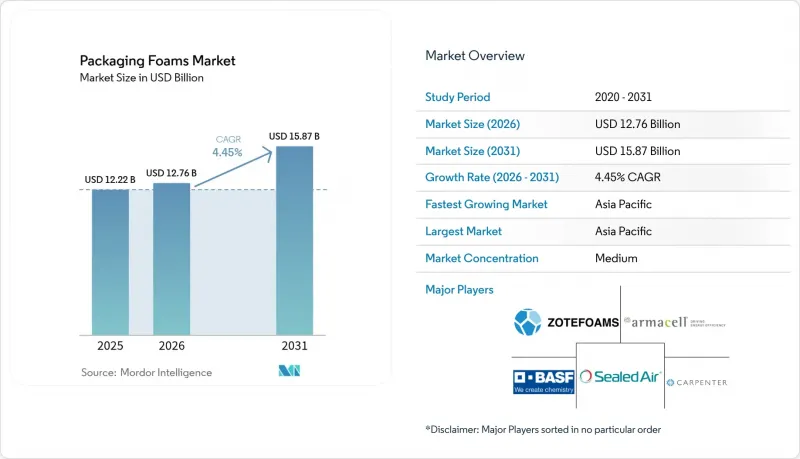
本報告按材料(聚苯乙烯、聚氨酯、聚烯及其他材料)、結構(軟性、剛性)、應用(食品包裝、工業包裝)和地區(亞太、北美、歐洲、南美、中東和非洲)進行細分。市場預測以美元計價。
全球泡棉發泡材市場趨勢與洞察
電子商務的擴張正在推動對運輸中使用的防護發泡材的需求。
自動化履約網路正在處理日益成長的小包裹量,其中經常包含易碎的電子產品和個人保養用品。業者正在選擇發泡材空氣枕,宅配業者發泡材指定使用具有內建靜電放電 (ESD) 保護功能的聚氨酯、聚乙烯和 EVA 泡沫,以滿足保固要求。自 2024 年以來,北美地區的採用速度加快,這與東南亞電子商務的快速發展以及來自其他地區對緊湊、永續緩衝解決方案的需求不斷成長的貨運量不謀而合。
亞洲24小時食品配送的蓬勃發展催生了對保溫發泡包裝的需求。
基於應用程式的食品聚合平台承諾全天候24小時送達,因此在多變的天氣條件下,溫度控制至關重要。為此,業者正在採用多層發泡材包裝,其中包含反射膜和相變材料,以將食品溫度在目標值的±2 度C範圍內保持長達24小時。在越南,對一次性聚苯乙烯課稅以及即將實施的塑膠禁令正在推動向生物基隔熱材料的轉變,迫使供應商獲得受監管的聚烯和纖維素發泡材的認證。中國監管機構正在收緊食品接觸材料的浸出測試,提高了對低VOC和極低殘留單體含量配方的需求。在新加坡,食品管理局規定的溫度限制為100 度C以上,要求供應商檢驗發泡容器在盛裝熱食時的安全性。這些指南正在推動亞洲快速成長的餐飲配送網路採用受監管的高品質解決方案。
城市層級禁止使用一次性聚苯乙烯
地方性法規正在加速材料轉型,例如限制食品級發泡聚苯乙烯製品的使用,並實施生態定價機制,以增強其與生物基產品的競爭。在加州,與永續農業計畫 (SNAP) 一致的、禁止在發泡緩衝材料中使用某些氫氟碳化合物的禁令,進一步降低了聚苯乙烯的競爭力。歐盟支持的 PolyStyreneLoop 工廠雖然展示了熔融回收路線的有效性,但仍需要成本高昂的收集系統,增加了加工商的複雜性。越南從 2026 年到 2031 年分階段實施塑膠禁令,進一步加速了該地區向可回收和可堆肥的發泡材轉型。隨著地方性法規的不斷完善,包裝製造商正在使其產品系列多元化,以維持市場准入並降低合規風險。
細分市場分析
預計到2025年,聚氨酯將佔據包裝發泡材市場50.98%的佔有率,這得益於其成熟的供應鏈和靈活的密度範圍,既可用於緩衝又可隔熱材料。同時,聚烯預計到2031年將以5.43%的複合年成長率成長,這主要得益於含有高達95%再生材料的配方,這些配方符合塑膠稅收豁免要求。對生物基聚氨酯(例如木質素增強泡沫)的研究表明,它們在保持0.0289 W/m*K導熱係數的同時,也展現出未來成長的潛力,並有助於實現溫室氣體減排目標。儘管歐盟部分地區的熔融回收計畫可能會緩解聚苯乙烯產量下降的趨勢,但監管壓力正在加速聚苯乙烯產量的下降。採用氫氟烯烴發泡的特種酚醛發泡體正在高溫冷鏈包裝領域嶄露頭角,低全球暖化潛值是該領域的關鍵考量。
儘管包裝發泡體市場中的聚氨酯細分市場預計將實現顯著成長,但聚烯細分市場預計在預測期內也將大幅擴張。這些趨勢凸顯了市場正逐步但實質地轉向使用化學材料,這些材料能夠降低碳排放強度、提高可回收性,並符合品牌所有者使用來自報廢產品的材料的承諾。隨著新的生物多元醇產能投入運作,混料商預計成本將逐步趨於平衡,這可能會在預測期後半段加速替代進程。
區域分析
亞太地區以40.10%的市佔率和5.56%的預期複合年成長率領先,主要得益於其強大的電子商務生態系統、快速成長的外送服務以及政府對冷鏈疫苗供給能力的投資。儘管中國已製定國內回收目標,但仍是聚苯乙烯的主要進口國,這凸顯了該地區對這種原料的強勁需求。越南對一次性發泡聚苯乙烯課稅,正在加速東南亞地區向聚烯和蘑菇衍生發泡材的轉型;而日本和韓國則在推廣使用氫化發泡聚氨酯,以降低全球暖化潛勢(GWP)。
北美在包裝發泡體市場佔有重要佔有率,這得益於其完善的履約基礎設施和大型零售商積極推行的永續發展策略。亞馬遜計畫於2024年逐步淘汰空氣枕,促使供應鏈轉向可回收的緩衝材料,展現了大規模生產的潛力。 Nourion在威斯康辛州的擴張反映了當地對輕質填充材的需求,這些填充物既能降低運輸成本,又能保持防護性能。聯邦政府對新一代發泡的SNAP(補充營養援助計劃)批准,為生物基和低全球暖化潛值(GWP)化學品提供了監管確定性。
儘管面臨原料成本飆升和化學品法規日益嚴格的挑戰,歐洲仍然是生物創新和循環經濟試點計畫的熱點。斯道拉恩索在德國進行的「Papilla」試驗證實了市場對可取代EPS用於家具和家用電器的纖維素泡沫的需求。該地區從苯乙烯淨出口地轉變為淨進口地,凸顯了導致價格波動的結構性供應挑戰。東歐加工商正擴大探索模塑紙漿產品,以符合一次性產品指令的要求,同時保持對特種隔熱材料中EPS的特定需求。
南美洲、中東和非洲在全球市場佔有率的擴張速度雖不快,但正在穩步提升。在巴西,由於電子商務的快速發展,輕質聚乙烯泡棉材料在電子產品領域的應用日益廣泛。同時,在海灣合作理事會波灣合作理事會的沙漠氣候地區,聚氨酯隔熱材料正被用於疫苗運輸。由多邊捐助方共同資助的非洲疫苗物流投資項目,優先採用即使在高溫環境下也能維持性能的可回收硬質泡沫材料,為未來需求成長奠定了基礎。
其他好處:
- Excel格式的市場預測(ME)表
- 3個月的分析師支持
目錄
第1章:引言
- 研究假設和市場定義
- 調查範圍
第2章:調查方法
第3章執行摘要
第4章 市場狀況
- 市場概覽
- 市場促進因素
- 電子商務的擴張增加了對發泡聚苯乙烯包裝的需求。
- 亞洲24小時送餐服務的蓬勃發展催生了對保溫發泡包裝的需求。
- 努力透過減輕物流負擔來降低貨運成本。
- 生物基多元醇在低碳發泡體中的快速應用
- 新興市場疫苗冷鏈基礎建設
- 市場限制因素
- 城市層級禁止使用一次性聚苯乙烯泡沫塑膠
- 苯乙烯和異氰酸酯的價格波動
- 模塑紙漿和蘑菇衍生包裝材料替代品的快速發展
- 價值鏈分析
- 波特五力模型
第5章 市場規模與成長預測
- 材料
- 聚苯乙烯
- 聚氨酯
- 聚烯
- 其他材料
- 按結構
- 靈活的
- 死板的
- 透過使用
- 食品包裝
- 工業包裝
- 運輸部件
- 電氣和電子設備
- 個人護理
- 製藥
- 其他工業包裝
- 按地區
- 亞太地區
- 中國
- 印度
- 日本
- 韓國
- 其他亞太國家
- 北美洲
- 美國
- 加拿大
- 墨西哥
- 歐洲
- 德國
- 英國
- 法國
- 義大利
- 俄羅斯
- 其他歐洲國家
- 南美洲
- 巴西
- 阿根廷
- 其他南美國家
- 中東和非洲
- 沙烏地阿拉伯
- 阿拉伯聯合大公國
- 南非
- 其他中東和非洲國家
- 亞太地區
第6章 競爭情勢
- 市場集中度
- 策略趨勢
- 市佔率(%)/排名分析
- 公司簡介
- Alleguard
- Armacell
- Atlas Roofing Corporation
- BASF SE
- Berry Global Inc.
- Borealis GmbH
- Carpenter Engineered Foams Belgium BV
- Dart Container Corporation
- Dow
- EFP, LLC.
- Huntsman International LLC
- JSP
- Novapor Hans Lau(GmbH & Co)KG
- Pregis LLC
- Sealed Air
- TotalEnergies
- Williams Products
- Zotefoams PLC
第7章 市場機會與未來展望
According to Mordor Intelligence, the packaging foams market size was valued at USD 12.22 billion in 2025 and estimated to grow from USD 12.76 billion in 2026 to reach USD 15.87 billion by 2031, at a CAGR of 4.45% during the forecast period (2026-2031).
This report is Segmented by Material (Polystyrene, Polyurethane, Polyolefin, Other Materials), Structure (Flexible, Rigid), Application (Food Packaging, Industrial Packaging), and Geography (Asia-Pacific, North America, Europe, South America, Middle East and Africa). The Market Forecasts are Provided in Terms of Value (USD).
Global Packaging Foams Market Trends and Insights
Rising E-commerce Led Demand for Protective Shipping Foam
Automated fulfillment networks handle rising parcel volumes that frequently contain fragile electronics and personal-care items. Operators replace plastic air pillows with engineered foam inserts that absorb shock, resist compression, and meet recycling targets. Dimensional-weight pricing by parcel carriers incentivizes thinner, lightweight cushions that cut freight charges while protecting products. Machine-learning design platforms generate right-sized foam interiors and deliver up to 25% transport savings for shippers. Electronics brand owners specify polyurethane, polyethylene, and EVA foams with embedded ESD protection to maintain warranty compliance. North American adoption has accelerated since 2024 and parallels rapid e-commerce expansion in Southeast Asia, boosting regional shipment volumes that favor compact, sustainable cushioning solutions.
24-Hour Food-Delivery Boom in Asia Requiring Insulated Foam Packs
App-based food aggregators promise full-day delivery windows that stress temperature management across variable climates. Operators therefore adopt multi-layered foam packs integrating reflective films and phase-change inserts that keep meals within 2 °C of target for up to 24 hours. Vietnam's single-use polystyrene taxes and upcoming plastic bans provoke a pivot toward bio-derived insulation formats, pushing suppliers to qualify compliant polyolefin or cellulose foams. Chinese regulators have tightened migration testing for food-contact materials, reinforcing demand for formulations with low VOC and minimal residual monomer content. In Singapore, temperature thresholds above 100 °C outlined by the Food Agency oblige suppliers to validate foam container safety across hot-food use cases. These directives collectively advance premium, regulation-ready solutions across Asia's fast-growing meal-delivery networks.
City-Level Bans on Single-Use Polystyrene
Municipal restrictions accelerate material transition by limiting expanded-polystyrene foodservice items and enforcing eco-fee structures that raise cost parity with bio-based formats. California's SNAP-aligned prohibitions on specific hydrofluorocarbons in foam cushions further reduce polystyrene competitiveness. The EU-backed PolyStyreneLoop facility validates dissolution recycling routes but still requires costly collection systems, adding complexity for converters Vietnam's staged plastic bans from 2026-2031 intensify regional momentum toward recyclable and compostable foams. As local mandates broaden, packaging producers diversify portfolios to preserve market access and mitigate compliance risks.
Other drivers and restraints analyzed in the detailed report include:
- Logistics Lightweighting Initiatives to Cut Freight Costs
- Rapid Adoption of Bio-Based Polyols for Low-Carbon Foams
- Styrene & Isocyanate Price Volatility
For complete list of drivers and restraints, kindly check the Table Of Contents.
Segment Analysis
Polyurethane held 50.98% of the packaging foam market share in 2025, benefiting from well-established supply chains and adaptable density ranges that suit both cushioning and insulation. Polyolefin, however, is projected to capture expanding demand with a 5.43% CAGR through 2031, supported by formulations containing up to 95% recycled content that comply with plastic-tax exemptions. Bio-based polyurethane research-such as lignin-reinforced foams retaining 0.0289 W/m*K thermal conductivity-indicates future growth potential while addressing greenhouse-gas goals. Regulatory pressure on polystyrene deepens its volume decline, although dissolution recycling projects may moderate the pace in select EU regions. Specialty phenolic foams leveraging hydrofluoroolefin blowing agents emerge in high-temperature cold-chain packaging where low global-warming potential is valuable.
The polyurethane segment of the packaging foam market is anticipated to achieve significant growth, while the polyolefin sub-segment is expected to witness notable expansion over the forecast period. These trajectories underscore a gradual but material shift toward chemistries that lower carbon intensity, improve recyclability, and align with brand-owner pledges on post-consumer content. As new bio-polyol capacity comes onstream, formulators anticipate incremental cost parity that could accelerate substitution in the outer years of the forecast.
Complete Report Scope:
- By Material
- Polystyrene
- Polyurethane
- Polyolefin
- Other Materials
- By Structure
- Flexible
- Rigid
- By Application
- Food Packaging
- Industrial Packaging
- Transportation Components
- Electrical and Electronics
- Personal Care
- Pharmaceutical
- Other Industrial Packaging
- By Geography
- Asia-Pacific
- China
- India
- Japan
- South Korea
- Rest of Asia-Pacific
- North America
- United States
- Canada
- Mexico
- Europe
- Germany
- United Kingdom
- France
- Italy
- Russia
- Rest of Europe
- South America
- Brazil
- Argentina
- Rest of South America
- Middle East and Africa
- Saudi Arabia
- United Arab Emirates
- South Africa
- Rest of Middle East and Africa
- Asia-Pacific
Geography Analysis
Asia-Pacific leads with 40.10% share and a forecast 5.56% CAGR, propelled by robust e-commerce ecosystems, burgeoning meal-delivery services, and government investment in cold-chain vaccine capacity. Despite setting domestic recycling targets, China remains a significant importer of polystyrene, emphasizing strong regional demand for the raw material. Vietnam's taxation of single-use styrofoam accelerates substitution toward polyolefin and mushroom-derived foams in Southeast Asia, while Japan and South Korea pursue hydrogen-blown polyurethane for lower GWP profiles.
North America commands a sizable slice of the packaging foam market, supported by sophisticated fulfillment infrastructure and aggressive sustainability roadmaps by leading retailers. Amazon's exit from air pillows in 2024 nudged the supply base toward recyclable cushions and validated high-volume production scaling. Nouryon's Wisconsin expansion reflects local demand for lightweight fillers that cut freight intensity while maintaining protective performance. Federal SNAP approvals of next-generation blowing agents provide regulatory certainty for bio-based and low-GWP chemistries.
Europe grapples with elevated feedstock costs and strict chemical regulations, yet remains a hotspot for bio-innovation and circular-economy pilots. Stora Enso's Papira trials in Germany confirm market appetite for cellulose foams capable of replacing EPS across furniture and consumer-electronics channels. The region's transition from net exporter to importer of styrene highlights structural supply challenges driving volatility. Eastern European converters increasingly explore molded-pulp formats to comply with single-use directives, while maintaining niche EPS demand in specialty insulation.
South America, the Middle East, and Africa contribute modest but rising shares to the global footprint. Brazil's e-commerce acceleration fosters adoption of lightweight PE foams in electronics, whereas Gulf Cooperation Council countries apply polyurethane insulation for vaccine transport across desert climates. Africa's vaccine logistics investments, co-funded by multilateral donors, prioritize recyclable rigid foams that sustain performance in high-temperature corridors, laying groundwork for future demand expansion.
- Alleguard
- Armacell
- Atlas Roofing Corporation
- BASF SE
- Berry Global Inc.
- Borealis GmbH
- Carpenter Engineered Foams Belgium BV
- Dart Container Corporation
- Dow
- EFP, LLC.
- Huntsman International LLC
- JSP
- Novapor Hans Lau (GmbH & Co) KG
- Pregis LLC
- Sealed Air
- TotalEnergies
- Williams Products
- Zotefoams PLC
Additional Benefits:
- The market estimate (ME) sheet in Excel format
- 3 months of analyst support
TABLE OF CONTENTS
1 Introduction
- 1.1 Study Assumptions and Market Definition
- 1.2 Scope of the Study
2 Research Methodology
3 Executive Summary
4 Market Landscape
- 4.1 Market Overview
- 4.2 Market Drivers
- 4.2.1 Rising e-commerce led demand for protective shipping foam
- 4.2.2 24-hour food-delivery boom in Asia requiring insulated foam packs
- 4.2.3 Logistics lightweighting initiatives to cut freight costs
- 4.2.4 Rapid adoption of bio-based polyols for low-carbon foams
- 4.2.5 Cold-chain vaccine infrastructure build-out in emerging markets
- 4.3 Market Restraints
- 4.3.1 City-level bans on single-use polystyrene
- 4.3.2 Styrene and isocyanate price volatility
- 4.3.3 Rapid advances in molded-pulp and mushroom packaging substitutes
- 4.4 Value Chain Analysis
- 4.5 Porter's Five Forces
- 4.5.1 Bargaining Power of Suppliers
- 4.5.2 Bargaining Power of Buyers
- 4.5.3 Threat of New Entrants
- 4.5.4 Threat of Substitutes
- 4.5.5 Degree of Competition
5 Market Size and Growth Forecasts (Value)
- 5.1 By Material
- 5.1.1 Polystyrene
- 5.1.2 Polyurethane
- 5.1.3 Polyolefin
- 5.1.4 Other Materials
- 5.2 By Structure
- 5.2.1 Flexible
- 5.2.2 Rigid
- 5.3 By Application
- 5.3.1 Food Packaging
- 5.3.2 Industrial Packaging
- 5.3.2.1 Transportation Components
- 5.3.2.2 Electrical and Electronics
- 5.3.2.3 Personal Care
- 5.3.2.4 Pharmaceutical
- 5.3.2.5 Other Industrial Packaging
- 5.4 By Geography
- 5.4.1 Asia-Pacific
- 5.4.1.1 China
- 5.4.1.2 India
- 5.4.1.3 Japan
- 5.4.1.4 South Korea
- 5.4.1.5 Rest of Asia-Pacific
- 5.4.2 North America
- 5.4.2.1 United States
- 5.4.2.2 Canada
- 5.4.2.3 Mexico
- 5.4.3 Europe
- 5.4.3.1 Germany
- 5.4.3.2 United Kingdom
- 5.4.3.3 France
- 5.4.3.4 Italy
- 5.4.3.5 Russia
- 5.4.3.6 Rest of Europe
- 5.4.4 South America
- 5.4.4.1 Brazil
- 5.4.4.2 Argentina
- 5.4.4.3 Rest of South America
- 5.4.5 Middle East and Africa
- 5.4.5.1 Saudi Arabia
- 5.4.5.2 United Arab Emirates
- 5.4.5.3 South Africa
- 5.4.5.4 Rest of Middle East and Africa
- 5.4.1 Asia-Pacific
6 Competitive Landscape
- 6.1 Market Concentration
- 6.2 Strategic Moves
- 6.3 Market Share(%)/ Ranking Analysis
- 6.4 Company Profiles (includes Global level Overview, Market level overview, Core Segments, Financials as available, Strategic Information, Market Rank/Share for key companies, Products and Services, and Recent Developments)
- 6.4.1 Alleguard
- 6.4.2 Armacell
- 6.4.3 Atlas Roofing Corporation
- 6.4.4 BASF SE
- 6.4.5 Berry Global Inc.
- 6.4.6 Borealis GmbH
- 6.4.7 Carpenter Engineered Foams Belgium BV
- 6.4.8 Dart Container Corporation
- 6.4.9 Dow
- 6.4.10 EFP, LLC.
- 6.4.11 Huntsman International LLC
- 6.4.12 JSP
- 6.4.13 Novapor Hans Lau (GmbH & Co) KG
- 6.4.14 Pregis LLC
- 6.4.15 Sealed Air
- 6.4.16 TotalEnergies
- 6.4.17 Williams Products
- 6.4.18 Zotefoams PLC
7 Market Opportunities and Future Outlook
- 7.1 White-space and Unmet-need Assessment

 現場泡棉包裝市場:全球市場預測,2026-2032年
 生物泡沫包裝市場規模、佔有率、成長、全球產業分析、區域趨勢及2026-2034年預測。
 EPE泡棉包裝市場規模、佔有率、成長和行業分析:按產品類型、最終用途和地區分類,並預測至2034年包裝發泡材市場-2026-2032年全球市場預測
 發泡包裝市場:商業機會、成長要素、產業趨勢分析及2026-2035年預測
 包裝泡棉市場預測至2034年-按結構類型、材料類型、服務類型、最終用戶和地區分類的全球分析全球發泡包裝市場規模、佔有率、趨勢和成長分析報告(2026-2034年)
 包裝發泡材市場規模、佔有率和成長分析(按材料類型、產品類型、最終用途、應用和地區分類)-2026-2033年產業預測柔性泡棉包裝市場規模、佔有率、成長及全球產業分析:按類型、應用和地區劃分的洞察,以及2024-2032年預測
 發泡包裝市場報告:趨勢、預測和競爭分析(至 2031 年)