


 |
市場調查報告書
商品編碼
2122372
離型紙:市場佔有率分析、產業趨勢與統計、成長預測(2026-2031)Release Liners - Market Share Analysis, Industry Trends & Statistics, Growth Forecasts (2026 - 2031) |
||||||

※ 本網頁內容可能與最新版本有所差異。詳細情況請與我們聯繫。
據 Mordor Intelligence 稱,2025 年離型紙市值為 171.3 億美元,預計到 2031 年將達到 247.6 億美元,而 2026 年為 182.1 億美元,預測期(2026-2031 年)複合年成長率為 6.33%。
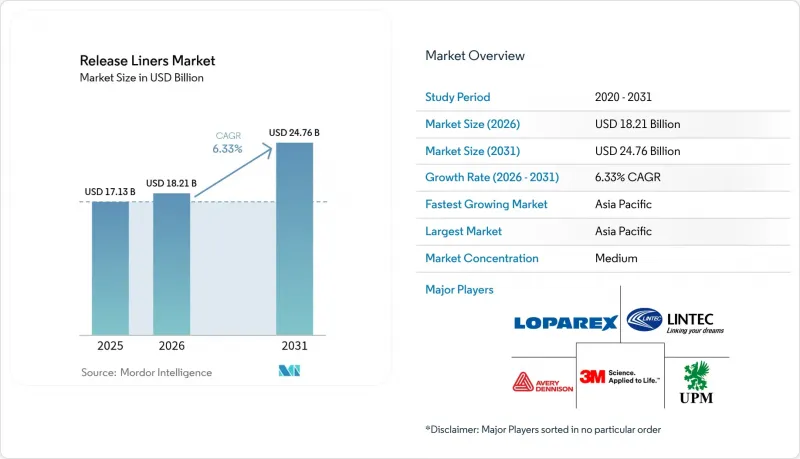
本報告按基材(黏土塗層牛皮紙、薄膜襯紙等)、脫模劑(矽油、氟樹脂等)、應用(標籤、圖形等)、終端用戶產業(食品飲料、醫療保健和製藥等)以及地區(亞太地區、北美地區、歐洲地區、南美地區、中東和非洲地區)進行細分。市場預測以美元計價。
全球離型紙市場趨勢及洞察
食品飲料產業對潔淨標示包裝的需求日益成長
食品飲料品牌擁有者正以未漂白的玻璃紙、水性矽酮和符合食品接觸法規的可Lintec Corporation化學品取代漂白基材和溶劑型塗料。 Lintec 的 Natural Tone玻璃紙就是轉型為低加工紙張的典型例子,它既能實現凹版印刷的保真度,又無需使用螢光增白劑。其功能性能如今也擴展到阻隔油污和水分,並允許原料清晰透明,而不會導致黏合劑遷移。隨著零售商提高永續性評估標準,能夠提供可追溯性證明的加工商正獲得更高的溢價。對不含 PFAS 系統的需求正從歐盟蔓延至北美,迫使供應商擴大其無氟替代品的種類,這些替代品即使在高速塗覆下也能輕鬆剝離。預計到 2024 年,食品飲料產業將佔市場佔有率的 29.26%,材料的分階段升級正在全球生產中迅速蔓延,進一步提高了供應商的認證標準。
電子商務的快速發展正在加速對標籤的需求。
隨著線上訂購線下取貨、訂閱服務和當日送達等模式的普及,小包裹處理量持續成長。離型紙必須在每分鐘超過150公尺的自動化列印和貼標線上可靠運行,能夠相容於可變資料條碼,並能承受冷鏈中-20°C至40°C的溫度波動。穩定的離型力和紙幅平整度可最大限度地減少停機時間和誤貼,從而直接影響每個包裹的履約成本。如今,高階「開箱」體驗的趨勢正延伸至食品雜貨和個人保健產品的全通路配送,這增加了對帶有觸感光油和金屬裝飾的多層標籤的需求。對於此類標籤,精密塗層的離型紙對於保護油墨品質直至使用至關重要。因此,除了銷售量成長之外,離型紙市場也正在經歷價值轉移,轉向針對機器人和視覺檢測設備最佳化的高規格紙張和薄膜基材。
處理離型紙廢棄物面臨的挑戰
大多數廢舊襯紙最終都被掩埋,因為矽油殘留物阻礙了標準的回收。 FINAT 的 CELAB-Europe 聯盟的目標是到 2025 年實現 75% 的回收率,但進展取決於收集物流和終端市場對再生纖維的需求。西密西根大學開發的一種水溶性隔離層可以在製漿過程中去除矽油,但製程改進和打包運輸成本等挑戰限制了商業性應用。 Susutana 集團位於威斯康辛州的工廠證明了該技術的可行性,但其地理覆蓋範圍有限。隨著生產者延伸責任制 (EPR) 的日益普及,加工商面臨成本增加,與無襯紙或可重複使用的紙型相比,價格競爭力正在下降。
細分市場分析
預計到2025年,玻璃紙仍將佔據離型紙市場36.74%的佔有率,憑藉其成本效益、光滑的表面以及FDA食品接觸認證,將繼續為大規模生產的標籤和膠帶項目提供支援。然而,由於品牌商擴大指定使用紙張重量離型紙以減少運輸過程中的排放,玻璃紙的成長速度正在放緩,即使在每平方公尺需求量不斷成長的地區,其總噸位也在下降。聚乙烯塗層牛皮紙因其優於未塗層產品的防潮性能,正在冷藏食品和戶外標籤領域獲得越來越多的市場佔有率。雙向拉伸聚酯薄膜(BO-PET)和雙向拉伸聚丙烯薄膜(BOPP)離型紙在電子、航太和汽車層壓產業迅速擴張,其固化溫度高於纖維素基紙張的玻璃化轉變溫度。
「其他」類別中的替代基材正在推動市場發展。雙向拉伸聚醯胺、聚四氟乙烯塗層玻璃布和微纖化纖維素複合複合材料具有多種功能,包括抗靜電性、脫模性、260 度C以上的熱穩定性以及可再製漿性。儘管這些基材的應用仍處於小眾市場,但隨著加工商採用多道次塗佈生產線和線上等離子處理來固定脫模劑,其平均售價正在上漲。玻璃紙供應商也紛紛推出具有增強阻隔性的產品(例如未漂白、金屬化、碳酸鈣填充等),以滿足潔淨標示包裝的需求。這些漸進式的變化意味著玻璃紙仍然佔據著重要的地位,但成長最快的細分市場正在轉向工程薄膜。
在2025年的離型紙市場中,矽基產品佔了80.65%的市佔率。這得歸功於其多樣化的固化化學特性、低表面能以及充足的矽氧烷原料供應。採用鉑催化劑的紫外光固化矽酮產品透過縮短固化時間和實現1000公尺/分鐘的高速塗覆,保持了價格競爭力。含氟聚合物基離型紙的市場規模雖小,但以7.42%的複合年成長率快速成長。這是因為全氟化鏈賦予了產品必要的化學惰性,使其在高溫複合複合材料和高腐蝕性膠帶中具有極低的脫模力。
由於對 PFAS 化學品的監管壓力,市場兩極化日益加劇。儘管航太領域對傳統氟矽油的需求仍然強勁,但包裝和衛生用品行業正轉向丙烯酸或聚烯基脫模清漆。 Hightower Products 等供應商現在提供客製化的無 PFAS 配方,可根據黏度和錨固樹脂進行調整,從而在清潔脫模和可回收性之間取得平衡。矽油製造商則透過推出遷移控制等級的產品來應對這項挑戰,這些產品可最大限度地減少矽氧烷向光學薄膜和半導體晶圓的遷移。競爭優勢在於具備分析能力,能夠檢驗遷移量低於 ppm 級,並加快客戶的認證流程。
區域分析
預計到2025年,亞太地區將以42.40%的市佔率佔據主導地位,並在2031年之前以7.31%的複合年成長率成長。這主要得益於該地區從紙漿到塗料的垂直整合供應鏈以及不斷壯大的中產階級的消費需求。中國是這一成長的主要貢獻者,因為包裝加工商正在擴大其在電履約中心附近的產能。同時,日本和韓國專注於為半導體製造廠和電池組裝生產高精度襯墊。政府對可再生能源的支持也推動了風力渦輪機葉片製造中對預浸襯墊的需求。
在北美,航太、醫療設備和快餐包裝行業仍然是該技術的大規模應用領域。美國是FDA核准的醫用膠帶研發中心,受惠於明尼蘇達州、麻薩諸塞州和加州周邊的產業群聚。加拿大利用其豐富的森林資源,推廣FSC認證的玻璃紙和黏土塗層牛皮紙的應用,以滿足零售商的永續發展要求。墨西哥的近岸外包熱潮正促使跨國公司將RFID、標籤和薄膜塗層設施建在其汽車和消費性電子工廠附近。艾利丹尼森公司1億美元的投資凸顯了這個發展動能。
歐洲在監管方面仍處於領先地位,透過獎勵能夠證明廢舊襯紙回收率的供應商,推動循環經濟目標的實現。德國在與汽車輕量化相關的工業膠帶創新方面處於主導,而義大利和法國則充分利用高階包裝市場,該市場對小批量、高光澤標籤所需的優質襯紙有著迫切的需求。北歐國家透過強制逐步淘汰 PFAS 並推廣生物基替代品,正在影響全球材料標準。東歐是為歐盟單一市場供應原料的成本效益型生產走廊,但地緣政治緊張局勢有時會擾亂原料的流通。
其他好處:
- Excel格式的市場預測(ME)表
- 3個月的分析師支持
目錄
第1章:引言
- 研究假設和市場定義
- 調查範圍
第2章:調查方法
第3章執行摘要
第4章 市場狀況
- 市場概覽
- 市場促進因素
- 食品飲料產業對潔淨標示包裝的需求日益成長
- 電子商務的快速發展正在加速對標籤的需求。
- 優質衛生和醫用膠帶的普及
- 用於航太和風力發電的預浸料需要特殊的襯裡
- 電動車電池電極膠帶的廣泛應用
- 市場限制因素
- 釋放片處置中的挑戰
- 紙漿和矽膠等原料價格波動很大。
- 過渡到無底紙標籤系統
- 價值鏈分析
- 波特五力模型
第5章 市場規模與成長預測
- 按基礎材料
- 玻璃紙/超壓光紙
- 聚乙烯塗佈紙
- 薄膜襯墊
- 黏土塗佈工藝紙
- 其他(例如,具有聚合物塗層的雙向拉伸聚對苯二甲酸乙二醇酯(BO-PET)薄膜)
- 釋放劑類型
- 矽酮
- 螢光樹脂
- 非矽膠型(丙烯酸型、其他)
- 透過使用
- 標籤
- 圖形
- 磁帶
- 醫學領域
- 產業
- 其他用途(例如,衛生用品)
- 按最終用途行業分類
- 食品/飲料
- 醫療和藥品
- 個人護理化妝品
- 汽車和運輸業
- 電子設備
- 建築/施工
- 其他終端用戶產業(例如農業)
- 按地區
- 亞太地區
- 中國
- 日本
- 印度
- 韓國
- 東南亞國協
- 其他亞太國家
- 北美洲
- 美國
- 加拿大
- 墨西哥
- 歐洲
- 德國
- 英國
- 法國
- 義大利
- 西班牙
- 俄羅斯
- 北歐國家
- 其他歐洲國家
- 南美洲
- 巴西
- 阿根廷
- 其他南美國家
- 中東和非洲
- 沙烏地阿拉伯
- 南非
- 其他中東和非洲國家
- 亞太地區
第6章 競爭情勢
- 市場集中度
- 策略趨勢
- 市佔率和排名分析
- 公司簡介
- 3M
- Ahlstrom
- Avery Dennison Corporation
- Dow
- Eastman Chemical Company
- Elkem ASA
- Felix Schoeller
- Gascogne Group
- Laufenberg GmbH
- LINTEC Corporation
- Loparex
- Mativ Holdings, Inc.
- Mitsubishi Chemical Group Corporation.
- Mondi
- Polyplex
- Sappi Ltd
- SJA Film Technologies Ltd.
- Techlan
- The Griff Network
- UPM
第7章 市場機會與未來展望
According to Mordor Intelligence, the release liners market size was valued at USD 17.13 billion in 2025 and estimated to grow from USD 18.21 billion in 2026 to reach USD 24.76 billion by 2031, at a CAGR of 6.33% during the forecast period (2026-2031).
This report is Segmented by Substrate (Clay-Coated Kraft Paper, Filmic Liners, and, More), Release Agent (Silicone, Fluoropolymer, and More), Application (Labels, Graphics, and More), End-Use Industry (Food and Beverage, Healthcare and Pharmaceuticals, and More), and Geography (Asia-Pacific, North America, Europe, South America, Middle East and Africa). The Market Forecasts are Provided in Terms of Value (USD).
Global Release Liners Market Trends and Insights
Growing Demand for Clean-Label Packaging in Food and Beverage
Food and beverage brand owners are replacing bleached substrates and solvent-based coatings with unbleached glassine, water-borne silicones, and compostable chemistries that meet direct-food-contact rules. LINTEC's natural-tone glassine illustrates the pivot toward minimally processed papers that enable gravure print fidelity while eliminating optical brighteners . Functional performance now extends to barrier protection against grease and moisture, permitting clear ingredient transparency without adhesive migration. Converters able to document traceability capture price premiums as retailers tighten sustainability scorecards. Demand for PFAS-free systems is spreading from the EU to North America, pushing suppliers to scale fluorine-free alternatives that still release cleanly at high application speeds. With food and beverage holding 29.26% share in 2024, iterative material upgrades ripple quickly across global volumes and reinforce supplier qualification hurdles.
E-commerce Boom Accelerating Label Demand
Parcel volumes continue rising with click-and-collect, subscription, and same-day delivery models. Release liners must perform across automated print-apply lines that exceed 150 m/min, handle variable-data barcoding, and endure cold-chain swings from -20 °C to 40 °C. Consistent release force and web flatness minimize downtime and misapplies, directly influencing fulfillment cost per package. Premium unboxing trends now extend to omnichannel grocery and personal-care shipments, boosting demand for multi-layer labels with tactile varnishes and metallic accents. These constructions rely on precision-coated liners to protect ink integrity until point-of-use. The release liner market, therefore, sees volume gains plus a value shift toward high-spec paper and film backings optimized for robotics and vision inspection equipment.
Release-Liner Waste Disposal Challenges
Used liner is largely landfilled because silicone residues impede standard recycling. FINAT's CELAB-Europe consortium aims for 75% recycling by 2025, but progress hinges on collection logistics and end-market demand for recovered fibers. Western Michigan University's water-soluble barrier layer enables silicone removal during pulping, yet commercial adoption remains limited by process retrofits and bale transport costs. Sustana Group's Wisconsin plant shows technical feasibility, but its geographic reach is narrow. As Extended Producer Responsibility schemes spread, converters face escalating fees that erode price competitiveness versus linerless or reusable formats.
Other drivers and restraints analyzed in the detailed report include:
- Uptake of Premium Hygiene and Medical Tapes
- Aerospace and Wind Prepregs Needing Specialty Liners
- Volatile Pulp and Silicone Raw-Material Prices
For complete list of drivers and restraints, kindly check the Table Of Contents.
Segment Analysis
Glassine retained 36.74% share of release liner market size in 2025 and continues to anchor high-volume label and tape programs thanks to cost efficiency, surface smoothness, and FDA food-contact clearances. Yet growth moderates as brand owners specify lower-grammage liners to cut freight emissions, eroding tonnage even where square-meter demand rises. Polyethylene-coated kraft papers are gaining in chilled-food and outdoor labeling where moisture resistance outperforms uncoated grades. Filmic liners made from BO-PET and BOPP are expanding quickly in electronics, aerospace, and automotive laminates that cure at temperatures beyond the glass-transition point of cellulosic papers.
Alternative substrates inside the "Others" category are setting the pace: bi-axially oriented polyamide, PTFE-coated glass cloth, and micro-fibrillated cellulose composites deliver multi-functional properties such as anti-static release, thermal stability above 260 °C, and repulpability. Adoption remains niche yet lifts average selling price because converters implement multi-pass coating lines and inline plasma treatments to anchor release agents. Glassine suppliers are responding with barrier-enhanced variations-unbleached, metallized, or calcium-carbonate-filled-aimed at clean-label packaging. These iterative shifts ensure glassine stays relevant while ceding the fastest growth slices to engineered films.
Silicone systems controlled 80.65% of the 2025 release liner market, supported by versatile cure chemistries, low surface energy, and abundant supply of base siloxanes. Platinum-catalyzed UV silicones shorten cure windows, enabling high-speed 1,000 m/min coating that sustains price competitiveness. The release liner market size for fluoropolymer-based agents is smaller yet advancing at 7.42% CAGR because perfluorinated chains deliver chemical inertness and ultra-low release force vital in high-temperature composite molds and aggressive adhesive tapes.
Regulatory pressure on PFAS chemicals is fostering a split: legacy fluoro-silicones for aerospace retain demand, while packaging and hygiene sectors shift toward acrylic or polyolefin release varnishes. Suppliers such as Hightower Products now market PFAS-free formulations customized by viscosity and anchorage resins, balancing clean release with recyclability. Silicone producers answer with controlled-migration grades that minimize siloxane transfer onto optical films and semiconductor wafers. Competitive advantage hinges on analytical capability to verify sub-ppm migration and accelerate customer qualification.
Complete Report Scope:
- By Substrate
- Glassine / Super-calendered Paper
- Polyethylene-coated Paper
- Filmic Liners
- Clay-coated Kraft Paper
- Others (Poly-coated Biaxially Oriented Polyethylene Terephthalate (BO-PET) film, etc.)
- By Release Agent
- Silicone
- Fluoropolymer
- Non-silicone (Acrylic, Others)
- By Application
- Labels
- Graphics
- Tapes
- Medical
- Industrial
- Other Applications (Hydiene Products, etc.)
- By End-use Industry
- Food and Beverage
- Healthcare and Pharmaceuticals
- Personal Care and Cosmetics
- Automotive and Transportation
- Electronics
- Building and Construction
- Other End-user Industries (Agriculture, etc.)
- By Geography
- Asia-Pacific
- China
- Japan
- India
- South Korea
- ASEAN Countries
- Rest of Asia-Pacific
- North America
- United States
- Canada
- Mexico
- Europe
- Germany
- United Kingdom
- France
- Italy
- Spain
- Russia
- NORDIC Countries
- Rest of Europe
- South America
- Brazil
- Argentina
- Rest of South America
- Middle East and Africa
- Saudi Arabia
- South Africa
- Rest of Middle East and Africa
- Asia-Pacific
Geography Analysis
Asia-Pacific dominated with 42.40% market share in 2025 and is projected to grow at a 7.31% CAGR through 2031, underpinned by the region's vertically integrated pulp-to-coating supply chain and expanding middle-class consumption. China accounts for the bulk of incremental tonnage as packaging converters ramp capacity near e-commerce fulfilment hubs, while Japan and South Korea specialize in high-precision liners for semiconductor fabs and battery cell assembly. Government incentives for renewable energy also lift demand for prepreg liners in wind-blade production.
North America preserves a sizeable installed base in aerospace, medical device, and quick-service restaurant packaging. The United States is the hub for FDA-cleared medical tape development, benefiting from clusters around Minnesota, Massachusetts, and California. Canada leverages abundant forest resources to promote FSC-certified glassine and clay-coated kraft, aligning with retailer sustainability mandates. Mexico's near-shoring boom encourages multinationals to co-locate RFID, label, and filmic coating facilities close to automotive and consumer-electronics plants; Avery Dennison's USD 100 million investment testifies to this momentum.
Europe remains the regulatory vanguard, driving circularity targets that reward suppliers able to certify post-consumer liner recycling rates. Germany spearheads industrial tape innovation linked to automotive lightweighting, whereas Italy and France capitalize on luxury packaging where small-batch, high-finish labels command premium liners. Nordic countries influence global material standards by mandating PFAS phase-outs and promoting bio-based alternatives. Eastern Europe serves as a cost-effective production corridor supplying the EU single market, though geopolitical tensions occasionally disrupt feedstock logistics.
- 3M
- Ahlstrom
- Avery Dennison Corporation
- Dow
- Eastman Chemical Company
- Elkem ASA
- Felix Schoeller
- Gascogne Group
- Laufenberg GmbH
- LINTEC Corporation
- Loparex
- Mativ Holdings, Inc.
- Mitsubishi Chemical Group Corporation.
- Mondi
- Polyplex
- Sappi Ltd
- SJA Film Technologies Ltd.
- Techlan
- The Griff Network
- UPM
Additional Benefits:
- The market estimate (ME) sheet in Excel format
- 3 months of analyst support
TABLE OF CONTENTS
1 Introduction
- 1.1 Study Assumptions and Market Definition
- 1.2 Scope of the Study
2 Research Methodology
3 Executive Summary
4 Market Landscape
- 4.1 Market Overview
- 4.2 Market Drivers
- 4.2.1 Growing Demand for Clean-label Packaging in Food and Beverage
- 4.2.2 E-commerce Boom Accelerating Label Demand
- 4.2.3 Uptake of Premium Hygiene and Medical Tapes
- 4.2.4 Aerospace and Wind Prepregs Needing Specialty Liners
- 4.2.5 Electric Vehicles Battery Cell Electrode Tapes Adoption
- 4.3 Market Restraints
- 4.3.1 Release-liner Waste Disposal Challenges
- 4.3.2 Volatile Pulp and Silicone Raw-material Prices
- 4.3.3 Shift Toward Liner-less Labelling Systems
- 4.4 Value Chain Analysis
- 4.5 Porter's Five Forces
- 4.5.1 Bargaining Power of Suppliers
- 4.5.2 Bargaining Power of Buyers
- 4.5.3 Threat of New Entrants
- 4.5.4 Threat of Substitutes
- 4.5.5 Degree of Competition
5 Market Size and Growth Forecasts (Value)
- 5.1 By Substrate
- 5.1.1 Glassine / Super-calendered Paper
- 5.1.2 Polyethylene-coated Paper
- 5.1.3 Filmic Liners
- 5.1.4 Clay-coated Kraft Paper
- 5.1.5 Others (Poly-coated Biaxially Oriented Polyethylene Terephthalate (BO-PET) film, etc.)
- 5.2 By Release Agent
- 5.2.1 Silicone
- 5.2.2 Fluoropolymer
- 5.2.3 Non-silicone (Acrylic, Others)
- 5.3 By Application
- 5.3.1 Labels
- 5.3.2 Graphics
- 5.3.3 Tapes
- 5.3.4 Medical
- 5.3.5 Industrial
- 5.3.6 Other Applications (Hydiene Products, etc.)
- 5.4 By End-use Industry
- 5.4.1 Food and Beverage
- 5.4.2 Healthcare and Pharmaceuticals
- 5.4.3 Personal Care and Cosmetics
- 5.4.4 Automotive and Transportation
- 5.4.5 Electronics
- 5.4.6 Building and Construction
- 5.4.7 Other End-user Industries (Agriculture, etc.)
- 5.5 By Geography
- 5.5.1 Asia-Pacific
- 5.5.1.1 China
- 5.5.1.2 Japan
- 5.5.1.3 India
- 5.5.1.4 South Korea
- 5.5.1.5 ASEAN Countries
- 5.5.1.6 Rest of Asia-Pacific
- 5.5.2 North America
- 5.5.2.1 United States
- 5.5.2.2 Canada
- 5.5.2.3 Mexico
- 5.5.3 Europe
- 5.5.3.1 Germany
- 5.5.3.2 United Kingdom
- 5.5.3.3 France
- 5.5.3.4 Italy
- 5.5.3.5 Spain
- 5.5.3.6 Russia
- 5.5.3.7 NORDIC Countries
- 5.5.3.8 Rest of Europe
- 5.5.4 South America
- 5.5.4.1 Brazil
- 5.5.4.2 Argentina
- 5.5.4.3 Rest of South America
- 5.5.5 Middle East and Africa
- 5.5.5.1 Saudi Arabia
- 5.5.5.2 South Africa
- 5.5.5.3 Rest of Middle East and Africa
- 5.5.1 Asia-Pacific
6 Competitive Landscape
- 6.1 Market Concentration
- 6.2 Strategic Moves
- 6.3 Market Share(%)/Ranking Analysis
- 6.4 Company Profiles (includes Global level Overview, Market level overview, Core Segments, Financials as available, Strategic Information, Market Rank/Share for key companies, Products and Services, and Recent Developments)
- 6.4.1 3M
- 6.4.2 Ahlstrom
- 6.4.3 Avery Dennison Corporation
- 6.4.4 Dow
- 6.4.5 Eastman Chemical Company
- 6.4.6 Elkem ASA
- 6.4.7 Felix Schoeller
- 6.4.8 Gascogne Group
- 6.4.9 Laufenberg GmbH
- 6.4.10 LINTEC Corporation
- 6.4.11 Loparex
- 6.4.12 Mativ Holdings, Inc.
- 6.4.13 Mitsubishi Chemical Group Corporation.
- 6.4.14 Mondi
- 6.4.15 Polyplex
- 6.4.16 Sappi Ltd
- 6.4.17 SJA Film Technologies Ltd.
- 6.4.18 Techlan
- 6.4.19 The Griff Network
- 6.4.20 UPM
7 Market Opportunities and Future Outlook
- 7.1 White-space and Unmet-need Assessment
- 7.2 Incorporation of Nano-coatings into Release Liners for Enhanced Release Properties

 離型紙市場報告:趨勢、預測及競爭分析(至2035年)
 離型紙市場:2026-2032年全球市場預測(依材料、標示技術、厚度範圍、製程、產品類型及最終用途分類)
 SCK離型膜市場 - 全球產業規模、佔有率、趨勢、機會、預測:材料類型、離型膜類型、基材類型、最終用途產業、地區和競爭格局分類,2021-2031年全球離型紙市場(2026 年)
 離型紙市場:按材料、基材、標籤技術、應用和地區分類(2026-2034 年)
 離型紙市場:依基材、標籤技術、應用及地區分類。
 2026-2034年全球離型紙市場規模、佔有率、趨勢及成長分析報告
 2026年全球醫用離型膜市場報告
 離型紙市場規模、佔有率和趨勢分析報告:按材料、應用、地區和細分市場預測,2026-2033年
 離型紙市場規模、佔有率及成長分析(按類型、材料、標籤技術、應用、最終用戶和地區分類)-2026-2033年產業預測