


 |
市場調查報告書
商品編碼
2120635
卵磷脂:市場佔有率分析、產業趨勢與統計、成長預測(2026-2031)Lecithin - Market Share Analysis, Industry Trends & Statistics, Growth Forecasts (2026 - 2031) |
||||||

※ 本網頁內容可能與最新版本有所差異。詳細情況請與我們聯繫。
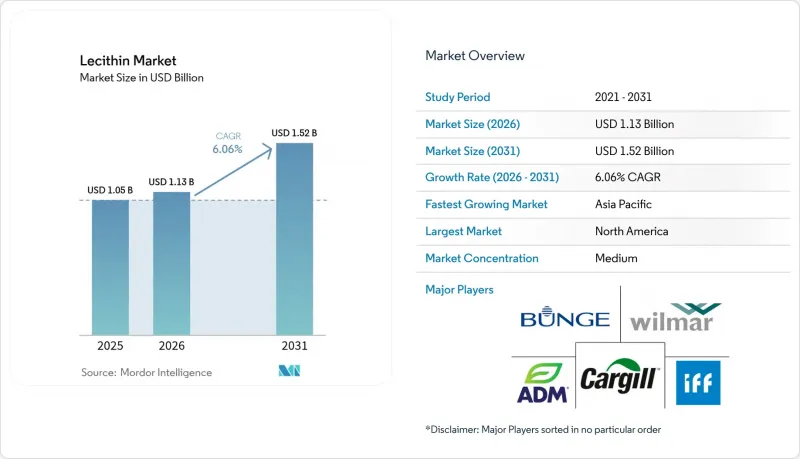
據 Mordor Intelligence 稱,卵磷脂市場預計將從 2025 年的 10.5 億美元成長到 2026 年的 11.3 億美元,到 2031 年達到 15.2 億美元,預計從 2026 年到 2031 年的複合年成長率為 6.06%。
本報告按來源(大豆、葵花籽、油菜籽/菜籽、雞蛋、其他)、等級(食品級、醫藥級、工業級)、形態(液體、粉末/顆粒)、特性(傳統、有機)、應用(食品飲料、動物飼料、營養補充劑、藥品、其他)和地區(北美、歐洲、亞太、其他)進行細分。市場預測以美元計價。
全球卵磷脂市場趨勢及洞察
加工食品和簡便食品。
消費者對便捷即食食品的需求推動了加工食品和簡便食品食品中乳化劑和穩定劑(例如卵磷脂)使用量的增加。這些成分在改善食品質地、延長保存期限和提升感官吸引力方面發揮著至關重要的作用,與不斷變化的家庭支出趨勢相符。例如,根據英國環境、食品和農村事務部 (Defra) 的數據,到 2024 會計年度末,英國家庭平均每週在食品和非酒精飲料上的支出將達到 70.50 英鎊,比 2023 會計年度末的 63.50 英鎊成長 11%。這一轉變反映出家庭預算更加嚴格,消費者更傾向於選擇成本績效實惠的便利食品,而不是頻繁在家烹飪。嘉吉公司(提供 Topcithin 系列工業乳化劑)和 ADM 公司(提供用於穩定烘焙食品和糖果產品的豆基卵磷脂)等領先製造商正透過潔淨標示解決方案來滿足這一需求。這些產品確保醬料和塗抹醬等產品中脂肪均勻分佈,且不影響風味。此外,我們採用源自向日葵和大豆的非基因改造原料,符合歐洲和北美透明標籤的監管要求。亞太地區加工食品市場的快速成長以及全球潔淨標示趨勢的推動,正促使卵磷脂廣泛應用。
擴大在動物營養和複合飼料領域的滲透率
卵磷脂在動物營養和複合飼料的滲透率不斷提高,推動了其在畜禽和水產飼料中的應用。卵磷脂天然的乳化特性和富含磷脂的成分能夠提高脂肪消化率、營養吸收率和飼料轉換率,使其成為現代飼料系統的首選成分。動物營養產業的複合飼料生產商面臨著在滿足潔淨標示和永續性要求的同時提升飼料性能的壓力。這推動了對植物源卵磷脂的需求,例如路易達孚公司(Louis Dreyfus Company)和Cefetra公司(該公司專門為植物來源飼料提供大豆卵磷脂產品)。卵磷脂能夠促進能量利用並改善偏好,飼料與複合飼料生產商最佳化生長速度和畜禽健康的目標相契合。工業飼料產能的擴展和向高性能添加劑組合的轉變,進一步加速了卵磷脂在全球被納入標準飼料配方和特殊營養混合物中。此外,卵磷脂能夠穩定脂溶性維生素和飼料油,確保產品品質穩定並延長保存期限。畜牧養殖戶對動物福利和提高生產效率的日益重視也推動了卵磷脂的應用。隨著全球精準飼餵和飼料強化策略的興起,動物營養市場對卵磷脂的需求預計將持續穩定成長。
原物料供應和價格波動
原料供應和價格的波動持續對卵磷脂生產商構成挑戰。這是因為卵磷脂的生產仍然嚴重依賴油籽提取工藝,使其極易受到農業週期、惡劣天氣以及影響大豆和油菜籽等關鍵原料的地緣政治事件的影響。根據美國農業部 (USDA) 的報告,預計2024-2025年美國中西部核心產區的乾旱將加劇美國大豆的庫存消費比,導致大豆粕和豆油價格上漲,進而擠壓卵磷脂提取的利潤空間。這迫使飼料原料生產商降低利潤率。此外,美國、歐盟和巴西強制使用生質燃料,導致大量大豆油和油菜籽油被用於生物柴油生產,限制了可用於卵磷脂提取的原油供應,並加劇了整個食品原料供應鏈的價格波動。當油籽成本飆升時,垂直整合能力和避險能力有限的加工商將面臨利潤率的巨大壓力,這限制了它們擴大產能、創新產品或投資長期供應合約的能力。隨著能源政策和氣候變遷對原物料供需的影響日益加劇,原物料價格波動的不可預測性仍然是製造商在成本、供應可靠性和全球競爭之間尋求平衡時面臨的一大障礙。
細分市場分析
到2025年,大豆卵磷脂將佔據卵磷脂市場最大佔有率,佔總量的64.72%。其主導地位源自於強大的大豆萃取能力、成熟的供應鏈和成本優勢,使其成為飼料、工業塗料和通用烘焙產品等價格敏感型應用中的首選乳化劑。儘管出現了替代品,但由於大豆卵磷脂易於獲取且受到配方負責人的大力支持,它仍然是大規模食品生產中的主要成分。同時,向日葵卵磷脂預計到2031年將以7.61%的複合年成長率成長,這得益於其不含過敏原、非基因改造認證和中性風味。這些特性受到高階食品、營養補充劑和化妝品配方開發人員的青睞,他們重視成分透明度和「潔淨標示」的簡潔性。這一轉變恰逢消費者對受過敏原控制和「無過敏原」成分的需求不斷成長,尤其是在已開發市場,對原料的審查和第三方認證會影響購買決策。
油菜籽卵磷脂和菜籽卵磷脂在加拿大和北歐等地區佔據穩定而獨特的市場地位,因其均衡的脂肪酸組成和低芥酸含量而備受青睞。然而,由於菜籽收穫週期和產量的區域差異,其供應受到限制。雞蛋卵磷脂以其高磷脂含量和優異的乳化性能而聞名,價格高昂,是醫藥和化妝品領域的首選原料。然而,成本、致敏性問題以及複雜的供應鏈限制了其廣泛應用。其他原料,例如米糠卵磷脂和玉米卵磷脂,由於磷脂產量低和提取基礎設施有限,市場佔有率仍然較小。監管要求進一步影響市場;美國農業部有機認證要求大豆卵磷脂和葵花籽卵磷脂必須使用非基因改造種子,並採用無溶劑萃取方法,而雞蛋卵磷脂則必須符合嚴格的滅菌和致敏性標籤標準。這些因素持續影響整個卵磷脂市場的配方策略和合規性考量。
到2025年,食品級卵磷脂將佔據全球銷售額的大部分,憑藉其在烘焙、糖果甜點、乳製品、飲料和簡便食品等領域的廣泛應用,佔據56.58%的市場佔有率。其關鍵功能,例如乳化、抗硬化和質地改良,對於維持產品品質和延長保存期限至關重要。包括美國卵磷脂公司在內的領導者提供客製化的磷脂配方,以滿足複雜食品系統中特定的功能需求,確保質地和水分管理的一致性。消費者對加工食品中較佳感官特性和高效配方的需求持續推動著食品級卵磷脂的普及。此外,嚴格的安全性和純度監管標準也支持其在全球價值鏈中的廣泛應用。工業級卵磷脂則與之互補,應用於油漆、塗料、潤滑劑和皮革加工等非食品業。在這些領域,監管要求相對寬鬆,但其乳化和潤濕性能仍然備受重視。這種多層次分級制度使生產者能夠在不同的市場中最大限度地提高利潤,同時滿足特定的性能和合規要求。
預計到2031年,藥用級卵磷脂將以8.91%的複合年成長率穩定成長,這主要得益於其在脂質載體(例如脂質奈米顆粒)中日益廣泛的應用。這些載體能夠提高生物利用度、減少副作用並實現標靶藥物傳遞。生產用於製藥的高純度卵磷脂需要嚴格遵守各項規範,包括低過氧化值、受控的重金屬含量以及特定的磷脂組成。與食品級和工業級卵磷脂相比,這增加了生產的複雜性和成本。人口老化推動了對慢性病治療需求的成長,以及腫瘤領域採用脂質奈米顆粒製劑來提高療效,這些因素進一步促進了該領域的發展。此外,疫苗研發人員擴大使用以高品質卵磷脂組分作為穩定磷脂配製的脂質奈米顆粒(LNP),凸顯了其在先進生物製藥應用中的重要性。這些因素共同塑造了市場的成長軌跡,並影響供應商的策略。
區域分析
北美在全球卵磷脂需求中佔最大佔有率,預計2025年將達到35.15%。這一主導地位得益於其成熟的潔淨標示體系、膳食補充劑的高消費量以及健全的法規結構,這些都促進了卵磷脂在食品、藥品和化妝品配方中的應用。像嘉吉這樣的原料供應商利用這些結構性優勢,為尋求標準化、符合標籤規範的乳化劑的烘焙、糖果、飲料和營養保健品生產商提供產品。該地區功能性食品和膳食補充劑的日益普及,正在推動對高純度和特殊卵磷脂的需求。此外,關於GRAS(公認安全)狀態和食品添加劑核准的法規的明確化,正在加速市場滲透,鞏固北美在銷售和價值方面的主導地位。
亞太地區是成長最快的地區,預計到2031年將維持8.32%的年複合成長率(CAGR)。中國、印度和越南等國可支配收入的成長、都市化的加快以及加工食品和簡便食品食品消費量的增加,推動了對功能性配料的需求。卵磷脂在改善食品配方中的質地、穩定性和保存期限方面發揮著重要作用,使其成為該地區的關鍵配料。像豐益國際這樣的公司受益於整合油籽壓榨和本地加工能力,從而確保向烘焙、糖果和乳製品製造商提供本地供應。該地區的成長反映了蛋白質攝取量的增加、現代零售業的擴張以及消費者向包裝食品的轉變,鞏固了其作為全球卵磷脂市場主要成長引擎的地位。
歐洲是一個成熟的市場,專注於高階卵磷脂產品。嚴格的過敏原標籤、有機認證要求以及消費者對潔淨標示的偏好,推動了對非基因改造、過敏原控制卵磷脂的需求,尤其是源自葵花籽和油菜籽的卵磷脂。這些產品在烘焙、巧克力、嬰幼兒食品和營養補充劑等領域以較高的價格銷售。另一方面,南美洲利用其毗鄰主要大豆產區的地理優勢,確保了卵磷脂在國內和出口市場的穩定供應。在中東和非洲,不斷擴張的烘焙、糖果甜點和乳製品行業蘊藏著商機,但由於價格敏感性、基礎設施挑戰以及來自低成本乳化劑的競爭,卵磷脂的應用仍然有限。
其他福利
- Excel格式的市場預測(ME)表
- 3個月的分析師支持
目錄
第1章:引言
- 研究假設和市場定義
- 調查範圍
第2章:調查方法
第3章執行摘要
第4章 市場動態
- 市場概覽
- 市場促進因素
- 加工食品和簡便食品。
- 擴大在動物營養和複合飼料領域的滲透率
- 植物來源食品、純素食品和替代蛋白食品的需求快速成長。
- 消費者越來越偏好潔淨標示、非基因改造和天然萃取的成分。
- 化妝品中天然和有機成分的推廣
- 擴大在功能性食品和強化飲料的應用,旨在改善口感和提供營養。
- 市場限制因素
- 原物料供應和價格波動
- 消費者對基因改造成分來源的質疑
- 來自其他乳化劑和多功能表面活性劑的激烈競爭。
- 與乾卵磷脂產品相比,液態卵磷脂產品的保存期限較短。
- 供應鏈分析
- 監理情勢
- 技術展望
- 波特五力分析
第5章 市場規模與成長預測
- 按供應來源
- 大豆
- 向日葵
- 菜籽
- 蛋
- 其他
- 按年級
- 食品級
- 醫藥級
- 工業級
- 按形式
- 液體
- 粉末/顆粒
- 自然
- 傳統的
- 有機的
- 透過使用
- 飲食
- 麵包糖果甜點
- 乳製品
- 飲料
- 其他食品和飲料
- 動物飼料
- 營養補充品
- 製藥
- 化妝品和個人護理
- 其他
- 飲食
- 按地區
- 北美洲
- 美國
- 加拿大
- 墨西哥
- 其他北美國家
- 歐洲
- 德國
- 英國
- 義大利
- 法國
- 西班牙
- 荷蘭
- 波蘭
- 比利時
- 瑞典
- 其他歐洲國家
- 亞太地區
- 中國
- 印度
- 日本
- 澳洲
- 印尼
- 韓國
- 泰國
- 新加坡
- 其他亞太國家
- 南美洲
- 巴西
- 阿根廷
- 哥倫比亞
- 智利
- 秘魯
- 其他南美國家
- 中東和非洲
- 南非
- 沙烏地阿拉伯
- 阿拉伯聯合大公國
- 奈及利亞
- 埃及
- 摩洛哥
- 土耳其
- 其他中東和非洲國家
- 北美洲
第6章 競爭情勢
- 市場集中度
- 策略趨勢
- 市場排名分析
- 公司簡介
- Archer Daniels Midland Company
- Cargill Incorporated
- Bunge Limited
- International Flavors & Fragrances, Inc.
- Wilmar International
- Lipoid GmbH
- Sternchemie GmbH and Co KG
- VAV Life Sciences Pvt Ltd
- American Lecithin Company
- The Scoular Company
- Ciranda Inc.
- Sonic Biochem
- Lecico GmbH
- Clarkson Specialty Lecithins
- Fishmer Lecithin
- AAK
- GIIAVA Industrial BIoTech
- SternWywiol Gruppe
- Emerson Resources
- Austrade Ingredients
第7章 市場機會與未來展望
According to Mordor Intelligence, the lecithin market size is expected to increase from USD 1.05 billion in 2025 to USD 1.13 billion in 2026 and reach USD 1.52 billion by 2031, growing at a CAGR of 6.06% over 2026-2031.
This report is Segmented by Source (Soy, Sunflower, Rapeseed/Canola, Egg, Other Sources), Grade (Food, Pharmaceutical, Industrial), Form (Liquid, Powder and Granules), Nature (Conventional, Organic), Application (Food and Beverage, Animal Feed, Dietary Supplements, Pharmaceuticals, and More), and Geography (North America, Europe, Asia-Pacific, and More). The Market Forecasts are Provided in Terms of Value (USD).
Global Lecithin Market Trends and Insights
Rising use of emulsifiers and stabilizers across processed and convenience foods
Consumer demand for quick, ready-to-eat options is driving the increased use of emulsifiers and stabilizers, such as lecithin, in processed and convenience foods. These ingredients play a critical role in improving texture, shelf life, and sensory appeal, aligning with shifting household spending patterns. For example, the average UK household spent GBP 70.50 per week on food and non-alcoholic drinks in FYE 2024, an 11% increase from GBP 63.50 in FYE 2023, according to the Department for Environment, Food & Rural Affairs . This shift reflects tighter budgets prioritizing value-driven convenience over frequent home cooking. Leading manufacturers such as Cargill, with its Topcithin range for industrial emulsions, and ADM, offering soy-based lecithins for bakery and confectionery stabilization, are addressing this demand with clean-label solutions. These products ensure uniform fat dispersion in items like sauces and spreads without altering flavor profiles. Additionally, non-GMO sourcing from sunflower or soy aligns with regulatory requirements in Europe and North America for transparent labeling. This trend supports lecithin adoption, driven by Asia-Pacific's rapid processed food growth and global clean-label momentum.
Stronger penetration in animal nutrition and compound feed formulations
The increasing penetration of lecithin in animal nutrition and compound feed formulations is driving its adoption across livestock, poultry, and aquaculture diets. Lecithin's natural emulsifying properties and phospholipid-rich profile enhance fat digestibility, nutrient absorption, and feed efficiency, making it a preferred ingredient in modern feed systems. Formulators in the competitive animal nutrition industry are under pressure to improve feed performance while meeting clean-label and sustainability requirements. This has led to rising demand for plant-derived lecithin from suppliers such as Louis Dreyfus Company, offering feed-grade lecithin, and Cefetra, known for soybean lecithin products tailored for animal feed. Lecithin supports energy utilization and improves palatability, aligning with compound feed producers' objectives to optimize growth rates and herd health. Expanding industrial feed production capacity and a shift toward high-performance additive portfolios are further integrating lecithin into standard feed rations and specialized nutrition blends globally. Additionally, lecithin stabilizes fat-soluble vitamins and feed oils, ensuring product consistency and shelf life. Growing awareness among livestock producers about animal welfare and productivity benefits reinforces its adoption. The increasing integration of precision feeding and feed fortification strategies worldwide is expected to sustain strong demand growth for lecithin in the animal nutrition market.
Volatility in raw material availability and pricing
Volatility in raw material availability and pricing continues to challenge lecithin manufacturers, as production remains heavily dependent on oilseed crushing operations and is therefore susceptible to agricultural cycles, weather disruptions, and geopolitical events affecting key feedstocks like soybeans and rapeseed. The USDA reports that U.S. soybean stocks-to-use ratios have tightened for 2024-2025 due to droughts in critical Midwest growing regions, driving up soybean meal and oil prices and compressing lecithin extraction margins. This has forced ingredient manufacturers to operate within narrower profitability windows. Additionally, biofuel mandates in the United States, European Union, and Brazil divert significant quantities of soybean and rapeseed oil toward biodiesel production, limiting the crude oil available for lecithin extraction and exacerbating price volatility across food ingredient supply chains. Processors with limited vertical integration or hedging capabilities face acute margin pressures during periods of elevated oilseed costs, restricting their ability to invest in capacity expansion, product innovation, or long-term supply agreements. As energy policies and climate variability increasingly shape feedstock dynamics, raw material unpredictability remains a critical obstacle for manufacturers striving to balance costs, supply reliability, and global competitiveness.
Other drivers and restraints analyzed in the detailed report include:
- Rapid expansion of demand from plant-based, vegan, and alternative protein foods
- Growing consumer preference for clean-label, non-GMO, and naturally sourced ingredients
- Intense competition from alternative emulsifiers and multifunctional surfactants
For complete list of drivers and restraints, kindly check the Table Of Contents.
Segment Analysis
Soy lecithin held the largest share of the lecithin market in 2025, accounting for 64.72% of the total volume. Its dominance is attributed to robust soybean crush capacity, well-established supply chains, and cost advantages, making it the preferred emulsifier for price-sensitive applications such as animal feed, industrial coatings, and commodity bakery products. Despite the emergence of alternatives, soy lecithin remains a staple in large-scale food production due to its widespread availability and strong position among formulators. Meanwhile, sunflower lecithin is projected to grow at a 7.61% CAGR through 2031, driven by its allergen-free positioning, non-GMO certification, and neutral flavor. These attributes appeal to premium food, dietary supplement, and cosmetic formulators who prioritize ingredient transparency and clean-label simplicity. This shift aligns with increasing consumer demand for allergen-managed and "free from" ingredients, particularly in developed markets where ingredient scrutiny and third-party certifications influence purchasing decisions.
Rapeseed/canola lecithin occupies a niche yet stable position in regions like Canada and Northern Europe, valued for its balanced fatty acid profile and lower erucic acid content. However, its supply is constrained by regional canola harvest cycles and production variability. Egg lecithin, recognized for its high phosphatidylcholine content and superior emulsification performance, commands premium pricing and is favored in pharmaceuticals and cosmetics. Broader adoption is limited by cost, allergen concerns, and complex supply chains. Other sources, such as rice bran and corn lecithins, remain marginal due to lower phospholipid yields and limited extraction infrastructure. Regulatory requirements further shape the market, with USDA organic certification necessitating non-GMO seed sourcing and solvent-free extraction for soy and sunflower lecithin, while egg lecithin must meet strict pasteurization and allergen labeling standards. These factors continue to influence formulation strategies and compliance considerations across the lecithin market.
In 2025, food-grade lecithin dominated global revenue, capturing 56.58% of the market share due to its extensive use in bakery, confectionery, dairy, beverage, and convenience food applications. Its key functionalities, such as emulsification, anti-staling, and texture modification, are essential for maintaining product quality and extending shelf life. Leading suppliers, including American Lecithin Company, offer tailored phospholipid profiles to address specific functional needs in complex food systems, ensuring consistent texture and moisture control. Consumer demand for enhanced sensory attributes in processed foods and efficient formulations continues to drive adoption. Additionally, compliance with stringent regulatory standards for safety and purity supports its widespread use across global supply chains. Industrial-grade lecithin complements this by serving non-food industries, such as paints, coatings, lubricants, and leather processing, where its emulsification and wetting properties are valued, albeit with less stringent regulatory requirements. This tiered grading system enables producers to maximize returns across diverse markets while meeting specific performance and compliance needs.
Pharmaceutical-grade lecithin is expected to grow at a strong 8.91% CAGR through 2031, fueled by its increasing use in lipid-based carriers like liposomes. These carriers improve bioavailability, reduce side effects, and enable targeted drug release. Producing high-purity lecithin for pharmaceutical applications requires adherence to stringent specifications, including low peroxide values, controlled heavy metal content, and defined phospholipid composition, which increases production complexity and costs compared to food and industrial grades. The rising demand for chronic disease therapies, driven by aging populations, and the adoption of liposomal formulations in oncology to enhance therapeutic outcomes further strengthen this segment. Additionally, vaccine developers increasingly utilize lipid nanoparticles (LNPs) incorporating high-quality lecithin fractions as stabilizing phospholipids, underscoring their importance in advanced biopharmaceutical applications. These factors collectively shape the market's growth trajectory and influence supplier strategies.
Complete Report Scope:
- By Source
- Soy
- Sunflower
- Rapeseed/Canola
- Egg
- Other Sources
- By Grade
- Food Grade
- Pharmaceutical Grade
- Industrial Grade
- By Form
- Liquid
- Powder and Granules
- By Nature
- Conventional
- Organic
- By Application
- Food and Beverage
- Bakery and Confectionery
- Dairy Products
- Beverages
- Other Food and Beverage
- Animal Feed
- Dietary Supplements
- Pharmaceuticals
- Cosmetics and Personal Care
- Other Applications
- Food and Beverage
- By Geography
- North America
- United States
- Canada
- Mexico
- Rest of North America
- Europe
- Germany
- United Kingdom
- Italy
- France
- Spain
- Netherlands
- Poland
- Belgium
- Sweden
- Rest of Europe
- Asia-Pacific
- China
- India
- Japan
- Australia
- Indonesia
- South Korea
- Thailand
- Singapore
- Rest of Asia-Pacific
- South America
- Brazil
- Argentina
- Colombia
- Chile
- Peru
- Rest of South America
- Middle East and Africa
- South Africa
- Saudi Arabia
- United Arab Emirates
- Nigeria
- Egypt
- Morocco
- Turkey
- Rest of Middle East and Africa
- North America
Geography Analysis
North America holds the largest share of global lecithin demand, accounting for 35.15% in 2025. This dominance is driven by a well-established clean-label ecosystem, high dietary supplement consumption, and robust regulatory frameworks that support lecithin's application in food, pharmaceutical, and cosmetic formulations. Ingredient suppliers, such as Cargill, leverage these structural advantages to serve bakery, confectionery, beverage, and nutraceutical manufacturers seeking standardized, label-friendly emulsifiers. The region's strong adoption of functional foods and supplements fuels demand for high-purity and specialty lecithin grades. Additionally, regulatory clarity on GRAS status and food additive approvals enhances market penetration, reinforcing North America's leadership in both volume and value terms.
Asia-Pacific is the fastest-growing region, with an 8.32% CAGR projected through 2031. Rising disposable incomes, urbanization, and increased consumption of processed and convenience foods in countries like China, India, and Vietnam are driving demand for functional ingredients. Lecithin's role in improving texture, stability, and shelf life in food formulations positions it as a key ingredient in the region. Companies such as Wilmar International benefit from integrated oilseed crushing and regional processing capabilities, ensuring localized supply for bakery, confectionery, and dairy producers. The region's growth reflects a shift toward higher protein intake, modern retail expansion, and packaged food adoption, solidifying its role as a major growth engine for the global lecithin market.
Europe represents a mature market with a focus on premium lecithin products. Stringent allergen labeling, organic certification requirements, and clean-label preferences drive demand for non-GMO, allergen-managed lecithin, particularly sunflower and rapeseed-based variants. These products command higher price points in segments like bakery, chocolate, infant nutrition, and dietary supplements. Meanwhile, South America benefits from proximity to major soybean production hubs, ensuring a steady lecithin supply for domestic and export markets. In the Middle East and Africa, expanding bakery, confectionery, and dairy sectors present opportunities, though adoption is limited by price sensitivity, infrastructure challenges, and competition from lower-cost emulsifiers.
- Archer Daniels Midland Company
- Cargill Incorporated
- Bunge Limited
- International Flavors & Fragrances, Inc.
- Wilmar International
- Lipoid GmbH
- Sternchemie GmbH and Co KG
- VAV Life Sciences Pvt Ltd
- American Lecithin Company
- The Scoular Company
- Ciranda Inc.
- Sonic Biochem
- Lecico GmbH
- Clarkson Specialty Lecithins
- Fishmer Lecithin
- AAK
- GIIAVA Industrial Biotech
- SternWywiol Gruppe
- Emerson Resources
- Austrade Ingredients
Additional Benefits:
- The market estimate (ME) sheet in Excel format
- 3 months of analyst support
TABLE OF CONTENTS
1 INTRODUCTION
- 1.1 Study Assumptions and Market Definition
- 1.2 Scope of the Study
2 RESEARCH METHODOLOGY
3 EXECUTIVE SUMMARY
4 MARKET DYNAMICS
- 4.1 Market Overview
- 4.2 Market Drivers
- 4.2.1 Rising use of emulsifiers and stabilizers across processed and convenience foods
- 4.2.2 Stronger penetration in animal nutrition and compound feed formulations
- 4.2.3 Rapid expansion of demand from plant-based, vegan, and alternative protein foods
- 4.2.4 Growing consumer preference for clean-label, non-GMO, and naturally sourced ingredients
- 4.2.5 Increasing incorporation into natural and organic cosmetic formulations
- 4.2.6 Expanding use in functional foods and fortified beverages for texture enhancement and nutrient delivery
- 4.3 Market Restraints
- 4.3.1 Volatility in raw material availability and pricing
- 4.3.2 Consumer skepticism toward genetically modified ingredient sources
- 4.3.3 Intense competition from alternative emulsifiers and multifunctional surfactants
- 4.3.4 Shorter shelf stability of liquid lecithin formats compared to dry variants
- 4.4 Supply Chain Analysis
- 4.5 Regulatory Landscape
- 4.6 Technological Outlook
- 4.7 Porter's Five Forces Analysis
- 4.7.1 Threat of New Entrants
- 4.7.2 Bargaining Power of Suppliers
- 4.7.3 Bargaining Power of Buyers
- 4.7.4 Threat of Substitutes
- 4.7.5 Intensity of Competitive Rivalry
5 MARKET SIZE AND GROWTH FORECASTS (VALUE)
- 5.1 By Source
- 5.1.1 Soy
- 5.1.2 Sunflower
- 5.1.3 Rapeseed/Canola
- 5.1.4 Egg
- 5.1.5 Other Sources
- 5.2 By Grade
- 5.2.1 Food Grade
- 5.2.2 Pharmaceutical Grade
- 5.2.3 Industrial Grade
- 5.3 By Form
- 5.3.1 Liquid
- 5.3.2 Powder and Granules
- 5.4 By Nature
- 5.4.1 Conventional
- 5.4.2 Organic
- 5.5 By Application
- 5.5.1 Food and Beverage
- 5.5.1.1 Bakery and Confectionery
- 5.5.1.2 Dairy Products
- 5.5.1.3 Beverages
- 5.5.1.4 Other Food and Beverage
- 5.5.2 Animal Feed
- 5.5.3 Dietary Supplements
- 5.5.4 Pharmaceuticals
- 5.5.5 Cosmetics and Personal Care
- 5.5.6 Other Applications
- 5.5.1 Food and Beverage
- 5.6 By Geography
- 5.6.1 North America
- 5.6.1.1 United States
- 5.6.1.2 Canada
- 5.6.1.3 Mexico
- 5.6.1.4 Rest of North America
- 5.6.2 Europe
- 5.6.2.1 Germany
- 5.6.2.2 United Kingdom
- 5.6.2.3 Italy
- 5.6.2.4 France
- 5.6.2.5 Spain
- 5.6.2.6 Netherlands
- 5.6.2.7 Poland
- 5.6.2.8 Belgium
- 5.6.2.9 Sweden
- 5.6.2.10 Rest of Europe
- 5.6.3 Asia-Pacific
- 5.6.3.1 China
- 5.6.3.2 India
- 5.6.3.3 Japan
- 5.6.3.4 Australia
- 5.6.3.5 Indonesia
- 5.6.3.6 South Korea
- 5.6.3.7 Thailand
- 5.6.3.8 Singapore
- 5.6.3.9 Rest of Asia-Pacific
- 5.6.4 South America
- 5.6.4.1 Brazil
- 5.6.4.2 Argentina
- 5.6.4.3 Colombia
- 5.6.4.4 Chile
- 5.6.4.5 Peru
- 5.6.4.6 Rest of South America
- 5.6.5 Middle East and Africa
- 5.6.5.1 South Africa
- 5.6.5.2 Saudi Arabia
- 5.6.5.3 United Arab Emirates
- 5.6.5.4 Nigeria
- 5.6.5.5 Egypt
- 5.6.5.6 Morocco
- 5.6.5.7 Turkey
- 5.6.5.8 Rest of Middle East and Africa
- 5.6.1 North America
6 COMPETITIVE LANDSCAPE
- 6.1 Market Concentration
- 6.2 Strategic Moves
- 6.3 Market Ranking Analysis
- 6.4 Company Profiles (includes Global level Overview, Market level overview, Core Segments, Financials as available, Strategic Information, Market Rank/Share for key companies, Products and Services, and Recent Developments)
- 6.4.1 Archer Daniels Midland Company
- 6.4.2 Cargill Incorporated
- 6.4.3 Bunge Limited
- 6.4.4 International Flavors & Fragrances, Inc.
- 6.4.5 Wilmar International
- 6.4.6 Lipoid GmbH
- 6.4.7 Sternchemie GmbH and Co KG
- 6.4.8 VAV Life Sciences Pvt Ltd
- 6.4.9 American Lecithin Company
- 6.4.10 The Scoular Company
- 6.4.11 Ciranda Inc.
- 6.4.12 Sonic Biochem
- 6.4.13 Lecico GmbH
- 6.4.14 Clarkson Specialty Lecithins
- 6.4.15 Fishmer Lecithin
- 6.4.16 AAK
- 6.4.17 GIIAVA Industrial Biotech
- 6.4.18 SternWywiol Gruppe
- 6.4.19 Emerson Resources
- 6.4.20 Austrade Ingredients
7 MARKET OPPORTUNITIES AND FUTURE OUTLOOK

 菜籽卵磷脂市場規模、佔有率和成長分析:按產品類型、性質、應用、功能、分銷管道、最終用戶和地區分類-2026-2033年產業預測
 卵磷脂市場:按類型、原料、形態和應用分類-2026-2032年全球市場預測
 卵磷脂市場報告:趨勢、預測及競爭分析(至2035年)
 卵磷脂市場規模、佔有率和趨勢分析報告:按原料、應用、形態、地區和細分市場預測(2026-2033 年)
 2026年全球卵磷脂補充劑市場報告
 甜味蛋黃市場分析及預測(至2035年):依類型、產品、應用、最終用戶、形態、製程、技術、成分及材料類型全球卵磷脂市場報告(2026 年)
 卵磷脂市場機會、成長要素、產業趨勢分析及預測(2026年至2035年)
 卵磷脂市場規模、佔有率和成長分析(按來源、形態、應用和地區分類)-2026-2033年產業預測
 全蛋和蛋黃粉:全球市場佔有率和排名、總收入和需求預測(2025-2031年)