


 |
市場調查報告書
商品編碼
1928892
卵磷脂市場機會、成長要素、產業趨勢分析及預測(2026年至2035年)Lecithin Market Opportunity, Growth Drivers, Industry Trend Analysis, and Forecast 2026 - 2035 |
||||||

全球卵磷脂市場預計到 2025 年將達到 22 億美元,到 2035 年將達到 35 億美元,年複合成長率為 4.7%。
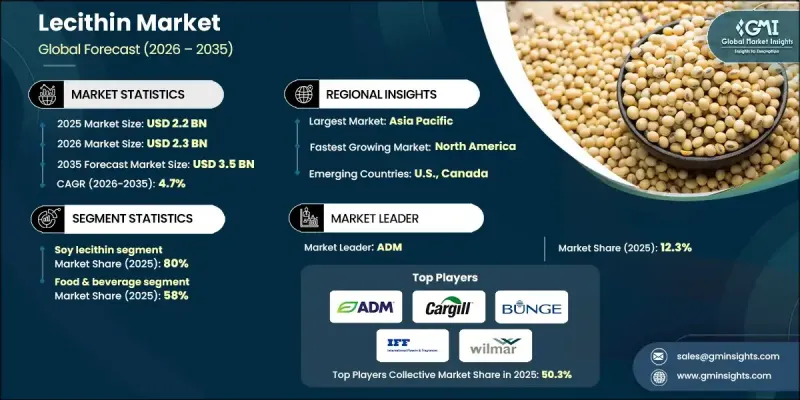
食品、營養保健品、藥品、個人護理和工業應用等多個行業的需求推動了成長,促使市場轉向更高性能等級的產品。消費者對潔淨標示產品的需求以及遞送系統的創新,正推動市場從傳統的液態卵磷脂轉向脫油、改性和高磷脂醯膽鹼 (PC) 組分。儘管供應和價格仍然受到油料作物供需週期的影響,但產品價值越來越取決於其功能性、品質和可追溯性。卵磷脂在化妝品和個人保健產品中的應用日益廣泛(它可用作乳化劑、保濕劑和滲透促進劑),推動了其普及。天然磷脂,尤其是 94-98% PC 組分,因其良好的生物相容性和穩定的質量,成為脂質體和腸外乳液的首選。包括歐洲食品安全局 (EFSA) 動物安全核准和美國農業部國家有機計劃 (USDA National Organic Program) 認證法規結構,支持有機和潔淨標示產品的配方,進一步拓展了全球市場的機會。
| 市場覆蓋範圍 | |
|---|---|
| 開始年份 | 2025 |
| 預測年份 | 2026-2035 |
| 起始值 | 22億美元 |
| 預測金額 | 35億美元 |
| 複合年成長率 | 4.7% |
預計到2025年,大豆卵磷脂市場佔有率將達到80%,這反映了大豆加工的廣泛應用以及油脂精煉過程中磷脂膠的回收利用。 2024/25年度全球大豆產量預估約4.2714億噸,其中巴西預計產量約1.75億噸,美國約1.158億噸。粗豆油含磷量為800-1200 ppm,可產出2-3%(重量比)的商業卵磷脂。其主要成分為磷脂醯膽鹼(PC)、磷脂醯乙醇胺(PE)和磷脂醯肌醇(PI),並含有微量的中性油和乳化成分,這些成分需要添加抗氧化劑來控制。
預計到2025年,食品飲料產業將佔據58%的市場。製造商正積極在烘焙食品、糖果甜點、乳製品、植物來源食品和潔淨標示產品中採用天然乳化劑。卵磷脂能夠改善質地、確保乳液穩定性並延長保存期限,滿足了消費者對包裝食品和便利食品日益成長的需求,尤其是在亞太地區快速成長的消費群體中。
北美卵磷脂市場佔全球市場佔有率的27%,主要得益於美國1.158億噸的大豆產量和加拿大1880萬噸的油菜籽產量。消費者對有機和非基因改造產品的偏好日益成長,推動了對認證卵磷脂的需求。此外,國家生物工程食品揭露標準(該標準評估基因改造物質的可檢測性)的監管清晰度也進一步影響採購、文件記錄和加工決策。
目錄
第1章調查方法和範圍
第2章執行摘要
第3章業界考察
- 生態系分析
- 供應商情況
- 利潤率
- 每個階段的附加價值
- 影響價值鏈的因素
- 中斷
- 產業影響因素
- 促進要素
- 產業潛在風險與挑戰
- 市場機遇
- 成長潛力分析
- 監管環境
- 北美洲
- 歐洲
- 亞太地區
- 拉丁美洲
- 中東和非洲
- 波特分析
- PESTEL 分析
- 價格趨勢
- 按地區
- 未來市場趨勢
- 科技與創新趨勢
- 當前技術趨勢
- 新興技術
- 專利狀態
- 貿易統計(HS編碼)(註:僅提供主要國家的貿易統計)
- 主要進口國
- 主要出口國
- 永續性和環境方面
- 永續努力
- 減少廢棄物策略
- 生產中的能源效率
- 環保舉措
- 碳足跡考量
第4章 競爭情勢
- 介紹
- 公司市佔率分析
- 按地區
- 北美洲
- 歐洲
- 亞太地區
- 拉丁美洲
- 中東和非洲
- 按地區
- 企業矩陣分析
- 主要市場公司的競爭分析
- 競爭定位矩陣
- 重大進展
- 併購
- 夥伴關係與合作
- 新產品發布
- 擴張計劃
5. 依來源分類的市場規模及預測,2022-2035年
- 大豆卵磷脂
- 基因改造大豆卵磷脂
- 非基因改造大豆卵磷脂
- 向日葵卵磷脂
- 菜籽卵磷脂
- 蛋黃卵磷脂
- 其他
第6章 依類型分類的市場規模及預測(2022-2035年)
- 流動性/液態卵磷脂
- 脫脂卵磷脂粉
- 顆粒狀卵磷脂
第7章 依應用領域分類的市場規模及預測(2022-2035年)
- 食品/飲料
- 烘焙產品
- 糖果甜點和巧克力
- 嬰兒奶粉和嬰兒食品
- 乳製品及乳製品替代品
- 其他
- 動物飼料
- 家禽飼料應用
- 水產飼料用途
- 牲畜飼料應用
- 製藥
- 固態和液體劑型
- 經皮吸收系統
- 其他
- 化妝品和個人護理
- 護膚品
- 護髮產品
- 工業用途
- 塑膠塗層
- 潤滑劑和脫模劑
- 其他
第8章 2022-2035年各地區市場規模及預測
- 北美洲
- 美國
- 加拿大
- 歐洲
- 英國
- 德國
- 法國
- 義大利
- 西班牙
- 其他歐洲地區
- 亞太地區
- 中國
- 印度
- 日本
- 韓國
- 澳洲
- 亞太其他地區
- 拉丁美洲
- 巴西
- 墨西哥
- 阿根廷
- 其他拉丁美洲地區
- 中東和非洲
- 南非
- 沙烏地阿拉伯
- 阿拉伯聯合大公國
- 其他中東和非洲地區
第9章:公司簡介
- Archer Daniels Midland
- Cargill
- International Flavors &Fragrances
- Bunge Limited
- GIIAVA
- Ruchi Soya
- Wilmar International
- Lipoid GmbH
- American Lecithin Company
- Thew Arnott
- Sternchemie
- Sodrugestvo
- LEKITHOS
- LECICO
- SOYA International
The Global Lecithin Market was valued at USD 2.2 billion in 2025 and is estimated to grow at a CAGR of 4.7% to reach USD 3.5 billion by 2035.
Growth is driven by demand across multiple industries, including food, nutraceuticals, pharmaceuticals, personal care, and industrial applications, with an increasing shift toward higher specification grades. Consumer demand for clean-label products and innovations in delivery systems is moving the market from traditional fluid lecithin toward deoiled, modified, and high-phosphatidylcholine (PC) fractions. While availability and pricing remain influenced by oilseed cycles, product value is increasingly determined by functionality, quality, and traceability. The rising use of lecithin in cosmetics and personal care products, where it acts as an emulsifier, moisturizer, and penetration enhancer, is boosting adoption. Natural phospholipids, especially 94-98% PC fractions, are preferred for liposomes and parenteral emulsions due to biocompatibility and consistent quality. Regulatory frameworks, including EFSA approvals for animal safety and USDA National Organic Program allowances, support organic and clean-label product formulations, further expanding opportunities across global markets.
| Market Scope | |
|---|---|
| Start Year | 2025 |
| Forecast Year | 2026-2035 |
| Start Value | $2.2 Billion |
| Forecast Value | $3.5 Billion |
| CAGR | 4.7% |
The soy lecithin segment held 80% share in 2025, reflecting extensive soybean processing and the recovery of phospholipid gums during oil refining. Global soybean production is projected at approximately 427.14 MMT in 2024/25, with Brazil producing around 175 MMT and the U.S. at 115.8 MMT. Crude soybean oil contains 800-1,200 ppm phosphorus, resulting in 2-3% commercial lecithin by weight, with its composition primarily of PC, PE, and PI, along with neutral oil and minor emulsifying components that require antioxidant management.
The food & beverage segment held 58% share in 2025. Manufacturers are increasingly incorporating natural emulsifiers into bakery, confectionery, dairy, plant-based, and clean-label products. Lecithin enhances texture, stabilizes emulsions, and extends shelf life, aligning with rising demand for processed and convenient foods, particularly among the fast-growing consumer base in the Asia-Pacific region.
North America Lecithin Market held 27% share supported by U.S. soybean production of 115.8 MMT and Canada's rapeseed output of 18.8 MMT. Rising consumer preference for organic and non-GMO products is increasing demand for certified lecithin grades. Regulatory clarity under the National Bioengineered Food Disclosure Standard, which assesses detectability of genetically modified material, further influences sourcing, documentation, and processing decisions.
Key players in the Global Lecithin Market include Wilmar International, Lipoid GmbH, American Lecithin Company, Archer Daniels Midland, Cargill, International Flavors & Fragrances, Bunge Limited, Thew Arnott, Ruchi Soya, Sternchemie, Sodrugestvo, LEKITHOS, LECICO, GIIAVA, and SOYA International. Market leaders strengthen their position by investing in research and development to create high-performance lecithin products with improved purity, functionality, and stability. Companies focus on expanding their certified organic and non-GMO product lines to meet consumer demand for clean-label offerings. Strategic partnerships with food, nutraceutical, and pharmaceutical manufacturers enable broader product adoption. Additionally, firms are enhancing supply chain traceability and documentation to comply with global regulatory requirements. Investments in global distribution networks, sustainability initiatives, and marketing campaigns highlighting functional benefits, versatility, and safety help companies consolidate market presence and foster long-term brand loyalty.
Table of Contents
Chapter 1 Methodology & Scope
- 1.1 Market scope and definition
- 1.2 Research design
- 1.2.1 Research approach
- 1.2.2 Data collection methods
- 1.3 Data mining sources
- 1.3.1 Global
- 1.3.2 Regional/Country
- 1.4 Base estimates and calculations
- 1.4.1 Base year calculation
- 1.4.2 Key trends for market estimation
- 1.5 Primary research and validation
- 1.5.1 Primary sources
- 1.6 Forecast model
- 1.7 Research assumptions and limitations
Chapter 2 Executive Summary
- 2.1 Industry 360° synopsis
- 2.2 Key market trends
- 2.2.1 Source
- 2.2.2 Form
- 2.2.3 Application
- 2.3 TAM analysis, 2026-2035
- 2.4 CXO perspectives: Strategic imperatives
- 2.4.1 Executive decision points
- 2.4.2 Critical success factors
- 2.5 Outlook and strategic recommendations
Chapter 3 Industry Insights
- 3.1 Industry ecosystem analysis
- 3.1.1 Supplier landscape
- 3.1.2 Profit margin
- 3.1.3 Value addition at each stage
- 3.1.4 Factor affecting the value chain
- 3.1.5 Disruptions
- 3.2 Industry impact forces
- 3.2.1 Growth drivers
- 3.2.2 Industry pitfalls and challenges
- 3.2.3 Market opportunities
- 3.3 Growth potential analysis
- 3.4 Regulatory landscape
- 3.4.1 North America
- 3.4.2 Europe
- 3.4.3 Asia Pacific
- 3.4.4 Latin America
- 3.4.5 Middle East & Africa
- 3.5 Porter';s analysis
- 3.6 PESTEL analysis
- 3.7 Price trends
- 3.7.1 By region
- 3.8 Future market trends
- 3.9 Technology and innovation landscape
- 3.9.1 Current technological trends
- 3.9.2 Emerging technologies
- 3.10 Patent landscape
- 3.11 Trade statistics (HS code) (Note: the trade statistics will be provided for key countries only)
- 3.11.1 Major importing countries
- 3.11.2 Major exporting countries
- 3.12 Sustainability and environmental aspects
- 3.12.1 Sustainable practices
- 3.12.2 Waste reduction strategies
- 3.12.3 Energy efficiency in production
- 3.12.4 Eco-friendly initiatives
- 3.13 Carbon footprint considerations
Chapter 4 Competitive Landscape, 2025
- 4.1 Introduction
- 4.2 Company market share analysis
- 4.2.1 By region
- 4.2.1.1 North America
- 4.2.1.2 Europe
- 4.2.1.3 Asia Pacific
- 4.2.1.4 Latin America
- 4.2.1.5 Middle East & Africa
- 4.2.1 By region
- 4.3 Company matrix analysis
- 4.4 Competitive analysis of major market players
- 4.5 Competitive positioning matrix
- 4.6 Key developments
- 4.6.1 Mergers & acquisitions
- 4.6.2 Partnerships & collaborations
- 4.6.3 New product launches
- 4.6.4 Expansion plans
Chapter 5 Market Size and Forecast, By Source, 2022-2035 (USD Billion, Kilo Tons)
- 5.1 Key trends
- 5.2 Soy lecithin
- 5.2.1 GMO soy lecithin
- 5.2.2 Non-GMO soy lecithin
- 5.3 Sunflower lecithin
- 5.4 Canola/rapeseed lecithin
- 5.5 Egg yolk lecithin
- 5.6 Others
Chapter 6 Market Size and Forecast, By Form, 2022-2035 (USD Billion, Kilo Tons)
- 6.1 Key trends
- 6.2 Fluid/liquid lecithin
- 6.3 Deoiled powder lecithin
- 6.4 Granular lecithin
Chapter 7 Market Size and Forecast, By Application, 2022-2035 (USD Billion, Kilo Tons)
- 7.1 Key trends
- 7.2 Food & beverages
- 7.2.1 Bakery products
- 7.2.2 Confectionery & chocolate
- 7.2.3 Infant formula & baby foods
- 7.2.4 Dairy & dairy alternatives
- 7.2.5 Others
- 7.3 Animal feed
- 7.3.1 Poultry feed applications
- 7.3.2 Aquaculture feed applications
- 7.3.3 Livestock feed applications
- 7.4 Pharmaceuticals
- 7.4.1 Solid & liquid dosage forms
- 7.4.2 Transdermal delivery systems
- 7.4.3 Others
- 7.5 Cosmetics & personal care
- 7.5.1 Skin care formulations
- 7.5.2 Hair care products
- 7.6 Industrial applications
- 7.6.1 Plastics & coatings
- 7.6.2 Lubricants & release agents
- 7.6.3 Others
Chapter 8 Market Size and Forecast, By Region, 2022-2035 (USD Billion, Kilo Tons)
- 8.1 Key trends
- 8.2 North America
- 8.2.1 U.S.
- 8.2.2 Canada
- 8.3 Europe
- 8.3.1 UK
- 8.3.2 Germany
- 8.3.3 France
- 8.3.4 Italy
- 8.3.5 Spain
- 8.3.6 Rest of Europe
- 8.4 Asia Pacific
- 8.4.1 China
- 8.4.2 India
- 8.4.3 Japan
- 8.4.4 South Korea
- 8.4.5 Australia
- 8.4.6 Rest of Asia Pacific
- 8.5 Latin America
- 8.5.1 Brazil
- 8.5.2 Mexico
- 8.5.3 Argentina
- 8.5.4 Rest of Latin America
- 8.6 Middle East & Africa
- 8.6.1 South Africa
- 8.6.2 Saudi Arabia
- 8.6.3 UAE
- 8.6.4 Rest of Middle East & Africa
Chapter 9 Company Profiles
- 9.1 Archer Daniels Midland
- 9.2 Cargill
- 9.3 International Flavors & Fragrances
- 9.4 Bunge Limited
- 9.5 GIIAVA
- 9.6 Ruchi Soya
- 9.7 Wilmar International
- 9.8 Lipoid GmbH
- 9.9 American Lecithin Company
- 9.10 Thew Arnott
- 9.11 Sternchemie
- 9.12 Sodrugestvo
- 9.13 LEKITHOS
- 9.14 LECICO
- 9.15 SOYA International

 菜籽卵磷脂市場規模、佔有率和成長分析:按產品類型、性質、應用、功能、分銷管道、最終用戶和地區分類-2026-2033年產業預測
 卵磷脂:市場佔有率分析、產業趨勢與統計、成長預測(2026-2031)
 卵磷脂市場:按類型、原料、形態和應用分類-2026-2032年全球市場預測
 卵磷脂市場報告:趨勢、預測及競爭分析(至2035年)
 卵磷脂市場規模、佔有率和趨勢分析報告:按原料、應用、形態、地區和細分市場預測(2026-2033 年)
 2026年全球卵磷脂補充劑市場報告
 甜味蛋黃市場分析及預測(至2035年):依類型、產品、應用、最終用戶、形態、製程、技術、成分及材料類型全球卵磷脂市場報告(2026 年)
 卵磷脂市場規模、佔有率和成長分析(按來源、形態、應用和地區分類)-2026-2033年產業預測
 全蛋和蛋黃粉:全球市場佔有率和排名、總收入和需求預測(2025-2031年)