


 |
市場調查報告書
商品編碼
2119869
美國金屬製品零售市場:市場佔有率分析、產業趨勢與統計、成長預測(2026-2031)United States Hardware Stores Retail - Market Share Analysis, Industry Trends & Statistics, Growth Forecasts (2026 - 2031) |
||||||

※ 本網頁內容可能與最新版本有所差異。詳細情況請與我們聯繫。
根據 Mordor Intelligence 估計,美國金屬製品零售市場在 2026 年的價值將達到 7,247.2 億美元,高於 2025 年的 7,105.8 億美元,預計到 2031 年將達到 7,997.1 億美元。
預計從 2026 年到 2031 年,其複合年成長率將達到 1.99%。
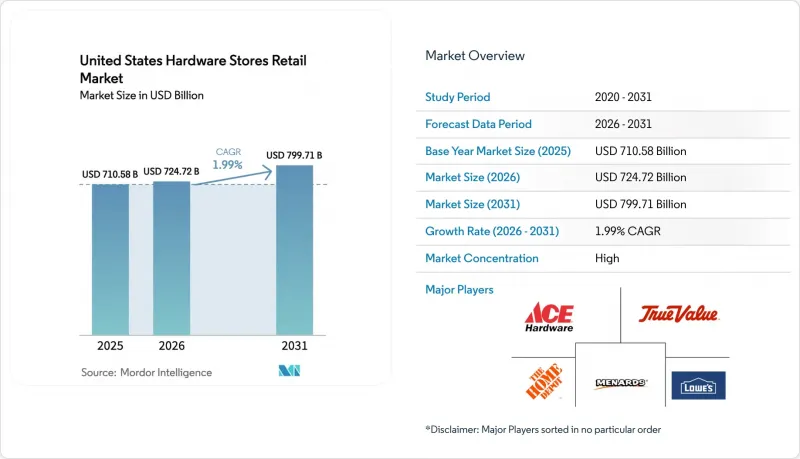
本報告按產品類型(門五金、建材、廚房衛浴用品及其他產品類型)、分銷管道(線下和線上)、門市類型(大型家居建材超市、傳統金屬製品及其他)和地區(東北部、中西部、南部和西部)進行細分。市場預測以美元(USD)計價。
美國金屬製品零售市場趨勢與洞察
2024年起,大規模住宅翻新熱潮即將到來
2024年平均高達6.5%的高房屋抵押貸款利率從根本上改變了住宅的行為,隨著搬家變得越來越困難,房屋翻新工程的需求也隨之強勁成長。這種利率環境引發了業內分析師所稱的「房屋抵押貸款利率鎖定」現象,即在2020-2021年以低於4%的利率獲得房屋抵押貸款的住宅推遲了房屋出售,轉而將自由裁量權的支出用於住宅維修。住宅研究聯合中心預測,到2025年,房屋翻新支出將達到5,090億美元,比先前的預測上調了6.4%。這項支出激增主要由廚房和浴室翻新推動,因為住宅越來越將這些項目視為長期投資,而不僅僅是自由裁量權的支出。這一趨勢尤其有利於五金零售商,平均交易額和專業產品購買頻率均有所提高。
社群媒體教學正在推動DIY文化的發展。
社群媒體平台大大提升了人們對住宅維修的認知。 YouTube 和 TikTok 上的教學影片激發了人們前所未有的信心,尤其是在 DIY 新手群體中,千禧世代和 Z 世代的住宅更是深受其擾。這種文化轉變的影響遠不止於娛樂,它直接影響零售業,因為觀看教學的人會購買材料和工具來復刻他們在網路上看到的物品。這種現象催生了圍繞特定技術和產品的病毒式傳播,引發了需求的激增,為傳統的庫存規劃帶來了挑戰。隨著社群媒體內容讓複雜的專案變得更加容易上手,五金零售商報告稱,以前只有專業承包商才能使用的專業工具和材料的銷售量有所成長。這種趨勢不僅限於單一項目,更體現了一種更廣泛的生活方式追求,在這種生活方式中,DIY 技能被視為個人能力和理財智慧的體現。零售商意識到,線上互動往往先於線下到店,因此他們擴大與社群媒體影響者合作,並製作自己的內容來吸引這群人。
由專業承包商繞過零售環節整合。
大規模專業承包商正擴大繞過傳統零售管道,直接與製造商和經銷商建立合作關係,透過大量採購獲得價格優勢和供貨保障。隨著承包商的整合,這一趨勢正在加速發展,他們合併後的營業單位足以與製造商直接談判——這種特權曾經只有大型零售商才能享有。這種轉變對低利潤率的大宗商品影響尤其顯著,承包商可以透過直接採購合約節省15%至25%的成本。區域承包商網路和採購合作社透過整合小規模企業的購買力,進一步強化了這一趨勢,從而實現批發定價。五金零售商則透過強調附加價值服務、專業產品和緊急供應鏈來應對這項變化,這些服務無法透過直接交易實現。然而,為消除中間商而進行的結構性變革,仍對傳統零售模式構成重大挑戰。
細分市場分析
到2025年,建材將佔據36.05%的市場佔有率,這反映了其在住宅和商業用途的新建和維修項目中發揮的基礎性作用。該領域的領先地位源於其規律性的更換週期和監管合規要求,使其基本需求不受經濟狀況的影響。智慧家庭硬體正成為成長最快的細分市場,預計到2031年將以10.03%的複合年成長率成長,這主要得益於消費者對連網設備的接受度以及與智慧家居系統的整合。門五金的需求保持穩定,這得益於為提高安全性而進行的更換週期以及注重美觀的翻新趨勢。廚房和衛浴產品則受益於浴室和廚房的翻新項目,這些項目是住宅維修中附加價值最高的類別。
此細分市場的演變反映了更廣泛的技術融合,傳統硬體越來越融入智慧功能和連接選項,從而推高了產品價格。勞氏公司與OpenAI合作推出的「Mylow」人工智慧顧問,就體現了零售商如何利用科技來促進該類別內的產品選擇和交叉銷售。 「其他產品類型」涵蓋了不屬於傳統分類的特殊用途和新興類別,為積極開發新產品線並與供應商建立合作關係的零售商提供了創新機會。
其他好處
- Excel格式的市場預測(ME)表
- 3個月的分析師支持
目錄
第1章:引言
- 研究假設和市場定義
- 調查範圍
第2章:調查方法
第3章執行摘要
第4章 市場狀況
- 市場概覽
- 市場促進因素
- 2024年起,大規模住宅翻新熱潮即將到來
- 社群媒體教學正在推動DIY文化的發展。
- 修訂節能建築標準
- 迅速強制實施使建築物能夠抵禦野火的建築規範
- 為老年人維修房屋以適應老化
- 保險業推動了對加固屋頂的需求。
- 市場限制因素
- 由專業承包商繞過零售環節整合。
- 木材和鋼鐵價格波動
- 由於缺乏技術純熟勞工。
- 零售犯罪增加,小型五金產品竊盜率上升
- 價值供應鏈分析
- 監理情勢
- 技術展望
- 波特五力模型
第5章 市場規模與成長預測
- 依產品類型
- 門五金件
- 建材
- 廚房和衛浴用品
- 其他產品類型
- 透過分銷管道
- 離線
- 線上
- 按商店類型
- 大型家居建材商店
- 傳統金屬製品
- 木材和建材零售商
- 農場/牧場用品商店
- 倉儲式會員商店
- 按地區(美國)
- 東北
- 中西部
- 南部
- 西
第6章 競爭情勢
- 市場集中度
- 策略趨勢
- 市佔率分析
- 公司簡介
- The Home Depot
- Lowe's Companies, Inc.
- Menards
- Ace Hardware Corp.
- True Value Co.
- Do it Best Corp.
- Harbor Freight Tools
- Tractor Supply Co.
- 84 Lumber
- Fastenal
- Orgill
- HD Supply
- Builders FirstSource Retail Yards
- LL Flooring(原名 Lumber Liquidators)
- Ferguson
- Ace-owned Westlake Ace
- Northern Tool+Equipment
- Blain's Farm & Fleet
- Bomgaars
- McCoy's Building Supply
第7章 市場機會與未來展望
According to Mordor Intelligence, the United States hardware stores retail market size in 2026 is estimated at USD 724.72 billion, growing from 2025 value of USD 710.58 billion with 2031 projections showing USD 799.71 billion, growing at 1.99% CAGR over 2026-2031.
This report is Segmented by Product Type (Door Hardware, Building Materials, Kitchen and Toilet Products, Other Product Types), Distribution Channel (Offline, Online), Store Format (Big-Box Home Centers, Traditional Hardware Stores, and Other), and Geography (Northeast, Midwest, South, West). The Market Forecasts are Provided in Terms of Value (USD).
United States Hardware Stores Retail Market Trends and Insights
Big-Ticket Home-Renovation Boom Post-2024
Elevated mortgage rates averaging 6.5% through 2024 have fundamentally altered homeowner behaviour, creating a captive audience for renovation projects as moving becomes financially prohibitive. This rate environment has generated what industry analysts term "mortgage rate lock-in," where homeowners with sub-4% rates from 2020-2021 defer selling, redirecting discretionary spending toward home improvements instead. The Joint Center for Housing Studies projects renovation spending will reach USD 509 billion in 2025, representing a 6.4% upward revision from earlier forecasts. Kitchen and bathroom upgrades dominate this spending surge, with homeowners increasingly viewing these projects as long-term investments rather than discretionary expenses. The trend particularly benefits hardware retailers through higher average transaction values and increased frequency of professional-grade product purchases.
DIY Culture Amplified by Social-Media Tutorials
Social media platforms have democratized home improvement knowledge, with YouTube and TikTok tutorials generating unprecedented confidence among novice DIY enthusiasts, particularly millennials and Gen Z homeowners. This cultural shift represents more than entertainment it translates directly into retail sales as tutorial viewers purchase materials and tools to replicate projects they observe online. The phenomenon has created viral trends around specific techniques and products, driving sudden demand spikes that challenge traditional inventory planning. Hardware retailers report increased sales of specialty tools and materials previously reserved for professional contractors, as social media content normalizes complex projects. The trend extends beyond individual projects to encompass broader lifestyle aspirations, where DIY capability signals personal competence and financial savvy. Retailers increasingly partner with social media influencers and create their own content to capture this audience, recognizing that digital engagement often precedes physical store visits.
Pro-Contractor Consolidation Bypassing Retail
Large-scale professional contractors increasingly establish direct relationships with manufacturers and distributors, circumventing traditional retail channels to secure volume pricing and guaranteed supply allocation. This trend accelerates as contractor consolidation creates entities with sufficient scale to negotiate manufacturer-direct terms previously reserved for major retailers. The shift particularly impacts high-volume, low-margin products where contractors can achieve 15-25% cost savings through direct sourcing arrangements. Regional contractor networks and buying cooperatives further amplify this trend, pooling smaller operators' purchasing power to access wholesale pricing. Hardware retailers respond by emphasizing value-added services, specialized products, and emergency availability that direct channels cannot replicate, but the structural shift toward disintermediation remains a persistent headwind for traditional retail models.
Other drivers and restraints analyzed in the detailed report include:
- Energy-Efficient Building Code Updates
- Rapid Wildfire-Resilient Construction Mandates
- Volatile Lumber & Steel Pricing
For complete list of drivers and restraints, kindly check the Table Of Contents.
Segment Analysis
Building Materials commanded 36.05% market share in 2025, reflecting their fundamental role in both new construction and renovation projects across residential and commercial applications. This segment's dominance stems from recurring replacement cycles and regulatory compliance requirements that sustain baseline demand regardless of economic conditions. Smart-Home Hardware emerges as the fastest-growing segment at 10.03% CAGR through 2031, driven by consumer adoption of connected devices and integration with home automation systems. Door Hardware maintains steady demand through security upgrade cycles and aesthetic renovation trends, while Kitchen and Toilet Products benefit from bathroom and kitchen remodeling projects that represent the highest-value home improvement categories.
The segment's evolution reflects broader technological integration, where traditional hardware increasingly incorporates smart features and connectivity options that command premium pricing. Lowe's partnership with OpenAI for its "Mylow" AI advisor demonstrates how retailers leverage technology to guide product selection and cross-selling within this category. Other Product Types capture specialized applications and emerging categories that don't fit traditional classifications, representing innovation opportunities for retailers willing to experiment with new product lines and supplier relationships.
Complete Report Scope:
- By Product Type
- Door Hardware
- Building Materials
- Kitchen and Toilet Products
- Other Product Types
- By Distribution Channel
- Offline
- Online
- By Store Format
- Big-Box Home Centers
- Traditional Hardware Stores
- Lumber & Building-Material Yards
- Farm & Ranch Supply Stores
- Warehouse Clubs
- By Region (U.S.)
- Northeast
- Midwest
- South
- West
List of Companies Covered in this Report:
- The Home Depot
- Lowe's Companies, Inc.
- Menards
- Ace Hardware Corp.
- True Value Co.
- Do it Best Corp.
- Harbor Freight Tools
- Tractor Supply Co.
- 84 Lumber
- Fastenal
- Orgill
- HD Supply
- Builders FirstSource Retail Yards
- LL Flooring (formerly Lumber Liquidators)
- Ferguson
- Ace-owned Westlake Ace
- Northern Tool + Equipment
- Blain's Farm & Fleet
- Bomgaars
- McCoy's Building Supply
Additional Benefits:
- The market estimate (ME) sheet in Excel format
- 3 months of analyst support
TABLE OF CONTENTS
1 Introduction
- 1.1 Study Assumptions & Market Definition
- 1.2 Scope of the Study
2 Research Methodology
3 Executive Summary
4 Market Landscape
- 4.1 Market Overview
- 4.2 Market Drivers
- 4.2.1 Big-ticket home-renovation boom post-2024
- 4.2.2 DIY culture amplified by social-media tutorials
- 4.2.3 Energy-efficient building code updates
- 4.2.4 Rapid wildfire-resilient construction mandates (under-the-radar)
- 4.2.5 Aging-in-place retrofits for seniors (under-the-radar)
- 4.2.6 Insurance-driven demand for fortified roofs (under-the-radar)
- 4.3 Market Restraints
- 4.3.1 Pro-contractor consolidation bypassing retail
- 4.3.2 Volatile lumber & steel pricing
- 4.3.3 Skilled-labor shortages slowing DIY completions (under-the-radar)
- 4.3.4 Rising retail crime/shrink rates on small hardware items (under-the-radar)
- 4.4 Value / Supply-Chain Analysis
- 4.5 Regulatory Landscape
- 4.6 Technological Outlook
- 4.7 Porter's Five Forces
- 4.7.1 Threat of New Entrants
- 4.7.2 Bargaining Power of Suppliers
- 4.7.3 Bargaining Power of Buyers
- 4.7.4 Threat of Substitutes
- 4.7.5 Industry Rivalry
5 Market Size & Growth Forecasts
- 5.1 By Product Type
- 5.1.1 Door Hardware
- 5.1.2 Building Materials
- 5.1.3 Kitchen and Toilet Products
- 5.1.4 Other Product Types
- 5.2 By Distribution Channel
- 5.2.1 Offline
- 5.2.2 Online
- 5.3 By Store Format
- 5.3.1 Big-Box Home Centers
- 5.3.2 Traditional Hardware Stores
- 5.3.3 Lumber & Building-Material Yards
- 5.3.4 Farm & Ranch Supply Stores
- 5.3.5 Warehouse Clubs
- 5.4 By Region (U.S.)
- 5.4.1 Northeast
- 5.4.2 Midwest
- 5.4.3 South
- 5.4.4 West
6 Competitive Landscape
- 6.1 Market Concentration
- 6.2 Strategic Moves
- 6.3 Market Share Analysis
- 6.4 Company Profiles (includes Global level Overview, Market level overview, Core Segments, Financials as available, Strategic Information, Market Rank/Share for key companies, Products & Services, and Recent Developments)
- 6.4.1 The Home Depot
- 6.4.2 Lowe's Companies, Inc.
- 6.4.3 Menards
- 6.4.4 Ace Hardware Corp.
- 6.4.5 True Value Co.
- 6.4.6 Do it Best Corp.
- 6.4.7 Harbor Freight Tools
- 6.4.8 Tractor Supply Co.
- 6.4.9 84 Lumber
- 6.4.10 Fastenal
- 6.4.11 Orgill
- 6.4.12 HD Supply
- 6.4.13 Builders FirstSource Retail Yards
- 6.4.14 LL Flooring (formerly Lumber Liquidators)
- 6.4.15 Ferguson
- 6.4.16 Ace-owned Westlake Ace
- 6.4.17 Northern Tool + Equipment
- 6.4.18 Blain's Farm & Fleet
- 6.4.19 Bomgaars
- 6.4.20 McCoy's Building Supply
7 Market Opportunities & Future Outlook
- 7.1 Growth of smart-home installation services inside stores
- 7.2 B2B e-commerce platforms for pro contractors

 不鏽鋼櫥櫃五金市場-2026年至2032年全球市場預測
 家居建材零售:市場佔有率分析、產業趨勢與統計、成長預測(2026-2031)
 全球建築與金屬製品五金市場
 五金工具市場:依產品類型、最終用途產業及地區分類建築金屬製品市場:2026-2032年全球市場預測(依產品類型、材料、操作機制、安裝方式、通路和最終用戶分類)
 2026年全球人工智慧硬體市場報告自助服務終端硬體市場按組件、部署方式、支付方式、應用和垂直產業分類-全球預測,2026-2032年2026年全球硬體市場報告印度家具金屬製品市場:市場佔有率分析、產業趨勢與統計、成長預測(2026-2031)
 家具金屬製品:全球市佔率及排名、總收入及需求預測(2025-2031年)