


 |
市場調查報告書
商品編碼
2119774
印度過氧化氫:市場佔有率分析、產業趨勢與統計及成長預測(2026-2031)India Hydrogen Peroxide - Market Share Analysis, Industry Trends & Statistics, Growth Forecasts (2026 - 2031) |
||||||

※ 本網頁內容可能與最新版本有所差異。詳細情況請與我們聯繫。
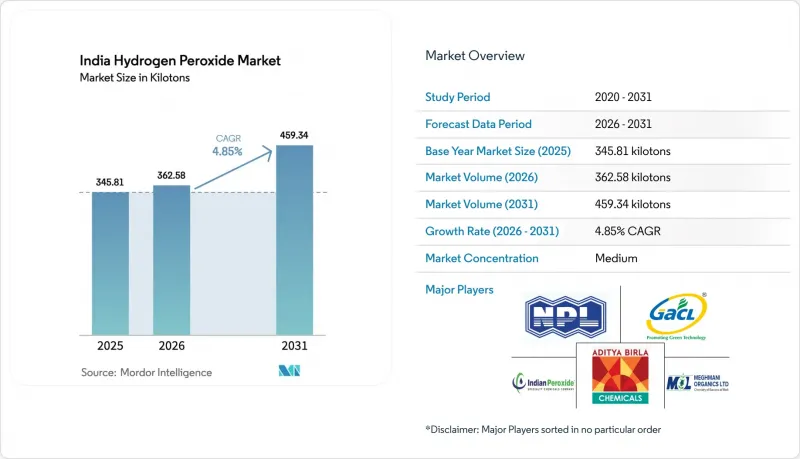
據 Mordor Intelligence 稱,印度過氧化氫市場預計到 2026 年將達到 362.58 千噸,高於 2025 年的 345.81 千噸,預計到 2031 年將達到 459.34 千噸。
預計從 2026 年到 2031 年,其複合年成長率將達到 4.85%。
本報告按產品功能(消毒劑、漂白劑、氧化劑及其他功能)和終端用戶行業(紙漿和造紙、化學合成、污水處理、採礦、食品和飲料、化妝品和醫療保健、紡織以及其他終端用戶行業(電子和包裝))進行細分。市場預測以數量(噸)為單位。
印度過氧化氫市場趨勢與洞察
國內紙漿和造紙業對漂白的需求不斷成長。
印度2500萬噸的紙漿和造紙業依賴52%至75%的再生纖維,需要大量使用過氧化氫漂白才能達到ISO白度標準。漂白過程本身就消耗了62.23%的過氧化氫總量,這為生產商帶來了可預測的基本負載需求,而這些需求與古吉拉突邦、泰米爾納德邦、安得拉邦和奧裡薩邦等地的造紙廠位置密切相關。由於聯合國2014年頒布的法規限制了濃度超過35%的溶液的長途運輸,因此將過氧化氫生產設施建在造紙叢集附近可以降低運輸成本。儘管整體紙張產量趨於平穩,但再生纖維的產能仍在持續成長,這確保了漂白需求保持強勁,不受原生紙漿進口波動的影響。
在二、三線城市增加污水高級氧化製程設施(AMRUT 2.0計畫)
在根據AMRUT 2.0計劃對設施維修的市政部門中,正在引入高級氧化處理系統。該系統結合使用過氧化氫、紫外線和臭氧來分解染料、藥物和微量污染物。由於含氯廢水會受到「零液體排放」法規的處罰,蒂爾普爾和蘇拉特等紡織工業中心迅速採用了這項技術。分散式專案部署催生了許多中型需求中心,使擁有本地倉庫、能夠安全供應35%濃度產品的經銷商受益。那些協助客戶調整AOP裝置中過氧化氫注入量的服務型供應商贏得了客戶的信任,並且能夠提供高於普通漂白劑價格的溢價。
由於貨物中危險物質的規定更加嚴格,濃度超過 35% 的氣瓶運輸受到限制。
根據2014年聯合國相關規定,過氧化氫被歸類為具有腐蝕性副作用的氧化劑,其在油輪中的裝載濃度限制在35%或以上,並禁止以超過40%的濃度空運。生產商被迫在以下三種選擇中做出抉擇:一是裝運前稀釋過氧化氫,這會增加每公斤活性成分的運輸成本;二是建設區域倉庫,但這會佔用其流動資金。目前,運往三線紡織工業城市的物流成本比散裝化學品高出15-20%,使得擁有認證罐車車隊的現有企業擁有顯著優勢。
細分市場分析
到2025年,漂白將佔過氧化氫總用量的61.62%,因為使用再生纖維的造紙廠會添加高濃度的過氧化氫以達到所需的白度目標。消毒劑的使用量正以5.12%的複合年成長率成長,儘管噸位仍然較小,這主要得益於醫院採用氣相消毒系統以及製藥廠轉向低殘留消毒劑。氧化級過氧化氫用於採礦和化學合成,可將金和銅的回收率提高10-15%。一些小眾家用產品、蔬菜清潔劑和洗碗機清潔劑配方也滿足了市場需求,但這些產品需要符合《食品化學品法典》(FCC)的規定,因此價格較高。
在印度過氧化氫市場,漂白應用領域的市場規模預計將隨著再生紙產能的提升而穩定成長;而消毒劑的需求量雖然目前噸位較小,但其價值佔有率預計將會上升。氧化應用領域將繼續隨金屬價格波動呈現週期性波動,並在經濟繁榮時期提供可觀的利潤率。高純度蒸氣級產品將成為供應商從通用漂白應用領域轉型的重要跳板。在客戶審核日益嚴格的背景下,印度過氧化氫產業中那些將大規模生產與專業精煉結合的企業,其息稅折舊攤銷前EBITDA獲利率)預計將有所提高。
其他好處:
- Excel格式的市場預測(ME)表
- 3個月的分析師支持
目錄
第1章:引言
- 研究假設和市場定義
- 調查範圍
第2章:調查方法
第3章執行摘要
第4章 市場狀況
- 市場概覽
- 市場促進因素
- 國內對漂白紙漿和紙張的需求不斷成長
- 在二、三線城市增加污水高級氧化製程設施的部署(AMRUT 2.0計畫)
- 新參與企業利用綠氫作為原料擴大產能
- 為了符合零液體排放標準,紡織廠正從氯氣消毒轉向過氧化氫消毒。
- 印度計劃興建的半導體工廠對半導體級過氧化物的需求增加
- 市場限制因素
- 由於危險品貨物的運輸規定更加嚴格,強度超過 35% 的氣瓶運輸受到限制。
- 蒽醌進口價格波動
- 小規模工廠(<20 ktpa)正努力應對高昂的電力成本。
- 價值鏈分析
- 波特五力模型
第5章 市場規模與成長預測
- 按功能分類的產品
- 消毒劑
- 漂
- 氧化劑
- 其他功能(消毒、洗碗機使用、蔬菜清洗)
- 按最終用戶行業分類
- 紙漿和造紙
- 化學合成
- 污水處理
- 礦業
- 食品/飲料
- 化妝品和醫療保健
- 紡織品
- 其他終端用戶產業(電子和包裝)
第6章 競爭情勢
- 市場集中度
- 策略趨勢
- 市佔率(%)/排名分析
- 公司簡介
- Aditya Birla Chemicals
- AkzoNobel NV
- Arkema
- Chemplast Sanmar Limited
- Evonik Industries AG
- Gujarat Alkalies and Chemicals Limited
- HANSOLCHEMICAL
- Hindustan Organic Chemicals Ltd.
- Indian Peroxide Limited
- Meghmani Finechem Limited
- National Peroxide Ltd.
- Nilkanth Organics
- OCI Ltd.
- Prakash Chemicals International Private Ltd.
- RXCHEMICALS
- Solvay
第7章 市場機會與未來展望
According to Mordor Intelligence, the India hydrogen peroxide market size in 2026 is estimated at 362.58 kilotons, growing from 2025 value of 345.81 kilotons with 2031 projections showing 459.34 kilotons, growing at 4.85% CAGR over 2026-2031.
This report is Segmented by Product Function (Disinfectant, Bleaching, Oxidant, and Other Functions) and End-User Industry (Pulp and Paper, Chemical Synthesis, Wastewater Treatment, Mining, Food and Beverage, Cosmetics and Healthcare, Textiles, Other End-User Industries (Electronics and Packaging)). Market Forecasts are Provided in Terms of Volume (tons).
India Hydrogen Peroxide Market Trends and Insights
Growing Domestic Pulp-and-Paper Bleaching Demand
India's 25 million-tonne pulp and paper sector relies on 52-75% recycled fiber, which requires intensive peroxide bleaching to achieve ISO brightness levels. Bleaching already absorbs 62.23% of the hydrogen-peroxide volume, providing producers with a predictable base-load offtake aligned with mill locations in Gujarat, Tamil Nadu, Andhra Pradesh, and Odisha. Freight savings accrue when peroxide units are located near paper clusters, as UN 2014 regulations limit long-haul movements of solutions with concentrations greater than 35%. Incremental recycled-fiber capacity continues to grow, even as total paper output plateaus, ensuring that bleaching demand remains resilient against fluctuations in virgin-pulp imports.
Rising Wastewater AOP Installations in Tier-2/3 Cities (Under AMRUT 2.0)
Municipalities upgrading under AMRUT 2.0 are adopting advanced-oxidation systems that dose hydrogen peroxide with UV or ozone to degrade dyes, pharmaceuticals, and micro-pollutants. Textile centers, such as Tiruppur and Surat, are early movers because zero-liquid-discharge mandates penalize chlorinated effluents. Decentralized project roll-outs create numerous mid-sized demand nodes, favoring distributors with regional depots that can supply 35% grades safely. Service-oriented suppliers that help calibrate peroxide feed rates in AOP plants are capturing loyalty and commanding a premium above commodity bleaching prices.
Freight-Hazard Regulations Tightening Cylinder Transport Above 35 % Strength
UN 2014 rules classify hydrogen peroxide as an oxidizer with a corrosive sub-risk, limiting tanker loads to above 35% and banning concentrations above 40% on aircraft. Producers must either dilute before shipment, which raises the freight cost per active kilogram, or build regional depots, locking up working capital. Logistics expenses to Tier-3 textile towns now run 15-20% above those for bulk chemicals, favoring incumbents that own certified tanker fleets.
Other drivers and restraints analyzed in the detailed report include:
- Capacity Expansion by New Entrants Using Green-Hydrogen Feedstock
- Textile Mills' Switch from Chlorine to Peroxide for Zero-Liquid-Discharge Compliance
- Volatility in Anthraquinone Import Prices
For complete list of drivers and restraints, kindly check the Table Of Contents.
Segment Analysis
Bleaching captured 61.62% of the hydrogen-peroxide volume in 2025 because recycled-fiber paper mills dose higher loadings to meet brightness targets. Disinfectant usage, although smaller in tonnage, is rising at a 5.12% CAGR as hospitals deploy vapor-phase systems and pharmaceutical plants convert to low-residue sanitizers. Oxidant grades serve mining and chemical syntheses, enhancing gold and copper recovery by 10-15 %. Niche household, vegetable-wash, and dishwasher formulations round out demand, but require Food Chemical Codex compliance and attract premium pricing.
The India hydrogen peroxide market size for bleaching is projected to rise steadily in lockstep with the addition of recycled-paper capacity, while disinfectant demand is set to carve out a larger value share, despite its lower tonnage base. Oxidant applications will stay cyclical, mirroring metal prices, yet deliver attractive margins in up-cycles. High-purity vapor grades provide a bridgehead for suppliers pivoting from commodity bleaching. The India hydrogen peroxide industry participants that combine bulk output with specialty purification stand to widen EBITDA spreads as customer audits tighten.
Complete Report Scope:
- By Product Function
- Disinfectant
- Bleaching
- Oxidant
- Other Functions (Antiseptic, Dishwasher, and Vegetable Wash)
- By End-user Industry
- Pulp and Paper
- Chemical Synthesis
- Wastewater Treatment
- Mining
- Food and Beverage
- Cosmetics and Healthcare
- Textiles
- Other End-User Industries (Electronics and Packaging)
List of Companies Covered in this Report:
- Aditya Birla Chemicals
- AkzoNobel N.V.
- Arkema
- Chemplast Sanmar Limited
- Evonik Industries AG
- Gujarat Alkalies and Chemicals Limited
- HANSOLCHEMICAL
- Hindustan Organic Chemicals Ltd.
- Indian Peroxide Limited
- Meghmani Finechem Limited
- National Peroxide Ltd.
- Nilkanth Organics
- OCI Ltd.
- Prakash Chemicals International Private Ltd.
- RXCHEMICALS
- Solvay
Additional Benefits:
- The market estimate (ME) sheet in Excel format
- 3 months of analyst support
TABLE OF CONTENTS
1 Introduction
- 1.1 Study Assumptions & Market Definition
- 1.2 Scope of the Study
2 Research Methodology
3 Executive Summary
4 Market Landscape
- 4.1 Market Overview
- 4.2 Market Drivers
- 4.2.1 Growing domestic pulp-and-paper bleaching demand
- 4.2.2 Rising wastewater AOP installations in Tier-2/3 cities (under AMRUT 2.0)
- 4.2.3 Capacity expansion by new entrants using green-hydrogen feedstock
- 4.2.4 Textile mills' switch from chlorine to peroxide for zero-liquid-discharge compliance
- 4.2.5 Semiconductor-grade peroxide demand from upcoming Indian fabs
- 4.3 Market Restraints
- 4.3.1 Freight-hazard regulations tightening cylinder transport above 35 % strength
- 4.3.2 Volatility in anthraquinone import prices
- 4.3.3 Persistent sub-scale plants (<20 ktpa) struggling with power tariffs
- 4.4 Value Chain Analysis
- 4.5 Porter's Five Forces
- 4.5.1 Bargaining Power of Suppliers
- 4.5.2 Bargaining Power of Buyers
- 4.5.3 Threat of New Entrants
- 4.5.4 Threat of Substitutes
- 4.5.5 Degree of Competition
5 Market Size & Growth Forecasts (Volume)
- 5.1 By Product Function
- 5.1.1 Disinfectant
- 5.1.2 Bleaching
- 5.1.3 Oxidant
- 5.1.4 Other Functions (Antiseptic, Dishwasher, and Vegetable Wash)
- 5.2 By End-user Industry
- 5.2.1 Pulp and Paper
- 5.2.2 Chemical Synthesis
- 5.2.3 Wastewater Treatment
- 5.2.4 Mining
- 5.2.5 Food and Beverage
- 5.2.6 Cosmetics and Healthcare
- 5.2.7 Textiles
- 5.2.8 Other End-User Industries (Electronics and Packaging)
6 Competitive Landscape
- 6.1 Market Concentration
- 6.2 Strategic Moves
- 6.3 Market Share (%)/ Ranking Analysis
- 6.4 Company Profiles (includes Global level Overview, Market level overview, Core Segments, Financials as available, Strategic Information, Market Rank/Share, Products & Services, Recent Developments)
- 6.4.1 Aditya Birla Chemicals
- 6.4.2 AkzoNobel N.V.
- 6.4.3 Arkema
- 6.4.4 Chemplast Sanmar Limited
- 6.4.5 Evonik Industries AG
- 6.4.6 Gujarat Alkalies and Chemicals Limited
- 6.4.7 HANSOLCHEMICAL
- 6.4.8 Hindustan Organic Chemicals Ltd.
- 6.4.9 Indian Peroxide Limited
- 6.4.10 Meghmani Finechem Limited
- 6.4.11 National Peroxide Ltd.
- 6.4.12 Nilkanth Organics
- 6.4.13 OCI Ltd.
- 6.4.14 Prakash Chemicals International Private Ltd.
- 6.4.15 RXCHEMICALS
- 6.4.16 Solvay
7 Market Opportunities and Future Outlook
- 7.1 White-space and Unmet-need Assessment

 過氧化氫消毒濕紙巾市場:全球市場預測,2026-2032年用於半導體的高純度度過氧化氫:2026-2032年全球市場預測
 過氧化氫:市場佔有率分析、產業趨勢與統計、成長預測(2026-2031)過氧化氫市場:2026-2032年全球市場預測(依等級、濃度、形態、生產流程、最終用途及分銷通路分類)
 過氧化氫市場報告:按應用、最終用途和地區分類(2026-2034 年)
 過氧化氫市場:按產品類型、功能、應用和地區分類
 全球過氧化氫市場規模、佔有率、趨勢和成長分析報告(2026-2034年)
 過氧化氫市場規模、佔有率和趨勢分析報告:按等級、應用、地區和細分市場預測(2026-2033 年)
 2026年全球過氧化氫市場報告全球蒸氣和過氧化氫滅菌用生物指示劑市場:市場規模、佔有率、成長率、產業分析、依類型、應用和地區劃分的分析以及未來預測(2026-2034)