


 |
市場調查報告書
商品編碼
2113592
非洲家禽飼料:市場佔有率分析、產業趨勢與統計、成長預測(2026-2031)Africa Poultry Feed - Market Share Analysis, Industry Trends & Statistics, Growth Forecasts (2026 - 2031) |
||||||

※ 本網頁內容可能與最新版本有所差異。詳細情況請與我們聯繫。
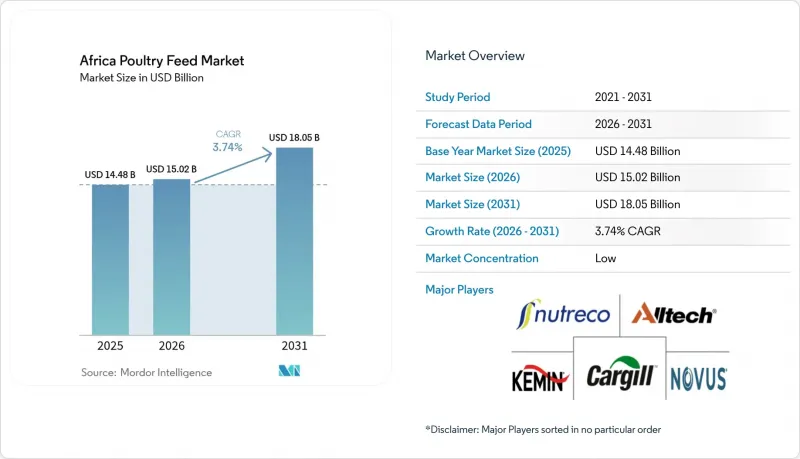
2025 年非洲家禽飼料市場價值 144.8 億美元,預計到 2031 年將達到 180.5 億美元,而 2026 年為 150.2 億美元,預測期(2026-2031 年)複合年成長率為 3.74%。
本報告按家禽類型(肉雞、蛋雞、火雞及其他家禽)、原料類型(穀物、油籽粕、糖蜜、魚油和魚粉、添加劑及其他原料)、形態(顆粒、碎粒、粉狀及其他形態)和地區(南非、阿爾及利亞、奈及利亞、埃塞俄比亞、摩洛哥及其他非洲地區)進行細分。市場預測以美元計價。
非洲家禽飼料市場趨勢與洞察
速食連鎖店雞肉部門的強勁需求
隨著以肯德基1000多家門市為首的泛非優質採購(QSR)雞肉模式的擴張,對確保飼料品質和數量的標準化肉雞供應方案的需求日益成長。合約農場模式鼓勵飼料生產商配製能夠在六週育雛期內穩定達到體重和飼料轉換率目標的飼料。 QSR採購政策越來越強調無抗生素方案,高利潤植物來源添加劑的應用也正在加速。因此,可預測的需求流使得企業能夠投資建造自動化顆粒飼料生產線和區域配送中心。這些因素共同作用,在非洲家禽飼料市場形成良性循環:加工能力提升、單位成本降低、盈利提高。
綜合家禽生產商的成長
像Zalar Holding和Country Bird Holdings這樣的公司正在深化垂直整合,以抵禦原物料價格波動帶來的影響。原料成本佔其銷貨成本的60%至70%。擁有自己的飼料廠使它們能夠根據雞群的年齡和生產目標同步調整飼料配方,從而支持分階段飼餵計劃,減少浪費。這種一體化模式縮短了營運資金周轉週期,加強了品管,並有助於快速引入昆蟲粉等替代蛋白。長遠來看,這些措施可望壓縮成本結構,增強北非和南非主要生產商的競爭力。
糧食進口價格劇烈波動
大宗商品價格波動對飼料生產商的利潤率帶來巨大壓力,尤其是在國內糧食生產能力有限的市場。 2024年,加納的玉米價格在短短八個月內飆升了80%,迫使飼料生產商停產30%的產能,並引發了要求豁免進口許可證的呼聲。埃及飼料產業也面臨類似的困境,玉米和大豆價格的飆升擠壓了生產商的利潤空間。許多非洲國家的飼料原料大多以硬通貨進口,成品則在當地市場銷售,因此貨幣貶值加劇了這些挑戰。
細分市場分析
至2025年,肉雞飼料將佔非洲家禽飼料市場的62.25%。這反映了該領域飼養週期短和需求模式標準化的特徵。在非洲家禽飼料市場中,火雞飼料市場規模預計到2031年將以7.30%的複合年成長率成長,這主要得益於其高階定位和不斷成長的單隻火雞飼料消耗量。肉雞飼料利用製粒和大規模分銷的規模經濟優勢,使其單位成本低於蛋雞飼料。一體化養雞戶透過將營養密度與快速增重目標相結合,推動了對高能量玉米和大豆飼料的需求。
火雞飼料雖然產量較小,但由於其長達28-32週的育肥期和特殊的氨基酸組成,價格卻更高。飼料生產者會使用益生菌混合物等差異化添加劑,以在較長的育肥期內維持腸道環境。蛋雞飼料在蛋雞養殖戶中需求穩定,而珍珠雞和鴨子等細分市場則鼓勵小批量生產,以滿足特定需求,這有助於那些專注於本地市場、靈活機動的飼料廠保持盈利能力。
其他好處:
- Excel格式的市場預測(ME)表
- 3個月的分析師支持
目錄
第1章:引言
- 研究假設和市場定義
- 調查範圍
第2章:調查方法
第3章執行摘要
第4章 市場狀況
- 市場概覽
- 市場促進因素
- 速食雞肉連鎖店的強勁需求
- 綜合家禽生產商的成長
- 政府對玉米和大豆種植的補貼
- 擴大使用市售營養均衡優良的飼料
- 近年來,以昆蟲粉作為飼料蛋白質來源的先導計畫激增。
- 非洲自由貿易區(AFCFTA)正在提高跨境飼料物流的效率。
- 市場限制因素
- 糧食進口價格波動劇烈。
- 感染疾病爆發導致需求暫時下降
- 電力短缺影響飼料廠運作時間
- 用於儲存維生素預混合料的低溫運輸有限。
- 監理情勢
- 技術展望
- 波特五力分析
第5章 市場規模與成長預測
- 依動物類型
- 肉雞
- 產蛋母雞
- 火雞
- 其他動物類型
- 依成分類型
- 穀類
- 油籽粕
- 糖蜜
- 魚油和魚粉
- 補充
- 其他成分類型
- 按形式
- 顆粒
- 崩潰
- Mash
- 其他形式
- 按地區
- 南非
- 阿爾及利亞
- 奈及利亞
- 衣索比亞
- 摩洛哥
- 其他非洲國家
第6章 競爭情勢
- 市場集中度
- 策略趨勢
- 市佔率分析
- 公司簡介
- Cargill Inc.
- Nutreco NV(Trouw Nutrition)
- Alltech Inc.
- Kemin Industries Inc.
- Novus International, Inc.(Mitsui & Co., Ltd. and Nippon Soda Co., Ltd.)
- BASF SE
- Seaboard Corporation
- RCL Foods Limited(Remgro Limited)
- Archer Daniels Midland Company
- Astral Foods Limited
- Zambeef Products PLC
- Evonik Industries AG
- Novafeeds(Pty)Ltd.(Quantum Foods Holdings Limited)
- De Heus Animal Nutrition Pvt. Ltd.
第7章 市場機會與未來展望
According to Mordor Intelligence, the Africa poultry feed market size was valued at USD 14.48 billion in 2025 and estimated to grow from USD 15.02 billion in 2026 to reach USD 18.05 billion by 2031, at a CAGR of 3.74% during the forecast period (2026-2031).
This report is Segmented by Animal Type (Broiler, Layer, Turkey, and Other Animal Types), by Ingredient Type (Cereals, Oilseed Meal, Molasses, Fish Oil and Fish Meal, Supplements, and Other Ingredient Types), by Form (Pellets, Crumble, Mash, and Other Forms), and by Geography (South Africa, Algeria, Nigeria, Ethiopia, Morocco, and Rest of Africa). The Market Forecasts are Provided in Terms of Value (USD).
Africa Poultry Feed Market Trends and Insights
Strong Demand from Quick-Service Restaurant Chicken Chains
Pan-African QSR expansion, led by KFC's more than 1,000 outlets, requires standardized broiler supply programs that lock in feed quality and volume commitments. Contract farming models incentivize mills to formulate feeds that consistently meet weight and feed-conversion targets within six-week grow-outs. QSR procurement policies increasingly specify antibiotic-free protocols, accelerating uptake of phytogenic additives that carry premium margins. The resulting predictable demand stream enables capital investment in automated pelleting lines and regional distribution hubs. Together, these factors anchor a virtuous cycle of higher throughput, lower per-unit costs, and improved profitability across the Africa poultry feed market.
Growth of Integrated Poultry Producers
Companies such as Zalar Holding and Country Bird Holdings deepen vertical integration to shield against raw-material price swings, which account for 60-70% of cost of goods sold. In-house feed mills allow synchronized formulation changes that match flock age and performance targets, supporting phase-feeding programs that reduce waste. Integrated models shorten working-capital cycles, enhance quality control, and support rapid adoption of alternative proteins like insect meal. Over time, this alignment is projected to compress cost structures across major North and Southern African producers, bolstering competitiveness.
High Volatility in Grain Import Prices
Commodity price fluctuations create significant margin pressure for feed manufacturers, particularly in markets with limited domestic grain production capacity. In 2024, maize prices in Ghana jumped 80% in eight months, forcing mills to idle 30% of capacity and prompting calls for import-license waivers. Egypt's sector likewise teetered under soaring corn and soybean costs that eroded producer margins. Currency devaluation compounds these challenges, as most African countries import significant portions of their feed ingredients in hard currencies while selling finished products in local markets.
Other drivers and restraints analyzed in the detailed report include:
- Government Subsidies for Maize and Soybean Cultivation
- Rising Adoption of Nutritionally Balanced Commercial Feed
- Disease Outbreaks Driving Temporary Demand Slumps
For complete list of drivers and restraints, kindly check the Table Of Contents.
Segment Analysis
Broiler formulations accounted for 62.25% of Africa poultry feed market share in 2025, reflecting the segment's short grow-out cycles and standardized demand profiles. The Africa poultry feed market size for turkey diets is projected to grow at a 7.30% CAGR to 2031, propelled by premium positioning and higher per-bird consumption. Broiler feed leverages economies of scale in pelleting and bulk distribution, resulting in lower unit costs compared to layer diets. Integrators align nutrient density with fast live-weight targets, reinforcing demand for energy-dense maize-soy rations.
Turkey feed, although smaller in volume, commands higher price points due to extended 28- to 32-week fattening schedules and specialized amino acid profiles. Feed manufacturers utilize differentiated additives, such as probiotic blends, to manage gut health over extended grow-out periods. While layer feed remains steady among egg enterprises, niche markets for guinea fowl and ducks spur tailored micro-batch production, preserving margins for agile, regionally focused mills.
Complete Report Scope:
- By Animal Type
- Broiler
- Layer
- Turkey
- Other Animal Types
- By Ingredient Type
- Cereals
- Oilseed Meal
- Molasses
- Fish Oil and Fish Meal
- Supplements
- Other Ingredient Types
- By Form
- Pellets
- Crumble
- Mash
- Other Forms
- By Geography
- South Africa
- Algeria
- Nigeria
- Ethiopia
- Morocco
- Rest of Africa
List of Companies Covered in this Report:
- Cargill Inc.
- Nutreco N.V. (Trouw Nutrition)
- Alltech Inc.
- Kemin Industries Inc.
- Novus International, Inc. (Mitsui & Co., Ltd. and Nippon Soda Co., Ltd.)
- BASF SE
- Seaboard Corporation
- RCL Foods Limited (Remgro Limited)
- Archer Daniels Midland Company
- Astral Foods Limited
- Zambeef Products PLC
- Evonik Industries AG
- Novafeeds (Pty) Ltd. (Quantum Foods Holdings Limited)
- De Heus Animal Nutrition Pvt. Ltd.
Additional Benefits:
- The market estimate (ME) sheet in Excel format
- 3 months of analyst support
TABLE OF CONTENTS
1 Introduction
- 1.1 Study Assumptions and Market Definition
- 1.2 Scope of the Study
2 Research Methodology
3 Executive Summary
4 Market Landscape
- 4.1 Market Overview
- 4.2 Market Drivers
- 4.2.1 Strong demand from quick-service restaurant chicken chains
- 4.2.2 Growth of integrated poultry producers
- 4.2.3 Government subsidies for maize and soybean cultivation
- 4.2.4 Rising adoption of nutritionally balanced commercial feed
- 4.2.5 Surge in insect-meal pilot projects for feed protein
- 4.2.6 African Continental Free Trade Area (AFCFTA)-driven cross-border feed logistics efficiencies
- 4.3 Market Restraints
- 4.3.1 High volatility in grain import prices
- 4.3.2 Disease outbreaks driving temporary demand slumps
- 4.3.3 Electricity shortages affecting feed-mill uptime
- 4.3.4 Limited cold-chain for vitamin premix storage
- 4.4 Regulatory Landscape
- 4.5 Technological Outlook
- 4.6 Porter's Five Forces Analysis
- 4.6.1 Bargaining Power of Suppliers
- 4.6.2 Bargaining Power of Buyers
- 4.6.3 Threat of New Entrants
- 4.6.4 Threat of Substitute Products
- 4.6.5 Intensity of Competitive Rivalry
5 Market Size and Growth Forecasts (Value)
- 5.1 By Animal Type
- 5.1.1 Broiler
- 5.1.2 Layer
- 5.1.3 Turkey
- 5.1.4 Other Animal Types
- 5.2 By Ingredient Type
- 5.2.1 Cereals
- 5.2.2 Oilseed Meal
- 5.2.3 Molasses
- 5.2.4 Fish Oil and Fish Meal
- 5.2.5 Supplements
- 5.2.6 Other Ingredient Types
- 5.3 By Form
- 5.3.1 Pellets
- 5.3.2 Crumble
- 5.3.3 Mash
- 5.3.4 Other Forms
- 5.4 By Geography
- 5.4.1 South Africa
- 5.4.2 Algeria
- 5.4.3 Nigeria
- 5.4.4 Ethiopia
- 5.4.5 Morocco
- 5.4.6 Rest of Africa
6 Competitive Landscape
- 6.1 Market Concentration
- 6.2 Strategic Moves
- 6.3 Market Share Analysis
- 6.4 Company Profiles (Includes Global Level Overview, Market Level Overview, Core Segments, Financials as Available, Strategic Information, Market Rank/Share for Key Companies, Products and Services, and Recent Developments)
- 6.4.1 Cargill Inc.
- 6.4.2 Nutreco N.V. (Trouw Nutrition)
- 6.4.3 Alltech Inc.
- 6.4.4 Kemin Industries Inc.
- 6.4.5 Novus International, Inc. (Mitsui & Co., Ltd. and Nippon Soda Co., Ltd.)
- 6.4.6 BASF SE
- 6.4.7 Seaboard Corporation
- 6.4.8 RCL Foods Limited (Remgro Limited)
- 6.4.9 Archer Daniels Midland Company
- 6.4.10 Astral Foods Limited
- 6.4.11 Zambeef Products PLC
- 6.4.12 Evonik Industries AG
- 6.4.13 Novafeeds (Pty) Ltd. (Quantum Foods Holdings Limited)
- 6.4.14 De Heus Animal Nutrition Pvt. Ltd.


