

 |
市場調查報告書
商品編碼
2113208
北美農業助劑:市場佔有率分析、產業趨勢與統計及成長預測(2026-2031 年)North America Agriculture Adjuvants - Market Share Analysis, Industry Trends & Statistics, Growth Forecasts (2026 - 2031) |
||||||

※ 本網頁內容可能與最新版本有所差異。詳細情況請與我們聯繫。
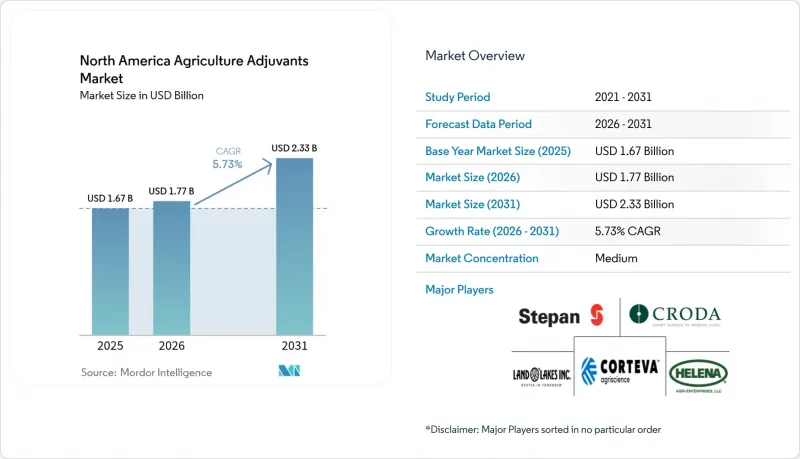
據 Mordor Intelligence 稱,北美農業添加劑市場預計到 2026 年價值 17.7 億美元,高於 2025 年的 16.7 億美元,預計到 2031 年將達到 23.3 億美元。
預計 2026 年至 2031 年的複合年成長率為 5.73%。
本報告按類型(活性劑型助劑和通用助劑)、應用(除草劑助劑、殺蟲劑助劑、殺菌劑助劑等)、作物類型(作物來源和非作物來源)以及地區(美國、墨西哥、加拿大等)進行分類。市場預測以美元(USD)為單位。
北美農業輔助產品市場趨勢及洞察
擴大天然和永續添加劑的使用
2024年,美國有機面積達560萬英畝,較上年成長12%,符合美國國家有機計畫(NOP)規定的OMRI認證除草劑市佔率也隨之擴大。隨著零售商擴大將永續性評估標準應用於其供應鏈合作夥伴,甲基硫代酯和乳酸乙酯正在許多除草劑項目中取代石油衍生的作物油濃縮液。黑田公司於2024年推出的菜籽衍生界面活性劑系列表明,可再生原料既能滿足揮發性有機化合物(VOC)的監管限制,又能滿足尋求低風險材料的生產商的需求。加州嚴格的VOC法規進一步加速了這一趨勢,因為低VOC除草劑既能符合空氣品質法規,又不影響其藥效。食品加工商供應合約中納入的碳強度指標,透過獎勵能夠證明其在範圍3減排方面表現的原料供應商,進一步刺激了市場需求。
對作物保護化學品的需求不斷成長
自2020年以來,由於長芒莧和水麻對Glyphosate抗性,美國中西部玉米和大豆種植系統中每英畝的除草劑用量激增了25%。這導致助劑的使用量增加,以確保在不增加活性成分用量的情況下達到防治效果。墨西哥也出現了類似的趨勢。在「Fertilizantes para el Bienestar」(健康肥料)計畫下,錫那羅亞州和索諾拉州的商業農場獲得了聯邦補貼,補貼金額高達除草劑和助劑成本的50%。隨著玉米輪蟲和大豆蚜蟲族群對擬除蟲菊酯類殺蟲劑的抗性不斷增強,殺蟲劑助劑的使用量也在增加,人們越來越關注那些能夠增強冠層穿透性和抗雨性能的化學物質。杏仁和葡萄種植者正在使用高品質的添加劑來提高殺菌劑的冠層覆蓋率,延長施藥間隔,並緩解旺季期間的人手不足。生產商使用多種添加劑來調節作用機制、pH值和水硬度,這對於避免複雜罐混中出現拮抗作用至關重要。
更嚴格的環保署和監管準則
美國環保署 (EPA) 的 2024 年除草劑策略規定,在《瀕危物種法》指定的 1500 個縣,噴灑者必須記錄其添加劑選擇和天氣參數,這迫使小規模企業要么實施新的記錄系統,要么因違規面臨處罰。目前,粗液滴的要求已涵蓋美國 40% 的耕地,這可能會降低除草劑對小型雜草的有效性,如果使用了不合適的添加劑,則需要重新處理。加拿大有害生物控制和監管局 (PMRA) 強制要求提交所有表面活性劑成分的水生毒性數據,這延長了註冊期限並增加了新參與企業的成本。墨西哥收緊了壬基酚聚氧乙烯醚混合物的進口許可,迫使經銷商更改配方或退出市場。在這些日益增多的障礙面前,在美國環保署註冊的供應商正在獲得市場優勢,因為生產商更傾向於可追溯的產品,這可以簡化審核流程。
細分市場分析
預計到2025年,活性劑類添加劑將佔銷售額的60.25%。這是因為非離子界面活性劑和作物油濃縮物仍然是玉米和大豆苗後除草劑方案的核心成分。含有甲硫醇甲酯的油性混合物能夠增強滲透性和抗雨性,儘管生物基替代品不斷湧現,但仍保持著重要的市場佔有率。同時,通用添加劑預計到2031年將以每年9.41%的速度成長,北美農業添加劑市場規模預計將在此期間結束時顯著超過9.8億美元。推動這一快速成長的主要因素是抑制漂移的聚合物和附著力增強劑,因為精密噴霧器使藥罐中活性成分的濃度提高了三倍,如果沒有專用添加劑,堵塞的風險就會增加。
水處理劑是另一個具有高成長潛力的領域。這是因為有證據表明,在未經處理的硬水條件下,Glyphosate的藥效會降低高達30%。此外,隨著生物來源產品的日益普及,相容劑也發揮著至關重要的作用。對於希望一次完成施藥的種植者來說,相容劑必不可少,因為它們可以防止微生物製劑和合成製劑混合時發生絮凝。由於這些實際應用領域的強勁發展勢頭,儘管活化劑的絕對銷量有所成長,但預計其在北美農業助劑市場的佔有率仍將略有下降。
其他好處:
- Excel格式的市場預測(ME)表
- 3個月的分析師支持
目錄
第1章:引言
- 研究假設和市場定義
- 調查範圍
第2章:調查方法
第3章執行摘要
第4章 市場狀況
- 市場概覽
- 市場促進因素
- 增加天然和永續添加劑的使用
- 農藥需求不斷成長
- 跨國公司正在加大對佐劑研發的投資。
- 精密噴塗技術的擴展
- 對高投入效率產品的排碳權獎勵
- 一種針對生物製藥最佳化的界面活性劑混合物。
- 市場限制因素
- 來自環保署和監管機構的嚴格指導方針。
- 特色農作物產區的生產者大眾認知度較低。
- 妥爾油和甲基大豆原料價格波動
- 加強對潤濕劑的監測
- 監理情勢
- 技術展望
- 波特五力分析
第5章 市場規模與成長預測
- 按類型
- 活化劑和佐劑
- 界面活性劑
- 油基佐劑
- 多功能輔助劑
- 活化劑和佐劑
- 透過使用
- 除草劑助劑
- 殺蟲劑添加劑
- 殺菌劑助劑
- 其他用途
- 按作物類型
- 按作物
- 穀物和穀類
- 水果和蔬菜
- 油籽
- 其他用途
- 非農作物來源
- 草坪和觀賞草
- 其他
- 按作物
- 按地區
- 美國
- 加拿大
- 墨西哥
- 其他北美國家
第6章 競爭情勢
- 市場集中度
- 策略趨勢
- 市佔率分析
- 公司簡介
- Corteva Agriscience
- Land O'Lakes Inc.
- Stepan Company
- Croda International plc
- Helena Agri-Enterprises LLC(Marubeni Corporation)
- Huntsman Corporation
- Farmers Business Network Inc.
- BASF SE
- Evonik Industries AG
- Solvay SA
- Nufarm Limited
- Loveland Products Inc.(Nutrien Ltd.)
- Wilbur-Ellis Company LLC
- Clariant AG
- Nouryon Holding BV
第7章 市場機會與未來展望
According to Mordor Intelligence, North America agriculture adjuvants market size in 2026 is estimated at USD 1.77 billion, growing from 2025 value of USD 1.67 billion with 2031 projections showing USD 2.33 billion, growing at 5.73% CAGR over 2026-2031.
This report is Segmented by Type (Activator Adjuvants and Utility Adjuvants), by Application (Herbicide Adjuvants, Insecticide Adjuvants, Fungicide Adjuvants, and More), by Crop Type (Crop-Based and Non-Crop-Based), and by Geography (United States, Mexico, Canada, and More). The Market Forecasts are Provided in Terms of Value (USD).
North America Agriculture Adjuvants Market Trends and Insights
Increasing Use of Natural and Sustainable Adjuvants
Organic acreage in the United States grew 12% year on year to 5.6 million acres in 2024, opening more shelf space for OMRI-listed adjuvants that comply with National Organic Program rules . Methyl soyate and ethyl lactate are now displacing petroleum-based crop-oil concentrates in many herbicide programs as retailers extend sustainability scorecards to their supply partners. Croda's rapeseed-derived surfactant line, launched in 2024, illustrates how renewable feedstocks can satisfy both volatile-organic-compound limits and grower preference for lower-risk inputs. California's stringent Volatile Organic Compound (VOC) rules accelerate this trend because low adjuvants preserve air-quality compliance without compromising efficacy. Carbon-intensity metrics embedded in food-processor supply contracts amplify demand by rewarding input suppliers that can document Scope 3 reductions.
Growing Demand for Crop-Protection Chemicals
Palmer amaranth and waterhemp resistance to glyphosate triggered a 25% surge in herbicide treatments per acre in Midwestern corn and soybean systems since 2020, elevating adjuvant usage to maintain coverage without raising active-ingredient loads. Mexico mirrors this trajectory: federal subsidies now offset up to 50% of herbicide and adjuvant costs for commercial farms in Sinaloa and Sonora under the Fertilizantes para el Bienestar program. Insecticide adjuvants are also climbing as pyrethroid resistance spreads in corn rootworm and soybean aphid populations, spurring interest in chemistries that enhance cuticle penetration and rainfastness. Almond and grape growers deploy premium adjuvants to enhance fungicide canopy coverage, thereby extending spray intervals and reducing labor bottlenecks during peak season as growers stack modes of action, adjuvants that buffer pH, and manage water hardness, becoming indispensable to avoid antagonism in complex tank mixes.
Stringent Environmental Protection Agency and Regulatory Guidelines
The Environmental Protection Agency's (EPA's) 2024 Herbicide Strategy requires applicators in 1,500 counties designated under the Endangered Species Act to log adjuvant selection and weather parameters, prompting small operators to adopt new record-keeping systems or face compliance penalties. Coarser droplet mandates now cover 40% of the United States cropland, which can reduce efficacy on small-seeded weeds and may lead to repeat treatments if unsuitable adjuvants are used. Canada's Pest Management Regulatory Agency added aquatic-toxicity data requirements for every surfactant component, extending registration timelines and raising costs for new entrants. Mexico tightened import permits on nonylphenol ethoxylate blends, forcing distributors either to reformulate or exit. As hurdles rise, suppliers with Environmental Protection Agency (EPA) registrations gain a market advantage because growers prefer traceable products that simplify audits.
Other drivers and restraints analyzed in the detailed report include:
- Higher Investment in Adjuvant R&D by Multinationals
- Expansion of Precision-Spraying Technologies
- Low Grower Awareness in Specialty-Crop Pockets
For complete list of drivers and restraints, kindly check the Table Of Contents.
Segment Analysis
Activator adjuvants accounted for 60.25% of the revenue in 2025, as non-ionic surfactants and crop-oil concentrates remained core to post-emergence herbicide programs in corn and soybeans. Oil-based blends that include methyl soyate offer enhanced penetration and rainfastness, explaining their continued presence even as bio-based alternatives emerge. Utility adjuvants, however, are forecast to rise 9.41% annually to 2031, lifting the North America agriculture adjuvants market size for this category well above USD 980 million by the period end. Drift-control polymers and deposition aids form the backbone of this surge because precision sprayers triple the active-ingredient concentration in the tank, which increases the risk of clogging without specialized additives .
Water conditioners are another high-growth pocket, given evidence that untreated hard-water conditions can slash glyphosate efficacy by as much as 30%. Compatibility agents round out the story as biologicals move mainstream, making it a non-negotiable requirement for growers who want single-pass applications, preventing flocculation when mixing microbes and synthetics. Momentum in these utility segments means the North America agriculture adjuvants market share for activators is expected to slide modestly even as absolute activator revenue rises.
Complete Report Scope:
- By Type
- Activator Adjuvants
- Surfactants
- Oil Adjuvants
- Utility Adjuvants
- Activator Adjuvants
- By Application
- Herbicide Adjuvants
- Insecticide Adjuvants
- Fungicide Adjuvants
- Other Applications
- By Crop Type
- Crops Based
- Grains and Cereals
- Fruits and Vegetables
- Oil Seeds
- Other Applications
- Non-Crops Based
- Turf and Ornamental Grass
- Others
- Crops Based
- By Geography
- United States
- Canada
- Mexico
- Rest of North America
List of Companies Covered in this Report:
- Corteva Agriscience
- Land O'Lakes Inc.
- Stepan Company
- Croda International plc
- Helena Agri-Enterprises LLC (Marubeni Corporation)
- Huntsman Corporation
- Farmers Business Network Inc.
- BASF SE
- Evonik Industries AG
- Solvay SA
- Nufarm Limited
- Loveland Products Inc. (Nutrien Ltd.)
- Wilbur-Ellis Company LLC
- Clariant AG
- Nouryon Holding B.V.
Additional Benefits:
- The market estimate (ME) sheet in Excel format
- 3 months of analyst support
TABLE OF CONTENTS
1 Introduction
- 1.1 Study Assumptions and Market Definition
- 1.2 Scope of the Study
2 Research Methodology
3 Executive Summary
4 Market Landscape
- 4.1 Market Overview
- 4.2 Market Drivers
- 4.2.1 Increasing use of natural and sustainable adjuvants
- 4.2.2 Growing demand for crop-protection chemicals
- 4.2.3 Higher investment in adjuvant R&D by multinationals
- 4.2.4 Expansion of precision-spraying technologies
- 4.2.5 Carbon-credit incentives for input-efficiency products
- 4.2.6 Surfactant blends optimized for biologicals
- 4.3 Market Restraints
- 4.3.1 Stringent Environmental Protection Agency and regulatory guidelines
- 4.3.2 Low grower awareness in specialty-crop pockets
- 4.3.3 Volatility in tall-oil and methyl-soyate feedstocks
- 4.3.4 Increasing scrutiny of wetting agents
- 4.4 Regulatory Landscape
- 4.5 Technological Outlook
- 4.6 Porter's Five Forces Analysis
- 4.6.1 Bargaining Power of Suppliers
- 4.6.2 Bargaining Power of Buyers
- 4.6.3 Threat of New Entrants
- 4.6.4 Threat of Substitute Products
- 4.6.5 Intensity of Competitive Rivalry
5 Market Size and Growth Forecasts (Value)
- 5.1 By Type
- 5.1.1 Activator Adjuvants
- 5.1.1.1 Surfactants
- 5.1.1.2 Oil Adjuvants
- 5.1.2 Utility Adjuvants
- 5.1.1 Activator Adjuvants
- 5.2 By Application
- 5.2.1 Herbicide Adjuvants
- 5.2.2 Insecticide Adjuvants
- 5.2.3 Fungicide Adjuvants
- 5.2.4 Other Applications
- 5.3 By Crop Type
- 5.3.1 Crops Based
- 5.3.1.1 Grains and Cereals
- 5.3.1.2 Fruits and Vegetables
- 5.3.1.3 Oil Seeds
- 5.3.1.4 Other Applications
- 5.3.2 Non-Crops Based
- 5.3.2.1 Turf and Ornamental Grass
- 5.3.2.2 Others
- 5.3.1 Crops Based
- 5.4 By Geography
- 5.4.1 United States
- 5.4.2 Canada
- 5.4.3 Mexico
- 5.4.4 Rest of North America
6 Competitive Landscape
- 6.1 Market Concentration
- 6.2 Strategic Moves
- 6.3 Market Share Analysis
- 6.4 Company Profiles (Includes Global Level Overview, Market Level Overview, Core Segments, Financials as Available, Strategic Information, Market Rank/Share, Products and Services, Recent Developments)
- 6.4.1 Corteva Agriscience
- 6.4.2 Land O'Lakes Inc.
- 6.4.3 Stepan Company
- 6.4.4 Croda International plc
- 6.4.5 Helena Agri-Enterprises LLC (Marubeni Corporation)
- 6.4.6 Huntsman Corporation
- 6.4.7 Farmers Business Network Inc.
- 6.4.8 BASF SE
- 6.4.9 Evonik Industries AG
- 6.4.10 Solvay SA
- 6.4.11 Nufarm Limited
- 6.4.12 Loveland Products Inc. (Nutrien Ltd.)
- 6.4.13 Wilbur-Ellis Company LLC
- 6.4.14 Clariant AG
- 6.4.15 Nouryon Holding B.V.


