

 |
市場調查報告書
商品編碼
2100737
印尼電信行動網路業者:市場佔有率分析、產業趨勢與統計及成長預測(2026-2031)Indonesia Telecom MNO - Market Share Analysis, Industry Trends & Statistics, Growth Forecasts (2026 - 2031) |
||||||

※ 本網頁內容可能與最新版本有所差異。詳細情況請與我們聯繫。
據 Mordor Intelligence 稱,2025 年印尼電信行動網路營運商 (MNO) 市場價值為 137.4 億美元,預計到 2031 年將從 2026 年的 144.2 億美元成長至 183.7 億美元,預測期(2026-2031 年)複合年成長率為 4.95%。
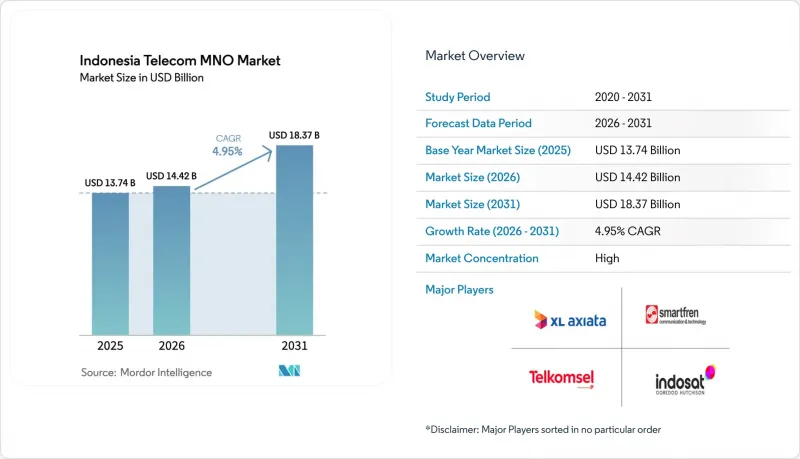
本報告依服務類型(語音服務、數據通訊服務、OTT 和付費電視服務)分類。市場預測以價值(美元)和規模(用戶數量)為單位呈現。
印尼通訊業者(MNO)市場趨勢與洞察。
影片和遊戲應用推動行動數據消費爆炸性成長。
印尼電信(Telkom Indonesia)2023年的數據顯示,行動寬頻用戶數達1.271億,數據流量達1790萬TB。這證實了以影片為中心的消費習慣如今已成為決定收入的主要因素。 Disney+ Hotstar佔據了付費串流訂閱的70%,Netflix佔46%,這意味著智慧型手機用戶現在普遍透過4G和新興的5G網路觀看高清內容。 XL Axiata在假日高峰期流量激增19%,其中東龍目島增幅達34%,旅遊勝地馬裡博羅更是飆漲115%。通訊業者目前正優先提升網路容量,以避免網路堵塞,並支援延遲低於40毫秒的遊戲應用。印尼行動網路營運商(MNO)市場的數據貨幣化趨勢仍在持續,營運商紛紛推出高級套餐,確保充足的數據流量和低延遲,即使在對價格敏感的預付用戶中也創造了提升銷售的機會。
全國範圍內的 4G 和 5G 網路部署正在擴展到離島。
Telkomsel已透過247,472個基地台覆蓋了97%的人口,其5G通訊速度已達到64.3 Mbps,幾乎是4G的四倍。政府已強制要求在2025年前在29個城市實現5G商用,並由「Palapa Ring」光纖骨幹提供支持,以緩解回程傳輸瓶頸。中波頻寬的擴展將使通訊業者能夠為蘇拉威西島和加里曼丹島的智慧港口、礦業自動化和物流走廊提供企業級服務。預計到2027年,全球整體專用LTE和5G網路的市場規模將達到74億美元,印尼通訊業者的目標是為有線連接尚不切實際的工廠和石油鑽井設施提供專用網路切片。網路品質的提升將帶來更高的客戶體驗評分,從而鼓勵客戶升級到更高層級的套餐。
持續的競爭正在拉低每位用戶平均收入(ARPU)。
印尼預付用戶仍優先考慮低價,儘管數據使用量不斷成長,但其平均每用戶收入(ARPU)仍遠低於亞太地區10.50美元的平均水平。 2023年的價格競爭導致實際收益下降,儘管流量增加,迫使Smartfren將數據資費提高10%以恢復利潤率,但競爭對手僅部分跟進。 XL Axiata和Smartfren正在進行的合併預計將增強市場紀律,預計每年可節省3億至4億美元的成本,這有望緩解收入壓力。然而,WhatsApp等OTT( Over-The-Top )營運商已將企業通訊資費降低了高達97%,並持續蠶食傳統語音通話和簡訊的收入。隨著促銷活動的持續升級,在可預見的未來,印尼行動網路營運商(MNO)市場可能會優先考慮提高銷售量而非漲價。
細分市場分析
2025年,數據和網際網路服務將佔印尼電信行動網路營運商(MNO)市場收入的53.92%,凸顯市場結構正從傳統語音線路轉型為其他領域。語音服務仍將佔20.62%,隨著VoLTE的引入,其複合年成長率(CAGR)將達到5.11%。這表明,即使在OTT服務的壓力下,運營商級通話品質仍然具有吸引力。物聯網(IoT)和機器對機器(M2M)服務將佔5.75%的市場佔有率,通訊業者預計,到2028年,隨著汽車、銀行和公共產業等行業的設備接入XL Axiata的「IoT Connectivity+」平台,設備數量將實現三位數成長。 OTT和付費電視服務將佔5.43%,其中直接串流媒體的成長勢頭尤為強勁,Disney+Hotstar佔據了70%的市場佔有率。剩餘的 14.28% 來自批發、漫遊和各種數位服務,這些服務正以 25% 的複合年成長率成長,並受益於雲端市場,預計到 2023 年雲端市場規模將達到 8 億美元。
投資重點包括封包核心網路升級,旨在將行動遊戲和工業自動化的延遲降低到 20 毫秒以下,以及邊緣運算節點。在港口和礦場進行的私人 LTE 試點計畫有助於在 5G 廣泛商業化之前檢驗投資回報。網路安全捆綁服務和資料中心託管服務正在推動收入多元化,這些服務專為符合印尼資料主權法的企業而設計。隨著固網行動融合的加速發展,通訊業者正在將光纖與無限量行動數據和串流內容捆綁銷售,以提高印尼行動網路營運商 (MNO) 市場的家庭用戶留存率並降低用戶解約率。
其他好處:
- Excel格式的市場預測(ME)表
- 3個月的分析師支持
目錄
第1章:引言
- 研究假設和市場定義
- 調查範圍
第2章:調查方法
第3章執行摘要
第4章 市場狀況
- 市場概覽
- 監理與政策框架
- 頻譜狀況和競爭對手的擁有情形
- 通訊業生態系統
- 宏觀經濟與外在因素
- 波特五力模型
- 主要行動網路營運商 (MNO) 的關鍵績效指標 (KPI) (2020-2025)
- 行動用戶數量和普及率
- 行動網路使用者數量和普及率
- 按接入技術分類的SIM卡合約數量和滲透率
- 蜂巢式物聯網/機器對機器連接數
- 寬頻連線數(移動和固定)
- ARPU(每位用戶平均收入)
- 每用戶平均數據使用量(GB/月)
- 市場促進因素
- 行動數據使用量的爆炸性成長是由影片和遊戲應用程式推動的。
- 全國範圍內的 4G/5G 網路部署也正在擴展到離島。
- 將固定和行動服務捆綁配套服務正在提高每戶平均收入。
- 政府主導的「帕拉帕環」和「努桑塔拉」光纖骨幹網路項目
- 印尼《PDP法》下對超大規模資料中心互連的需求
- LEO衛星回程傳輸為偏遠地區的企業提供物聯網解決方案。
- 市場限制因素
- 持續的競爭正在拉低每位用戶平均收入(ARPU)。
- 分佈式頻段和高最低競標
- 土地使用許可核准的延誤正在減緩光纖電纜的部署。
- Java以外地區5G射頻設計人員短缺
- 技術展望
- 通訊業關鍵經營模式分析
- 定價模型和定價分析
第5章 市場規模與成長預測
- 整個通訊業的收入和每用戶平均收入
- 服務類型
- 語音服務
- 數據和網際網路服務
- 通訊服務
- 物聯網和機器對機器服務
- OTT和付費電視服務
- 其他服務(附加價值服務、漫遊和國際服務、企業和批發服務等)
- 最終用戶
- 公司
- 消費者
第6章 競爭情勢
- 市場集中度
- 主要供應商的策略性舉措和投資(2023-2025 年)
- 2024年行動通訊業者(MNO)市佔率分析
- MNO snapshot(subscribers, churn rate, ARPU, etc.)
- 行動通訊業者(MNO)公司簡介*
- Telkomsel
- Indosat Ooredoo Hutchison
- XL Axiata
- Smartfren
第7章 市場機會與未來展望
According to Mordor Intelligence, the Indonesia telecom MNO market size was valued at USD 13.74 billion in 2025 and estimated to grow from USD 14.42 billion in 2026 to reach USD 18.37 billion by 2031, at a CAGR of 4.95% during the forecast period (2026-2031).
This report is Segmented by Services (Voice Services, Data and Messaging Services, and OTT and Pay TV Services). The Market Forecasts are Provided in Terms of Value (USD) and Volume (Subscribers).
Indonesia Telecom MNO Market Trends and Insights
Explosive mobile data consumption fueled by video and gaming apps
Telkom Indonesia recorded 127.1 million mobile broadband users in 2023 with data traffic of 17.9 million TB, confirming that video-centric habits now anchor revenue decisions. Disney+ Hotstar captured 70% of paid streaming subscriptions, while Netflix held 46%, pushing average smartphone users to consume high-definition content on 4G and emerging 5G networks. XL Axiata logged 19% traffic spikes during peak holidays, with East Lombok surging 34% and Malioboro tourism zones up 115%. Operators now prioritize capacity upgrades to avoid congestion and to support gaming applications that demand latency below 40 ms. The Indonesia telecom MNO market sees sustained data monetization as premium bundles pair generous quotas with low-latency assurance, creating upsell potential even in a price-sensitive prepaid base.
Nationwide 4G and 5G rollout reaching outer islands
Telkomsel already covers 97% of the population through 247,472 base stations, and its 5G speeds reach 64.3 Mbps, almost four times faster than 4G. The government mandates commercial 5G presence in 29 cities by 2025, supported by the Palapa Ring fiber backbone that reduces backhaul bottlenecks. Expanded mid-band spectrum will enable operators to deliver enterprise-grade service for smart ports, mining automation, and logistics corridors in Sulawesi and Kalimantan. With private LTE and 5G networks forecast to reach USD 7.4 billion globally by 2027, Indonesian carriers target dedicated slices for factories and oil rigs where wired links remain impractical. Improved network quality translates into stronger customer experience scores, reinforcing willingness to pay for elevated tiers.
Persistent price competition suppressing ARPU
Indonesian prepaid users still focus on affordability, keeping blended ARPU well below the Asia-Pacific average of USD 10.5 despite heavier data usage. Tariff wars in 2023 shaved effective yields even as traffic grew, compelling Smartfren to hike data prices by 10% to restore margins, a move only partly matched by rivals. The pending XL Axiata-Smartfren merger should raise market discipline, promising USD 300-400 million in annual cost savings that offset revenue pressure. Nevertheless, over-the-top players such as WhatsApp, which cut business messaging fees by up to 97%, continue to erode legacy voice and SMS income. Sustained promotional intensity will keep the Indonesia telecom MNO market chasing volume over price increases in the near term.
Other drivers and restraints analyzed in the detailed report include:
- Fixed-mobile convergence bundles lifting household ARPU
- Government-led Palapa Ring and Nusantara fiber backbone projects
- Fragmented spectrum and high reserve prices
For complete list of drivers and restraints, kindly check the Table Of Contents.
Segment Analysis
Data and Internet Services accounted for 53.92% of Indonesia telecom MNO market revenue in 2025, underscoring a structural pivot from legacy voice lines. Voice still holds 20.62% with a 5.11% CAGR through VoLTE adoption, proving carrier-grade call quality has residual appeal even under OTT pressure. IoT and M2M claim 5.75% share, and operators expect triple-digit device growth by 2028 as automotive, banking, and utilities fleets connect to XL Axiata's IoT Connectivity+ platform. OTT and PayTV services sit at 5.43%, with Disney+ Hotstar's 70% slice highlighting direct streaming traction. The remainder 14.28% comes from wholesale, roaming, and varied digital services that ride a cloud market expanding at 25% CAGR to USD 0.8 billion in 2023.
Investment priorities favor packet-core upgrades and edge computing nodes that keep latency below 20 ms for mobile gaming and industrial automation. Private LTE pilots in ports and mining sites help validate returns ahead of broad 5G monetization. Revenue diversification flows from cybersecurity bundles and data-center colocation designed for enterprises complying with Indonesia's data-sovereignty law. With fixed-mobile convergence gaining momentum, operators bundle fiber with unlimited mobile data and streaming content, reinforcing household stickiness and reducing churn within the Indonesia telecom MNO market.
Complete Report Scope:
- Overall Telecom Revenue and ARPU
- Service Type
- Voice Services
- Data and Internet Services
- Messaging Services
- IoT and M2M Services
- OTT and PayTV Services
- Other Services (VAS, Roaming And International Services, Enterprise And Wholesale Services, etc.)
- End-user
- Enterprises
- Consumer
List of Companies Covered in this Report:
- Telkomsel
- Indosat Ooredoo Hutchison
- XL Axiata
- Smartfren
Additional Benefits:
- The market estimate (ME) sheet in Excel format
- 3 months of analyst support
TABLE OF CONTENTS
1 INTRODUCTION
- 1.1 Study Assumptions and Market Definition
- 1.2 Scope of the Study
2 RESEARCH METHODOLOGY
3 EXECUTIVE SUMMARY
4 Market Landscape
- 4.1 Market Overview
- 4.2 Regulatory And Policy Framework
- 4.3 Spectrum Landscape And Competitive Holdings
- 4.4 Telecom Industry Ecosystem
- 4.5 Macroeconomic And External Drivers
- 4.6 Porter's Five Forces
- 4.6.1 Competitive Rivalry
- 4.6.2 Threat of New Entrants
- 4.6.3 Bargaining Power of Suppliers
- 4.6.4 Bargaining Power of Buyers
- 4.6.5 Threat of Substitutes
- 4.7 Key MNO KPIs (2020-2025)
- 4.7.1 Unique Mobile Subscribers And Penetration Rate
- 4.7.2 Mobile Internet Users And Penetration Rate
- 4.7.3 SIM Connections by Access Technology And Penetration
- 4.7.4 Cellular IoT / M2M Connections
- 4.7.5 Broadband Connections (Mobile And Fixed)
- 4.7.6 ARPU (Average Revenue Per User)
- 4.7.7 Average Data Usage per Subscription (GB/month)
- 4.8 Market Drivers
- 4.8.1 Explosive mobile data consumption fuelled by video And gaming apps
- 4.8.2 Nationwide 4G/5G rollout reaching outer islands
- 4.8.3 Fixed-mobile convergence bundles lifting household ARPU
- 4.8.4 Government-led Palapa Ring And Nusantara fiber backbone projects
- 4.8.5 Hyperscale data-centre interconnect demand under Indonesia PDP law
- 4.8.6 LEO-satellite backhaul enabling remote-area enterprise IoT
- 4.9 Market Restraints
- 4.9.1 Persistent price competition suppressing ARPU
- 4.9.2 Fragmented spectrum And high reserve prices
- 4.9.3 Right-of-way permit delays slowing fiber rollout
- 4.9.4 Shortage of 5G RF planning talent outside Java
- 4.10 Technological Outlook
- 4.11 Analysis of key business models in Telecom
- 4.12 Analysis of Pricing Models and Pricing
5 MARKET SIZE AND GROWTH FORECASTS (VALUE)
- 5.1 Overall Telecom Revenue and ARPU
- 5.2 Service Type
- 5.2.1 Voice Services
- 5.2.2 Data and Internet Services
- 5.2.3 Messaging Services
- 5.2.4 IoT and M2M Services
- 5.2.5 OTT and PayTV Services
- 5.2.6 Other Services (VAS, Roaming And International Services, Enterprise And Wholesale Services, etc.)
- 5.3 End-user
- 5.3.1 Enterprises
- 5.3.2 Consumer
6 COMPETITIVE LANDSCAPE
- 6.1 Market Concentration
- 6.2 Strategic Moves and Investments by key vendors, 2023-2025
- 6.3 Market share analysis for MNOs, 2024
- 6.4 MNO snapshot (subscribers, churn rate, ARPU, etc.)
- 6.5 Company Profiles* of MNOs (Includes Business Overview | Service Portfolio | Financials | Business Strategy and Recent Developments | SWOT Analysis)
- 6.5.1 Telkomsel
- 6.5.2 Indosat Ooredoo Hutchison
- 6.5.3 XL Axiata
- 6.5.4 Smartfren
7 MARKET OPPORTUNITIES AND FUTURE OUTLOOK
- 7.1 White-space And Unmet-Need Assessment

 行動虛擬網路營運商 (MVNO) 市場-2026-2032 年全球市場預測
 5G MVNO:市場佔有率分析、產業趨勢與統計、成長預測(2026-2031)美國虛擬行動服務業者(MVNO):市場佔有率分析、行業趨勢和統計數據以及成長預測(2026-2031 年)
 行動虛擬網路啟用器市場規模、佔有率和趨勢分析報告:按服務類型、部署模式、最終用戶產業、地區和細分市場預測(2026-2033 年)行動虛擬網路聚合器市場規模、佔有率和趨勢分析報告:按服務、最終用途、地區和細分市場分類(2026-2033 年)
 全球行動虛擬網路營運商(MVNO)市場規模、佔有率、趨勢和成長分析報告(2026-2034年)
 行動虛擬網路營運商 (MVNO) 市場:按服務類型、商業模式、最終用戶和地區分類虛擬行動服務業者(MVNO) 市場:市場規模、佔有率和趨勢分析(按類型、商業模式、服務類型、合約類型、最終用途和地區分類),細分市場預測(2026-2033 年)5G MVNO市場:按套餐類型、最終用戶、設備類型、銷售管道、產業和網路類型分類-2026-2032年全球市場預測
 2026年全球行動虛擬網路營運商(MVNO)市場報告