


 |
市場調查報告書
商品編碼
2100010
歐洲電子商務服裝:市場佔有率分析、產業趨勢與統計、成長預測(2026-2031)Europe E-commerce Apparel - Market Share Analysis, Industry Trends & Statistics, Growth Forecasts (2026 - 2031) |
||||||

※ 本網頁內容可能與最新版本有所差異。詳細情況請與我們聯繫。
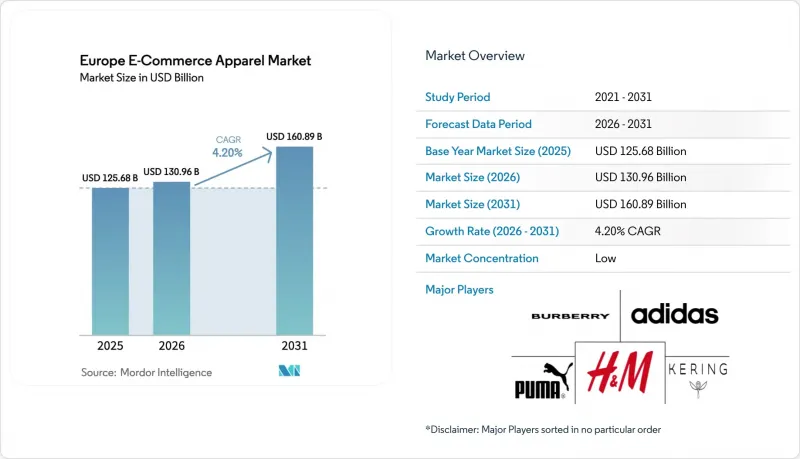
根據 Mordor Intelligence 估計,歐洲電子商務服飾市場規模從 2025 年的 1,256.8 億美元成長到 2026 年的 1,309.6 億美元,預計到 2031 年將達到 1,608.9 億美元。
預計從 2026 年到 2031 年,其複合年成長率將達到 4.2%。
本報告按產品類型(正裝、休閒裝、運動裝、睡衣等)、最終用戶(男士等)、布料(棉等)、品類(大眾市場和高階市場)、平台類型(第三方零售商和公司網站)以及地區(德國、英國、法國、義大利、西班牙、俄羅斯等)進行細分。市場預測以美元計價。
歐洲電子商務服飾市場的趨勢與洞察
促銷和折扣能夠刺激消費者的購買意願。
在電商服裝市場,促銷和折扣是影響消費者購買決策的關鍵因素。在競爭激烈的市場中,這些策略透過多種方式影響消費者的購買行為,例如營造緊迫感、提供附加價值以及降低購買成本。常見的促銷技巧包括限時折扣、閃購和獨家優惠,這些都旨在鼓勵消費者即時購買。此外,忠誠度計畫和個人化促銷活動也有助於提高顧客留存率。全通路行銷和社群電商的整合提升了促銷的有效性,使品牌能夠利用客戶數據分析在各個平台上投放精準優惠。 TikTok 和 Instagram 等社交媒體平台已成為重要的促銷管道,Zara 和 H&M 等品牌也推出了“可購買影片內容”,引導用戶獲取僅限線上購買的折扣。
科技成就了個人化的購物體驗
歐洲電商服裝產業向個人化購物體驗的轉變,是由技術進步和不斷變化的消費者偏好所驅動的。消費者追求便利、相關性和與品牌的聯繫,促使零售商採用人工智慧、機器學習和數據分析解決方案。這些技術分析客戶數據,包括瀏覽模式、購買歷史、偏好和社交媒體互動,從而提供個人化的產品建議和精準的促銷活動。虛擬試衣間和擴增實境(AR) 解決方案讓顧客在購買前就能預覽服裝的合身效果,有助於降低退貨率。人工智慧聊天機器人則在整個購物過程中提供即時且個人化的客戶支援。根據歐盟統計局 (Eurostat) 預測,到 2024 年,歐盟將有 13.5% 的企業在營運中應用人工智慧技術,而零售業將成為該技術的主要應用領域。
經銷仿冒品
仿冒品氾濫是歐洲服飾電商市場的一大挑戰,它不僅損害了消費者信任和品牌價值,也造成了不公平的競爭環境。根據歐盟智慧財產局(EUIPO)統計,仿冒品每年導致服裝、化妝品和玩具業損失160億歐元的銷售額,並造成約20萬個工作機會流失。電子商務的數位化特性無意中加劇了這個問題,造假者利用第三方市場和社群媒體平台直接觸達消費者,他們常常盜用正品的圖片和描述來創建誤導性商品資訊。產業應對措施已從基本的防偽標籤發展到基於區塊鏈的檢驗系統,以在整個價值鏈中驗證商品的真偽。各公司正在實施綜合性的仿冒品策略,將技術解決方案與消費者意識宣傳活動結合。這個問題在高階和奢侈品領域尤其突出,因為品牌價值直接影響產品的價值提案和定價權。
細分市場分析
預計到2025年,休閒服飾將佔據歐洲電商服飾市場37.02%的佔有率,這主要得益於消費者對舒適百搭服飾日益成長的偏好。遠距辦公的普及進一步推動了這一趨勢,歐盟統計局(Eurostat)的數據顯示,2023年歐盟8.9%的員工在家工作。這個細分市場在北歐國家,例如德國和荷蘭,表現特別強勁,因為實用性強的服裝符合當地的偏好。運動服飾預計將在2026年至2031年間以4.57%的複合年成長率成長,這主要得益於休閒風潮的興起和人們健康意識的增強。正裝市場也積極適應市場變化,推出更多舒適百搭的設計,以滿足商務和休閒場合的需求。
受消費者對睡眠品質和健康日益成長的關注推動,睡衣市場正在蓬勃發展,高階睡衣品牌的市場佔有率也在擴大。在各個細分市場,製造商都在透過採用具有吸濕排汗、溫度調節和防臭等功能性布料來打造差異化產品。產品策略也朝著多功能性和全年適用性的方向轉變,不再局限於嚴格的季節性系列,而是轉向更永續的庫存管理。模組化服飾系統的流行也反映了這一趨勢,這類服裝能夠適應各種場合和天氣條件,吸引那些追求服飾性價比的消費者。
預計到2025年,女裝市場將佔據44.18%的主導地位。這主要歸功於女裝與其他類別相比更高的購買頻率和更廣泛的產品類別。這種主導地位在南歐市場,尤其是義大利和西班牙,表現得最為顯著,因為在這些國家,時尚在文化認同中扮演著重要角色。大型零售商已成功在女裝部門應用人工智慧驅動的尺寸推薦工具,以解決長期以來品牌間尺寸不一致的問題。儘管歐洲出生率下降,但由於父母們更加重視服裝的品質和永續,預計童裝市場仍將實現最高成長率,2026年至2031年的複合年成長率將達到4.89%。
男裝領域正在發生重大變革,重點在於透過風格教育和精選服務來打破傳統時尚消費障礙。零售商正透過實施數據驅動的個人化和引導式導航,簡化男性消費者的購物體驗,在保持風格選擇的同時,降低選擇的複雜性。在所有細分市場,對包容性尺寸的需求持續成長,品牌也不斷擴大尺寸範圍。這種包容性趨勢也延伸至適合不同年齡層的造型設計,尤其針對歐洲日益成長的50歲以上人群,他們擁有龐大的自由裁量權消費能力。
其他好處:
- Excel格式的市場預測(ME)表
- 3個月的分析師支持
目錄
第1章:引言
- 研究假設和市場定義
- 調查範圍
第2章:調查方法
第3章執行摘要
第4章 市場狀況
- 市場概覽
- 市場促進因素
- 促銷和折扣能夠刺激消費者的購買意願。
- 科技成就了個人化的購物體驗
- 直接面對消費者 (DTC) 品牌的成長
- 社群媒體平台與名人代言的影響
- 靈活多樣的支付方式
- 對永續和符合道德規範的時尚的需求日益成長。
- 市場限制因素
- 經銷仿冒品
- 來自實體店和其他零售通路的競爭
- 尺寸、合身度和產品評估方面的挑戰。
- 履約配送的挑戰
- 消費行為分析
- 監理展望
- 波特五力模型
第5章 市場規模與成長預測
- 依產品類型
- 正裝
- 休閒裝
- 運動服
- 睡衣
- 女用貼身內衣和家居服
- 其他產品類型
- 最終用戶
- 男性
- 女士
- 孩子們
- 材料
- 棉布
- 聚酯纖維
- 尼龍
- 丹寧布料
- 其他布料類型
- 按類別
- 鱒魚
- 優質的
- 依平台類型
- 第三方市場
- 我們自己的平台
- 國家
- 德國
- 英國
- 義大利
- 法國
- 西班牙
- 荷蘭
- 波蘭
- 比利時
- 瑞典
- 其他歐洲國家
第6章 競爭情勢
- 市場集中度
- 策略趨勢
- 市佔率分析
- 公司簡介
- Burberry Group plc
- Hennes & Mauritz AB
- Adidas AG
- Puma SE
- PVH Corp.
- Kering SA
- LVMH Moet Hennessy Louis Vuitton SE
- Chanel Limited
- Nike, Inc.
- Industria de Diseno Textil SA
- Hermes International SA
- Ralph Lauren Corporation
- Marks & Spencer Group plc
- Punta Na Holding SA
- VF Corporation
- Next plc
- Levi Strauss & Co.
- Authentic Brands Group, LLC
- Moncler SpA
- Decathlon SA
第7章 市場機會與未來展望
According to Mordor Intelligence, the Europe e-commerce apparel market size in 2026 is estimated at USD 130.96 billion, growing from 2025 value of USD 125.68 billion with 2031 projections showing USD 160.89 billion, growing at 4.2% CAGR over 2026-2031.
This report is Segmented by Product Type (Formal Wear, Casual Wear, Sportswear, Nightwear, and More), End User (Men and More), Fabric Material (Cotton and More), Category (Mass and Premium), Platform Type (Third Party Retailer and Company's Own Website), and Geography (Germany, United Kingdom, France, Italy, Spain, Russia, and More). The Market Forecasts are Provided in Terms of Value (USD).
Europe E-commerce Apparel Market Trends and Insights
Promotion and Discounts Enticing Consumer to Make Purchase
Promotions and discounts drive consumer purchasing decisions in the E-Commerce apparel market. These strategies influence buying behavior through multiple factors: creating urgency, providing value, and reducing purchase costs in a competitive market. Common promotional tactics include time-limited discounts, flash sales, and exclusive offers, which encourage immediate purchases. Additionally, loyalty programs and personalized promotions help build customer retention. The integration of omnichannel marketing and social commerce has enhanced promotional effectiveness, enabling brands to deliver targeted offers across platforms using customer data analytics. Social media platforms like TikTok and Instagram have become key promotional channels, with brands such as Zara and H&M implementing shoppable video content that connects users to exclusive online discounts.
Personalized Shopping Experience Enabled by Technology
The Europe e-commerce apparel industry's shift toward personalized shopping experiences is driven by technological advancements and evolving consumer preferences. Consumers seek convenience, relevance, and brand connection, prompting retailers to implement artificial intelligence, machine learning, and data analytics solutions. These technologies analyze customer data, including browsing patterns, purchase records, preferences, and social media interactions, to create personalized product recommendations and targeted promotions. Virtual fitting rooms and augmented reality solutions help customers visualize clothing fit and appearance before purchase, which helps reduce return rates. AI-powered chatbots provide immediate, personalized customer support throughout the shopping process. According to Eurostat, in 2024, 13.5% of enterprises in the European Union implemented artificial intelligence technologies in their operations, with retail emerging as a primary adopter .
Availability of Counterfeit Products
The proliferation of counterfeit products poses a significant challenge to the European e-commerce apparel market, eroding consumer trust and brand equity while creating unfair competitive dynamics. According to the European Union Intellectual Property Office (EUIPO), counterfeit goods cost the clothing, cosmetics, and toy industries EUR 16 billion in sales and nearly 200,000 jobs annually . The digital nature of e-commerce has inadvertently facilitated this problem, with counterfeiters using third-party marketplaces and social media platforms to reach consumers directly, often utilizing authentic product images and descriptions to create misleading listings. The industry's response has evolved from basic authentication tags to blockchain-based verification systems that provide proof of authenticity throughout the supply chain. Companies are implementing comprehensive anti-counterfeiting strategies that combine technological solutions with consumer education initiatives. This issue particularly affects premium and luxury segments, where brand equity directly influences value proposition and pricing power.
Other drivers and restraints analyzed in the detailed report include:
- Direct-to-Consumer (DTC) Brand Growth
- Influence of Social Media Platforms and Celebrity Endorsements
- Competition from Brick-and-Mortar Stores and Alternative Retail Channels
For complete list of drivers and restraints, kindly check the Table Of Contents.
Segment Analysis
The casual wear segment holds a 37.02% share of the European e-commerce apparel market in 2025, driven by consumers' increasing preference for comfortable and versatile clothing. This trend is supported by the growth in remote work, with 8.9% of employed people in the European Union working from home in 2023, according to Eurostat. The segment shows particular strength in Northern European countries, including Germany and the Netherlands, where practical clothing aligns with local preferences. The sportswear segment is expected to grow at a CAGR of 4.57% from 2026 to 2031, supported by athleisure trends and increased health awareness. The Formal Wear segment has adapted by incorporating more comfortable designs that work in both professional and casual settings.
The nightwear category shows growth due to increased consumer interest in sleep quality and wellness, with premium sleep brands gaining market share. Across all segments, manufacturers are incorporating technical fabrics with moisture-wicking, temperature-regulating, and odor-resistant properties to differentiate their products. Product strategies focus on versatility and year-round appeal, moving away from strict seasonal collections toward more sustainable inventory management. This trend is reflected in the popularity of modular clothing systems that adapt to various situations and weather conditions, appealing to consumers seeking maximum value from their clothing purchases.
The women's segment holds a dominant 44.18% market share in 2025, attributed to higher purchase frequency and broader product category selection compared to other segments. This dominance is strongest in Southern European markets, particularly Italy and Spain, where fashion plays a significant role in cultural identity. Major retailers have successfully implemented AI-powered size recommendation tools in the women's segment to resolve the persistent issue of size inconsistency across brands. The children's wear segment is expected to achieve the highest growth rate at 4.89% CAGR from 2026 to 2031, as parents prioritize quality and sustainable clothing options despite Europe's declining birth rates.
The men's segment is undergoing significant changes, focusing on style education and curation services to overcome traditional barriers in fashion engagement. Retailers are implementing data-driven personalization to streamline the shopping experience for male consumers through guided navigation that reduces choice complexity while maintaining style options. Across all segments, demand for inclusive sizing continues to increase, prompting brands to expand their size ranges. This inclusivity trend extends to age-appropriate styling, particularly targeting Europe's growing 50+ demographic, which represents a significant portion of discretionary spending power.
Complete Report Scope:
- By Product Type
- Formal Wear
- Casual Wear
- Sportswear
- Nightwear
- Intimate and Loungewear
- Other Product Tyoes
- By End User
- Men
- Women
- Children
- By Fabric Material
- Cotton
- Polyester
- Nylon
- Denim
- Other Fabric Types
- By Category
- Mass
- Premium
- By Platform Type
- Third-Party Marketplace
- Company-owned Platform
- By Country
- Germany
- United Kingdom
- Italy
- France
- Spain
- Netherlands
- Poland
- Belgium
- Sweden
- Rest of Europe
List of Companies Covered in this Report:
- Burberry Group plc
- Hennes & Mauritz AB
- Adidas AG
- Puma SE
- PVH Corp.
- Kering S.A.
- LVMH Moet Hennessy Louis Vuitton SE
- Chanel Limited
- Nike, Inc.
- Industria de Diseno Textil SA
- Hermes International S.A.
- Ralph Lauren Corporation
- Marks & Spencer Group plc
- Punta Na Holding SA
- VF Corporation
- Next plc
- Levi Strauss & Co.
- Authentic Brands Group, LLC
- Moncler S.p.A
- Decathlon SA
Additional Benefits:
- The market estimate (ME) sheet in Excel format
- 3 months of analyst support
TABLE OF CONTENTS
1 INTRODUCTION
- 1.1 Study Assumptions and Market Definition
- 1.2 Scope of the Study
2 RESEARCH METHODOLOGY
3 EXECUTIVE SUMMARY
4 MARKET LANDSCAPE
- 4.1 Market Overview
- 4.2 Market Drivers
- 4.2.1 Promotion and Discounts Enticing Consumer to Make Purchase
- 4.2.2 Personalized Shopping Experience Enabled by Technology
- 4.2.3 Direct-to-Consumer (DTC) Brand Growth
- 4.2.4 Influence of Social Media Platforms and Celebrity Endorsements
- 4.2.5 Flexible and Diverse Payment Options
- 4.2.6 Rising Demand for Sustainable and Ethical Fashion
- 4.3 Market Restraints
- 4.3.1 Availablity of Counterfeit Products
- 4.3.2 Competition from Brick-and-Mortar Stores and Alternative Retail Channels
- 4.3.3 Size, Fit, and Product Assessment Challenges
- 4.3.4 Logistical Challenges in Fulfillment and Delivery
- 4.4 Consumer Behaviour Analysis
- 4.5 Regulatory Outlook
- 4.6 Porter's Five Forces
- 4.6.1 Bargaining Power of Suppliers
- 4.6.2 Bargaining Power of Buyers
- 4.6.3 Threat of New Entrants
- 4.6.4 Threat of Substitutes
- 4.6.5 Degree of Competition
5 MARKET SIZE AND GROWTH FORECAST (VALUE)
- 5.1 By Product Type
- 5.1.1 Formal Wear
- 5.1.2 Casual Wear
- 5.1.3 Sportswear
- 5.1.4 Nightwear
- 5.1.5 Intimate and Loungewear
- 5.1.6 Other Product Tyoes
- 5.2 By End User
- 5.2.1 Men
- 5.2.2 Women
- 5.2.3 Children
- 5.3 By Fabric Material
- 5.3.1 Cotton
- 5.3.2 Polyester
- 5.3.3 Nylon
- 5.3.4 Denim
- 5.3.5 Other Fabric Types
- 5.4 By Category
- 5.4.1 Mass
- 5.4.2 Premium
- 5.5 By Platform Type
- 5.5.1 Third-Party Marketplace
- 5.5.2 Company-owned Platform
- 5.6 By Country
- 5.6.1 Germany
- 5.6.2 United Kingdom
- 5.6.3 Italy
- 5.6.4 France
- 5.6.5 Spain
- 5.6.6 Netherlands
- 5.6.7 Poland
- 5.6.8 Belgium
- 5.6.9 Sweden
- 5.6.10 Rest of Europe
6 COMPETITIVE LANDSCAPE
- 6.1 Market Concentration
- 6.2 Strategic Moves
- 6.3 Market Share Analysis
- 6.4 Company Profiles (includes Global level Overview, Market level overview, Core Segments, Financials as available, Strategic Information, Market Rank/Share for key companies, Products and Services, and Recent Developments)
- 6.4.1 Burberry Group plc
- 6.4.2 Hennes & Mauritz AB
- 6.4.3 Adidas AG
- 6.4.4 Puma SE
- 6.4.5 PVH Corp.
- 6.4.6 Kering S.A.
- 6.4.7 LVMH Moet Hennessy Louis Vuitton SE
- 6.4.8 Chanel Limited
- 6.4.9 Nike, Inc.
- 6.4.10 Industria de Diseno Textil SA
- 6.4.11 Hermes International S.A.
- 6.4.12 Ralph Lauren Corporation
- 6.4.13 Marks & Spencer Group plc
- 6.4.14 Punta Na Holding SA
- 6.4.15 VF Corporation
- 6.4.16 Next plc
- 6.4.17 Levi Strauss & Co.
- 6.4.18 Authentic Brands Group, LLC
- 6.4.19 Moncler S.p.A
- 6.4.20 Decathlon SA
7 MARKET OPPORTUNITES AND FUTURE OUTLOOK

 2026-2030年全球線上鞋類市場
 電子商務服飾市場-2026-2032年全球市場預測線上時尚零售市場:2026-2032年全球市場預測(依產品類別、性別、銷售管道和經營模式)
 線上服裝:市場佔有率分析、產業趨勢與統計、成長預測(2026-2031)電子商務服裝:市場佔有率分析、產業趨勢與統計、成長預測(2026-2031)
 日本時尚電商市場:依產品類型、最終用戶、價格範圍和分銷管道分類
 2026年全球線上服裝鞋類市場報告2026年全球時尚電商市場報告2026年全球線上時尚零售市場報告
 全球電子商務服裝市場規模、佔有率、趨勢和成長分析報告(2026-2034)