


 |
市場調查報告書
商品編碼
2097474
軟體引進:市佔率分析、產業趨勢與統計及成長預測(2026-2031 年)SOFT Framework Implementation Software - Market Share Analysis, Industry Trends & Statistics, Growth Forecasts (2026 - 2031) |
||||||

※ 本網頁內容可能與最新版本有所差異。詳細情況請與我們聯繫。
據 Mordor Intelligence 稱,2025 年 SOFT 框架實施軟體市場價值為 32.4 億美元,預計到 2031 年將從 2026 年的 39.1 億美元成長至 100.2 億美元,預測期(2026-2031 年)的複合年成長率為 20.71%。
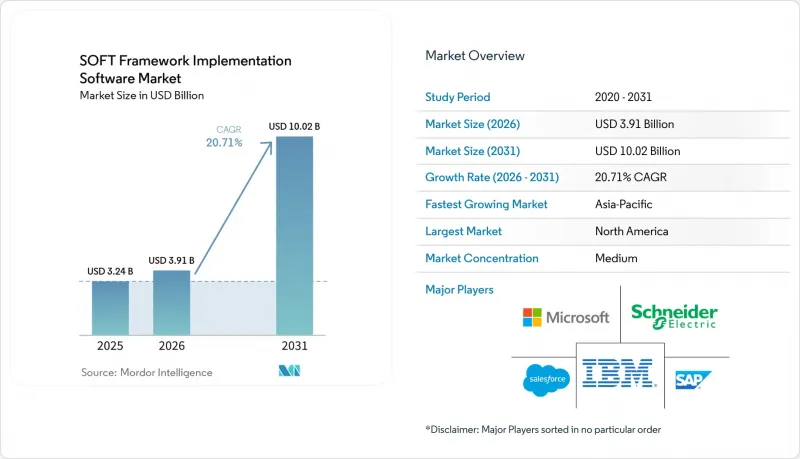
本報告按元件(軟體平台和服務)、部署類型(雲端、本地部署、混合部署)、組織規模(大型企業和中小企業)、功能(永續性策略和管治等)、最終用戶產業(銀行、金融服務和保險等)以及地區進行細分。市場預測以美元計價。
全球軟體框架軟體引進市場趨勢與洞察
企業對框架主導永續發展管治的需求日益成長
2025年11月,SOFT框架的批准為企業在SOFT框架軟體引進市場的採用和採購建立了一個更清晰的框架。該框架系統化了策略、實施、營運和合規等各個環節的永續發展活動,為採購者提供了一個通用框架,使其無需依賴分散的內部需求即可評估軟體需求。這一點意義重大,因為軟體選擇正從單純關注碳計量和揭露工具轉向更廣泛的、能夠綜合支持管治、執行和合規的方案。此外,由於該框架是在主要企業參與者的參與下制定的,因此它增強了採購談判的可信度,並支持SOFT框架實施軟體市場的發展,因為大型組織正在規範供應商要求。在與全球企業進行試點測試後,SOFT v2.0的開發計畫也表明,市場正從框架採用階段過渡到更具商業性的實施階段。
監管機構對可審計的ESG和碳排放報告施加壓力
SOFT框架軟體引進市場也受到監管的推動。報告義務促使人們需要更一致的數據、更強力的控制和更清晰的審計追蹤。歐盟從2024會計年度開始對大規模公共事業機構實施CSRD(永續發展報告準則),並強制要求在2025年發布報告。這迫使許多組織加強其永續發展報告體系。雖然美國證券交易委員會(SEC)在2025年的態度轉變緩解了美國聯邦政府的部分壓力,但大型企業仍然面臨來自投資者、客戶和州級機構的取證要求,因此對結構化報告工具的需求依然存在。 SOFT框架軟體引進市場正受益於「有限保證」要求,這些要求更強調調查方法、資料譜系和版本控制的文件記錄。這些要素難以透過基於電子表格的工作流程進行管理。因此,許多買家將做好審計準備視為軟體實施的起點,這繼續支撐著軟體框架軟體引進市場的短期需求。
企業資料分散,排放調查方法不一致
永續性資訊通常分散在各種位置,包括企業資源計劃 (ERP) 系統、採購工具、人力資源系統、公用事業收費記錄和設施管理平台,這使得資料碎片化成為軟體市場採用 SOFT 框架的一大障礙。即使投資了軟體,企業仍需要協調來源系統、邊界、運算規則和管治實踐,才能獲得可靠的輸出。當報告範圍從範圍 1 和範圍 2 擴展到與供應商相關的範圍 3 時,這項挑戰會更加突出,因為範圍 3 類別中的原始資料往往缺失或不一致。雖然 SOFT 框架能夠滿足實施和合規要求,但將其指導原則轉化為跨舊有系統的標準化操作資料仍然需要時間和專家的投入。這可能會減慢實施速度,增加交付複雜性,並延緩 SOFT 框架軟體引進市場的擴展階段。
細分市場分析
至2025年,軟體平台將佔據SOFT框架軟體引進市場71.73%的佔有率。這反映了大型企業對資料管理和報告基礎設施的早期投資,而這對於永續發展至關重要。軟體平台的主導地位與支援多種框架、集中式資料模型以及在策略、實施、營運和合規等職能部門之間保持一致的工作流程的需求密切相關。在SOFT框架軟體引進市場,由於買家希望減少報告、碳會計和管治活動中的重複工作,因此更受青睞功能更全面的平台。當公司在多個司法管轄區運作並需要單一系統來支援多個內部團隊時,這一趨勢會進一步增強。
預計2026年至2031年間,服務業的複合年成長率將達到24.67%,成為SOFT框架軟體引進市場中成長最快的細分領域。這反映出,隨著專案日益複雜,市場關注點正從初始授權部署轉向部署支援、培訓、託管服務和指導性推廣營運。 IFS於2026年5月發布了IFS Zero,這是一款專為資產密集型產業打造的排放管理作業系統,進一步強化了這個發展方向。這充分體現了供應商如何將軟體功能與更深層的應用場景結合。 SOFT框架軟體引進產業正在向一種新模式轉型,在這種模式下,長期價值不僅取決於產品的廣度,還取決於產品在實際企業環境中運作的能力。
到2025年,基於雲端的部署將佔市場佔有率的74.15%,這表明SOFT框架軟體引進市場的大多數買家仍然傾向於可擴展的集中式管理系統。雲端部署能夠實現跨子公司的快速部署、更便利的更新以及不同地點團隊更廣泛的存取權限。對於那些需要單一記錄系統進行報告、分析和供應商協作,而無需維護獨立本地基礎設施的組織而言,雲端部署也十分適用。對許多企業來說,雲端仍然是預設的起點,因為它能夠縮短部署週期,並實現跨多個營業單位的更有效率的報告。
預計到2031年,本地部署將以18.83%的複合年成長率成長,顯示SOFT框架軟體引進市場並未轉向純雲端模式。資料主權要求、網路安全擔憂以及政府、公共產業和金融等受監管行業的採購偏好都在支撐著這項需求。混合架構仍然至關重要,因為一些組織希望利用雲端環境進行分析和報告工作流程,同時將敏感業務資料置於更嚴格的本地管理之下。因此,部署模式變得更加多層次,SOFT框架軟體引進市場的供應商需要具備跨越雲端、本地和混合模式的柔軟性,以最大限度地挖掘企業的業務機會。
區域分析
到2025年,北美將佔據SOFT框架軟體引進市場36.64%的佔有率,成為目前收入最高的區域市場。該地區憑藉其成熟的大型企業基礎、對永續發展軟體的高度認知以及強大的專業服務生態系統,為SOFT框架的實施提供了有力支持。美國仍然佔據核心地位,因為許多大型企業已經建立了可擴展至符合SOFT框架的軟體實施的管治體系。此外,即使美國證券交易委員會(SEC)在2025年不再支持氣候變遷資訊揭露規則,加州相關的揭露要求仍將維持對結構化報告和排放管理的需求。因此,北美在SOFT框架軟體引進市場展現出相對較高的應用水平,尤其是在那些合規影響廣泛且企業發展複雜的公司中。
歐洲在SOFT框架軟體引進市場中仍然佔據著重要的結構性地位,因為資訊揭露要求持續影響企業的採購行為。大規模公用事業公司在2025年提交2024會計年度資料時,將適用CSRD(永續供應鏈報告條例),這直接催生了對更強大的資訊揭露系統、文件和可審計工作流程的需求。這種需求不僅限於大型企業,小規模的供應商網路也受到與企業報告鏈相關的更廣泛的永續性資訊要求的影響。德國作為實施環境尤其突出,因為受監管產業和工業供應鏈都需要更結構化、更受本地信任的報告基礎設施。南美洲目前處於早期階段,但跨國公司參與歐洲報告要求正在形成一種預備性需求,這將支持其分階段進入SOFT框架軟體引進市場。
預計到2031年,亞太地區將以23.17%的複合年成長率成長,並有望成為SOFT框架軟體引進市場中成長最快的地區。日本是主要驅動力,這得益於資訊揭露標準、企業數位化和技術主導永續發展專案的同步推進。 NTT於2026年3月宣布的關於軟體產品二氧化碳運算規則的舉措,顯示日本在永續發展管理環境中越來越重視營運層面。 ASUENE於2026年推出的服務也表明,該日本本土平台正在調整其產品以滿足國內外的資訊揭露要求,這將促進其在中型企業中的更廣泛應用。在全部區域,新加坡、澳洲和韓國等市場符合ISSB標準的資訊揭露工作,正在為SOFT框架實施軟體市場奠定更堅實的長期基礎。中東和非洲仍處於發展初期,但由於各國永續發展框架的建立以及對管治主導資訊揭露的期望,部分國家的需求已開始成長。因此,儘管不同地區的成熟度仍然存在顯著差異,但地理前景仍在不斷擴大。
其他好處:
- Excel格式的市場預測(ME)表
- 3個月的分析師支持
目錄
第1章:引言
- 研究假設和市場定義
- 調查範圍
第2章:調查方法
第3章執行摘要
第4章 市場狀況
- 市場概覽
- 市場促進因素
- 企業對框架主導永續發展管治的需求日益成長
- 監管機構對可審計的ESG和碳排放報告施加壓力
- 將永續發展指標融入核心業務流程
- 過渡到自動化數據收集和持續監測
- 透過採購主導擴大範圍 3 的課責
- 需要製定一項涵蓋IT和營運部門的脫碳計劃。
- 市場限制因素
- 企業資料分散,排放調查方法不一致
- 永續發展、財務和IT團隊缺乏內部主動性。
- 與傳統ERP和工作流程系統整合需要付出相當大的努力。
- 非營利軟體專案的預算審查
- 產業價值鏈分析
- 宏觀經濟因素對市場的影響
- 監理情勢
- 技術展望
- 波特五力分析
第5章 市場規模與成長預測
- 按組件
- 軟體平台
- 服務
- 部署模式
- 基於雲端的
- 現場
- 混合
- 按組織規模
- 大公司
- 小型企業
- 功能性別
- 永續發展策略與管治
- 數據管理與興趣
- 碳和環境核算
- 報告和揭露管理
- 工作流程與績效管理
- 平台整合與分析
- 按最終用戶行業分類
- 能源公用事業
- 製造業
- BFSI
- 資訊科技/通訊
- 零售和消費品
- 醫療保健和生命科學
- 運輸/物流
- 政府/公共部門
- 其他終端用戶產業
- 按地區
- 北美洲
- 美國
- 加拿大
- 墨西哥
- 南美洲
- 巴西
- 阿根廷
- 智利
- 其他南美國家
- 歐洲
- 德國
- 英國
- 法國
- 義大利
- 西班牙
- 其他歐洲國家
- 亞太地區
- 中國
- 日本
- 印度
- 澳洲
- 韓國
- 新加坡
- 其他亞太國家
- 中東
- 沙烏地阿拉伯
- 阿拉伯聯合大公國
- 土耳其
- 其他中東國家
- 非洲
- 南非
- 埃及
- 其他非洲國家
- 北美洲
第6章 競爭情勢
- 市場集中度
- 策略趨勢
- 市佔率分析
- 公司簡介
- Microsoft Corporation
- SAP SE
- International Business Machines Corporation
- Salesforce, Inc.
- Schneider Electric SE
- ServiceNow, Inc.
- Workiva Inc.
- Sphera Solutions, Inc.
- Persefoni AI, Inc.
- Watershed Technology, Inc.
- Plan A
- Normative AB
- Greenly
- Position Green AB
- Enablon North America Corporation
- Cority Software Inc.
- Inogen Alliance, LLC
- Diligent Corporation
- OneTrust, LLC
- Measurabl, Inc.
第7章 市場機會與未來展望
According to Mordor Intelligence, the SOFT framework implementation software market size was valued at USD 3.24 billion in 2025 and estimated to grow from USD 3.91 billion in 2026 to reach USD 10.02 billion by 2031, at a CAGR of 20.71% during the forecast period (2026-2031).
This report is Segmented by Component (Software Platform, and Services), Deployment Mode (Cloud-Based, On-Premise, and Hybrid), Organization Size (Large Enterprises, and Small and Medium Enterprises), Functionality (Sustainability Strategy and Governance, and More), End-User Industry Vertical (BFSI, and More), and Geography. The Market Forecasts are Provided in Terms of Value (USD).
Global SOFT Framework Implementation Software Market Trends and Insights
Rising Enterprise Demand for Framework-Led Sustainability Governance
The November 2025 ratification of the SOFT framework has given the SOFT Framework implementation software market a clearer structure for enterprise adoption and procurement. The framework organizes sustainability work across strategy, implementation, operations, and compliance domains, providing buyers with a common structure for evaluating software needs rather than relying on fragmented internal requirements. This matters because software selection is no longer centered only on carbon accounting or disclosure tools, and it is moving toward broader programs that support governance, execution, and compliance together. The framework was also shaped with input from major enterprise participants, which improves its credibility in procurement discussions and supports the SOFT Framework implementation software market as larger organizations standardize vendor requirements. The planned development of SOFT v2.0, following live pilots at global organizations, also points to a market moving from framework introduction into a more commercial implementation phase
Regulatory Pressure for Audit-Ready ESG and Carbon Reporting
The SOFT Framework implementation software market is also being boosted by regulation, as reporting obligations now require more consistent data, stronger controls, and clearer audit trails. The European Union brought CSRD into force for large public-interest entities for the 2024 financial year, with reporting published in 2025, which pushed many organizations to strengthen their sustainability reporting systems. The 2025 shift in the SEC position reduced one source of federal pressure in the United States, but it did not remove the need for structured reporting tools because large enterprises still face investor, customer, and state-level disclosure demands. The SOFT Framework implementation software market is benefiting from limited-assurance-style requirements that place greater weight on methodology documentation, data lineage, and version control, which are difficult to manage in spreadsheet-based workflows. The result is that many buyers are treating audit readiness as the starting point for software adoption, and that continues to support near-term demand in the SOFT Framework implementation software market.
Fragmented Enterprise Data and Inconsistent Emissions Methodologies
Data fragmentation remains a significant brake on the implementation of the SOFT Framework in software markets because sustainability information often resides across ERP systems, procurement tools, HR systems, utility records, and facility platforms. Even when enterprises invest in software, they still need to harmonize source systems, boundaries, calculation rules, and governance practices before outputs are reliable. The challenge becomes more serious when reporting moves beyond Scope 1 and Scope 2 into supplier-related Scope 3 categories, where primary data is often missing or inconsistent. The SOFT framework addresses implementation and compliance requirements, but turning that guidance into standardized operating data across legacy systems still takes time and specialist effort. This slows deployment speed, raises delivery complexity, and can delay expansion phases in the SOFT Framework implementation software market.
Other drivers and restraints analyzed in the detailed report include:
- Integration of Sustainability Metrics into Core Business Workflows
- Shift Toward Automated Data Collection and Continuous Monitoring
- Limited Internal Ownership Across Sustainability, Finance, and IT Teams
For complete list of drivers and restraints, kindly check the Table Of Contents.
Segment Analysis
Software platforms accounted for 71.73% of the SOFT Framework implementation software market in 2025, reflecting earlier investment by large enterprises in core sustainability data management and reporting infrastructure. The leading role of software platforms is tied to the need for multi-framework support, centralized data models, and consistent workflows across strategy, implementation, operational, and compliance functions. The SOFT Framework implementation software market has favored broader platforms, as buyers seek to reduce duplication across reporting, carbon accounting, and governance activities. That preference becomes even stronger when enterprises operate across multiple jurisdictions and need a single system that supports multiple internal teams.
Services are projected to grow at a 24.67% CAGR between 2026 and 2031, making them the fastest-expanding part of the SOFT Framework implementation software market. This reflects a shift from initial license deployment toward implementation support, training, managed services, and guided rollout work as programs become more complex. IFS supported this direction in May 2026 with the launch of IFS Zero, an emissions operating system built for asset-intensive sectors, demonstrating how vendors are combining software capabilities with deeper operational use cases. The SOFT Framework implementation software industry is moving toward a model in which long-term value depends not only on product breadth but also on the ability to support execution across live enterprise environments.
Cloud-based deployment accounted for 74.15% of the market in 2025, indicating that most buyers in the SOFT Framework implementation software market still prefer scalable, centrally managed systems. Cloud deployment supports faster rollout across subsidiaries, easier updates, and wider access for teams working across different locations. It also aligns well with organizations that need a single record system for reporting, analytics, and supplier collaboration, without maintaining separate local infrastructure. For many enterprises, cloud remains the default starting point because it shortens implementation time and enables more efficient multi-entity reporting.
On-premise deployment is projected to grow at a 18.83% CAGR through 2031, indicating that the SOFT Framework implementation software market is not moving toward a cloud-only model. Data sovereignty requirements, cybersecurity concerns, and procurement preferences in regulated sectors such as government, utilities, and finance are supporting demand. Hybrid architectures also remain relevant because some organizations want sensitive operational data under tighter local control while using cloud environments for analytics and reporting workflows. This creates a more layered deployment picture, and it means vendors in the SOFT Framework implementation software market need flexibility across cloud, on-premises, and hybrid models to address the full enterprise opportunity.
Complete Report Scope:
- By Component
- Software Platform
- Services
- By Deployment Mode
- Cloud-Based
- On-Premise
- Hybrid
- By Organization Size
- Large Enterprises
- Small and Medium Enterprises
- By Functionality
- Sustainability Strategy and Governance
- Data Management and Collection
- Carbon and Environmental Accounting
- Reporting and Disclosure Management
- Workflow and Performance Management
- Platform Integration and Analytics
- By End-User Industry Vertical
- Energy and Utilities
- Manufacturing
- BFSI
- IT and Telecommunications
- Retail and Consumer Goods
- Healthcare and Life Sciences
- Transportation and Logistics
- Government and Public Sector
- Other End-User Industry Verticals
- By Geography
- North America
- United States
- Canada
- Mexico
- South America
- Brazil
- Argentina
- Chile
- Rest of South America
- Europe
- Germany
- United Kingdom
- France
- Italy
- Spain
- Rest of Europe
- Asia-pacific
- China
- Japan
- India
- Australia
- South Korea
- Singapore
- Rest of Asia-pacific
- Middle East
- Saudi Arabia
- United Arab Emirates
- Turkey
- Rest of Middle East
- Africa
- South Africa
- Egypt
- Rest of Africa
- North America
Geography Analysis
North America held 36.64% of the SOFT Framework implementation software market share in 2025, making it the leading regional segment by current revenue. The region benefits from a mature base of large enterprises, stronger familiarity with sustainability software categories, and a deeper professional services ecosystem that can support implementation. The United States remains central because many large organizations have already built governance programs that can be extended into broader SOFT-aligned software deployment. California-related disclosure requirements also help sustain demand for structured reporting and emissions management even after the SEC stepped back from defending its climate disclosure rule in 2025. This leaves North America with a relatively advanced adoption curve in the SOFT Framework implementation software market, especially among enterprises with broad compliance exposure and complex operating footprints.
Europe remains a structurally important region in the SOFT Framework implementation software market because disclosure requirements continue to shape enterprise procurement behavior. CSRD application for large public-interest entities reporting financial year 2024 data in 2025 created a direct need for stronger disclosure systems, documentation, and audit-ready workflows. That demand is not limited to the largest companies, because smaller supplier networks are also being affected by broader sustainability information requirements tied to enterprise reporting chains. Germany stands out as a strong deployment environment because regulated sectors and industrial supply chains both require more structured and locally trusted reporting infrastructure. South America is at an earlier stage, but multinational exposure to European reporting expectations is creating preparatory demand that supports gradual entry into the SOFT Framework implementation software market.
Asia-Pacific is projected to expand at a 23.17% CAGR through 2031, giving it the fastest regional growth rate in the SOFT Framework implementation software market. Japan is a key driver because disclosure standards, enterprise digitalization, and technology-led sustainability programs are advancing in parallel. NTT's March 2026 work on software product CO2 calculation rules shows the depth of operational focus that is now emerging in Japan's sustainability management environment. ASUENE's 2026 service launch also indicates that domestic platforms are aligning offerings to local and international disclosure expectations, which supports wider adoption among mid-sized enterprises. Across the broader region, ISSB-aligned disclosure efforts in markets such as Singapore, Australia, and South Korea are helping create a stronger long-term base for the SOFT Framework implementation software market. The Middle East and Africa remain earlier-stage opportunities, but national sustainability frameworks and governance-led disclosure expectations are beginning to build demand in selected countries. This keeps the geographic outlook broadening even though regional maturity still differs widely.
- Microsoft Corporation
- SAP SE
- International Business Machines Corporation
- Salesforce, Inc.
- Schneider Electric SE
- ServiceNow, Inc.
- Workiva Inc.
- Sphera Solutions, Inc.
- Persefoni AI, Inc.
- Watershed Technology, Inc.
- Plan A
- Normative AB
- Greenly
- Position Green AB
- Enablon North America Corporation
- Cority Software Inc.
- Inogen Alliance, LLC
- Diligent Corporation
- OneTrust, LLC
- Measurabl, Inc.
Additional Benefits:
- The market estimate (ME) sheet in Excel format
- 3 months of analyst support
TABLE OF CONTENTS
1 INTRODUCTION
- 1.1 Study Assumptions and Market Definition
- 1.2 Scope of the Study
2 RESEARCH METHODOLOGY
3 EXECUTIVE SUMMARY
4 MARKET LANDSCAPE
- 4.1 Market Overview
- 4.2 Market Drivers
- 4.2.1 Rising Enterprise Demand for Framework-Led Sustainability Governance
- 4.2.2 Regulatory Pressure for Audit-Ready ESG and Carbon Reporting
- 4.2.3 Integration of Sustainability Metrics Into Core Business Workflows
- 4.2.4 Shift Toward Automated Data Collection and Continuous Monitoring
- 4.2.5 Expansion of Procurement-Led Scope 3 Accountability
- 4.2.6 Need for Cross-Functional Decarbonization Planning Across IT and Operations
- 4.3 Market Restraints
- 4.3.1 Fragmented Enterprise Data and Inconsistent Emissions Methodologies
- 4.3.2 Limited Internal Ownership Across Sustainability, Finance, and IT Teams
- 4.3.3 High Integration Effort With Legacy ERP and Workflow Systems
- 4.3.4 Budget Scrutiny for Non-Revenue Software Programs
- 4.4 Industry Value-Chain Analysis
- 4.5 Impact of Macroeconomic Factors on the Market
- 4.6 Regulatory Landscape
- 4.7 Technological Outlook
- 4.8 Porter's Five Forces Analysis
- 4.8.1 Bargaining Power of Suppliers
- 4.8.2 Bargaining Power of Buyers
- 4.8.3 Threat of New Entrants
- 4.8.4 Threat of Substitutes
- 4.8.5 Industry Rivalry
5 MARKET SIZE AND GROWTH FORECASTS (VALUE)
- 5.1 By Component
- 5.1.1 Software Platform
- 5.1.2 Services
- 5.2 By Deployment Mode
- 5.2.1 Cloud-Based
- 5.2.2 On-Premise
- 5.2.3 Hybrid
- 5.3 By Organization Size
- 5.3.1 Large Enterprises
- 5.3.2 Small and Medium Enterprises
- 5.4 By Functionality
- 5.4.1 Sustainability Strategy and Governance
- 5.4.2 Data Management and Collection
- 5.4.3 Carbon and Environmental Accounting
- 5.4.4 Reporting and Disclosure Management
- 5.4.5 Workflow and Performance Management
- 5.4.6 Platform Integration and Analytics
- 5.5 By End-User Industry Vertical
- 5.5.1 Energy and Utilities
- 5.5.2 Manufacturing
- 5.5.3 BFSI
- 5.5.4 IT and Telecommunications
- 5.5.5 Retail and Consumer Goods
- 5.5.6 Healthcare and Life Sciences
- 5.5.7 Transportation and Logistics
- 5.5.8 Government and Public Sector
- 5.5.9 Other End-User Industry Verticals
- 5.6 By Geography
- 5.6.1 North America
- 5.6.1.1 United States
- 5.6.1.2 Canada
- 5.6.1.3 Mexico
- 5.6.2 South America
- 5.6.2.1 Brazil
- 5.6.2.2 Argentina
- 5.6.2.3 Chile
- 5.6.2.4 Rest of South America
- 5.6.3 Europe
- 5.6.3.1 Germany
- 5.6.3.2 United Kingdom
- 5.6.3.3 France
- 5.6.3.4 Italy
- 5.6.3.5 Spain
- 5.6.3.6 Rest of Europe
- 5.6.4 Asia-pacific
- 5.6.4.1 China
- 5.6.4.2 Japan
- 5.6.4.3 India
- 5.6.4.4 Australia
- 5.6.4.5 South Korea
- 5.6.4.6 Singapore
- 5.6.4.7 Rest of Asia-pacific
- 5.6.5 Middle East
- 5.6.5.1 Saudi Arabia
- 5.6.5.2 United Arab Emirates
- 5.6.5.3 Turkey
- 5.6.5.4 Rest of Middle East
- 5.6.6 Africa
- 5.6.6.1 South Africa
- 5.6.6.2 Egypt
- 5.6.6.3 Rest of Africa
- 5.6.1 North America
6 COMPETITIVE LANDSCAPE
- 6.1 Market Concentration
- 6.2 Strategic Moves
- 6.3 Market Share Analysis
- 6.4 Company Profiles (includes Global Level Overview, Market Level Overview, Core Segments, Financials as available, Strategic Information, Market Rank/Share, Products and Services, Recent Developments)
- 6.4.1 Microsoft Corporation
- 6.4.2 SAP SE
- 6.4.3 International Business Machines Corporation
- 6.4.4 Salesforce, Inc.
- 6.4.5 Schneider Electric SE
- 6.4.6 ServiceNow, Inc.
- 6.4.7 Workiva Inc.
- 6.4.8 Sphera Solutions, Inc.
- 6.4.9 Persefoni AI, Inc.
- 6.4.10 Watershed Technology, Inc.
- 6.4.11 Plan A
- 6.4.12 Normative AB
- 6.4.13 Greenly
- 6.4.14 Position Green AB
- 6.4.15 Enablon North America Corporation
- 6.4.16 Cority Software Inc.
- 6.4.17 Inogen Alliance, LLC
- 6.4.18 Diligent Corporation
- 6.4.19 OneTrust, LLC
- 6.4.20 Measurabl, Inc.
7 MARKET OPPORTUNITIES AND FUTURE OUTLOOK
- 7.1 White-Space and Unmet-Need Assessment

 免費遊戲市場:全球市場預測,2026-2032年
 人工智慧作業系統:市場佔有率分析、產業趨勢與統計及成長預測(2026-2031)
 多模態人工智慧基礎設施市場預測至2034年-按基礎設施類型、模態類型、部署模式、最終用戶和地區分類的全球分析聯邦式人工智慧管治市場預測至2034年—按組件、部署類型、組織規模、管治架構、最終用戶和地區分類的全球分析
 2026年全球大型主機作業系統市場報告2026年Macintosh(Mac)客戶關係管理(CRM)軟體全球市場報告2026年全球Java Web框架軟體市場報告
 聯邦式人工智慧系統市場分析與預測(至2035年):類型、產品類型、服務、技術、組件、應用、部署模式、最終用戶2026年Macintosh(Mac)作業系統(OS)全球市場報告2026年全球汽車數位化服務市場報告