


 |
市場調查報告書
商品編碼
2073078
非洲飼料黴菌毒素去除劑:市場佔有率分析、產業趨勢和統計數據以及成長預測(2026-2031 年)Africa Feed Mycotoxin Detoxifiers - Market Share Analysis, Industry Trends & Statistics, Growth Forecasts (2026 - 2031) |
||||||

※ 本網頁內容可能與最新版本有所差異。詳細情況請與我們聯繫。
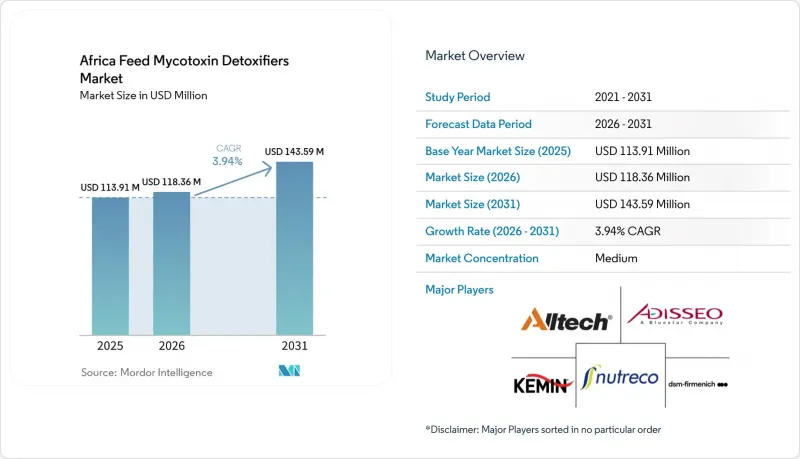
根據 Mordor Intelligence 預測,非洲飼料清除劑市場規模預計將在 2025 年達到 1.1391 億美元,從 2026 年的 1.1836 億美元成長到 2031 年的 1.4359 億美元,在 2026 年至 2031 年的預測期內,複合年成長率將達到 3.94%。
本報告按添加劑(粘合劑和生物轉化劑)、動物類型(家禽、反芻動物、豬、水產養殖及其他動物)和地區(埃及、肯亞、南非及其他非洲國家)進行細分。市場預測以價值(美元)和數量(噸)表示。
非洲飼料用黴菌毒素去除劑市場的趨勢與見解。
非洲飼料穀物中黃麴毒素和Fumonisins含量高
非洲對黴菌毒素清除劑的需求主要受飼料飼料(尤其是以玉米為主的飼料系統)黴菌毒素污染風險持續存在的驅動,而玉米飼料系統在全部區域的畜牧業中佔據主導地位。根據帝斯曼-菲美意全球黴菌毒素調查(2025年1月至12月),撒哈拉以南非洲被認定為黴菌毒素污染風險極高的地區,其中黃麴毒素和Fumonisins是影響飼料安全的主要毒素。調查還指出,黴菌毒素污染通常以「混合污染」的形式出現,即涉及多種毒素而非單一毒素,這增加了商業飼料生產商和畜牧養殖戶的飼料品管。這種污染模式推動了對能夠同時清除多種毒素的先進黴菌毒素清除劑的需求,從而有助於維護非洲飼料產業的動物健康、生產力和飼料安全標準。
商業複合飼料產能擴張
由於非洲傳統複合飼料生產的擴張,非洲飼料用黴菌毒素去除劑市場正迅速成長。根據Alltech發布的《2025年農業食品展望》,2025年非洲複合飼料產量將達到6,420萬噸,比2024年增加11.5%。這一成長鞏固了非洲連續第二年成為全球成長最快的飼料生產地區的地位。隨著飼料生產的商業化程度不斷提高,生產商更加重視飼料的品質、穩定性和風險管理。大規模飼料廠批量採購穀物,並遵循更嚴格的品質保證標準,推動了對黴菌毒素去除劑的需求,以應對污染風險並確保牲畜的最佳生產力。因此,工業飼料生產的持續成長正在支撐非洲飼料市場對黴菌毒素控制解決方案的需求。
高價產品與低成本黏土基替代品的比較
該市場面臨的限制因素是,與傳統的黏土基吸附劑相比,先進的解毒解決方案價格相對較高。對成本敏感的畜牧養殖戶和飼料混合商,尤其是在非正規和小規模生產系統中,在選擇飼料添加劑時往往優先考慮價格因素。西非國家經濟共同體區域農業和糧食組織(RAAF/ARAA)在2024年11月進行的一項調查中強調了這一問題,該調查指出,快速黃麴毒素檢測試劑的高成本是該地區飼料安全管理面臨的一項重大挑戰。這些成本相關的障礙阻礙了對全面黴菌毒素控制的投資,並延緩了高品質解毒劑在非洲飼料產業價格敏感型領域的應用。
細分市場分析
預計到2025年,在非洲飼料黴菌毒素去除市場中,黏合劑將佔據最大的市場佔有率,達到65.0%。黏合劑在商業飼料生產中扮演著舉足輕重的角色,並且能夠有效控制黴菌毒素風險,因此仍然是市場需求的基石。黏合劑的廣泛應用、在飼料生產商中的高認可度以及與現有飼料配方的兼容性,都促使其在各個畜牧領域中持續推廣。尤其是在以玉米為基礎的飼料體系中,對黴菌毒素污染的擔憂顯著影響採購決策,因此對黏合劑的需求更為強勁。此外,黏合劑的成本效益和易於融入飼料生產流程的特點,也進一步鞏固了其在常規飼料安全計畫中的作用。
在非洲飼料用黴菌毒素去除劑市場,變壓器細分市場預計將以最高的成長率成長,2026年至2031年的複合年成長率(CAGR)將達到3.9%。這一成長的驅動力在於,人們日益認知到需要能夠應對傳統吸附方法無法有效處理的複雜污染問題的解決方案。變壓器作為傳統解毒策略的補充,正受到越來越多的關注,因為它們可以透過生物轉化過程去除更廣泛的黴菌毒素。對於旨在提高飼料安全性和性能的先進飼料生產企業而言,採用生物轉化劑尤其重要。隨著品質標準的日益嚴格,商業生產系統中對多功能解毒技術的興趣也日益濃厚。
其他好處
- Excel格式的市場預測(ME)表
- 3個月的分析師支持
目錄
第1章:引言
- 研究假設和市場定義
- 調查範圍
- 調查方法
第2章:本報告的內容
第3章:執行摘要和主要發現
第4章 主要產業趨勢
- 飼養的動物數量
- 家禽
- 反芻動物
- 豬
- 飼料生產
- 水產養殖
- 家禽
- 反芻動物
- 豬
- 法律規範
- 埃及
- 肯亞
- 南非
- 其他非洲國家
- 價值鍊和通路分析
- 市場促進因素
- 非洲飼料穀物中黃麴毒素和Fumonisins含量高。
- 擴大市售複合飼料的生產能力
- 家禽業整合與食品安全監測
- 非洲聯盟和國家黃麴毒素控制計劃
- 黃麴毒素檢測迅速普及,且對基礎設施的要求不高。
- 在飼料中擴大使用多樣化產品和劣質穀物
- 市場限制因素
- 高價黏土替代品與低價黏土替代品的比較
- 小規模農戶和農場工人意識薄弱。
- 國內對當地毒素概況的檢驗不足。
- 在常規飼料分發管道之外,執法力量零散。
第5章 市場規模與成長預測
- 添加劑
- 粘合劑
- 生物轉化劑
- 依動物類型
- 水產養殖
- 魚
- 蝦
- 其他養殖物種
- 家禽
- 肉雞
- 產蛋母雞
- 其他家禽
- 反芻動物
- 牛
- 牛
- 其他反芻動物
- 豬
- 其他動物
- 水產養殖
- 按地區
- 埃及
- 肯亞
- 南非
- 其他非洲地區
第6章 競爭情勢
- 市場集中度
- 策略趨勢
- 市佔率分析
- 公司簡介
- DSM-Firmenich AG
- Kemin Industries, Inc.
- Nutreco NV(SHV Holdings NV)
- Alltech, Inc.
- Bluestar Adisseo Company(China National BlueStar(Group)Co., Ltd.)
- Impextraco NV
- Anpario plc
- Norel, SA
- Orffa International Holding BV(Marubeni Corporation)
- Olmix SA(Olmix Group)
- Perstorp Holding AB(PETRONAS Chemicals Group Berhad)
- VisscherHolland BV
- Micron Bio-Systems Ltd(Volac International Limited)
- Special Nutrients, Inc.
- Novonesis A/S
第7章 執行長需要思考的關鍵策略問題
According to Mordor Intelligence, the africa feed mycotoxin detoxifiers market was valued at USD 113.91 million in 2025 and is projected to grow from USD 118.36 million in 2026 to USD 143.59 million by 2031, registering a CAGR of 3.94% during the forecast period of 2026-2031.
This report is Segmented by Sub-Additive (Binders and Biotransformers), by Animal Type (Poultry, Ruminants, Swine, Aquaculture, and Other Animals), and by Geography (Egypt, Kenya, South Africa, Rest of Africa). The Market Forecasts are Provided in Terms of Value (USD) and Volume (Metric Tons).
Africa Feed Mycotoxin Detoxifiers Market Trends and Insights
High Aflatoxin and Fumonisin Load in African Feed Grains
The Africa feed mycotoxin detoxifiers market is driven by the ongoing risk of mycotoxin contamination in feed grains, particularly in maize-based feed systems, which are predominant in livestock production across the region. The DSM-Firmenich World Mycotoxin Survey (January-December 2025) identified Sub-Saharan Africa as an extreme-risk region for mycotoxin contamination, with aflatoxins and fumonisins being the primary toxins impacting feed safety. The survey also noted that mycotoxin contamination often occurs as co-contamination rather than isolated toxin events, complicating feed quality management for commercial feed manufacturers and livestock producers. This contamination pattern is increasing the demand for advanced mycotoxin detoxifiers capable of addressing multiple toxins simultaneously, thereby supporting animal health, productivity, and feed safety standards in the African feed industry.
Expansion of Commercial Compound Feed Capacity
The Africa feed mycotoxin detoxifiers market is experiencing growth due to the rapid expansion of formal compound feed manufacturing in the region. According to the Alltech Agri-Food Outlook 2025, Africa produced 64.2 million metric tons of compound feed in 2025, marking an 11.5% increase from 2024. This growth positioned Africa as the fastest-growing feed-producing region globally for the second consecutive year. As feed production becomes more commercialized, manufacturers are prioritizing feed quality, consistency, and risk management. Larger feed mills, which procure grain in bulk and adhere to stricter quality assurance standards, are driving the demand for mycotoxin detoxifiers to address contamination risks and ensure optimal animal performance. As a result, the continued growth of industrial feed production is sustaining the demand for mycotoxin management solutions in the African feed market.
Premium Pricing Versus Low-Cost Clay Alternatives
The market is constrained by the relatively high cost of advanced detoxification solutions compared to conventional clay-based binders. Cost-sensitive livestock producers and feed mixers, particularly in informal and small-scale production systems, often prioritize affordability when choosing feed additives. This issue was highlighted in a November 2024 mission by the ECOWAS Regional Agency for Agriculture and Food (RAAF/ARAA), which identified the high cost of reagents for rapid aflatoxin tests as a significant challenge to feed safety management in the region. These cost-related barriers hinder investment in comprehensive mycotoxin control measures and slow the adoption of premium detoxifiers in price-sensitive segments of the African feed industry.
Other drivers and restraints analyzed in the detailed report include:
- Poultry Sector Intensification and Food-Safety Scrutiny
- African Union and National Aflatoxin Control Programs
- Fragmented Enforcement Outside Formal Feed Channels
For complete list of drivers and restraints, kindly check the Table Of Contents.
Segment Analysis
The Africa feed mycotoxin detoxifiers market share for binders held the largest 65.0% in 2025. Binders remain a cornerstone of demand due to their established role in commercial feed production and their effectiveness in managing mycotoxin risks. Their widespread availability, familiarity among feed manufacturers, and compatibility with existing feed formulations contribute to their continued adoption across various livestock sectors. Demand is particularly robust in maize-based feed systems, where contamination concerns significantly influence purchasing decisions. Additionally, their cost efficiency and ease of integration into feed manufacturing processes further solidify their role in routine feed safety programs.
The Africa feed mycotoxin detoxifiers market size for biotransformers is forecast to grow at the fastest CAGR of 3.9% from 2026 to 2031. This growth is driven by increasing recognition of the need for solutions that address complex contamination profiles beyond traditional adsorption methods. Biotransformers are gaining traction due to their ability to target a broader range of mycotoxins through biological conversion processes, complementing conventional detoxification strategies. Their adoption is particularly significant in advanced feed operations aiming for enhanced feed safety and improved performance outcomes. As quality standards become more stringent, interest in multifunctional detoxification technologies is expanding across commercial production systems.
Complete Report Scope:
- By Sub-Additive
- Binders
- Biotransformers
- By Animal Type
- Aquaculture
- Fish
- Shrimp
- Other Aquaculture Species
- Poultry
- Broiler
- Layer
- Other Poultry Birds
- Ruminants
- Beef Cattle
- Dairy Cattle
- Other Ruminants
- Swine
- Other Animals
- Aquaculture
- By Geography
- Egypt
- Kenya
- South Africa
- Rest of Africa
List of Companies Covered in this Report:
- DSM-Firmenich AG
- Kemin Industries, Inc.
- Nutreco N.V. (SHV Holdings N.V.)
- Alltech, Inc.
- Bluestar Adisseo Company (China National BlueStar (Group) Co., Ltd.)
- Impextraco NV
- Anpario plc
- Norel, S.A.
- Orffa International Holding B.V. (Marubeni Corporation)
- Olmix S.A. (Olmix Group)
- Perstorp Holding AB (PETRONAS Chemicals Group Berhad)
- VisscherHolland B.V.
- Micron Bio-Systems Ltd (Volac International Limited)
- Special Nutrients, Inc.
- Novonesis A/S
Additional Benefits:
- The market estimate (ME) sheet in Excel format
- 3 months of analyst support
TABLE OF CONTENTS
1 INTRODUCTION
- 1.1 Study Assumptions and Market Definition
- 1.2 Scope of the Study
- 1.3 Research Methodology
2 REPORT OFFERS
3 EXECUTIVE SUMMARY AND KEY FINDINGS
4 KEY INDUSTRY TRENDS
- 4.1 Animal Headcount
- 4.1.1 Poultry
- 4.1.2 Ruminants
- 4.1.3 Swine
- 4.2 Feed Production
- 4.2.1 Aquaculture
- 4.2.2 Poultry
- 4.2.3 Ruminants
- 4.2.4 Swine
- 4.3 Regulatory Framework
- 4.3.1 Egypt
- 4.3.2 Kenya
- 4.3.3 South Africa
- 4.3.4 Rest of Africa
- 4.4 Value Chain and Distribution Channel Analysis
- 4.5 Market Drivers
- 4.5.1 High aflatoxin and fumonisin load in African feed grains
- 4.5.2 Expansion of commercial compound feed capacity
- 4.5.3 Poultry sector intensification and food-safety scrutiny
- 4.5.4 African Union and national aflatoxin control programs
- 4.5.5 Rapid uptake of low-infrastructure aflatoxin testing
- 4.5.6 Rising use of variable by-products and distressed grains in feed
- 4.6 Market Restraints
- 4.6.1 Premium pricing versus low-cost clay alternatives
- 4.6.2 Low awareness among smallholders and on-farm mixers
- 4.6.3 Sparse in-country efficacy validation for local toxin profiles
- 4.6.4 Fragmented enforcement outside formal feed channels
5 MARKET SIZE AND GROWTH FORECASTS (VALUE AND VOLUME)
- 5.1 By Sub-Additive
- 5.1.1 Binders
- 5.1.2 Biotransformers
- 5.2 By Animal Type
- 5.2.1 Aquaculture
- 5.2.1.1 Fish
- 5.2.1.2 Shrimp
- 5.2.1.3 Other Aquaculture Species
- 5.2.2 Poultry
- 5.2.2.1 Broiler
- 5.2.2.2 Layer
- 5.2.2.3 Other Poultry Birds
- 5.2.3 Ruminants
- 5.2.3.1 Beef Cattle
- 5.2.3.2 Dairy Cattle
- 5.2.3.3 Other Ruminants
- 5.2.4 Swine
- 5.2.5 Other Animals
- 5.2.1 Aquaculture
- 5.3 By Geography
- 5.3.1 Egypt
- 5.3.2 Kenya
- 5.3.3 South Africa
- 5.3.4 Rest of Africa
6 COMPETITIVE LANDSCAPE
- 6.1 Market Concentration
- 6.2 Strategic Moves
- 6.3 Market Share Analysis
- 6.4 Company Profiles (Includes Global Level Overview, Market Level Overview, Core Segments, Financials as Available, Strategic Information, Market Rank/Share for Key Companies, Products and Services, and Recent Developments)
- 6.4.1 DSM-Firmenich AG
- 6.4.2 Kemin Industries, Inc.
- 6.4.3 Nutreco N.V. (SHV Holdings N.V.)
- 6.4.4 Alltech, Inc.
- 6.4.5 Bluestar Adisseo Company (China National BlueStar (Group) Co., Ltd.)
- 6.4.6 Impextraco NV
- 6.4.7 Anpario plc
- 6.4.8 Norel, S.A.
- 6.4.9 Orffa International Holding B.V. (Marubeni Corporation)
- 6.4.10 Olmix S.A. (Olmix Group)
- 6.4.11 Perstorp Holding AB (PETRONAS Chemicals Group Berhad)
- 6.4.12 VisscherHolland B.V.
- 6.4.13 Micron Bio-Systems Ltd (Volac International Limited)
- 6.4.14 Special Nutrients, Inc.
- 6.4.15 Novonesis A/S


