


 |
市場調查報告書
商品編碼
1940681
泰國快遞、速遞和小包裹(CEP) 市場佔有率分析、行業趨勢和統計數據、成長預測 (2026-2031)Thailand Courier, Express, And Parcel (CEP) - Market Share Analysis, Industry Trends & Statistics, Growth Forecasts (2026 - 2031) |
||||||

※ 本網頁內容可能與最新版本有所差異。詳細情況請與我們聯繫。
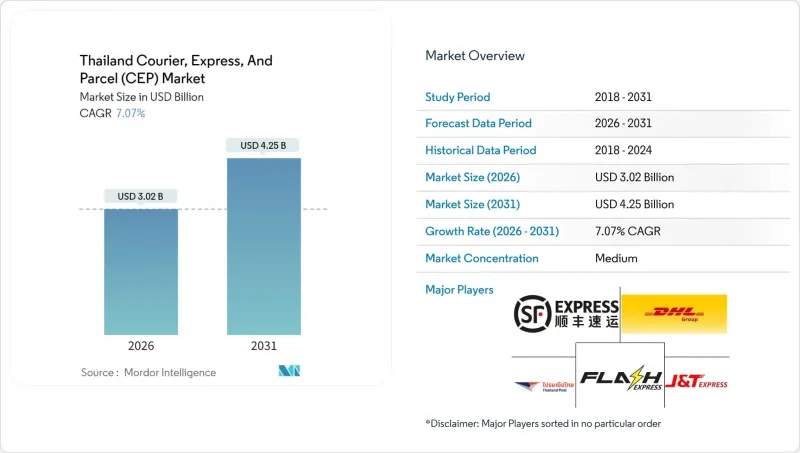
預計泰國快遞、速遞和小包裹(CEP) 市場將從 2025 年的 28.2 億美元成長到 2026 年的 30.2 億美元,到 2031 年將達到 42.5 億美元,2026 年至 2031 年的複合年成長率為 7.07%。
這一穩健的成長軌跡反映了泰國作為區域物流樞紐的地位,受益於政府的「泰國4.0」策略、電子商務的持續發展大規模基礎設施建設。可支配收入的成長促進了國內小包裹流通,而連接寮國-中國走廊的高速鐵路則為跨境的快速擴張奠定了基礎。低溫運輸投資正在拓展藥品和生鮮食品的物流服務範圍,而5G連接和人工智慧投資則實現了路線最佳化、庫存視覺化和即時追蹤。平台型物流產業的興起既推動了競爭,也促使企業不斷提升效率,從而維持了高品質的服務和快速的配送速度。
泰國快遞、速遞與小包裹(CEP) 市場趨勢與洞察
電子商務的爆炸性成長
泰國線上零售業持續快速成長,這主要得益於數位支付的普及和行動優先的購物習慣。各大平台承諾當日送達,迫使快遞公司在確保網路可靠性的同時,縮短截止時間。持續不斷的折扣宣傳活動在旺季推高了需求,促使商家採取應對措施,例如建立臨時收出貨中心、利用人工智慧進行需求預測以及群眾外包司機等。尤其是在曼谷,較高的小包裹密度使得商家即使在價格競爭激烈的情況下也能製定盈利的配送路線。政府對無現金支付的支持進一步擴大了基本客群,而更快的現金處理速度也降低了配送失敗率。
中產階級可支配所得增加
泰國央行預測GDP成長將加快,這將提升家庭購買力,並促使更多消費者為了方便而選擇高階快捷郵件服務。財政部推出的數位錢包獎勵策略注入了流動性,直接轉化為線上購物的成長。隨著國內旅遊業的復甦,酒店業的需求也隨之增加,帶動了對床上用品、食品和酒店用品等配送服務的需求,這些服務需要送往全國各地的酒店。為此,快遞公司正在將隔天達服務擴展到清邁和普吉島等區域性城市,併升級其面向客戶的應用程式,以提供更精準的送達時間。如今,高階護膚品、電子產品和專門食品咖啡均採用溫控包裝配送,這顯示消費者越來越願意為更優質的服務付費。
競爭加劇導致利潤率下降
平台物流集團過度促銷的策略給現有物流公司的小包裹價格帶來了壓力。折扣券和免運費宣傳活動降低了消費者的預期,迫使承運商擴大規模並實現自動化以維持獲利能力。規模較小的承運商無力投資機器人分類中心,難以維持服務水平,引發了一波策略聯盟浪潮。泰國郵政正透過增值倉儲和清關服務來緩解壓力,而私人宅配業者則在試點將退貨處理和包裹保險相結合的訂閱模式。
細分市場分析
電子商務將在交易量方面繼續保持領先地位,預計到2025年將佔據34.86%的收入佔有率,這主要得益於社交電商直播和預售活動的蓬勃發展。溫控包裝和身分驗證配送在化妝品和酒類產業正日益普及。醫療小包裹雖然數量不多,但由於嚴格的監管要求(例如需要符合GDP認證的加工流程),其利潤率仍然很高。受人口老化和藥品分銷改革的推動,預計2026年至2031年間,泰國快遞、速遞和小包裹(CEP)行業的醫療收入將以7.41%的複合年成長率成長。
隨著工廠實施準時制生產模式,對製造業小包裹的需求預計將保持強勁,因為低價值、高緊急性的備件需要透過可靠的宅配運輸。金融服務信封的使用量隨著銀行對帳單的數位化提高而逐漸下降,但對重要文件宅配的需求依然旺盛,這些快遞公司負責遞送法律文件和公證合約。
儘管國際小包裹目前僅佔收入的一小部分,但預計其成長速度將超過國內配送,2026年至2031年的複合年成長率將達到7.31%。這一成長動能主要得益於供應商來源多元化(主要來自中國)、小小包裹免稅配額優惠政策以及東協單一窗口提供的簡化海關API。受昆明-曼谷鐵路走廊建設的推動,泰國快遞、速遞和小包裹(CEP)市場規模預計到2031年將超過15.3億美元,該走廊將縮短幹線運輸時間。泰國郵政已推出海關預付服務以縮短最後一公里配送週期,而私人宅配業者則為面向泰國消費者的海外企業提供集履約和客戶服務於一體的增值服務。
國內運輸是公司的核心業務,預計到2025年將佔總收入的64.35%,主要得益於大都會圈的需求。在曼谷,每位駕駛每天的包裹遞送密度超過150件。然而,區域擴張計畫以及在農業省份獲得無人機試飛許可表明,承運人已做好準備,迎接首都以外地區的下一波成長。服務柔軟性——例如站點內的包裹櫃、隔夜送達和即時重新派送安排——是該領域競爭優勢的關鍵所在。
其他福利:
- Excel格式的市場預測(ME)表
- 3個月的分析師支持
目錄
第1章 引言
- 研究假設和市場定義
- 調查範圍
第2章調查方法
第3章執行摘要
第4章 市場情勢
- 市場概覽
- 人口統計數據
- 按經濟活動分類的GDP分配
- 按經濟活動分類的GDP成長
- 通貨膨脹
- 經濟表現及概況
- 電子商務產業的趨勢
- 製造業趨勢
- 運輸和倉儲業GDP
- 出口趨勢
- 進口趨勢
- 燃油價格
- 物流績效
- 基礎設施
- 法律規範
- 價值鍊和通路分析
- 市場促進因素
- 電子商務的爆炸性成長
- 中產階級可支配所得不斷成長
- 政府主導的「泰國4.0」數位物流推廣
- 物流基礎建設(東部經濟走廊、高速公路)
- 利用寮國-泰國高速鐵路進行跨境電子商務
- 擴大低溫運輸和最後一公里網路
- 市場限制
- 競爭加劇導致利潤率下降
- 燃油價格波動
- 零工經濟導致外送員離職率
- 曼谷交通瓶頸
- 市場創新
- 波特五力分析
- 新進入者的威脅
- 買方的議價能力
- 供應商的議價能力
- 替代品的威脅
- 競爭對手之間的競爭
第5章 市場規模與成長預測
- 目的地
- 國內的
- 國際的
- 配送速度
- 快遞
- 非快遞
- 模型
- B2B
- B2C
- C2C
- 運輸重量
- 重型貨物
- 輕型貨物
- 中等重量貨物
- 交通工具
- 航空
- 陸上
- 其他
- 終端用戶產業
- 電子商務
- 金融服務(BFSI)
- 衛生保健
- 製造業
- 一級產業
- 批發零售(線下)
- 其他
第6章 競爭情勢
- 市場集中度
- 重大策略舉措
- 市佔率分析
- 公司簡介
- Aqua Corporation(including Thai Parcel Public Company Limited)
- BEST Inc.
- CJ Logistics Corporation
- DHL Group
- FedEx
- Flash Express
- J&T Express
- JWD Group
- Nim Express Company Ltd.
- SF Express(KEX-SF)
- Thailand Post
- United Parcel Service(UPS)
第7章 市場機會與未來展望
The Thailand courier express parcel market is expected to grow from USD 2.82 billion in 2025 to USD 3.02 billion in 2026 and is forecast to reach USD 4.25 billion by 2031 at 7.07% CAGR over 2026-2031.
This healthy trajectory reflects Thailand's role as a regional logistics hub benefiting from the government's Thailand 4.0 strategy, continued e-commerce adoption, and large-scale infrastructure upgrades that knit together road, rail, air, and port assets. Rising disposable income strengthens domestic parcel flows, while the high-speed rail link to the Laos-China corridor positions the country for rapid cross-border expansion. Cold-chain investment widens service breadth toward pharmaceuticals and perishables, and 5G connectivity plus AI investments enable route optimization, inventory visibility, and real-time tracking. Platform-owned logistics arms inject additional competition but also stimulate continuous efficiency improvements that keep service quality high and delivery times low.
Thailand Courier, Express, And Parcel (CEP) Market Trends and Insights
Explosive Growth of E-Commerce
Thailand's online retail sector continues to soar, lifted by digital-payment penetration and mobile-first shopping habits. Major platforms integrate same-day delivery promises, forcing couriers to tighten cutoff times while maintaining network reliability. Continuous discount events create peak-season surges that operators now manage with temporary hubs, AI-based demand forecasting, and crowdsourced driver pools. The resulting parcel density, especially in Bangkok, supports profitable route planning even at competitive price points. Government support for cashless transactions further expands the addressable customer base and lowers failed-delivery rates by shrinking cash-handling time.
Rising Middle-Class Disposable Income
The Bank of Thailand projects accelerating GDP growth that lifts household consumption power, nudging shoppers toward premium express options for convenience. The Ministry of Finance's digital-wallet stimulus injects liquidity that translates directly into online purchases. Domestic travel and tourism rebound adds demand from hospitality suppliers moving linen, food, and amenities to hotels statewide. Couriers expand next-day coverage to regional cities such as Chiang Mai and Phuket in response, while upgrading customer-facing apps to offer precise delivery slots. Luxury skincare, electronics, and specialty coffee now travel via temperature-controlled packs, signaling willingness to pay for service upgrades.
Aggressive Price Competition Eroding Margins
Cut-throat promotional tactics by platform-owned logistics groups compress per-parcel yields for incumbents. Discount vouchers and free-shipping festivals reset consumer expectations downward, forcing carriers to pursue scale and automation to stay profitable. Smaller players without capital for sort-center robotics struggle to match service levels, sparking a wave of strategic alliances. Thailand Post offsets pressure by monetizing value-added warehousing and customs brokerage, while private couriers pilot subscription models that bundle returns handling and parcel insurance.
Other drivers and restraints analyzed in the detailed report include:
- Government Thailand 4.0 Digital-Logistics Push
- Logistics-Infrastructure Upgrades (EEC, Highways)
- Fuel-Price Volatility
For complete list of drivers and restraints, kindly check the Table Of Contents.
Segment Analysis
E-commerce consistently tops the volume chart with 34.86% revenue share in 2025, underpinned by social-commerce livestreams and payday flash sales. Temperature-controlled packs and secure ID-check delivery are gaining traction within cosmetics and alcohol verticals. Healthcare parcels generate less volume but higher margins, thanks to stringent regulatory compliance mandating GDP-certified handling. The Thailand courier express parcel industry expects healthcare revenue to grow by a 7.41% CAGR between 2026-2031, helped by aging demographics and national pharmaceutical distribution reforms.
Manufacturing parcels stay relevant as factories adopt just-in-time models that need dependable courier links for low-value high-urgency spares. Financial-services envelopes decline gradually as banks digitize statements, though secure-document couriers still serve legal filings and notarized contracts.
International parcels, though contributing a smaller proportion of revenue, are projected to grow faster than domestic flows at a 7.31% CAGR between 2026-2031. That momentum stems from supplier diversification out of China, duty-free thresholds that favor small parcels, and streamlined customs APIs under the ASEAN Single Window. The Thailand courier express parcel market size related to cross-border flows is forecast to surpass USD 1.53 billion by 2031, aided by the Kunming-Bangkok rail corridor that compresses line-haul times. Thailand Post already offers customs pre-payment to shorten last-mile cycles, while private couriers bundle fulfillment and customer-service add-ons for overseas merchants eyeing Thai consumers.
Domestic traffic remains the volume cornerstone with 64.35% revenue share of 2025, anchored by dense metropolitan demand that yields route densities above 150 parcels per driver per day in Bangkok. However, rural expansion programs and drone trial permits in agricultural provinces show carriers are preparing for next-wave growth beyond the capital. Service flexibility-parcel lockers in petrol stations, timed evening delivery, and real-time rescheduling-defines competitive advantage within this segment.
The Thailand Courier, Express, and Parcel (CEP) Market Report is Segmented by End User Industry (E-Commerce and More), Destination (Domestic and More), Speed of Delivery (Express and Non-Express), Shipment Weight (Heavy Weight Shipments and More), Mode of Transport (Air, Road, and Others), and Model (Business-To-Business, Business-To-Consumer, and Consumer-To-Consumer). The Market Forecasts are Provided in Terms of Value (USD).
List of Companies Covered in this Report:
- Aqua Corporation (including Thai Parcel Public Company Limited)
- BEST Inc.
- CJ Logistics Corporation
- DHL Group
- FedEx
- Flash Express
- J&T Express
- JWD Group
- Nim Express Company Ltd.
- SF Express (KEX-SF)
- Thailand Post
- United Parcel Service (UPS)
Additional Benefits:
- The market estimate (ME) sheet in Excel format
- 3 months of analyst support
TABLE OF CONTENTS
1 Introduction
- 1.1 Study Assumptions and Market Definition
- 1.2 Scope of the Study
2 Research Methodology
3 Executive Summary
4 Market Landscape
- 4.1 Market Overview
- 4.2 Demographics
- 4.3 GDP Distribution by Economic Activity
- 4.4 GDP Growth by Economic Activity
- 4.5 Inflation
- 4.6 Economic Performance and Profile
- 4.6.1 Trends in E-Commerce Industry
- 4.6.2 Trends in Manufacturing Industry
- 4.7 Transport and Storage Sector GDP
- 4.8 Export Trends
- 4.9 Import Trends
- 4.10 Fuel Price
- 4.11 Logistics Performance
- 4.12 Infrastructure
- 4.13 Regulatory Framework
- 4.14 Value Chain and Distribution Channel Analysis
- 4.15 Market Drivers
- 4.15.1 Explosive Growth of E-Commerce
- 4.15.2 Rising Middle-Class Disposable Income
- 4.15.3 Government "Thailand 4.0" Digital-Logistics Push
- 4.15.4 Logistics-Infrastructure Upgrades (EEC, Highways)
- 4.15.5 Cross-Border E-Commerce via Laos-Thailand High-Speed Rail
- 4.15.6 Expansion of Cold-Chain Last-Mile Networks
- 4.16 Market Restraints
- 4.16.1 Aggressive Price Competition Eroding Margins
- 4.16.2 Fuel-Price Volatility
- 4.16.3 Gig-Economy Courier Churn
- 4.16.4 Bangkok Traffic Congestion Bottlenecks
- 4.17 Technology Innovations in the Market
- 4.18 Porter's Five Forces Analysis
- 4.18.1 Threat of New Entrants
- 4.18.2 Bargaining Power of Buyers
- 4.18.3 Bargaining Power of Suppliers
- 4.18.4 Threat of Substitutes
- 4.18.5 Competitive Rivalry
5 Market Size and Growth Forecasts (Value, USD)
- 5.1 Destination
- 5.1.1 Domestic
- 5.1.2 International
- 5.2 Speed of Delivery
- 5.2.1 Express
- 5.2.2 Non-Express
- 5.3 Model
- 5.3.1 Business-to-Business (B2B)
- 5.3.2 Business-to-Consumer (B2C)
- 5.3.3 Consumer-to-Consumer (C2C)
- 5.4 Shipment Weight
- 5.4.1 Heavy Weight Shipments
- 5.4.2 Light Weight Shipments
- 5.4.3 Medium Weight Shipments
- 5.5 Mode of Transport
- 5.5.1 Air
- 5.5.2 Road
- 5.5.3 Others
- 5.6 End User Industry
- 5.6.1 E-Commerce
- 5.6.2 Financial Services (BFSI)
- 5.6.3 Healthcare
- 5.6.4 Manufacturing
- 5.6.5 Primary Industry
- 5.6.6 Wholesale and Retail Trade (Offline)
- 5.6.7 Others
6 Competitive Landscape
- 6.1 Market Concentration
- 6.2 Key Strategic Moves
- 6.3 Market Share Analysis
- 6.4 Company Profiles (Includes Global Level Overview, Market Level Overview, Core Segments, Financials as Available, Strategic Information, Market Rank/Share for Key Companies, Products and Services, and Recent Developments)
- 6.4.1 Aqua Corporation (including Thai Parcel Public Company Limited)
- 6.4.2 BEST Inc.
- 6.4.3 CJ Logistics Corporation
- 6.4.4 DHL Group
- 6.4.5 FedEx
- 6.4.6 Flash Express
- 6.4.7 J&T Express
- 6.4.8 JWD Group
- 6.4.9 Nim Express Company Ltd.
- 6.4.10 SF Express (KEX-SF)
- 6.4.11 Thailand Post
- 6.4.12 United Parcel Service (UPS)
7 Market Opportunities and Future Outlook
- 7.1 White-Space and Unmet-Need Assessment

 2026年全球宅配服務市場報告2026年全球宅配市場報告2026年全球當日配送服務市場報告2026年全球超當地語系化配送應用市場報告
 2026-2030年全球宅配包裹(CEP)市場
 宅配、包裹及小包裹市場報告:按服務類型、目的地、物品、最終用途行業和地區分類(2026-2034 年)2026年全球宅配車輛市場報告
 超當地語系化配送應用市場分析及預測(至2035年):按類型、產品、服務、技術、組件、應用、設備、流程、部署類型及最終用戶分類
 亞太地區快遞、速遞和小包裹(CEP):市場佔有率分析、行業趨勢和統計數據、成長預測(2026-2031)美國快遞、速遞和小包裹(CEP):市場佔有率分析、行業趨勢和統計數據、成長預測 (2026-2031)