


 |
市場調查報告書
商品編碼
1939578
泰國塑膠:市場佔有率分析、產業趨勢與統計、成長預測(2026-2031)Thailand Plastics - Market Share Analysis, Industry Trends & Statistics, Growth Forecasts (2026 - 2031) |
||||||

※ 本網頁內容可能與最新版本有所差異。詳細情況請與我們聯繫。
預計到 2026 年,泰國塑膠市場規模將達到 643 萬噸,高於 2025 年的 623 萬噸。
預計到 2031 年將達到 756 萬噸,2026 年至 2031 年的複合年成長率為 3.27%。
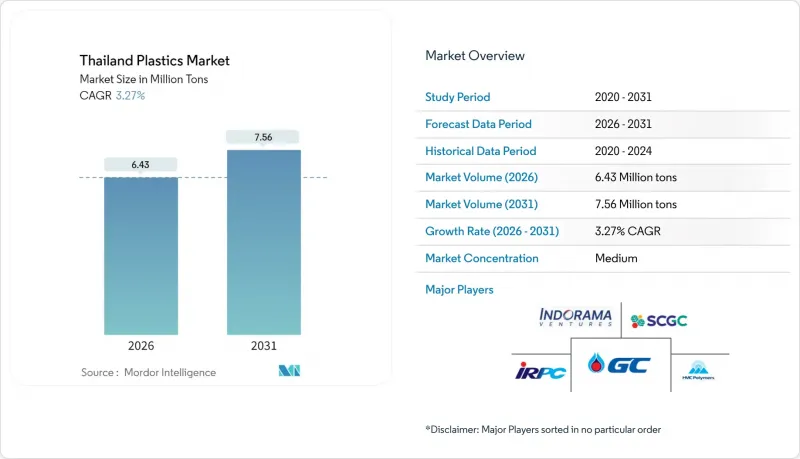
這種溫和的成長率掩蓋了關鍵的轉變,包括向低碳原料、循環經濟實踐和特種應用領域的轉型,即使大宗商品價差收窄,也能提升利潤率。雖然樹脂傳統上佔據產量主導地位,但生物聚合物正在迅速崛起,這要歸功於生物乙烯和聚乳酸(PLA)的大規模合資產能擴張。食品、飲料和電商包裝行業的需求勢頭最為強勁,而電動車供應鏈的興起和大型基礎設施計劃的推進也為工程樹脂和高性能化合物創造了新的需求。鑑於中國日益嚴重的供應過剩、石腦油價格波動以及更嚴格的廢棄物管理法規都對利潤率構成壓力,那些實現原料多元化並投資於回收基礎設施的公司,更有能力在泰國塑膠市場保護利潤。
泰國塑膠市場趨勢及分析
食品和飲料包裝行業的需求不斷成長
國內飲料消費持續成長,為包裝需求提供了穩定的支撐。將於2025年3月生效的新食品接觸標準正鼓勵加工商轉向使用可回收、耐熱和高附加價值的產品。飲料出口到鄰國柬埔寨和越南是推動需求的主要因素,自疫情爆發以來成長超過一倍的食品配送業務,每份訂單都會使用多種塑膠製品。氣溫上升、快速都市化以及旅遊業的復甦預計將繼續推動泰國塑膠市場強勁的包裝需求。隨著個人護理行業的蓬勃發展,硬質容器的需求也在同步成長,化妝品和保健品的銷售額呈現溫和的個位數成長,推動了專用包裝材料的應用。
建築和施工行業塑膠使用量的增加
政府在150多個基礎設施計劃上的支出,支撐了對PVC管道、隔熱材料和屋頂板的長期需求。 「塑膠公路」計畫每公里使用多達5噸的再生材料,標誌著政策向循環建築模式轉變,並擴大了再生樹脂的潛在市場。目前,已有800多家中大型製造商正在實施數位化訂購工具和低碳生產流程,以滿足綠色建築標準。預計大型企劃將創造100萬個新的就業崗位,從而促進住宅和商業建築的發展。即使能源價格上漲和中國廉價進口產品擠壓了利潤空間,這些因素仍將支撐對塑膠建築材料的強勁需求。
加強對一次性塑膠的監管和課稅
泰國塑膠廢棄物藍圖將於2025年1月起分階段實施,其中包括進口禁令以及對食品接觸產品更嚴格的品質標準。曼谷等都市區每天產生1800噸一次性塑膠廢棄物,當局正迅速推動課稅和標籤要求,這將增加加工商的合規成本。 《工業廢棄物管理法案》新增了一項專門用於環境影響修復的基金,並對危險廢棄物製定了更嚴格的處置規則。泰國塑膠市場的生產商必須投資於經認證的可再生或可堆肥替代品,並加強可追溯性體系,違規者將受到處罰。雖然這些法規初期會限制一次性塑膠產品,但最終將推動對高價值、永續樹脂的需求。
細分市場分析
截至2025年,傳統樹脂在泰國塑膠市場佔據70.55%的佔有率,這主要得益於完善的基礎設施、規模經濟以及多樣化的終端應用。聚乙烯和聚丙烯等樹脂支撐了包裝、汽車和建築業的需求,而PET的應用範圍也從瓶子擴展到工業紗線和輪胎織物等領域。 HMC Polymers預計2023年的銷售額將超過250億泰銖,這表明大宗商品級樹脂仍具有持續的商業性價值。工程樹脂,例如聚醯胺和聚碳酸酯,在電子組裝和電動車動力傳動系統應用的推動下,實現了中等個位數的成長。
生物聚合物是成長最快的品類,複合年成長率達5.53%,主要得益於20萬噸生物乙烯業務和7.5萬噸PLA產能的快速提升。領先的製造商目前正在試驗化學回收路線和循環石腦油流,以確保其資產基礎的未來發展,並在新的食品接觸法規下保持競爭力。傳統供應商透過獲得生物基製程的許可來拓展業務,而新參與企業則透過碳足跡聲明和可堆肥認證來凸顯自身優勢,從而縮小競爭差距。
泰國塑膠市場報告按類型(傳統塑膠、工程塑膠、生質塑膠)和應用(包裝、電氣和電子設備、建築施工、汽車和運輸設備、家具和床上用品以及其他應用)進行細分。市場預測以噸為單位。
其他福利:
- Excel格式的市場預測(ME)表
- 3個月的分析師支持
目錄
第1章 引言
- 研究假設和市場定義
- 調查範圍
第2章調查方法
第3章執行摘要
第4章 市場情勢
- 市場概覽
- 市場促進因素
- 食品和飲料包裝行業的需求不斷成長
- 建築和施工行業塑膠使用量的增加
- 對輕量化汽車和電動車零件的需求
- 電子商務的快速成長推動了防護包裝的發展
- 生物基聚合物合資企業(例如,SCGC、Braskem)
- 市場限制
- 禁止和課稅一次性塑膠製品
- 原油和石腦油價格波動
- 聚丙烯(PP)和聚乙烯(PE)供應過剩,以及來自中國的低成本進口
- 價值鏈分析
- 波特五力模型
- 供應商的議價能力
- 買方的議價能力
- 新進入者的威脅
- 替代品的威脅
- 競爭程度
第5章 市場規模與成長預測
- 按類型
- 傳統塑膠
- 聚乙烯(PE)
- 聚丙烯(PP)
- 聚氯乙烯(PVC)
- 聚苯乙烯(PS)
- 工程塑膠
- 聚對苯二甲酸乙二醇酯(PET)
- 聚醯胺(PA)
- 聚碳酸酯(PC)
- 苯乙烯共聚物(ABS 和 SAN)
- 聚丁烯對苯二甲酸酯(PBT)
- 聚甲基丙烯酸甲酯(PMMA)
- 其他工程塑膠
- 生質塑膠
- 傳統塑膠
- 透過使用
- 包裝
- 電氣和電子設備
- 建築/施工
- 汽車與運輸
- 家具和床上用品
- 其他用途
第6章 競爭情勢
- 市場集中度
- 策略趨勢
- 市佔率(%)/排名分析
- 公司簡介
- Covestro AG
- HMC Polymers Thailand
- Indorama Ventures Public Company Limited
- INEOS Styrolution Group GmbH
- IRPC Public Company Limited
- PTT Global Chemical Public Company Limited
- SCG Chemicals Co. Ltd
- Thai Plastic Industries Co. Ltd
第7章 市場機會與未來展望
Thailand Plastics Market size in 2026 is estimated at 6.43 million tons, growing from 2025 value of 6.23 million tons with 2031 projections showing 7.56 million tons, growing at 3.27% CAGR over 2026-2031.
This moderate headline growth conceals a decisive shift toward low-carbon feedstocks, circular economy practices, and specialty applications that lift margins even as commodity spreads tighten. Traditional resins dominate volumes, yet a rapid pivot to biopolymers is underway because joint ventures are unlocking bio-ethylene and PLA capacity at scale. Demand momentum remains strongest in food, beverage, and e-commerce packaging, but the emergence of an electric-vehicle supply chain and large-scale infrastructure projects creates fresh pull for engineering resins and high-performance compounds. Intensifying Chinese oversupply, volatile naphtha costs, and stricter waste regulations pressure margins; firms that diversify feedstocks and invest in recycling infrastructure are best placed to protect returns in the Thailand plastics market.
Thailand Plastics Market Trends and Insights
Rising Demand from Food and Beverage Packaging
Domestic beverage consumption continues to expand, locking in steady packaging tonnage. New food-contact standards effective March 2025 encourage converters to adopt recyclable and heat-resistant formulations that command premium pricing. Beverage exports to neighboring Cambodia and Vietnam add incremental volumes, and food-delivery growth has more than doubled since the pandemic, generating multiple plastic items per order. Rising temperatures, rapid urbanization, and a tourism rebound sustain packaging intensity in the Thailand plastics market. Demand for rigid containers grows in parallel with the personal-care segment, where mid-single-digit sales growth of cosmetics and health products boosts specialized packaging uptake.
Increasing Plastics Use in Building and Construction
Government spending across over 150 infrastructure projects underwrites long-run demand for PVC pipes, insulation, and roofing sheets. The Plastic Roads initiative, which incorporates up to five tons of recycled material per kilometer, signals a policy pivot toward circular construction practices that enlarge the addressable market for recycled resin. More than 800 mid- and large-size manufacturers now integrate digital ordering tools and low-carbon processes to satisfy green-building specifications. An expected 1 million new jobs linked to megaprojects will spur residential and commercial builds, reinforcing demand for plastic building products even as energy inflation and cheap Chinese imports squeeze margins.
Stricter Single-Use-Plastic Bans and Taxes
Thailand's plastic-waste roadmap phases out imports from January 2025 and tightens quality rules for food-contact articles. Urban centers such as Bangkok generate 1,800 metric tons of single-use waste daily, prompting authorities to fast-track levies and labeling mandates that raise compliance costs for converters. Additional legislation under the Draft Industrial Waste Management Act introduces a dedicated fund to remediate environmental impacts and imposes stricter disposal rules on hazardous scrap. Producers in the Thailand plastics market must invest in certified recyclable or compostable alternatives and enhance traceability systems or face penalties. These rules initially restrict disposable items but ultimately catalyze demand for higher-value sustainable resins.
Other drivers and restraints analyzed in the detailed report include:
- Lightweighting Needs in Automotive and EV Components
- Bio-Based Polymer Joint Ventures
- Polypropylene and Polyethylene Oversupply and Low-Cost Imports from China
For complete list of drivers and restraints, kindly check the Table Of Contents.
Segment Analysis
Traditional resins retained 70.55% of Thailand's plastics market share in 2025 thanks to entrenched infrastructure, scale economics, and diversified end-use exposure. Among them, polyethylene and polypropylene anchor packaging, automotive, and construction demand, while PET has grown beyond bottles into technical yarns and tire fabrics. HMC Polymers surpassed THB 25 billion in sales in 2023, illustrating the continuing commercial relevance of commodity grades. Engineering resins such as polyamides and polycarbonates post mid-single-digit demand gains tied to electronics assembly and EV power-train applications.
Biopolymers are the fastest-expanding category, progressing at a 5.53% CAGR and lifted by the 200,000-ton bio-ethylene venture and the 75,000-ton PLA expansion. Mainstream producers now trial chemical-recycling routes and circular naphtha streams to future-proof their asset bases and preserve relevance under new food-contact rules. The competitive gap narrows as conventional suppliers license bio-based processes, while newcomers differentiate through carbon-footprint declarations and compostability certifications.
The Thailand Plastics Report is Segmented by Type (Traditional Plastics, Engineering Plastics, and Bioplastics), Application (Packaging, Electrical and Electronics, Building and Construction, Automotive and Transportation, Furniture and Bedding, and Other Applications). The Market Forecasts are Provided in Terms of Volume (Tons).
List of Companies Covered in this Report:
- Covestro AG
- HMC Polymers Thailand
- Indorama Ventures Public Company Limited
- INEOS Styrolution Group GmbH
- IRPC Public Company Limited
- PTT Global Chemical Public Company Limited
- SCG Chemicals Co. Ltd
- Thai Plastic Industries Co. Ltd
Additional Benefits:
- The market estimate (ME) sheet in Excel format
- 3 months of analyst support
TABLE OF CONTENTS
1 Introduction
- 1.1 Study Assumptions and Market Definition
- 1.2 Scope of the Study
2 Research Methodology
3 Executive Summary
4 Market Landscape
- 4.1 Market Overview
- 4.2 Market Drivers
- 4.2.1 Rising Demand from Food and Beverage Packaging
- 4.2.2 Increasing Plastics Use in Building and Construction
- 4.2.3 Lightweighting Needs in Automotive and EV Components
- 4.2.4 Rapid E-Commerce Growth Boosting Protective Packaging
- 4.2.5 Bio-Based Polymer Joint Ventures (E.G., SCGC, Braskem)
- 4.3 Market Restraints
- 4.3.1 Stricter Single-Use-Plastic Bans and Taxes
- 4.3.2 Crude-Oil/Naphtha Price Volatility
- 4.3.3 PP and PE Oversupply and Low-Cost Imports from China
- 4.4 Value Chain Analysis
- 4.5 Porter's Five Forces
- 4.5.1 Bargaining Power of Suppliers
- 4.5.2 Bargaining Power of Buyers
- 4.5.3 Threat of New Entrants
- 4.5.4 Threat of Substitutes
- 4.5.5 Degree of Competition
5 Market Size and Growth Forecasts (Volume)
- 5.1 By Type
- 5.1.1 Traditional Plastics
- 5.1.1.1 Polyethylene (PE)
- 5.1.1.2 Polypropylene (PP)
- 5.1.1.3 Polyvinyl Chloride (PVC)
- 5.1.1.4 Polystyrene (PS)
- 5.1.2 Engineering Plastics
- 5.1.2.1 Polyethylene Terephthalate (PET)
- 5.1.2.2 Polyamides (PA)
- 5.1.2.3 Polycarbonates (PC)
- 5.1.2.4 Styrene Copolymers (ABS and SAN)
- 5.1.2.5 Polybutylene Terephthalate (PBT)
- 5.1.2.6 Polymethyl Methacrylate (PMMA)
- 5.1.2.7 Other Engineering Plastics
- 5.1.3 Bioplastics
- 5.1.1 Traditional Plastics
- 5.2 By Application
- 5.2.1 Packaging
- 5.2.2 Electrical and Electronics
- 5.2.3 Building and Construction
- 5.2.4 Automotive and Transportation
- 5.2.5 Furniture and Bedding
- 5.2.6 Other Applications
6 Competitive Landscape
- 6.1 Market Concentration
- 6.2 Strategic Moves
- 6.3 Market Share (%)/Ranking Analysis
- 6.4 Company Profiles (includes Global level Overview, Market level overview, Core Segments, Financials, Strategic Information, Market Rank/Share, Products and Services, Recent Developments)
- 6.4.1 Covestro AG
- 6.4.2 HMC Polymers Thailand
- 6.4.3 Indorama Ventures Public Company Limited
- 6.4.4 INEOS Styrolution Group GmbH
- 6.4.5 IRPC Public Company Limited
- 6.4.6 PTT Global Chemical Public Company Limited
- 6.4.7 SCG Chemicals Co. Ltd
- 6.4.8 Thai Plastic Industries Co. Ltd
7 Market Opportunities and Future Outlook
- 7.1 White-space and Unmet-need Assessment

 塑膠紙托盤市場-全球產業規模、佔有率、趨勢、機會、預測:按類型、產品、分銷管道、地區和競爭格局分類,2021-2031年
 塑膠研究展望:2025
 磁性塑膠市場:2026-2032年全球市場預測(按類型、樹脂類型、形狀、製造程序和磁性塑膠應用分類)
 2026-2030年全球塑膠市場
 塑膠市場規模、佔有率、趨勢和預測:按類型、應用、最終用戶和地區分類,2026-2034年塑膠市場:依形狀、等級、製造流程、類型、應用和分銷管道分類-2026-2032年全球市場預測
 塑膠市場分析及預測(至2035年):類型、產品、應用、材料類型、技術、最終用戶、製程、組件、安裝類型
 東南亞塑膠市場:市場佔有率分析、產業趨勢與統計、成長預測(2026-2031)越南塑膠市場:市場佔有率分析、產業趨勢與統計、成長預測(2026-2031)
 2026-2034年全球塑膠分解細菌市場規模、佔有率、趨勢和成長分析報告