


 |
市場調查報告書
商品編碼
1880369
全球碳化矽 (SiC) 市場(按 SiC 分立元件、電壓範圍和汽車級 SiC 裝置分類)—預測至 2030 年Silicon Carbide (SiC) Market by SiC Discrete Device, Voltage Range, Automotive SiC Device - Global Forecast to 2030 |
||||||


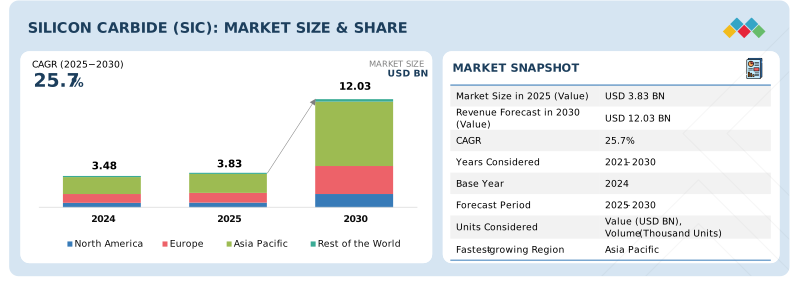
全球碳化矽 (SiC) 市場預計將從 2025 年的 38.3 億美元成長到 2030 年的 120.3 億美元,複合年成長率為 25.7%。
| 調查範圍 | |
|---|---|
| 調查期 | 2021-2030 |
| 基準年 | 2024 |
| 預測期 | 2025-2030 |
| 單元 | 10億美元 |
| 部分 | SiC 分立元件、SiC 模組、電壓範圍、介質、區域 |
| 目標區域 | 北美、歐洲、亞太地區及其他地區 |
由於碳化矽 (SiC) 裝置在電動車領域的應用日益廣泛,以及工業和能源應用對高效電力電子產品的需求不斷成長,碳化矽市場呈現強勁成長勢頭。汽車製造商正在採用 SiC MOSFET 和模組來製造牽引逆變器、車載充電器和快速充電系統,而可再生能源和電網基礎設施計劃也在利用 SiC 來提高效率和可靠性。
寬能能隙技術、晶圓尺寸縮小和基板品質的進步正在提升性能並降低系統成本,從而促進更廣泛的應用。這些因素正在加速下一代電力系統從矽到碳化矽的過渡。同時,通訊、交通和工業自動化領域對緊湊型、高能源效率和耐高溫元件的需求日益成長,市場也蘊藏著巨大的機會。材料和封裝技術的持續創新,以及全球產能的擴張,正在推動更高的可擴展性,使碳化矽能夠重新定義電力電子技術,從而建立一個更永續的未來。
“按裝置類型分類,碳化矽(SiC)模組將在碳化矽(SiC)市場中實現最快的成長。”
隨著各行業對緊湊、整合且高效的電源管理解決方案的需求日益成長,碳化矽(SiC)模組預計將成為碳化矽市場成長最快的產品。與分立元件不同,模組將多個SiC組件整合到單一封裝中,從而提供更高的功率密度、更簡化的系統設計和更優異的散熱性能。這些特性使其在需要穩健且擴充性解決方案的應用中尤為重要,例如電動車動力傳動系統、快速充電驅動裝置、工業馬達驅動和可再生能源系統。向電動出行的轉型是推動這一趨勢的主要因素,汽車製造商正在採用SiC模組來提供高效的牽引逆變器和車載充電系統,從而提高續航里程並減少能源損耗。在可再生能源領域,SiC模組能夠以最小的損耗處理高電壓,從而提高太陽能和風能的轉換效率。此外,資料中心和通訊基礎設施也擴大採用這些模組來提高電力利用率並降低營運成本。隨著封裝技術的進步和規模經濟的實現,SiC模組的成本競爭力日益增強,這將進一步加速其快速普及。性能、可靠性和擴充性的結合,使這些模組成為全球碳化矽 (SiC) 市場中成長最快的細分市場。
「按電壓範圍分類,中壓範圍(1700V至3300V)預計將佔據碳化矽(SiC)市場的最大佔有率。”
在預測期內,1700V至3300V的中壓碳化矽(SiC)元件預計將佔據最大的市場佔有率。該領域是高性能應用的基礎,而傳統的矽元件在這些應用中存在效率、溫度控管和功率密度方面的限制。關鍵成長領域包括電力鐵路牽引、風力發電機、工業驅動裝置和高功率電動車逆變器,這些應用需要在高電壓和高溫下可靠運作。中壓SiC元件具有更低的開關損耗和更高的熱穩定性,使其成為能源效率和系統小型化至關重要的嚴苛環境的理想選擇。在交通運輸領域,尤其是在電力鐵路和重型電動車領域,這些裝置能夠提高效率和續航里程。在可再生能源領域,它們能夠提高太陽能逆變器和風力發電轉換系統的功率輸出和可靠性。隨著各行業日益重視節能、緊湊設計和永續性,中壓SiC裝置已成為推動整體市場滲透率的最大驅動力,確保其在工業和電力密集領域的長期主導地位。
本報告分析了全球碳化矽(SiC)市場,提供了關鍵促進因素和限制因素、競爭格局和未來趨勢的資訊。
目錄
第1章 引言
第2章調查方法
第3章執行摘要
第4章 主要發現
- 碳化矽市場對企業而言極具吸引力的機會
- 按行業分類的碳化矽市場
- 按元件分類的碳化矽市場
- 按電壓範圍分類的碳化矽市場
- 亞太地區碳化矽市場(按產業和國家分類)(2025 年)
- 按地區分類的碳化矽市場
第5章 市場概覽
- 介紹
- 市場動態
- 促進要素
- 抑制因素
- 機會
- 任務
- 供應鏈分析
- 生態系分析
- 投資和資金籌措方案
- 影響客戶業務的趨勢/干擾因素
- 技術分析
- 主要技術
- 互補技術
- 鄰近技術
- 定價分析
- 主要企業SIC裝置平均售價趨勢
- 設備平均售價趨勢
- 各地區設備平均售價趨勢
- 主要相關利益者和採購標準
- 波特五力分析
- 案例研究分析
- 貿易分析
- 進口方案(HS編碼284920)
- 出口方案(HS編碼284920)
- 專利分析
- 監管環境
- 監管機構、政府機構和其他組織
- 標準與法規
- 重大會議和活動(2024-2025)
- 人工智慧/生成式人工智慧對碳化矽市場的影響
- 2025年美國關稅對碳化矽市場的影響
- 介紹
- 主要關稅稅率
- 價格影響分析
- 對國家的影響
- 對產業的影響
第6章 碳化矽元件的晶體結構
- 介紹
- 立方晶系(3C-SiC/閃鋅礦)
- 六方晶系晶系(4H-SiC,6H-SiC)
- 菱面體晶體(15R-SIC)
第7章 碳化矽材料的類型
- 介紹
- 綠色SIC
- 黑色碳化矽
第8章:以晶圓尺寸分類的碳化矽市場趨勢
- 介紹
- 150毫米或更小
- 超過150毫米
9. 按元件分類的碳化矽市場
- 介紹
- 積體電路分立元件
- SIC模組
第10章 碳化矽產業市場
- 介紹
- 車
- 能源與電力
- 產業
- 運輸
- 通訊
- 其他行業
第11章 依電壓範圍分類的碳化矽市場
- 介紹
- 1200伏或以下
- 1,201~1,700V
- 1,701~3,300V
- 超過3300伏
第12章 各地區碳化矽市場
- 介紹
- 北美洲
- 北美宏觀經濟展望
- 美國
- 加拿大
- 墨西哥
- 歐洲
- 歐洲宏觀經濟展望
- 英國
- 德國
- 法國
- 義大利
- 西班牙
- 波蘭
- 北歐國家
- 其他歐洲
- 亞太地區
- 亞太宏觀經濟展望
- 中國
- 日本
- 韓國
- 印度
- 澳洲
- 印尼
- 馬來西亞
- 泰國
- 越南
- 亞太其他地區
- 其他地區
- 其他地區的宏觀經濟展望
- 中東
- 非洲
- 南美洲
第13章 競爭格局
- 介紹
- 主要參與企業的策略/優勢
- 市佔率分析(2024 年)
- 公司估值和財務指標
- 品牌/產品對比
- 主要企業營收分析(2020-2024)
- 企業評估矩陣:主要企業(2024)
- 公司評估矩陣:Start-Ups/中小企業(2024 年)
- 競爭格局和趨勢
第14章:公司簡介
- 介紹
- 主要企業
- STMICROELECTRONICS
- SEMICONDUCTOR COMPONENTS INDUSTRIES, LLC
- INFINEON TECHNOLOGIES AG
- WOLFSPEED, INC.
- ROHM CO., LTD.
- FUJI ELECTRIC CO., LTD.
- TOSHIBA ELECTRONIC DEVICES & STORAGE CORPORATION
- MICROCHIP TECHNOLOGY INC.
- MITSUBISHI ELECTRIC CORPORATION
- ROBERT BOSCH GMBH
- 其他公司
- SEMIKRON DANFOSS
- NAVITAS SEMICONDUCTOR
- TT ELECTRONICS
- VISHAY INTERTECHNOLOGY, INC.
- WEEN SEMICONDUCTORS
- MINEBEA POWER SEMICONDUCTOR DEVICE INC.
- SOLITRON DEVICES, INC.
- SANAN IC
- BYD SEMICONDUCTOR
- LITTELFUSE, INC.
- TYCO TIANRUN, INC.
- NEXPERIA
- INVENTCHIP TECHNOLOGY CO., LTD.
- DIODES INCORPORATED
- MCC
- 矽晶圓製造商
- SOITEC
- XIAMEN POWERWAY ADVANCED MATERIAL CO., LTD.
- COHERENT CORP.
- SK SILTRON CO., LTD.
- TANKEBLUE CO., LTD.
第15章附錄
The global silicon carbide (SiC) market is estimated to be valued at USD 12.03 billion by 2030, up from USD 3.83 billion in 2025, at a CAGR of 25.7%.
| Scope of the Report | |
|---|---|
| Years Considered for the Study | 2021-2030 |
| Base Year | 2024 |
| Forecast Period | 2025-2030 |
| Units Considered | Value (USD Billion) |
| Segments | By SiC Discrete Device, SiC Module, Voltage Range, Medium and Region |
| Regions covered | North America, Europe, APAC, RoW |
The silicon carbide (SiC) market is experiencing robust growth, driven by the increasing deployment of SiC devices in electric vehicles and the rising demand for efficient power electronics across industrial and energy applications. Automakers are adopting SiC MOSFETs and modules for traction inverters, onboard chargers, and fast-charging systems, while renewable energy and grid infrastructure projects are leveraging SiC to achieve higher efficiency and reliability.
Advancements in wide-bandgap technologies, wafer scaling, and substrate quality are enhancing performance and lowering system costs, enabling broader adoption. These drivers are collectively accelerating the transition from silicon to SiC in next-generation power systems. At the same time, the market presents strong opportunities in telecommunications, transportation, and industrial automation, where the need for compact, energy-efficient, and high-temperature-resistant devices is growing. Ongoing innovations in materials and packaging, along with the expansion of global production capacity, are fostering greater scalability and enabling SiC to redefine power electronics for a more sustainable future.
"SiC modules to record fastest growth in silicon carbide (sic) market based on device"
SiC modules are expected to register the fastest growth in the silicon carbide (SiC) market as industries increasingly demand compact, integrated, and high-efficiency solutions for power management. Unlike discrete devices, modules integrate multiple SiC components within a single package, providing higher power density, simplified system design, and enhanced thermal performance. This makes them particularly valuable for applications requiring robust and scalable solutions, such as electric vehicle powertrains, fast-charging infrastructure, industrial motor drives, and renewable energy systems. The shift toward e-mobility is a major driver, with automakers adopting SiC modules to deliver efficient traction inverters and onboard charging systems that improve range and reduce energy losses. In renewable energy, SiC modules enhance the performance of solar and wind power conversion by handling higher voltages with minimal losses. Additionally, data centers and telecom infrastructure are increasingly adopting these modules to improve power usage effectiveness and reduce operational costs. As packaging technology improves and economies of scale expand manufacturing, SiC modules are becoming more cost-competitive, further fueling their rapid adoption. Their combination of performance, reliability, and scalability positions them as the fastest-growing segment in the global silicon carbide (SiC) market.
"Medium (1,700 V to 3,300 V) voltage range to account for largest share of silicon carbide (SiC) market based on voltage range"
The medium voltage range, spanning 1,700 V to 3,300 V, is projected to account for the largest share of the silicon carbide (SiC) market during the forecast period. This segment has become the backbone of high-performance applications where traditional silicon solutions face limitations in terms of efficiency, thermal management, and power density. Key growth areas include electric rail traction, wind turbines, industrial drives, and high-power EV inverters, all of which demand reliable operation under high voltage and temperature conditions. Medium-voltage SiC devices offer lower switching losses and improved thermal stability, making them highly suitable for demanding environments that prioritize energy efficiency and reduced system footprint. In transportation, particularly electric trains and heavy-duty electric vehicles, these devices are driving efficiency gains and range improvements. In renewable energy, they enable higher output and reliability in solar inverters and wind energy conversion systems. With industries increasingly targeting energy savings, compact designs, and sustainability, the medium voltage SiC range is positioned as the largest contributor to overall market adoption, ensuring long-term dominance across industrial and power-intensive sectors.
"Europe to account for second-largest market share in 2025."
Europe is expected to hold the second-largest share of the global silicon carbide (SiC) market, driven by strong government support for electrification, renewable energy adoption, and industrial modernization. The region is at the forefront of the electric vehicle revolution, with leading automakers and suppliers integrating SiC MOSFETs and modules into powertrains, onboard chargers, and charging infrastructure to meet strict emission reduction targets. Europe's ambitious green deal and carbon neutrality goals are fueling investments in renewable energy projects, such as solar farms, wind power, and smart grids, where SiC technology enhances efficiency, reliability, and grid stability. The industrial automation and transportation sectors are also embracing SiC devices to improve power density and lower operational costs in rail traction, robotics, and aerospace applications. In addition, European semiconductor players and research institutions are investing heavily in advancing wafer production and packaging technologies, thereby ensuring a secure supply chain and fostering regional innovation ecosystems. With its strong regulatory push toward sustainability and leadership in automotive and energy technologies, Europe is positioned to remain a critical growth region for the SiC market, consolidating its role as the second-largest contributor globally.
The breakdown of the primary participants' profiles in the silicon carbide (SiC) market is as follows.
- By Company Type: Tier 1 - 45%, Tier 2 - 35%, and Tier 3 - 20%
- By Designation Type: C-level Executives - 40%, Directors - 30%, and Others - 30%
- By Region: Europe - 20%, North America - 40%, Asia Pacific - 30%, Rest of the World (RoW) - 10%
Note: Other designations include sales, marketing, and product managers.
The three tiers of the companies are based on their total revenues as of 2024: Tier 1: >USD 1 billion, Tier 2: USD 500 million-1 billion, and Tier 3: USD 500 million.
The major players in the silicon carbide (SiC) market with a significant global presence include STMicroelectronics (Switzerland), Semiconductor Components Industries, LLC (US), Infineon Technologies AG (Germany), Wolfspeed, Inc. (US), ROHM Co., Ltd. (Japan), and others.
Research Coverage
The report segments the silicon carbide (SiC) market and forecasts its size by device type, voltage range, vertical, and region. It also provides a comprehensive review of the drivers, restraints, opportunities, and challenges that influence market growth. The report encompasses both qualitative and quantitative aspects of the market.
Reasons to buy the report:
The report will assist market leaders/new entrants in this market by providing information on the approximate revenues for the overall silicon carbide (SiC) market and its related segments. This report will help stakeholders understand the competitive landscape and gain valuable insights to strengthen their market position and develop effective go-to-market strategies. The report also helps stakeholders understand the pulse of the market, providing them with information on key market drivers, restraints, opportunities, and challenges.
The report provides insights into the following pointers:
- Analysis of key drivers (growing deployment of SiC devices in EVs, increasing demand for power electronics, and growing demand for renewable energy systems), restraints (high efficacy of alternative technologies for power electronics and high cost of SiC devices), opportunities (growing adoption of SiC devices in telecommunications industry and ongoing quality enhancements of SiC substrates and epitaxy processes), and challenges (material defects and designing and packaging issues in SiC devices, and supply chain and capacity constraints)
- Product Development/Innovation: Detailed insights on upcoming technologies, research and development activities, and new product launches in the silicon carbide (SiC) market.
- Market Development: Comprehensive information about lucrative markets by analyzing the silicon carbide (SiC) market across varied regions
- Market Diversification: Exhaustive information about new products, untapped geographies, recent developments, and investments in the silicon carbide (SiC) market
- Competitive Assessment: In-depth assessment of market shares, growth strategies, and product offerings of leading players, including STMicroelectronics (Switzerland), Semiconductor Components Industries, LLC (US), Infineon Technologies AG (Germany), Wolfspeed, Inc. (US), and ROHM Co., Ltd. (Japan)
TABLE OF CONTENTS
1 INTRODUCTION
- 1.1 STUDY OBJECTIVES
- 1.2 MARKET DEFINITION
- 1.3 STUDY SCOPE
- 1.3.1 INCLUSIONS AND EXCLUSIONS
- 1.3.1.1 Company: Inclusions and exclusions
- 1.3.1.2 Device: Inclusions and exclusions
- 1.3.1.3 Voltage range: Inclusions and exclusions
- 1.3.1.4 Vertical: Inclusions and exclusions
- 1.3.1.5 Region: Inclusions and exclusions
- 1.3.2 MARKETS COVERED
- 1.3.3 YEARS CONSIDERED
- 1.3.1 INCLUSIONS AND EXCLUSIONS
- 1.4 CURRENCY CONSIDERED
- 1.5 UNITS CONSIDERED
- 1.6 LIMITATIONS
- 1.7 STAKEHOLDERS
- 1.8 SUMMARY OF CHANGES
2 RESEARCH METHODOLOGY
- 2.1 RESEARCH DATA
- 2.1.1 SECONDARY DATA
- 2.1.1.1 Major secondary sources
- 2.1.1.2 Key data from secondary sources
- 2.1.2 PRIMARY DATA
- 2.1.2.1 List of primary interview participants
- 2.1.2.2 Breakdown of primaries
- 2.1.2.3 Key industry insights
- 2.1.2.4 Key data from primary sources
- 2.1.3 SECONDARY AND PRIMARY RESEARCH
- 2.1.1 SECONDARY DATA
- 2.2 MARKET SIZE ESTIMATION
- 2.2.1 BOTTOM-UP APPROACH
- 2.2.1.1 Approach to estimate market size using bottom-up analysis (demand side)
- 2.2.2 TOP-DOWN APPROACH
- 2.2.2.1 Approach to estimate market size using top-down analysis (supply side)
- 2.2.1 BOTTOM-UP APPROACH
- 2.3 FACTOR ANALYSIS
- 2.3.1 SUPPLY-SIDE ANALYSIS
- 2.4 MARKET GROWTH ASSUMPTIONS
- 2.5 DATA TRIANGULATION
- 2.6 RESEARCH ASSUMPTIONS
- 2.7 RISK ASSESSMENT
3 EXECUTIVE SUMMARY
4 PREMIUM INSIGHTS
- 4.1 ATTRACTIVE OPPORTUNITIES FOR PLAYERS IN SILICON CARBIDE MARKET
- 4.2 SILICON CARBIDE MARKET, BY VERTICAL
- 4.3 SILICON CARBIDE MARKET, BY DEVICE
- 4.4 SILICON CARBIDE MARKET, BY VOLTAGE RANGE
- 4.5 ASIA PACIFIC: SILICON CARBIDE MARKET, BY VERTICAL AND COUNTRY, 2025
- 4.6 SILICON CARBIDE MARKET, BY REGION
5 MARKET OVERVIEW
- 5.1 INTRODUCTION
- 5.2 MARKET DYNAMICS
- 5.2.1 DRIVERS
- 5.2.1.1 Growing deployment of SiC devices in EVs
- 5.2.1.2 Increasing demand for power electronics
- 5.2.1.3 Rising demand for renewable energy systems
- 5.2.1.4 Increasing initiatives and investments in SiC devices
- 5.2.2 RESTRAINTS
- 5.2.2.1 High efficacy of alternative technologies for power electronics
- 5.2.2.2 High cost of SiC devices
- 5.2.3 OPPORTUNITIES
- 5.2.3.1 Growing adoption of SiC devices in telecommunications industry
- 5.2.3.2 Ongoing quality enhancements of SiC substrates and epitaxy processes
- 5.2.4 CHALLENGES
- 5.2.4.1 Material defects and designing & packaging issues in SiC devices
- 5.2.4.2 Supply chain and capacity constraints
- 5.2.1 DRIVERS
- 5.3 SUPPLY CHAIN ANALYSIS
- 5.4 ECOSYSTEM ANALYSIS
- 5.5 INVESTMENT AND FUNDING SCENARIO
- 5.6 TRENDS/DISRUPTIONS IMPACTING CUSTOMERS' BUSINESSES
- 5.7 TECHNOLOGY ANALYSIS
- 5.7.1 KEY TECHNOLOGIES
- 5.7.1.1 SiC device fabrication
- 5.7.1.2 Epitaxy
- 5.7.2 COMPLEMENTARY TECHNOLOGIES
- 5.7.2.1 Gallium nitride
- 5.7.2.2 Advanced packaging
- 5.7.3 ADJACENT TECHNOLOGIES
- 5.7.3.1 Wide bandgap semiconductor
- 5.7.3.2 Thermal management
- 5.7.1 KEY TECHNOLOGIES
- 5.8 PRICING ANALYSIS
- 5.8.1 AVERAGE SELLING PRICE TREND OF SIC DEVICES, BY KEY PLAYER
- 5.8.2 AVERAGE SELLING PRICE TREND OF DEVICE, BY TYPE
- 5.8.3 AVERAGE SELLING PRICE TREND OF DEVICE, BY REGION
- 5.9 KEY STAKEHOLDERS AND BUYING CRITERIA
- 5.9.1 KEY STAKEHOLDERS IN BUYING PROCESS
- 5.9.2 BUYING CRITERIA
- 5.10 PORTER'S FIVE FORCES ANALYSIS
- 5.10.1 THREAT OF NEW ENTRANTS
- 5.10.2 THREAT OF SUBSTITUTES
- 5.10.3 BARGAINING POWER OF SUPPLIERS
- 5.10.4 BARGAINING POWER OF BUYERS
- 5.10.5 INTENSITY OF COMPETITIVE RIVALRY
- 5.11 CASE STUDY ANALYSIS
- 5.11.1 JAGUAR LAND ROVER INTEGRATED WOLFSPEED'S SIC DEVICES INTO EVS TO ENHANCE POWERTRAIN EFFICIENCY AND EXTEND DRIVING RANGE
- 5.11.2 BORGWARNER INC. DELIVERED INNOVATIVE AND SUSTAINABLE MOBILITY SOLUTIONS THROUGH INTEGRATION OF STMICROELECTRONICS' SIC MOSFETS
- 5.11.3 AMPT'S DC STRING ENHANCED OPTIMIZERS BY INTEGRATING ONSEMI'S SIC MOSFET
- 5.11.4 DRIVING PERFORMANCE AND COST EFFICIENCY OF MERSEN'S SIC POWER STACK REFERENCE DESIGN
- 5.11.5 TESLA UTILIZED STMICROELECTRONICS' SIC MOSFETS TO BOOST EV PERFORMANCE AND IMPROVE ENERGY EFFICIENCY
- 5.12 TRADE ANALYSIS
- 5.12.1 IMPORT SCENARIO (HS CODE 284920)
- 5.12.2 EXPORT SCENARIO (HS CODE 284920)
- 5.13 PATENT ANALYSIS
- 5.14 REGULATORY LANDSCAPE
- 5.14.1 REGULATORY BODIES, GOVERNMENT AGENCIES, AND OTHER ORGANIZATIONS
- 5.14.2 STANDARDS & REGULATIONS
- 5.15 KEY CONFERENCES AND EVENTS, 2024-2025
- 5.16 IMPACT OF AI/GENERATIVE AI ON SILICON CARBIDE MARKET
- 5.17 IMPACT OF 2025 US TARIFF ON SILICON CARBIDE MARKET
- 5.17.1 INTRODUCTION
- 5.17.2 KEY TARIFF RATES
- 5.17.3 PRICE IMPACT ANALYSIS
- 5.17.4 IMPACT ON COUNTRY/REGION
- 5.17.4.1 US
- 5.17.4.2 Europe
- 5.17.4.3 Asia Pacific
- 5.17.5 IMPACT ON VERTICALS
6 CRYSTAL STRUCTURES OF SIC DEVICES
- 6.1 INTRODUCTION
- 6.2 CUBIC (3C-SIC/ZINC BLENDE)
- 6.3 HEXAGONAL (4H-SIC AND 6H-SIC)
- 6.4 RHOMBOHEDRAL (15R-SIC)
7 SIC MATERIAL TYPES
- 7.1 INTRODUCTION
- 7.2 GREEN SIC
- 7.3 BLACK SIC
8 SILICON CARBIDE MARKET TRENDS ACROSS DIFFERENT WAFER SIZES
- 8.1 INTRODUCTION
- 8.2 UP TO 150 MM
- 8.3 >150 MM
9 SILICON CARBIDE MARKET, BY DEVICE
- 9.1 INTRODUCTION
- 9.2 SIC DISCRETE DEVICES
- 9.2.1 INCREASING APPLICATION IN EVS AND 5G INFRASTRUCTURE TO DRIVE MARKET
- 9.2.2 SIC DIODES
- 9.2.2.1 Higher electrical and thermal conductivity than silicon variants to boost demand
- 9.2.3 SIC MOSFETS
- 9.2.3.1 Ability to function as power-switching transistors to boost demand
- 9.3 SIC MODULES
- 9.3.1 REDUCED NEED FOR PASSIVE COMPONENTS AND SMALL SYSTEM FOOTPRINT TO ACCELERATE DEMAND
10 SILICON CARBIDE MARKET, BY VERTICAL
- 10.1 INTRODUCTION
- 10.2 AUTOMOTIVE
- 10.2.1 GROWING DEMAND FOR HIGH-PERFORMING OPTO-SEMICONDUCTOR DEVICES TO BOOST DEMAND
- 10.2.2 ELECTRIC VEHICLES
- 10.2.3 CHARGING INFRASTRUCTURE
- 10.3 ENERGY & POWER
- 10.3.1 RAPID ADOPTION IN RENEWABLE ENERGY SYSTEMS TO ACCELERATE DEMAND
- 10.3.2 RENEWABLE ENERGY
- 10.3.3 ENERGY STORAGE SYSTEMS
- 10.4 INDUSTRIAL
- 10.4.1 GROWING USE IN ROBOTICS TO BOOST DEMAND
- 10.5 TRANSPORTATION
- 10.5.1 EASE OF HEAT DISSIPATION DUE TO HIGH THERMAL CONDUCTIVITY TO DRIVE MARKET
- 10.5.2 RAILWAYS
- 10.5.3 AEROSPACE & MARINE
- 10.6 TELECOMMUNICATIONS
- 10.6.1 RISING ADOPTION IN 5G WIRELESS COMMUNICATION TO DRIVE MARKET
- 10.7 OTHER VERTICALS
11 SILICON CARBIDE MARKET, BY VOLTAGE RANGE
- 11.1 INTRODUCTION
- 11.2 UP TO 1,200 V
- 11.2.1 EXPANSION OF COMPACT, ENERGY-EFFICIENT POWER SYSTEMS IN CONSUMER AND EV APPLICATIONS TO PROPEL MARKET
- 11.3 1,201-1,700 V
- 11.3.1 ACCELERATED ADOPTION IN EV TRACTION INVERTERS, FAST-CHARGING INFRASTRUCTURE, AND RENEWABLE INTEGRATION TO DRIVE MARKET
- 11.4 1,701-3,300 V
- 11.4.1 DEMAND FROM INDUSTRIAL DRIVES, UTILITY-SCALE RENEWABLES, AND ELECTRIFIED RAIL SYSTEMS TO PROPEL MARKET
- 11.5 >3,300 V
- 11.5.1 GROWING ADOPTION IN GRID MODERNIZATION AND HIGH-VOLTAGE TRANSPORTATION SYSTEMS TO PROPEL MARKET
12 SILICON CARBIDE MARKET, BY REGION
- 12.1 INTRODUCTION
- 12.2 NORTH AMERICA
- 12.2.1 MACROECONOMIC OUTLOOK FOR NORTH AMERICA
- 12.2.2 US
- 12.2.2.1 Growing demand for EVs and charging stations to drive market
- 12.2.3 CANADA
- 12.2.3.1 Government initiatives for clean technology to increase demand
- 12.2.4 MEXICO
- 12.2.4.1 Increasing number of manufacturing facilities and expanding distribution network of SiC device manufacturers to drive market
- 12.3 EUROPE
- 12.3.1 MACROECONOMIC OUTLOOK FOR EUROPE
- 12.3.2 UK
- 12.3.2.1 Growing adoption of connected and autonomous vehicles to drive market
- 12.3.3 GERMANY
- 12.3.3.1 Increasing applications in power supplies, EV motor drives, and charging stations to drive market
- 12.3.4 FRANCE
- 12.3.4.1 Surging adoption of renewable energy systems to drive market
- 12.3.5 ITALY
- 12.3.5.1 Increasing SiC investments to support market growth
- 12.3.6 SPAIN
- 12.3.6.1 Growth in renewable energy to drive market
- 12.3.7 POLAND
- 12.3.7.1 Battery ecosystem expansion and grid modernization to fuel SiC demand
- 12.3.8 NORDIC COUNTRIES
- 12.3.8.1 Increasing demand for high-efficiency power electronics to drive market
- 12.3.9 REST OF EUROPE
- 12.4 ASIA PACIFIC
- 12.4.1 MACROECONOMIC OUTLOOK FOR ASIA PACIFIC
- 12.4.2 CHINA
- 12.4.2.1 Thriving power electronics industry to fuel market growth
- 12.4.3 JAPAN
- 12.4.3.1 Increased R&D activities in industrial, automotive, and telecommunications verticals to boost demand
- 12.4.4 SOUTH KOREA
- 12.4.4.1 Growing demand for consumer electronics to drive adoption
- 12.4.5 INDIA
- 12.4.5.1 EV adoption and semiconductor initiatives to drive demand
- 12.4.6 AUSTRALIA
- 12.4.6.1 Renewable energy transition and EV uptake to support SiC integration
- 12.4.7 INDONESIA
- 12.4.7.1 EV infrastructure expansion to support market growth
- 12.4.8 MALAYSIA
- 12.4.8.1 Semiconductor expansion and renewable energy deployment to drive market growth
- 12.4.9 THAILAND
- 12.4.9.1 EV policies and renewable energy programs to accelerate SiC use
- 12.4.10 VIETNAM
- 12.4.10.1 Growing electronics manufacturing and EV adoption to drive demand
- 12.4.11 REST OF ASIA PACIFIC
- 12.5 REST OF THE WORLD
- 12.5.1 MACROECONOMIC OUTLOOK FOR REST OF THE WORLD
- 12.5.2 MIDDLE EAST
- 12.5.2.1 Bahrain
- 12.5.2.1.1 Industrial modernization and clean energy projects to drive demand
- 12.5.2.2 Kuwait
- 12.5.2.2.1 Energy diversification and industrial growth to support market growth
- 12.5.2.3 Oman
- 12.5.2.3.1 Mining and renewable energy expansion to drive SiC usage
- 12.5.2.4 Qatar
- 12.5.2.4.1 Infrastructure growth and smart energy projects to fuel demand
- 12.5.2.5 Saudi Arabia
- 12.5.2.5.1 Vision 2030 and mega projects to propel market growth
- 12.5.2.6 UAE
- 12.5.2.6.1 Growing renewable projects and smart grid investments to drive demand
- 12.5.2.7 Rest of Middle East
- 12.5.2.1 Bahrain
- 12.5.3 AFRICA
- 12.5.3.1 South Africa
- 12.5.3.1.1 Industrial modernization and growing focus on renewable energy to propel market
- 12.5.3.2 Rest of Africa
- 12.5.3.1 South Africa
- 12.5.4 SOUTH AMERICA
- 12.5.4.1 EV growth and clean energy projects to accelerate demand
13 COMPETITIVE LANDSCAPE
- 13.1 INTRODUCTION
- 13.2 KEY PLAYER STRATEGIES/RIGHT TO WIN
- 13.3 MARKET SHARE ANALYSIS, 2024
- 13.4 COMPANY VALUATION AND FINANCIAL METRICS
- 13.5 BRAND/PRODUCT COMPARISON
- 13.6 REVENUE ANALYSIS OF KEY PLAYERS, 2020-2024
- 13.7 COMPANY EVALUATION MATRIX: KEY PLAYERS, 2024
- 13.7.1 STARS
- 13.7.2 EMERGING LEADERS
- 13.7.3 PERVASIVE PLAYERS
- 13.7.4 PARTICIPANTS
- 13.7.5 COMPANY FOOTPRINT: KEY PLAYERS, 2024
- 13.7.5.1 Company footprint
- 13.7.5.2 Region footprint
- 13.7.5.3 Device footprint
- 13.7.5.4 Voltage range footprint
- 13.7.5.5 Vertical footprint
- 13.8 COMPANY EVALUATION MATRIX: STARTUPS/SMES, 2024
- 13.8.1 PROGRESSIVE COMPANIES
- 13.8.2 RESPONSIVE COMPANIES
- 13.8.3 DYNAMIC COMPANIES
- 13.8.4 STARTING BLOCKS
- 13.8.5 COMPETITIVE BENCHMARKING: STARTUPS/SMES, 2024
- 13.8.5.1 Detailed list of key startups/SMEs
- 13.8.5.2 Competitive benchmarking of key startups/SMEs
- 13.9 COMPETITIVE SCENARIOS AND TRENDS
- 13.9.1 PRODUCT LAUNCHES
- 13.9.2 DEALS
- 13.9.3 EXPANSIONS
14 COMPANY PROFILES
- 14.1 INTRODUCTION
- 14.2 KEY PLAYERS
- 14.2.1 STMICROELECTRONICS
- 14.2.1.1 Business overview
- 14.2.1.2 Products/Solutions/Services offered
- 14.2.1.3 Recent developments
- 14.2.1.3.1 Product launches
- 14.2.1.3.2 Deals
- 14.2.1.3.3 Expansions
- 14.2.1.4 MnM view
- 14.2.1.4.1 Key strengths
- 14.2.1.4.2 Strategic choices
- 14.2.1.4.3 Weaknesses & competitive threats
- 14.2.2 SEMICONDUCTOR COMPONENTS INDUSTRIES, LLC
- 14.2.2.1 Business overview
- 14.2.2.2 Products/Solutions/Services offered
- 14.2.2.3 Recent developments
- 14.2.2.3.1 Product launches
- 14.2.2.3.2 Deals
- 14.2.2.3.3 Expansions
- 14.2.2.4 MnM view
- 14.2.2.4.1 Key strengths
- 14.2.2.4.2 Strategic choices
- 14.2.2.4.3 Weaknesses & competitive threats
- 14.2.3 INFINEON TECHNOLOGIES AG
- 14.2.3.1 Business overview
- 14.2.3.2 Products/Solutions/Services offered
- 14.2.3.3 Recent developments
- 14.2.3.3.1 Product launches
- 14.2.3.3.2 Deals
- 14.2.3.4 MnM view
- 14.2.3.4.1 Key strengths
- 14.2.3.4.2 Strategic choices
- 14.2.3.4.3 Weaknesses & competitive threats
- 14.2.4 WOLFSPEED, INC.
- 14.2.4.1 Business overview
- 14.2.4.2 Products/Solutions/Services offered
- 14.2.4.3 Recent developments
- 14.2.4.3.1 Product launches
- 14.2.4.3.2 Deals
- 14.2.4.3.3 Expansions
- 14.2.4.4 MnM view
- 14.2.4.4.1 Key strengths
- 14.2.4.4.2 Strategic choices
- 14.2.4.4.3 Weaknesses & competitive threats
- 14.2.5 ROHM CO., LTD.
- 14.2.5.1 Business overview
- 14.2.5.2 Products/Solutions/Services offered
- 14.2.5.3 Recent developments
- 14.2.5.3.1 Product launches
- 14.2.5.3.2 Deals
- 14.2.5.4 MnM view
- 14.2.5.4.1 Key strengths
- 14.2.5.4.2 Strategic choices
- 14.2.5.4.3 Weaknesses & competitive threats
- 14.2.6 FUJI ELECTRIC CO., LTD.
- 14.2.6.1 Business overview
- 14.2.6.2 Products/Solutions/Services offered
- 14.2.6.3 Recent developments
- 14.2.6.3.1 Product launches
- 14.2.6.3.2 Deals
- 14.2.7 TOSHIBA ELECTRONIC DEVICES & STORAGE CORPORATION
- 14.2.7.1 Business overview
- 14.2.7.2 Products/Solutions/Services offered
- 14.2.7.3 Recent developments
- 14.2.7.3.1 Product launches
- 14.2.7.3.2 Deals
- 14.2.7.3.3 Expansions
- 14.2.8 MICROCHIP TECHNOLOGY INC.
- 14.2.8.1 Business overview
- 14.2.8.2 Products/Solutions/Services offered
- 14.2.8.3 Recent developments
- 14.2.8.3.1 Product launches
- 14.2.8.3.2 Deals
- 14.2.8.3.3 Expansions
- 14.2.9 MITSUBISHI ELECTRIC CORPORATION
- 14.2.9.1 Business overview
- 14.2.9.2 Products/Solutions/Services offered
- 14.2.9.3 Recent developments
- 14.2.9.3.1 Product launches
- 14.2.9.3.2 Deals
- 14.2.10 ROBERT BOSCH GMBH
- 14.2.10.1 Business overview
- 14.2.10.2 Products/Solutions/Services offered
- 14.2.10.3 Recent developments
- 14.2.10.3.1 Product launches
- 14.2.10.3.2 Deals
- 14.2.1 STMICROELECTRONICS
- 14.3 OTHER PLAYERS
- 14.3.1 SEMIKRON DANFOSS
- 14.3.2 NAVITAS SEMICONDUCTOR
- 14.3.3 TT ELECTRONICS
- 14.3.4 VISHAY INTERTECHNOLOGY, INC.
- 14.3.5 WEEN SEMICONDUCTORS
- 14.3.6 MINEBEA POWER SEMICONDUCTOR DEVICE INC.
- 14.3.7 SOLITRON DEVICES, INC.
- 14.3.8 SANAN IC
- 14.3.9 BYD SEMICONDUCTOR
- 14.3.10 LITTELFUSE, INC.
- 14.3.11 TYCO TIANRUN, INC.
- 14.3.12 NEXPERIA
- 14.3.13 INVENTCHIP TECHNOLOGY CO., LTD.
- 14.3.14 DIODES INCORPORATED
- 14.3.15 MCC
- 14.4 SIC WAFER MANUFACTURERS
- 14.4.1 SOITEC
- 14.4.2 XIAMEN POWERWAY ADVANCED MATERIAL CO., LTD.
- 14.4.3 COHERENT CORP.
- 14.4.4 SK SILTRON CO., LTD.
- 14.4.5 TANKEBLUE CO., LTD.
15 APPENDIX
- 15.1 INSIGHTS FROM INDUSTRY EXPERTS
- 15.2 DISCUSSION GUIDE
- 15.3 KNOWLEDGESTORE: MARKETSANDMARKETS' SUBSCRIPTION PORTAL
- 15.4 CUSTOMIZATION OPTIONS
- 15.5 RELATED REPORTS
- 15.6 AUTHOR DETAILS
List of Tables
- TABLE 1 SILICON CARBIDE MARKET: GROWTH ASSUMPTIONS
- TABLE 2 SILICON CARBIDE MARKET: SUPPLY CHAIN ANALYSIS
- TABLE 3 PRICING RANGE OF SIC DEVICES, BY KEY PLAYER, 2024
- TABLE 4 INFLUENCE OF STAKEHOLDERS ON BUYING PROCESS OF TOP THREE VERTICALS
- TABLE 5 KEY BUYING CRITERIA FOR TOP THREE VERTICALS
- TABLE 6 SILICON CARBIDE MARKET: PORTER'S FIVE FORCES ANALYSIS
- TABLE 7 IMPORT DATA FOR HS CODE 284920-COMPLIANT PRODUCTS, BY COUNTRY, 2020-2024 (USD MILLION)
- TABLE 8 EXPORT DATA FOR HS CODE 284920-COMPLIANT PRODUCTS, BY COUNTRY, 2020-2024 (USD MILLION)
- TABLE 9 NORTH AMERICA: REGULATORY BODIES, GOVERNMENT AGENCIES, AND OTHER ORGANIZATIONS
- TABLE 10 EUROPE: REGULATORY BODIES, GOVERNMENT AGENCIES, AND OTHER ORGANIZATIONS
- TABLE 11 ASIA PACIFIC: REGULATORY BODIES, GOVERNMENT AGENCIES, AND OTHER ORGANIZATIONS
- TABLE 12 ROW: REGULATORY BODIES, GOVERNMENT AGENCIES, AND OTHER ORGANIZATIONS
- TABLE 13 SILICON CARBIDE MARKET: KEY CONFERENCES AND EVENTS, 2024-2025
- TABLE 14 US-ADJUSTED RECIPROCAL TARIFF RATES
- TABLE 15 SILICON CARBIDE MARKET, BY DEVICE, 2021-2024 (USD MILLION)
- TABLE 16 SILICON CARBIDE MARKET, BY DEVICE, 2025-2030 (USD MILLION)
- TABLE 17 SIC DISCRETE DEVICES: SILICON CARBIDE MARKET, BY TYPE, 2021-2024 (USD MILLION)
- TABLE 18 SIC DISCRETE DEVICES: SILICON CARBIDE MARKET, BY TYPE, 2025-2030 (USD MILLION)
- TABLE 19 SIC DISCRETE DEVICES: SILICON CARBIDE MARKET, BY TYPE, 2021-2024 (THOUSAND UNITS)
- TABLE 20 SIC DISCRETE DEVICES: SILICON CARBIDE MARKET, BY TYPE, 2025-2030 (THOUSAND UNITS)
- TABLE 21 SIC DIODES: SILICON CARBIDE MARKET, BY REGION, 2021-2024 (THOUSAND UNITS)
- TABLE 22 SIC DIODES: SILICON CARBIDE MARKET, BY REGION, 2025-2030 (THOUSAND UNITS)
- TABLE 23 SIC MOSFETS: SILICON CARBIDE MARKET, BY REGION, 2021-2024 (THOUSAND UNITS)
- TABLE 24 SIC MOSFETS: SILICON CARBIDE MARKET, BY REGION, 2025-2030 (THOUSAND UNITS)
- TABLE 25 SILICON CARBIDE MARKET, BY VERTICAL, 2021-2024 (USD MILLION)
- TABLE 26 SILICON CARBIDE MARKET, BY VERTICAL, 2025-2030 (USD MILLION)
- TABLE 27 AUTOMOTIVE: SILICON CARBIDE MARKET, BY REGION, 2021-2024 (USD MILLION)
- TABLE 28 AUTOMOTIVE: SILICON CARBIDE MARKET, BY REGION, 2025-2030 (USD MILLION)
- TABLE 29 AUTOMOTIVE: SILICON CARBIDE MARKET IN NORTH AMERICA, BY COUNTRY, 2021-2024 (USD MILLION)
- TABLE 30 AUTOMOTIVE: SILICON CARBIDE MARKET IN NORTH AMERICA, BY COUNTRY, 2025-2030 (USD MILLION)
- TABLE 31 AUTOMOTIVE: SILICON CARBIDE MARKET IN EUROPE, BY COUNTRY, 2021-2024 (USD MILLION)
- TABLE 32 AUTOMOTIVE: SILICON CARBIDE MARKET IN EUROPE, BY COUNTRY, 2025-2030 (USD MILLION)
- TABLE 33 AUTOMOTIVE: SILICON CARBIDE MARKET IN ASIA PACIFIC, BY COUNTRY, 2021-2024 (USD MILLION)
- TABLE 34 AUTOMOTIVE: SILICON CARBIDE MARKET IN ASIA PACIFIC, BY COUNTRY, 2025-2030 (USD MILLION)
- TABLE 35 AUTOMOTIVE: SILICON CARBIDE MARKET IN REST OF THE WORLD, BY REGION, 2021-2024 (USD MILLION)
- TABLE 36 AUTOMOTIVE: SILICON CARBIDE MARKET IN REST OF THE WORLD, BY REGION, 2025-2030 (USD MILLION)
- TABLE 37 ENERGY & POWER: SILICON CARBIDE MARKET, BY REGION, 2021-2024 (USD MILLION)
- TABLE 38 ENERGY & POWER: SILICON CARBIDE MARKET, BY REGION, 2025-2030 (USD MILLION)
- TABLE 39 ENERGY & POWER: SILICON CARBIDE MARKET IN NORTH AMERICA, BY COUNTRY, 2021-2024 (USD MILLION)
- TABLE 40 ENERGY & POWER: SILICON CARBIDE MARKET IN NORTH AMERICA, BY COUNTRY, 2025-2030 (USD MILLION)
- TABLE 41 ENERGY & POWER: SILICON CARBIDE MARKET IN EUROPE, BY COUNTRY, 2021-2024 (USD MILLION)
- TABLE 42 ENERGY & POWER: SILICON CARBIDE MARKET IN EUROPE, BY COUNTRY, 2025-2030 (USD MILLION)
- TABLE 43 ENERGY & POWER: SILICON CARBIDE MARKET IN ASIA PACIFIC, BY COUNTRY, 2021-2024 (USD MILLION)
- TABLE 44 ENERGY & POWER: SILICON CARBIDE MARKET IN ASIA PACIFIC, BY COUNTRY, 2025-2030 (USD MILLION)
- TABLE 45 ENERGY & POWER: SILICON CARBIDE MARKET IN REST OF THE WORLD, BY REGION, 2021-2024 (USD MILLION)
- TABLE 46 ENERGY & POWER: SILICON CARBIDE MARKET IN REST OF THE WORLD, BY REGION, 2025-2030 (USD MILLION)
- TABLE 47 INDUSTRIAL: SILICON CARBIDE MARKET, BY REGION, 2021-2024 (USD MILLION)
- TABLE 48 INDUSTRIAL: SILICON CARBIDE MARKET, BY REGION, 2025-2030 (USD MILLION)
- TABLE 49 INDUSTRIAL: SILICON CARBIDE MARKET IN NORTH AMERICA, BY COUNTRY, 2021-2024 (USD MILLION)
- TABLE 50 INDUSTRIAL: SILICON CARBIDE MARKET IN NORTH AMERICA, BY COUNTRY, 2025-2030 (USD MILLION)
- TABLE 51 INDUSTRIAL: SILICON CARBIDE MARKET IN EUROPE, BY COUNTRY, 2021-2024 (USD MILLION)
- TABLE 52 INDUSTRIAL: SILICON CARBIDE MARKET IN EUROPE, BY COUNTRY, 2025-2030 (USD MILLION)
- TABLE 53 INDUSTRIAL: SILICON CARBIDE MARKET IN ASIA PACIFIC, BY COUNTRY, 2021-2024 (USD MILLION)
- TABLE 54 INDUSTRIAL: SILICON CARBIDE MARKET IN ASIA PACIFIC, BY COUNTRY, 2025-2030 (USD MILLION)
- TABLE 55 INDUSTRIAL: SILICON CARBIDE MARKET IN REST OF THE WORLD, BY REGION, 2021-2024 (USD MILLION)
- TABLE 56 INDUSTRIAL: SILICON CARBIDE MARKET IN REST OF THE WORLD, BY REGION, 2025-2030 (USD MILLION)
- TABLE 57 TRANSPORTATION: SILICON CARBIDE MARKET, BY REGION, 2021-2024 (USD MILLION)
- TABLE 58 TRANSPORTATION: SILICON CARBIDE MARKET, BY REGION, 2025-2030 (USD MILLION)
- TABLE 59 TRANSPORTATION: SILICON CARBIDE MARKET IN NORTH AMERICA, BY COUNTRY, 2021-2024 (USD MILLION)
- TABLE 60 TRANSPORTATION: SILICON CARBIDE MARKET IN NORTH AMERICA, BY COUNTRY, 2025-2030 (USD MILLION)
- TABLE 61 TRANSPORTATION: SILICON CARBIDE MARKET IN EUROPE, BY COUNTRY, 2021-2024 (USD MILLION)
- TABLE 62 TRANSPORTATION: SILICON CARBIDE MARKET IN EUROPE, BY COUNTRY, 2025-2030 (USD MILLION)
- TABLE 63 TRANSPORTATION: SILICON CARBIDE MARKET IN ASIA PACIFIC, BY COUNTRY, 2021-2024 (USD MILLION)
- TABLE 64 TRANSPORTATION: SILICON CARBIDE MARKET IN ASIA PACIFIC, BY COUNTRY, 2025-2030 (USD MILLION)
- TABLE 65 TRANSPORTATION: SILICON CARBIDE MARKET IN REST OF THE WORLD, BY REGION, 2021-2024 (USD MILLION)
- TABLE 66 TRANSPORTATION: SILICON CARBIDE MARKET IN REST OF THE WORLD, BY REGION, 2025-2030 (USD MILLION)
- TABLE 67 TELECOMMUNICATIONS: SILICON CARBIDE MARKET, BY REGION, 2021-2024 (USD MILLION)
- TABLE 68 TELECOMMUNICATIONS: SILICON CARBIDE MARKET, BY REGION, 2025-2030 (USD MILLION)
- TABLE 69 TELECOMMUNICATIONS: SILICON CARBIDE MARKET IN NORTH AMERICA, BY COUNTRY, 2021-2024 (USD MILLION)
- TABLE 70 TELECOMMUNICATIONS: SILICON CARBIDE MARKET IN NORTH AMERICA, BY COUNTRY, 2025-2030 (USD MILLION)
- TABLE 71 TELECOMMUNICATIONS: SILICON CARBIDE MARKET IN EUROPE, BY COUNTRY, 2021-2024 (USD MILLION)
- TABLE 72 TELECOMMUNICATIONS: SILICON CARBIDE MARKET IN EUROPE, BY COUNTRY, 2025-2030 (USD MILLION)
- TABLE 73 TELECOMMUNICATIONS: SILICON CARBIDE MARKET IN ASIA PACIFIC, BY COUNTRY, 2021-2024 (USD MILLION)
- TABLE 74 TELECOMMUNICATIONS: SILICON CARBIDE MARKET IN ASIA PACIFIC, BY COUNTRY, 2025-2030 (USD MILLION)
- TABLE 75 TELECOMMUNICATIONS: SILICON CARBIDE MARKET IN REST OF THE WORLD, BY REGION, 2021-2024 (USD MILLION)
- TABLE 76 TELECOMMUNICATIONS: SILICON CARBIDE MARKET IN REST OF THE WORLD, BY REGION, 2025-2030 (USD MILLION)
- TABLE 77 OTHER VERTICALS: SILICON CARBIDE MARKET, BY REGION, 2021-2024 (USD MILLION)
- TABLE 78 OTHER VERTICALS: SILICON CARBIDE MARKET, BY REGION, 2025-2030 (USD MILLION)
- TABLE 79 OTHER VERTICALS: SILICON CARBIDE MARKET IN NORTH AMERICA, BY COUNTRY, 2021-2024 (USD MILLION)
- TABLE 80 OTHER VERTICALS: SILICON CARBIDE MARKET IN NORTH AMERICA, BY COUNTRY, 2025-2030 (USD MILLION)
- TABLE 81 OTHER VERTICALS: SILICON CARBIDE MARKET IN EUROPE, BY COUNTRY, 2021-2024 (USD MILLION)
- TABLE 82 OTHER VERTICALS: SILICON CARBIDE MARKET IN EUROPE, BY COUNTRY, 2025-2030 (USD MILLION)
- TABLE 83 OTHER VERTICALS: SILICON CARBIDE MARKET IN ASIA PACIFIC, BY COUNTRY, 2021-2024 (USD MILLION)
- TABLE 84 OTHER VERTICALS: SILICON CARBIDE MARKET IN ASIA PACIFIC, BY COUNTRY, 2025-2030 (USD MILLION)
- TABLE 85 OTHER VERTICALS: SILICON CARBIDE MARKET IN REST OF THE WORLD, BY REGION, 2021-2024 (USD MILLION)
- TABLE 86 OTHER VERTICALS: SILICON CARBIDE MARKET IN REST OF THE WORLD, BY REGION, 2025-2030 (USD MILLION)
- TABLE 87 SILICON CARBIDE MARKET, BY VOLTAGE RANGE, 2021-2024 (USD MILLION)
- TABLE 88 SILICON CARBIDE MARKET, BY VOLTAGE RANGE, 2025-2030 (USD MILLION)
- TABLE 89 SILICON CARBIDE MARKET, BY REGION, 2021-2024 (USD MILLION)
- TABLE 90 SILICON CARBIDE MARKET, BY REGION, 2025-2030 (USD MILLION)
- TABLE 91 NORTH AMERICA: SILICON CARBIDE MARKET, BY COUNTRY, 2021-2024 (USD MILLION)
- TABLE 92 NORTH AMERICA: SILICON CARBIDE MARKET, BY COUNTRY, 2025-2030 (USD MILLION)
- TABLE 93 NORTH AMERICA: SILICON CARBIDE MARKET, BY VERTICAL, 2021-2024 (USD MILLION)
- TABLE 94 NORTH AMERICA: SILICON CARBIDE MARKET, BY VERTICAL, 2025-2030 (USD MILLION)
- TABLE 95 NORTH AMERICA: SILICON CARBIDE MARKET FOR SIC DISCRETE DEVICES, BY TYPE, 2021-2024 (THOUSAND UNITS)
- TABLE 96 NORTH AMERICA: SILICON CARBIDE MARKET FOR DISCRETE DEVICES, BY TYPE, 2025-2030 (THOUSAND UNITS)
- TABLE 97 US: SILICON CARBIDE MARKET, BY VERTICAL, 2021-2024 (USD MILLION)
- TABLE 98 US: SILICON CARBIDE MARKET, BY VERTICAL, 2025-2030 (USD MILLION)
- TABLE 99 CANADA: SILICON CARBIDE MARKET, BY VERTICAL, 2021-2024 (USD MILLION)
- TABLE 100 CANADA: SILICON CARBIDE MARKET, BY VERTICAL, 2025-2030 (USD MILLION)
- TABLE 101 MEXICO: SILICON CARBIDE MARKET, BY VERTICAL, 2021-2024 (USD MILLION)
- TABLE 102 MEXICO: SILICON CARBIDE MARKET, BY VERTICAL, 2025-2030 (USD MILLION)
- TABLE 103 EUROPE: SILICON CARBIDE MARKET, BY COUNTRY, 2021-2024 (USD MILLION)
- TABLE 104 EUROPE: SILICON CARBIDE MARKET, BY COUNTRY, 2025-2030 (USD MILLION)
- TABLE 105 EUROPE: SILICON CARBIDE MARKET, BY VERTICAL, 2021-2024 (USD MILLION)
- TABLE 106 EUROPE: SILICON CARBIDE MARKET, BY VERTICAL, 2025-2030 (USD MILLION)
- TABLE 107 EUROPE: SILICON CARBIDE MARKET FOR SIC DISCRETE DEVICES, BY TYPE, 2021-2024 (THOUSAND UNITS)
- TABLE 108 EUROPE: SILICON CARBIDE MARKET FOR DISCRETE DEVICES, BY TYPE, 2025-2030 (THOUSAND UNITS)
- TABLE 109 UK: SILICON CARBIDE MARKET, BY VERTICAL, 2021-2024 (USD MILLION)
- TABLE 110 UK: SILICON CARBIDE MARKET, BY VERTICAL, 2025-2030 (USD MILLION)
- TABLE 111 GERMANY: SILICON CARBIDE MARKET, BY VERTICAL, 2021-2024 (USD MILLION)
- TABLE 112 GERMANY: SILICON CARBIDE MARKET, BY VERTICAL, 2025-2030 (USD MILLION)
- TABLE 113 FRANCE: SILICON CARBIDE MARKET, BY VERTICAL, 2021-2024 (USD MILLION)
- TABLE 114 FRANCE: SILICON CARBIDE MARKET, BY VERTICAL, 2025-2030 (USD MILLION)
- TABLE 115 ITALY: SILICON CARBIDE MARKET, BY VERTICAL, 2021-2024 (USD MILLION)
- TABLE 116 ITALY: SILICON CARBIDE MARKET, BY VERTICAL, 2025-2030 (USD MILLION)
- TABLE 117 SPAIN: SILICON CARBIDE MARKET, BY VERTICAL, 2021-2024 (USD MILLION)
- TABLE 118 SPAIN: SILICON CARBIDE MARKET, BY VERTICAL, 2025-2030 (USD MILLION)
- TABLE 119 POLAND: SILICON CARBIDE MARKET, BY VERTICAL, 2021-2024 (USD MILLION)
- TABLE 120 POLAND: SILICON CARBIDE MARKET, BY VERTICAL, 2025-2030 (USD MILLION)
- TABLE 121 NORDIC COUNTRIES: SILICON CARBIDE MARKET, BY VERTICAL, 2021-2024 (USD MILLION)
- TABLE 122 NORDIC COUNTRIES: SILICON CARBIDE MARKET, BY VERTICAL, 2025-2030 (USD MILLION)
- TABLE 123 REST OF EUROPE: SILICON CARBIDE MARKET, BY VERTICAL, 2021-2024 (USD MILLION)
- TABLE 124 REST OF EUROPE: SILICON CARBIDE MARKET, BY VERTICAL, 2025-2030 (USD MILLION)
- TABLE 125 ASIA PACIFIC: SILICON CARBIDE MARKET, BY COUNTRY, 2021-2024 (USD MILLION)
- TABLE 126 ASIA PACIFIC: SILICON CARBIDE MARKET, BY COUNTRY, 2025-2030 (USD MILLION)
- TABLE 127 ASIA PACIFIC: SILICON CARBIDE MARKET, BY VERTICAL, 2021-2024 (USD MILLION)
- TABLE 128 ASIA PACIFIC: SILICON CARBIDE MARKET, BY VERTICAL, 2025-2030 (USD MILLION)
- TABLE 129 ASIA PACIFIC: SILICON CARBIDE MARKET FOR SIC DISCRETE DEVICES, BY TYPE, 2021-2024 (THOUSAND UNITS)
- TABLE 130 ASIA PACIFIC: SILICON CARBIDE MARKET FOR DISCRETE DEVICES, BY TYPE, 2025-2030 (THOUSAND UNITS)
- TABLE 131 CHINA: SILICON CARBIDE MARKET, BY VERTICAL, 2021-2024 (USD MILLION)
- TABLE 132 CHINA: SILICON CARBIDE MARKET, BY VERTICAL, 2025-2030 (USD MILLION)
- TABLE 133 JAPAN: SILICON CARBIDE MARKET, BY VERTICAL, 2021-2024 (USD MILLION)
- TABLE 134 JAPAN: SILICON CARBIDE MARKET, BY VERTICAL, 2025-2030 (USD MILLION)
- TABLE 135 SOUTH KOREA: SILICON CARBIDE MARKET, BY VERTICAL, 2021-2024 (USD MILLION)
- TABLE 136 SOUTH KOREA: SILICON CARBIDE MARKET, BY VERTICAL, 2025-2030 (USD MILLION)
- TABLE 137 INDIA: SILICON CARBIDE MARKET, BY VERTICAL, 2021-2024 (USD MILLION)
- TABLE 138 INDIA: SILICON CARBIDE MARKET, BY VERTICAL, 2025-2030 (USD MILLION)
- TABLE 139 AUSTRALIA: SILICON CARBIDE MARKET, BY VERTICAL, 2021-2024 (USD MILLION)
- TABLE 140 AUSTRALIA: SILICON CARBIDE MARKET, BY VERTICAL, 2025-2030 (USD MILLION)
- TABLE 141 INDONESIA: SILICON CARBIDE MARKET, BY VERTICAL, 2021-2024 (USD MILLION)
- TABLE 142 INDONESIA: SILICON CARBIDE MARKET, BY VERTICAL, 2025-2030 (USD MILLION)
- TABLE 143 MALAYSIA: SILICON CARBIDE MARKET, BY VERTICAL, 2021-2024 (USD MILLION)
- TABLE 144 MALAYSIA: SILICON CARBIDE MARKET, BY VERTICAL, 2025-2030 (USD MILLION)
- TABLE 145 THAILAND: SILICON CARBIDE MARKET, BY VERTICAL, 2021-2024 (USD MILLION)
- TABLE 146 THAILAND: SILICON CARBIDE MARKET, BY VERTICAL, 2025-2030 (USD MILLION)
- TABLE 147 VIETNAM: SILICON CARBIDE MARKET, BY VERTICAL, 2021-2024 (USD MILLION)
- TABLE 148 VIETNAM: SILICON CARBIDE MARKET, BY VERTICAL, 2025-2030 (USD MILLION)
- TABLE 149 REST OF ASIA PACIFIC: SILICON CARBIDE MARKET, BY VERTICAL, 2021-2024 (USD MILLION)
- TABLE 150 REST OF ASIA PACIFIC: SILICON CARBIDE MARKET, BY VERTICAL, 2025-2030 (USD MILLION)
- TABLE 151 REST OF THE WORLD: SILICON CARBIDE MARKET, BY REGION, 2021-2024 (USD MILLION)
- TABLE 152 REST OF THE WORLD: SILICON CARBIDE MARKET, BY REGION, 2025-2030 (USD MILLION)
- TABLE 153 REST OF THE WORLD: SILICON CARBIDE MARKET, BY VERTICAL, 2021-2024 (USD MILLION)
- TABLE 154 REST OF THE WORLD: SILICON CARBIDE MARKET, BY VERTICAL, 2025-2030 (USD MILLION)
- TABLE 155 REST OF THE WORLD: SILICON CARBIDE MARKET FOR SIC DISCRETE DEVICES, BY TYPE, 2021-2024 (THOUSAND UNITS)
- TABLE 156 REST OF THE WORLD: SILICON CARBIDE MARKET FOR DISCRETE DEVICES, BY TYPE, 2025-2030 (THOUSAND UNITS)
- TABLE 157 MIDDLE EAST: SILICON CARBIDE MARKET, BY COUNTRY, 2021-2024 (USD MILLION)
- TABLE 158 MIDDLE EAST: SILICON CARBIDE MARKET, BY COUNTRY, 2025-2030 (USD MILLION)
- TABLE 159 MIDDLE EAST: SILICON CARBIDE MARKET, BY VERTICAL, 2021-2024 (USD MILLION)
- TABLE 160 MIDDLE EAST: SILICON CARBIDE MARKET, BY VERTICAL, 2025-2030 (USD MILLION)
- TABLE 161 AFRICA: SILICON CARBIDE MARKET, BY COUNTRY, 2021-2024 (USD MILLION)
- TABLE 162 AFRICA: SILICON CARBIDE MARKET, BY COUNTRY, 2025-2030 (USD MILLION)
- TABLE 163 AFRICA: SILICON CARBIDE MARKET, BY VERTICAL, 2021-2024 (USD MILLION)
- TABLE 164 AFRICA: SILICON CARBIDE MARKET, BY VERTICAL, 2025-2030 (USD MILLION)
- TABLE 165 SOUTH AMERICA: SILICON CARBIDE MARKET, BY VERTICAL, 2021-2024 (USD MILLION)
- TABLE 166 SOUTH AMERICA: SILICON CARBIDE MARKET, BY VERTICAL, 2025-2030 (USD MILLION)
- TABLE 167 OVERVIEW OF STRATEGIES DEPLOYED BY KEY PLAYERS IN SILICON CARBIDE MARKET
- TABLE 168 SILICON CARBIDE MARKET: DEGREE OF COMPETITION, 2024
- TABLE 169 SILICON CARBIDE MARKET: REGION FOOTPRINT
- TABLE 170 SILICON CARBIDE MARKET: DEVICE FOOTPRINT
- TABLE 171 SILICON CARBIDE MARKET: VOLTAGE RANGE FOOTPRINT
- TABLE 172 SILICON CARBIDE MARKET: VERTICAL FOOTPRINT
- TABLE 173 SILICON CARBIDE MARKET: DETAILED LIST OF KEY STARTUPS/SMES, 2024
- TABLE 174 SILICON CARBIDE MARKET: COMPETITIVE BENCHMARKING OF KEY STARTUPS/SMES
- TABLE 175 SILICON CARBIDE MARKET: PRODUCT LAUNCHES, JANUARY 2022-AUGUST 2025
- TABLE 176 SILICON CARBIDE MARKET: DEALS, JANUARY 2022-AUGUST 2025
- TABLE 177 SILICON CARBIDE MARKET: EXPANSIONS, JANUARY 2022-AUGUST 2025
- TABLE 178 STMICROELECTRONICS: COMPANY OVERVIEW
- TABLE 179 STMICROELECTRONICS: PRODUCTS/SOLUTIONS/SERVICES OFFERED
- TABLE 180 STMICROELECTRONICS: PRODUCT LAUNCHES
- TABLE 181 STMICROELECTRONICS: DEALS
- TABLE 182 STMICROELECTRONICS: EXPANSIONS
- TABLE 183 SEMICONDUCTOR COMPONENTS INDUSTRIES, LLC: COMPANY OVERVIEW
- TABLE 184 SEMICONDUCTOR COMPONENTS INDUSTRIES, LLC: PRODUCTS/SOLUTIONS/SERVICES OFFERED
- TABLE 185 SEMICONDUCTOR COMPONENTS INDUSTRIES, LLC: PRODUCT LAUNCHES
- TABLE 186 SEMICONDUCTOR COMPONENTS INDUSTRIES, LLC: DEALS
- TABLE 187 SEMICONDUCTOR COMPONENTS INDUSTRIES, LLC: EXPANSIONS
- TABLE 188 INFINEON TECHNOLOGIES AG: COMPANY OVERVIEW
- TABLE 189 INFINEON TECHNOLOGIES AG: PRODUCTS/SOLUTIONS/SERVICES OFFERED
- TABLE 190 INFINEON TECHNOLOGIES AG: PRODUCT LAUNCHES
- TABLE 191 INFINEON TECHNOLOGIES AG: DEALS
- TABLE 192 WOLFSPEED, INC.: COMPANY OVERVIEW
- TABLE 193 WOLFSPEED, INC.: PRODUCTS/SOLUTIONS/SERVICES OFFERED
- TABLE 194 WOLFSPEED, INC.: PRODUCT LAUNCHES
- TABLE 195 WOLFSPEED, INC.: DEALS
- TABLE 196 WOLFSPEED, INC.: EXPANSIONS
- TABLE 197 ROHM CO., LTD.: COMPANY OVERVIEW
- TABLE 198 ROHM CO., LTD.: PRODUCTS/SOLUTIONS/SERVICES OFFERED
- TABLE 199 ROHM CO., LTD.: PRODUCT LAUNCHES
- TABLE 200 ROHM CO., LTD.: DEALS
- TABLE 201 FUJI ELECTRIC CO., LTD.: COMPANY OVERVIEW
- TABLE 202 FUJI ELECTRIC CO., LTD.: PRODUCTS/SOLUTIONS/SERVICES OFFERED
- TABLE 203 FUJI ELECTRIC CO., LTD.: PRODUCT LAUNCHES
- TABLE 204 FUJI ELECTRIC CO., LTD.: DEALS
- TABLE 205 TOSHIBA ELECTRONIC DEVICES & STORAGE CORPORATION: COMPANY OVERVIEW
- TABLE 206 TOSHIBA ELECTRONIC DEVICES & STORAGE CORPORATION: PRODUCTS/SOLUTIONS/ SERVICES OFFERED
- TABLE 207 TOSHIBA ELECTRONIC DEVICES & STORAGE CORPORATION: PRODUCT LAUNCHES
- TABLE 208 TOSHIBA ELECTRONIC DEVICES & STORAGE CORPORATION: DEALS
- TABLE 209 TOSHIBA ELECTRONIC DEVICES & STORAGE CORPORATION: EXPANSIONS
- TABLE 210 MICROCHIP TECHNOLOGY INC.: COMPANY OVERVIEW
- TABLE 211 MICROCHIP TECHNOLOGY INC.: PRODUCTS/SOLUTIONS/SERVICES OFFERED
- TABLE 212 MICROCHIP TECHNOLOGY INC.: PRODUCT LAUNCHES
- TABLE 213 MICROCHIP TECHNOLOGY INC.: DEALS
- TABLE 214 MICROCHIP TECHNOLOGY INC.: EXPANSIONS
- TABLE 215 MITSUBISHI ELECTRIC CORPORATION: COMPANY OVERVIEW
- TABLE 216 MITSUBISHI ELECTRIC CORPORATION: PRODUCTS/SOLUTIONS/ SERVICES OFFERED
- TABLE 217 MITSUBISHI ELECTRIC CORPORATION: PRODUCT LAUNCHES
- TABLE 218 MITSUBISHI ELECTRIC CORPORATION: DEALS
- TABLE 219 ROBERT BOSCH GMBH: COMPANY OVERVIEW
- TABLE 220 ROBERT BOSCH GMBH: PRODUCTS/SOLUTIONS/SERVICES OFFERED
- TABLE 221 ROBERT BOSCH GMBH: PRODUCT LAUNCHES
- TABLE 222 ROBERT BOSCH GMBH: DEALS
- TABLE 223 SEMIKRON DANFOSS: BUSINESS OVERVIEW
- TABLE 224 NAVITAS SEMICONDUCTOR: BUSINESS OVERVIEW
- TABLE 225 TT ELECTRONICS: BUSINESS OVERVIEW
- TABLE 226 VISHAY INTERTECHNOLOGY, INC.: BUSINESS OVERVIEW
- TABLE 227 WEEN SEMICONDUCTORS: BUSINESS OVERVIEW
- TABLE 228 MINEBEA POWER SEMICONDUCTOR DEVICE INC.: BUSINESS OVERVIEW
- TABLE 229 SOLITRON DEVICES, INC.: BUSINESS OVERVIEW
- TABLE 230 SANAN IC: BUSINESS OVERVIEW
- TABLE 231 BYD SEMICONDUCTOR: BUSINESS OVERVIEW
- TABLE 232 LITTELFUSE, INC.: BUSINESS OVERVIEW
- TABLE 233 TYCO TIANRUN, INC.: BUSINESS OVERVIEW
- TABLE 234 NEXPERIA: BUSINESS OVERVIEW
- TABLE 235 INVENTCHIP TECHNOLOGY CO., LTD.: BUSINESS OVERVIEW
- TABLE 236 DIODES INCORPORATED: BUSINESS OVERVIEW
- TABLE 237 MCC: BUSINESS OVERVIEW
- TABLE 238 SOITEC: BUSINESS OVERVIEW
- TABLE 239 XIAMEN POWERWAY ADVANCED MATERIAL CO., LTD.: BUSINESS OVERVIEW
- TABLE 240 COHERENT CORP.: BUSINESS OVERVIEW
- TABLE 241 SK SILTRON CO., LTD.: BUSINESS OVERVIEW
- TABLE 242 TANKEBLUE CO., LTD.: BUSINESS OVERVIEW
List of Figures
- FIGURE 1 SILICON CARBIDE MARKET SEGMENTATION & REGIONAL SCOPE
- FIGURE 2 SILICON CARBIDE MARKET: RESEARCH DESIGN
- FIGURE 3 MARKET SIZE ESTIMATION: SUPPLY-SIDE ANALYSIS
- FIGURE 4 MARKET SIZE ESTIMATION METHODOLOGY: BOTTOM-UP APPROACH
- FIGURE 5 MARKET SIZE ESTIMATION METHODOLOGY: TOP-DOWN APPROACH
- FIGURE 6 MARKET SIZE ESTIMATION METHODOLOGY: SUPPLY-SIDE ANALYSIS
- FIGURE 7 DATA TRIANGULATION
- FIGURE 8 SILICON CARBIDE MARKET: GLOBAL SNAPSHOT
- FIGURE 9 SIC MODULES SEGMENT TO REGISTER HIGHER CAGR DURING FORECAST PERIOD
- FIGURE 10 1,701-3,300 V SEGMENT TO WITNESS HIGH GROWTH DURING FORECAST PERIOD
- FIGURE 11 AUTOMOTIVE SEGMENT TO ACCOUNT FOR LARGEST MARKET SHARE IN 2030
- FIGURE 12 ASIA PACIFIC ACCOUNTED FOR LARGEST MARKET SHARE IN 2024
- FIGURE 13 GROWING DEMAND FOR ELECTRIC VEHICLES AND RENEWABLE ENERGY SYSTEMS TO DRIVE MARKET
- FIGURE 14 AUTOMOTIVE SEGMENT TO DOMINATE MARKET DURING FORECAST PERIOD
- FIGURE 15 SIC MODULES SEGMENT TO ACCOUNT FOR LARGER MARKET SHARE IN 2030
- FIGURE 16 1,701-3,300 V SEGMENT TO SECURE LARGER MARKET SHARE IN 2030
- FIGURE 17 AUTOMOTIVE SEGMENT TO ACCOUNT FOR LARGEST SHARE OF ASIA PACIFIC MARKET IN 2025
- FIGURE 18 ASIA PACIFIC TO RECORD HIGHEST CAGR DURING FORECAST PERIOD
- FIGURE 19 SIC MARKET: DRIVERS, RESTRAINTS, OPPORTUNITIES, AND CHALLENGES
- FIGURE 20 GLOBAL SALES OF EVS, 2022-2024
- FIGURE 21 GLOBAL SHARE OF RENEWABLE ENERGY GENERATION, 2022-2028
- FIGURE 22 IMPACT ANALYSIS OF DRIVERS ON SIC MARKET
- FIGURE 23 IMPACT ANALYSIS OF RESTRAINTS ON SIC MARKET
- FIGURE 24 IMPACT ANALYSIS OF OPPORTUNITIES ON SIC MARKET
- FIGURE 25 IMPACT ANALYSIS OF CHALLENGES ON SIC MARKET
- FIGURE 26 SILICON CARBIDE MARKET: SUPPLY CHAIN ANALYSIS
- FIGURE 27 SIC MARKET: ECOSYSTEM ANALYSIS
- FIGURE 28 INVESTMENT AND FUNDING SCENARIO, 2020-2024
- FIGURE 29 TRENDS/DISRUPTIONS IMPACTING CUSTOMERS' BUSINESSES
- FIGURE 30 AVERAGE SELLING PRICE TREND OF SIC DEVICES, BY KEY PLAYER, 2024
- FIGURE 31 AVERAGE SELLING PRICE TREND OF DEVICE, BY TYPE, 2023-2030
- FIGURE 32 AVERAGE SELLING PRICE TREND OF SIC MOSFETS, BY REGION, 2023-2030
- FIGURE 33 INFLUENCE OF STAKEHOLDERS ON BUYING PROCESS OF TOP THREE VERTICALS
- FIGURE 34 KEY BUYING CRITERIA OF TOP THREE VERTICALS
- FIGURE 35 SILICON CARBIDE MARKET: PORTER'S FIVE FORCES ANALYSIS, 2024
- FIGURE 36 IMPORT DATA FOR HS CODE 284920-COMPLIANT PRODUCTS, BY COUNTRY, 2020-2024
- FIGURE 37 EXPORT DATA FOR HS CODE 284920-COMPLIANT PRODUCTS, BY COUNTRY, 2020-2024
- FIGURE 38 NUMBER OF PATENTS GRANTED PERTAINING TO SILICON CARBIDE, 2015-2024
- FIGURE 39 IMPACT OF AI/GENERATIVE AI ON SILICON CARBIDE MARKET
- FIGURE 40 SIC MODULES SEGMENT TO REGISTER HIGHEST CAGR DURING FORECAST PERIOD
- FIGURE 41 AUTOMOTIVE SEGMENT TO DOMINATE MARKET DURING FORECAST PERIOD
- FIGURE 42 1,701 V-3,300 V SEGMENT TO REGISTER HIGHEST CAGR DURING FORECAST PERIOD
- FIGURE 43 SILICON CARBIDE MARKET, BY REGION
- FIGURE 44 ASIA PACIFIC TO EXHIBIT HIGHEST CAGR IN SILICON CARBIDE MARKET DURING FORECAST PERIOD
- FIGURE 45 NORTH AMERICA: SILICON CARBIDE MARKET SNAPSHOT
- FIGURE 46 EUROPE: SILICON CARBIDE MARKET SNAPSHOT
- FIGURE 47 ASIA PACIFIC: SILICON CARBIDE MARKET SNAPSHOT
- FIGURE 48 REST OF THE WORLD: SILICON CARBIDE MARKET SNAPSHOT
- FIGURE 49 SILICON CARBIDE MARKET: MARKET SHARE ANALYSIS, 2024
- FIGURE 50 SILICON CARBIDE MARKET: COMPANY VALUATION, 2024
- FIGURE 51 SILICON CARBIDE MARKET: FINANCIAL METRICS (EV/EBITDA), 2025
- FIGURE 52 SILICON CARBIDE MARKET: BRAND/PRODUCT COMPARISON
- FIGURE 53 SILICON CARBIDE MARKET: REVENUE ANALYSIS OF KEY PLAYERS, 2020-2024 (USD BILLION)
- FIGURE 54 SILICON CARBIDE MARKET: COMPANY EVALUATION MATRIX (KEY PLAYERS), 2024
- FIGURE 55 SILICON CARBIDE MARKET: COMPANY FOOTPRINT
- FIGURE 56 SILICON CARBIDE MARKET: COMPANY EVALUATION MATRIX (STARTUPS/SMES), 2024
- FIGURE 57 STMICROELECTRONICS: COMPANY SNAPSHOT
- FIGURE 58 SEMICONDUCTOR COMPONENTS INDUSTRIES, LLC: COMPANY SNAPSHOT
- FIGURE 59 INFINEON TECHNOLOGIES AG: COMPANY SNAPSHOT
- FIGURE 60 WOLFSPEED, INC.: COMPANY SNAPSHOT
- FIGURE 61 ROHM CO., LTD.: COMPANY SNAPSHOT
- FIGURE 62 FUJI ELECTRIC CO., LTD.: COMPANY SNAPSHOT
- FIGURE 63 MICROCHIP TECHNOLOGY INC.: COMPANY SNAPSHOT
- FIGURE 64 MITSUBISHI ELECTRIC CORPORATION: COMPANY SNAPSHOT
- FIGURE 65 ROBERT BOSCH GMBH: COMPANY SNAPSHOT

 碳化矽市場:2026-2032年全球市場預測(依產品類型、應用、終端用戶產業及通路分類)
 碳化矽市場規模、佔有率、趨勢和預測:按產品、應用和地區分類,2026-2034年LED用碳化矽載體市場:依產品類型、技術、額定功率、類型、裝置類型、應用、最終用戶分類,全球預測(2026-2032年)
 氮化鎵/碳化矽(GaN on SiC)與氮化鎵/矽(GaN on Si)市場分析及預測(至2035年):按類型、產品類型、服務、技術、組件、應用、材料類型、裝置、最終用戶和功能分類
 碳化矽:市場佔有率分析、產業趨勢與統計、成長預測(2026-2031)
 2026-2034年全球碳化矽市場規模、佔有率、趨勢和成長分析報告2026-2034年超高純度碳化矽全球市場規模、佔有率、趨勢和成長分析報告
 2026年全球燒結碳化矽市場報告
 碳化矽粉末:全球市場佔有率和排名、總收入和需求預測(2025-2031 年)SiC元件市場按應用、元件類型、電壓範圍、終端用戶產業和功率等級分類-2026年至2032年全球預測