

 |
市場調查報告書
商品編碼
2083338
嬰兒擦拭巾市場機會、成長促進因素、產業趨勢分析及2026-2035年預測。Baby Wipes Market Opportunity, Growth Drivers, Industry Trend Analysis, and Forecast 2026 - 2035 |
||||||

全球嬰兒擦拭巾市場預計到 2025 年將達到 100 億美元,年複合成長率為 5.5%,到 2035 年將達到 171 億美元。
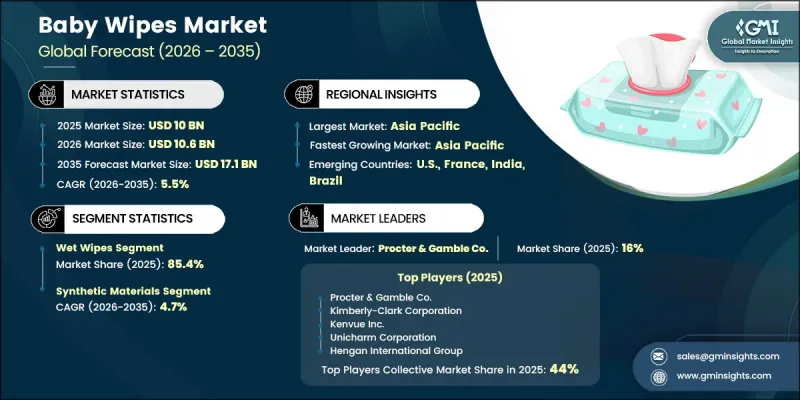
受嬰兒衛生意識增強、便利嬰兒護理產品需求成長以及已開發市場和新興市場滲透率提高的推動,嬰兒濕紙巾市場持續穩定成長。快速的都市化、家庭收入的成長以及生活方式的改變,促使消費者傾向選擇兼具便利性和易用性的包裝衛生產品。同時,成熟市場優質化趨勢的興起,也帶動了消費者對有機、親膚、經皮膚科醫生測試且產品價值更高的嬰兒擦拭巾的需求。發展中地區消費的成長和成熟市場對高級產品需求的增加,共同為該產業創造了均衡的成長環境。零售通路的便利化、消費者購買習慣的改變以及對便捷育兒解決方案日益成長的偏好,進一步鞏固了全球嬰兒擦拭巾市場的長期發展前景。
| 市場範圍 | |
|---|---|
| 開始年份 | 2025 |
| 預測期 | 2026-2035 |
| 起始金額 | 100億美元 |
| 預測金額 | 171億美元 |
| 複合年成長率 | 5.5% |
嬰兒擦拭巾市場正受益於消費者生活方式的轉變,消費者越來越重視便利性、衛生和產品品質。隨著越來越多的家庭採用現代育兒方式,對便利衛生用品的需求持續成長。城市生活、零售網路的擴張以及雙薪家庭的增多,都推動了嬰兒擦拭巾在首次購買者和回頭客中的普及。這些消費模式的轉變正在促進市場擴張,並促使製造商推出更舒適、更能保護皮膚、更方便日常使用的產品。
預計到2025年,擦拭巾市佔率將達到85.4%,並在2026年至2035年間以5.2%的複合年成長率成長。此細分市場持續佔據主導地位,是因為擦拭巾是嬰幼兒日常護理中必不可少的衛生用品。濕紙巾集清潔、保濕和護膚功效於一體,並採用便利的一次性包裝,使其成為眾多消費者的首選。此外,大規模生產使製造商能夠提高原料採購效率,從而幫助他們在生產成本波動的情況下保持價格競爭力。
預計到2025年,合成材料市佔率將達到76.5%,並在2035年之前以4.7%的複合年成長率成長。合成不織布的廣泛應用得益於其持久耐用、卓越的吸水性、均勻的質地以及經濟高效的生產特性。這些性能優勢使製造商能夠在維持大眾消費市場品質標準的同時,生產出價格實惠的產品,從而鞏固了該細分市場的持續主導地位。
預計到2025年,北美嬰兒擦拭巾市佔率將達到28%,成為全球第二大區域市場。美國憑藉主導地位。消費者對高品質產品的持續偏好、豐富的產品選擇以及嬰兒護膚意識的不斷提高,預計將推動北美嬰兒濕紙巾市場的持續成長。
目錄
第1章:調查方法
第2章執行摘要
第3章 行業洞察
- 產業生態系分析
- 影響價值鏈的因素
- 利潤率分析
- 中斷
- 未來展望
- 製造商
- 中斷
- 供應商情況
- 主要新聞和舉措
- 技術與創新展望
- 監理情勢
- 影響因素
- 成長促進因素
- 產業潛在風險與挑戰
- 機會
- 波特的分析
- PESTLE分析
- 價格分析
- 2019-2024年歷史價格趨勢分析
- 定價策略:按業務類型分類
- 貿易數據分析
- 進出口量及進口額趨勢
- 主要貿易路線及關稅的影響
- 人工智慧和生成式人工智慧對市場的影響
- 利用人工智慧改造現有經營模式
- 按細分市場分類的生成式人工智慧用例和部署藍圖
- 風險、限制和監管考量
- 目前分銷基礎設施和通路滲透情況
- 按地區與業態(現代零售與傳統零售)分類的通路覆蓋率
- 缺乏最後一公里基礎設施和不斷變化的管道
第4章 競爭情勢
- 介紹
- 企業市佔率分析
- 競爭定位矩陣
- 戰略展望矩陣
- 主要市場公司的競爭分析
- 主要進展
- 併購
- 夥伴關係和聯盟
- 新產品發布
- 業務拓展計劃
第5章 市場估算與預測:依產品類型分類,2022-2035年
- 乾濕擦拭巾
- 擦拭巾
第6章 市場估計與預測:依材料分類,2022-2035年
- 有機材料
- 合成材料
第7章 市場估算與預測:公用事業部門,2022-2035年
- 一次性的
- 可重複使用的
第8章 市場估算與預測:依價格區間分類,2022-2035年
- 低的
- 中等的
- 高的
第9章 市場估價與預測:依通路分類,2022-2035年
- 線上
- 電子商務
- 企業網站
- 離線
- 大賣場和超級市場
- 藥局/藥局
- 其他零售店
第10章 市場估價與預測:依地區分類,2022-2035年
- 北美洲
- 美國
- 加拿大
- 歐洲
- 德國
- 英國
- 法國
- 義大利
- 西班牙
- 亞太地區
- 中國
- 印度
- 日本
- 韓國
- 澳洲
- 拉丁美洲
- 巴西
- 墨西哥
- 阿根廷
- 中東和非洲
- UAE
- 沙烏地阿拉伯
- 南非
第11章:公司簡介
- 世界公司
- Procter & Gamble Co.
- Kimberly-Clark Corporation
- Kenvue, Inc.
- Unicharm Corporation
- Hengan International Group Co. Ltd.
- 本地公司
- Nice-Pak Products, Inc.
- Pigeon Corporation
- Laboratoires Expanscience(Mustela)
- WaterWipes UC
- Naty AB
- Himalaya Wellness Company
- Beiersdorf AG
- Essity AB
- 新興企業
- The Honest Company, Inc.
- Seventh Generation, Inc.
- Burt's Bees Baby
- Babyganics
- Albaad
- Coterie, Inc.
- Rockline Industries
- Ontex Group NV
The Global Baby Wipes Market was valued at USD 10 billion in 2025 and is estimated to grow at a CAGR of 5.5% to reach USD 17.1 billion by 2035.
The market continues to experience steady growth due to increasing awareness of infant hygiene, rising demand for convenient baby care products, and strong adoption across both developed and emerging economies. Rapid urbanization, improving household incomes, and changing lifestyles are encouraging consumers to shift toward packaged hygiene products that offer convenience and ease of use. At the same time, premiumization trends in mature markets are driving demand for organic, skin-friendly, and dermatologist-tested baby wipes that command higher product value. The combination of expanding consumption in developing regions and increasing demand for premium offerings in established markets is creating a balanced growth environment for the industry. Improved retail accessibility, changing consumer purchasing habits, and the growing preference for convenient childcare solutions continue to strengthen the long-term outlook for the global baby wipes market.
| Market Scope | |
|---|---|
| Start Year | 2025 |
| Forecast Year | 2026-2035 |
| Start Value | $10 Billion |
| Forecast Value | $17.1 Billion |
| CAGR | 5.5% |
The baby wipes market is benefiting from evolving consumer lifestyles that prioritize convenience, hygiene, and product quality. As more households adopt modern childcare practices, demand for ready-to-use hygiene products continues to increase. Urban living, expanding retail networks, and higher participation of dual-income families are supporting greater adoption of baby wipes among both first-time and repeat buyers. These changing consumption patterns are reinforcing market expansion while encouraging manufacturers to introduce products that offer improved comfort, skin protection, and everyday convenience.
The wet wipes segment held 85.4% share in 2025 and is projected to grow at a CAGR of 5.2% between 2026 and 2035. The segment continues to dominate because wet wipes serve as an essential hygiene product for daily infant care. Their ability to combine cleansing, moisturizing, and skin-conditioning benefits within a convenient disposable format has made them the preferred choice across a wide range of consumer groups. Large-scale production also enables manufacturers to achieve purchasing efficiencies for raw materials, helping maintain competitive pricing despite fluctuations in production costs.
The synthetic materials segment accounted for 76.5% share in 2025 and is expected to grow at a CAGR of 4.7% throughout 2035. The widespread use of synthetic nonwoven materials is supported by their consistent durability, effective liquid absorption, uniform texture, and cost-efficient manufacturing characteristics. These performance advantages enable manufacturers to produce affordable products while maintaining quality standards across high-volume consumer markets, supporting continued dominance of the segment.
North America Baby Wipes Market represented 28% share in 2025, making it the second-largest regional market by revenue. The United States remains the leading country within the region due to high consumer spending on baby care products, strong demand for premium baby hygiene solutions, and a well-developed retail distribution network. Continued consumer preference for high-quality products, broad product availability, and increasing awareness of infant skincare are expected to support sustained market growth across North America.
Major players operating in the global baby wipes market are Kimberly-Clark Corporation, Procter & Gamble Co., WaterWipes UC, Kenvue, Inc., Albaad, Nice-Pak Products, Inc., Beiersdorf AG, Unicharm Corporation, Essity AB, Babyganics, Hengan International Group Co. Ltd., Laboratoires Expanscience (Mustela), Burt's Bees Baby, Rockline Industries, Ontex Group NV, The Honest Company, Inc., Pigeon Corporation, Himalaya Wellness Company, Coterie, Inc., Seventh Generation, Inc., and Naty AB. Companies operating in the baby wipes market are strengthening their competitive position by investing in product innovation, sustainable material development, premium product portfolios, and expanded distribution networks. Manufacturers are focusing on gentle formulations, biodegradable materials, skin-friendly ingredients, and environmentally responsible packaging to address evolving consumer preferences. Companies are also enhancing their online presence, strengthening retail partnerships, and expanding global distribution channels to improve product accessibility.
Table of Contents
Chapter 1 Research Methodology
- 1.1 Research approach
- 1.2 Quality Commitments
- 1.2.1 GMI AI policy & data integrity commitment
- 1.2.1.1 Source consistency protocol
- 1.2.1 GMI AI policy & data integrity commitment
- 1.3 Research Trail & Confidence Scoring
- 1.3.1 Research Trail Components
- 1.3.2 Scoring Components
- 1.4 Data Collection
- 1.4.1 Partial list of primary sources
- 1.5 Data mining sources
- 1.5.1 Paid sources
- 1.5.1.1 Sources, by region
- 1.5.1 Paid sources
- 1.6 Base estimates and calculations
- 1.6.1 Base year calculation for any one approach
- 1.7 Forecast model
- 1.7.1 Quantified market impact analysis
- 1.7.1.1 Mathematical impact of growth parameters on forecast
- 1.7.1 Quantified market impact analysis
- 1.8 Research transparency addendum
- 1.8.1 Source attribution framework
- 1.8.2 Quality assurance metrics
- 1.8.3 Our commitment to trust
Chapter 2 Executive Summary
- 2.1 Industry 360° synopsis, 2022 - 2035
- 2.2 Key market trends
- 2.2.1 Regional
- 2.2.2 Product type
- 2.2.3 Material
- 2.2.4 Utility
- 2.2.5 Price range
- 2.2.6 Distribution Channel
Chapter 3 Industry Insights
- 3.1 Industry ecosystem analysis
- 3.1.1 Factor affecting the value chain
- 3.1.2 Profit margin analysis
- 3.1.3 Disruptions
- 3.1.4 Future outlook
- 3.1.5 Manufacturers
- 3.1.6 Distributors
- 3.2 Supplier landscape
- 3.3 Key news & initiatives
- 3.4 Technology & Innovation Landscape
- 3.5 Regulatory landscape
- 3.6 Impact on forces
- 3.6.1 Growth drivers
- 3.6.2 Industry pitfalls & challenges
- 3.6.3 Opportunities
- 3.7 Porter's analysis
- 3.8 PESTEL analysis
- 3.9 Pricing analysis (driven by primary research)
- 3.9.1 Historical Price Trend Analysis, 2019-2024 (Driven by Primary Research)
- 3.9.2 Pricing Strategy by Player Type (Driven by Primary Research)
- 3.10 Trade data analysis (driven by paid database)
- 3.10.1 Import/Export Volume & Value Trends (Driven by Primary Research)
- 3.10.2 Key Trade Corridors & Tariff Impact (Driven by Primary Research)
- 3.11 Impact of AI & Generative AI on the Market
- 3.11.1 AI-Driven Disruption of Existing Business Models
- 3.11.2 GenAI Use Cases & Adoption Roadmap by Segment
- 3.11.3 Risks, Limitations & Regulatory Considerations
- 3.12 Distribution Infrastructure & Channel Penetration Landscape (Driven by Primary Research)
- 3.12.1 Channel Coverage by Region & Format (Modern vs. Traditional Trade) (Driven by Primary Research)
- 3.12.2 Last-Mile Infrastructure Gaps & Emerging Channel Shifts (Driven by Primary Research)
Chapter 4 Competitive Landscape, 2025
- 4.1 Introduction
- 4.2 Company market share analysis
- 4.3 Competitive positioning matrix
- 4.4 Strategic outlook matrix
- 4.5 Competitive analysis of major market players
- 4.6 Key developments
- 4.6.1 Mergers & acquisitions
- 4.6.2 Partnerships & collaborations
- 4.6.3 New product launches
- 4.6.4 Expansion plans
Chapter 5 Market Estimates and Forecast, By Product type, 2022 - 2035 (USD Billion, Thousand Units)
- 5.1 Key trends
- 5.2 Dry wipes
- 5.3 Wet wipes
Chapter 6 Market Estimates and Forecast, By Material, 2022 - 2035 (USD Billion, Thousand Units)
- 6.1 Key trends
- 6.2 Organic materials
- 6.3 Synthetic materials
Chapter 7 Market Estimates and Forecast, By Utility, 2022 - 2035 (USD Billion, Thousand Units)
- 7.1 Key trends
- 7.2 Disposable
- 7.3 Reusable
Chapter 8 Market Estimates and Forecast, By Price range, 2022 - 2035 (USD Billion, Thousand Units)
- 8.1 Key trends
- 8.2 Low
- 8.3 Medium
- 8.4 High
Chapter 9 Market Estimates and Forecast, By Distribution Channel, 2022 - 2035 (USD Billion, Thousand Units)
- 9.1 Key trends
- 9.2 Online
- 9.2.1 E-commerce
- 9.2.2 Company website
- 9.3 Offline
- 9.3.1 Hypermarket and supermarket
- 9.3.2 Pharmaceutical & drug stores
- 9.3.3 Others retail stores
Chapter 10 Market Estimates & Forecast, By Region, 2022 - 2035, (USD Billion, Thousand Units)
- 10.1 Key trends
- 10.2 North America
- 10.2.1 U.S.
- 10.2.2 Canada
- 10.3 Europe
- 10.3.1 Germany
- 10.3.2 U.K.
- 10.3.3 France
- 10.3.4 Italy
- 10.3.5 Spain
- 10.4 Asia Pacific
- 10.4.1 China
- 10.4.2 India
- 10.4.3 Japan
- 10.4.4 South Korea
- 10.4.5 Australia
- 10.5 Latin America
- 10.5.1 Brazil
- 10.5.2 Mexico
- 10.5.3 Argentina
- 10.6 MEA
- 10.6.1 UAE
- 10.6.2 Saudi Arabia
- 10.6.3 South Africa
Chapter 11 Company Profiles
- 11.1 Global players
- 11.1.1 Procter & Gamble Co.
- 11.1.2 Kimberly-Clark Corporation
- 11.1.3 Kenvue, Inc.
- 11.1.4 Unicharm Corporation
- 11.1.5 Hengan International Group Co. Ltd.
- 11.2 Regional players
- 11.2.1 Nice-Pak Products, Inc.
- 11.2.2 Pigeon Corporation
- 11.2.3 Laboratoires Expanscience (Mustela)
- 11.2.4 WaterWipes UC
- 11.2.5 Naty AB
- 11.2.6 Himalaya Wellness Company
- 11.2.7 Beiersdorf AG
- 11.2.8 Essity AB
- 11.3 Emerging players
- 11.3.1 The Honest Company, Inc.
- 11.3.2 Seventh Generation, Inc.
- 11.3.3 Burt's Bees Baby
- 11.3.4 Babyganics
- 11.3.5 Albaad
- 11.3.6 Coterie, Inc.
- 11.3.7 Rockline Industries
- 11.3.8 Ontex Group NV

 嬰兒擦拭巾市場:全球市場預測,2026-2032年
 全球嬰兒擦拭巾市場規模、佔有率、趨勢和成長分析報告(2026-2034年)
 嬰兒擦拭巾市場規模、佔有率、趨勢和預測:按技術、產品類型、分銷管道和地區分類,2026-2034年
 嬰兒濕紙巾市場 - 全球產業規模、佔有率、趨勢、機會及預測(按產品、包裝類型、銷售管道、地區和競爭格局分類,2021-2031年)
 嬰兒擦拭巾市場規模、佔有率和成長分析(按類型、包裝、通路和地區分類)—2026-2033年產業預測
 全球嬰兒擦拭巾市場
 按產品類型、性質、香味、包裝類型、價格範圍、分銷管道、地區、機會和預測對全球嬰兒濕紙巾市場進行評估(2018-2032 年)按產品類型、性質、香味、包裝類型、價格範圍、分銷管道、地區、機會和預測對印度嬰兒濕紙巾市場進行評估(2018-2032 年)