


 |
市場調查報告書
商品編碼
2071341
2026 年至 2035 年二手相機鏡頭的市場機會、成長要素、產業趨勢和預測。Secondhand Camera Lens Market Opportunity, Growth Drivers, Industry Trend Analysis, and Forecast 2026 - 2035 |
||||||

全球二手相機鏡頭市場預計到 2025 年將達到 28 億美元,年複合成長率為 5.3%,到 2035 年將達到 47 億美元。
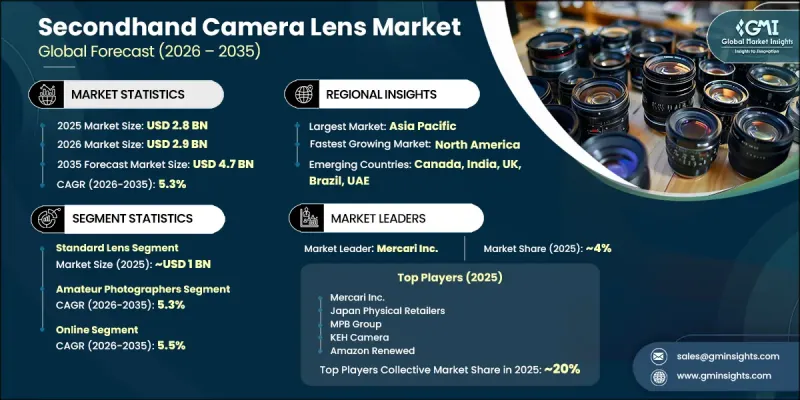
相機鏡頭的長壽命是推動這一成長的主要因素。與隨著技術進步而頻繁更換的機身相比,鏡頭的光學性能能夠保持更長時間。這種耐用性確保了每次攝影師升級設備時,二手鏡頭都會源源不絕地流入二手市場。不斷擴大的用戶群,包括內容創作者、學生、自由工作者和專業攝影師,進一步提升了對經濟實惠的新設備替代方案的需求。透過使用二手鏡頭,用戶可以以更低的價格獲得高階光學品牌,同時也能嘗試不同的焦距和創新風格,而無需進行大量投資。此外,人們對循環經濟實踐和價值導向購買行為的日益理解,也推動了專業和消費市場兩大領域的成長。
| 市場規模 | |
|---|---|
| 開始年份 | 2025 |
| 預測期 | 2026-2035 |
| 上市時的市場規模 | 28億美元 |
| 預測金額 | 47億美元 |
| 複合年成長率 | 5.3% |
預計到2025年,標準鏡頭市場規模將達到10億美元,並在2035年之前以5.3%的複合年成長率成長。由於其多功能性以及適用於日常攝影(包括人像、街頭攝影和一般用途),該細分市場仍然交易活躍。隨著用戶升級到更專業的鏡頭,標準鏡頭經常流入二手市場,從而確保了功能完好、品質優良的二手產品的穩定供應。
預計到2025年,線上銷售管道將佔據70.5%的市場佔有率,並預計在2026年至2035年間以5.5%的複合年成長率成長。數位平台之所以在市場中佔據主導地位,是因為它們能夠提供種類繁多的商品訊息,不受品牌、成色或價格範圍的限制。系統化的評級系統、透明的產品資訊、檢驗的用戶評論以及買家保護機制增強了消費者的信任,使線上平台成為二手鏡頭交易的首選管道。
美國二手相機鏡頭市場預計到2025年將達到6.714億美元,並在2035年之前以5.1%的複合年成長率成長。推動這一市場成長的主要因素是眾多攝影師、影像人和數位內容創作者尋求經濟實惠的高品質光學設備。單眼相機向無反光鏡相機系統的持續轉變進一步增加了二手鏡頭的供應量,從而促進了穩健的以舊換新和轉售循環。完善的數位轉售體系,包括評級標準、保固選項和系統化的退貨政策,持續增強了消費者的信心和參與意願。
目錄
第1章:調查方法和範圍
第2章執行摘要
第3章 行業洞察
- 產業生態系分析
- 供應商情況
- 利潤率
- 每個階段增加的價值
- 影響價值鏈的因素
- 影響產業的因素
- 促進因素
- 新相機設備成本不斷上漲
- 內容生產經濟的成長
- 相機鏡頭的高耐用性
- 價格實惠,成本降低
- 產業潛在風險與挑戰
- 有限保固和售後服務
- 假冒仿冒品產品的風險
- 機會
- 鏡頭租賃和混合所有權模式的開發
- 擴大認證二手商品計劃
- 促進因素
- 成長潛力分析
- 未來市場趨勢
- 技術與創新展望
- 最新科技趨勢
- 新興技術
- 監理情勢
- 標準和合規要求
- 區域監理框架
- 認證標準
- 貿易數據分析
- 進出口量及進口額趨勢
- 主要貿易路線及關稅的影響
- 價格分析
- 對過去價格趨勢的分析
- 按業務類型(高階/低階/大眾市場)分類的定價策略
- 人工智慧和生成式人工智慧對市場的影響
- 利用人工智慧改造現有經營模式
- 按細分市場分類的生成式人工智慧用例和部署藍圖
- 風險、限制和監管考量
- 波特的分析
- PESTLE分析
- 消費者購買行為分析
- 人口趨勢
- 影響購買決策的因素
- 消費者產品採納
- 首選分銷管道
第4章 競爭情勢
- 介紹
- 企業市佔率分析
- 按地區
- 企業矩陣分析
- 主要市場公司的競爭分析
- 競爭定位矩陣
- 主要進展
- 併購
- 夥伴關係和聯盟
- 新產品發布
- 業務拓展計劃
第5章 市場估價與預測:依鏡片類型分類,2022-2035年
- 標準鏡頭
- 廣角鏡頭
- 長焦鏡頭
- 其他(魚眼、微距、移軸等)
第6章 市場估價與預測:依鏡頭卡口分類,2022-2035年
- S型介面
- C型介面
- CS 支架
- F 卡口
- T型介面
- 其他(EF卡口、RF卡口、E卡口、Z卡口、L卡口等)
第7章 市場估計與預測:依聚焦期限分類,2022-2035年
- 100毫米或更小
- 100~200 mm
- 200~400 mm
- 400毫米或以上
第8章 市場估算與預測:依價格區間分類,2022-2035年
- 低價
- 中價位
- 高價
第9章 市場估價與預測:依最終用戶分類,2022-2035年
- 業餘攝影師
- 專業攝影師
- 內容創作者/影片部落客
- 旅行愛好者
- 其他(學生/學習者、一般使用者等)
第10章 市場估價與預測:依通路分類,2022-2035年
- 線上
- 離線
第11章 市場估價與預測:按地區分類,2022-2035年
- 北美洲
- 美國
- 加拿大
- 歐洲
- 德國
- 英國
- 法國
- 義大利
- 西班牙
- 亞太地區
- 中國
- 印度
- 日本
- 韓國
- 澳洲
- 印尼
- 馬來西亞
- 拉丁美洲
- 巴西
- 墨西哥
- 阿根廷
- 中東和非洲
- 沙烏地阿拉伯
- UAE
- 南非
第12章:公司簡介
- 世界頂尖公司
- MPB
- KEH Camera
- B&H Photo Video
- Adorama
- Canon Inc.
- Nikon Corporation
- 該地區的領先企業
- Campkins Cameras(Europe)
- Harrison Cameras (Europe)
- The Camera Company (North America)
- National Camera Exchange (North America)
- Kerrisdale Cameras (North America)
- Map Camera
- Fujiya Camera
- 新興企業
- eBay
- Amazon Renewed
- Back Market
- Facebook Marketplace
- OLX
- Quikr
- Greentoe
The Global Secondhand Camera Lens Market was valued at USD 2.8 billion in 2025 and is estimated to grow at a CAGR of 5.3% to reach USD 4.7 billion by 2035.
Growth is influenced by the long operational lifespan of camera lenses, which retain their optical quality far longer than camera bodies that are frequently replaced due to technological upgrades. This durability ensures a continuous flow of used lenses into the resale ecosystem as photographers upgrade their gear. The expanding base of content creators, students, freelancers, and professional photographers is further strengthening demand for cost-effective alternatives to new equipment. Secondhand lenses enable users to access premium optical brands at lower prices while experimenting with different focal lengths and creative styles without heavy investment. Additionally, growing acceptance of circular economy practices and value-based purchasing behavior is reinforcing market expansion across both professional and consumer segments.
| Market Scope | |
|---|---|
| Start Year | 2025 |
| Forecast Year | 2026-2035 |
| Start Value | $2.8 Billion |
| Forecast Value | $4.7 Billion |
| CAGR | 5.3% |
The standard lens category generated USD 1 billion in 2025 and is projected to grow at a CAGR of 5.3% through 2035. This segment remains widely traded due to its versatility and suitability for everyday photography applications such as portraits, street photography, and general use. Standard lenses frequently circulate in the resale ecosystem as users upgrade to more specialized optical equipment, ensuring a steady supply of functional and high-quality used products in the market.
The online sales channel accounted for 70.5% share in 2025 and is expected to grow at a CAGR of 5.5% during 2026-2035. Digital platforms dominate due to their ability to provide broad access to listings across brands, conditions, and price ranges. Structured grading systems, transparent product information, verified user feedback, and buyer protection mechanisms have strengthened consumer trust, making online platforms the preferred channel for secondhand lens transactions.
United States Secondhand Camera Lens Market reached USD 671.4 million in 2025 and is projected to grow at a CAGR of 5.1% through 2035. Market growth in the country is driven by a large base of photographers, videographers, and digital content creators seeking cost-efficient access to high-quality optical equipment. The ongoing transition from DSLR to mirrorless systems is further increasing the availability of used lenses, supporting active trade-in and resale cycles. Strong digital resale infrastructure, including grading standards, warranty options, and structured return policies, continues to enhance consumer confidence and market participation.
Key companies operating in the global secondhand camera lens market include KEH Camera, MPB, B&H Photo Video, Adorama, Map Camera, eBay, Amazon Renewed, Back Market, Canon Inc., Nikon Corporation, Campkins Cameras, Harrison Cameras, The Camera Company, National Camera Exchange, Kerrisdale Cameras, Fujiya Camera, Greentoe, Facebook Marketplace, OLX, and Quikr. Market participants are focusing on strengthening their competitive position through platform expansion, improved product authentication systems, and enhanced quality grading standards. Companies are investing in AI-driven inspection tools and standardized evaluation processes to increase buyer confidence in used optical equipment. Expansion of online resale platforms and integration of secure payment and return policies are further improving transaction transparency. Strategic partnerships with retailers and manufacturers are supporting certified pre-owned programs and structured trade-in ecosystems. Firms are also leveraging data-driven pricing models to optimize inventory turnover and improve market efficiency. In addition, increasing emphasis on sustainability and circular economy practices is helping companies attract environmentally conscious consumers and strengthen long-term market presence in the secondhand camera lens market.
Table of Contents
Chapter 1 Methodology & Scope
- 1.1 Market scope and definition
- 1.2 Research design
- 1.2.1 Research approach
- 1.2.2 Data collection methods
- 1.3 Data mining sources
- 1.3.1 Global
- 1.3.2 Regional/Country
- 1.4 Base estimates and calculations
- 1.4.1 Base year calculation
- 1.4.2 Key trends for market estimation
- 1.5 Primary research and validation
- 1.5.1 Primary sources
- 1.6 Forecast model
- 1.7 Research assumptions and limitations
Chapter 2 Executive Summary
- 2.1 Industry 360° synopsis
- 2.2 Key market trends
- 2.2.1 Regional
- 2.2.2 Lens type
- 2.2.3 Lens mount
- 2.2.4 Focal length
- 2.2.5 Price
- 2.2.6 End user
- 2.2.7 Distribution channel
Chapter 3 Industry Insights
- 3.1 Industry ecosystem analysis
- 3.1.1 Supplier landscape
- 3.1.2 Profit margin
- 3.1.3 Value addition at each stage
- 3.1.4 Factor affecting the value chain
- 3.2 Industry impact forces
- 3.2.1 Growth drivers
- 3.2.1.1 Rising cost of new camera equipment
- 3.2.1.2 Growth of content creation economy
- 3.2.1.3 High durability of camera lenses
- 3.2.1.4 Affordability and cost savings
- 3.2.2 Industry pitfalls & challenges
- 3.2.2.1 Limited warranty and after-sales support
- 3.2.2.2 Risk of counterfeit and misrepresented products
- 3.2.3 Opportunities
- 3.2.3.1 Development of lens rental & hybrid ownership models
- 3.2.3.2 Expansion of certified pre-owned programs
- 3.2.1 Growth drivers
- 3.3 Growth potential analysis
- 3.4 Future market trends
- 3.5 Technology and innovation landscape
- 3.5.1 Current technological trends
- 3.5.2 Emerging technologies
- 3.6 Regulatory landscape
- 3.6.1 Standards and compliance requirements
- 3.6.2 Regional regulatory frameworks
- 3.6.3 Certification standards
- 3.7 Trade data analysis (HS Code 9002.11)
- 3.7.1 Import/export volume & value trends
- 3.7.2 Key trade corridors & tariff impact
- 3.8 Pricing analysis
- 3.8.1 Historical price trend analysis (driven by primary research)
- 3.8.2 Pricing strategy by player type (premium / value / mass market)
- 3.9 Impact of AI & generative AI on the market
- 3.9.1 AI-driven disruption of existing business models
- 3.9.2 GenAI use cases & adoption roadmap by segment
- 3.9.3 Risks, limitations & regulatory considerations
- 3.10 Porter's analysis
- 3.11 PESTEL analysis
- 3.12 Consumer buying behavior analysis
- 3.12.1 Demographic trends
- 3.12.2 Factors affecting buying decisions
- 3.12.3 Consumer product adoption
- 3.12.4 Preferred distribution channel
Chapter 4 Competitive Landscape, 2025
- 4.1 Introduction
- 4.2 Company market share analysis
- 4.2.1 By Region
- 4.2.1.1 North America
- 4.2.1.2 Europe
- 4.2.1.3 Asia Pacific
- 4.2.1.4 Latin America
- 4.2.1.5 Middle East & Africa
- 4.2.1 By Region
- 4.3 Company matrix analysis
- 4.4 Competitive analysis of major market players
- 4.5 Competitive positioning matrix
- 4.6 Key developments
- 4.6.1 Mergers & acquisitions
- 4.6.2 Partnerships & collaborations
- 4.6.3 New product launches
- 4.6.4 Expansion plans
Chapter 5 Market Estimates & Forecast, By Lens Type, 2022 - 2035, (USD Billion) (Million Units)
- 5.1 Key trends
- 5.2 Standard lens
- 5.3 Wide angle lens
- 5.4 Telephoto lens
- 5.5 Others (fisheye, macro, tilt-shift, etc.)
Chapter 6 Market Estimates & Forecast, By Lens Mount, 2022 - 2035, (USD Billion) (Million Units)
- 6.1 Key trends
- 6.2 S-mount
- 6.3 C-mount
- 6.4 CS-mount
- 6.5 F-mount
- 6.6 T-mount
- 6.7 Others (EF-mount, RF-mount, E-mount, Z-mount, L-mount, etc.)
Chapter 7 Market Estimates & Forecast, By Focal Length, 2022 - 2035, (USD Billion) (Million Units)
- 7.1 Key trends
- 7.2 Up to 100 mm
- 7.3 100 to 200 mm
- 7.4 200 to 400 mm
- 7.5 Above 400 mm
Chapter 8 Market Estimates & Forecast, By Price range, 2022 - 2035, (USD Billion) (Million Units)
- 8.1 Key trends
- 8.2 Low
- 8.3 Medium
- 8.4 High
Chapter 9 Market Estimates & Forecast, By End User, 2022 - 2035, (USD Billion) (Million Units)
- 9.1 Key trends
- 9.2 Amateur photographers
- 9.3 Professional photographers
- 9.4 Content creators/vloggers
- 9.5 Travel enthusiasts
- 9.6 Others (students and learners, casual users etc.)
Chapter 10 Market Estimates & Forecast, By Distribution Channel, 2022 - 2035, (USD Billion) (Million Units)
- 10.1 Key trends
- 10.2 Online
- 10.3 Offline
Chapter 11 Market Estimates & Forecast, By Region, 2022 - 2035, (USD Billion) (Million Units)
- 11.1 Key trends
- 11.2 North America
- 11.2.1 U.S.
- 11.2.2 Canada
- 11.3 Europe
- 11.3.1 Germany
- 11.3.2 UK
- 11.3.3 France
- 11.3.4 Italy
- 11.3.5 Spain
- 11.4 Asia Pacific
- 11.4.1 China
- 11.4.2 India
- 11.4.3 Japan
- 11.4.4 South Korea
- 11.4.5 Australia
- 11.4.6 Indonesia
- 11.4.7 Malaysia
- 11.5 Latin America
- 11.5.1 Brazil
- 11.5.2 Mexico
- 11.5.3 Argentina
- 11.6 MEA
- 11.6.1 Saudi Arabia
- 11.6.2 UAE
- 11.6.3 South Africa
Chapter 12 Company Profiles
- 12.1 Top Global Players
- 12.1.1 MPB
- 12.1.2 KEH Camera
- 12.1.3 B&H Photo Video
- 12.1.4 Adorama
- 12.1.5 Canon Inc.
- 12.1.6 Nikon Corporation
- 12.2 Regional Champions
- 12.2.1 Campkins Cameras (Europe)
- 12.2.2 Harrison Cameras (Europe)
- 12.2.3 The Camera Company (North America)
- 12.2.4 National Camera Exchange (North America)
- 12.2.5 Kerrisdale Cameras (North America)
- 12.2.6 Map Camera
- 12.2.7 Fujiya Camera
- 12.3 Emerging Players
- 12.3.1 eBay
- 12.3.2 Amazon Renewed
- 12.3.3 Back Market
- 12.3.4 Facebook Marketplace
- 12.3.5 OLX
- 12.3.6 Quikr
- 12.3.7 Greentoe

 全球二手相機鏡頭市場規模、佔有率、趨勢和成長分析報告(2026-2034年)
 2026 年至 2035 年二手相機和鏡頭的市場機會、成長要素、產業趨勢和預測。
 智慧型手機相機鏡頭市場報告:按技術類型、相容性、分銷管道和地區分類(2026-2034 年)相機鏡頭市場報告:按類型、銷售管道、應用和地區分類(2026-2034 年)
 智慧型相機鏡頭市場:按解析度和地區分類
 餅乾鏡頭市場:2026-2032年全球市場預測(按焦距、光學設計、應用、銷售管道和最終用戶分類)相機鏡頭市場:按應用和地區分類
 智慧型手機相機鏡頭:市場佔有率分析、產業趨勢與統計、成長預測(2026-2031)廣角定焦鏡頭市場:以對焦方式、感光元件格式、應用、最終用戶和通路分類-2026-2032年全球預測緊湊型鏡頭產生器市場:按類型、技術、分銷管道、應用、最終用戶分類,全球預測(2026-2032)