

 |
市場調查報告書
商品編碼
2061376
寵物噪音焦慮市場機會、成長要素、產業趨勢分析及2026-2035年預測Pet Noise Anxiety Market Opportunity, Growth Drivers, Industry Trend Analysis, and Forecast 2026 - 2035 |
||||||

2025 年全球寵物噪音焦慮市場價值 14.6 億美元,預計到 2035 年將以 6.6% 的複合年成長率成長至 27.4 億美元。
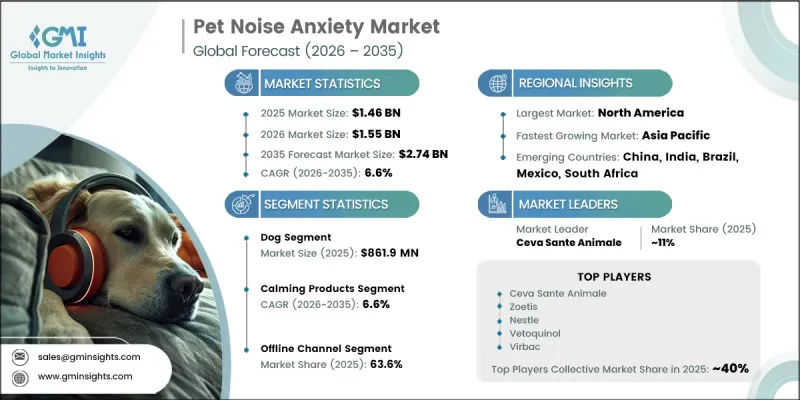
全球寵物擁有率的上升以及消費者在寵物健康和醫療產品上的支出增加,推動了市場成長。獸醫行為護理解決方案和焦慮管理技術的進步進一步加速了全球產業的擴張。寵物專用鎮靜劑、費洛蒙療法、穿戴式舒適設備、抗焦慮服裝和降噪產品的日益普及,顯著促進了市場需求。人們對寵物情緒和心理健康的日益關注,也促使寵物飼主尋求預防性和長期的焦慮管理解決方案。此外,獸醫行為諮詢服務和遠距獸醫會診的普及,提高了寵物獲得專業護理的便利性,並加快了市場滲透。隨著人們對寵物人性化和行為健康管理的關注度不斷提高,寵物噪音焦慮管理行業的製造商和獸醫服務提供者將持續迎來強勁的成長機會。
| 市場範圍 | |
|---|---|
| 開始年份 | 2025 |
| 預測期 | 2026-2035 |
| 上市時的市場規模 | 14.6億美元 |
| 預測金額 | 27.4億美元 |
| 複合年成長率 | 6.6% |
寵物噪音焦慮是一種行為障礙,患有此病的伴侶動物在暴露於巨大或突發噪音時會表現出過度緊張、恐懼或恐慌反應。各種環境噪音都可能引發焦慮反應,受影響的寵物可能會出現躁動不安、吠叫、躲藏、踱步、破壞性行為或攻擊性行為等行為症狀。這種疾病日益被認為是伴侶動物嚴重的行為健康問題,如果處理不當,會對它們的情緒穩定和身體健康產生負面影響。寵物飼主和獸醫專業人員對未經治療的焦慮症的長期影響的認知不斷提高,進一步增加了對專業行為護理產品和治療性介入的需求。
預計到2025年,犬類市場規模將達到8.619億美元。此細分市場的成長主要受犬隻焦慮和壓力相關行為障礙高發生率的驅動。犬類對環境噪音刺激高度敏感,這些刺激常會引發恐懼行為反應和精神壓力。這種高度敏感性顯著增加了對鎮靜劑、穿戴式焦慮管理產品、獸醫行為療法以及專為犬類研發的壓力緩解方案的需求。全球伴侶犬數量的不斷成長以及飼主對犬類行為健康意識的提高,也進一步推動了該細分市場的成長。
預計到2035年,鎮靜產品市場將以6.6%的複合年成長率成長。該市場涵蓋補充劑、信息素產品以及其他各種旨在為伴侶動物提供行為支持的焦慮管理解決方案。推動該品類成長的主要因素是人們越來越傾向於採用非侵入性和預防性方法來管理寵物焦慮相關症狀。隨著寵物飼主尋求安全便捷的方式來減輕寵物在壓力情境和環境變化中的焦慮,對鎮靜零食、舒緩焦慮的裹敷產品、信息素產品、壓力管理補充劑以及以舒適為導向的健康解決方案的需求持續成長。
預計到2025年,北美寵物噪音焦慮市場將佔據46.7%的佔有率。該地區持續引領市場,主要得益於伴侶動物行為照護產品的高滲透率、寵物醫療保健支出不斷成長以及消費者對寵物情緒健康的日益重視。此外,鎮靜補充劑、穿戴式舒適設備、聲療技術、焦慮緩解產品和處方箋獸醫護理的需求不斷成長也支撐了市場成長。獸醫專業人員積極參與行為諮詢、預防保健和早期焦慮診斷,也促進了北美市場需求的持續成長。寵物人性化和高階寵物健康解決方案的強勁趨勢進一步推動了該地區市場的持續擴張。
目錄
第1章:調查方法和範圍
第2章執行摘要
第3章 行業洞察
- 產業生態系分析
- 影響產業的因素
- 促進因素
- 寵物數量增加以及動物醫療保健支出增加
- 寵物護理產品的進步
- 人們越來越關注寵物心理健康
- 擴大寵物行為的研究與開發
- 產業潛在風險與挑戰
- 缺乏標準化治療方法
- 犬類以外的其他群體認知度較低
- 市場機遇
- 拓展自然與整體的放鬆方案
- 引進智慧科技來管理寵物焦慮
- 促進因素
- 成長潛力分析
- 監理情勢
- 技術展望
- 當前技術趨勢
- 新興科技的發展趨勢
- 數位健康整合的機遇
- 人工智慧與穿戴式科技的融合
- 遠端醫療平台的開發
- 消費行為分析
- 寵物飼主的基本人口統計特徵和心理特徵
- 決策流程視覺化
- 採購流程和接觸點分析
- 價格敏感度和支付意願
- 品牌忠誠度和轉換模式
- 產品開發藍圖
- 投資和資金籌措趨勢
- 價格分析
- 人工智慧和生成式人工智慧對市場的影響
- 波特的分析
- PESTLE分析
第4章 競爭情勢
- 介紹
- 企業市佔率分析
- 北美洲
- 歐洲
- 亞太地區
- 企業矩陣分析
- 主要市場公司的競爭分析
- 競爭定位矩陣
- 主要進展
- 併購
- 夥伴關係和聯盟
- 新產品發布
- 業務拓展計劃
第5章 市場估算與預測:依動物種類分類,2022-2035年
- 狗
- 貓
- 其他動物
第6章 市場估算與預測:依產品類型分類,2022-2035年
- 鎮靜劑產品
- 補充
- 信息素
- 其他鎮靜劑產品
- 壓縮背心和繃帶
- 製藥
- 其他產品類型
第7章 市場估價與預測:依銷售管道分類,2022-2035年
- 離線頻道
- 線上管道
第8章 市場估計與預測:依地區分類,2022-2035年
- 北美洲
- 美國
- 加拿大
- 歐洲
- 德國
- 英國
- 法國
- 西班牙
- 義大利
- 荷蘭
- 亞太地區
- 日本
- 中國
- 印度
- 澳洲
- 韓國
- 拉丁美洲
- 巴西
- 墨西哥
- 阿根廷
- 中東和非洲
- 沙烏地阿拉伯
- 南非
- UAE
第9章:公司簡介
- Ceva Sante Animale
- Feliway
- Nestle
- Nutramax Laboratories Veterinary Sciences
- Nutravet
- Orion Oyj
- Pet Acoustics
- Pet Remedy
- PetIQ
- RelaxoPet
- Thunderworks
- Vetoquinol
- VetriScience
- Virbac
- West Paw
- Zesty Paws
- Zoetis
- Zylkene
The Global Pet Noise Anxiety Market was valued at USD 1.46 billion in 2025 and is estimated to grow at a CAGR of 6.6% to reach USD 2.74 billion by 2035.
Market growth is supported by the increasing rate of global pet ownership and rising consumer spending on companion animal wellness and healthcare products. Advancements in veterinary behavioral care solutions and anxiety-management technologies are further accelerating industry expansion worldwide. Growing adoption of calming supplements, pheromone therapies, wearable comfort devices, anxiety-relief garments, and sound-reduction products designed specifically for pets is contributing significantly to market demand. Increasing awareness regarding the emotional and psychological well-being of companion animals is also encouraging pet owners to seek preventive and long-term anxiety management solutions. In addition, the expanding availability of veterinary behavioral counseling services and tele-veterinary consultations is improving access to professional care and supporting broader market penetration. The increasing focus on pet humanization and behavioral health management continues to create strong growth opportunities for manufacturers and veterinary care providers operating within the pet noise anxiety industry.
| Market Scope | |
|---|---|
| Start Year | 2025 |
| Forecast Year | 2026-2035 |
| Start Value | $1.46 Billion |
| Forecast Value | $2.74 Billion |
| CAGR | 6.6% |
Pet noise anxiety is recognized as a behavioral condition in which companion animals experience excessive stress, fear, or panic reactions when exposed to loud or unexpected sounds. Various environmental noises can trigger anxiety-related responses, leading affected pets to display behavioral symptoms such as restlessness, vocalization, hiding, pacing, destructive actions, or aggressive behavior. The condition is increasingly viewed as a serious companion animal behavioral health concern that can negatively influence both emotional stability and physical well-being if not properly managed. Growing awareness among pet owners and veterinary professionals regarding the long-term effects of untreated anxiety is further increasing demand for specialized behavioral care products and therapeutic interventions.
The dog segment accounted for USD 861.9 million in 2025. Segment growth is primarily attributed to the high occurrence of anxiety and stress-related behavioral disorders among dogs. Canines are highly sensitive to environmental noise disturbances, which frequently result in fear-based behavioral responses and emotional stress. This growing sensitivity has created substantial demand for calming therapies, wearable anxiety-management products, veterinary behavioral treatments, and stress-relief solutions specifically developed for dogs. Rising adoption of companion dogs globally and increasing owner awareness regarding canine behavioral wellness are further strengthening market growth within the segment.
The calming products segment is anticipated to grow at a CAGR of 6.6% throughout 2035. The segment includes supplements, pheromone products, and various other anxiety-management solutions designed to provide behavioral support for companion animals. Growth within this category is being driven by increasing preference for non-invasive and preventive approaches to managing anxiety-related conditions in pets. Demand for calming treats, anxiety wraps, pheromone-based products, stress-management supplements, and comfort-focused wellness solutions continues to rise as pet owners seek safe and convenient methods to reduce anxiety during stressful situations and environmental disturbances.
North America Pet Noise Anxiety Market accounted for 46.7% share in 2025. The region continues to dominate due to high adoption of companion animal behavioral care products, increasing spending on pet healthcare, and strong consumer awareness regarding pet emotional wellness. Market growth is also supported by rising demand for calming supplements, wearable comfort devices, sound therapy technologies, anxiety-relief products, and prescription-based veterinary treatments. In addition, active participation by veterinary professionals in behavioral counseling, preventive care, and early anxiety diagnosis is contributing to sustained market demand across North America. The strong trend toward pet humanization and premium pet wellness solutions further supports continued regional expansion.
Key companies operating in the Global Pet Noise Anxiety Market include Ceva Sante Animale, Feliway, Nestle, Nutramax Laboratories Veterinary Sciences, Nutravet, Orion Oyj, Pet Acoustics, Pet Remedy, PetIQ, RelaxoPet, Thunderworks, Vetoquinol, VetriScience, Virbac, West Paw, Zesty Paws, Zoetis, and Zylkene. Companies operating in the pet noise anxiety industry are implementing several strategic initiatives to strengthen their market presence and improve long-term competitiveness. Major players are increasing investments in product innovation, veterinary behavioral research, and advanced calming technologies to develop highly effective anxiety-management solutions for companion animals. Businesses are also focusing on expanding product portfolios with supplements, wearable devices, pheromone-based therapies, and natural wellness products designed to meet evolving consumer preferences. Strategic collaborations with veterinary clinics, pet retailers, and online distribution platforms are helping companies improve market penetration and customer reach. In addition, manufacturers are strengthening digital marketing efforts, educational awareness campaigns, and tele-veterinary partnerships to enhance consumer engagement and promote early behavioral care adoption.
Table of Contents
Chapter 1 Methodology and Scope
- 1.1 Market scope and definition
- 1.2 Research approach
- 1.3 Quality commitments
- 1.3.1 GMI AI policy and data integrity commitment
- 1.3.1.1 Source consistency protocol
- 1.3.1 GMI AI policy and data integrity commitment
- 1.4 Research trail and confidence scoring
- 1.4.1 Research trail components
- 1.4.2 Scoring components
- 1.5 Data collection
- 1.5.1 Partial list of primary sources
- 1.6 Data mining sources
- 1.6.1 Paid sources
- 1.6.1.1 Sources, by region
- 1.6.1 Paid sources
- 1.7 Base estimates and calculations
- 1.7.1 Revenue share analysis
- 1.7.2 Base year calculation
- 1.8 Forecast model
- 1.9 Research transparency addendum
- 1.9.1 Source attribution framework
- 1.9.2 Quality assurance metrics
- 1.9.3 Our commitment to trust
Chapter 2 Executive Summary
- 2.1 Industry 360° synopsis
- 2.2 Key market trends
- 2.2.1 Regional trends
- 2.2.2 Animal trends
- 2.2.3 Product type trends
- 2.2.4 Sales channel trends
- 2.3 CXO perspectives: Strategic imperatives
Chapter 3 Industry Insights
- 3.1 Industry ecosystem analysis
- 3.2 Industry impact forces
- 3.2.1 Growth drivers
- 3.2.1.1 Increasing pet ownership and spending on animal health
- 3.2.1.2 Advancements in pet care products
- 3.2.1.3 Growing awareness of pet mental health
- 3.2.1.4 Increasing R&D in pet behavioral
- 3.2.2 Industry pitfalls and challenges
- 3.2.2.1 Lack of standardized treatments
- 3.2.2.2 Low awareness in non-dog segments
- 3.2.3 Market opportunities
- 3.2.3.1 Expansion of natural and holistic calming solutions
- 3.2.3.2 Integration of smart technology in pet anxiety management
- 3.2.1 Growth drivers
- 3.3 Growth potential analysis
- 3.4 Regulatory landscape (Driven by Primary Research)
- 3.4.1 North America
- 3.4.2 Europe
- 3.4.3 Asia Pacific
- 3.4.4 Latin America
- 3.4.5 MEA
- 3.5 Technology landscape
- 3.5.1 Current technology landscape
- 3.5.2 Emerging technology landscape (Driven by Primary Research)
- 3.5.2.1 Digital health integration opportunities
- 3.5.2.2 AI & wearable technology integration
- 3.5.2.3 Telemedicine platform development
- 3.6 Consumer behavior analysis (Driven by Primary Research)
- 3.6.1 Pet owner demographics & psychographics
- 3.6.2 Decision-making process mapping
- 3.6.3 Purchase journey and touchpoint analysis
- 3.6.4 Price sensitivity and willingness to pay
- 3.6.5 Brand loyalty and switching patterns
- 3.7 Product development roadmap planning (Driven by Primary Research)
- 3.8 Investment and funding landscape (Driven by Primary Research)
- 3.9 Pricing analysis (Driven by Primary Research)
- 3.10 Impact of AI and generative AI on the market (Driven by Primary Research)
- 3.11 Porter's analysis
- 3.12 PESTEL analysis
Chapter 4 Competitive Landscape, 2025
- 4.1 Introduction
- 4.2 Company market share analysis
- 4.2.1 North America
- 4.2.2 Europe
- 4.2.3 Asia Pacific
- 4.3 Company matrix analysis
- 4.4 Competitive analysis of major market players
- 4.5 Competitive positioning matrix
- 4.6 Key developments
- 4.6.1 Merger and acquisition
- 4.6.2 Partnership and collaboration
- 4.6.3 New product launches
- 4.6.4 Expansion plans
Chapter 5 Market Estimates and Forecast, By Animal, 2022 - 2035 ($ Mn)
- 5.1 Key trends
- 5.2 Dogs
- 5.3 Cats
- 5.4 Other animals
Chapter 6 Market Estimates and Forecast, By Product Type, 2022 - 2035 ($ Mn)
- 6.1 Key trends
- 6.2 Calming products
- 6.2.1 Supplements
- 6.2.2 Pheromones
- 6.2.3 Other calming products
- 6.3 Pressure vests and wraps
- 6.4 Medications
- 6.5 Other product types
Chapter 7 Market Estimates and Forecast, By Sales Channel, 2022 - 2035 ($ Mn)
- 7.1 Key trends
- 7.2 Offline channel
- 7.3 Online channel
Chapter 8 Market Estimates and Forecast, By Region, 2022 - 2035 ($ Mn)
- 8.1 Key trends
- 8.2 North America
- 8.2.1 U.S.
- 8.2.2 Canada
- 8.3 Europe
- 8.3.1 Germany
- 8.3.2 UK
- 8.3.3 France
- 8.3.4 Spain
- 8.3.5 Italy
- 8.3.6 Netherlands
- 8.4 Asia Pacific
- 8.4.1 Japan
- 8.4.2 China
- 8.4.3 India
- 8.4.4 Australia
- 8.4.5 South Korea
- 8.5 Latin America
- 8.5.1 Brazil
- 8.5.2 Mexico
- 8.5.3 Argentina
- 8.6 Middle East and Africa
- 8.6.1 Saudi Arabia
- 8.6.2 South Africa
- 8.6.3 UAE
Chapter 9 Company Profiles
- 9.1 Ceva Sante Animale
- 9.2 Feliway
- 9.3 Nestle
- 9.4 Nutramax Laboratories Veterinary Sciences
- 9.5 Nutravet
- 9.6 Orion Oyj
- 9.7 Pet Acoustics
- 9.8 Pet Remedy
- 9.9 PetIQ
- 9.10 RelaxoPet
- 9.11 Thunderworks
- 9.12 Vetoquinol
- 9.13 VetriScience
- 9.14 Virbac
- 9.15 West Paw
- 9.16 Zesty Paws
- 9.17 Zoetis
- 9.18 Zylkene

 寵物噪音焦慮市場:2026-2032年全球市場預測(按產品類型、成分類型、寵物類型、應用、最終用戶和分銷管道分類)
 寵物噪音焦慮市場規模、佔有率和成長分析:依治療類型、劑型、動物種類、通路和地區分類-2026-2033年產業預測
 鳥屋市場規模、佔有率和成長分析:按材料/基材、安裝方式、應用、分銷/採購管道和地區分類-2026-2033年產業預測
 寵物噪音焦慮市場:依產品類型、銷售管道和地區分類
 全球寵物聲音恐懼症市場分析及預測(至2035年):類型、產品、服務、技術、應用、劑型、最終用戶、解決方案
 寵物食品和零食市場機會、成長要素、產業趨勢分析及 2026-2035 年預測。
 鳥類餵食器市場規模、佔有率和成長分析:按鳥類餵食器類型、材質、安裝方式、餵食機制和地區分類-2026-2033年產業預測
 寵物舒緩產品市場 - 全球產業規模、佔有率、趨勢、機會及預測(按類型、寵物類型、分銷管道、地區和競爭格局分類,2021-2031年)狗背帶市場 - 全球產業規模、佔有率、趨勢、機會及預測(按產品類型、應用、地區和競爭格局分類,2021-2031年)鳥籠及配件市場-全球產業規模、佔有率、趨勢、機會、預測:按類型、價格範圍、分銷管道、地區和競爭格局分類,2021-2031年