

 |
市場調查報告書
商品編碼
2045782
頭髮烘乾毛巾市場商機、成長要素、產業趨勢分析及2026-2035年預測。Hair Drying Towel Market Opportunity, Growth Drivers, Industry Trend Analysis, and Forecast 2026 - 2035 |
||||||

預計到 2025 年,全球乾髮毛巾市場價值將達到 6.921 億美元,年複合成長率為 5.8%,到 2035 年將達到 12 億美元。
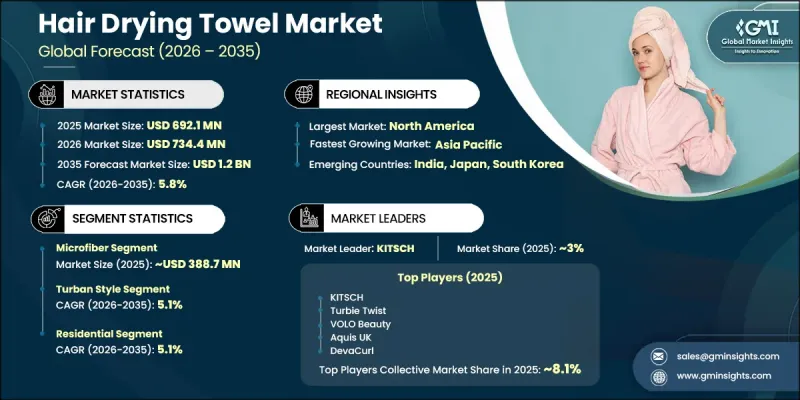
吹風巾市場的擴張主要得益於消費者在個人整裝儀容和自我護理產品上的支出增加,以及對專業美髮解決方案的認知度不斷提高。消費者越來越傾向於選擇能夠改善頭髮健康、減少吹風損傷的產品。吹風巾因其比傳統毛巾更有效地吸收水分,從而減少頭髮斷裂和毛躁,而日益受到歡迎。專業美髮沙龍和髮型師也開始將這些產品融入他們的服務中,以提高便利性和營運效率。超細纖維技術、輕質材料和符合人體工學的產品設計的持續創新,正在提升產品的性能和舒適度。此外,線上零售平台的擴張以及全球分銷網路帶來的產品供應改善,使得世界各地的消費者都能更方便地購買到吹風巾。美容類數位內容和社交媒體趨勢的影響力日益增強,進一步推動了市場需求,因為消費者越來越關注透過線上平台共用的護髮建議、教學和產品演示。
| 市場範圍 | |
|---|---|
| 開始年份 | 2025 |
| 預測期 | 2026-2035 |
| 上市時的市場規模 | 6.921億美元 |
| 預計金額 | 12億美元 |
| 複合年成長率 | 5.8% |
預計到2025年,超細纖維市場規模將達到3.887億美元,並在2026年至2035年間以4.1%的複合年成長率成長。超細纖維乾髮巾的強勁需求主要源於其卓越的吸水性、速乾性能以及對頭髮的溫和觸感。這些毛巾採用超細纖維製成,能夠有效去除多餘水分,同時減少摩擦,有助於降低頭髮損傷和毛躁的風險。與傳統毛巾材質相比,超細纖維產品因其乾髮速度更快、輕盈易用,成為日常護髮的理想之選,而廣受歡迎。消費者對保持頭髮健康和預防損傷的日益關注,預計將在整個預測期內持續推動超細纖維產品的整體普及。
預計到2025年,頭巾式乾髮巾的市佔率將達到42.8%,並在2026年至2035年間以5.1%的複合年成長率成長。這一細分市場的成長主要得益於頭巾式乾髮巾實用便捷的設計。這類產品可貼合頭部,使用舒適,能有效吸收水分,同時牢牢固定頭髮。其免持功能尤其吸引那些追求淋浴設備後便捷舒適整裝儀容的消費者。消費者對高效易用的護髮產品的需求不斷成長,預計將進一步鞏固頭巾式乾髮巾的市場地位。
美國乾髮毛巾市場預計到2025年將達到1.784億美元,並在2026年至2035年間以5.3%的複合年成長率成長。消費者在個人護理方面的強勁支出以及對先進護髮解決方案日益成長的偏好是美國市場成長的主要驅動力。消費者越來越傾向於選擇超細纖維和頭巾式乾髮毛巾,這些產品旨在減少熱損傷並在洗髮後保持頭髮的質地。快節奏的都市區方式也推動了市場需求,促使人們使用便利的個人保健產品。此外,廣泛的數位行銷活動以及推廣頭髮健康和現代護理習慣的線上美容內容的日益成長的影響力,也持續推動著市場的發展。
目錄
第1章:調查方法和範圍
第2章執行摘要
第3章 行業洞察
- 產業生態系分析
- 供應商情況
- 利潤率
- 每個階段增加的價值
- 影響價值鏈的因素
- 影響產業的因素
- 促進因素
- 人們越來越意識到頭髮護理和損傷預防的重要性
- 全球美容及個人護理產業的擴張
- 社群媒體與美妝部落客的影響力
- 潛在風險和挑戰
- 價格低廉的普通毛巾也可作為替代品。
- 基本型號的產品差異化程度有限。
- 機會
- 對環保和永續紡織材料的需求日益成長
- 開發多功能且時尚的設計
- 促進因素
- 成長潛力分析
- 未來市場趨勢
- 技術與創新展望
- 最新科技趨勢
- 新興技術
- 監理情勢
- 標準和合規要求
- 區域監理框架
- 認證標準
- 波特的分析
- PESTLE分析
- 價格分析
- 2021-2024年歷史價格趨勢分析
- 依球員類型(高階/中階/經濟型)制定定價策略
- 區域價格波動與購買力指數
- 貿易數據分析
- 按地區分類的進出口數量和價值趨勢
- 主要貿易路線及關稅對紡織品的影響
- 主要出口國及進口國
- 人工智慧和生成式人工智慧對市場的影響
- 人工智慧驅動的護髮產品個人化建議
- 生成式人工智慧在電子商務中的應用案例(虛擬試穿、聊天機器人)
- 透過人工智慧分析最佳化供應鏈
- 風險、限制和監管考量
- 目前分銷基礎設施和通路滲透情況
- 按地區與業態(現代零售與傳統零售)分類的通路涵蓋範圍
- 缺乏最後一公里基礎設施和不斷變化的管道
第4章 競爭情勢
- 介紹
- 企業市佔率分析
- 按地區
- 北美洲
- 歐洲
- 亞太地區
- 拉丁美洲
- 中東和非洲
- 按地區
- 企業矩陣分析
- 主要市場公司的競爭分析
- 競爭定位矩陣
- 主要進展
- 併購
- 夥伴關係和聯盟
- 新產品發布
- 業務拓展計劃
第5章 市場估計與預測:依材料分類,2022-2035年
- 超細纖維
- 棉布
- 竹子
- 混紡布料
- 其他
第6章 市場估算與預測:依風格分類,2022-2035年
- 頭巾式
- 標準毛巾
- 饒舌風格
第7章 市場估計與預測:依價格區間分類,2022-2035年
- 低的
- 中等的
- 高的
第8章 市場估算與預測:依最終用途分類,2022-2035年
- 住宅
- 商業的
第9章 市場估價與預測:依通路分類,2022-2035年
- 線上
- 電子商務
- 公司網站
- 離線
- 超級市場
- 專賣店
- 其他
第10章 市場估價與預測:依地區分類,2022-2035年
- 北美洲
- 美國
- 加拿大
- 歐洲
- 德國
- 英國
- 法國
- 義大利
- 西班牙
- 亞太地區
- 中國
- 印度
- 日本
- 韓國
- 澳洲
- 拉丁美洲
- 巴西
- 墨西哥
- 阿根廷
- 中東和非洲
- 沙烏地阿拉伯
- UAE
- 南非
第11章:公司簡介
- 世界頂尖公司
- KITSCH
- Turbie Twist
- VOLO Beauty
- DevaCurl
- Curlsmith
- Iles Formula
- T3 Micro
- 該地區的領先企業
- Good Wash Day
- Ettitude
- Hair RePear
- JML
- Cariloha
- Moroccan Oil
- Glamour Global
- 新興企業和專業公司
- Smart Hair Towel
- Formula-A
- The Perfect Haircare
- Morning Glamour
- Hairstory
- Aquis UK
- Turbella
The Global Hair Drying Towel Market was valued at USD 692.1 million in 2025 and is estimated to grow at a CAGR of 5.8% to reach USD 1.2 billion by 2035.
Expansion of the hair drying towel industry is fueled by rising consumer spending on personal grooming and self-care products, along with growing awareness regarding specialized hair care solutions. Consumers are increasingly shifting toward products designed to improve hair health and reduce damage caused during drying routines. Hair drying towels are gaining strong popularity because they absorb moisture more efficiently and help minimize hair breakage and frizz compared to conventional towels. Professional salons and hairstyling experts are also incorporating these products into their services to improve convenience and operational efficiency. Continuous innovation in microfiber technology, lightweight materials, and ergonomic product designs is enhancing product performance and user comfort. In addition, the expansion of online retail platforms and wider product availability through global distribution networks is making hair drying towels more accessible to consumers worldwide. The growing influence of beauty-focused digital content and social media trends is further accelerating demand, as consumers increasingly engage with hair care recommendations, tutorials, and product demonstrations shared through online platforms.
| Market Scope | |
|---|---|
| Start Year | 2025 |
| Forecast Year | 2026-2035 |
| Start Value | $692.1 Million |
| Forecast Value | $1.2 Billion |
| CAGR | 5.8% |
The microfiber segment generated USD 388.7 million in 2025 and is expected to grow at a CAGR of 4.1% from 2026 to 2035. Strong demand for microfiber hair drying towels is primarily driven by their superior absorbency, fast-drying properties, and gentle effect on hair. These towels are manufactured using ultra-fine fibers that effectively remove excess moisture while reducing friction, which helps lower the risk of hair damage and unwanted frizz. Compared to traditional towel materials, microfiber products are widely preferred because they dry hair more quickly and provide a lightweight, convenient solution for everyday hair care routines. Increasing consumer focus on maintaining healthy hair and preventing damage is expected to continue driving adoption across the microfiber segment throughout the forecast period.
The turban style segment held a 42.8% share in 2025, and is projected to grow at a CAGR of 5.1% between 2026 and 2035. Growth within this segment is supported by the practical and user-friendly design of turban-style towels, which offer a secure fit and improved convenience during hair drying routines. These products are designed to wrap comfortably around the head while efficiently absorbing moisture and keeping hair firmly in place. Their hands-free functionality makes them particularly attractive for consumers seeking convenience and comfort during post-shower grooming activities. Rising demand for efficient and easy-to-use hair care accessories is expected to further strengthen the market position of the turban style segment.
U.S. Hair Drying Towel Market captured USD 178.4 million in 2025 and is anticipated to grow at a CAGR of 5.3% from 2026 to 2035. Strong consumer spending on personal care and increasing preference for advanced hair care solutions are major factors supporting market growth in the United States. Consumers are increasingly choosing microfiber and turban-style hair drying towels designed to reduce heat-related damage and preserve hair texture after washing. Demand is driven by fast-paced urban lifestyles that encourage the adoption of convenient, quick-drying personal care products. The market continues to benefit from extensive digital marketing efforts and the growing influence of online beauty content promoting hair wellness and modern grooming practices.
Major companies operating in the Global Hair Drying Towel Market include KITSCH, Turbie Twist, VOLO Beauty, DevaCurl, Curlsmith, Iles Formula, and T3 Micro. Additional regional participants active in the industry include Good Wash Day, Ettitude, Hair RePear, JML, Cariloha, Moroccan Oil, and Glamour Global. Emerging and niche-focused companies operating within the market include Smart Hair Towel, Formula-A, The Perfect Haircare, Morning Glamour, Hairstory, Aquis UK, and Turbella. Companies competing in the hair drying towel industry are implementing various growth strategies to strengthen their market position and expand customer reach. Leading manufacturers are focusing on product innovation by introducing advanced microfiber materials, lightweight fabrics, and ergonomic designs that improve comfort and drying efficiency. Many companies are also investing in sustainable and eco-friendly production methods to appeal to environmentally conscious consumers. Strategic collaborations with beauty influencers, hairstylists, and digital content creators are helping brands increase product visibility and consumer engagement.
Table of Contents
Chapter 1 Methodology & Scope
- 1.1 Market scope and definition
- 1.2 Research design
- 1.2.1 Research approach
- 1.2.2 Data collection methods
- 1.3 Data mining sources
- 1.3.1 Global
- 1.3.2 Regional/Country
- 1.4 Base estimates and calculations
- 1.4.1 Base year calculation
- 1.4.2 Key trends for market estimation
- 1.5 Primary research and validation
- 1.5.1 Primary sources
- 1.6 Forecast model
- 1.7 Research assumptions and limitations
Chapter 2 Executive Summary
- 2.1 Industry 360° synopsis
- 2.2 Key market trends
- 2.2.1 Regional
- 2.2.2 Material
- 2.2.3 Style
- 2.2.4 Price Range
- 2.2.5 End-use
- 2.2.6 Distribution channel
Chapter 3 Industry Insights
- 3.1 Industry ecosystem analysis
- 3.1.1 Supplier landscape
- 3.1.2 Profit margin
- 3.1.3 Value addition at each stage
- 3.1.4 Factor affecting the value chain
- 3.2 Industry impact forces
- 3.2.1 Growth drivers
- 3.2.1.1 Rising awareness of hair care and damage prevention
- 3.2.1.2 Expansion of beauty and personal care industry globally
- 3.2.1.3 Influence of social media and beauty influencers
- 3.2.2 Pitfalls & Challenges
- 3.2.2.1 Availability of low-cost conventional towels as substitutes
- 3.2.2.2 Limited product differentiation in basic variants
- 3.2.3 Opportunities
- 3.2.3.1 Rising demand for eco-friendly and sustainable fabric materials
- 3.2.3.2 Development of multifunctional and stylish designs
- 3.2.1 Growth drivers
- 3.3 Growth potential analysis
- 3.4 Future market trends
- 3.5 Technology and innovation landscape
- 3.5.1 Current technological trends
- 3.5.2 Emerging technologies
- 3.6 Regulatory landscape
- 3.6.1 Standards and compliance requirements
- 3.6.2 Regional regulatory frameworks
- 3.6.3 Certification standards
- 3.7 Porter's analysis
- 3.8 PESTEL analysis
- 3.9 Pricing analysis (driven by primary research)
- 3.9.1 Historical price trend analysis (2021-2024) (driven by primary research)
- 3.9.2 Pricing strategy by player type (premium/mid-range/value) (driven by primary research)
- 3.9.3 Regional price variations and affordability index (driven by primary research)
- 3.10 Trade data analysis (driven by primary research)
- 3.10.1 Import/export volume and value trends by region (driven by primary research)
- 3.10.2 Key trade corridors and tariff impact on textile products (driven by primary research)
- 3.10.3 Major exporting and importing countries (driven by primary research)
- 3.11 Impact of AI and generative AI on the market
- 3.11.1 AI-driven personalization in hair care product recommendations
- 3.11.2 GenAI use cases in e-commerce (virtual try-on, chatbots)
- 3.11.3 Supply chain optimization through AI analytics
- 3.11.4 Risks, limitations and regulatory considerations
- 3.12 Distribution infrastructure and channel penetration landscape (driven by primary research)
- 3.12.1 Channel coverage by region and format (modern vs traditional trade) (driven by primary research)
- 3.12.2 Last-mile infrastructure gaps and emerging channel shifts (driven by primary research)
Chapter 4 Competitive Landscape, 2025
- 4.1 Introduction
- 4.2 Company market share analysis
- 4.2.1 By Region
- 4.2.1.1 North America
- 4.2.1.2 Europe
- 4.2.1.3 Asia Pacific
- 4.2.1.4 Latin America
- 4.2.1.5 Middle East & Africa
- 4.2.1 By Region
- 4.3 Company matrix analysis
- 4.4 Competitive analysis of major market players
- 4.5 Competitive positioning matrix
- 4.6 Key developments
- 4.6.1 Mergers & acquisitions
- 4.6.2 Partnerships & collaborations
- 4.6.3 New product launches
- 4.6.4 Expansion plans
Chapter 5 Market Estimates & Forecast, By Material, 2022 - 2035, (USD Million) (Thousand Units)
- 5.1 Key trends
- 5.2 Microfiber
- 5.3 Cotton
- 5.4 Bamboo
- 5.5 Blended Fabrics
- 5.6 Others
Chapter 6 Market Estimates & Forecast, By Style, 2022 - 2035, (USD Million) (Thousand Units)
- 6.1 Key trends
- 6.2 Turban Style
- 6.3 Standard Towel
- 6.4 Wrap Style
Chapter 7 Market Estimates & Forecast, By Price Range, 2022 - 2035, (USD Million) (Thousand Units)
- 7.1 Key trends
- 7.2 Low
- 7.3 Mid
- 7.4 High
Chapter 8 Market Estimates & Forecast, By End-use, 2022 - 2035, (USD Million) (Thousand Units)
- 8.1 Key trends
- 8.2 Residential
- 8.3 Commercial
Chapter 9 Market Estimates & Forecast, By Distribution Channel, 2022 - 2035, (USD Million) (Thousand Units)
- 9.1 Key trends
- 9.2 Online
- 9.2.1 E-commerce
- 9.2.2 Company owned websites
- 9.3 Offline
- 9.3.1 Supermarkets
- 9.3.2 Specialty Stores
- 9.3.3 Others
Chapter 10 Market Estimates & Forecast, By Region, 2022 - 2035, (USD Million) (Thousand Units)
- 10.1 Key trends
- 10.2 North America
- 10.2.1 U.S.
- 10.2.2 Canada
- 10.3 Europe
- 10.3.1 Germany
- 10.3.2 UK
- 10.3.3 France
- 10.3.4 Italy
- 10.3.5 Spain
- 10.4 Asia Pacific
- 10.4.1 China
- 10.4.2 India
- 10.4.3 Japan
- 10.4.4 South Korea
- 10.4.5 Australia
- 10.5 Latin America
- 10.5.1 Brazil
- 10.5.2 Mexico
- 10.5.3 Argentina
- 10.6 MEA
- 10.6.1 Saudi Arabia
- 10.6.2 UAE
- 10.6.3 South Africa
Chapter 11 Company Profiles
- 11.1 Top Global Players
- 11.1.1 KITSCH
- 11.1.2 Turbie Twist
- 11.1.3 VOLO Beauty
- 11.1.4 DevaCurl
- 11.1.5 Curlsmith
- 11.1.6 Iles Formula
- 11.1.7 T3 Micro
- 11.2 Regional Champions
- 11.2.1 Good Wash Day
- 11.2.2 Ettitude
- 11.2.3 Hair RePear
- 11.2.4 JML
- 11.2.5 Cariloha
- 11.2.6 Moroccan Oil
- 11.2.7 Glamour Global
- 11.3 Emerging & Specialized Players
- 11.3.1 Smart Hair Towel
- 11.3.2 Formula-A
- 11.3.3 The Perfect Haircare
- 11.3.4 Morning Glamour
- 11.3.5 Hairstory
- 11.3.6 Aquis UK
- 11.3.7 Turbella

 全球乾髮毛巾市場規模、佔有率、趨勢和成長分析報告(2026-2034)
 頭髮黏合劑市場規模、佔有率和成長分析:按產品類型、應用、形式、最終用戶、分銷管道、頭髮類型和地區分類-2026-2033年產業預測
 護髮市場機會、成長要素、產業趨勢分析及2026-2035年預測。
 頭髮漂白產品市場-全球產業規模、佔有率、趨勢、機會、預測:按類型、最終用戶、分銷管道、地區和競爭格局分類,2021-2031年
 髮膠市場報告:趨勢、預測與競爭分析(至2035年)護髮市場報告:趨勢、預測及競爭分析(至2035年)
 髮膠市場:2026-2032年全球市場預測(依產品類型、定型力、包裝、分銷通路及最終用戶分類)
 2026-2030年全球護髮市場美髮沙龍美髮服務市場規模、佔有率、成長率和全球行業分析:按類型、應用和地區分類的洞察,以及 2026-2034 年的預測。護髮產品市場規模、佔有率、成長率及全球產業分析:按類型、應用和地區分類,並預測至2026-2034年