

 |
市場調查報告書
商品編碼
2019250
香水市場機會、成長要素、產業趨勢分析及2026-2035年預測。Perfume Market Opportunity, Growth Drivers, Industry Trend Analysis, and Forecast 2026 - 2035 |
||||||

預計到 2025 年,全球香水市場價值將達到 621 億美元,年複合成長率為 3.3%,到 2035 年將達到 855 億美元。
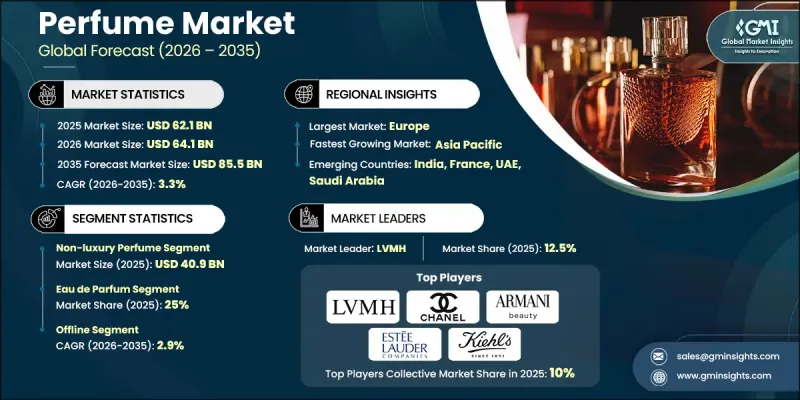
市場擴張的驅動力來自消費者對採用天然成分的特色香水日益成長的興趣,以及電子商務平台的蓬勃發展,這些平台讓香水在全球範圍內更容易獲得。個人護理服務的興起和社群媒體平台的影響力也提升了消費者對香水的興趣。此外,先進的調香技術和天然有機成分的使用吸引了具有環保意識的消費者。中性香水的普及擴大了消費群體,而年輕一代(尤其是Z世代)不斷變化的偏好也影響著新產品的推出。花香調香水,特別是以玫瑰為基調的創新香水,正在經歷顯著的復興,反映了消費者偏好的轉變。總而言之,消費者行為的改變、技術的創新以及法律規範的完善正在重塑香水產業,並推動市場穩步成長。
| 市場範圍 | |
|---|---|
| 開始年份 | 2025 |
| 預測期 | 2026-2035 |
| 上市時的市場規模 | 621億美元 |
| 預測金額 | 855億美元 |
| 複合年成長率 | 3.3% |
預計到2025年,非奢侈香水市場規模將達到409億美元,並在2035年之前保持2.9%的複合年成長率。該市場的成長主要得益於產品價格的親民以及消費者對日常香水需求的不斷成長。消費者越來越傾向於在價格適中的範圍內尋找多樣化的選擇,這推動了該市場的穩定擴張。線上零售通路的蓬勃發展進一步提升了產品的可及性,使消費者更容易找到各種非奢華香水。因此,該市場在維持強勁市場地位的同時,也促進了中價位香水產品的普及。
預計到2025年,淡香精(EDP)市佔率將達到25%,並在2026年至2035年間以3.8%的複合年成長率成長。淡香精的香精油濃度均衡,留香時間更長,價格也比香水更實惠。這種親民的價格,加上豐富的香型選擇,使得淡香精在中等收入消費者中特別受歡迎。整裝儀容意識的提高以及透過香氛表達自我的趨勢日益成長,進一步推動了這個細分市場的成長。香氛配方的不斷創新和精準的行銷,成功吸引了全球的廣大消費者。
美國香水市場佔全球80%的佔有率,預計2025年市場規模將達到147億美元。這主要得益於消費者偏好向小眾、個人化香水轉變,以及對環保和永續香氛日益成長的興趣。社群媒體平台和名人代言持續提升品牌知名度,並影響消費者的購買決策。作為香水創新和分銷的重要中心,美國東海岸在推動潮流形成和市場擴張方面發揮著至關重要的作用。富裕的消費者群體、創新的行銷策略以及高滲透率的電子商務管道,共同確保了美國將繼續保持全球領先市場的地位。
目錄
第1章:調查方法和範圍
第2章執行摘要
第3章業界考察
- 生態系分析
- 供應商情況
- 利潤率
- 每個階段增加的價值
- 影響價值鏈的因素
- 中斷
- 影響產業的因素
- 促進因素
- 產業潛在風險與挑戰
- 機會
- 成長潛力分析
- 未來市場趨勢
- 科技與創新趨勢
- 當前技術趨勢
- 新興技術
- 價格趨勢
- 按地區
- 依產品類型
- 法律規範
- 標準和認證
- 環境法規
- 出口和進口限制
- 貿易統計
- 主要進口國
- 主要出口國
- 波特五力分析
- PESTEL 分析
- 消費行為分析
- 購買模式
- 偏好分析
- 不同地區的消費行為差異
- 電子商務對購買決策的影響
第4章 競爭情勢
- 介紹
- 企業市佔率分析
- 按地區
- 企業矩陣分析
- 主要市場公司的競爭分析
- 競爭定位矩陣
- 主要進展
- 併購
- 夥伴關係與合作
- 新產品發布
- 業務拓展計劃
第5章 市場估算與預測:依產品類型分類,2022-2035年
- 奢華香水
- 面向大眾的香水
第6章 市場估價與預測:依香水類型分類,2022-2035年
- 香水或香水
- 香水(EDP)
- 淡香水(EDT)
- 古龍水(EDC)
- 其他(例如 O'Fresh)
第7章 市場估計與預測:依香型分類,2022-2035年
- 花的
- 東方
- 伍迪
- 新鮮的
- 其他(美食調、果香調等)
第8章 市場估算與預測:依消費者區隔市場分類,2022-2035年
- 男性
- 女士
- 男女通用的
第9章 市場估計與預測:依價格分類,2022-2035年
- 49美元以下
- 50-149美元
- 超過 150 美元
第10章 市場估價與預測:依通路分類,2022-2035年
- 線上
- 電子商務
- 企業網站
- 離線
- 超級市場/大賣場
- 專業零售店
- 其他(例如獨立經營零售商店)
第11章 市場估價與預測:按地區分類,2022-2035年
- 北美洲
- 美國
- 加拿大
- 歐洲
- 德國
- 英國
- 法國
- 西班牙
- 義大利
- 荷蘭
- 亞太地區
- 中國
- 日本
- 印度
- 澳洲
- 韓國
- 拉丁美洲
- 巴西
- 墨西哥
- 阿根廷
- 中東和非洲(MEA)
- 南非
- 沙烏地阿拉伯
- 阿拉伯聯合大公國
第12章:公司簡介
- Armani Beauty
- Burberry
- Bvlgari
- Chanel
- Dior
- Estee Lauder
- Gucci
- Hermes
- Kiehl's
- LVMH
- Michael Kors
- Paris Hilton
- Tom Ford
- Victoria's Secret
- Zara
The Global Perfume Market was valued at USD 62.1 billion in 2025 and is estimated to grow at a CAGR of 3.3% to reach USD 85.5 billion by 2035.
Market expansion is fueled by rising consumer interest in specialized perfumes made from natural ingredients and the increasing reach of e-commerce platforms, which have made fragrances more accessible worldwide. The growing popularity of personal grooming services and the influence of social media platforms are driving consumer engagement with perfumes. Advanced formulation technologies and the inclusion of natural and organic components are attracting environmentally conscious buyers. Additionally, the growing trend of unisex fragrances is broadening the consumer base, while shifting preferences among younger consumers, particularly Gen-Z, are influencing new fragrance launches. Floral-inspired scents, especially innovative variations of rose, are making a notable comeback, reflecting evolving consumer tastes. Collectively, changing consumer behavior, technological innovations, and regulatory frameworks are reshaping the perfume industry and driving consistent market growth.
| Market Scope | |
|---|---|
| Start Year | 2025 |
| Forecast Year | 2026-2035 |
| Start Value | $62.1 Billion |
| Forecast Value | $85.5 Billion |
| CAGR | 3.3% |
In 2025, the non-luxury perfume segment reached USD 40.9 billion and is expected to grow at a CAGR of 2.9% through 2035. The segment's growth is supported by product affordability and the rising demand for daily-use fragrances. Consumers increasingly seek diverse options within accessible price ranges, which encourages steady expansion. The growth of online retail channels has further amplified accessibility, allowing customers to explore a wide variety of non-luxury perfumes conveniently. As a result, the segment continues to maintain a strong foothold in the market while supporting the adoption of mid-range fragrance products.
The eau de parfum (EDP) segment held a 25% share in 2025 and is projected to grow at a CAGR of 3.8% from 2026 to 2035. EDP offers a balanced concentration of fragrance oils, making it longer-lasting yet more affordable than parfum. Its affordability, combined with the availability of multiple scent options, has made EDP particularly popular among middle-income consumers. Rising awareness of personal grooming and the growing trend of self-expression through fragrances are further driving the segment's expansion. The segment benefits from ongoing innovations in scent composition and targeted marketing, attracting a broad audience globally.
United States Perfume Market held an 80% share, generating USD 14.7 billion in 2025, driven by shifting consumer preferences toward niche and personalized perfumes, along with growing interest in eco-friendly and sustainable fragrance options. Social media platforms and celebrity endorsements continue to elevate brand visibility and influence purchasing decisions. The East Coast, with key hubs for fragrance innovation and distribution, plays a critical role in shaping trends and supporting market expansion. The combination of affluent consumers, innovative marketing strategies, and high adoption of e-commerce channels ensures that the U.S. remains a leading market globally.
Prominent players operating in the Global Perfume Market include Chanel, Dior, Gucci, Tom Ford, Burberry, Victoria's Secret, Armani Beauty, Hermes, LVMH, Michael Kors, Estee Lauder, Bvlgari, Kiehl's, Paris Hilton, and Zara. Key strategies adopted by companies in the Global Perfume Market focus on product innovation, digital engagement, and market diversification to strengthen their presence. Businesses are investing in research and development to create natural, sustainable, and personalized fragrances that resonate with changing consumer preferences. Strategic collaborations with influencers and celebrities enhance brand visibility, while expanding e-commerce and direct-to-consumer platforms increase market penetration. Companies are also leveraging data-driven marketing to target specific consumer segments, optimize product portfolios, and introduce seasonal or limited-edition fragrances to stimulate demand. Sustainability initiatives, including eco-friendly packaging and responsible sourcing, help companies build brand loyalty. Additionally, global expansion into emerging markets and partnerships with retail chains ensure a strong market footprint and competitive advantage.
Table of Contents
Chapter 1 Methodology and scope
- 1.1 Market scope and definition
- 1.2 Research design
- 1.2.1 Research approach
- 1.2.2 Data collection methods
- 1.3 Data mining sources
- 1.3.1 Global
- 1.3.2 Regional/country
- 1.4 Base estimates and calculations
- 1.4.1 Base year calculation
- 1.4.2 Key trends for market estimation
- 1.5 Primary research and validation
- 1.5.1 Primary sources
- 1.6 Forecast model
- 1.7 Research assumptions and limitations
Chapter 2 Executive summary
- 2.1 Industry 360° synopsis
- 2.2 Key market trends
- 2.2.1 Regional
- 2.2.2 Product Type
- 2.2.3 By Perfume Type
- 2.2.4 By Scent Profile
- 2.2.5 By Consumer Group
- 2.2.6 By Price
- 2.2.7 By Distribution Channel
- 2.3 CXO perspectives: strategic imperatives
- 2.3.1 Key decision points for industry executives
- 2.3.2 Critical success factors for market players
- 2.4 Future outlook and strategic recommendations
Chapter 3 Industry insights
- 3.1 Industry ecosystem analysis
- 3.1.1 Supplier landscape
- 3.1.2 Profit margin
- 3.1.3 Value addition at each stage
- 3.1.4 Factor affecting the value chain
- 3.1.5 Disruptions
- 3.2 Industry impact forces
- 3.2.1 Growth drivers
- 3.2.2 Industry pitfalls & challenges
- 3.2.3 Opportunities
- 3.3 Growth potential analysis
- 3.4 Future market trends
- 3.5 Technology and innovation landscape
- 3.5.1 Current technological trends
- 3.5.2 Emerging technologies
- 3.6 Price trends
- 3.6.1 By region
- 3.6.2 By product type
- 3.7 Regulatory framework
- 3.7.1 Standards and certifications
- 3.7.2 Environmental regulations
- 3.7.3 Import export regulations
- 3.8 Trade statistics
- 3.8.1 Major importing countries
- 3.8.2 Major exporting countries
- 3.9 Porter's five forces analysis
- 3.10 PESTEL analysis
- 3.11 Consumer behavior analysis
- 3.11.1 Purchasing patterns
- 3.11.2 Preference analysis
- 3.11.3 Regional variations in consumer behavior
- 3.11.4 Impact of e-commerce on buying decisions
Chapter 4 Competitive landscape, 2025
- 4.1 Introduction
- 4.2 Company market share analysis
- 4.2.1 By region
- 4.2.1.1 North America
- 4.2.1.2 Europe
- 4.2.1.3 Asia Pacific
- 4.2.1.4 Latin America
- 4.2.1.5 MEA
- 4.2.1 By region
- 4.3 Company matrix analysis
- 4.4 Competitive analysis of major market players
- 4.5 Competitive positioning matrix
- 4.6 Key developments
- 4.6.1 Mergers & acquisitions
- 4.6.2 Partnerships & collaborations
- 4.6.3 New product launches
- 4.6.4 Expansion plans
Chapter 5 Market Estimates & Forecast, By Product Type, 2022 - 2035 ($Billion, Million Units)
- 5.1 Key trends
- 5.2 Luxury perfume
- 5.3 Non-luxury perfume
Chapter 6 Market Estimates & Forecast, By Perfume Type, 2022 - 2035 ($Billion, Million Units)
- 6.1 Key trends
- 6.2 Parfum or de parfum
- 6.3 Eau De Parfum (EDP)
- 6.4 Eau De Toilette (EDT)
- 6.5 Eau De Cologne (EDC)
- 6.6 Other (Eau Fraiche etc.)
Chapter 7 Market Estimates & Forecast, By Scent Profile, 2022 - 2035 ($Billion, Million Units)
- 7.1 Key trends
- 7.2 Floral
- 7.3 Oriental
- 7.4 Woody
- 7.5 Fresh
- 7.6 Others (gourmand, fruity etc.)
Chapter 8 Market Estimates & Forecast, By Consumer Group, 2022 - 2035 ($Billion, Million Units)
- 8.1 Key trends
- 8.2 Men
- 8.3 Women
- 8.4 Unisex
Chapter 9 Market Estimates & Forecast, By Price, 2022 - 2035 ($Billion, Million Units)
- 9.1 Key trends
- 9.2 Up to $49
- 9.3 $50 to $149
- 9.4 $150 & above
Chapter 10 Market Estimates & Forecast, By Distribution Channel, 2022 - 2035 ($Billion, Million Units)
- 10.1 Key trends
- 10.2 Online
- 10.2.1 E-commerce
- 10.2.2 Company websites
- 10.3 Offline
- 10.3.1 Supermarkets/hypermarket
- 10.3.2 Specialty retail stores
- 10.3.3 Others (independent retailer etc.)
Chapter 11 Market Estimates & Forecast, By Region, 2022 - 2035 ($Billion, Million Units)
- 11.1 Key trends
- 11.2 North America
- 11.2.1 U.S.
- 11.2.2 Canada
- 11.3 Europe
- 11.3.1 Germany
- 11.3.2 UK
- 11.3.3 France
- 11.3.4 Spain
- 11.3.5 Italy
- 11.3.6 Netherlands
- 11.4 Asia Pacific
- 11.4.1 China
- 11.4.2 Japan
- 11.4.3 India
- 11.4.4 Australia
- 11.4.5 South Korea
- 11.5 Latin America
- 11.5.1 Brazil
- 11.5.2 Mexico
- 11.5.3 Argentina
- 11.6 MEA
- 11.6.1 South Africa
- 11.6.2 Saudi Arabia
- 11.6.3 UAE
Chapter 12 Company Profiles
- 12.1 Armani Beauty
- 12.2 Burberry
- 12.3 Bvlgari
- 12.4 Chanel
- 12.5 Dior
- 12.6 Estee Lauder
- 12.7 Gucci
- 12.8 Hermes
- 12.9 Kiehl's
- 12.10 LVMH
- 12.11 Michael Kors
- 12.12 Paris Hilton
- 12.13 Tom Ford
- 12.14 Victoria's Secret
- 12.15 Zara

 香水市場報告:趨勢、預測及競爭分析(至2035年)
 香水市場:按產品類型、最終用戶、分銷管道和地區分類
 數位香水市場:2026-2032年全球市場預測(依產品類型、價格範圍、性別、年齡層、香水類別及銷售管道)
 香水包裝市場分析及預測(至2035年):依類型、產品類型、服務、技術、組件、應用、材質、製程、最終用戶及功能分類香水市場分析及預測(至2035年):依類型、產品類型、應用、最終用戶、劑型、材料類型、通路、功能及包裝分類
 全球香水市場規模、佔有率、趨勢和成長分析報告(2026-2034)
 香水市場規模、佔有率、趨勢及預測(依香水類型、類別及地區分類),2026-2034年
 固體香精市場 - 全球產業規模、佔有率、趨勢、機會及預測(按類型、香型、最終用戶、分銷管道、地區和競爭格局分類,2021-2031年)人工智慧香水生成市場:2026-2032年全球預測(依香水類別、應用程式、最終用戶和通路分類)合成麝香香精市場按類型、形態、應用和分銷管道分類,全球預測(2026-2032年)