


 |
市場調查報告書
商品編碼
2019192
機場快餐店市場機會、成長要素、產業趨勢分析及2026-2035年預測Airport Quick Service Restaurant (QSR) Market Opportunity, Growth Drivers, Industry Trend Analysis, and Forecast 2026 - 2035 |
||||||

預計到 2025 年,全球機場快餐店市場價值將達到 344 億美元,並預計以 4.5% 的複合年成長率成長,到 2035 年達到 534 億美元。
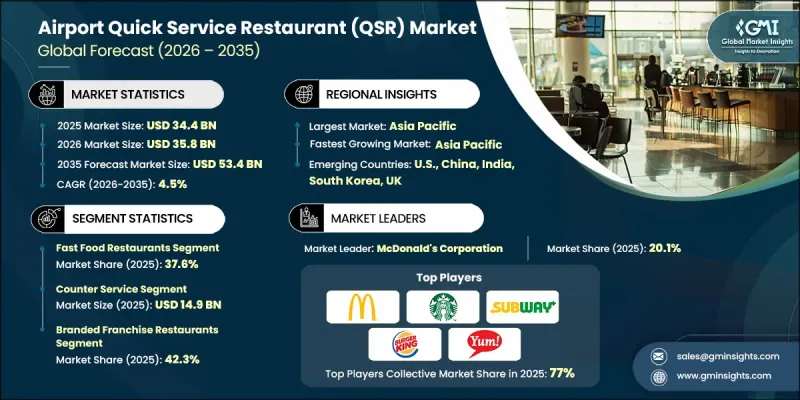
全球航空客運量的成長以及機場內對便利快速餐飲解決方案日益成長的需求,推動了市場擴張。數位化訂餐平台、行動服務和自助服務的引入,正在改變人們在旅途中的用餐方式。此外,機場基礎設施的持續投資和航站樓的擴建,也為餐飲服務供應商創造了更多商機。旅客對快速、可靠、高品質餐飲的需求日益成長,促使供應商加快服務速度並最佳化菜單。機場當局與餐飲品牌之間的合作,以及菜單向更健康、更永續的轉變,進一步塑造了競爭格局。先進訂餐技術的整合以及旅客對便利性和個人化服務的不斷提升,正在推動市場的長期成長。
| 市場範圍 | |
|---|---|
| 開始年份 | 2025 |
| 預測期 | 2026-2035 |
| 上市時的市場規模 | 344億美元 |
| 預測金額 | 534億美元 |
| 複合年成長率 | 4.5% |
由於全球旅客數量的持續成長,機場快餐市場呈現出強勁的發展勢頭。這直接影響了航站內高效食品服務營運的需求。機場設施的擴建使營運商能夠擴大營運規模並提高產生收入能力。旅客在餐飲方面的支出不斷成長,以及行動點餐和自助點餐機等數位化工具的普及,也推動了市場成長。這些創新提高了訂單準確率,縮短了等待時間,並提升了整體客戶體驗,使其成為現代機場餐飲生態系統中不可或缺的一部分。
預計到2025年,快餐店市佔率將達到37.6%,這主要得益於其能夠快速、穩定地服務大量顧客。這些餐廳利用精簡的營運流程、標準化的菜單和強大的品牌知名度來滿足時間緊迫的旅客的需求。遍佈全球多個機場的佈局增強了顧客的熟悉度和信任度,進一步推動了該細分市場的成長和營運擴充性。
預計到2035年,數位化和自助點餐產業將以5.1%的複合年成長率成長,這主要得益於行動應用程式、自助點餐機和預訂系統的日益普及。這些技術使乘客無需排隊,即可享受個人化菜單提案和便捷的支付方式。與忠誠度計畫和非接觸式系統的整合進一步提升了使用者體驗和營運效率,使數位化點餐成為機場食品服務的關鍵驅動力。
預計到2025年,北美機場快餐市場將佔據23.7%的佔有率,這主要得益於全部區域強勁的客運量和成熟的機場特許經營體系。不斷成長的旅客出行需求持續推動對快餐解決方案的需求,而機場營運商也持續投資於現代化的零售和食品服務理念。先進點餐技術和高效率服務模式的引入,正在提升旅客滿意度和處理能力。隨著機場建設項目的持續推進和航空旅行的穩步成長,預計該地區將在未來幾年保持其領先地位。
目錄
第1章:調查方法和範圍
第2章執行摘要
第3章業界考察
- 生態系分析
- 供應商情況
- 利潤率
- 成本結構
- 每個階段增加的價值
- 影響價值鏈的因素
- 中斷
- 影響產業的因素
- 促進因素
- 全球航空客運量的激增正在推高食品需求。
- 數位化和行動端訂餐提高了速度和客戶體驗。
- 機場航站大樓的擴建將促進餐飲店的發展。
- 廉價航空公司的發展導致旅客在機場轉機期間的食品和飲料購買量增加。
- 旅行者越來越偏好方便快速的餐點。
- 產業潛在風險與挑戰
- 高昂的機場租金給快餐店的利潤率帶來了壓力。
- 旅行模式的波動會影響到店顧客數量,進而影響需求。
- 市場機遇
- 創新健康永續的菜單將刺激需求。
- 技術驅動的預訂和提貨解決方案正在擴大其覆蓋範圍。
- 促進因素
- 成長潛力分析
- 監理情勢
- 北美洲
- 歐洲
- 亞太地區
- 拉丁美洲
- 中東和非洲
- 波特五力分析
- PESTEL 分析
- 科技與創新趨勢
- 當前技術趨勢
- 新興技術
- 價格趨勢
- 按地區
- 依產品
- 定價策略
- 新興經營模式
- 合規要求
- 專利和智慧財產權分析
第4章 競爭情勢
- 介紹
- 企業市佔率分析
- 按地區
- 北美洲
- 歐洲
- 亞太地區
- 拉丁美洲
- 中東和非洲
- 市場集中度分析
- 按地區
- 主要企業的競爭標竿分析
- 財務績效比較
- 銷售量
- 利潤率
- 研究與開發
- 產品系列比較
- 產品線寬度
- 科技
- 創新
- 區域擴張比較
- 全球擴張分析
- 服務網路覆蓋
- 按地區分類的市場滲透率
- 競爭定位矩陣
- 領導者
- 挑戰者
- 追蹤者
- 小眾玩家
- 戰略展望矩陣
- 財務績效比較
- 主要進展
- 併購
- 夥伴關係與合作
- 技術進步
- 擴張和投資策略
- 數位轉型計劃
- 新興競爭對手和Start-Ups競爭對手的發展趨勢
第5章 市場估價與預測:依餐廳類型分類,2022-2035年
- 速食店
- 咖啡和飲料連鎖店
- 麵包店和小吃店
- 快餐/新鮮食品快餐店
第6章 市場估計與預測:依服務模式分類,2022-2035年
- 櫃檯服務
- 外帶
- 數位/自助訂購
第7章 市場估計與預測:依經營模式,2022-2035年
- 機場租戶營運商
- 品牌連鎖餐廳
- 獨立/區域品牌
第8章 市場估算與預測:乘客類型,2022-2035年
- 國內旅客
- 國際旅客
- 過境乘客
第9章 市場估價與預測:依地點/區域分類的機場,2022-2035年
- 陸側/安檢前區域
- 安檢後的空側/出發區
- 到達大廳
第10章 市場估價與預測:依地區分類,2022-2035年
- 北美洲
- 美國
- 加拿大
- 歐洲
- 德國
- 英國
- 法國
- 西班牙
- 義大利
- 亞太地區
- 中國
- 印度
- 日本
- 澳洲
- 韓國
- 拉丁美洲
- 巴西
- 墨西哥
- 阿根廷
- 中東和非洲
- 南非
- 沙烏地阿拉伯
- 阿拉伯聯合大公國
第11章:公司簡介
- 主要企業
- McDonald's Corporation
- Starbucks Corporation
- Subway IP LLC
- Burger King Company LLC
- Yum!Brands, Inc.
- 按地區分類的主要企業
- 北美洲
- OTG Management
- Inspire Brands, Inc.
- The Wendy's Company
- Chick fil A, Inc.
- 亞太地區
- Panda Restaurant Group, Inc.
- 歐洲
- SSP Group plc
- Autogrill SpA
- Lagardere Travel Retail
- Costa Limited
- 北美洲
- 特殊玩家/干擾者
- HMSHost Corporation
The Global Airport Quick Service Restaurant Market was valued at USD 34.4 billion in 2025 and is estimated to grow at a CAGR of 4.5% to reach USD 53.4 billion by 2035.
Market expansion is fueled by rising global air passenger volumes and the increasing need for fast, accessible dining solutions within airport environments. The adoption of digital ordering platforms, mobile-based services, and self-service technologies is transforming how food is consumed in transit spaces. Additionally, continuous investments in airport infrastructure and terminal expansions are creating more commercial opportunities for food service providers. Travelers are increasingly seeking quick, reliable, and quality food options, encouraging operators to enhance service speed and menu efficiency. Partnerships between airport authorities and food service brands, combined with a shift toward healthier and more sustainable menu offerings, are further shaping the competitive landscape. The integration of advanced ordering technologies and evolving passenger expectations for convenience and personalization are reinforcing long-term market growth.
| Market Scope | |
|---|---|
| Start Year | 2025 |
| Forecast Year | 2026-2035 |
| Start Value | $34.4 Billion |
| Forecast Value | $53.4 Billion |
| CAGR | 4.5% |
The airport quick service restaurant market is witnessing strong momentum due to the steady increase in global passenger traffic, which is directly influencing demand for efficient food service operations within terminals. Expanding airport facilities are enabling operators to scale their presence and improve revenue generation capabilities. Growth is also supported by rising traveler spending on food and beverages and the widespread implementation of digital tools such as mobile ordering and automated kiosks. These innovations are improving order accuracy, reducing wait times, and enhancing the overall customer experience, making them integral to modern airport dining ecosystems.
The fast food restaurant segment accounted for 37.6% share in 2025, owing to its ability to handle high customer volumes with speed and consistency. These outlets benefit from streamlined operations, standardized menus, and strong brand visibility, allowing them to cater to time-sensitive travelers. Their global presence across multiple airport locations strengthens customer familiarity and trust, further supporting segment growth and operational scalability.
The digital and self-ordering segment is projected to grow at a CAGR of 5.1% throughout 2035, driven by the growing adoption of mobile applications, automated kiosks, and pre-ordering systems. These technologies enable passengers to avoid queues while accessing customized menu recommendations and seamless payment options. Integration with loyalty programs and contactless systems enhances user convenience and operational efficiency, positioning digital ordering as a key growth driver within airport food services.
North America Airport Quick Service Restaurant Market held 23.7% share in 2025, supported by strong passenger traffic and well-established airport concession frameworks across the region. The increasing number of travelers is generating sustained demand for quick dining solutions, while airport operators continue to invest in modern retail and food service concepts. The adoption of advanced ordering technologies and high-efficiency service models is improving passenger satisfaction and throughput. Ongoing airport development projects and consistent growth in air travel are expected to maintain the region's leadership position over the coming years.
Key companies operating in the Global Airport Quick Service Restaurant Market include Autogrill S.p.A., Burger King Company LLC, Chick-fil-A, Inc., Costa Limited, HMSHost Corporation, Inspire Brands, Inc., Lagardere Travel Retail, McDonald's Corporation, OTG Management, Panda Restaurant Group, Inc., SSP Group plc, Starbucks Corporation, Subway IP LLC, The Wendy's Company, and Yum! Brands, Inc. Companies in the Airport Quick Service Restaurant Market are strengthening their market position by focusing on digital transformation, strategic partnerships, and operational efficiency. They are investing heavily in mobile ordering platforms, self-service kiosks, and AI-driven analytics to improve customer experience and streamline operations. Expanding collaborations with airport authorities and concession operators allows brands to secure prime locations and increase visibility. Many players are also diversifying menus to include healthier and sustainable options, aligning with changing consumer preferences. Additionally, companies are enhancing supply chain efficiency and adopting data-driven decision-making to optimize inventory and reduce costs. Franchise expansion, brand localization, and personalized marketing strategies are further helping businesses strengthen their foothold and drive long-term growth.
Table of Contents
Chapter 1 Methodology and Scope
- 1.1 Market scope and definition
- 1.2 Research design
- 1.2.1 Research approach
- 1.2.2 Data collection methods
- 1.3 Data mining sources
- 1.3.1 Global
- 1.3.2 Regional/Country
- 1.4 Base estimates and calculations
- 1.4.1 Base year calculation
- 1.4.2 Key trends for market estimation
- 1.5 Primary research and validation
- 1.5.1 Primary sources
- 1.6 Forecast model
- 1.7 Research assumptions and limitations
Chapter 2 Executive Summary
- 2.1 Industry 360° synopsis, 2022 - 2035
- 2.2 Key market trends
- 2.2.1 Restaurant type trends
- 2.2.2 Service model trends
- 2.2.3 Business model trends
- 2.2.4 Passenger type trends
- 2.2.5 Airport location / zone trends
- 2.2.6 Regional trends
- 2.3 TAM Analysis, 2026-2035
- 2.4 CXO perspectives: Strategic imperatives
Chapter 3 Industry Insights
- 3.1 Industry ecosystem analysis
- 3.1.1 Supplier Landscape
- 3.1.2 Profit Margin
- 3.1.3 Cost structure
- 3.1.4 Value addition at each stage
- 3.1.5 Factor affecting the value chain
- 3.1.6 Disruptions
- 3.2 Industry impact forces
- 3.2.1 Growth drivers
- 3.2.1.1 Surging global air passenger traffic increases food demand
- 3.2.1.2 Digital/mobile ordering enhances speed and customer experience
- 3.2.1.3 Expansion of airport terminals boosts dining footprints
- 3.2.1.4 Budget airline growth raises airport layover food purchases
- 3.2.1.5 Rising traveler preference for convenient, fast meals
- 3.2.2 Industry pitfalls and challenges
- 3.2.2.1 High airport rents compress QSR profit margins
- 3.2.2.2 Footfall volatility from travel patterns impacts demand
- 3.2.3 Market opportunities
- 3.2.3.1 Healthy and sustainable menu innovations unlock demand
- 3.2.3.2 Tech-enabled pre-order and ready-pickup solutions expand reach
- 3.2.1 Growth drivers
- 3.3 Growth potential analysis
- 3.4 Regulatory landscape
- 3.4.1 North America
- 3.4.2 Europe
- 3.4.3 Asia Pacific
- 3.4.4 Latin America
- 3.4.5 Middle East & Africa
- 3.5 Porter's analysis
- 3.6 PESTEL analysis
- 3.7 Technology and Innovation landscape
- 3.7.1 Current technological trends
- 3.7.2 Emerging technologies
- 3.8 Price trends
- 3.8.1 By region
- 3.8.2 By product
- 3.9 Pricing Strategies
- 3.10 Emerging Business Models
- 3.11 Compliance Requirements
- 3.12 Patent and IP analysis
Chapter 4 Competitive Landscape, 2025
- 4.1 Introduction
- 4.2 Company market share analysis
- 4.2.1 By region
- 4.2.1.1 North America
- 4.2.1.2 Europe
- 4.2.1.3 Asia Pacific
- 4.2.1.4 Latin America
- 4.2.1.5 Middle East & Africa
- 4.2.2 Market concentration analysis
- 4.2.1 By region
- 4.3 Competitive benchmarking of key players
- 4.3.1 Financial performance comparison
- 4.3.1.1 Revenue
- 4.3.1.2 Profit margin
- 4.3.1.3 R&D
- 4.3.2 Product portfolio comparison
- 4.3.2.1 Product range breadth
- 4.3.2.2 Technology
- 4.3.2.3 Innovation
- 4.3.3 Geographic presence comparison
- 4.3.3.1 Global footprint analysis
- 4.3.3.2 Service network coverage
- 4.3.3.3 Market penetration by region
- 4.3.4 Competitive positioning matrix
- 4.3.4.1 Leaders
- 4.3.4.2 Challengers
- 4.3.4.3 Followers
- 4.3.4.4 Niche players
- 4.3.5 Strategic outlook matrix
- 4.3.1 Financial performance comparison
- 4.4 Key developments
- 4.4.1 Mergers and acquisitions
- 4.4.2 Partnerships and collaborations
- 4.4.3 Technological advancements
- 4.4.4 Expansion and investment strategies
- 4.4.5 Digital transformation initiatives
- 4.5 Emerging/ startup competitors landscape
Chapter 5 Market Estimates and Forecast, By Restaurant Type, 2022 - 2035 (USD Million)
- 5.1 Key trends
- 5.2 Fast food restaurants
- 5.3 Coffee & beverage chains
- 5.4 Bakery & snack outlets
- 5.5 Fast casual / fresh food QSR
Chapter 6 Market Estimates and Forecast, By Service Model, 2022 - 2035 (USD Million)
- 6.1 Key trends
- 6.2 Counter service
- 6.3 Grab-and-go
- 6.4 Digital / self-ordering
Chapter 7 Market Estimates and Forecast, By Business Model, 2022 - 2035 (USD Million)
- 7.1 Key trends
- 7.2 Airport concession operators
- 7.3 Branded franchise restaurants
- 7.4 Independent / local brands
Chapter 8 Market Estimates and Forecast, By Passenger Type, 2022 - 2035 (USD Million)
- 8.1 Key trends
- 8.2 Domestic passengers
- 8.3 International passengers
- 8.4 Transit / transfer passengers
Chapter 9 Market Estimates and Forecast, By Airport Location / Zone, 2022 - 2035 (USD Million)
- 9.1 Key trends
- 9.2 Landside / pre-security areas
- 9.3 Airside / post-security departure areas
- 9.4 Arrival halls
Chapter 10 Market Estimates and Forecast, By Region, 2022 - 2035 (USD Million)
- 10.1 Key trends
- 10.2 North America
- 10.2.1 U.S.
- 10.2.2 Canada
- 10.3 Europe
- 10.3.1 Germany
- 10.3.2 UK
- 10.3.3 France
- 10.3.4 Spain
- 10.3.5 Italy
- 10.4 Asia Pacific
- 10.4.1 China
- 10.4.2 India
- 10.4.3 Japan
- 10.4.4 Australia
- 10.4.5 South Korea
- 10.5 Latin America
- 10.5.1 Brazil
- 10.5.2 Mexico
- 10.5.3 Argentina
- 10.6 Middle East and Africa
- 10.6.1 South Africa
- 10.6.2 Saudi Arabia
- 10.6.3 UAE
Chapter 11 Company Profiles
- 11.1 Global Key Players
- 11.1.1 McDonald's Corporation
- 11.1.2 Starbucks Corporation
- 11.1.3 Subway IP LLC
- 11.1.4 Burger King Company LLC
- 11.1.5 Yum! Brands, Inc.
- 11.2 Regional key players
- 11.2.1 North America
- 11.2.1.1 OTG Management
- 11.2.1.2 Inspire Brands, Inc.
- 11.2.1.3 The Wendy’s Company
- 11.2.1.4 Chick fil A, Inc.
- 11.2.2 Asia Pacific
- 11.2.2.1 Panda Restaurant Group, Inc.
- 11.2.3 Europe
- 11.2.3.1 SSP Group plc
- 11.2.3.2 Autogrill S.p.A.
- 11.2.3.3 Lagardere Travel Retail
- 11.2.3.4 Costa Limited
- 11.2.1 North America
- 11.3 Niche Players/Disruptors
- 11.3.1 HMSHost Corporation


