


 |
市場調查報告書
商品編碼
1896749
全球國防機器人與自動駕駛車輛市場(2026-2036)Global Defense Robots And Autonomous Vehicles Market 2026-2036 |
||||||

據估計,全球國防機器人和自動駕駛車輛市場在2026年的價值為44.9億美元,預計到2036年將達到140.1億美元,2026年至2036年的複合年增長率為12.05%。
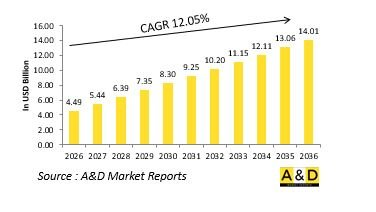
國防機器人與自動駕駛車輛市場概述
國防機器人和自動駕駛車輛市場涵蓋旨在以最小的人工幹預執行複雜軍事任務的無人系統。 這些系統可在空中、陸地和海上領域運行,執行偵察、後勤支援、監視、爆炸物處理和作戰行動等任務。它們透過在衝突地區和危險環境中執行危險任務,增強部隊防護並降低人員風險。將機器人和自主技術融入國防行動,反映了向數位化、網路化和精確作戰的更廣泛轉變。世界各地的國防機構正在加速採用機器人平台,以提高作戰效率、保持態勢感知並擴大人力部隊的作戰範圍。隨著人工智慧 (AI) 和機器學習的不斷成熟,自主防禦系統正從遠端操作工具演變為能夠獨立執行任務的智慧決策支援資產,從而重新定義現代軍事戰略的本質。
科技對國防機器人與自主車輛市場的影響:
在人工智慧、先進感測器和機器自主技術的推動下,科技正在深刻地改變國防機器人和自主車輛市場。 人工智慧驅動的導航和感知技術的突破使這些系統能夠在複雜多變的環境中自主運作。增強的感測器融合技術能夠無縫整合視覺、熱成像和雷達數據,從而實現卓越的態勢感知和目標識別能力。邊緣運算和即時資料處理使自主平台能夠在任務執行過程中做出瞬間決策,而無需依賴外部通訊鏈路。機器人設計的進步使得平台更加輕巧、靈活和節能,能夠適應各種地形和任務需求。群體智慧和協作機器人技術是新興趨勢,使多個自主系統能夠協同作戰。網路安全和安全通訊協定也至關重要,確保系統能夠抵禦電子戰和乾擾。這些技術進步使機器人技術和自主系統成為未來國防能力的基礎,從而實現精準性、適應性和作戰可擴展性。
國防機器人與自主車輛市場的主要驅動因素:
國防機器人和自主車輛市場的成長主要受現代戰爭中對增強態勢感知、部隊防護和作戰效率的需求所驅動。日益複雜的戰場環境、城市作戰環境以及不斷增加的非對稱威脅凸顯了能夠執行高風險任務的無人系統的價值。國防機構正在優先考慮自動化,以減少傷亡、提高任務連續性並優化後勤和偵察任務。人工智慧和自主技術在監視、作戰支援和決策過程中的日益普及進一步推動了這些技術的應用。各國政府也將技術自主和機器人系統的國內研發作為其現代化計畫的優先事項。電子戰的興起以及對更快、數據驅動型響應能力日益增長的需求正在推動對智慧連網機器人平台的投資。此外,民用機器人創新與國防應用的整合正在加速這些技術的應用,並塑造無人和自主軍事行動的新時代。
國防機器人與自主車輛市場區域趨勢:
國防機器人和自主車輛市場的區域趨勢反映了各地區戰略目標和技術能力的差異。北美地區持續投資於無人地面、空中和海上系統,並將先進的自主技術和人工智慧應用於聯合部隊作戰,從而引領市場發展。歐洲則專注於合作式國防機器人項目,旨在開發用於監視、後勤和作戰任務的互操作系統。亞太地區由於國防預算的增加以及對國內機器人技術發展的重視,正經歷快速成長,以加強邊境和海上監視。中東地區正在投資用於情報收集和基地防禦的自主系統,以應對區域安全挑戰。拉丁美洲和非洲正透過合作和技術轉讓,逐步部署用於邊境監視和維和任務的無人系統。 在所有地區,建構自主防禦能力、數位轉型以及向下一代作戰方式的邁進,都在加速將機器人和自主系統融入主流軍事行動。
主要國防機器人與自主車輛項目:
美國陸軍與國防創新部門 (DIU) 合作,已選定卡內基機器人公司 (Carnegie Robotics) 和 Forterra 公司推進自主運輸車輛系統 (ATV-S) 的原型開發。 2023 年 12 月,陸軍最初向三家供應商——機器人研究自主工業公司 (Robotics Research Autonomous Industries,現為 Forterra 公司)、Neya Systems 公司和卡內基機器人公司——授予總額為 1480 萬美元的合同,用於分別開發四個原型。雖然這份新合約的細節(例如金額和條款)尚未披露,但此次選定將使通過初步篩選的原型進入陸軍的正式測試和評估階段。
目錄
國防機器人與自動駕駛車輛市場 - 目錄
國防機器人與自動駕駛車輛市場報告定義
國防機器人和自動駕駛車輛市場細分
按地區
按應用
按平台
未來十年國防機器人與自動駕駛車輛市場分析
本章將對未來十年國防機器人和自動駕駛車輛市場進行分析,詳細概述市場成長、趨勢變化、技術應用概況以及整體市場吸引力。
國防機器人與自動駕駛車輛市場技術展望
本部分討論了預計將影響該市場的十大技術,以及這些技術可能對整體市場產生的影響。
全球國防機器人與自動駕駛車輛市場預測
以上各部分詳細涵蓋了未來十年的國防機器人和自動駕駛車輛市場預測。
區域國防機器人與自動駕駛車輛市場趨勢及預測
本部分涵蓋了區域國防機器人和自動駕駛車輛市場的趨勢、驅動因素、限制因素和挑戰,以及政治、經濟、社會和技術因素。此外,本部分也提供了詳細的區域市場預測和情境分析。區域分析最後包括主要公司概況、供應商狀況和公司基準分析。目前市場規模是基於 "一切照舊" 情境估算的。
北美
驅動因素、限制因素與挑戰
PEST分析
市場預測與情境分析
主要公司
供應商層級結構
公司標竿分析
歐洲
中東
亞太地區
南美洲
國防機器人與自動駕駛車輛市場國家分析
本章涵蓋該市場的主要國防項目以及最新的市場新聞和專利申請。此外,本章也提供未來十年各國的市場預測和情境分析。
美國
國防項目
最新消息
專利
當前市場技術成熟度
市場預測與情境分析
加拿大
義大利
法國
德國
荷蘭
比利時
西班牙
瑞典
希臘
澳洲
南非
印度
中國
俄羅斯
南非韓國
日本
馬來西亞
新加坡
巴西
國防機器人與自動駕駛車輛市場機會矩陣
機會矩陣幫助讀者了解該市場中高機會細分領域。
關於國防機器人和自動駕駛車輛市場報告的專家意見
本報告總結了我們專家對此市場潛力分析的意見。
結論
關於航空和國防市場報告
The Global Defense Robots and Autonomous Vehicles market is estimated at USD 4.49 billion in 2026, projected to grow to USD 14.01 billion by 2036 at a Compound Annual Growth Rate (CAGR) of 12.05% over the forecast period 2026-2036.
Introduction to Defense Robots and Autonomous Vehicles Market
The defense robots and autonomous vehicles market encompasses unmanned systems designed to perform complex military tasks with minimal human intervention. These systems operate across air, land, and sea domains, executing missions such as reconnaissance, logistics support, surveillance, explosive ordnance disposal, and combat operations. They enhance force protection by performing dangerous tasks in contested or hazardous environments, reducing the risk to human personnel. The integration of robotics and autonomy into defense operations reflects a broader shift toward digitized, networked, and precision-oriented warfare. Defense organizations worldwide are increasingly adopting robotic platforms to boost operational efficiency, maintain situational awareness, and extend the reach of human forces. As artificial intelligence and machine learning continue to mature, autonomous defense systems are evolving from remote-controlled tools to intelligent, decision-supporting assets capable of independent mission execution, redefining the nature of modern military strategy.
Technology Impact in Defense Robots and Autonomous Vehicles Market:
Technology is profoundly transforming the defense robots and autonomous vehicles market through innovations in artificial intelligence, advanced sensors, and machine autonomy. Breakthroughs in AI-driven navigation and perception enable these systems to operate independently in complex and dynamic environments. Enhanced sensor fusion allows seamless integration of visual, thermal, and radar data for superior situational awareness and target identification. Edge computing and real-time data processing empower autonomous platforms to make split-second decisions during missions without relying on external communication links. Robotics design advancements have led to lighter, more agile, and energy-efficient platforms adaptable to multiple terrains and mission profiles. Swarm intelligence and collaborative robotics are emerging trends that allow multiple autonomous systems to coordinate actions in synchronized operations. Cybersecurity and secure communication protocols are also integral, ensuring resilience against electronic warfare and interference. These technological developments are positioning robotics and autonomy as the cornerstone of future defense capabilities, enabling precision, adaptability, and operational scalability.
Key Drivers in Defense Robots and Autonomous Vehicles Market:
The growth of the defense robots and autonomous vehicles market is driven by the need for enhanced situational awareness, force protection, and operational efficiency in modern warfare. Increasing battlefield complexity, urban combat environments, and asymmetric threats have underscored the value of unmanned systems capable of performing high-risk missions. Defense agencies are prioritizing automation to reduce human casualties, increase mission persistence, and optimize logistics and reconnaissance tasks. The expanding use of AI and autonomy in surveillance, combat support, and decision-making processes further fuels adoption. Governments are also emphasizing technological self-reliance and indigenous development of robotic systems as part of modernization programs. The rise of electronic warfare and the demand for faster, data-driven response capabilities encourage investment in intelligent and connected robotic platforms. Moreover, the growing convergence between civilian robotics innovations and defense applications is accelerating the pace of adoption, shaping a new era of unmanned and autonomous military operations.
Regional Trends in Defense Robots and Autonomous Vehicles Market:
Regional trends in the defense robots and autonomous vehicles market reflect varied strategic objectives and technological capabilities. North America leads through sustained investments in unmanned ground, aerial, and maritime systems, integrating advanced autonomy and AI into joint-force operations. Europe focuses on collaborative defense robotics programs aimed at developing interoperable systems for surveillance, logistics, and combat missions. The Asia-Pacific region is experiencing rapid growth, driven by rising defense budgets and emphasis on indigenous robotic development to enhance border security and maritime surveillance. The Middle East is investing in autonomous systems for intelligence gathering and base protection, addressing regional security challenges. Latin America and Africa are gradually adopting unmanned systems for border monitoring and peacekeeping missions through partnerships and technology transfers. Across all regions, the push toward self-reliant defense capabilities, digital transformation, and next-generation combat readiness is accelerating the integration of robotics and autonomy into mainstream military operations.
Key Defense Robots and Autonomous Vehicles Program:
The U.S. Army, in collaboration with the Defense Innovation Unit (DIU), has chosen Carnegie Robotics and Forterra to advance prototyping efforts for the Autonomous Transport Vehicle System (ATV-S). Initially, in December 2023, the Army awarded development and prototyping contracts to three vendors-Robotics Research Autonomous Industries (now Forterra), Neya Systems, and Carnegie Robotics-valued at $14.8 million for four prototypes each. While the specifics of the new contract, including its value and terms, have not been disclosed, this award represents a first down selection, moving the chosen prototypes into formal Army Test and Evaluation.
Table of Contents
Defense Robots And Autonomous Vehicles Market - Table of Contents
Defense Robots And Autonomous Vehicles Market Report Definition
Defense Robots And Autonomous Vehicles Market Segmentation
By Region
By Application
By Platform
Defense Robots And Autonomous Vehicles Market Analysis for next 10 Years
The 10-year Defense Robots And Autonomous Vehicles Market analysis would give a detailed overview of Defense Robots And Autonomous Vehicles Market growth, changing dynamics, technology adoption overviews and the overall market attractiveness is covered in this chapter.
Market Technologies of Defense Robots And Autonomous Vehicles Market
This segment covers the top 10 technologies that is expected to impact this market and the possible implications these technologies would have on the overall market.
Global Defense Robots And Autonomous Vehicles Market Forecast
The 10-year Defense Robots And Autonomous Vehicles Market forecast of this market is covered in detailed across the segments which are mentioned above.
Regional Defense Robots And Autonomous Vehicles Market Trends & Forecast
The regional Defense Robots And Autonomous Vehicles Market trends, drivers, restraints and Challenges of this market, the Political, Economic, Social and Technology aspects are covered in this segment. The market forecast and scenario analysis across regions are also covered in detailed in this segment. The last part of the regional analysis includes profiling of the key companies, supplier landscape and company benchmarking. The current market size is estimated based on the normal scenario.
North America
Drivers, Restraints and Challenges
PEST
Market Forecast & Scenario Analysis
Key Companies
Supplier Tier Landscape
Company Benchmarking
Europe
Middle East
APAC
South America
Country Analysis of Defense Robots And Autonomous Vehicles Market
This chapter deals with the key defense programs in this market, it also covers the latest news and patents which have been filed in this market. Country level 10 year market forecast and scenario analysis are also covered in this chapter.
US
Defense Programs
Latest News
Patents
Current levels of technology maturation in this market
Market Forecast & Scenario Analysis
Canada
Italy
France
Germany
Netherlands
Belgium
Spain
Sweden
Greece
Australia
South Africa
India
China
Russia
South Korea
Japan
Malaysia
Singapore
Brazil
Opportunity Matrix for Defense Robots And Autonomous Vehicles Market
The opportunity matrix helps the readers understand the high opportunity segments in this market.
Expert Opinions on Defense Robots And Autonomous Vehicles Market Report
Hear from our experts their opinion of the possible analysis for this market.
Conclusions
About Aviation and Defense Market Reports
List of Tables
- Table 1: 10 Year Market Outlook, 2025-2035
- Table 2: Drivers, Impact Analysis, North America
- Table 3: Restraints, Impact Analysis, North America
- Table 4: Challenges, Impact Analysis, North America
- Table 5: Drivers, Impact Analysis, Europe
- Table 6: Restraints, Impact Analysis, Europe
- Table 7: Challenges, Impact Analysis, Europe
- Table 8: Drivers, Impact Analysis, Middle East
- Table 9: Restraints, Impact Analysis, Middle East
- Table 10: Challenges, Impact Analysis, Middle East
- Table 11: Drivers, Impact Analysis, APAC
- Table 12: Restraints, Impact Analysis, APAC
- Table 13: Challenges, Impact Analysis, APAC
- Table 14: Drivers, Impact Analysis, South America
- Table 15: Restraints, Impact Analysis, South America
- Table 16: Challenges, Impact Analysis, South America
- Table 17: Scenario Analysis, Scenario 1, By Region, 2025-2035
- Table 18: Scenario Analysis, Scenario 1, By Platform, 2025-2035
- Table 19: Scenario Analysis, Scenario 1, By Application, 2025-2035
- Table 20: Scenario Analysis, Scenario 2, By Region, 2025-2035
- Table 21: Scenario Analysis, Scenario 2, By Platform, 2025-2035
- Table 22: Scenario Analysis, Scenario 2, By Application, 2025-2035
List of Figures
- Figure 1: Global Defense Robots and Autonomous Vehicles Forecast, 2025-2035
- Figure 2: Global Defense Robots and Autonomous Vehicles Forecast, By Region, 2025-2035
- Figure 3: Global Defense Robots and Autonomous Vehicles Forecast, By Platform, 2025-2035
- Figure 4: Global Defense Robots and Autonomous Vehicles Forecast, By Application, 2025-2035
- Figure 5: North America, Defense Robots and Autonomous Vehicles, Market Forecast, 2025-2035
- Figure 6: Europe, Defense Robots and Autonomous Vehicles, Market Forecast, 2025-2035
- Figure 7: Middle East, Defense Robots and Autonomous Vehicles, Market Forecast, 2025-2035
- Figure 8: APAC, Defense Robots and Autonomous Vehicles, Market Forecast, 2025-2035
- Figure 9: South America, Defense Robots and Autonomous Vehicles, Market Forecast, 2025-2035
- Figure 10: United States, Defense Robots and Autonomous Vehicles, Technology Maturation, 2025-2035
- Figure 11: United States, Defense Robots and Autonomous Vehicles, Market Forecast, 2025-2035
- Figure 12: Canada, Defense Robots and Autonomous Vehicles, Technology Maturation, 2025-2035
- Figure 13: Canada, Defense Robots and Autonomous Vehicles, Market Forecast, 2025-2035
- Figure 14: Italy, Defense Robots and Autonomous Vehicles, Technology Maturation, 2025-2035
- Figure 15: Italy, Defense Robots and Autonomous Vehicles, Market Forecast, 2025-2035
- Figure 16: France, Defense Robots and Autonomous Vehicles, Technology Maturation, 2025-2035
- Figure 17: France, Defense Robots and Autonomous Vehicles, Market Forecast, 2025-2035
- Figure 18: Germany, Defense Robots and Autonomous Vehicles, Technology Maturation, 2025-2035
- Figure 19: Germany, Defense Robots and Autonomous Vehicles, Market Forecast, 2025-2035
- Figure 20: Netherlands, Defense Robots and Autonomous Vehicles, Technology Maturation, 2025-2035
- Figure 21: Netherlands, Defense Robots and Autonomous Vehicles, Market Forecast, 2025-2035
- Figure 22: Belgium, Defense Robots and Autonomous Vehicles, Technology Maturation, 2025-2035
- Figure 23: Belgium, Defense Robots and Autonomous Vehicles, Market Forecast, 2025-2035
- Figure 24: Spain, Defense Robots and Autonomous Vehicles, Technology Maturation, 2025-2035
- Figure 25: Spain, Defense Robots and Autonomous Vehicles, Market Forecast, 2025-2035
- Figure 26: Sweden, Defense Robots and Autonomous Vehicles, Technology Maturation, 2025-2035
- Figure 27: Sweden, Defense Robots and Autonomous Vehicles, Market Forecast, 2025-2035
- Figure 28: Brazil, Defense Robots and Autonomous Vehicles, Technology Maturation, 2025-2035
- Figure 29: Brazil, Defense Robots and Autonomous Vehicles, Market Forecast, 2025-2035
- Figure 30: Australia, Defense Robots and Autonomous Vehicles, Technology Maturation, 2025-2035
- Figure 31: Australia, Defense Robots and Autonomous Vehicles, Market Forecast, 2025-2035
- Figure 32: India, Defense Robots and Autonomous Vehicles, Technology Maturation, 2025-2035
- Figure 33: India, Defense Robots and Autonomous Vehicles, Market Forecast, 2025-2035
- Figure 34: China, Defense Robots and Autonomous Vehicles, Technology Maturation, 2025-2035
- Figure 35: China, Defense Robots and Autonomous Vehicles, Market Forecast, 2025-2035
- Figure 36: Saudi Arabia, Defense Robots and Autonomous Vehicles, Technology Maturation, 2025-2035
- Figure 37: Saudi Arabia, Defense Robots and Autonomous Vehicles, Market Forecast, 2025-2035
- Figure 38: South Korea, Defense Robots and Autonomous Vehicles, Technology Maturation, 2025-2035
- Figure 39: South Korea, Defense Robots and Autonomous Vehicles, Market Forecast, 2025-2035
- Figure 40: Japan, Defense Robots and Autonomous Vehicles, Technology Maturation, 2025-2035
- Figure 41: Japan, Defense Robots and Autonomous Vehicles, Market Forecast, 2025-2035
- Figure 42: Malaysia, Defense Robots and Autonomous Vehicles, Technology Maturation, 2025-2035
- Figure 43: Malaysia, Defense Robots and Autonomous Vehicles, Market Forecast, 2025-2035
- Figure 44: Singapore, Defense Robots and Autonomous Vehicles, Technology Maturation, 2025-2035
- Figure 45: Singapore, Defense Robots and Autonomous Vehicles, Market Forecast, 2025-2035
- Figure 46: United Kingdom, Defense Robots and Autonomous Vehicles, Technology Maturation, 2025-2035
- Figure 47: United Kingdom, Defense Robots and Autonomous Vehicles, Market Forecast, 2025-2035
- Figure 48: Opportunity Analysis, Defense Robots and Autonomous Vehicles, By Region (Cumulative Market), 2025-2035
- Figure 49: Opportunity Analysis, Defense Robots and Autonomous Vehicles, By Region (CAGR), 2025-2035
- Figure 50: Opportunity Analysis, Defense Robots and Autonomous Vehicles, By Platform (Cumulative Market), 2025-2035
- Figure 51: Opportunity Analysis, Defense Robots and Autonomous Vehicles, By Platform (CAGR), 2025-2035
- Figure 52: Opportunity Analysis, Defense Robots and Autonomous Vehicles, By Application (Cumulative Market), 2025-2035
- Figure 53: Opportunity Analysis, Defense Robots and Autonomous Vehicles, By Application (CAGR), 2025-2035
- Figure 54: Scenario Analysis, Defense Robots and Autonomous Vehicles, Cumulative Market, 2025-2035
- Figure 55: Scenario Analysis, Defense Robots and Autonomous Vehicles, Global Market, 2025-2035
- Figure 56: Scenario 1, Defense Robots and Autonomous Vehicles, Total Market, 2025-2035
- Figure 57: Scenario 1, Defense Robots and Autonomous Vehicles, By Region, 2025-2035
- Figure 58: Scenario 1, Defense Robots and Autonomous Vehicles, By Platform, 2025-2035
- Figure 59: Scenario 1, Defense Robots and Autonomous Vehicles, By Application, 2025-2035
- Figure 60: Scenario 2, Defense Robots and Autonomous Vehicles, Total Market, 2025-2035
- Figure 61: Scenario 2, Defense Robots and Autonomous Vehicles, By Region, 2025-2035
- Figure 62: Scenario 2, Defense Robots and Autonomous Vehicles, By Platform, 2025-2035
- Figure 63: Scenario 2, Defense Robots and Autonomous Vehicles, By Application, 2025-2035
- Figure 64: Company Benchmark, Defense Robots and Autonomous Vehicles, 2025-2035

 Ultracruise 與城市自動駕駛市場機會、成長要素、產業趨勢分析及 2026 年至 2035 年預測
 全球自動駕駛汽車市場規模、佔有率、趨勢和成長分析報告(2026-2034)
 2026-2030年全球L4級自動駕駛汽車市場
 按營運模式、車輛類型、自動駕駛等級、所有權模式和應用程式分類的按需自動駕駛出行市場,全球預測,2026-2032年按自主等級、推進方式、負載容量、車輛類型、應用和最終用戶產業分類的全球自主物流車輛市場預測(2026-2032年)重型自主移動機器人市場:按導航技術、有效載荷能力、機器人類型、電池類型、環境、終端用戶產業和應用分類-全球預測(2026-2032 年)
 L4級自動駕駛汽車市場:按組件、車輛類型、動力系統、國家及地區分類-全球產業分析、市場規模、市場佔有率及2025-2032年預測
 2032年自動駕駛合規系統市場預測:按合規類型、部署模式、車輛類型、技術、最終用戶和地區分類的全球分析全球自主物流協調市場預測(至2032年):依解決方案類型、組件、技術、應用、最終用戶和地區分類
 自動駕駛汽車市場規模、佔有率和成長分析(按組件、車輛類型、動力系統、自動化程度、應用和地區分類)-2026-2033年產業預測