


 |
市場調查報告書
商品編碼
1838155
有無人機聯合(MUM-T)系統的全球市場(2025年~2035年)Global Manned to Unmanned Assisted Combat Systems Market 2025-2035 |
||||||

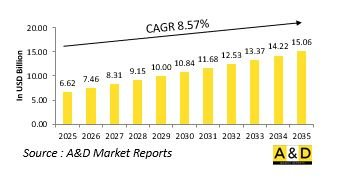
全球有人/無人隧道車輛(MUM-T)系統市場預計在2025年達到66.2億美元,預計到2035年將達到150.6億美元,2025年至2035年的複合年增長率(CAGR)為8.57%。
有無人機聯合(MUM-T)系統市場上技術的影響
技術創新正在推動有人/無人隧道車輛(MUM-T)系統的演進。
向無人(MUM-T)系統過渡,重新定義了部隊在空中、陸地、海洋和太空的協作和作戰方式。人工智慧和機器學習演算法使無人平台能夠半自主運行,即時分析感測器數據,並在人工監督下獨立做出戰術決策。安全的數據鏈路和先進的通信協議確保有人和無人部隊之間的無縫通信,即使在電子戰密集的環境中也能保持作戰協同。邊緣運算和感測器融合技術的進步進一步增強了態勢感知能力,使無人系統能夠快速共享資訊並自主優化作戰參數。模組化架構和開放式軟體系統便於整合新功能,使有人和無人機團隊能夠適應不斷變化的威脅。在空戰中, "忠誠僚機" 計畫正是這種綜效的典範。無人機透過擴展探測範圍和提供額外火力來增強有人戰鬥機的作戰能力。電磁屏蔽、低延遲網路和網路安全措施確保這些系統能夠抵禦電子戰和網路入侵。這些技術突破使國防組織能夠在人為控制和機器自主性之間實現動態平衡,從而徹底改變未來作戰行動的計畫、協調和執行方式。有人-無人戰術(MUM-T)系統市場的主要驅動因素
對有人-無人戰術(MUM-T)系統的需求源自於對作戰彈性、降低人員風險和提高作戰效能日益增長的需求。現代軍隊面臨日益複雜的戰場,需要快速決策和適應性回應。將無人系統與有人裝備相結合的能力實現了分散式作戰,多個平台協同工作以高效完成目標。這降低了人員的脆弱性,同時增強了態勢感知和反應能力。對兵力倍增的日益重視也是推動其應用的主要因素。無人裝備透過同時執行偵察、電子戰和攻擊行動來補充有人部隊,使指揮官能夠以更少的資源更有效地投射力量。
網路中心戰的趨勢進一步推動了能夠在人為監督下自主協作的系統的發展。預算優化和永續性也在影響市場需求。自由載人車輛與無人車輛的協作提供了一種經濟高效的方式來增強作戰能力,而無需承擔部署額外有人平台的全部成本。持續的現代化項目以及自主性和數據共享技術的進步正促使各國將這些系統整合到多個領域。這些因素表明,全球正在向混合防禦架構轉變,以最大限度地提高效率、生存能力和技術優勢。自由載人車輛與無人車輛合作(MUM-T)系統市場的區域趨勢
自由載人車輛與無人車輛協作(MUM-T)系統市場的區域動態反映了全球向混合戰爭戰略日益趨同的趨勢,但各區域的優先事項也十分明確。
先進國防強國致力於發展一體化海上框架,透過先進的數據網路和人工智慧驅動的作戰管理系統,將空中、陸地和海上作戰連接起來。這些地區優先發展先進的自主性、互通性和安全通訊系統,以支援複雜的多域作戰。同時,新興國防市場強調經濟高效且可擴展的解決方案。它們也正在投資模組化系統,使現有有人駕駛平台能夠與無人駕駛車輛和無人機協同作戰。這種方法允許在保持作戰準備的同時,逐步現代化。聯合計畫和技術轉移也在加速區域應用,並促進旨在共同開發本土能力的產業合作。戰略緊張局勢和不斷演變的威脅環境正在影響採購重點,動態地區的國家將有人-無人-戰術(MUM-T)系統視為監視、邊境安全和威懾行動的關鍵推動因素。同時,盟軍之間的互通性正在推動聯合研發工作,以實現聯合行動中共享的戰術感知。總體而言,該地區的發展趨勢表明,旨在增強協作、韌性和技術自主性的混合作戰生態系統正被廣泛應用。 本報告分析了全球有人-無人戰術(MUM-T)系統市場,提供了有關成長驅動因素、未來十年展望以及區域市場趨勢和預測的資訊。目錄
防衛有無人機聯合(MUM-T)系統市場報告定義
防衛有無人機聯合(MUM-T)系統市場區隔
各地區
按作用
各平台
防衛有無人機聯合(MUM-T)系統市場今後10年的分析
防衛有無人機聯合(MUM-T)系統市場技術
全球防衛有無人機聯合(MUM-T)系統市場預測
防衛有無人機聯合(MUM-T)系統的市場趨勢與預測:各地區
北美
促進因素,阻礙因素,課題
PEST
市場預測與Scenario分析
主要企業
供應商層級概覽
企業基準
歐洲
中東
亞太地區
南美
防衛有無人機聯合(MUM-T)系統市場國的分析
美國
防衛計劃
最新消息
專利
這個市場上目前技術成熟度
市場預測與Scenario分析
加拿大
義大利
法國
德國
荷蘭
比利時
西班牙
瑞典
希臘
澳洲
南非
印度
中國
俄羅斯
韓國
日本
馬來西亞
新加坡
巴西
防衛有無人機聯合(MUM-T)系統市場機會矩陣
防衛有無人機聯合(MUM-T)系統市場報告相關專家的意見
結論
關於Aviation and Defense Market Reports
The Global Manned to Unmanned Assisted Combat Systems market is estimated at USD 6.62 billion in 2025, projected to grow to USD 15.06 billion by 2035 at a Compound Annual Growth Rate (CAGR) of 8.57% over the forecast period 2025-2035.
Introduction to Manned to Unmanned Assisted Combat Systems Market:
The defense manned to unmanned assisted combat systems market represents a major evolution in modern warfare, bridging the capabilities of human-operated platforms with autonomous and remotely controlled systems. This concept revolves around creating a cohesive ecosystem where manned aircraft, vehicles, and naval assets work alongside unmanned systems to enhance situational awareness, combat effectiveness, and survivability. The collaboration between manned and unmanned platforms allows militaries to distribute tasks strategically-assigning high-risk or repetitive missions to unmanned systems while keeping human operators in control of decision-critical functions. This integration is transforming traditional combat operations by enabling faster response times, extended reach, and multi-domain coordination. Manned platforms serve as command nodes, directing groups of autonomous vehicles or drones that conduct surveillance, electronic warfare, and precision strikes. Such collaboration reduces human exposure to danger while leveraging the strengths of both manned intuition and machine precision. The market's growth reflects a strategic shift toward networked, flexible, and adaptive defense architectures that can respond to rapidly changing threat environments. As global militaries prioritize force multiplication and operational resilience, manned-unmanned teaming is emerging as a key enabler of next-generation warfare, offering new paradigms in coordination, autonomy, and tactical advantage.
Technology Impact in Manned to Unmanned Assisted Combat Systems Market:
Technological innovation is the driving force behind the evolution of manned to unmanned assisted combat systems, redefining how forces coordinate and execute missions across air, land, sea, and space. Artificial intelligence and machine learning algorithms enable unmanned platforms to operate semi-autonomously, analyze sensor data in real time, and make independent tactical decisions under human supervision. Secure data links and advanced communication protocols ensure seamless interaction between manned command units and their unmanned counterparts, maintaining operational cohesion even in electronically contested environments. Advancements in edge computing and sensor fusion technologies further enhance situational awareness, allowing unmanned systems to share information rapidly and autonomously optimize mission parameters. Modular architectures and open software systems allow easy integration of new capabilities, making manned-unmanned teams adaptable to evolving threats. In air combat, loyal wingman programs exemplify this synergy, where unmanned aircraft augment manned fighters by extending detection range and providing additional firepower. Electromagnetic shielding, low-latency networks, and cybersecurity measures ensure that these systems remain resilient against electronic warfare and cyber intrusions. Collectively, these technological breakthroughs are enabling defense organizations to establish a dynamic balance between human control and machine autonomy, revolutionizing how future combat missions are planned, coordinated, and executed.
Key Drivers in Manned to Unmanned Assisted Combat Systems market:
The demand for manned to unmanned assisted combat systems is driven by the growing need for operational flexibility, reduced risk to personnel, and enhanced mission effectiveness. Modern militaries are confronting increasingly complex battlefields that require rapid decision-making and adaptive responses. The ability to integrate unmanned systems alongside manned assets allows for distributed operations, where multiple platforms coordinate to achieve objectives efficiently. This reduces human vulnerability while expanding situational coverage and response capability. Rising emphasis on force multiplication is another major factor driving adoption. Unmanned assets can complement manned units by executing reconnaissance, electronic warfare, and strike missions simultaneously, enabling commanders to project power more effectively with fewer resources. The trend toward network-centric warfare further encourages the development of systems capable of autonomous cooperation under human oversight. Budget optimization and sustainability are also influencing demand. Manned-unmanned collaboration offers a cost-effective means to enhance capabilities without the full expense of fielding additional manned platforms. Ongoing modernization programs, coupled with advancements in autonomy and data sharing, are pushing nations to integrate these systems across multiple domains. Together, these drivers underscore a clear global shift toward hybrid defense architectures that maximize efficiency, survivability, and technological dominance.
Regional Trends in Manned to Unmanned Assisted Combat Systems Market:
Regional dynamics in the manned to unmanned assisted combat systems market reflect a growing global convergence toward hybrid warfare strategies, but with distinct regional priorities. Advanced defense powers are focusing on developing integrated manned-unmanned frameworks that link air, land, and naval operations through sophisticated data networks and AI-driven mission management. These regions prioritize high levels of autonomy, interoperability, and secure communication systems to support complex multi-domain missions. Emerging defense markets, on the other hand, are emphasizing cost-effective and scalable solutions. They are investing in modular systems that can retrofit existing manned platforms to operate in tandem with unmanned vehicles or drones. This approach allows them to modernize incrementally while maintaining operational readiness. Collaborative programs and technology transfers are also accelerating regional adoption, fostering industrial partnerships aimed at co-developing indigenous capabilities. Strategic tensions and evolving threat environments shape procurement priorities, with nations in volatile regions viewing manned-unmanned teaming as a critical enabler for surveillance, border security, and deterrence missions. Meanwhile, interoperability among allied forces drives joint development initiatives to ensure shared tactical awareness during coalition operations. Overall, regional trends point toward widespread adoption of hybrid combat ecosystems designed to enhance coordination, resilience, and technological self-reliance.
Key Defense Manned to Unmanned Assisted Combat Systems Program:
Airbus Helicopters has entered into an agreement with Singapore's Defence Science and Technology Agency (DSTA) to explore manned-unmanned teaming (MUM-T) capabilities for the Republic of Singapore Air Force's (RSAF) H225M medium-lift helicopter, the company announced on June 18. According to Airbus, the collaboration will incorporate the use of its Flexrotor vertical take-off and landing (VTOL) uncrewed aerial system to assess how integrating crewed and uncrewed platforms can enhance situational awareness and optimize mission effectiveness. The initiative will culminate in a flight demonstration to evaluate the operational benefits of MUM-T integration.
Table of Contents
Defense Manned Unmanned Teaming Systems (MUM-T) Market - Table of Contents
Manned To Defense Manned Unmanned Teaming Systems Market Report Definition
Manned To Defense Manned Unmanned Teaming Systems Market Segmentation
By Region
By Role
By Platform
Manned To Defense Manned Unmanned Teaming Systems Market Analysis for next 10 Years
The 10-year Defense Manned Unmanned Teaming Systems market analysis would give a detailed overview of Defense Manned Unmanned Teaming Systems market growth, changing dynamics, technology adoption overviews and the overall market attractiveness is covered in this chapter.
Market Technologies of Manned To Defense Manned Unmanned Teaming Systems Market
This segment covers the top 10 technologies that is expected to impact this market and the possible implications these technologies would have on the overall market.
Global Manned To Defense Manned Unmanned Teaming Systems Market Forecast
The 10-year defense manned unmanned teaming systems market forecast of this market is covered in detailed across the segments which are mentioned above.
Regional Manned To Defense Manned Unmanned Teaming Systems Market Trends & Forecast
The regional defense manned unmanned teaming systems market trends, drivers, restraints and Challenges of this market, the Political, Economic, Social and Technology aspects are covered in this segment. The market forecast and scenario analysis across regions are also covered in detailed in this segment. The last part of the regional analysis includes profiling of the key companies, supplier landscape and company benchmarking. The current market size is estimated based on the normal scenario.
North America
Drivers, Restraints and Challenges
PEST
Market Forecast & Scenario Analysis
Key Companies
Supplier Tier Landscape
Company Benchmarking
Europe
Middle East
APAC
South America
Country Analysis of Defense Manned Unmanned Teaming Systems Market
This chapter deals with the key defense programs in this market, it also covers the latest news and patents which have been filed in this market. Country level 10 year market forecast and scenario analysis are also covered in this chapter.
US
Defense Programs
Latest News
Patents
Current levels of technology maturation in this market
Market Forecast & Scenario Analysis
Canada
Italy
France
Germany
Netherlands
Belgium
Spain
Sweden
Greece
Australia
South Africa
India
China
Russia
South Korea
Japan
Malaysia
Singapore
Brazil
Opportunity Matrix for Defense Manned Unmanned Teaming Systems Market
The opportunity matrix helps the readers understand the high opportunity segments in this market.
Expert Opinions on Defense Manned Unmanned Teaming Systems Market Report
Hear from our experts their opinion of the possible analysis for this market.
Conclusions
About Aviation and Defense Market Reports
List of Tables
- Table 1: 10 Year Market Outlook, 2025-2035
- Table 2: Drivers, Impact Analysis, North America
- Table 3: Restraints, Impact Analysis, North America
- Table 4: Challenges, Impact Analysis, North America
- Table 5: Drivers, Impact Analysis, Europe
- Table 6: Restraints, Impact Analysis, Europe
- Table 7: Challenges, Impact Analysis, Europe
- Table 8: Drivers, Impact Analysis, Middle East
- Table 9: Restraints, Impact Analysis, Middle East
- Table 10: Challenges, Impact Analysis, Middle East
- Table 11: Drivers, Impact Analysis, APAC
- Table 12: Restraints, Impact Analysis, APAC
- Table 13: Challenges, Impact Analysis, APAC
- Table 14: Drivers, Impact Analysis, South America
- Table 15: Restraints, Impact Analysis, South America
- Table 16: Challenges, Impact Analysis, South America
- Table 17: Scenario Analysis, Scenario 1, By Region, 2025-2035
- Table 18: Scenario Analysis, Scenario 1, By Role, 2025-2035
- Table 19: Scenario Analysis, Scenario 1, By Platform, 2025-2035
- Table 20: Scenario Analysis, Scenario 2, By Region, 2025-2035
- Table 21: Scenario Analysis, Scenario 2, By Role, 2025-2035
- Table 22: Scenario Analysis, Scenario 2, By Platform, 2025-2035
List of Figures
- Figure 1: Global Manned Unmanned Teaming Systems Market Forecast, 2025-2035
- Figure 2: Global Manned Unmanned Teaming Systems Market Forecast, By Region, 2025-2035
- Figure 3: Global Manned Unmanned Teaming Systems Market Forecast, By Role, 2025-2035
- Figure 4: Global Manned Unmanned Teaming Systems Market Forecast, By Platform, 2025-2035
- Figure 5: North America, Manned Unmanned Teaming Systems Market, Market Forecast, 2025-2035
- Figure 6: Europe, Manned Unmanned Teaming Systems Market, Market Forecast, 2025-2035
- Figure 7: Middle East, Manned Unmanned Teaming Systems Market, Market Forecast, 2025-2035
- Figure 8: APAC, Manned Unmanned Teaming Systems Market, Market Forecast, 2025-2035
- Figure 9: South America, Manned Unmanned Teaming Systems Market, Market Forecast, 2025-2035
- Figure 10: United States, Manned Unmanned Teaming Systems Market, Technology Maturation, 2025-2035
- Figure 11: United States, Manned Unmanned Teaming Systems Market, Market Forecast, 2025-2035
- Figure 12: Canada, Manned Unmanned Teaming Systems Market, Technology Maturation, 2025-2035
- Figure 13: Canada, Manned Unmanned Teaming Systems Market, Market Forecast, 2025-2035
- Figure 14: Italy, Manned Unmanned Teaming Systems Market, Technology Maturation, 2025-2035
- Figure 15: Italy, Manned Unmanned Teaming Systems Market, Market Forecast, 2025-2035
- Figure 16: France, Manned Unmanned Teaming Systems Market, Technology Maturation, 2025-2035
- Figure 17: France, Manned Unmanned Teaming Systems Market, Market Forecast, 2025-2035
- Figure 18: Germany, Manned Unmanned Teaming Systems Market, Technology Maturation, 2025-2035
- Figure 19: Germany, Manned Unmanned Teaming Systems Market, Market Forecast, 2025-2035
- Figure 20: Netherlands, Manned Unmanned Teaming Systems Market, Technology Maturation, 2025-2035
- Figure 21: Netherlands, Manned Unmanned Teaming Systems Market, Market Forecast, 2025-2035
- Figure 22: Belgium, Manned Unmanned Teaming Systems Market, Technology Maturation, 2025-2035
- Figure 23: Belgium, Manned Unmanned Teaming Systems Market, Market Forecast, 2025-2035
- Figure 24: Spain, Manned Unmanned Teaming Systems Market, Technology Maturation, 2025-2035
- Figure 25: Spain, Manned Unmanned Teaming Systems Market, Market Forecast, 2025-2035
- Figure 26: Sweden, Manned Unmanned Teaming Systems Market, Technology Maturation, 2025-2035
- Figure 27: Sweden, Manned Unmanned Teaming Systems Market, Market Forecast, 2025-2035
- Figure 28: Brazil, Manned Unmanned Teaming Systems Market, Technology Maturation, 2025-2035
- Figure 29: Brazil, Manned Unmanned Teaming Systems Market, Market Forecast, 2025-2035
- Figure 30: Australia, Manned Unmanned Teaming Systems Market, Technology Maturation, 2025-2035
- Figure 31: Australia, Manned Unmanned Teaming Systems Market, Market Forecast, 2025-2035
- Figure 32: India, Manned Unmanned Teaming Systems Market, Technology Maturation, 2025-2035
- Figure 33: India, Manned Unmanned Teaming Systems Market, Market Forecast, 2025-2035
- Figure 34: China, Manned Unmanned Teaming Systems Market, Technology Maturation, 2025-2035
- Figure 35: China, Manned Unmanned Teaming Systems Market, Market Forecast, 2025-2035
- Figure 36: Saudi Arabia, Manned Unmanned Teaming Systems Market, Technology Maturation, 2025-2035
- Figure 37: Saudi Arabia, Manned Unmanned Teaming Systems Market, Market Forecast, 2025-2035
- Figure 38: South Korea, Manned Unmanned Teaming Systems Market, Technology Maturation, 2025-2035
- Figure 39: South Korea, Manned Unmanned Teaming Systems Market, Market Forecast, 2025-2035
- Figure 40: Japan, Manned Unmanned Teaming Systems Market, Technology Maturation, 2025-2035
- Figure 41: Japan, Manned Unmanned Teaming Systems Market, Market Forecast, 2025-2035
- Figure 42: Malaysia, Manned Unmanned Teaming Systems Market, Technology Maturation, 2025-2035
- Figure 43: Malaysia, Manned Unmanned Teaming Systems Market, Market Forecast, 2025-2035
- Figure 44: Singapore, Manned Unmanned Teaming Systems Market, Technology Maturation, 2025-2035
- Figure 45: Singapore, Manned Unmanned Teaming Systems Market, Market Forecast, 2025-2035
- Figure 46: United Kingdom, Manned Unmanned Teaming Systems Market, Technology Maturation, 2025-2035
- Figure 47: United Kingdom, Manned Unmanned Teaming Systems Market, Market Forecast, 2025-2035
- Figure 48: Opportunity Analysis, Manned Unmanned Teaming Systems Market, By Region (Cumulative Market), 2025-2035
- Figure 49: Opportunity Analysis, Manned Unmanned Teaming Systems Market, By Region (CAGR), 2025-2035
- Figure 50: Opportunity Analysis, Manned Unmanned Teaming Systems Market, By Role (Cumulative Market), 2025-2035
- Figure 51: Opportunity Analysis, Manned Unmanned Teaming Systems Market, By Role (CAGR), 2025-2035
- Figure 52: Opportunity Analysis, Manned Unmanned Teaming Systems Market, By Platform (Cumulative Market), 2025-2035
- Figure 53: Opportunity Analysis, Manned Unmanned Teaming Systems Market, By Platform (CAGR), 2025-2035
- Figure 54: Scenario Analysis, Manned Unmanned Teaming Systems Market, Cumulative Market, 2025-2035
- Figure 55: Scenario Analysis, Manned Unmanned Teaming Systems Market, Global Market, 2025-2035
- Figure 56: Scenario 1, Manned Unmanned Teaming Systems Market, Total Market, 2025-2035
- Figure 57: Scenario 1, Manned Unmanned Teaming Systems Market, By Region, 2025-2035
- Figure 58: Scenario 1, Manned Unmanned Teaming Systems Market, By Role, 2025-2035
- Figure 59: Scenario 1, Manned Unmanned Teaming Systems Market, By Platform, 2025-2035
- Figure 60: Scenario 2, Manned Unmanned Teaming Systems Market, Total Market, 2025-2035
- Figure 61: Scenario 2, Manned Unmanned Teaming Systems Market, By Region, 2025-2035
- Figure 62: Scenario 2, Manned Unmanned Teaming Systems Market, By Role, 2025-2035
- Figure 63: Scenario 2, Manned Unmanned Teaming Systems Market, By Platform, 2025-2035
- Figure 64: Company Benchmark, Manned Unmanned Teaming Systems Market, 2025-2035

 2026-2030年全球戰鬥機市場
 戰鬥機市場:全球市場預測,2026-2032年
 2026-2036年全球戰鬥機紅外線搜尋與追蹤系統市場國防有人和無人協同系統市場報告:趨勢、預測和競爭分析(至2035年)全球戰鬥機市場:2026-2036年戰鬥機市場報告:趨勢、預測和競爭分析(至2035年)全球國防戰鬥機駕駛座座艙罩市場:2026-2036年全球戰鬥機登機舵市場:2026-2036年
 2026年全球戰鬥機市場報告
 戰鬥機市場-全球產業規模、佔有率、趨勢、機會和預測,按類型、起降方式、飛機類型、地區和競爭格局分類,2020-2030年預測