


 |
市場調查報告書
商品編碼
2154912
南美洲軟塑膠包裝:市場佔有率分析、產業趨勢與統計及成長預測(2026-2031 年)South America Flexible Plastic Packaging - Market Share Analysis, Industry Trends & Statistics, Growth Forecasts (2026 - 2031) |
||||||

※ 本網頁內容可能與最新版本有所差異。詳細情況請與我們聯繫。
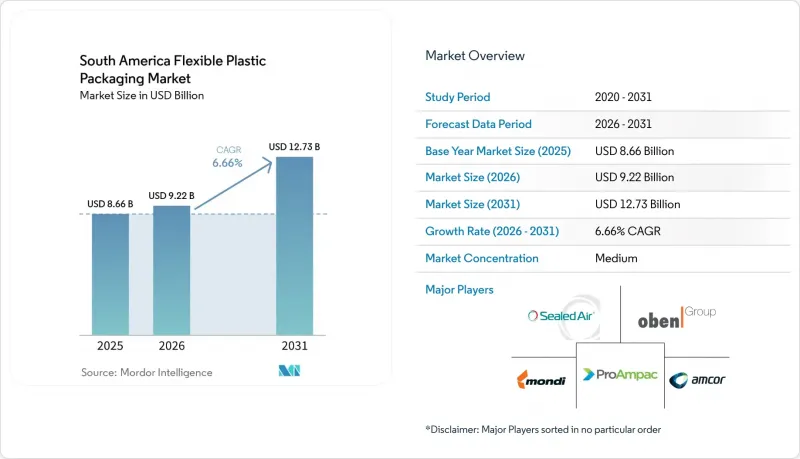
據 Mordor Intelligence 稱,2025 年南美軟塑膠包裝市場價值為 86.6 億美元,預計到 2031 年將從 2026 年的 92.4 億美元成長至 127.3 億美元,預測期(2026-2031 年)複合年成長率為 6.66%。
南美洲軟塑膠包裝市場趨勢與洞察
對方便即食食品的需求日益成長。
巴西、阿根廷和智利的高速都市化推動了對獨立包裝、常溫保存和即食食品的需求。這些包裝形式採用軟包裝袋、可重複密封包裝和泡棉填充密封膜,與許多硬質包裝材料相比,既能保護產品,又能減少材料用量。食品應用在南美洲軟塑膠包裝市場佔據了相當大的佔有率。糖果甜點、零食、生鮮食品和乳製品仍需要兼具實用性和阻隔性的包裝。根據ABIEF的產業研究,巴西農業和工業用軟包裝的需求量顯著成長。食品製造商擴大讓加工商更早參與產品和包裝形式的開發。預計這將有助於加工商與提供薄膜、油墨和生產設備支援的供應商之間建立更長期的合作關係。
電子商務履約與體積重量最佳化
由於小包裹遞送的收費系統,包裝重量已成為線上經銷商重要的商業性考慮因素。軟性郵寄信封和氣泡複合袋有助於減輕運輸重量,並在倉庫和輸送機搬運過程中保護產品。 MercadoLibre 每年擁有龐大的獨立買家群體,並已對巴西的物流基礎設施進行了大量投資。這項網路擴張正在推動整個南美洲軟塑膠包裝市場對輕型郵寄信封和直銷包裝的需求。高階品牌通常需要小批量生產並定製圖案,而大規模電商平台上的賣家則需要低成本的空白包裝。由於數位印刷無需像柔版印刷那樣產生製版成本,因此預計在整個預測期內,數位印刷將保持強勁成長。加工商在兩個產品層級之間共用資產可以提高設備運轉率,並服務更廣泛的客戶群。
經認證的再生樹脂供不應求
儘管巴西的再生材料含量要求於2026年中期生效,但可追溯認證樹脂的供應仍然有限。在軟包裝領域,在新規實施初期,再生材料含量仍低於目標值。巴西的機械回收率仍然很低,而且由於軟包裝薄膜密度低且易受食品污染,其回收難度高於硬質容器。食品級再生樹脂的產能僅能滿足部分區域需求。目前巴西正在建造多個超淨處理設施,如果獲得批准,這些設施預計將增加認證產能。如果加工商無法獲得國內再生樹脂供應契約,南美軟塑膠市場將面臨高昂的合規成本。
細分市場分析
2025年,聚乙烯在南美洲軟塑膠市場佔據了61.24%的佔有率。這主要得益於巴西和阿根廷成熟的薄膜和包裝袋加工能力。根據ABIEF的研究,低密度聚乙烯(LDPE)和線性低密度聚乙烯(LLDPE)在當年巴西的柔軟性產量中佔比最高。這種材料廣泛應用於食品、農業和消費品產業。在需要控制成本、密封性和生產柔軟性的應用中,聚乙烯仍然是一種實用的材料。此外,它在滿足回收要求的單一材料設計中也發揮核心作用。
雙軸延伸聚丙烯因其優異的透明度和印刷性能,被廣泛用於零食、糖果甜點和烘焙產品的包裝。流延聚丙烯則用於需要蒸餾和蒸氣阻隔性能的加工食品領域。聚氯乙烯在某些工業和特殊應用中仍然發揮著有限的作用。其可回收性方面的限制促使人們投資於材料種類較少的替代材料。在南美軟塑膠市場,乙烯-乙烯醇共聚物(EVA)預計到2031年將以6.92%的複合年成長率成長。其需求主要來自醫藥、新鮮蛋白質和農產品等領域對強氧氣阻隔性的要求。投資乙烯-乙烯醇共聚物共擠出技術將使加工商能夠利用同一生產平台來滿足食品和醫藥產業的包裝需求。
到2025年,軟包裝袋將佔南美洲軟質塑膠包裝市場50.66%的佔有率。自立袋、蒸餾、吸嘴袋和可重複密封拉鍊袋等包裝形式廣泛應用於食品、寵物食品、居家護理和個人保健產品。立式袋因其能提高托盤裝載密度並減少對二次紙箱的需求,而被廣泛應用於農產品和工業產品出口。其可印刷的表面也允許在無需額外標籤的情況下添加產品資訊。此外,袋子在種子、肥料、散裝原料以及其他需要承載能力的領域中仍然發揮著至關重要的作用。
其他產品包括工業產品專用包裝膜和軟性中型散貨箱(FIBC)。這些產品的需求與工業產出和農業貿易趨勢密切相關。預計到2031年,薄膜和包裝膜市場將以7.13%的複合年成長率成長。冷鏈、調氣包裝(MAP)和歐盟保護膜的擴張支撐了這個前景。 2026年6月,安姆科與巴西巴拉曼薩食品公司合作,實施了Moda旋轉真空室密封技術。該項目展示了在肉類加工廠同時實施設備和包裝材料的能力。雖然南美洲軟塑膠包裝市場對出口導向阻隔膜和聚乙烯拉伸膜產品都有需求,但出口規格為建造差異化薄膜產品線提供了更清晰的路徑。
其他好處:
- Excel格式的市場預測(ME)表
- 3個月的分析師支持
目錄
第1章:引言
- 研究假設和市場定義
- 調查範圍
第2章:調查方法
第3章執行摘要
第4章 市場狀況
- 市場概覽
- 市場促進因素
- 對方便即食食品的需求日益成長。
- 電子商務履約與體積重量最佳化
- 擴大生鮮食品和冷鏈配送
- 關於再生材料含量和生產者延伸責任的義務
- 高級寵物食品和特殊動物食品的包裝
- 利用單一材料實現阻隔性包裝的創新
- 市場限制因素
- 經認證的再生樹脂供應有限。
- 樹脂價格和外匯的波動
- 多層回收中的不相容性
- 分散的收集和分類基礎設施
- 宏觀經濟因素對市場的影響
- 產業價值鏈分析
- 監理情勢
- 技術展望
- 波特五力分析
第5章 市場規模與成長預測
- 材料
- 聚乙烯(PE)
- 雙軸延伸聚丙烯(BOPP)
- 流延聚丙烯(CPP)
- 聚氯乙烯(PVC)
- 乙烯-乙烯醇共聚物(EVOH)
- 其他材料
- 依產品類型
- 小袋
- 包包
- 薄膜和包裝
- 其他產品類型
- 透過印刷技術
- 柔版印刷
- 凹版印刷
- 數位印刷
- 噴墨列印
- 靜電照相印刷
- 按最終用途行業分類
- 食物
- 糖果甜點和零食
- 麵包和穀物
- 生鮮食品
- 乳製品
- 其他食品用途
- 飲料
- 醫療和製藥
- 個人護理和居家護理
- 其他終端用戶產業
- 農業
- 化學品
- 車
- 食物
- 透過分銷管道
- 直銷
- 間接銷售
- 按地區
- 巴西
- 阿根廷
- 哥倫比亞
- 智利
- 秘魯
- 其他南美國家
第6章 競爭情勢
- 市場集中度
- 策略趨勢
- 市佔率分析
- 公司簡介
- Amcor plc
- Mondi plc
- Sealed Air Corporation
- Coveris Management GmbH
- Grupo Oben Holding
- Sonoco Products Company
- Transcontinental Inc.
- ProAmpac Intermediate Inc.
- Huhtamaki Oyj
- Constantia Flexibles Group GmbH
- SIG Group AG
- Gualapack Spa
- Videplast Plastic Industry Ltda.
- Zaraplast SA
- Vitopel do Brasil Ltda.
- Petropack SA
- Grupo HZ
- Embaquim Industria e Comercio Ltda.
- Parnaplast Industria de Plasticos Ltda.
- Plasfil Industria e Comercio de Plasticos Ltda.
第7章 市場機會與未來展望
According to Mordor Intelligence, the South America flexible plastic packaging market size was valued at USD 8.66 billion in 2025 and estimated to grow from USD 9.24 billion in 2026 to reach USD 12.73 billion by 2031, at a CAGR of 6.66% during the forecast period (2026-2031).
South America Flexible Plastic Packaging Market Trends and Insights
Rising Demand for Convenience and Ready-to-Eat Foods
High urbanization levels in Brazil, Argentina, and Chile supported demand for portioned, shelf-stable, and ready-to-eat food formats. These formats use pouches, resealable packs, and form-fill-seal films that protect products while using less material than many rigid alternatives. Food applications accounted for a significant share of the South America flexible plastic packaging market. Confectionery, snacks, fresh produce, and dairy products continue to require packaging that combines practical use with barrier performance. Brazil's agro-industrial flexible packaging volume increased significantly, according to the ABIEF industry survey.. Food producers increasingly involve converters earlier when they develop products and packaging formats. This can extend supplier relationships where converters provide film, inks, and production equipment support.
E-Commerce Fulfillment and Volumetric-Weight Optimization
Parcel delivery pricing has made packaging weight an important commercial consideration for online sellers. Flexible mailers and bubble-laminated pouches can reduce transport weight and help protect products through warehouse and conveyor handling. MercadoLibre reported a large annual unique buyer base and committed substantial investments to Brazilian logistics infrastructure. This network expansion supports demand for lightweight mailers and direct-to-consumer packaging across the South America flexible plastic packaging market. Premium brands often need short runs with customized graphics, while large marketplace sellers need lower-cost plain-stock formats. Digital printing is projected to expand strongly through the forecast period because it serves shorter runs without flexographic plate costs. Converters that use shared assets for both product tiers can improve equipment utilization and serve a broader customer base.
Limited Availability of Certified Post-Consumer Recycled Resin
Brazil's recycled-content requirement took effect in mid-2026, but certified resin with a traceable chain of custody remains limited. The flexible packaging sector used recycled content below the new target during the initial implementation period. Brazil's mechanical recycling rate remained limited, while low density and food contamination make flexible films harder to collect than rigid containers. Food-grade recycled resin capacity covers only part of regional demand. Several super-cleaning facilities were in development in Brazil and could add certified capacity after approvals. The South America flexible plastic packaging market faces higher compliance costs where converters have not secured domestic recycled-resin agreements.
Other drivers and restraints analyzed in the detailed report include:
- Expansion of Fresh-Produce and Cold-Chain Distribution
- Recycled-Content and Extended-Producer-Responsibility Mandates
- Resin-Price and Currency Volatility
For complete list of drivers and restraints, kindly check the Table Of Contents.
Segment Analysis
Polyethylene held 61.24% of the South America flexible plastic packaging market share in 2025, supported by established film and pouch conversion capacity in Brazil and Argentina. Low-density polyethylene and linear low-density polyethylene accounted for most of Brazil's flexible plastic packaging volume during the year, according to the ABIEF survey. This material base supports food, agro-industrial, and consumer goods applications. Polyethylene remains practical for applications that require cost control, sealability, and production flexibility. It also plays a central role in mono-material designs that support recycling requirements.
Biaxially oriented polypropylene is widely used for snacks, confectionery, and bakery packaging because it provides clarity and print performance. Cast polypropylene is used in retort and steam-barrier processed-food applications. Polyvinyl chloride retains a smaller role in selected industrial and specialty uses. Its recycling limitations are directing some investment toward alternatives that use fewer material families. Ethylene-vinyl alcohol is projected to expand at a CAGR of 6.92% through 2031 within the South America flexible plastic packaging market. Demand comes from pharmaceutical, fresh-protein, and produce applications that require strong oxygen barriers. Ethylene-vinyl alcohol co-extrusion investments allow converters to address food and pharmaceutical requirements from the same production platform.
Pouches commanded 50.66% of the South America flexible plastic packaging market size in 2025. Stand-up, retort, spouted, and zipper-reclosable formats are used in food, pet nutrition, home care, and personal care products. Stand-up pouches are widely used in agro-industrial exports because they improve pallet density and can reduce the need for secondary cartons. Their printable surface can also carry product information without an additional label. Bags and sacks remain relevant for seeds, fertilizer, bulk ingredients, and other applications requiring load-bearing formats.
Other products include specialty wraps for industrial goods and flexible intermediate bulk containers. Their demand is linked to industrial output and agricultural commodity activity. Films and wraps are projected to expand at a CAGR of 7.13% through 2031. Cold-chain expansion, modified-atmosphere packaging, and protective e-commerce films support this outlook. Amcor installed Moda rotary vacuum chamber sealing technology in Brazil in June 2026 with Barra Mansa Alimentos. The project showed how equipment and packaging materials can be introduced together at a meat-processing site. The South America flexible plastic packaging market has demand for both export-grade barrier films and polyethylene stretch-wrap products, but export specifications offer a clearer path to differentiated film portfolios.
Complete Report Scope:
- By Material
- Polyethylene (PE)
- Biaxially Oriented Polypropylene (BOPP)
- Cast Polypropylene (CPP)
- Polyvinyl Chloride (PVC)
- Ethylene-Vinyl Alcohol (EVOH)
- Other Materials
- By Product Type
- Pouches
- Bags and Sacks
- Films and Wraps
- Other Product Types
- By Printing Technology
- Flexography
- Rotogravure
- Digital Printing
- Inkjet Printing
- Electrophotographic Printing
- By End-Use Industry
- Food
- Confectionery and Snacks
- Breads and Cereals
- Fresh Produce
- Dairy-Based Products
- Other Food Applications
- Beverages
- Medical and Pharmaceutical
- Personal and Home Care
- Other End-Use Industries
- Agriculture
- Chemicals
- Automotive
- Food
- By Distribution Channel
- Direct Sales
- Indirect Sales
- By Geography
- Brazil
- Argentina
- Colombia
- Chile
- Peru
- Rest of South America
List of Companies Covered in this Report:
- Amcor plc
- Mondi plc
- Sealed Air Corporation
- Coveris Management GmbH
- Grupo Oben Holding
- Sonoco Products Company
- Transcontinental Inc.
- ProAmpac Intermediate Inc.
- Huhtamaki Oyj
- Constantia Flexibles Group GmbH
- SIG Group AG
- Gualapack S.p.a.
- Videplast Plastic Industry Ltda.
- Zaraplast S.A.
- Vitopel do Brasil Ltda.
- Petropack S.A.
- Grupo HZ
- Embaquim Industria e Comercio Ltda.
- Parnaplast Industria de Plasticos Ltda.
- Plasfil Industria e Comercio de Plasticos Ltda.
Additional Benefits:
- The market estimate (ME) sheet in Excel format
- 3 months of analyst support
TABLE OF CONTENTS
1 INTRODUCTION
- 1.1 Study Assumptions and Market Definition
- 1.2 Scope of the Study
2 RESEARCH METHODOLOGY
3 EXECUTIVE SUMMARY
4 MARKET LANDSCAPE
- 4.1 Market Overview
- 4.2 Market Drivers
- 4.2.1 Rising Demand for Convenience and Ready-to-Eat Foods
- 4.2.2 E-Commerce Fulfillment and Volumetric-Weight Optimization
- 4.2.3 Expansion of Fresh-Produce and Cold-Chain Distribution
- 4.2.4 Recycled-Content and Extended-Producer-Responsibility Mandates
- 4.2.5 Premium Pet Nutrition and Specialized Animal-Food Packaging
- 4.2.6 Mono-Material High-Barrier Packaging Innovation
- 4.3 Market Restraints
- 4.3.1 Limited Availability of Certified Post-Consumer Recycled Resin
- 4.3.2 Resin-Price and Currency Volatility
- 4.3.3 Recycling Incompatibility of Multilayer Structures
- 4.3.4 Fragmented Collection and Sorting Infrastructure
- 4.4 Impact of Macroeconomic Factors on the Market
- 4.5 Industry Value Chain Analysis
- 4.6 Regulatory Landscape
- 4.7 Technological Outlook
- 4.8 Porter's Five Forces Analysis
- 4.8.1 Bargaining Power of Suppliers
- 4.8.2 Bargaining Power of Buyers
- 4.8.3 Threat of New Entrants
- 4.8.4 Threat of Substitutes
- 4.8.5 Competitive Rivalry
5 MARKET SIZE AND GROWTH FORECASTS (VALUE)
- 5.1 By Material
- 5.1.1 Polyethylene (PE)
- 5.1.2 Biaxially Oriented Polypropylene (BOPP)
- 5.1.3 Cast Polypropylene (CPP)
- 5.1.4 Polyvinyl Chloride (PVC)
- 5.1.5 Ethylene-Vinyl Alcohol (EVOH)
- 5.1.6 Other Materials
- 5.2 By Product Type
- 5.2.1 Pouches
- 5.2.2 Bags and Sacks
- 5.2.3 Films and Wraps
- 5.2.4 Other Product Types
- 5.3 By Printing Technology
- 5.3.1 Flexography
- 5.3.2 Rotogravure
- 5.3.3 Digital Printing
- 5.3.4 Inkjet Printing
- 5.3.5 Electrophotographic Printing
- 5.4 By End-Use Industry
- 5.4.1 Food
- 5.4.1.1 Confectionery and Snacks
- 5.4.1.2 Breads and Cereals
- 5.4.1.3 Fresh Produce
- 5.4.1.4 Dairy-Based Products
- 5.4.1.5 Other Food Applications
- 5.4.2 Beverages
- 5.4.3 Medical and Pharmaceutical
- 5.4.4 Personal and Home Care
- 5.4.5 Other End-Use Industries
- 5.4.5.1 Agriculture
- 5.4.5.2 Chemicals
- 5.4.5.3 Automotive
- 5.4.1 Food
- 5.5 By Distribution Channel
- 5.5.1 Direct Sales
- 5.5.2 Indirect Sales
- 5.6 By Geography
- 5.6.1 Brazil
- 5.6.2 Argentina
- 5.6.3 Colombia
- 5.6.4 Chile
- 5.6.5 Peru
- 5.6.6 Rest of South America
6 COMPETITIVE LANDSCAPE
- 6.1 Market Concentration
- 6.2 Strategic Moves
- 6.3 Market Share Analysis
- 6.4 Company Profiles (includes Global Level Overview, Market Level Overview, Core Segments, Financials as available, Strategic Information, Market Rank/Share, Products and Services, Recent Developments)
- 6.4.1 Amcor plc
- 6.4.2 Mondi plc
- 6.4.3 Sealed Air Corporation
- 6.4.4 Coveris Management GmbH
- 6.4.5 Grupo Oben Holding
- 6.4.6 Sonoco Products Company
- 6.4.7 Transcontinental Inc.
- 6.4.8 ProAmpac Intermediate Inc.
- 6.4.9 Huhtamaki Oyj
- 6.4.10 Constantia Flexibles Group GmbH
- 6.4.11 SIG Group AG
- 6.4.12 Gualapack S.p.a.
- 6.4.13 Videplast Plastic Industry Ltda.
- 6.4.14 Zaraplast S.A.
- 6.4.15 Vitopel do Brasil Ltda.
- 6.4.16 Petropack S.A.
- 6.4.17 Grupo HZ
- 6.4.18 Embaquim Industria e Comercio Ltda.
- 6.4.19 Parnaplast Industria de Plasticos Ltda.
- 6.4.20 Plasfil Industria e Comercio de Plasticos Ltda.
7 MARKET OPPORTUNITIES AND FUTURE OUTLOOK
- 7.1 White-Space and Unmet-Need Assessment

 柔軟性塑膠包裝市場:全球市場預測,2026-2032年
 全球軟塑膠包裝市場:按材質、包裝類型、印刷技術、應用和地區分類-預測至2031年
 2026-2034年全球軟塑膠包裝塗料市場規模、佔有率、趨勢和成長分析報告
 軟塑膠包裝市場規模、佔有率和趨勢分析報告:按材料、產品、應用、地區和細分市場預測(2026-2033 年)
 2026年全球柔軟性塑膠包裝市場報告軟質塑膠包裝市場-2026-2031年預測
 軟性塑膠包裝市場-全球產業規模、佔有率、趨勢、機會和預測,按類型、基材樹脂、印刷技術、最終用戶、地區和競爭格局分類,2020-2030年預測
 軟塑膠包裝市場規模、佔有率和成長分析(按類型、印刷技術、應用和地區)- 2025-2032 年產業預測