

 |
市場調查報告書
商品編碼
2124417
塑膠射出成型:市場佔有率分析、產業趨勢與統計、成長預測(2026-2031)Plastics Injection Molding - Market Share Analysis, Industry Trends & Statistics, Growth Forecasts (2026 - 2031) |
||||||

※ 本網頁內容可能與最新版本有所差異。詳細情況請與我們聯繫。
據 Mordor Intelligence 稱,2025 年塑膠射出成型市場價值為 1.5713 億噸,預計到 2031 年將達到 2.0147 億噸,而 2026 年為 1.6378 億噸,預測期(2026-2031 年)複合成長率為 4.23%。
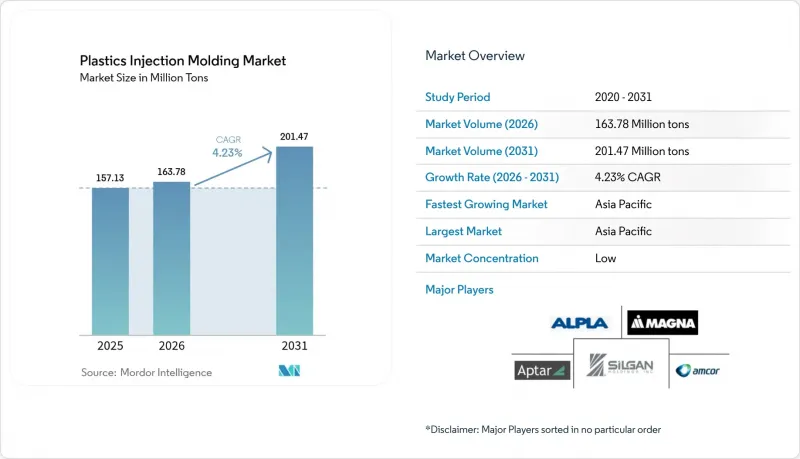
本報告按原料類型(聚丙烯、丙烯腈丁二烯苯乙烯 (ABS)、聚苯乙烯、聚乙烯、聚氯乙烯(PVC) 等)、應用領域(包裝、建築和施工、消費品、電子產品、汽車和運輸、醫療保健等)以及地區(亞太地區、北美、歐洲、南美以及中東和非洲)進行分類。
全球注塑射出成型市場趨勢與洞察
電子商務帶來的包裝需求激增
小包裹處理量的爆炸式成長推動了對耐用且輕巧的保護解決方案的需求,促使品牌商指定採用單一材料的聚乙烯和聚丙烯包裝,以在不影響強度的前提下最大限度地減少材料用量。將於2025年生效的歐盟包裝和包裝廢棄物法規(PPWR)規定,到2030年,PET食品包裝中必須含有30%的再生材料,這將加速模具和程式參數的重新設計,以適應高可回收性混合物。在美國,14個州實施的生產者延伸責任制(EPR)收費機制,進一步刺激了環保設計,並有利於擁有先進樹脂回收生產線的加工商。這些法規的協同效應正在擴大射出射出成型市場的產量,尤其是在薄壁容器和瓶蓋領域,而縮短的生產週期帶來了材料節約和生產效率提升。先進的射出成型製造商正在採用套模貼標和數位浮水印技術來簡化分類操作,從而提高廢棄舊樹脂的可用性,並確保原料的穩定供應。
汽車和電動車的輕量化要求
為了滿足日益嚴格的車輛平均二氧化碳排放目標並最大限度地提高電動車的續航里程,汽車製造商正在加速從塑膠轉向其他材料。特斯拉的「超級鑄造」(Gigacasting)策略展示了大型鋁鑄造部件如何在減少零件數量的同時,擴大對整合鑄造結構的射出成型成型內外飾件的需求。電池製造商正在探索採用阻燃夾層結構壁的熱塑性外殼,與鋼製外殼相比,此外殼每輛車最多可減重40公斤。恩格爾公司的高壓電池機殼原型就是這項轉變的例證。 ISO 14040標準下的生命週期評估正日益影響材料的選擇,可回收塑膠比多材料金屬組件更受青睞。這些趨勢正在推動對工程級聚合物(例如聚醯胺、聚碳酸酯和再生聚丙烯)的需求,並透過提高單車射出成型用量和持續滿足新型電動車平台模具的需求,擴大塑膠射出成型市場的價值。
樹脂價格波動與原油價格相關
受地緣政治動盪影響,基準原油價格波動,導致聚乙烯和聚丙烯現貨價格上漲。美國將於2025年徵收關稅,使部分樹脂等級的接收成本增加10-15%,而中國產能過剩(預計新增產能500萬噸)壓低了亞洲地區的價格,擴大了區域間套利價差。樹脂經銷商指出,市場存在前所未有的不確定性,82%的注塑成型商正在採取多元化採購策略以應對價格飆升。利潤率的波動抑制了長期模具投資,提高了注塑射出成型市場產能擴張的門檻,並促使加工商對產品進行避險,並採用複合定價合約。
細分市場分析
預計到2025年,聚乙烯將在射出成型塑膠市場佔據36.05%的主導地位,並有望在2031年之前以5.02%的複合年成長率成長。強制性再生材料含量帶來的可回收性優勢將進一步鞏固其主導地位。薄壁包裝、蓋子與封口裝置系統以及新興的汽車燃料電池組件等應用都充分利用了聚乙烯樹脂的耐化學性,從而鞏固了其領先地位。聚丙烯緊隨聚乙烯之後,在汽車內飾、暖通空調外殼和家用電器組件等領域佔據重要地位,這得益於其高熱變形溫度和高剛度重量比。丙烯腈-丁二烯-苯乙烯共聚物(ABS)在家用電器機殼保持著一定的市場佔有率,而聚苯乙烯由於監管日益嚴格,在一次性刀叉餐具市場面臨結構性萎縮。
先進的回收設施具備解聚和溶劑精煉能力,正在提升廢棄聚乙烯的質量,使其能夠直接取代原生樹脂,並降低加工商的範圍3排放。聚碳酸酯在車頭燈透鏡和透明防護罩中的應用日益廣泛,一些汽車車型也開始使用薄玻璃代替厚玻璃。由蓖麻油製成的生物基聚醯胺因其固有的阻燃性和低碳強度,在引擎室零件領域備受關注。這些材料層面的變化進一步豐富了射出射出成型市場,同時也幫助客戶實現其環境、社會和管治(ESG)目標。
區域分析
到2025年,亞太地區將佔全球注塑射出成型市場34.10%的佔有率,預計到2031年將以5.24%的複合年成長率持續成長,這主要得益於中國、印度和東南亞地區電子和汽車產量的成長。政府獎勵、低廉的人事費用以及接近性下游組裝廠的地理優勢,都為產能的提升提供了支撐。在日本,超過80%的工廠正在利用數位孿生技術和碳足跡儀錶板來提高生產效率和永續性。北美地區正受益於製造業回流和近岸外包,而墨西哥在2023年吸引了439億美元的外國直接投資(FDI),這促進了汽車內飾模具的進口和承包生產單元的引入。
美國1.4兆美元的再工業化計畫正在支持半導體、電動車電池和醫療設備的生產能力,預計將擴大國內對樹脂的需求。加拿大安大略省的一個模具製造群繼續為消費性包裝項目供應多腔模具,但工資溢價正在推動自動化程度的提高。
歐洲加工商正投資建造解聚和溶劑精煉工廠,以滿足PPWR(塑膠包裝再利用條例)的要求,該條例規定到2030年,PET包裝中必須含有30%的再生材料。德國卓越的工程技術支援豪華汽車的先進多成分注塑成型,而法國則在消費者環保意識日益增強的背景下,擴大生物基化妝品包裝的生產。南美洲依賴巴西的汽車需求,而在地採購法規正在鼓勵增加塑膠零件的國內產量。
在中東和非洲,沙烏地阿拉伯對聚合物下游產業的投資以及南非旨在促進本地零件生產的模具津貼計畫正在推動市場擴張。這些不同的區域趨勢共同擴大了射出射出成型市場的地理範圍。
其他好處
- Excel格式的市場預測(ME)表
- 3個月的分析師支持
目錄
第1章:引言
- 研究假設和市場定義
- 調查範圍
第2章:調查方法
第3章執行摘要
第4章 市場狀況
- 市場概覽
- 市場促進因素
- 電子商務帶來的包裝需求激增
- 汽車和電動車的輕量化要求
- 拋棄式產品的需求不斷成長
- 亞太地區電子製造業的產業化
- OEM廠商採用射出成型電動汽車電池外殼
- 市場限制因素
- 樹脂價格波動與原油價格相關
- 全球塑膠法規日益加強
- 全電動大噸位壓力機的資本投資與技能差距
- 價值鏈分析
- 波特五力模型
第5章 市場規模與成長預測
- 依原料類型
- 聚丙烯
- 丙烯腈丁二烯苯乙烯(ABS)
- 聚苯乙烯
- 聚乙烯
- 聚氯乙烯(PVC)
- 聚碳酸酯
- 聚醯胺
- 其他
- 透過使用
- 包裝
- 建築/施工
- 消費品
- 電子設備
- 汽車和運輸業
- 衛生保健
- 其他
- 按地區
- 亞太地區
- 中國
- 印度
- 日本
- 韓國
- 其他亞太國家
- 北美洲
- 美國
- 加拿大
- 墨西哥
- 歐洲
- 德國
- 英國
- 法國
- 義大利
- 俄羅斯
- 其他歐洲國家
- 南美洲
- 巴西
- 阿根廷
- 其他南美國家
- 中東和非洲
- 沙烏地阿拉伯
- 南非
- 其他中東和非洲國家
- 亞太地區
第6章 競爭情勢
- 市場集中度
- 策略趨勢
- 市佔率和排名分析
- 公司簡介
- ALPLA
- Amcor PLC
- Antolin
- AptarGroup, Inc.
- BERICAP
- CVA Plastics
- EVCO Plastics
- FORVIA Faurecia
- HTI Plastics
- Husky Technologies
- IAC Group
- Magna International Inc.
- Marelli Holdings Co. Ltd
- Naber Plastics BV
- Quantum Plastics
- SCHAUENBURG Industrietechnik
- SEKISUI CHEMICAL CO., LTD.
- Silgan Holdings Inc.
- The Rodon Group
- TOYOTA BOSHOKU CORPORATION
第7章 市場機會與未來展望
According to Mordor Intelligence, the plastics injection molding market size was valued at USD 157.13 million tons in 2025 and estimated to grow from USD 163.78 million tons in 2026 to reach USD 201.47 million tons by 2031, at a CAGR of 4.23% during the forecast period (2026-2031).
This report is Segmented by Raw Material Type (Polypropylene, Acrylonitrile Butadiene Styrene, Polystyrene, Polyethylene, Polyvinyl Chloride, and More), Application (Packaging, Building and Construction, Consumer Goods, Electronics, Automotive and Transportation, Healthcare, and Other Applications), and Geography (Asia-Pacific, North America, Europe, South America, and Middle-East and Africa).
Global Plastics Injection Molding Market Trends and Insights
Surge in E-commerce-Driven Packaging Demand
Explosive parcel volumes have heightened requirements for durable yet lightweight protective solutions, prompting brand owners to specify mono-material polyethylene and polypropylene packages that minimize material use without compromising strength. The EU Packaging and Packaging Waste Regulation (PPWR), effective 2025, mandates 30% recycled content in PET food packaging by 2030, accelerating redesign of tooling and process parameters to handle higher-recycled blends. U.S. Extended Producer Responsibility (EPR) fees across 14 states create an additional cost signal that rewards eco-modulated designs and favors converters with advanced resin reclamation lines. These converging mandates bolster volume growth in the plastics injection molding market, particularly in thin-wall container and closure segments where cycle-time reductions deliver material savings and higher throughput. Progressive molders are adopting in-mold labeling and digital watermarking to streamline sorting, increasing the likelihood of post-consumer resin availability and ensuring feedstock continuity.
Lightweighting Requirements in Automotive and EVs
Automotive OEMs have intensified plastics substitution to achieve stringent fleet-average CO2 targets and maximize EV range. Tesla's gigacasting strategy showcases how large aluminum castings reduce part counts, but it simultaneously expands demand for injection-molded interior and exterior trims that integrate with cast structures. Battery manufacturers are exploring thermoplastic housings with flame-retardant sandwich walls that cut up to 40 kg per vehicle compared with steel alternatives, a shift exemplified by Engel's high-voltage battery enclosure prototype. ISO 14040 life-cycle assessments increasingly influence material choices, favoring recyclable resins over multi-material metal assemblies. These trends elevate engineering-grade polymers such as polyamide, polycarbonate and recycled polypropylene, widening the value pool of the plastics injection molding market through higher content per vehicle and sustained tooling demand for new EV platforms.
Volatile Crude-Oil-Linked Resin Pricing
Polyethylene and polypropylene spot prices rose as crude benchmarks responded to geopolitical disruptions. U.S. tariffs introduced in 2025 raised landed costs of some resin grades by 10-15%, while Chinese oversupply, estimated at an additional 5 million tons of capacity, depressed Asian quotes and widened inter-regional arbitrage spreads. Resin distributors cite unprecedented uncertainty, with 82% of converters pursuing multisourcing strategies to guard against price spikes. Margin volatility discourages long-term tooling commitments, raising the hurdle rate for capacity additions across the plastics injection molding market and nudging processors toward hedging instruments and formula-pricing contracts.
Other drivers and restraints analyzed in the detailed report include:
- Growing Need for Single-Use Medical Disposables
- OEM Adoption of Injection-Molded EV Battery Housings
- Tightening Global Anti-Plastic Regulations
For complete list of drivers and restraints, kindly check the Table Of Contents.
Segment Analysis
Polyethylene secured a commanding 36.05% share of the plastics injection molding market in 2025 and is on track for a 5.02% CAGR through 2031 as recycled-content mandates reinforce its recyclability advantage. This leadership is fueled by thin-wall packaging, cap-and-closure systems and emerging automotive fuel-cell components that capitalize on the resin's chemical resistance. Polypropylene follows closely in interior automotive trims, HVAC housings and appliance parts, leveraging high heat deflection and stiffness-to-weight ratios. Acrylonitrile butadiene styrene retains niche in consumer electronics casings, while polystyrene faces structural decline in single-use cutlery amid regulatory crackdowns.
Advanced recycling facilities capable of depolymerization and solvent-based purification are improving the quality of post-consumer polyethylene, enabling drop-in replacement for virgin resin and lowering scope-3 emissions for converters. Polycarbonate uptake advances steadily in headlamp lenses and transparent protective shields, with thin-gauge glazing options replacing heavier glass in certain automotive models. Bio-based polyamides produced from castor-bean oil are gaining interest in under-hood parts due to inherent flame retardancy and lower carbon intensity. These material-level shifts deepen the diversification of the plastics injection molding market while supporting clients' environmental, social and governance (ESG) objectives.
Complete Report Scope:
- By Raw Material Type
- Polypropylene
- Acrylonitrile Butadiene Styrene (ABS)
- Polystyrene
- Polyethylene
- Polyvinyl Chloride (PVC)
- Polycarbonate
- Polyamide
- Other Raw Materials
- By Application
- Packaging
- Building and Construction
- Consumer Goods
- Electronics
- Automotive and Transportation
- Healthcare
- Other Applications
- By Geography
- Asia-Pacific
- China
- India
- Japan
- South Korea
- Rest of Asia-Pacific
- North America
- United States
- Canada
- Mexico
- Europe
- Germany
- United Kingdom
- France
- Italy
- Russia
- Rest of Europe
- South America
- Brazil
- Argentina
- Rest of South America
- Middle-East and Africa
- Saudi Arabia
- South Africa
- Rest of Middle-East and Africa
- Asia-Pacific
Geography Analysis
Asia-Pacific held 34.10% of the plastics injection molding market in 2025 and is expanding at a 5.24% CAGR to 2031 as China, India, and Southeast Asia scale electronics and automotive output. Government incentives, lower labor costs, and proximity to downstream assembly plants underpin capacity additions. Japan is leveraging digital twins and carbon-footprint dashboards across more than 80% of factories to heighten productivity and sustainability. North America benefits from reshoring and nearshoring, with Mexico securing USD 43.9 billion in FDI during 2023 that spurs tooling imports and turnkey cell installations for automotive interiors.
The United States' USD 1.4 trillion reindustrialization plan supports semiconductor, EV battery and medical-device capacity that will boost domestic resin offtake. Canada's mold-making clusters in Ontario continue to supply high-cavitation tools for consumer-packaging programs, though wage premiums encourage higher degrees of automation.
European converters are investing in depolymerization and solvent-based purification plants to meet PPWR requirements for 30% recycled content in PET packaging by 2030. Germany's engineering prowess underpins advanced multi-component molding for premium vehicles, while France scales bio-based cosmetic packaging aligned with consumer eco-preferences. South America depends on Brazilian automotive demand, with localized content rules compelling higher domestic plastic part production.
The Middle East and Africa are expanding through Saudi Arabia's polymer downstream investments and South Africa's tooling grant scheme aimed at stimulating localized part production. These diverse regional dynamics collectively broaden the geographic footprint of the plastics injection molding market.
- ALPLA
- Amcor PLC
- Antolin
- AptarGroup, Inc.
- BERICAP
- CVA Plastics
- EVCO Plastics
- FORVIA Faurecia
- HTI Plastics
- Husky Technologies
- IAC Group
- Magna International Inc.
- Marelli Holdings Co. Ltd
- Naber Plastics BV
- Quantum Plastics
- SCHAUENBURG Industrietechnik
- SEKISUI CHEMICAL CO., LTD.
- Silgan Holdings Inc.
- The Rodon Group
- TOYOTA BOSHOKU CORPORATION
Additional Benefits:
- The market estimate (ME) sheet in Excel format
- 3 months of analyst support
TABLE OF CONTENTS
1 Introduction
- 1.1 Study Assumptions and Market Definition
- 1.2 Scope of the Study
2 Research Methodology
3 Executive Summary
4 Market Landscape
- 4.1 Market Overview
- 4.2 Market Drivers
- 4.2.1 Surge in E-Commerce?Driven Packaging Demand
- 4.2.2 Lightweighting Requirements in Automotive and EVs
- 4.2.3 Growing Need for Single-Use Medical Disposables
- 4.2.4 Industrialisation in APAC Electronics Manufacturing
- 4.2.5 OEM Adoption of Injection-Molded EV Battery Housings
- 4.3 Market Restraints
- 4.3.1 Volatile Crude-Oil-Linked Resin Pricing
- 4.3.2 Tightening Global Anti-Plastic Regulations
- 4.3.3 Cap-Ex and Skills Gap for All-Electric High-Tonnage Presses
- 4.4 Value Chain Analysis
- 4.5 Porter's Five Forces
- 4.5.1 Bargaining Power of Suppliers
- 4.5.2 Bargaining Power of Buyers
- 4.5.3 Threat of New Entrants
- 4.5.4 Threat of Substitutes
- 4.5.5 Degree of Competition
5 Market Size and Growth Forecasts (Volume)
- 5.1 By Raw Material Type
- 5.1.1 Polypropylene
- 5.1.2 Acrylonitrile Butadiene Styrene (ABS)
- 5.1.3 Polystyrene
- 5.1.4 Polyethylene
- 5.1.5 Polyvinyl Chloride (PVC)
- 5.1.6 Polycarbonate
- 5.1.7 Polyamide
- 5.1.8 Other Raw Materials
- 5.2 By Application
- 5.2.1 Packaging
- 5.2.2 Building and Construction
- 5.2.3 Consumer Goods
- 5.2.4 Electronics
- 5.2.5 Automotive and Transportation
- 5.2.6 Healthcare
- 5.2.7 Other Applications
- 5.3 By Geography
- 5.3.1 Asia-Pacific
- 5.3.1.1 China
- 5.3.1.2 India
- 5.3.1.3 Japan
- 5.3.1.4 South Korea
- 5.3.1.5 Rest of Asia-Pacific
- 5.3.2 North America
- 5.3.2.1 United States
- 5.3.2.2 Canada
- 5.3.2.3 Mexico
- 5.3.3 Europe
- 5.3.3.1 Germany
- 5.3.3.2 United Kingdom
- 5.3.3.3 France
- 5.3.3.4 Italy
- 5.3.3.5 Russia
- 5.3.3.6 Rest of Europe
- 5.3.4 South America
- 5.3.4.1 Brazil
- 5.3.4.2 Argentina
- 5.3.4.3 Rest of South America
- 5.3.5 Middle-East and Africa
- 5.3.5.1 Saudi Arabia
- 5.3.5.2 South Africa
- 5.3.5.3 Rest of Middle-East and Africa
- 5.3.1 Asia-Pacific
6 Competitive Landscape
- 6.1 Market Concentration
- 6.2 Strategic Moves
- 6.3 Market Share (%)/Ranking Analysis
- 6.4 Company Profiles (includes Global level overview, Market level overview, Core Segments, Financials as available, Strategic Information, Market Rank/Share, Products and Services, Recent Developments)
- 6.4.1 ALPLA
- 6.4.2 Amcor PLC
- 6.4.3 Antolin
- 6.4.4 AptarGroup, Inc.
- 6.4.5 BERICAP
- 6.4.6 CVA Plastics
- 6.4.7 EVCO Plastics
- 6.4.8 FORVIA Faurecia
- 6.4.9 HTI Plastics
- 6.4.10 Husky Technologies
- 6.4.11 IAC Group
- 6.4.12 Magna International Inc.
- 6.4.13 Marelli Holdings Co. Ltd
- 6.4.14 Naber Plastics BV
- 6.4.15 Quantum Plastics
- 6.4.16 SCHAUENBURG Industrietechnik
- 6.4.17 SEKISUI CHEMICAL CO., LTD.
- 6.4.18 Silgan Holdings Inc.
- 6.4.19 The Rodon Group
- 6.4.20 TOYOTA BOSHOKU CORPORATION
7 Market Opportunities and Future Outlook
- 7.1 White-space and Unmet-Need Assessment

 2026-2030年全球網格鑄造機市場
 塑膠射出成型市場-2026-2032年全球市場預測
 全球金屬材料模具市場:機會與策略展望(至2035年)
 全電動吹塑成型機市場規模、佔有率和成長分析:按機器類型、驅動系統組件、產量/產能、最終用途產業和地區分類-2026-2033年產業預測工業模具市場:依模具類型、模具材料、最終用途產業及銷售管道分類-2026-2032年全球預測
 全球聚合物微注射射出成型市場:市場規模、佔有率和趨勢分析(按聚合物類型、應用和地區分類),細分市場預測(2026-2033 年)橡膠轉注成型機市場:按型腔類型、自動化程度、機器類型、材料類型、終端用戶產業分類,全球預測,2026-2032年
 網格鑄造機市場分析及預測(至2035年):依類型、產品類型、技術、組件、應用、材質、製程、最終用戶及功能分類
 全球聚合物微射出成形市場規模、佔有率、趨勢和成長分析報告(2026-2034)2026年全球工業模具市場報告