


 |
市場調查報告書
商品編碼
2124388
IPaaS(整合平台即服務):市場佔有率分析、產業趨勢與統計資料、成長預測(2026-2031 年)Integration Platform-as-a-Service - Market Share Analysis, Industry Trends & Statistics, Growth Forecasts (2026 - 2031) |
||||||

※ 本網頁內容可能與最新版本有所差異。詳細情況請與我們聯繫。
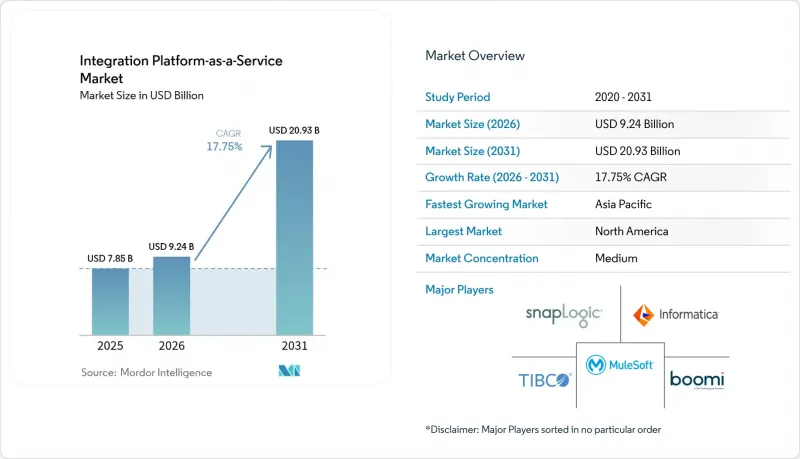
根據 Mordor Intelligence 預測,IPaaS(整合平台即服務)市場將從 2025 年的 78.5 億美元成長到 2026 年的 92.4 億美元,到 2031 年將達到 209.3 億美元,2026 年至 2031 年的複合成長率為 17.75%。
本報告按部署模式(公共雲端、混合雲端、其他)、最終用戶行業(銀行、金融服務和保險 (BFSI)、製造業、IT 和電信業、其他)、組織規模(大型企業和中小企業 (SME))、服務類型(應用整合、資料/ETL 整合、其他)以及地區進行細分。市場預測以美元 (USD) 為單位。
全球 IPaaS(整合平台即服務)市場趨勢與洞察
AI驅動的整合與GenAI設計助手
生成式人工智慧已整合到 MuleSoft 的 Einstein 和 SnapLogic 的 SnapGPT 等領先平台中,即使是非技術人員也能用簡單易懂的語言描述流程,從而將設計週期從數週縮短至數小時。 SnapGPT 的每月文件處理量預計在 2024 年將達到 4.7 兆,凸顯了工作負載的激增。雖然這些助手將對話工具直接整合到整合開發環境 (IDE) 中,但敏感資料在經過訓練模型時會面臨管治的挑戰。能夠平衡安全提示和企業策略控制的供應商將獲得明顯的優勢。
API 的激增和對「可組合企業」的需求
企業管理超過 400 個活躍的 API,並根據產品進行分類,以適應微服務和 SaaS 的採用。推動工廠數位轉型的製造商依靠物聯網感測器、ERP 和數位孿生模型之間的即時協調來維護預測性維護策略。 「可組合業務」設計在亞太工業中心尤為流行,該地區 75% 的服務業領導者計劃在 2025 年增加數位投資,從而推動了對整合編配和串流後台的需求。
由於超大規模資料中心業者中心「原生整合」的擴張而導致的蠶食
AWS AppFlow、Azure Logic Apps 和 Google Apigee Integration 都與核心雲端服務捆綁在一起,與獨立供應商相比,它們在價格和便利性方面更具優勢。擁有現有雲端合約的中型企業買家通常會選擇這些原生選項作為預設方案,尤其是當他們不需要標準連接器以外的高級功能時。獨立供應商則透過強調多重雲端功能、產業專用連接器和高級 AI編配來應對這項挑戰——這些功能超大規模資料中心業者尚未跟上的。
細分市場分析
公共雲端將繼續佔據 IPaaS(整合平台即服務)市場最大佔有率,到 2025 年將佔總收入的 70.35%。混合雲端雖然規模較小,但正迅速縮小差距,預計到 2031 年將以 27.35% 的複合年成長率成長,因為企業需要在雲端可擴展性和資料主權管理之間取得平衡。這種遷移模式與 GAIA-X 框架以及金融和醫療保健行業的監管規定相吻合,這些規定限制了將工作負載完全卸載到公共雲端。目前,獨立供應商提供預先建置的本地代理,這些代理可以複製公共雲端運行時環境,從而使受監管的工作負載能夠留在本地,同時參與共用的整合架構。
企業正擴大將包含高度敏感的個人識別資訊 (PII) 和商業機密的工作負載分配到私有核心,同時透過公共邊緣來編配客戶的服務事件流。歐洲電信營運商正在利用自主的 iPaaS 層安全地向開發人員開放 5G 網路 API,而日本汽車製造商則將生產線遙測資料鏡像到區域雲以進行高級分析。隨著這些混合策略的日趨成熟,公共雲端在 IPaaS(整合平台即服務)市場的主導地位正在逐漸縮小。
預計到2025年,銀行、金融和保險(BFSI)行業將佔據整合平台即服務(IPaaS)市場21.60%的佔有率,這主要得益於開放銀行API、即時支付和合規性報告的推動。同時,醫療保健和生命科學領域預計將實現最快成長,複合年成長率(CAGR)將達到29.95%,這主要得益於電子健康記錄(EHR)互通性、HL7 FHIR的強制實施以及遠距遠端醫療基礎設施的升級。醫療服務提供者需要臨床、計費和分析系統之間實現即時資料同步,以支援以價值為導向的醫療保健。
大規模醫院網路正在部署串流整合平台即服務 (iPaaS) 節點,以從連網設備收集生命徵象資料並將其輸入人工智慧診斷模型。製藥公司的研發團隊正在將實驗室資訊管理系統 (LIMS) 與分子模擬引擎整合,以縮短研發週期。銀行、金融和保險 (BFSI) 行業持續投資於安全訊息協議和詐欺預防事件流程,但由於醫療保健行業監管期限臨近,採購決策正在加速推進,導致對配備符合 HIPAA 標準的連接器的專用平台的支出增加。
區域分析
預計到2025年,北美市場佔有率將達到45.40%,這反映了企業對雲端服務的日益成長的需求以及整合平台即服務(iPaaS)供應商的高度集中。該地區的收入結構嚴重偏向人工智慧驅動的整合和多重雲端自動化,例如Salesforce在2025年5月以80億美元收購Informatica,此次收購整合了資料管理和工作流程編配。在金融和聯邦機構等注重合規性的產業,企業仍在檢驗自主擴展能力,以降低供應商鎖定風險。
亞太地區預計將成為成長最快的地區,到2031年複合年成長率將達到23.20%,這主要得益於政府的數位化服務項目以及「工業4.0」指南下製造業的根本性變革。亞洲開發銀行(亞銀)的「數位發展基金」為人工智慧和巨量資料平台提供技術支持,間接提升了對強大整合基礎設施的需求。日本和韓國的電子巨頭正在將智慧工廠孿生體與雲端分析連接起來,而東協的數位身分系統則依賴跨機構的API閘道器。在歐洲,機會與挑戰並存。 GAIA-X正在推動一個開放的、聯邦式的雲端生態系,但GDPR和正在進行的人工智慧立法延長了評估週期。在南美、中東和非洲,儘管目前的收入規模較小,但行動技術的快速普及和金融科技的現代化正在推動對雲端優先整合的需求。
其他好處
- Excel格式的市場預測(ME)表
- 3個月的分析師支持
目錄
第1章:引言
- 研究假設和市場定義
- 調查範圍
第2章:調查方法
第3章執行摘要
第4章 市場狀況
- 市場概覽
- 市場促進因素
- AI驅動的整合與GenAI設計助手
- API 的激增和對「可組合企業」的需求
- 事件流的興起和物聯網邊緣整合
- 低程式碼/無程式碼整合的普及
- CSP的iPaaS SKU市場捆綁銷售
- 推廣中小企業採用「按流量收費」制度。
- 市場限制因素
- 由於超大規模資料中心業者中心「原生整合」的擴張而導致的蠶食
- 對供應商鎖定和轉換成本的擔憂
- 與主權雲端/資料居住要求相關的合規性挑戰
- 新興市場一體化領域專業人才短缺
- 價值鏈分析
- 監理情勢
- 技術展望
- 波特五力分析
第5章 市場規模與成長預測
- 按部署模式
- 公共雲端
- 私有雲端
- 混合雲端
- 按最終用戶行業分類
- BFSI
- 零售與電子商務
- 醫療保健和生命科學
- 製造業
- 資訊科技/通訊
- 媒體與娛樂
- 按組織規模
- 大公司
- 中小企業
- 按服務類型
- 應用整合
- 數據/ETL整合
- API 和事件整合
- B2B/電子商務整合
- 按地區
- 北美洲
- 南美洲
- 歐洲
- 亞太地區
- 中東和非洲
第6章 競爭情勢
- 市場集中度
- 策略趨勢
- 市佔率分析
- 公司簡介
- Salesforce(MuleSoft)
- Boomi
- Informatica
- SAP
- Oracle
- IBM
- SnapLogic
- Workato
- Microsoft(Azure Logic Apps)
- Google(Apigee Integration)
- AWS(AppFlow)
- TIBCO
- Celigo
- Jitterbit
- Talend
- Fivetran
- Tray.io
- Adeptia
- ONEiO
第7章 市場機會與未來展望
According to Mordor Intelligence, the integration platform-as-a-Service market size is expected to grow from USD 7.85 billion in 2025 to USD 9.24 billion in 2026 and is forecast to reach USD 20.93 billion by 2031 at 17.75% CAGR over 2026-2031.
This report is Segmented by Deployment Mode (Public Cloud, Hybrid Cloud, and More), End-User Vertical (BFSI, Manufacturing, IT and Telecom, and More), Organization Size (Large Enterprises and Small and Mid-Size Enterprises (SME)), Service Type (Application Integration, Data / ETL Integration, and More), and Geography. The Market Forecasts are Provided in Terms of Value (USD).
Global Integration Platform-as-a-Service Market Trends and Insights
AI-augmented integration and GenAI design assistants
Generative AI inside leading platforms such as MuleSoft's Einstein and SnapLogic's SnapGPT lets non-technical staff specify flows in plain language, trimming design cycles from weeks to hours. Monthly document throughput on SnapGPT reached 4.7 trillion in 2024, underscoring surging workload volumes. These assistants bring conversational tooling directly into IDEs, yet also raise governance questions whenever sensitive data travels through learning models. Providers able to marry secure prompts with enterprise policy controls gain a clear edge.
API-sprawl and "composable enterprise" mandates
Enterprises manage 400+ active APIs, a side-effect of microservices and SaaS adoption. Manufacturers digitising factories rely on real-time links between IoT sensors, ERP and digital-twin models to sustain predictive maintenance strategies. Composable business design, especially popular across APAC industrial hubs where 75% of service leaders plan extra digital spend in 2025, drives appetite for unified orchestration and streaming backplanes.
Growing hyperscale native-integration cannibalization
AWS AppFlow, Azure Logic Apps, and Google Apigee Integration come bundled with core cloud services, undercutting standalone vendors on price and convenience. Mid-market buyers with existing cloud commitments often default to these native options, especially where feature depth beyond standard connectors is unnecessary. Independent vendors counter by emphasizing multi-cloud reach, industry-specific connectors, and advanced AI orchestration that hyperscalers do not yet match.
Other drivers and restraints analyzed in the detailed report include:
- Rise of event-stream and IoT edge integrations
- Low-/no-code integration democratization
- Vendor lock-in and switching-cost anxiety
For complete list of drivers and restraints, kindly check the Table Of Contents.
Segment Analysis
Public Cloud retains the largest slice of the Integration Platform-as-a-Service market size at a 70.35% revenue contribution in 2025. Hybrid Cloud, though smaller, is cutting the gap at a rapid 27.35% CAGR to 2031 as firms reconcile cloud elasticity with sovereign data controls. This migration pattern correlates with GAIA-X frameworks and sector rules in finance and healthcare that restrict full public-cloud offload. Independent providers now position pre-engineered on-prem agents that mirror public-cloud runtimes, letting regulated workloads participate in shared integration fabrics while remaining in the country.
Enterprises increasingly allocate sensitive PII or trade-secret workloads to private cores yet orchestrate event streams across public edges for customer-facing services. European telcos use sovereign iPaaS layers to expose 5G network APIs safely to developers, while Japanese automakers mirror production-line telemetry into regional clouds for advanced analytics. The Integration Platform-as-a-Service market share advantage of Public Cloud narrows as these hybrid playbooks mature.
BFSI captured 21.60% of Integration Platform-as-a-Service market share in 2025, powered by open-banking APIs, real-time payments and compliance reporting. Healthcare and Life Sciences, meanwhile, charts the steepest growth at 29.95% CAGR on the back of EHR interoperability, HL7 FHIR mandates and telehealth infrastructure upgrades. Providers need instant data synchronization between clinical, claims and analytics systems to support value-based care.
Large hospital networks deploy streaming iPaaS nodes to collect vitals from connected devices and feed AI diagnostic models. Pharmaceutical R&D teams integrate LIMS with molecular simulation engines to cut cycle times. BFSI continues to invest in secure message protocols and anti-fraud event flows, yet regulatory deadlines in healthcare accelerate procurement decisions, tilting incremental spending toward specialized platforms with HIPAA-grade connectors.
Complete Report Scope:
- By Deployment Model
- Public Cloud
- Private Cloud
- Hybrid Cloud
- By End-user Vertical
- BFSI
- Retail and E-commerce
- Healthcare and Life Sciences
- Manufacturing
- IT and Telecom
- Media and Entertainment
- By Organisation Size
- Large Enterprises
- Small and Mid-size Enterprises (SME)
- By Service Type
- Application Integration
- Data / ETL Integration
- API and Event Integration
- B2B / E-commerce Integration
- By Geography
- North America
- South America
- Europe
- Asia-Pacific
- Middle East and Africa
Geography Analysis
North America's 45.40% revenue share in 2025 reflects entrenched enterprise cloud adoption and a dense concentration of iPaaS vendors. The region's revenue mix tilts toward AI-augmented integration and multi-cloud automation, illustrated by Salesforce's USD 8 billion Informatica acquisition in May 2025 that fused data management with workflow orchestration. Compliance-focused sectors such as finance and federal agencies still test sovereign extensions to mitigate lock-in risk.
APAC grows fastest at 23.20% CAGR through 2031, propelled by government digital-service programs and manufacturing overhauls under Industry 4.0 charters. The Asian Development Bank's Digital Development Facility funnels technical assistance into AI and big-data platforms, indirectly raising demand for robust integration backbones. Japanese and Korean electronics giants connect smart-factory twins to cloud analytics, while ASEAN digital-ID schemes hinge on cross-agency API gateways. Europe balances opportunity and constraint: GAIA-X pushes open, federated cloud ecosystems, yet GDPR and pending AI laws prolong evaluation cycles. South America, Middle East and Africa currently register smaller revenues but show growing appetite for cloud-first integration where mobile adoption and fintech modernization are rapid.
- Salesforce (MuleSoft)
- Boomi
- Informatica
- SAP
- Oracle
- IBM
- SnapLogic
- Workato
- Microsoft (Azure Logic Apps)
- Google (Apigee Integration)
- AWS (AppFlow)
- TIBCO
- Celigo
- Jitterbit
- Talend
- Fivetran
- Tray.io
- Adeptia
- ONEiO
Additional Benefits:
- The market estimate (ME) sheet in Excel format
- 3 months of analyst support
TABLE OF CONTENTS
1 INTRODUCTION
- 1.1 Study Assumptions and Market Definition
- 1.2 Scope of the Study
2 RESEARCH METHODOLOGY
3 EXECUTIVE SUMMARY
4 MARKET LANDSCAPE
- 4.1 Market Overview
- 4.2 Market Drivers
- 4.2.1 AI-augmented integration and GenAI design assistants
- 4.2.2 API-sprawl and "composable enterprise" mandates
- 4.2.3 Rise of event-stream and IoT edge integrations
- 4.2.4 Low-/no-code integration democratisation
- 4.2.5 CSPs' marketplace bundling of iPaaS SKUs
- 4.2.6 Pay-per-flow pricing unlocking SME adoption
- 4.3 Market Restraints
- 4.3.1 Growing hyperscaler "native-integration" cannibalisation
- 4.3.2 Vendor lock-in and switching-cost anxiety
- 4.3.3 Sovereign-cloud / data-residency compliance hurdles
- 4.3.4 Scarcity of integration-literate talent in emerging markets
- 4.4 Value Chain Analysis
- 4.5 Regulatory Landscape
- 4.6 Technological Outlook
- 4.7 Porter's Five Forces Analysis
- 4.7.1 Threat of New Entrants
- 4.7.2 Bargaining Power of Buyers
- 4.7.3 Bargaining Power of Suppliers
- 4.7.4 Threat of Substitutes
- 4.7.5 Competitive Rivalry
5 MARKET SIZE AND GROWTH FORECASTS (VALUE)
- 5.1 By Deployment Model
- 5.1.1 Public Cloud
- 5.1.2 Private Cloud
- 5.1.3 Hybrid Cloud
- 5.2 By End-user Vertical
- 5.2.1 BFSI
- 5.2.2 Retail and E-commerce
- 5.2.3 Healthcare and Life Sciences
- 5.2.4 Manufacturing
- 5.2.5 IT and Telecom
- 5.2.6 Media and Entertainment
- 5.3 By Organisation Size
- 5.3.1 Large Enterprises
- 5.3.2 Small and Mid-size Enterprises (SME)
- 5.4 By Service Type
- 5.4.1 Application Integration
- 5.4.2 Data / ETL Integration
- 5.4.3 API and Event Integration
- 5.4.4 B2B / E-commerce Integration
- 5.5 By Geography
- 5.5.1 North America
- 5.5.2 South America
- 5.5.3 Europe
- 5.5.4 Asia-Pacific
- 5.5.5 Middle East and Africa
6 COMPETITIVE LANDSCAPE
- 6.1 Market Concentration
- 6.2 Strategic Moves
- 6.3 Market Share Analysis
- 6.4 Company Profiles {(includes Global level Overview, Market level overview, Core Segments, Financials as available, Strategic Information, Market Rank/Share for key companies, Products and Services, and Recent Developments)}
- 6.4.1 Salesforce (MuleSoft)
- 6.4.2 Boomi
- 6.4.3 Informatica
- 6.4.4 SAP
- 6.4.5 Oracle
- 6.4.6 IBM
- 6.4.7 SnapLogic
- 6.4.8 Workato
- 6.4.9 Microsoft (Azure Logic Apps)
- 6.4.10 Google (Apigee Integration)
- 6.4.11 AWS (AppFlow)
- 6.4.12 TIBCO
- 6.4.13 Celigo
- 6.4.14 Jitterbit
- 6.4.15 Talend
- 6.4.16 Fivetran
- 6.4.17 Tray.io
- 6.4.18 Adeptia
- 6.4.19 ONEiO
7 MARKET OPPORTUNITIES AND FUTURE OUTLOOK
- 7.1 White-space and Unmet-need Assessment

 全球平台即服務 (iPaaS) 市場規模、佔有率、趨勢和成長分析報告,2026-2034 年
 2026-2030年全球整合平台即服務(IPaaS)市場
 整合平台即服務 (iPaaS) 市場:2026-2032 年全球市場預測(按整合類型、組織規模、服務類型、技術類型、部署模式和最終用途分類)
 整合平台即服務 (iPaaS) 市場規模、佔有率和趨勢分析報告:按服務、部署類型、企業規模、最終用途、地區和細分市場預測 (2026–2033)
 iPaaS(整合平台即服務)市場分析及至 2035 年預測:類型、產品、服務、技術、組件、應用、部署、最終用戶、功能、解決方案
 2026年全球平台即服務(iPaaS)市場報告2026年全球整合平台即服務市場報告整合平台即服務市場-2026-2031年預測
 整合平台即服務市場-全球產業規模、佔有率、趨勢、機會及預測(依服務類型、部署方式、垂直產業、地區及競爭格局分類,2021-2031年)
 整合平台即服務 (iPaaS) 市場規模、佔有率和成長分析(按部署類型、服務類型、公司規模、行業和地區分類)—2026-2033 年行業預測