


 |
市場調查報告書
商品編碼
2124354
歐洲挖掘機和裝載機:市場佔有率分析、行業趨勢和統計數據以及成長預測(2026-2031 年)Europe Excavator And Loaders - Market Share Analysis, Industry Trends & Statistics, Growth Forecasts (2026 - 2031) |
||||||

※ 本網頁內容可能與最新版本有所差異。詳細情況請與我們聯繫。
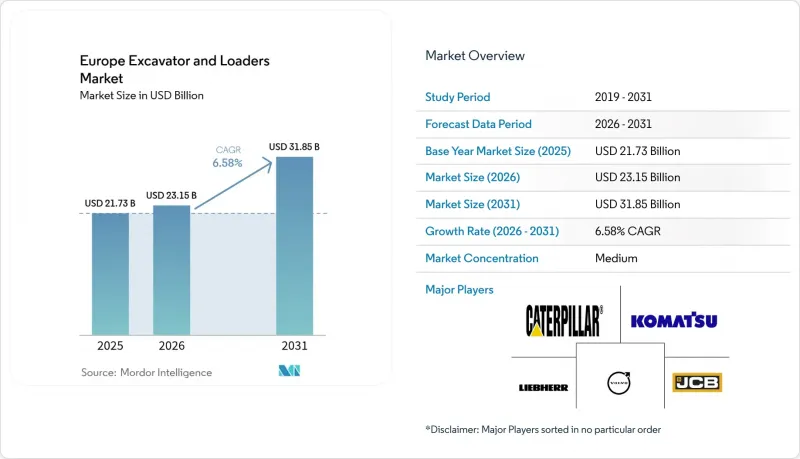
根據 Mordor Intelligence 預測,歐洲挖掘裝載機市場規模預計將在 2025 年達到 217.3 億美元,2026 年達到 231.5 億美元,到 2031 年達到 318.5 億美元,2026 年至 2031 年的複合年成長率為 6.58%。
本報告按機器類型(挖土機、裝載機)、驅動系統(柴油/液壓、電動、其他)、運作重量(6噸以下、其他)、最終用途行業(建築、採礦、其他)、應用(挖掘、物料輸送、其他)和地區細分。市場預測以價值(美元)和數量(台)表示。
歐洲挖掘機和裝載機市場的趨勢和洞察
第五階段排放氣體法規將加速設備升級。
在歐洲施工機械市場,第五階段排放氣體法規正在加速車隊現代化,尤其是挖土機和裝載機。由於加裝先進廢氣後處理系統成本高昂,許多業者,特別是中小型承包商,不得不提前更換老舊設備。同時,由於德國的稅收優惠和永續性法規,電動驅動系統無需維修廢氣處理系統,因此發展勢頭強勁。這種市場環境的變化不僅迫使企業調整籌資策略,也推動了租賃和認證二手車專案的擴張。此外,這也加速了原始設備製造商(OEM)在電氣化、混合動力和尖端電池技術方面的投資。
歐盟綠色交易導致基礎設施資金籌措激增。
在「連接歐洲基金」(CEF)框架下,未來幾年交通和能源走廊預計將獲得大量投資。這波投資熱潮有望提振對中型挖土機和輪式裝載機的需求。尤其值得一提的是,德國和法國已確定了一些項目,這些項目需要在未來五年內大幅增加施工機械的使用。此外,零排放資產折舊速度加快將顯著縮短租賃週期,從而推動歐洲挖土機和裝載機市場設備升級換代提前的趨勢。
高利率抑制了資本投資。
在歐洲,高利率抑制了施工機械市場的投資,尤其是挖土機和裝載機。歐洲中央銀行(ECB)的貨幣緊縮措施提高了建築公司的資金籌措成本,使得直接購買的吸引力下降。因此,許多建築公司要么延長貸款期限以減輕還款負擔,要么選擇對現有機械進行中期翻新以延長其使用壽命。這種謹慎的策略不僅減緩了機械更換週期,降低了對新設備的需求,而且還促使企業更加重視維護策略,並改變融資習慣,直到借貸成本更加有利為止。
細分市場分析
預計到2025年,歐洲挖掘裝載機市佔率將達到高峰55.71%。 6噸以下的迷你挖土機成長最快,其零尾迴轉設計使其能夠進入狹窄的行人區域,因此備受青睞。 6至14噸的中型挖土機佔據了該細分市場的大部分銷售佔有率,是地基工程和溝槽挖掘的關鍵設備。裝載機緊隨其後,保持著6.55%的成長率,因為輪式裝載機在骨材廠仍然必不可少。滑移裝載機和小型履帶裝載機分別在建築內部拆除和軟土地面農業領域擴大了市場佔有率,這反映了歐洲挖掘裝載機市場需求的多元化。
隨著專用小型挖土機和加長型堆高機的日益普及,後鏟式裝載機後鏟式裝載機的市佔率正在下降。同時,小型鉸接式裝載機在市政除雪作業中的市佔率正在擴大。附件的多功能性——例如可在90秒內完成工具更換的快速連接器——提高了設備的運轉率,並幫助原始設備製造商(OEM)在歐洲挖掘機和裝載機市場獲得業務收益。
儘管柴油和油壓設備目前佔據88.15%的市場佔有率,但隨著電動設備出貨量以6.66%的複合年成長率成長(直至2031年),它們的統治地位正在減弱。預計到2031年,電動設備在歐洲挖土機和裝載機市場的佔有率將進一步擴大,這主要得益於其充電成本低於柴油設備,尤其適用於運作時間較長的車輛。在充電基礎設施不足的地區,混合動力系統正日益受到關注。
氫燃料電池試點系統的數量仍不足20套,儘管其長期發展潛力巨大,但預計到2031年銷售量仍將非常低。在挪威電網接入穩定的水力發電廠,電纜連接的挖掘機被廣泛使用。生物柴油燃料混合物有助於符合監管要求,但未經原始設備製造商 (OEM) 批准,保固將失效,這促使許多建築公司直接轉向電池驅動系統,這對歐洲挖掘機和裝載機市場而言是一個戰略轉折點。
其他好處
- Excel格式的市場預測(ME)表
- 3個月的分析師支持
目錄
第1章:引言
- 研究假設和市場定義
- 調查範圍
第2章:調查方法
第3章執行摘要
第4章 市場狀況
- 市場概覽
- 市場促進因素
- 第五階段排放氣體法規將加速設備升級。
- 歐盟綠色交易導致基礎設施資金籌措激增。
- 疫情後如何解決建築訂單積壓問題
- 斯堪地那維亞的強制性零排放場所
- 設備即服務 (EaaS)經營模式
- 在建築工地廣泛採用數位孿生技術實現自動化。
- 市場限制因素
- 高利率抑制了資本投資。
- 租賃車輛的增加抑制了購買力。
- 電池材料成本波動
- 經銷商網路的整合阻礙了新進入者。
- 價值供應鏈分析
- 監理情勢
- 技術展望
- 波特五力模型
第5章 市場規模與成長預測
- 按機器類型
- 挖土機
- 小型(6噸以下)
- 中型(6-14噸)
- 爬行型
- 輪型
- 水陸兩用
- 大型(超過45噸)
- 裝載機
- 輪式裝載機
- 滑移裝載機
- 小型履帶裝載機
- 後鏟式裝載機
- 小型鉸接式裝載機
- 挖土機
- 透過驅動系統
- 柴油/液壓
- 電的
- 混合
- 氫燃料電池(新興產業)
- 電纜網格繫繩類型
- 按運作重量
- 不到6噸
- 6~14t
- 14~30t
- 30~45t
- 超過45噸
- 按最終用途行業分類
- 建造
- 採礦和採石
- 農業和林業
- 廢棄物和回收
- 公共產業與城市基礎設施
- 租賃公司
- 透過使用
- 挖土和土方工程
- 物料輸送
- 拆除
- 景觀設計
- 除雪
- 道路建設/維護管理
- 國家
- 德國
- 英國
- 法國
- 義大利
- 西班牙
- 荷蘭
- 瑞典
- 挪威
- 其他歐洲國家
第6章 競爭情勢
- 市場集中度
- 策略趨勢
- 市佔率分析
- 公司簡介
- Caterpillar Inc.
- Komatsu Ltd.
- Volvo Construction Equipment
- CNH Industrial NV(CASE and New Holland)
- Deere and Company
- Hitachi Construction Machinery
- Liebherr-International Deutschland GmbH
- Doosan Bobcat Co.
- Kobelco Construction Machinery
- Manitou BF SA
- Yanmar Construction Equipment
- JCB Ltd.
- Kubota Corp.
- Sany Europe
- XCMG Europe
- Wacker Neuson SE
- Hyundai Construction Equipment Europe
- Mecalac SAS
- Wirtgen Group(John Deere)
- Avant Tecno Oy
第7章 市場機會與未來展望
According to Mordor Intelligence, the Europe excavator and loaders market size is projected to be USD 21.73 billion in 2025, USD 23.15 billion in 2026, and reach USD 31.85 billion by 2031, growing at a CAGR of 6.58% from 2026 to 2031.
This report is Segmented by Machinery Type (Excavators and Loaders), Drive Type (Diesel/Hydraulic, Electric, and More), Operating Weight (Below 6t and More), End-Use (Construction, Mining, and More), Application (Excavation, Material Handling, and More), and Geography. The Market Forecasts in Value (USD) and Volume (Units).
Europe Excavator And Loaders Market Trends and Insights
Stage V Emission Norms Driving Fleet Renewal
In Europe's construction equipment market, Stage V emission norms are accelerating fleet renewal, particularly for excavators and loaders. Many operators, especially small- and mid-sized contractors, are trading in their older machines sooner than anticipated due to the steep costs of retrofitting them with advanced after-treatment systems. Meanwhile, electric drivetrains are gaining momentum, sidestepping retrofit costs, thanks to Germany's tax incentives and sustainability mandates. This evolving landscape is not only reshaping procurement strategies but also amplifying leasing and certified pre-owned programs. Furthermore, it's spurring original equipment manufacturers (OEMs) to ramp up investments in electrification, hybridization, and cutting-edge battery technologies.
EU Green Deal Infrastructure Funding Boom
Under the Connecting Europe Facility, substantial funding is set to flow into transport and energy corridors over the next few years. This surge in investment is poised to boost the demand for mid-size excavators and wheel loaders. Notably, Germany and France have identified projects that will necessitate a significant increase in machinery during the latter part of the decade. Furthermore, with accelerated depreciation for zero-emission assets, rental cycles have shortened considerably, leading to a trend of early replacements in the European excavators and loaders market.
High Interest-Rate Environment Dampening CAPEX
Across Europe, high interest rates are curbing capital expenditure in the construction equipment market, especially for excavators and loaders. Due to the European Central Bank's tight monetary policy, contractors face higher financing costs, making outright purchases less appealing. As a result, many contractors are either extending loan tenors to alleviate repayment pressures or choosing mid-life overhauls to prolong the service life of their current fleets. This prudent strategy not only decelerates the equipment refresh cycle and diminishes demand for new machinery but also strengthens the focus on maintenance strategies, altering procurement habits until borrowing costs become more favorable.
Other drivers and restraints analyzed in the detailed report include:
- Post-Pandemic Construction Backlog Release
- Zero-Emission Site Mandates in Scandinavia
- Growth of Rental Fleets Suppressing Purchases
For complete list of drivers and restraints, kindly check the Table Of Contents.
Segment Analysis
Europe's excavator and loader market size peaked at 55.71% in 2025. Mini excavators below 6 tonnes post the fastest gains, favored by zero-tail-swing designs that slip into tight pedestrian zones. Midi units between 6 and 14 tonnes hold significant weight-segment revenue and anchor foundation and trenching needs. Loaders trail but still grow at 6.55% as wheel loaders remain indispensable at aggregate plants. Skid-steer and compact track loaders win share inside interior demolition and soft-ground agriculture, respectively, reflecting diversified pull on the European excavators & loaders market.
Replacement of backhoe loaders with dedicated mini excavators and telehandlers continues, shrinking the backhoe portion. At the same time, small articulated loaders carve out space in municipal snow removal. Attachment versatility-quick couplers that allow tool swaps in 90 seconds-elevates utilization, helping OEMs lock in service revenue in the European excavators & loaders market.
Diesel and hydraulic equipment account for 88.15% of the market share, yet their grip is easing as electric shipments expand at a 6.66% CAGR through 2031. Europe excavators & loaders market share for electric machines will climb by 2031 on the back of charging costs undercutting diesel on high-hour fleets. Hybrid drivetrains appeal where charging is scarce.
Hydrogen fuel-cell pilots remain below 20 units, signaling long-term optionality but negligible volume before 2031. Cable-tethered excavators thrive in Norway's hydropower dams, where grid access is stable. Biodiesel blends ease compliance but void warranties unless OEM-approved, leaving many contractors to leapfrog straight to battery power, a strategic inflection for the European excavators & loaders market.
Complete Report Scope:
- By Machinery Type
- Excavators
- Mini (Below 6 t)
- Midi (6 to 14 t)
- Crawler
- Wheeled
- Amphibious
- Large (Above 45 t)
- Loaders
- Wheel Loader
- Skid Steer Loader
- Compact Track Loader
- Backhoe Loader
- Small Articulated Loader
- Excavators
- By Drive Type
- Diesel / Hydraulic
- Electric
- Hybrid
- Hydrogen Fuel-Cell (emerging)
- Cable / Grid-tethered
- By Operating Weight (t)
- Below 6
- 6 to 14
- 14 to 30
- 30 to 45
- Above 45
- By End-Use Industry
- Construction
- Mining and Quarrying
- Agriculture and Forestry
- Waste and Recycling
- Utilities and Urban Infrastructure
- Rental Companies
- By Application
- Excavation and Earthmoving
- Material Handling
- Demolition
- Landscaping
- Snow Removal
- Road Building and Maintenance
- By Country
- Germany
- United Kingdom
- France
- Italy
- Spain
- Netherlands
- Sweden
- Norway
- Rest of Europe
List of Companies Covered in this Report:
- Caterpillar Inc.
- Komatsu Ltd.
- Volvo Construction Equipment
- CNH Industrial N.V. (CASE and New Holland)
- Deere and Company
- Hitachi Construction Machinery
- Liebherr-International Deutschland GmbH
- Doosan Bobcat Co.
- Kobelco Construction Machinery
- Manitou BF SA
- Yanmar Construction Equipment
- JCB Ltd.
- Kubota Corp.
- Sany Europe
- XCMG Europe
- Wacker Neuson SE
- Hyundai Construction Equipment Europe
- Mecalac SAS
- Wirtgen Group (John Deere)
- Avant Tecno Oy
Additional Benefits:
- The market estimate (ME) sheet in Excel format
- 3 months of analyst support
TABLE OF CONTENTS
1 Introduction
- 1.1 Study Assumptions & Market Definition
- 1.2 Scope of the Study
2 Research Methodology
3 Executive Summary
4 Market Landscape
- 4.1 Market Overview
- 4.2 Market Drivers
- 4.2.1 Stage V Emission Norms Driving Fleet Renewal
- 4.2.2 EU Green-Deal Infrastructure Funding Boom
- 4.2.3 Post-Pandemic Construction Backlog Release
- 4.2.4 Zero-Emission Site Mandates in Scandinavia
- 4.2.5 Equipment-as-a-Service Business Models
- 4.2.6 Digital-Twin Job-Site Automation Uptake
- 4.3 Market Restraints
- 4.3.1 High Interest-Rate Environment Dampening CAPEX
- 4.3.2 Growth of Rental Fleets Suppressing Purchases
- 4.3.3 Battery-Material Cost Volatility
- 4.3.4 Dealer-Network Consolidation Blocking New Entrants
- 4.4 Value / Supply-Chain Analysis
- 4.5 Regulatory Landscape
- 4.6 Technological Outlook
- 4.7 Porter's Five Forces
- 4.7.1 Threat of New Entrants
- 4.7.2 Bargaining Power of Suppliers
- 4.7.3 Bargaining Power of Buyers
- 4.7.4 Threat of Substitutes
- 4.7.5 Competitive Rivalry
5 Market Size & Growth Forecasts (Value (USD) and Volume (Units))
- 5.1 By Machinery Type
- 5.1.1 Excavators
- 5.1.1.1 Mini (Below 6 t)
- 5.1.1.2 Midi (6 to 14 t)
- 5.1.1.3 Crawler
- 5.1.1.4 Wheeled
- 5.1.1.5 Amphibious
- 5.1.1.6 Large (Above 45 t)
- 5.1.2 Loaders
- 5.1.2.1 Wheel Loader
- 5.1.2.2 Skid Steer Loader
- 5.1.2.3 Compact Track Loader
- 5.1.2.4 Backhoe Loader
- 5.1.2.5 Small Articulated Loader
- 5.1.1 Excavators
- 5.2 By Drive Type
- 5.2.1 Diesel / Hydraulic
- 5.2.2 Electric
- 5.2.3 Hybrid
- 5.2.4 Hydrogen Fuel-Cell (emerging)
- 5.2.5 Cable / Grid-tethered
- 5.3 By Operating Weight (t)
- 5.3.1 Below 6
- 5.3.2 6 to 14
- 5.3.3 14 to 30
- 5.3.4 30 to 45
- 5.3.5 Above 45
- 5.4 By End-Use Industry
- 5.4.1 Construction
- 5.4.2 Mining and Quarrying
- 5.4.3 Agriculture and Forestry
- 5.4.4 Waste and Recycling
- 5.4.5 Utilities and Urban Infrastructure
- 5.4.6 Rental Companies
- 5.5 By Application
- 5.5.1 Excavation and Earthmoving
- 5.5.2 Material Handling
- 5.5.3 Demolition
- 5.5.4 Landscaping
- 5.5.5 Snow Removal
- 5.5.6 Road Building and Maintenance
- 5.6 By Country
- 5.6.1 Germany
- 5.6.2 United Kingdom
- 5.6.3 France
- 5.6.4 Italy
- 5.6.5 Spain
- 5.6.6 Netherlands
- 5.6.7 Sweden
- 5.6.8 Norway
- 5.6.9 Rest of Europe
6 Competitive Landscape
- 6.1 Market Concentration
- 6.2 Strategic Moves
- 6.3 Market Share Analysis
- 6.4 Company Profiles (includes Global Level Overview, Market Level Overview, Core Segments, Financials as Available, Strategic Information, Market Rank/Share for Key Companies, Products and Services, SWOT Analysis, and Recent Developments)
- 6.4.1 Caterpillar Inc.
- 6.4.2 Komatsu Ltd.
- 6.4.3 Volvo Construction Equipment
- 6.4.4 CNH Industrial N.V. (CASE and New Holland)
- 6.4.5 Deere and Company
- 6.4.6 Hitachi Construction Machinery
- 6.4.7 Liebherr-International Deutschland GmbH
- 6.4.8 Doosan Bobcat Co.
- 6.4.9 Kobelco Construction Machinery
- 6.4.10 Manitou BF SA
- 6.4.11 Yanmar Construction Equipment
- 6.4.12 JCB Ltd.
- 6.4.13 Kubota Corp.
- 6.4.14 Sany Europe
- 6.4.15 XCMG Europe
- 6.4.16 Wacker Neuson SE
- 6.4.17 Hyundai Construction Equipment Europe
- 6.4.18 Mecalac SAS
- 6.4.19 Wirtgen Group (John Deere)
- 6.4.20 Avant Tecno Oy
7 Market Opportunities & Future Outlook
- 7.1 White-space & unmet-need assessment

 吸力挖掘機市場分析及預測(至2035年):依類型、產品、服務、技術、應用、最終用戶、設備、解決方案、模式分類
 全球混合動力挖土機市場規模、佔有率、趨勢和成長分析報告(2026-2034年)
 兩棲挖土機市場:商機、成長要素、產業趨勢分析及2026-2035年預測
 2026年全球車載挖土機市場報告全球挖土機附件市場:市場規模、佔有率、趨勢和成長分析(2026-2034)
 拉鏟挖土機市場規模、佔有率和成長分析:按推進/移動方式、鏟鬥容量、最終用途產業、銷售管道和地區分類-2026-2033年產業預測混合動力挖土機市場規模、佔有率、成長、全球產業分析、區域趨勢及2026年至2034年預測
 挖掘機附件市場規模、佔有率和趨勢分析報告:按材料和細分市場分類,預測(2026-2033 年)
 液壓挖土機市場規模、佔有率、趨勢和預測:按產品類型、驅動系統、功率範圍、應用和地區分類,2026-2034年
 兩棲挖土機市場:按類型、應用和地區分類