


 |
市場調查報告書
商品編碼
2123443
美國汽車售後市場零件:市場佔有率分析、產業趨勢與統計及成長預測(2026-2031 年)United States Aftermarket Automotive Parts And Components - Market Share Analysis, Industry Trends & Statistics, Growth Forecasts (2026 - 2031) |
||||||

※ 本網頁內容可能與最新版本有所差異。詳細情況請與我們聯繫。
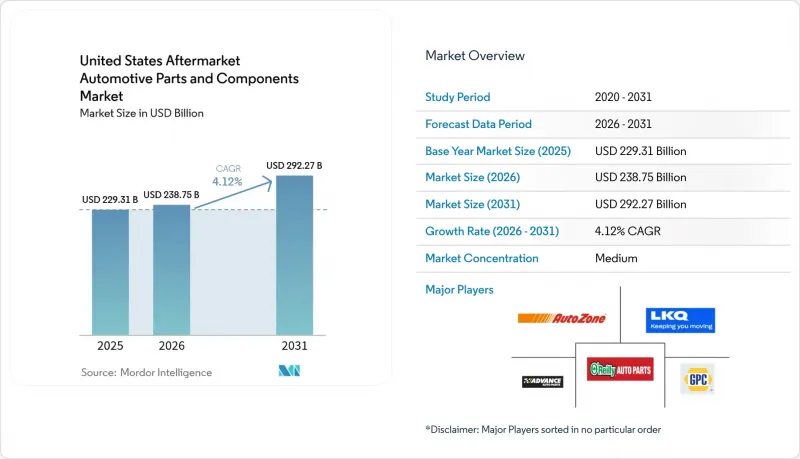
根據 Mordor Intelligence 預測,美國汽車售後市場零件市場規模將從 2025 年的 2,293.1 億美元成長到 2026 年的 2,387.5 億美元,然後在 2031 年達到 2922.7 億美元,2026 年至 2031 年的複合年成長率為 4.12%。
本報告按車輛類型(乘用車、輕型商用車等)、零件(引擎零件、變速箱和傳動系統等)、銷售管道(線上和線下)、動力類型(內燃機車輛等)以及服務管道(DIY、DIFM 獨立維修廠等)進行分類。市場預測以美元計價。
美國汽車售後市場零件市場的趨勢與洞見。
大型SUV和皮卡車的普及帶動了易損件的銷售。
輕型卡車預計將主導汽車市場,預計到2027年將佔據新車銷售的相當大佔有率。這些堅固耐用的車輛,由於其獨特的性能和需求,其售後市場支出高於傳統乘用車。構成這些卡車的各個部件——懸吊、煞車系統和傳動系統部件——必須能夠承受相當大的負荷,因為它們需要牽引和承載重物。
隨著越野旅行、拖車旅行和戶外探險等生活方式的日益流行,對性能提升改裝的需求也隨之成長。愛好者們正在尋找升高套件、重型減震器和超大尺寸輪胎,以改善駕駛體驗並應對崎嶇地形。專為皮卡車設計的專用設備市場規模已高達每年160億美元,製造商也紛紛為這些多功能車輛開發專屬產品線。
輕型卡車車主往往熱衷於改裝,因此,升級配件的平均交易額通常高於標準替換零件。這種趨勢不僅提升了卡車的外觀和功能,也提高了整個汽車售後市場零件產業的利潤率,顯示這是一個蓬勃發展且潛力無限的市場。
電子商務的廣泛普及加速了長尾SKU的出現。
目前,絕大多數汽車後市場交易都透過動態的數位管道進行,其滲透率遠遠超過美國零售電商的滲透率。這一顯著轉變使得網路商店能夠處理特殊SKU,而無需承擔傳統實體批發商面臨的庫存管理負擔。因此,全國各地都能輕鬆提供難以找到的老式車款零件,滿足愛好者和收藏家的需求。代出貨物流和即時庫存數據縮短了DIY愛好者和小規模維修店的前置作業時間,並將市場主導權轉移到了精通數位技術的供應商手中。然而,仿冒品的湧入仍然是一個嚴重的風險,聯邦執法措施凸顯了品牌保護計畫的重要性。那些將強大的真偽驗證技術與方便用戶使用介面相結合的公司,正在不斷擴大的數位後市場中佔據主導地位。
ADAS減少了與碰撞相關的零件的銷售量。
自動緊急煞車和車道維持系統的普及性降低了事故率,導致對保險桿、擋泥板和車燈的需求下降。碰撞頻率的下降在最新的豪華車型中最為顯著,這些車型的ADAS普及率最高,從而導致外部零件銷量下滑。為了彌補這一損失,由於需要進行感測器校準和更長的工時,配備ADAS的車輛維修成本不斷上漲。損壞的攝影機和雷達模組的更換推動了專用電子產品細分市場的成長。碰撞維修中心正在提陞技術能力並投資先進的掃描工具,這有利於提供原廠級感測器和校準夾具的零件供應商。
細分市場分析
到2025年,乘用車憑藉其廣泛的市場部署,將占美國汽車售後零件市場總銷售額的52.74%。然而,商用輕型卡車預計將以7.05%的複合年成長率成長,隨著小包裹遞送和服務車輛日行駛里程的增加,其在汽車售後零件市場規模中的佔比預計將進一步擴大。嚴苛的運作週期和嚴格的運轉率要求,導致煞車總成、傳動系統接頭和冷卻零件的更換頻率不斷增加。車隊營運商的採購慣例優先考慮那些能夠保證快速供貨和高效保固流程的供應商,這促使零件製造商轉向倉庫級庫存管理和預測性訂單履約系統。
儘管中型和重型卡車的銷量較小,但其零件成本高且停機損失巨大,因此具有很高的經濟價值。美國環保署 (EPA) 2027 年的排放氣體法規鼓勵消費者領先購買重型卡車,並在售後市場加裝選擇性催化還原 (SCR) 系統和顆粒過濾器,從而暫時提振了市場需求。本次預測中新分類的客車和長途客車市場,為專注於高容量溫度控管和懸吊產品的供應商帶來了意想不到的商機。乘用車市場仍然重要,但隨著家庭對混合動力出行時代是否需要多輛車產生質疑,乘用車銷量成長停滯。另一方面,車隊用車市場似乎正處於成長軌道上,這與物流業的擴張密切相關。
預計到2025年,引擎零件將維持在美國汽車售後市場零件市場31.45%的佔有率,反映出內燃機(ICE)的持續主導地位。然而,ADAS感測器預計將以7.52%的複合年成長率成長,顯示價值重心正從機械零件轉向電子零件。相機模組、雷達單元和控制ECU在輕微碰撞或環境污染物的影響下經常發生故障,從而形成高利潤的更換週期。大陸集團在2024年推出700個新的引擎管理SKU,顯示供應商採取了雙管齊下的策略,即在保持其在機械領域優勢的同時,擴展其電子產品組合。
在懸吊、煞車和輪胎領域,大型SUV和皮卡的需求持續成長。隨著駕駛員對互聯升級和OTA功能的需求增加,電氣系統和資訊娛樂細分市場正在擴張,售後硬體和軟體服務之間的界線也變得模糊。車身和外觀部件的情況則較為複雜。雖然ADAS降低了碰撞事故的發生率,但個人化文化和區域氣候造成的損害仍然維持著基本的需求。隨著獨立維修店不斷提升自身設備以維修複雜的軟體主導車輛系統,對工具、診斷設備和維修耗材的需求也不斷成長。
其他好處:
- Excel格式的市場預測(ME)表
- 3個月的分析師支持
目錄
第1章:引言
- 研究假設和市場定義
- 調查範圍
第2章:調查方法
第3章執行摘要
第4章 市場狀況
- 市場概覽
- 市場促進因素
- 車隊中輕型汽車(微型汽車)數量的老化正在推動更換的需求。
- SUV和皮卡車型的大型化趨勢正在推動易損件銷售的成長。
- 電子商務的普及增加了長尾SKU的供應量。
- 動力改裝套件正在開闢一個利潤豐厚的細分市場。
- 有關「維修權」的法規正在擴大獨立售後市場的准入範圍。
- 隨著疫情後里程數的恢復,服務提供頻率也隨之增加。
- 市場限制因素
- 電動車的活動部件比傳統汽車少30-40%。
- 高級駕駛輔助系統 (ADAS) 的出現導致碰撞相關零件的產量下降。
- OE的「服務即軟體(SaaS)」訂閱模式正在蠶食硬體銷售。
- 跨境電商通路湧入的仿冒品正在侵蝕品牌市場佔有率。
- 價值供應鏈分析
- 監理情勢
- 技術展望
- 波特五力模型
第5章 市場規模與成長預測
- 車輛類型
- 搭乘用車
- 輕型商用車(1-3類)
- 中型和重型卡車(4-8級)
- 巴士/長途汽車(新)
- 依組件類型
- 引擎零件(濾清器、墊片、活塞)
- 變速箱和傳動系統
- 電氣和電子設備(感測器、交流發電機、ADAS)
- 懸吊和煞車
- 車身及外觀(保險桿、照明)
- 胎
- 內裝配件
- 液體和潤滑劑
- 其他(座椅和椅套等)
- 按銷售管道
- 線上
- 離線
- 依推進類型
- 內燃機車
- 混合動力電動車(HEV)
- 電池式電動車(BEV)
- 插電式混合動力車(PHEV)
- 燃料電池汽車(FCEV)
- 服務管道
- DIY(Do-It-Yourself)
- DIFM獨立汽車維修廠
- 車隊/商業服務供應商
第6章 競爭情勢
- 市場集中度
- 策略趨勢
- 市佔率分析
- 公司簡介
- Magna International Inc.
- Continental AG
- ZF Friedrichshafen AG
- DENSO Corporation
- Robert Bosch GmbH
- Lear Corporation
- Flex-N-Gate Corporation
- Panasonic Automotive Systems Co. of America
- Aisin World Corp. of America
- American Axle & Manufacturing
- Yazaki North America
- Adient PLC
- Faurecia SE
- Aptiv PLC
- LKQ Corporation
- Advance Auto Parts Inc.
- O'Reilly Automotive Inc.
- AutoZone Inc.
- Genuine Parts Co.(NAPA)
- Tenneco Inc.
- Dana Incorporated
- BorgWarner Inc.
- Goodyear Tire & Rubber Co.
第7章 市場機會與未來展望
According to Mordor Intelligence, the United States aftermarket automotive parts and components market size is expected to grow from USD 229.31 billion in 2025 to USD 238.75 billion in 2026 and is forecast to reach USD 292.27 billion by 2031 at 4.12% CAGR over 2026-2031.
This report is Segmented by Vehicle Type (Passenger Cars, Light Commercial Vehicles, and More), Component Type (Engine Components, Transmission and Driveline, and More), Sales Channel (Online and Offline), Propulsion Type (ICE Vehicles, and More), and by Service Channel (DIY, DIFM Independent Garages, and More). The Market Forecasts are Provided in Terms of Value (USD).
United States Aftermarket Automotive Parts And Components Market Trends and Insights
Shift to Larger SUVs and Pickups Raises Wear-Part Revenues
Light trucks are poised to take the automotive market by storm, likely capturing a substantial share of new-vehicle sales by 2027. Each of these robust vehicles commands a higher aftermarket expenditure compared to traditional passenger cars, reflecting their unique demands and capabilities. The components that comprise these trucks, suspension, braking, and drivetrain parts, must endure considerably greater stress due to the hefty loads they tow and carry.
As lifestyle trends like overlanding, trailering, and outdoor adventures gain popularity, the appetite for performance-enhancing upgrades swells. Enthusiasts are seeking out lift kits, heavy-duty shocks, and oversized tires to elevate their driving experiences and tackle rugged terrains. The market for specialty equipment tailored to pickups has already surpassed an impressive USD 16 billion annually, prompting manufacturers to roll out dedicated product lines for these versatile vehicles.
Light-truck owners are often passionate about customization, leading to an average transaction value for upgrades that frequently eclipses that of standard replacements. This trend not only enhances the aesthetics and functionality of their trucks but also elevates profit margins across the aftermarket automotive parts sector, signaling a thriving market with boundless potential.
E-Commerce Penetration Accelerates Long-Tail SKU Availability
The vast majority of aftermarket transactions now traverse the dynamic landscape of digital channels, far surpassing the overall adoption of retail e-commerce across the United States. This remarkable shift allows online storefronts to showcase specialized SKUs without the burdensome costs of inventory that traditional brick-and-mortar wholesalers encounter. As a result, they can effortlessly provide nationwide access to hard-to-find parts for vintage models, catering to enthusiasts and collectors alike. Drop-shipment logistics and real-time inventory data reduce lead times for DIYers and small garages, redistributing market power toward digitally savvy suppliers. Yet counterfeit inflow remains an acute risk; federal enforcement actions underscore the importance of brand-protection programs . Firms that combine robust authentication technology with user-friendly interfaces are capturing a disproportionate share of the expanding digital aftermarket.
ADAS Lowers Collision-Part Volumes
Automatic emergency braking and lane-keeping systems are cutting crash rates, trimming demand for bumpers, fenders, and lamps. Collision frequency declines most among late-model premium vehicles, where ADAS penetration is highest, compressing volumes for cosmetic body parts. Offsetting this decline, repairs on ADAS-equipped vehicles command higher invoice values due to mandatory sensor calibration and longer labor hours. Replacement of damaged cameras or radar modules fosters growth in specialized electronics sub-segments. Collision-repair centers are upskilling and investing in advanced scan tools, benefiting parts suppliers that offer OE-grade sensors and calibration fixtures.
Other drivers and restraints analyzed in the detailed report include:
- Electrified Retrofit Kits Open High-Margin Specialty Niches
- Post-Pandemic Rebound in Vehicle Miles Traveled Lifts Service Frequency
- OEM "Service-as-Software" Subscriptions Cannibalize Hardware Sales
For complete list of drivers and restraints, kindly check the Table Of Contents.
Segment Analysis
Passenger cars accounted for 52.74% of the United States Aftermarket Automotive Parts and Components Market overall revenue in 2025, anchored through an expansive installed base. Nevertheless, commercial light trucks are projected to post a 7.05% CAGR, elevating their contribution to the aftermarket automotive parts market size as parcel delivery and service fleets log higher daily mileage. Combining intensive duty cycles and stringent uptime requirements lifts replacement frequency for brake assemblies, driveline joints, and cooling components. Fleet operators' procurement practices favor suppliers that guarantee rapid availability and streamlined warranty processes, nudging parts makers toward depot-level inventory and predictive fulfillment systems.
Medium and heavy trucks yield outsized monetary value, while smaller in volume, because individual components carry higher price tags and downtime penalties. EPA 2027 emissions rules motivate prebuy activity and aftermarket retrofits of selective catalytic reduction and particulate filters, temporarily boosting heavy-duty demand. Buses and coaches, newly segmented in the forecast, open ancillary potential for specialist providers of high-capacity thermal-management and suspension products. Passenger-car segments remain relevant but confront a plateauing unit base as households question the need for multiple vehicles in the era of hybrid work, whereas fleet vehicles appear locked into growth trajectories tied to logistics expansion.
Engine components retained 31.45% of the United States Aftermarket Automotive Parts and Components Market in 2025, mirroring the still-dominant ICE parc. Yet ADAS sensors are forecast for a 7.52% CAGR, signaling the pivot from mechanical to electronic value. Camera modules, radar units, and control ECUs often fail in minor collisions or succumb to environmental contaminants, creating high-margin replacement cycles. Continental's 2024 launch of 700 new engine-management SKUs illustrates suppliers' dual strategy of defending mechanical strongholds while scaling electronics portfolios.
Suspension, brake, and tire categories see ongoing lift from the trend toward heavier SUVs and pickups. Electrical and infotainment sub-segments increase as drivers seek connectivity upgrades and over-the-air functionality, blurring the line between aftermarket hardware and software services. Body and exterior parts face mixed fortunes: ADAS reduces collision frequency, yet personalization culture and regional climate damage sustain baseline demand. Tools, diagnostics, and shop consumables are expanding as independent garages gear up to service complex, software-driven vehicle systems.
Complete Report Scope:
- By Vehicle Type
- Passenger Cars
- Light Commercial Vehicles (Class 1-3)
- Medium & Heavy Trucks (Class 4-8)
- Buses & Coaches (NEW)
- By Component Type
- Engine Components (filters, gaskets, pistons)
- Transmission & Driveline
- Electrical & Electronics (sensors, alternators, ADAS)
- Suspension & Brakes
- Body & Exterior (bumpers, lighting)
- Tires
- Interior & Accessories
- Fluids & Lubricants
- Others (Seat and Covers, etc.)
- By Sales Channel
- Online
- Offline
- By Propulsion Type
- Internal-Combustion Engine (ICE) Vehicles
- Hybrid Electric Vehicles (HEV)
- Battery Electric Vehicles (BEV)
- Plug-in Hybrid Electric Vehicles (PHEV)
- Fuel-Cell Electric Vehicles (FCEV)
- By Service Channel
- DIY (Do-It-Yourself)
- DIFM Independent Garages
- Fleet / Commercial Service Providers
List of Companies Covered in this Report:
- Magna International Inc.
- Continental AG
- ZF Friedrichshafen AG
- DENSO Corporation
- Robert Bosch GmbH
- Lear Corporation
- Flex-N-Gate Corporation
- Panasonic Automotive Systems Co. of America
- Aisin World Corp. of America
- American Axle & Manufacturing
- Yazaki North America
- Adient PLC
- Faurecia SE
- Aptiv PLC
- LKQ Corporation
- Advance Auto Parts Inc.
- O'Reilly Automotive Inc.
- AutoZone Inc.
- Genuine Parts Co. (NAPA)
- Tenneco Inc.
- Dana Incorporated
- BorgWarner Inc.
- Goodyear Tire & Rubber Co.
Additional Benefits:
- The market estimate (ME) sheet in Excel format
- 3 months of analyst support
TABLE OF CONTENTS
1 Introduction
- 1.1 Study Assumptions & Market Definition
- 1.2 Scope of the Study
2 Research Methodology
3 Executive Summary
4 Market Landscape
- 4.1 Market Overview
- 4.2 Market Drivers
- 4.2.1 Aging Light-Vehicle Parc Drives Replacement Demand.
- 4.2.2 Shift To Larger SUVs and Pickups Raises Wear-Part Revenues.
- 4.2.3 E-Commerce Penetration Accelerates Long-Tail SKU Availability.
- 4.2.4 Electrified Retrofit Kits Open High-Margin Specialty Niches.
- 4.2.5 Right-To-Repair Statutes Widen Independent Aftermarket Access.
- 4.2.6 Post-Pandemic Rebound In Vehicle-Miles-Traveled Lifts Service Frequency
- 4.3 Market Restraints
- 4.3.1 EVs Contain 30-40 % Fewer Moving Parts.
- 4.3.2 ADAS Lowers Collision-Part Volumes
- 4.3.3 OE Service-As-Software Subscriptions Cannibalize Hardware Sales.
- 4.3.4 Counterfeit Inflow Via Cross-Border E-Commerce Erodes Brand Share.
- 4.4 Value / Supply-Chain Analysis
- 4.5 Regulatory Landscape
- 4.6 Technological Outlook
- 4.7 Porter's Five Forces
- 4.7.1 Threat of New Entrants
- 4.7.2 Bargaining Power of Buyers/Consumers
- 4.7.3 Bargaining Power of Suppliers
- 4.7.4 Threat of Substitute Products
- 4.7.5 Intensity of Competitive Rivalry
5 Market Size & Growth Forecasts (Value, USD)
- 5.1 By Vehicle Type
- 5.1.1 Passenger Cars
- 5.1.2 Light Commercial Vehicles (Class 1-3)
- 5.1.3 Medium & Heavy Trucks (Class 4-8)
- 5.1.4 Buses & Coaches (NEW)
- 5.2 By Component Type
- 5.2.1 Engine Components (filters, gaskets, pistons)
- 5.2.2 Transmission & Driveline
- 5.2.3 Electrical & Electronics (sensors, alternators, ADAS)
- 5.2.4 Suspension & Brakes
- 5.2.5 Body & Exterior (bumpers, lighting)
- 5.2.6 Tires
- 5.2.7 Interior & Accessories
- 5.2.8 Fluids & Lubricants
- 5.2.9 Others (Seat and Covers, etc.)
- 5.3 By Sales Channel
- 5.3.1 Online
- 5.3.2 Offline
- 5.4 By Propulsion Type
- 5.4.1 Internal-Combustion Engine (ICE) Vehicles
- 5.4.2 Hybrid Electric Vehicles (HEV)
- 5.4.3 Battery Electric Vehicles (BEV)
- 5.4.4 Plug-in Hybrid Electric Vehicles (PHEV)
- 5.4.5 Fuel-Cell Electric Vehicles (FCEV)
- 5.5 By Service Channel
- 5.5.1 DIY (Do-It-Yourself)
- 5.5.2 DIFM Independent Garages
- 5.5.3 Fleet / Commercial Service Providers
6 Competitive Landscape
- 6.1 Market Concentration
- 6.2 Strategic Moves
- 6.3 Market Share Analysis
- 6.4 Company Profiles (Includes Global-level Overview, Market-level Overview, Core Segments, Financials, Strategic Information, Market Rank/Share, Products & Services, Recent Developments)
- 6.4.1 Magna International Inc.
- 6.4.2 Continental AG
- 6.4.3 ZF Friedrichshafen AG
- 6.4.4 DENSO Corporation
- 6.4.5 Robert Bosch GmbH
- 6.4.6 Lear Corporation
- 6.4.7 Flex-N-Gate Corporation
- 6.4.8 Panasonic Automotive Systems Co. of America
- 6.4.9 Aisin World Corp. of America
- 6.4.10 American Axle & Manufacturing
- 6.4.11 Yazaki North America
- 6.4.12 Adient PLC
- 6.4.13 Faurecia SE
- 6.4.14 Aptiv PLC
- 6.4.15 LKQ Corporation
- 6.4.16 Advance Auto Parts Inc.
- 6.4.17 O'Reilly Automotive Inc.
- 6.4.18 AutoZone Inc.
- 6.4.19 Genuine Parts Co. (NAPA)
- 6.4.20 Tenneco Inc.
- 6.4.21 Dana Incorporated
- 6.4.22 BorgWarner Inc.
- 6.4.23 Goodyear Tire & Rubber Co.


