


 |
市場調查報告書
商品編碼
2120548
人工油脂提取系統:市場佔有率分析、產業趨勢與統計、成長預測(2026-2031)Artificial Lift Systems - Market Share Analysis, Industry Trends & Statistics, Growth Forecasts (2026 - 2031) |
||||||

※ 本網頁內容可能與最新版本有所差異。詳細情況請與我們聯繫。
據 Mordor Intelligence 稱,2025 年人工石油提取系統市值為 140.4 億美元,預計到 2031 年將達到 200.3 億美元,而 2026 年為 149 億美元,預測期(2026-2031 年)的複合年成長率為 6.11%。
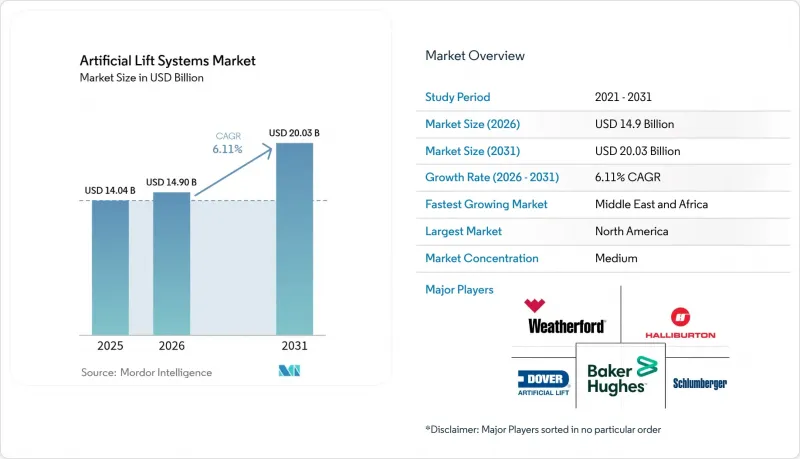
本報告按提升類型(電潛泵 (ESP)、升降杆、其他)、井向(水平井、垂直井)、儲層類型(常規、非常規)、應用(陸上、海上)、組件(泵、電機、其他)、服務(安裝和試運行、其他)以及地區(北美、亞太、中東和非洲、其他)進行分類。
全球人工榨油系統市場趨勢及洞察
延長老油井再生利用的投資週期
石油公司正投入資金從老舊油井開採更多原油。這是因為修井成本比新鑽井低60-70%,且內部收益率(IRR)超過30%。光是沙烏地阿美就已在2024年累計35億美元用於人工智慧驅動的生產最佳化,凸顯了其延長資產壽命的長期承諾。 (1) 資料來源:根據OilPrice網站報道,“沙烏地阿美將利用人工智慧進行生產最佳化”,生產工程師表示,添加合適的人工智慧開採裝置可以將油井的生產壽命延長15-20年,並推遲與油井退役相關的債務累積。對於服務公司而言,成熟油田的活動預計需求穩定,因為與前沿探勘相比,它受原油價格波動的影響較小。原油價格持續高於每桶60美元將增強這一因素,但價格下跌可能會減緩資本投資的步伐。
非常規油藏水平鑽井技術快速進展
第二層頁岩目前正處於開發階段,其產量急劇下降,因此需要在投產後的12至18個月內引入人工採油系統。阿根廷的瓦卡穆埃爾塔頁岩油田預計在2024年12月達到日產757,122桶,需要在其不斷擴大的水平井網中部署先進的泵送系統。引入機器學習工具將提高井底壓力預測的準確性,預計將減少25%至30%的設備過度設計。中國鄂爾多斯盆地早期採用人工採油技術,不僅支持了緻密氣產量目標的實現,而且即使在原油價格高達每桶40美元的情況下也能保持獲利能力。這些因素綜合起來意味著,非常規油氣領域人工採油系統的潛在市場正遠遠超出北美市場。
原油價格波動導致資本支出(CAPEX)週期性收縮
如果布蘭特原油價格跌破每桶60美元,業者將像2020年一樣,把人工開採預算延後多達30%。儘管出現了可以分階段部署的新型模組化井架,但在市場波動的情況下,18-24個月的投資回收期仍然被視為高風險。分析師預測,到2025年,油井成本將再下降1%左右,但這本身並不能完全抵銷價格的不確定性。 (2) 供應來源:《美國石油天然氣報告》,“2025年油井成本展望”,aogr.com。供應商正在透過提案租賃和基於績效的合約來應對,但在市場低迷時期,資金籌措將受到限制,因為銀行貸款條款仍然取決於大宗商品價格預測。
細分市場分析
到2025年,電動潛水泵將佔總銷售量的38.70%,充分展現了其在處理日流量100至30,000桶範圍內的多功能性。同時,單轉子設計的螺桿泵(PCP)正以7.76%的複合年成長率持續擴大市場佔有率,因為它們能夠處理重質原油和砂粒,且不易快速磨損。 SLB的PowerEdge ESPCP混合型設備結合了電動潛水幫浦的可靠性和螺桿幫浦的耐磨性,可減少55%的二氧化碳排放。
由於運作成本低,升降杆仍是陸上常規油井的主要舉升方式。另一方面,氣舉在海上領域表現出色,因為在海上領域,最大限度地減少地下設備至關重要。液壓活塞泵和噴射泵的應用仍然局限於特殊環境、砂質環境和偏遠地區。柱塞式舉升用於從低壓氣井排出液體。展望未來,混合式採油方式正在興起,它將兩種或多種方法結合起來,隨著油藏的成熟,這將為營運商提供最佳解決方案。由於永磁馬達可將電潛泵 (ESP) 的效率提高 20%,供應商預計在預測期內,電潛泵和預壓泵 (PCP) 平台之間的競爭將加劇。
預計到2025年,水平井將佔人工採油市場收入的49.60%,並預計在2031年之前以6.33%的複合年成長率成長。水平井複雜的流體條件推動了氣體處理分離器和適用於更窄完井尺寸的超薄電潛泵(ESP)的技術創新。到2024年,永磁馬達在水平井中的應用率已達到11%,能夠在更短的井筒內實現更高的產量。這在橫向空間有限的環境中是一項顯著優勢。
在優先考慮成熟設備和低干預成本的傳統生產,垂直井仍然至關重要。雖然水平井成品工具的標準化縮小了安裝成本的差距,但水平井人工採油成本仍高出150%至200%。自主流入控制設備已將水平井含水量降低了80%以上,延長了泵浦的使用壽命並降低了抽油成本。這種積極的技術循環正在進一步加速向水平井的轉變,即使在曾經以垂直井為主的地區也是如此。
區域分析
北美擁有豐富的頁岩油氣資源,並秉持著快速採用新技術的文化,預計到2025年將佔據人工採油系統市場35.60%的佔有率。 SLB報告稱,將天然氣處理設計與工程化施工方法結合,已使二疊紀盆地電潛泵(ESP)的運作延長了400%。雖然自動化有助於緩解區域勞動力短缺問題,但熟練工人和特種彈性體的供不應求仍然是人工採油系統市場發展的瓶頸。隨著基礎設施的日趨成熟,市場正從新型硬體轉向最佳化服務。
中東和非洲是成長最快的地區,預計到2030年將以6.95%的複合年成長率成長,這主要得益於上游領域7,300億美元的投資以及一系列強化採油作業(EOR)計畫。阿布達比國家石油公司(ADNOC)的RoboWell計畫已將氣舉使用量減少了30%,凸顯了該地區對高階數位化解決方案的強勁需求。國營石油公司正透過將研發投入與大規模採購項目結合,建立有利於一體化供應商的長期服務關係。
南美洲的成長主要集中在阿根廷的瓦卡穆埃爾塔油田和巴西的鹽層下油田。 SLB與巴西石油公司簽訂的價值10億美元的海底契約,體現了對其能夠承受腐蝕性二氧化碳和硫化氫的長壽命強化系統的信心。預計到2025年,圭亞那的石油日產量將超過80萬桶,這將進一步擴大對海底起重包裝的需求。這項技術轉移協議旨在建立本地供應基地、縮短前置作業時間並培養熟練勞動力。
其他福利
- Excel格式的市場預測(ME)表
- 3個月的分析師支持
目錄
第1章:引言
- 研究假設和市場定義
- 調查範圍
第2章:調查方法
第3章執行摘要
第4章 市場狀況
- 市場概覽
- 市場促進因素
- 延長老油井再生利用的投資週期
- 非常規油藏水平鑽井技術快速進展
- 電梯最佳化數位化(人工智慧驅動的變速驅動)
- 向更深的鹽層下下層轉移
- 受環境、社會及公司治理(ESG)因素的影響,對節能型電梯系統的需求日益成長。
- 利用靜電集塵器組進行小眾地熱能利用
- 市場限制因素
- 原油價格波動導致資本支出(CAPEX)週期性收縮
- 超深海作業成本高昂
- 特種彈性體供應鏈瓶頸
- 自動化維修導致技術純熟勞工短缺
- 供應鏈分析
- 監理情勢
- 技術展望
- 波特五力模型
第5章 市場規模與成長預測
- 按電梯類型
- 電動潛水幫浦(ESP)
- 單軸螺旋泵浦幫浦(PCP)
- 升降杆(樑式、吸桿式)
- 氣舉
- 液壓活塞泵和噴射泵
- 柱塞式升降機
- 其他專用系統(液壓潛水式、毛細管式)
- 井方向
- 水平井
- 垂直井
- 按儲層類型
- 傳統的
- 非常規(頁岩緻密)
- 透過使用
- 陸上
- 離岸
- 按組件
- 泵浦
- 引擎
- 變速驅動和控制設備
- 地面設備
- 配件(感應器、密封件、墊片)
- 按服務
- 安裝和試運行
- 最佳化和監測
- 維護、修理和大修 (MRO)
- 按地區
- 北美洲
- 美國
- 加拿大
- 墨西哥
- 歐洲
- 英國
- 德國
- 法國
- 西班牙
- 北歐國家
- 俄羅斯
- 其他歐洲國家
- 亞太地區
- 中國
- 印度
- 日本
- 韓國
- ASEAN
- 其他亞太國家
- 南美洲
- 巴西
- 阿根廷
- 哥倫比亞
- 其他南美國家
- 中東和非洲
- 阿拉伯聯合大公國
- 沙烏地阿拉伯
- 南非
- 埃及
- 其他中東和非洲國家
- 北美洲
第6章 競爭情勢
- 市場集中度
- 策略趨勢(併購、聯盟、購電協議)
- 市場佔有率分析(主要公司的市場排名和佔有率)
- 公司簡介
- Baker Hughes Company
- Halliburton Company
- Schlumberger NV
- Weatherford International Plc
- NOV Inc.
- Dover(Artificial Lift)
- Borets International Limited
- ChampionX Corp
- Alkhorayef Petroleum
- JJ Tech
- AccessESP
- Odessa Separator
- RAGHOEBAR
- Novomet
- Shengli Oilfield Highland
- Torqueflow Sydex
- Canadian Advanced ESP
- GE Power Conversion
- PCM Artificial Lift
- OptiLift
- OilSERV
第7章 市場機會與未來展望
According to Mordor Intelligence, the artificial lift systems market size was valued at USD 14.04 billion in 2025 and estimated to grow from USD 14.9 billion in 2026 to reach USD 20.03 billion by 2031, at a CAGR of 6.11% during the forecast period (2026-2031).
This report is Segmented by Lift Type (Electric Submersible Pumps, Rod Lift, and More), Well Orientation (Horizontal Wells and Vertical Wells), Reservoir Type (Conventional and Unconventional), Application (Onshore and Offshore), Component (Pump, Motor, and More), Service (Installation and Commissioning, and More), and Geography (North America, Asia-Pacific, Middle East and Africa, and More).
Global Artificial Lift Systems Market Trends and Insights
Mature Well Rejuvenation Up-cycle
Operators are redirecting capital toward squeezing more barrels from aging wells because workovers cost 60-70% less than new drilling and deliver internal rates of return above 30%. Saudi Aramco alone earmarked USD 3.5 billion for AI-driven production optimization in 2024, underscoring the long-range commitment to asset life extension. (1)Source: OilPrice Staff, "Saudi Aramco Bets on AI for Production Optimization," oilprice.com Production engineers report that adding the right artificial lift string can lengthen a well's producing life by 15-20 years and defer abandonment liabilities. Service firms see stable demand because mature-field activity is less sensitive to oil-price swings than frontier exploration. Continued crude prices above USD 60 per barrel support this driver, though lower pricing would slow capital release.
Horizontal Drilling in Unconventional Reservoirs
Tier-2 shale acreage now moves to the development phase, and its steep decline curves force lift deployment within 12-18 months of first oil. Argentina's Vaca Muerta hit 757,122 barrels per day in December 2024, requiring sophisticated lift systems across a growing inventory of laterals. Machine-learning tools improve bottom-hole pressure forecasting and reduce equipment oversizing by 25-30%. Early lift adoption in China's Ordos Basin supports tight-gas production goals and keeps the economics viable at USD 40 per barrel. These factors combine to widen the addressable artificial lift system market within the unconventional sector well past North America.
Crude-Price CAPEX Compression Cycles
When Brent drops below USD 60 per barrel, operators defer artificial lift budgets by up to 30% as seen in 2020. Despite new modular strings that can be installed incrementally, payback horizons of 18-24 months still look risky in choppy markets. Analysts expect modest 1% further well-cost reductions in 2025, which will not fully counteract price uncertainty.(2)Source: American Oil & Gas Reporter, "Well-Cost Outlook 2025," aogr.com Suppliers respond by offering rental and performance-based contracts, but bank lending terms remain tied to commodity forecasts, limiting capital availability during downturns.
Other drivers and restraints analyzed in the detailed report include:
- Digitalization of Lift Optimization (AI-Enabled VSDs)
- Shift to Deeper Offshore Pre-Salt Developments
- High Work-Over Costs in Ultra-Deepwater
For complete list of drivers and restraints, kindly check the Table Of Contents.
Segment Analysis
Electric submersible pumps retained 38.70% revenue in 2025, confirming their versatility for flow rates from 100 to 30,000 barrels per day. Progressive cavity pumps, however, are advancing at an 7.76% CAGR because their single-rotor design handles heavy crude and sand without rapid wear. SLB's PowerEdge ESPCP hybrid now blends ESP reliability with PCP tolerance for abrasives while lowering CO2 output by 55%.
Rod-lift still anchors legacy onshore wells because of low running costs, while gas-lift excels offshore, where minimal downhole hardware is valued. Hydraulic piston and jet pumps stay in niche, sandy, or remote environments. Plunger-lift clears liquids in low-pressure gas wells. The direction is toward hybrid packages that combine two or more methods, giving operators tailored solutions as reservoirs mature. As permanent-magnet motors push ESP efficiency up 20%, suppliers expect stiffer competition between ESP and PCP platforms over the forecast horizon.
Horizontal wells supplied 49.60% of the 2025 artificial lift market revenue and will expand at a 6.33% CAGR to 2031. Their complex flow regimes drive innovation in gas-handling separators and slim-line ESP stages that fit tighter completions. Permanent-magnet motors reached 11% horizontal-well adoption in 2024 because they deliver higher power in shorter housings, an asset where lateral space is scarce.
Vertical wells remain vital in conventional provinces that value proven equipment and low intervention cost. Standardization in horizontal completion tools has narrowed the installation cost gap, yet horizontal wells still carry 150-200% higher artificial lift outlays. Autonomous inflow control devices now cut water cut by more than 80% in horizontals, extending pump life and shrinking lifting cost curves. This technological feedback loop reinforces the shift toward laterals, even in regions once dominated by vertical producers.
Complete Report Scope:
- By Lift Type
- Electric Submersible Pumps (ESP)
- Progressive Cavity Pump (PCP)
- Rod Lift (Beam, Sucker-Rod)
- Gas Lift
- Hydraulic Piston and Jet Pumps
- Plunger Lift
- Other Niche Systems (Hydraulic Submersible, Capillary)
- By Well Orientation
- Horizontal Wells
- Vertical Wells
- By Reservoir Type
- Conventional
- Unconventional (Shale/Tight)
- By Application
- Onshore
- Offshore
- By Component
- Pump
- Motor
- Variable Speed Drive and Controls
- Surface Equipment
- Ancillary (Sensors, Seal-Sections, Packers)
- By Service
- Installation and Commissioning
- Optimization and Monitoring
- Maintenance, Repair and Overhaul (MRO)
- By Geography
- North America
- United States
- Canada
- Mexico
- Europe
- United Kingdom
- Germany
- France
- Spain
- Nordic Countries
- Russia
- Rest of Europe
- Asia-Pacific
- China
- India
- Japan
- South Korea
- ASEAN Countries
- Rest of Asia-Pacific
- South America
- Brazil
- Argentina
- Colombia
- Rest of South America
- Middle East and Africa
- United Arab Emirates
- Saudi Arabia
- South Africa
- Egypt
- Rest of Middle East and Africa
- North America
Geography Analysis
North America secured a 35.60% share of the artificial lift systems market in 2025, anchored by prolific shale plays and a culture of rapid technology adoption. SLB reported 400% ESP run-life improvements in the Permian Basin after combining gas-handling designs with engineered completions. Automation helps counter regional labor tightness, yet shortages of skilled crews and specialty elastomers remain bottlenecks for the artificial lift system market. The market is moving toward optimization services rather than new hardware as infrastructure matures.
The Middle East and Africa is the fastest-growing region at a 6.95% CAGR, propelled by USD 730 billion in upstream spending through 2030 and a pipeline of enhanced-oil-recovery projects. ADNOC's RoboWell program cut gas-lift use by 30%, revealing the region's appetite for high-end digital solutions. National oil companies are bundling R&D commitments with large procurement lots, locking in long-term service relationships that favor integrated suppliers.
South America's growth revolves around Argentina's Vaca Muerta and Brazil's pre-salt. SLB's USD 1 billion subsea contracts with Petrobras demonstrate confidence in long-life boosting systems that withstand corrosive CO2 and H2S. Guyana will exceed 800,000 barrels daily by 2025, further enlarging demand for subsea lift packages. Technology transfer agreements aim to build local supply hubs, shortening lead times and fostering skilled labor pools.
- Baker Hughes Company
- Halliburton Company
- Schlumberger NV
- Weatherford International Plc
- NOV Inc.
- Dover (Artificial Lift)
- Borets International Limited
- ChampionX Corp
- Alkhorayef Petroleum
- JJ Tech
- AccessESP
- Odessa Separator
- RAGHOEBAR
- Novomet
- Shengli Oilfield Highland
- Torqueflow Sydex
- Canadian Advanced ESP
- GE Power Conversion
- PCM Artificial Lift
- OptiLift
- OilSERV
Additional Benefits:
- The market estimate (ME) sheet in Excel format
- 3 months of analyst support
TABLE OF CONTENTS
1 Introduction
- 1.1 Study Assumptions & Market Definition
- 1.2 Scope of the Study
2 Research Methodology
3 Executive Summary
4 Market Landscape
- 4.1 Market Overview
- 4.2 Market Drivers
- 4.2.1 Up-cycle in mature well rejuvenation spending
- 4.2.2 Rapid horizontal drilling in unconventional reservoirs
- 4.2.3 Digitalization of lift optimization (AI-enabled VSDs)
- 4.2.4 Shift to deeper offshore pre-salt plays
- 4.2.5 ESG-driven demand for energy-efficient lift systems
- 4.2.6 Niche geothermal repurposing of ESP strings
- 4.3 Market Restraints
- 4.3.1 Volatile crude-price CAPEX compression cycles
- 4.3.2 High work-over costs in ultra-deepwater
- 4.3.3 Supply-chain bottlenecks in specialty elastomers
- 4.3.4 Skilled-labor shortages for automation retrofits
- 4.4 Supply-Chain Analysis
- 4.5 Regulatory Landscape
- 4.6 Technological Outlook
- 4.7 Porters Five Forces
- 4.7.1 Bargaining Power of Suppliers
- 4.7.2 Bargaining Power of Buyers
- 4.7.3 Threat of New Entrants
- 4.7.4 Threat of Substitutes
- 4.7.5 Intensity of Competitive Rivalry
5 Market Size & Growth Forecasts
- 5.1 By Lift Type
- 5.1.1 Electric Submersible Pumps (ESP)
- 5.1.2 Progressive Cavity Pump (PCP)
- 5.1.3 Rod Lift (Beam, Sucker-Rod)
- 5.1.4 Gas Lift
- 5.1.5 Hydraulic Piston and Jet Pumps
- 5.1.6 Plunger Lift
- 5.1.7 Other Niche Systems (Hydraulic Submersible, Capillary)
- 5.2 By Well Orientation
- 5.2.1 Horizontal Wells
- 5.2.2 Vertical Wells
- 5.3 By Reservoir Type
- 5.3.1 Conventional
- 5.3.2 Unconventional (Shale/Tight)
- 5.4 By Application
- 5.4.1 Onshore
- 5.4.2 Offshore
- 5.5 By Component
- 5.5.1 Pump
- 5.5.2 Motor
- 5.5.3 Variable Speed Drive and Controls
- 5.5.4 Surface Equipment
- 5.5.5 Ancillary (Sensors, Seal-Sections, Packers)
- 5.6 By Service
- 5.6.1 Installation and Commissioning
- 5.6.2 Optimization and Monitoring
- 5.6.3 Maintenance, Repair and Overhaul (MRO)
- 5.7 By Geography
- 5.7.1 North America
- 5.7.1.1 United States
- 5.7.1.2 Canada
- 5.7.1.3 Mexico
- 5.7.2 Europe
- 5.7.2.1 United Kingdom
- 5.7.2.2 Germany
- 5.7.2.3 France
- 5.7.2.4 Spain
- 5.7.2.5 Nordic Countries
- 5.7.2.6 Russia
- 5.7.2.7 Rest of Europe
- 5.7.3 Asia-Pacific
- 5.7.3.1 China
- 5.7.3.2 India
- 5.7.3.3 Japan
- 5.7.3.4 South Korea
- 5.7.3.5 ASEAN Countries
- 5.7.3.6 Rest of Asia-Pacific
- 5.7.4 South America
- 5.7.4.1 Brazil
- 5.7.4.2 Argentina
- 5.7.4.3 Colombia
- 5.7.4.4 Rest of South America
- 5.7.5 Middle East and Africa
- 5.7.5.1 United Arab Emirates
- 5.7.5.2 Saudi Arabia
- 5.7.5.3 South Africa
- 5.7.5.4 Egypt
- 5.7.5.5 Rest of Middle East and Africa
- 5.7.1 North America
6 Competitive Landscape
- 6.1 Market Concentration
- 6.2 Strategic Moves (M&A, Partnerships, PPAs)
- 6.3 Market Share Analysis (Market Rank/Share for key companies)
- 6.4 Company Profiles (includes Global level Overview, Market level overview, Core Segments, Financials as available, Strategic Information, Products & Services, and Recent Developments)
- 6.4.1 Baker Hughes Company
- 6.4.2 Halliburton Company
- 6.4.3 Schlumberger NV
- 6.4.4 Weatherford International Plc
- 6.4.5 NOV Inc.
- 6.4.6 Dover (Artificial Lift)
- 6.4.7 Borets International Limited
- 6.4.8 ChampionX Corp
- 6.4.9 Alkhorayef Petroleum
- 6.4.10 JJ Tech
- 6.4.11 AccessESP
- 6.4.12 Odessa Separator
- 6.4.13 RAGHOEBAR
- 6.4.14 Novomet
- 6.4.15 Shengli Oilfield Highland
- 6.4.16 Torqueflow Sydex
- 6.4.17 Canadian Advanced ESP
- 6.4.18 GE Power Conversion
- 6.4.19 PCM Artificial Lift
- 6.4.20 OptiLift
- 6.4.21 OilSERV
7 Market Opportunities & Future Outlook
- 7.1 White-space & Unmet-need Assessment

 2026-2030年全球人工採油系統市場
 人工採油市場:2026-2032年全球市場預測(按泵送方式、驅動系統、應用、最終用戶和井型分類)
 海上人工採油系統市場-全球產業規模、佔有率、趨勢、機會、預測:按類型、地區和競爭格局分類,2021-2031年
 人工採油系統市場報告:依抽油、井型、機制、應用和地區分類(2026-2034 年)
 2026-2034年全球人工油脂萃取系統市場規模、佔有率、趨勢及成長分析報告
 2026年全球陸上人工採油市場報告2026年全球人工採油系統市場報告桿式起重系統市場 - 全球產業規模、佔有率、趨勢、機會、預測:按類型、最終用戶、地區和競爭格局分類,2021-2031年陸基人工採油系統市場-全球產業規模、佔有率、趨勢、機會與預測:按技術、最終用戶、地區和競爭對手分類,2021-2031年全球人工舉升系統市場:市場規模、佔有率、成長率、產業分析、類型、應用及區域分析、未來預測(2026-2034)