


 |
市場調查報告書
商品編碼
2119353
工業能源管理系統:市場佔有率分析、產業趨勢與統計、成長預測(2026-2031)Industrial Energy Management Systems - Market Share Analysis, Industry Trends & Statistics, Growth Forecasts (2026 - 2031) |
||||||

※ 本網頁內容可能與最新版本有所差異。詳細情況請與我們聯繫。
據 Mordor Intelligence 稱,工業能源管理系統市場預計將從 2025 年的 129.4 億美元成長到 2026 年的 143.3 億美元,到 2031 年達到 249.4 億美元,2026 年至 2031 年的複合年成長率為 11.72%。
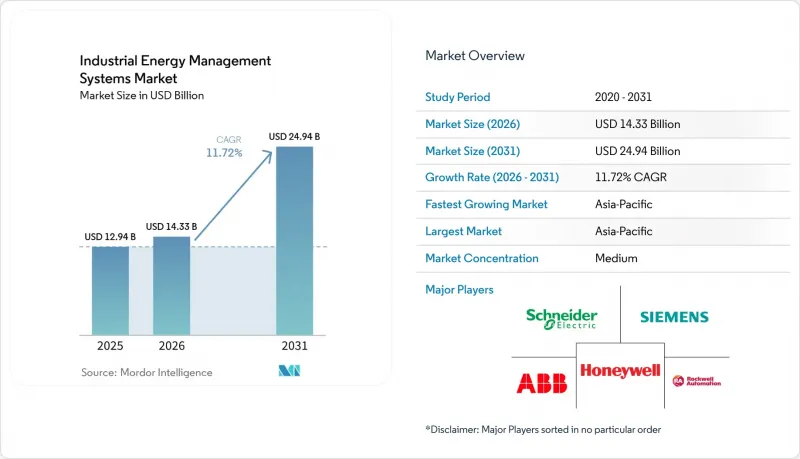
本報告按組件(硬體、軟體、服務)、部署模式(本地部署、雲端部署)、應用(能源監控與測量、需求與負載管理等)、最終用戶產業(石油天然氣、化學和石化、食品飲料、電子半導體等)和地區細分。市場預測以美元計價。
全球工業能源管理系統市場趨勢與洞察
人工智慧驅動的預測最佳化推動即時工業智慧。
人工智慧 (AI) 正在將工業能源管理系統從單純的監控工具轉變為支援即時營運決策的系統。透過利用高頻感測器數據,可以在傳統診斷流程發現問題之前識別設備能耗的變化。這種能力使企業能夠更早解決能源浪費和意外停機問題。 2026 年 8 月,艾默生發布了 PACEdge 3.0 版本,該版本具有容器化分析、視覺應用和工業邊緣部署功能,可將來自各種營運技術 (OT) 環境的資料聚合到一個統一的層中。因此,在工業能源管理系統 (IEMS) 市場中,連接感測器數據、模型和營運操作的軟體價值正在不斷提升。此外,基於邊緣的處理縮短了檢測和響應負載變化之間的延遲,從而支持企業快速參與需量反應計劃。
工業電氣化和日益複雜的負載需求需要更先進的能源管理。
電氣化驅動系統、製程加熱和物料輸送產生的負載模式無法透過傳統的能源監控進行管理。這些過程會產生諧波、功率突變和非線性負荷,進而影響工廠需求和電網交互作用。對高解析度工業能源數據的研究揭示了設施在管理這些系統時需要了解的詳細能耗模式。一項2026年關於基於風險的工業負載管理的研究發現,無論風險承受能力如何,將分散式能源和儲能結合都能改善參與輔助服務的經濟效益。因此,工業運營商越來越傾向於將電氣化專案和能源管理投資視為相互關聯的決策。當設施需要軟體來調度新的電力負荷而不增加成本負擔時,工業能源管理系統市場將從中受益。
高昂的整合和維修成本限制了棕地。
將最先進的能源管理軟體與傳統的分散式控制系統、監控與數據採集 (SCADA) 基礎設施以及專用計量表整合,其成本可能遠超初始軟體許可費。老舊的紙漿和造紙、有色金屬和石化設施通常需要客製化中間件、協議閘道器和大規模的試運行。對於無法在維持生產的同時安排內部工程師參與長達數月的專案的中小型工業企業而言,這項挑戰更為嚴峻。人才短缺也加劇了這個問題。電力產業的管理人員指出,人才匱乏是基礎設施現代化的一大障礙。雖然模組化和雲端原生方案可以在一定程度上降低部署的複雜性,但其持續的訂閱成本對於資產密集型營運商而言仍然難以接受。因此,工業能源管理系統市場在大規模集中式站點和小規模分散式資產組合方面面臨不同的部署條件。
細分市場分析
預計到2025年,軟體將佔工業能源管理系統市場佔有率的41.10%,並將在2031年之前以13.42%的複合年成長率成長。該領域正從基礎數據視覺化向營運分析、數位孿生整合和基於雲端的決策支援發展。這些功能使企業能夠將能源數據與製程狀態和生產計劃關聯起來。因此,軟體在工業能源管理系統產業的系統採購決策中扮演著越來越重要的角色。
硬體仍然至關重要,智慧電錶、電能品質分析儀和通訊閘道器提供了底層數據。然而,隨著規範日益標準化,許多設備面臨價格壓力,限制了硬體的收入潛力。服務在整合、試運行、培訓和能源管理專案中仍然發揮關鍵作用。工業能源管理系統市場也依賴能夠配置系統以滿足工廠特定需求的服務供應商。 Sidenor 介紹了其位於 Basauli 工廠的 2025 年項目,該項目將線上能耗監測與人工智慧 (AI) 模型相結合,以幫助減少天然氣和電力消耗以及二氧化碳當量排放。羅克韋爾自動化將其「FactoryTalk Energy Manager」定位為一種連接能源和生產監控的解決方案,這反映了軟體功能和持續服務支援之間仍然存在重疊。
截至2025年,本地部署系統在工業能源管理系統市場佔據58.11%的佔有率。部署數量最多的行業是資本密集型行業,這些行業需要透過較長的更新周期來維持操作技術。此外,許多運營商更傾向於本地數據控制,因為工廠資訊可能涉及商業機密。這些因素確保了本地部署在石油天然氣、化學和石化以及國防製造等行業的運作中仍然佔據核心地位。
預計到2031年,雲端運算的採用率將以14.52%的複合年成長率成長,成為該領域成長最快的細分市場。擁有新設施或多個辦公地點的公司正在利用雲端平台整合能源狀態視覺化功能,並更輕鬆地更新最佳化模型。混合架構允許將分析和企業級報告卸載到雲端,同時在工廠邊緣保持快速的控制迴路。這種方法透過滿足本地控制和企業級報告的需求,為工業能源管理系統市場提供了支援。 2026年4月,艾默生發布了“DeltaV Live Enterprise View”,該平台允許從企業雲環境透過基於瀏覽器的唯讀存取來顯示即時控制螢幕,而無需更改底層控制系統。 2026年的一項針對啤酒廠的調查也顯示,工業能源系統設計和調度模型中柔軟性的調度方式有助於降低電力成本並提高可再生能源的利用率。
區域分析
預計到2025年,亞太地區將佔據工業能源管理系統30.71%的市場佔有率,並將以13.44%的複合年成長率持續成長至2031年。中國是主要的需求來源,其「十四五」計畫的目標是將單位GDP的能源強度降低13.5%。在國內生產總值,指定的高能耗設施必須提交能源管理計劃,這促進了系統化能源管理的實踐。印度也蘊藏著巨大的市場機會。 ABB的一項調查顯示,80%的印度受訪者已做好數位節能準備,高於67%的全球平均。印度也正在成為工業設施中人工智慧(AI)主導的自主運作程序應用中心。在韓國,半導體製造廠、電池工廠和電動車(EV)零件製造廠對精準能源最佳化的需求日益成長。
北美和歐洲是第二大區域叢集,儘管它們的需求模式有所不同。北美地區新建的電池製造、半導體製造和國防供應鏈設施正在推動投資。這些待開發區專案允許在試運行階段就實施能源管理系統,而無需後期維修。同時,加拿大和墨西哥正透過製造業投資和近岸外包獲得更多機會。在歐洲,德國、法國和英國正受惠於歐盟能源效率指令的實施進度。英國的簡化能源和碳排放報告(SECR)架構也滿足了大型企業對自動化能源資料收集的需求。
中東和非洲是較小的區域集團,但對石化、金屬、採礦和其他能源密集產業的高附加價值產品需求旺盛,尤其是在沙烏地阿拉伯和阿拉伯聯合大公國。南美洲的機會較為分散,巴西的農產品和礦物加工產業比其他國家的市場更為活躍。包括阿根廷在內的南美市場需求疲軟,因為宏觀經濟狀況和關稅結構可能會降低節能投資的獎勵。預計奈及利亞和南非的採礦和加工產業將有需求,但在非洲部分地區,電網可靠性問題可能會限制需量反應主導部署。
其他好處:
- Excel格式的市場預測(ME)表
- 3個月的分析師支持
目錄
第1章:引言
- 研究假設和市場定義
- 調查範圍
第2章:調查方法
第3章執行摘要
第4章 市場狀況
- 市場概覽
- 市場促進因素
- 工業電氣化和日益複雜的負載
- 能源價格波動與高峰需求費用
- 能源和碳排放報告義務
- 人工智慧驅動的預測最佳化
- 可再生能源、儲能和靈活負載的整合
- 工業回流和對數位化工廠的投資
- 市場限制因素
- 高整合和修改成本
- 傳統營運技術(OT)與資訊科技(IT)之間互通性的差距。
- 網路安全和業務永續營運方面的職責
- 工業部門缺乏能源管理技能
- 產業價值鏈分析
- 監理情勢
- 技術展望
- 宏觀經濟因素對市場的影響
- 波特五力分析
第5章 市場規模與成長預測
- 按組件
- 硬體
- 軟體
- 服務
- 部署模式
- 現場
- 雲
- 透過使用
- 能源監控與測量
- 需求和負載管理
- 製程和生產中的能源最佳化
- 合規性和排放報告
- 其他用途
- 按最終用戶行業分類
- 石油和天然氣
- 化工/石油化工
- 金屬和採礦
- 食品/飲料
- 車
- 電子和半導體
- 製藥和生命科學
- 紙漿和造紙
- 其他終端用戶產業
- 按地區
- 北美洲
- 美國
- 加拿大
- 墨西哥
- 南美洲
- 巴西
- 阿根廷
- 其他南美國家
- 歐洲
- 德國
- 英國
- 法國
- 義大利
- 西班牙
- 其他歐洲國家
- 亞太地區
- 中國
- 日本
- 印度
- 韓國
- 其他亞太國家
- 中東和非洲
- 中東
- 沙烏地阿拉伯
- 阿拉伯聯合大公國
- 土耳其
- 其他中東國家
- 非洲
- 南非
- 奈及利亞
- 其他非洲國家
- 中東
- 北美洲
第6章 競爭情勢
- 市場集中度
- 策略趨勢
- 市佔率分析
- 公司簡介
- Schneider Electric SE
- Siemens AG
- ABB Ltd
- Honeywell International Inc.
- Rockwell Automation, Inc.
- Emerson Electric Co.
- Eaton Corporation plc
- Yokogawa Electric Corporation
- Mitsubishi Electric Corporation
- AVEVA Group Limited
- Azbil Corporation
- Fuji Electric Co., Ltd.
- Delta Electronics, Inc.
- Advantech Co., Ltd.
- General Electric Company
- Hitachi, Ltd.
- Panasonic Holdings Corporation
- Toshiba Corporation
- Itron Inc.
- ICONICS, Inc.
第7章 市場機會與未來展望
According to Mordor Intelligence, the industrial energy management systems market size is expected to increase from USD 12.94 billion in 2025 to USD 14.33 billion in 2026 and reach USD 24.94 billion by 2031, expanding at a CAGR of 11.72% over 2026-2031.
This report is Segmented by Component (Hardware, Software, and Services), Deployment Mode (On-Premise, and Cloud), Application (Energy Monitoring and Metering, Demand and Load Management, and More), End-User Industry (Oil and Gas, Chemicals and Petrochemicals, Food and Beverage, Electronics and Semiconductor, and More), and Geography. The Market Forecasts are Provided in Terms of Value (USD).
Global Industrial Energy Management Systems Market Trends and Insights
AI-Enabled Predictive Optimization Driving Real-Time Industrial Intelligence
Artificial intelligence is transforming industrial energy management systems from monitoring tools into systems that support real-time operational decisions. High-frequency sensor data can help identify changes in equipment energy use before conventional diagnostic processes detect the issue. This capability can help facilities address energy waste and unplanned downtime earlier. Emerson launched PACEdge version 3.0 in August 2026 with containerized analytics, vision applications, and industrial edge deployment capabilities that bring data from different operational technology environments into a unified layer. The industrial energy management systems (IEMS) market is therefore placing greater value on software that links sensor data, models, and operating actions. Edge-based processing can also reduce the delay between detecting a load change and responding to it, which supports participation in fast demand-response programs.
Industrial Electrification and Load Complexity Requiring Advanced Energy Management
Electrified drive systems, process heating, and material handling are creating load patterns that conventional energy monitoring was not designed to manage. These processes can introduce harmonics, rapid changes in power, and nonlinear loads that affect plant demand and grid interactions. Research on high-resolution industrial energy data has documented the detailed consumption patterns that facilities must understand when managing such systems. A 2026 study of risk-based industrial load management found that combining distributed energy resources and energy storage improved financial outcomes in ancillary-services participation across risk preferences. Industrial operators are consequently treating electrification projects and energy management investments as connected decisions. The industrial energy management systems market benefits when facilities need software to schedule new electric loads without increasing tariff exposure.
High Integration and Retrofit Costs Limiting Brownfield Penetration
Integrating modern energy management software with legacy distributed control systems, supervisory control and data acquisition infrastructure, and proprietary meters can cost more than the initial software license. Older pulp and paper, primary metals, and petrochemical sites often require custom middleware, protocol gateways, and extensive commissioning. The challenge is greater for small and medium-sized industrial companies that cannot assign internal engineers to a multimonth project while maintaining production. Workforce constraints also add to the issue, as power-sector executives have identified talent shortages as a barrier to infrastructure modernization. Modular and cloud-native options can reduce some upfront complexity, but their recurring subscription costs remain difficult for some asset-heavy operators to accept. The industrial energy management systems market, therefore, faces different adoption conditions at large centralized sites and fragmented smaller portfolios.
Other drivers and restraints analyzed in the detailed report include:
- Energy Price Volatility and Peak-Demand Charges Accelerating Adoption
- Mandatory Energy and Carbon Reporting Strengthening Procurement Decisions
- Cybersecurity and Operational-Continuity Liability Slowing Connectivity Decisions
For complete list of drivers and restraints, kindly check the Table Of Contents.
Segment Analysis
Software accounted for 41.10% of the industrial energy management systems market in 2025 and is projected to grow at a 13.42% CAGR through 2031. The category has moved beyond basic data visualization toward operational analytics, digital twin integration, and cloud-enabled decision support. These capabilities help facilities connect energy data with process conditions and production schedules. Consequently, the industrial energy management systems industry is giving software a larger role in system purchasing decisions.
Hardware remains necessary because smart meters, power-quality analyzers, and communication gateways provide the underlying data. Its revenue potential is more limited because many devices face price pressure as specifications become more standardized. Services are still important for integration, commissioning, training, and managed energy programs. The industrial energy management systems market also depends on service providers that can configure systems around plant conditions. Sidenor described a 2025 project that combined online consumption monitoring with artificial intelligence models to support reductions in natural gas and electricity use, and CO2-equivalent emissions, at its Basauri plant. Rockwell Automation positions FactoryTalk Energy Manager to connect energy and production monitoring, reflecting the continued overlap between software capabilities and ongoing services support.
On-premise systems held 58.11% of the industrial energy management systems market share in 2025. The installed base is strongest in capital-intensive industries where operational technology is retained for long replacement cycles. Many operators also prefer local data control because plant information can be commercially sensitive. These considerations keep on-premise deployment central to operations in oil and gas, chemicals and petrochemicals, and defense-related manufacturing.
Cloud deployment is projected to expand at a 14.52% CAGR through 2031, the highest rate in this segmentation. New facilities and multi-site companies are using cloud platforms to consolidate energy views and update optimization models more easily. Hybrid architectures can maintain fast control loops at the plant edge while offloading analytics and enterprise reporting to the cloud. This approach supports the industrial energy management systems market by meeting both local control and enterprise reporting needs. Emerson released DeltaV Live Enterprise View in April 2026 to provide browser-based, read-only access to live control displays from enterprise cloud environments without changing the underlying control system. A 2026 brewery study also found that scheduling flexibility in industrial energy system design and dispatch models reduced electricity costs and improved the use of renewable energy.
Complete Report Scope:
- By Component
- Hardware
- Software
- Services
- By Deployment Mode
- On-premise
- Cloud
- By Application
- Energy Monitoring and Metering
- Demand and Load Management
- Process and Production Energy Optimization
- Compliance and Emissions Reporting
- Other Applications
- By End-User Industry
- Oil and Gas
- Chemicals and Petrochemicals
- Metals and Mining
- Food and Beverage
- Automotive
- Electronics and Semiconductor
- Pharmaceuticals and Life Sciences
- Pulp and Paper
- Other End-user Industries
- By Geography
- North America
- United States
- Canada
- Mexico
- South America
- Brazil
- Argentina
- Rest of South America
- Europe
- Germany
- United Kingdom
- France
- Italy
- Spain
- Rest of Europe
- Asia-Pacific
- China
- Japan
- India
- South Korea
- Rest of Asia-Pacific
- Middle East and Africa
- Middle East
- Saudi Arabia
- United Arab Emirates
- Turkey
- Rest of the Middle East
- Africa
- South Africa
- Nigeria
- Rest of Africa
- Middle East
- North America
Geography Analysis
Asia-Pacific held 30.71% of the industrial energy management systems market share in 2025 and is projected to expand at a 13.44% CAGR through 2031. China is a major source of demand because energy-intensity objectives under the 14th Five-Year Plan require a 13.5% reduction in energy intensity per unit of gross domestic product. Japan requires designated energy-intensive facilities to submit energy management plans, which support formalized energy practices. India is also an important opportunity, with an ABB survey reporting 80% digital readiness for energy efficiency among Indian respondents compared with a 67% global average, while serving as a setting for artificial intelligence-led autonomous operations programs in industrial facilities. South Korean semiconductor fabs, battery plants, and electric vehicle component facilities are adding demand for precise energy optimization.
North America and Europe form the next largest regional clusters, although their demand conditions differ. New facilities in battery manufacturing, semiconductor fabrication, and defense supply chains support North American investment. These greenfield sites can install energy management systems during commissioning rather than retrofitting them later, while Canada and Mexico offer further opportunities through manufacturing investment and nearshoring. In Europe, Germany, France, and the United Kingdom benefit from the implementation timetable for the European Union Energy Efficiency Directive. The United Kingdom's Streamlined Energy and Carbon Reporting framework also supports demand for automated energy data collection in large companies.
The Middle East and Africa are a smaller regional group but have high-value needs in petrochemicals, metals, mining, and other energy-intensive activities, especially in Saudi Arabia and the United Arab Emirates. South America has a divided opportunity, with Brazilian agribusiness and mineral processing more active than other national markets. Argentina and other South American markets face weaker demand because macroeconomic conditions and tariff structures can reduce incentives for efficiency investments. Nigeria and South Africa support demand in mining and process industries, although grid reliability issues can limit demand-response-led deployments in parts of Africa.
- Schneider Electric SE
- Siemens AG
- ABB Ltd
- Honeywell International Inc.
- Rockwell Automation, Inc.
- Emerson Electric Co.
- Eaton Corporation plc
- Yokogawa Electric Corporation
- Mitsubishi Electric Corporation
- AVEVA Group Limited
- Azbil Corporation
- Fuji Electric Co., Ltd.
- Delta Electronics, Inc.
- Advantech Co., Ltd.
- General Electric Company
- Hitachi, Ltd.
- Panasonic Holdings Corporation
- Toshiba Corporation
- Itron Inc.
- ICONICS, Inc.
Additional Benefits:
- The market estimate (ME) sheet in Excel format
- 3 months of analyst support
TABLE OF CONTENTS
1 INTRODUCTION
- 1.1 Study Assumptions and Market Definition
- 1.2 Scope of the Study
2 RESEARCH METHODOLOGY
3 EXECUTIVE SUMMARY
4 MARKET LANDSCAPE
- 4.1 Market Overview
- 4.2 Market Drivers
- 4.2.1 Industrial Electrification and Load Complexity
- 4.2.2 Energy Price Volatility and Peak-Demand Charges
- 4.2.3 Mandatory Energy and Carbon Reporting
- 4.2.4 AI-Enabled Predictive Optimization
- 4.2.5 Renewable, Storage and Flexible-Load Integration
- 4.2.6 Industrial Reshoring and Digital Factory Investment
- 4.3 Market Restraints
- 4.3.1 High Integration and Retrofit Costs
- 4.3.2 Legacy OT and IT Interoperability Gaps
- 4.3.3 Cybersecurity and Operational-Continuity Liability
- 4.3.4 Shortage of Industrial Energy-Management Skills
- 4.4 Industry Value-Chain Analysis
- 4.5 Regulatory Landscape
- 4.6 Technological Outlook
- 4.7 Impact of Macroeconomic Factors on the Market
- 4.8 Porter's Five Forces Analysis
- 4.8.1 Threat of New Entrants
- 4.8.2 Bargaining Power of Suppliers
- 4.8.3 Bargaining Power of Buyers
- 4.8.4 Threat of Substitutes
- 4.8.5 Competitive Rivalry
5 MARKET SIZE AND GROWTH FORECASTS (VALUE)
- 5.1 By Component
- 5.1.1 Hardware
- 5.1.2 Software
- 5.1.3 Services
- 5.2 By Deployment Mode
- 5.2.1 On-premise
- 5.2.2 Cloud
- 5.3 By Application
- 5.3.1 Energy Monitoring and Metering
- 5.3.2 Demand and Load Management
- 5.3.3 Process and Production Energy Optimization
- 5.3.4 Compliance and Emissions Reporting
- 5.3.5 Other Applications
- 5.4 By End-User Industry
- 5.4.1 Oil and Gas
- 5.4.2 Chemicals and Petrochemicals
- 5.4.3 Metals and Mining
- 5.4.4 Food and Beverage
- 5.4.5 Automotive
- 5.4.6 Electronics and Semiconductor
- 5.4.7 Pharmaceuticals and Life Sciences
- 5.4.8 Pulp and Paper
- 5.4.9 Other End-user Industries
- 5.5 By Geography
- 5.5.1 North America
- 5.5.1.1 United States
- 5.5.1.2 Canada
- 5.5.1.3 Mexico
- 5.5.2 South America
- 5.5.2.1 Brazil
- 5.5.2.2 Argentina
- 5.5.2.3 Rest of South America
- 5.5.3 Europe
- 5.5.3.1 Germany
- 5.5.3.2 United Kingdom
- 5.5.3.3 France
- 5.5.3.4 Italy
- 5.5.3.5 Spain
- 5.5.3.6 Rest of Europe
- 5.5.4 Asia-Pacific
- 5.5.4.1 China
- 5.5.4.2 Japan
- 5.5.4.3 India
- 5.5.4.4 South Korea
- 5.5.4.5 Rest of Asia-Pacific
- 5.5.5 Middle East and Africa
- 5.5.5.1 Middle East
- 5.5.5.1.1 Saudi Arabia
- 5.5.5.1.2 United Arab Emirates
- 5.5.5.1.3 Turkey
- 5.5.5.1.4 Rest of the Middle East
- 5.5.5.2 Africa
- 5.5.5.2.1 South Africa
- 5.5.5.2.2 Nigeria
- 5.5.5.2.3 Rest of Africa
- 5.5.5.1 Middle East
- 5.5.1 North America
6 COMPETITIVE LANDSCAPE
- 6.1 Market Concentration
- 6.2 Strategic Moves
- 6.3 Market Share Analysis
- 6.4 Company Profiles (includes Global Level Overview, Market Level Overview, Core Segments, Financials as available, Strategic Information, Market Rank/Share, Products and Services, Recent Developments)
- 6.4.1 Schneider Electric SE
- 6.4.2 Siemens AG
- 6.4.3 ABB Ltd
- 6.4.4 Honeywell International Inc.
- 6.4.5 Rockwell Automation, Inc.
- 6.4.6 Emerson Electric Co.
- 6.4.7 Eaton Corporation plc
- 6.4.8 Yokogawa Electric Corporation
- 6.4.9 Mitsubishi Electric Corporation
- 6.4.10 AVEVA Group Limited
- 6.4.11 Azbil Corporation
- 6.4.12 Fuji Electric Co., Ltd.
- 6.4.13 Delta Electronics, Inc.
- 6.4.14 Advantech Co., Ltd.
- 6.4.15 General Electric Company
- 6.4.16 Hitachi, Ltd.
- 6.4.17 Panasonic Holdings Corporation
- 6.4.18 Toshiba Corporation
- 6.4.19 Itron Inc.
- 6.4.20 ICONICS, Inc.
7 MARKET OPPORTUNITIES AND FUTURE OUTLOOK
- 7.1 White-Space and Unmet-Need Assessment

 工業能源管理市場預測至2034年-全球分析(按組件、部署模式、系統類型、能源來源、應用、最終用戶、銷售管道和地區分類)
 工業能源管理系統市場分析及預測(至2035年):依類型、產品類型、技術、組件、應用、部署類型、最終用戶、模組、功能及解決方案分類
 全球工業能源管理系統市場規模、佔有率、趨勢和成長分析報告(2026-2034年)
 工業能源管理系統市場-全球產業規模、佔有率、趨勢、機會及預測(按類型、應用、組件、最終用戶、地區和競爭格局分類),2021-2031年
 工業能源管理系統市場按組件、能源來源、部署類型、應用和最終用戶分類,全球預測(2026-2032)
 全球工業能源管理系統 (IEMS) 市場規模研究與預測,按組件(計量與現場設備、硬體、軟體)和應用(電力與能源、IT、製造)分類,以及 2025 年至 2035 年的區域預測
 工業能源管理系統市場機會、成長動力、產業趨勢分析及 2025 - 2034 年預測