


 |
市場調查報告書
商品編碼
2119082
南美洲農業機械:市場佔有率分析、行業趨勢和統計數據以及成長預測(2026-2031 年)South America Farm Implements - Market Share Analysis, Industry Trends & Statistics, Growth Forecasts (2026 - 2031) |
||||||

※ 本網頁內容可能與最新版本有所差異。詳細情況請與我們聯繫。
根據 Mordor Intelligence 預測,南美農業機械市場規模預計將在 2025 年達到 109.8 億美元,2026 年達到 116.4 億美元,到 2031 年達到 155.5 億美元,在 2026 年至 2031 年的預測期內,複合年成長率將達到 5.97%。
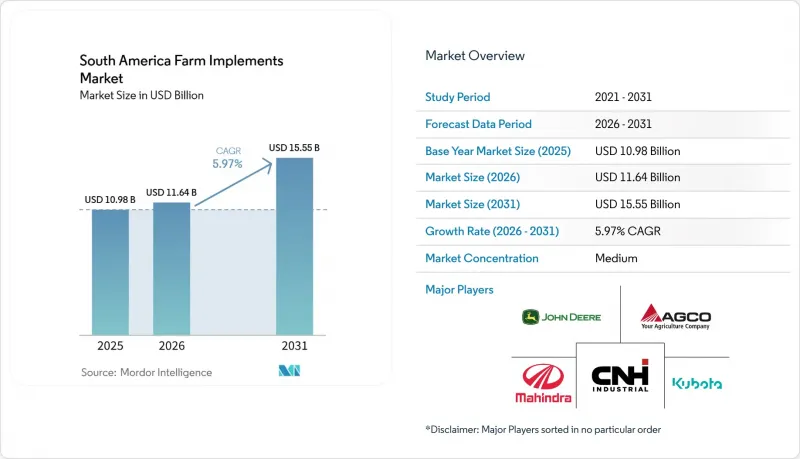
本報告按產品類型(曳引機、收割機、土壤耕作設備等)、驅動系統(動力和非動力農業機械)、功率輸出(30馬力以下、31-70馬力、71-130馬力、130馬力以上)以及地區(巴西、阿根廷和其他南美國家)進行分類。市場預測以美元計價。
南美洲農業機械市場趨勢與洞察
勞動力短缺和機械化發展
南美洲農業部門普遍存在的勞動力短缺問題正在加速農業機械的普及應用。農村人口向城市遷移、農業勞動力老化以及季節性勞動力短缺等問題,使得包括巴西、阿根廷和智利在內的主要農業國家越來越依賴機械進行田間作業。對於甘蔗、水果、咖啡和園藝作物等勞動密集型作物而言,這種影響尤其顯著,因為及時播種、作物保護和收穫對於維持生產力至關重要。因此,生產者正增加對農業機械的投資,以提高作業效率、減少對人工的依賴,並確保在有限的季節內完成田間作業。這些結構性的勞動限制因素持續支持南美洲農業機械市場的長期需求。
公共貸款及機械化補貼
巴西啟動了「2025-2026年薩夫拉計畫」(Plano Safra 2025-2026),這是一項面向家庭農場的890億雷亞爾(約171.8億美元)農村信貸計畫。該計劃旨在幫助那些無法滿足傳統商業貸款條件的生產者購買農業機械。其資金籌措結構使農民能夠升級基本設備或購買適合其耕地面積和工作需求的小型機械。 「國家家庭農業強化計畫(PRONAF)」支持這一機械化進程,並擴大潛在基本客群。對於南美洲農業機械市場的供應商而言,公共資金在將不斷成長的需求與本地生產和經銷商通路聯繫起來方面發揮著重要作用。這一趨勢凸顯了公共資金計畫在擴大機械化普及範圍和支持南美洲農業機械市場更廣泛應用方面的重要性。
前期成本高,且對利率敏感
根據巴西中央銀行的數據,預計2025/2026作物年度巴西企業農村信貸發放將下降12%。信貸條件收緊可能會延緩農業機械的更新換代,尤其是對中小農業企業而言。抵押品要求的提高和農業債務的增加使得獲得無擔保貸款變得更加困難。商業利率與補貼貸款利率之間的差距是許多生產者能否購買農業機械的關鍵因素。這使得供應商更容易受到信貸條件變化和政府支持項目可用性的影響。由於農業機械是農業領域的重大投資,南美洲農業機械市場很可能仍將受到資金籌措的影響。
細分市場分析
2025年,曳引機佔南美洲農業機械市場的45.3%。曳引機在商業農場的播種、犁地、撒播、運輸和其他田間作業中繼續發揮核心作用。經銷商通常將曳引機和附件打包銷售,使曳引機成為各種機械採購的關鍵組成部分。巴西的更新換代需求和阿根廷的商業農業運作將持續支撐這一品類。收割機也佔據了相當大的佔有率,由於生產者更換現有設備,2025年阿根廷的整體銷售仍然強勁。土地準備設備、播種設備、灌溉設備和作物保護機械為田間生產的關鍵階段提供支援。乾草和飼料機械為畜牧業和酪農提供支持,可靠的飼料準備至關重要。這些產品線為供應商提供了多種機會,使其能夠進入擁有不同作物類型和種植面積需求的農民市場。
精密農業和自動化農機設備是南美洲農業機械市場成長最快的產品類型,預計2026年至2031年將以12.5%的複合年成長率成長。這一成長主要得益於對GPS導航、可變施肥、分段控制和互聯機械的需求。這些功能有助於農場更有效率地管理投入,並提高作業的一致性。在2026年巴西農業展(Agrishow 2026)上,Grupo Jacto公司正式發表了巴西首款自動化噴藥機,標誌著自動化設備商業化應用的開始。無論是新生產的設備或是現有設備系列的新技術,都蘊藏著巨大的成長機會。隨著南方共同市場(Mercosur)與歐盟(EU)貿易框架的逐步實施,歐洲精密農業設備供應商可望進入更廣大的市場。巴西的《農村信貸手冊》(MCR)繼續支持使用均衡農村信貸購買設備的本地生產或本地夥伴關係。因此,產品供應商需要具備先進的技術能力和本地服務基礎設施。
其他好處:
- Excel格式的市場預測(ME)表
- 3個月的分析師支持
目錄
第1章:引言
- 研究假設和市場定義
- 調查範圍
第2章:調查方法
第3章執行摘要
第4章 市場狀況
- 市場概覽
- 市場促進因素
- 勞動力短缺和機械化發展
- 公共貸款及機械化補貼
- 擴大擁有的中功率曳引機和農具數量
- 合約農業、合約僱用和經銷商主導的租賃服務
- 精密農業和投入最佳化簡介
- 製造業和南方共同市場相關供應鏈在該地區的本地化
- 市場限制因素
- 前期成本高,且對利率敏感
- 擁有情形多元化和低產能運轉率
- 商品價格波動和農業收入
- 進口、外匯及零件成本風險
- 監理情勢
- 技術展望
- 波特五力分析
第5章 市場規模與成長預測
- 依產品類型
- 聯結機
- 收割機
- 土壤準備及農業設備
- 種植、播種和施肥設備
- 用於灌溉和作物保護的農業機械
- 精密農業自主農業設備
- 乾草和飼料設備
- 其他農業設備
- 透過操作模式
- 動力農業設備
- 非動力農業設備
- 依輸出類型
- 小於30馬力
- 31~70 HP
- 71~130 HP
- 130馬力或以上
- 按地區
- 巴西
- 阿根廷
- 其他南美國家
第6章 競爭情勢
- 市場集中度
- 策略趨勢
- 市佔率分析
- 公司簡介
- Deere & Company
- CNH Industrial NV(Exor NV)
- AGCO Corporation
- Mahindra and Mahindra Ltd.
- Kubota Corporation
- CLAAS KGaA mbH
- JC Bamford Excavators Ltd.
- LS Mtron Ltd.(LS Holdings Co., Ltd.)
- Maquinas Agricolas Jacto SA(Grupo Jacto)
- Stara S/A Industria de Implementos Agricolas
- Marchesan Implementos e Maquinas Agricolas TATU SA
- Agrale SA
- Valmont Industries, Inc.
- Lindsay Corporation
- Metalfor SA
第7章 市場機會與未來展望
According to Mordor Intelligence, the South America farm implements market was valued at USD 10.98 billion in 2025, estimated at USD 11.64 billion in 2026, and is forecasted to reach USD 15.55 billion by 2031, at a CAGR of 5.97% during the forecast period from 2026 to 2031.
This report is Segmented by Product Type (Tractors, Harvesters, Soil Preparation and Cultivation Equipment, and More), by Mode of Operation (Powered Implements and Unpowered Implements), by Power Output (Below 30 HP, 31-70 HP, 71-130 HP, and Above 130 HP), and by Geography (Brazil, Argentina, and Rest of South America). The Market Forecasts are Provided in Terms of Value (USD).
South America Farm Implements Market Trends and Insights
Labor Scarcity and Rising Mechanization Intensity
Labor shortages across South America's agricultural sector are accelerating the adoption of mechanized farm implements. Rural-to-urban migration, an aging agricultural workforce, and declining availability of seasonal labor are increasing the reliance on machinery for field operations across major agricultural economies, including Brazil, Argentina, and Chile. The impact is particularly evident in labor-intensive crops such as sugarcane, fruits, coffee, and horticultural products, where timely planting, crop protection, and harvesting are critical to maintaining productivity. As a result, growers are increasingly investing in farm implements that improve operational efficiency, reduce dependence on manual labor, and ensure field operations are completed within narrow seasonal windows. These structural labor constraints continue to support long-term demand for farm implements across the South America farm implements market.
Public Credit and Mechanization Subsidies
Brazil launched Plano Safra 2025-2026 with BRL 89 billion (USD 17.18 billion) in rural credit for family farming. The program supports machinery purchases by producers who may not qualify for conventional commercial lending. Its financing structure helps farmers replace basic equipment and purchase smaller implements suited to their acreage and operational needs. The National Program for Strengthening Family Farming (PRONAF) supports this route to mechanization and broadens the potential customer base. For suppliers in the South America farm implements market, public financing links demand growth with local production and dealer access. This trend highlights the importance of public financing programs in expanding access to mechanization, supporting broader adoption of farm implements across the South America farm implements market.
High Upfront Cost and Interest-Rate Sensitivity
According to Banco Central do Brasil data, Brazil's enterprise rural-credit disbursements declined 12% in the 2025/2026 crop plan. Tighter lending conditions can delay fleet replacement, particularly for smaller and mid-sized operations. Higher collateral requirements and farm debt make unsupported borrowing harder to secure. The gap between commercial and subsidized financing rates determines whether many producers can make equipment purchases. This exposes suppliers to shifts in lending conditions and the availability of government-backed programs. The South America farm implements market will remain sensitive to financing costs, as machinery represents a high-value farm investment.
Other drivers and restraints analyzed in the detailed report include:
- Precision Agriculture and Input-Optimization Adoption
- Contract Farming, Custom Hiring, and Dealer-Led Rental Services
- Commodity-Price and Farm-Income Volatility
For complete list of drivers and restraints, kindly check the Table Of Contents.
Segment Analysis
Tractors accounted for 45.3% of the South America farm implements market in 2025. They remain central to planting, tillage, spraying, transport, and other field activities across commercial farms. Dealers commonly bundle tractor and attachment financing, making the tractor a key component of broader equipment purchases. Replacement activity in Brazil and commercial farming operations in Argentina continue to support this category. Harvesters also held a significant share, with Argentina recording stronger combined sales in 2025 as producers renewed their fleets. Soil-preparation equipment, planting and seeding equipment, irrigation equipment, and crop-protection implements serve the main stages of field production. Haying and forage equipment supports livestock and dairy operations where reliable feed preparation is essential. These product groups provide suppliers with multiple entry points into farm accounts with varying crop and acreage requirements.
Precision and autonomous implements are the fastest-growing product category in the South America farm implements market, forecast to expand at a 12.5% CAGR between 2026 and 2031. This growth is driven by demand for GPS guidance, variable-rate application, section control, and connected machinery. These functions help farms manage inputs more efficiently and improve operational consistency. Grupo Jacto commercially launched Brazil's first autonomous sprayer at Agrishow 2026, marking the entry of autonomous equipment into commercial use. Growth opportunities exist in both newly manufactured equipment and add-on technology for existing fleets. European precision suppliers may gain greater market access as the Mercosur-European Union trade framework moves into implementation. Brazil's Manual de Credito Rural (MCR) rules continue to support local manufacturing or partnerships when equipment is purchased using equalized rural credit. Product suppliers therefore require both advanced technology capabilities and local service infrastructure.
Complete Report Scope:
- By Product Type
- Tractors
- Harvesters
- Soil Preparation and Cultivation Equipment
- Planting, Seeding, and Fertilizing Equipment
- Irrigation and Crop-Protection Implements
- Precision and Autonomous Implements
- Haying and Forage Equipment
- Other Implements
- By Mode of Operation
- Powered Implements
- Unpowered Implements
- By Power Output
- Below 30 HP
- 31-70 HP
- 71-130 HP
- Above 130 HP
- By Geography
- Brazil
- Argentina
- Rest of South America
List of Companies Covered in this Report:
- Deere & Company
- CNH Industrial N.V. (Exor N.V.)
- AGCO Corporation
- Mahindra and Mahindra Ltd.
- Kubota Corporation
- CLAAS KGaA mbH
- J.C. Bamford Excavators Ltd.
- LS Mtron Ltd. (LS Holdings Co., Ltd.)
- Maquinas Agricolas Jacto S.A. (Grupo Jacto)
- Stara S/A Industria de Implementos Agricolas
- Marchesan Implementos e Maquinas Agricolas TATU S.A.
- Agrale S.A.
- Valmont Industries, Inc.
- Lindsay Corporation
- Metalfor S.A.
Additional Benefits:
- The market estimate (ME) sheet in Excel format
- 3 months of analyst support
TABLE OF CONTENTS
1 INTRODUCTION
- 1.1 Study Assumptions and Market Definition
- 1.2 Scope of the Study
2 RESEARCH METHODOLOGY
3 EXECUTIVE SUMMARY
4 MARKET LANDSCAPE
- 4.1 Market Overview
- 4.2 Market Drivers
- 4.2.1 Labor scarcity and rising mechanization intensity
- 4.2.2 Public credit and mechanization subsidies
- 4.2.3 Expansion of medium-horsepower tractor and implement fleets
- 4.2.4 Contract farming, custom hiring, and dealer-led rental services
- 4.2.5 Precision agriculture and input-optimization adoption
- 4.2.6 Regional manufacturing and Mercosur-linked supply localization
- 4.3 Market Restraints
- 4.3.1 High upfront cost and interest-rate sensitivity
- 4.3.2 Fragmented holdings and low equipment utilization
- 4.3.3 Commodity-price and farm-income volatility
- 4.3.4 Import, currency, and component-cost exposure
- 4.4 Regulatory Landscape
- 4.5 Technological Outlook
- 4.6 Porter's Five Forces Analysis
- 4.6.1 Intensity of Competitive Rivalry
- 4.6.2 Supplier Power
- 4.6.3 Buyer Power
- 4.6.4 Threat of New Entrants
- 4.6.5 Threat of Substitutes
5 MARKET SIZE AND GROWTH FORECASTS (VALUE)
- 5.1 By Product Type
- 5.1.1 Tractors
- 5.1.2 Harvesters
- 5.1.3 Soil Preparation and Cultivation Equipment
- 5.1.4 Planting, Seeding, and Fertilizing Equipment
- 5.1.5 Irrigation and Crop-Protection Implements
- 5.1.6 Precision and Autonomous Implements
- 5.1.7 Haying and Forage Equipment
- 5.1.8 Other Implements
- 5.2 By Mode of Operation
- 5.2.1 Powered Implements
- 5.2.2 Unpowered Implements
- 5.3 By Power Output
- 5.3.1 Below 30 HP
- 5.3.2 31-70 HP
- 5.3.3 71-130 HP
- 5.3.4 Above 130 HP
- 5.4 By Geography
- 5.4.1 Brazil
- 5.4.2 Argentina
- 5.4.3 Rest of South America
6 COMPETITIVE LANDSCAPE
- 6.1 Market Concentration
- 6.2 Strategic Moves
- 6.3 Market Share Analysis
- 6.4 Company Profiles (Includes Global Level Overview, Market Level Overview, Core Segments, Financials as Available, Strategic Information, Market Rank/Share, Products and Services, Recent Developments)
- 6.4.1 Deere & Company
- 6.4.2 CNH Industrial N.V. (Exor N.V.)
- 6.4.3 AGCO Corporation
- 6.4.4 Mahindra and Mahindra Ltd.
- 6.4.5 Kubota Corporation
- 6.4.6 CLAAS KGaA mbH
- 6.4.7 J.C. Bamford Excavators Ltd.
- 6.4.8 LS Mtron Ltd. (LS Holdings Co., Ltd.)
- 6.4.9 Maquinas Agricolas Jacto S.A. (Grupo Jacto)
- 6.4.10 Stara S/A Industria de Implementos Agricolas
- 6.4.11 Marchesan Implementos e Maquinas Agricolas TATU S.A.
- 6.4.12 Agrale S.A.
- 6.4.13 Valmont Industries, Inc.
- 6.4.14 Lindsay Corporation
- 6.4.15 Metalfor S.A.
7 MARKET OPPORTUNITIES AND FUTURE OUTLOOK

 農業機械皮帶市場:全球市場預測(2026-2032年)
 核子掩體市場:按類型、建造類型和地區分類
 全球農業機械市場規模、佔有率、趨勢和成長分析報告(2026-2034年)
 日本農業機械市場規模、佔有率、趨勢和預測:按類型、應用和地區分類,2026-2034年
 2026年全球農業機械市場報告農業產業鏈管理市場按組件、部署模式、業務模式、功能和最終用戶分類,全球預測(2026-2032)
 農業機械市場規模、佔有率和趨勢分析報告:按產品類型、動力來源、公司規模、最終用途、地區和細分市場預測(2025-2033 年)
 到 2030 年農業設備市場預測:按機器類型、操作、功能、容量、銷售管道和地區進行的全球分析
 農業犁市場報告:趨勢、預測和競爭分析(至 2030 年)