


 |
市場調查報告書
商品編碼
2117310
美國智慧空氣清淨機:市場佔有率分析、產業趨勢與統計及成長預測(2026-2031)US Smart Air Purifier - Market Share Analysis, Industry Trends & Statistics, Growth Forecasts (2026 - 2031) |
||||||

※ 本網頁內容可能與最新版本有所差異。詳細情況請與我們聯繫。
據 Mordor Intelligence 稱,美國智慧空氣清淨機市場預計到 2026 年價值 8.4 億美元,高於 2025 年的 7.3 億美元,預計到 2031 年將達到 16.8 億美元。
預計 2026 年至 2031 年的複合年成長率為 14.92%。
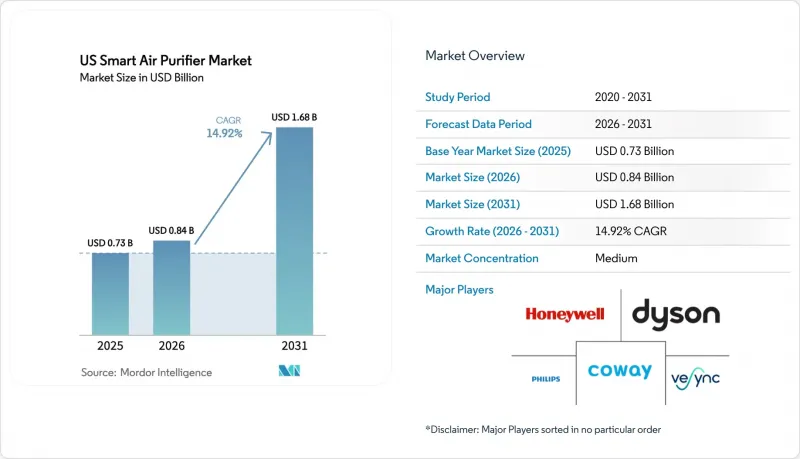
本報告按產品類型(集塵機、廢氣和煙氣收集系統、其他)、技術(高效空氣微粒過濾器、活性碳過濾、其他)、應用領域(住宅、商業、其他)、安裝方式(獨立式/可攜式、管道式/中央空調)、配銷通路(B2C/零售、B2B/直銷)和地區(東北、西部、其他)進行分類。市場預測以美元計價。
美國智慧空氣清淨機市場趨勢與洞察
消費者對室內空氣品質的意識日益增強
2024年2月,美國環保署(EPA)將PM2.5的年均基準值降至9微克/立方米,此前有消息稱室內污染物濃度可能達到室外水平的2到5倍,這一舉措迅速提高了公眾的關注度。研究表明,美國人一天中90%的時間都待在室內,這進一步凸顯了問題的迫切性。製造商現在正著重宣傳其產品能夠去除揮發性有機化合物(VOC)、捕獲野火煙霧以及即時顯示空氣品質指數(AQI)。夏普的叢集產品在全球銷售已超過9,000萬台,這充分證明了基於離子淨化技術的訊息深受注重健康的消費者歡迎。 《國家空氣品質報告》顯示,四分之一的美國人呼吸著不健康的室外空氣,這進一步證實了家用空氣淨化已成為一種有效的預防性醫療保健手段。
呼吸系統疾病增加
呼吸系統疾病的普遍流行造就了巨大的潛在市場。根據美國慢性病預防與健康促進中心的數據,目前美國有2,490萬人患有氣喘。不斷上漲的醫療保健成本促使人們更加關注預防措施。美國暖氣、冷氣與空調工程師協會(ASHRAE)241號標準強制要求建築業主考慮安裝病原體控制型空氣清淨器,學校和辦公室對空氣清淨機的需求也不斷成長。研究表明,配備高效能空氣微粒過濾器(HEPA)和紫外線C(UV-C)燈的空氣清淨機有助於降低幼兒流感的發生率,並改善氣喘患者的呼吸狀況。對於許多注重健康的家庭來說,這些顯而易見的益處使得最初的投資物有所值。
高昂的初始成本和維修成本
頂級空氣清淨機價格不斐。光是標價就足以讓許多中等收入家庭望而卻步,而且成本還不止於此。 HEPA濾網和活性碳濾網需要每隔幾個月更換一次,因此對於預算有限的人來說,每年的維護費用可能與購買價格相當,甚至更高。
雖然運作這些設備本身會產生額外的成本,但節能型空氣清淨機可以略微降低電費。一些州和電力公司會提供小額補貼來減輕消費者的價格負擔,但這些項目並非普遍適用。對於想要在多個房間安裝空氣清淨機的家庭來說,這筆費用尤其難以承受,因為全屋安裝需要較大的前期投入。儘管如此,許多注重健康的家庭認為,從長遠來看,更乾淨的空氣、更少的過敏發作和更好的睡眠帶來的益處值得現在節省開支。獲得能源之星認證的型號可以減少25%的年電力消耗量,但只有部分電力公司提供補貼。奧勒岡州的能源信託基金提供75美元的補貼,康乃狄克州的一項計畫提供40美元的補貼,但許多消費者並未獲得任何經濟援助。目前,一些品牌提供分期付款和以舊換新折扣,但價格仍然是美國智慧空氣清淨機市場擴張的一大障礙,尤其是在低收入地區。
細分市場分析
2025年,集塵機在美國智慧空氣清淨機市場佔比達45.32%。這主要得益於消費者對室內過敏原和寵物皮屑的關注。該細分市場受益於知名HEPA品牌和廣泛的價格區間,吸引了許多普通消費者。相較之下,廢氣和煙霧淨化器雖然屬於小眾市場,但預計到2031年將以15.12%的複合年成長率成長,這主要受日益嚴重的野火季和不斷增加的都市區霧霾預警的推動。
技術融合正在加速產品演進。 KIMM的無濾網靜電設計承諾90%的顆粒物去除率和較低的生命週期成本,而夏普的除濕功能組合正吸引沿海地區的買家。像AtomikAir這樣處理能力高達100萬平方公尺/小時的工業級系統,正在為倉儲市場開闢新的道路,該市場先前一直依賴基本的暖通空調過濾器。隨著設施管理人員對包含監控面板的承包解決方案的需求日益成長,這種轉變正在創造新的B2B收入。
預計到2025年,HEPA高效空氣清淨系統將佔據52.40%的市場佔有率,並將繼續成為追求99.97%高效去除率的家庭的首選。在美國智慧空氣清淨機市場,HEPA系統憑藉其高認證認可度和低監管風險,佔據了市場主導地位。活性碳空氣清淨機預計到2031年將維持15.57%的複合年成長率。
新材料的出現也為市場帶來了改變。例如,華盛頓州立大學的科學家成功地將玉米蛋白轉化為一種過濾器,其顆粒物捕獲率高達99.5%,與HEPA過濾器不相上下,同時還能去除87%的甲醛。許多品牌現在將HEPA、活性碳和UV-C紫外線等多種技術整合到一台設備中,以應對各種室內污染物。此外,透過添加Wi-Fi感測器和基於應用程式的控制功能,空氣清淨機可以即時自動調整。戴森的某些型號甚至具備自動診斷功能,可以在需要維護時進行自我診斷,從而最大限度地減少用戶的麻煩。
其他好處
- Excel格式的市場預測(ME)表
- 3個月的分析師支持
目錄
第1章:引言
- 研究假設和市場定義
- 調查範圍
第2章:調查方法
第3章執行摘要
第4章 市場狀況
- 市場概覽
- 市場促進因素
- 消費者對室內空氣品質的意識日益增強
- 呼吸系統疾病盛行率增加
- 智慧家庭和物聯網 (IoT) 整合
- 電子商務通路的拓展
- 公用事業收費補貼和醫療保險獎勵
- 共享辦公空間取得 WELL LEED 認證積分的實施現狀
- 市場限制因素
- 高昂的初始成本和維修成本
- 對臭氧和紫外線 (UV) 副產物的排放表示擔憂。
- 室內感測器資料的隱私問題
- 對進口濾材供應鏈的依賴
- 產業價值鏈分析
- 波特五力分析
- 洞察最新市場趨勢與創新
- 洞察近期市場趨勢(新產品發布、策略性舉措、投資、合作、合資、業務擴張、併購等)
第5章 市場規模與成長預測
- 依產品類型
- 集塵機
- 廢氣和煙氣除塵系統
- 其他
- 透過技術
- HEPA
- 活性碳過濾
- 離子過濾器
- 紫外線技術
- 其他
- 按安裝類型
- 獨立式/可攜式
- 管道式中央空調
- 透過使用
- 住宅
- 商業的
- 產業
- 透過分銷管道
- B2C/零售
- 多品牌商店
- 品牌經銷店
- 線上
- 其他
- 製造商的B2B/直接銷售
- B2C/零售
- 按地區
- 東北
- 東南部
- 中西部
- 西南
- 西
第6章 競爭情勢
- 市場集中度
- 策略趨勢
- 市佔率分析
- 公司簡介
- Honeywell International Inc.
- Dyson Ltd.
- Sharp Corporation
- Koninklijke Philips NV
- Coway Co., Ltd.
- Levoit(Vesync Co., Ltd.)
- IQAir AG
- LG Electronics Inc.
- Hamilton Beach Brands Inc.
- Whirlpool Corporation
- Blueair AB(Unilever PLC)
- Winix Inc.
- Aerus LLC
- Molekule Inc.
- Rabbit Air
- Oransi LLC
- GermGuardian(Guardian Technologies)
- TruSens(Environmental Solutions Group)
- Medify Air
- Boneco AG
第7章 市場機會與未來展望
According to Mordor Intelligence, US smart air purifier market size in 2026 is estimated at USD 0.84 billion, growing from 2025 value of USD 0.73 billion with 2031 projections showing USD 1.68 billion, growing at 14.92% CAGR over 2026-2031.
This report is Segmented by Type (Dust Collectors, Fume & Smoke Collectors, and Others), by Technology (HEPA, Activated Carbon Filtration, and More), by Application (Residential, Commercial, and More), by Installation Type(Standalone, Central HVAC), Distribution Channel (B2C/Retail, B2B), and by Geography(Northeast, West, and More). The Market Forecasts are Provided in Terms of Value (USD).
US Smart Air Purifier Market Trends and Insights
Rising Consumer Awareness of Indoor Air Quality
Awareness spiked after the US EPA cut the annual PM2.5 limit to 9 µg/m3 in February 2024, prompting headlines that indoor pollutant loads can be two to five times higher than outdoor levels. Studies that show Americans stay indoors 90% of the day have added urgency. Manufacturers now highlight VOC (Volatile Organic Compound) removal, wildfire smoke capture, and real-time AQI (Air Quality Index) displays. Sharp's global sales of more than 90 million Plasmacluster units illustrate how ion-based purification messaging resonates with health-conscious buyers. A National Air Quality report showing 1 in 4 citizens breathing unhealthy outdoor air further cements in-home filtration as a preventive health tool.
Increasing Prevalence of Respiratory Diseases
Respiratory disease prevalence creates a substantial addressable market. National Center for Chronic Disease Prevention and Health Promotion, data put current US asthma cases at 24.9 million. Rising medical costs have sharpened interest in preventive solutions. ASHRAE Standard 241 forces building owners to consider filtration for pathogen control, boosting demand in schools and offices. Clinical research shows that air purifiers with both HEPA filters and UV-C lights help kids catch the flu less often and breathe easier if they have asthma. For many families focused on health, those clear benefits make the upfront cost worthwhile.
High Upfront & Maintenance Costs
Top-shelf air purifiers do not come at a low cost. The sticker price alone can keep many middle-income families on the sidelines, and the bills do not stop there. HEPA or charcoal filters must be swapped out every few months so that annual upkeep can rival-or even top-the original purchase cost for anyone watching the budget.
Running the unit adds another layer of expense, although models with energy-saving labels do soften the hit on the power bill. A handful of states and utilities offer small rebates that take some sting out of the price, but those programs are far from universal. This cost barrier particularly impacts households when a family wants coverage in several rooms; outfitting an entire home requires a bigger cash outlay up front. Even so, many health-focused households decide the longer-term payoff-cleaner air, fewer allergy flare-ups, better sleep-is worth stretching the budget today. ENERGY STAR certified models cut annual power use by 25%, but only selected utilities fund rebates-Energy Trust of Oregon offers USD 75, and Connecticut's program pays USD 40, leaving many consumers without cost relief . Brands now counter with financing plans and trade-in credits, but affordability still curbs the US smart air purifier market in lower-income ZIP codes.
Other drivers and restraints analyzed in the detailed report include:
- Integration of Smart-Home Connectivity (IoT)
- Expansion of E-Commerce Channels
- Ozone/UV By-Product Emission Concerns
For complete list of drivers and restraints, kindly check the Table Of Contents.
Segment Analysis
Dust collectors accounted for 45.32% of the US smart air purifier market in 2025 as consumers target household allergens and pet dander. The segment benefits from recognizable HEPA branding and broad price ranges that suit casual shoppers. In contrast, fume and smoke collectors, although niche, are projected to grow at an 15.12% CAGR through 2031 amid intensifying wildfire seasons and urban smog alerts.
Technology cross-pollination is speeding product evolution. Filter-free electrostatic designs from KIMM promise 90% particulate removal with lower lifetime cost, while Sharp bundles dehumidification to attract coastal buyers. Industrial-grade systems such as AtomikAir treat up to 1 million ft3/h, opening an avenue for warehouses that previously relied on basic HVAC filtration. This shift brings new B2B revenue as facility managers look for turnkey packages that include monitoring dashboards.
HEPA systems held 52.40% share in 2025 and remain the default choice for families seeking tested 99.97% efficiency. The US smart air purifier market share for HEPA is reinforced by certification visibility and low regulatory risk. Activated-carbon units are forecast to register a 15.57% CAGR through 2031.
Fresh materials are also shaking things up. Washington State University scientists, for example, turned corn protein into a filter that rivals HEPA at 99.5% particle capture and grabs 87% of formaldehyde as well. Many brands now bundle several technologies-HEPA, carbon, UV-C-in one box to cover the full spectrum of indoor contaminants. Add Wi-Fi sensors and app controls, and the purifier can adjust itself in real time; Dyson models even diagnose their own maintenance needs to keep upkeep simple for the owner.
Complete Report Scope:
- By Product Type
- Dust Collectors
- Fume & Smoke Collectors
- Others
- By Technology
- HEPA
- Activated Carbon Filtration
- Ionic Filter
- Ultra-Violet Technology
- Others
- By Installation Type
- Stand-alone / Portable
- In-duct / Central HVAC
- By Application
- Residential
- Commercial
- Industrial
- By Distribution Channel
- B2C/Retail
- Multi-brand Stores
- Exclusive Brand Outlets
- Online
- Other Distribution Channels
- B2B/Directly from the Manufacturers
- B2C/Retail
- By Geography
- Northeast
- Southeast
- Midwest
- Southwest
- West
List of Companies Covered in this Report:
- Honeywell International Inc.
- Dyson Ltd.
- Sharp Corporation
- Koninklijke Philips N.V.
- Coway Co., Ltd.
- Levoit (Vesync Co., Ltd.)
- IQAir AG
- LG Electronics Inc.
- Hamilton Beach Brands Inc.
- Whirlpool Corporation
- Blueair AB (Unilever PLC)
- Winix Inc.
- Aerus LLC
- Molekule Inc.
- Rabbit Air
- Oransi LLC
- GermGuardian (Guardian Technologies)
- TruSens (Environmental Solutions Group)
- Medify Air
- Boneco AG
Additional Benefits:
- The market estimate (ME) sheet in Excel format
- 3 months of analyst support
TABLE OF CONTENTS
1 Introduction
- 1.1 Study Assumptions & Market Definition
- 1.2 Scope of the Study
2 Research Methodology
3 Executive Summary
4 Market Landscape
- 4.1 Market Overview
- 4.2 Market Drivers
- 4.2.1 Rising Consumer Awareness of Indoor Air Quality
- 4.2.2 Increasing Prevalence of Respiratory Diseases
- 4.2.3 Integration of Smart-Home Connectivity (IoT)
- 4.2.4 Expansion of E-Commerce Channels
- 4.2.5 Utility Rebates & Health-Insurance Incentives
- 4.2.6 Uptake in Co-Working Offices for WELL/LEED Credits
- 4.3 Market Restraints
- 4.3.1 High Upfront & Maintenance Costs
- 4.3.2 Ozone/UV By-Product Emission Concerns
- 4.3.3 Indoor-Sensor Data-Privacy Concerns
- 4.3.4 Supply-Chain Dependence on Imported Filter Media
- 4.4 Industry Value Chain Analysis
- 4.5 Porter's Five Forces Analysis
- 4.5.1 Threat of New Entrants
- 4.5.2 Bargaining Power of Suppliers
- 4.5.3 Bargaining Power of Buyers
- 4.5.4 Threat of Substitutes
- 4.5.5 Competitive Rivalry
- 4.6 Insights into the Latest Trends and Innovations in the Market
- 4.7 Insights on Recent Developments (New Product Launches, Strategic Initiatives, Investments, Partnerships, JVs, Expansion, M&As, etc.) in the Market
5 Market Size & Growth Forecasts (Value)
- 5.1 By Product Type
- 5.1.1 Dust Collectors
- 5.1.2 Fume & Smoke Collectors
- 5.1.3 Others
- 5.2 By Technology
- 5.2.1 HEPA
- 5.2.2 Activated Carbon Filtration
- 5.2.3 Ionic Filter
- 5.2.4 Ultra-Violet Technology
- 5.2.5 Others
- 5.3 By Installation Type
- 5.3.1 Stand-alone / Portable
- 5.3.2 In-duct / Central HVAC
- 5.4 By Application
- 5.4.1 Residential
- 5.4.2 Commercial
- 5.4.3 Industrial
- 5.5 By Distribution Channel
- 5.5.1 B2C/Retail
- 5.5.1.1 Multi-brand Stores
- 5.5.1.2 Exclusive Brand Outlets
- 5.5.1.3 Online
- 5.5.1.4 Other Distribution Channels
- 5.5.2 B2B/Directly from the Manufacturers
- 5.5.1 B2C/Retail
- 5.6 By Geography
- 5.6.1 Northeast
- 5.6.2 Southeast
- 5.6.3 Midwest
- 5.6.4 Southwest
- 5.6.5 West
6 Competitive Landscape
- 6.1 Market Concentration
- 6.2 Strategic Moves
- 6.3 Market Share Analysis
- 6.4 Company Profiles (includes Global level Overview, Market level overview, Core Segments, Financials as available, Strategic Information, Market Rank/Share, Products & Services, and Recent Developments)
- 6.4.1 Honeywell International Inc.
- 6.4.2 Dyson Ltd.
- 6.4.3 Sharp Corporation
- 6.4.4 Koninklijke Philips N.V.
- 6.4.5 Coway Co., Ltd.
- 6.4.6 Levoit (Vesync Co., Ltd.)
- 6.4.7 IQAir AG
- 6.4.8 LG Electronics Inc.
- 6.4.9 Hamilton Beach Brands Inc.
- 6.4.10 Whirlpool Corporation
- 6.4.11 Blueair AB (Unilever PLC)
- 6.4.12 Winix Inc.
- 6.4.13 Aerus LLC
- 6.4.14 Molekule Inc.
- 6.4.15 Rabbit Air
- 6.4.16 Oransi LLC
- 6.4.17 GermGuardian (Guardian Technologies)
- 6.4.18 TruSens (Environmental Solutions Group)
- 6.4.19 Medify Air
- 6.4.20 Boneco AG
7 Market Opportunities & Future Outlook
- 7.1 AI-Powered Smart Washing Systems in the Residential Market
- 7.2 Smart Air Purifiers to Surge on the Back of Tech-Driven Innovation


