


 |
市場調查報告書
商品編碼
2117275
數位健身應用:市場佔有率分析、產業趨勢與統計及成長預測(2026-2031 年)Digital Fitness Apps - Market Share Analysis, Industry Trends & Statistics, Growth Forecasts (2026 - 2031) |
||||||

※ 本網頁內容可能與最新版本有所差異。詳細情況請與我們聯繫。
根據 Mordor Intelligence 預測,數位健身應用市場規模預計將在 2026 年達到 153.5 億美元,到 2031 年達到 283 億美元,預測期內複合年成長率為 13.01%。
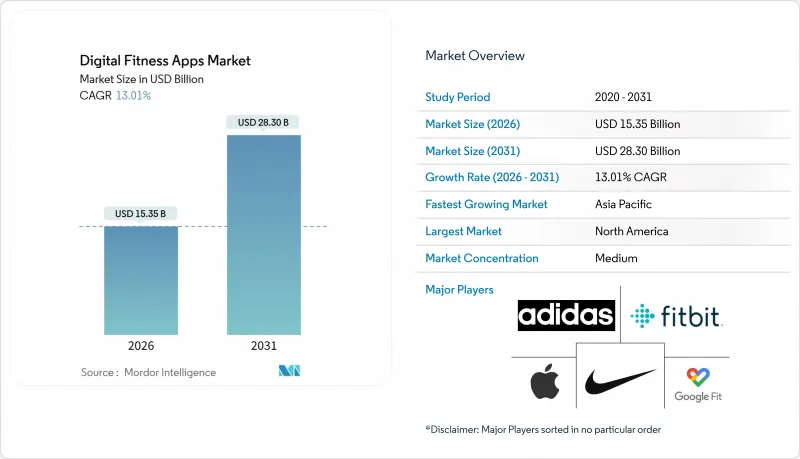
本報告按應用程式類型(健身追蹤、營養與飲食、冥想與心理健康、其他)、平台(iOS、Android、網頁及漸進式網頁應用程式、其他)、訂閱模式(免費增值、訂閱制、其他)、最終用戶(個人消費者、企業健康計劃、其他)和地區進行細分。市場預測以美元計價。
全球數位健身應用市場趨勢與洞察
將 GLP-1 應用於減重計畫
以Semaglutide和替澤帕肽為基礎的聯合療法正被整合到各大平台中,將藥物依從性支持工具與運動指導結合。慧儷輕體(WeightWatchers)已開始在其應用程式內開立GLP-1處方箋,引導會員使用遠端醫療服務,並簡化宅配服務。蘋果健身+(Apple Fitness+)新增了與服藥時間同步的運動計劃,降低了內分泌學家指出的肌肉流失風險。奧馬哈健康(Omada Health)擴大了其糖尿病預防項目的保險覆蓋範圍,將GLP-1支持納入其中,並將支付責任從用戶轉移到保險公司。透過整合藥物治療,應用程式正在演變為混合型護理協調員,將使用者參與週期延長至遠超通常90天取消期的水平,並使保險公司能夠支付此前僅限於門診就診的費用。
透過人工智慧生成的語音指導實現差異化
大規模語言模型將靜態教程轉化為互動式對話,使用戶能夠隨時調整訓練姿勢、強度和休息間隔。 WHOOP 的「教練」功能利用 GPT-4 分析夜間恢復數據,並在訓練期間提供即時指導。 Fitbit 的 Gemini 整合增加了對話式問答功能,提供經同行評審的科學答案。 Strava 的「運動員智慧」功能利用群體對比來估算比賽日的配速。語音互動使用戶無需頻繁查看螢幕,彌合了與真人教練之間的差距,降低了教練成本,並產生詳細的行為資料集,從而增強個性化引擎。
加強資料隱私監管
監管機構正在加強對高度敏感的健康遙測資料的管理。 2024年,愛爾蘭資料保護委員會因Meta公司不當處理健身資料而對其處以9,100萬歐元(約9,800萬美元)的罰款。歐盟的《數位市場法案》禁止安全隔離網閘自動安裝自家應用程式,迫使蘋果和谷歌等公司憑藉自身實力展開競爭。美國提案的立法要求數據共用必須獲得用戶明確同意,但這構成了一大障礙,因為40%的用戶拒絕給予同意。合規性要求增加了工程負擔,使跨平台個性化變得更加複雜,並迫使小規模開發者轉向整合。
細分市場分析
雖然與生育和避孕相關的應用程式在整個數位健身應用程式市場中所佔佔有率較小,但其複合年成長率 (CAGR) 高達 13.88%,超過了健身追蹤器預計到 2025 年將佔據的 36.83% 的市場佔有率。 Flo Health 的 CE 認證排卵預測引擎使歐洲保險公司能夠報銷訂閱費用,而 Natural Cycles 獲得 FDA 批准的方案在 2024 年吸引了 250 萬付費用戶。與 Apple Watch 和 Samsung Galaxy Ring 中的體溫感測器整合後,預測準確率已提高到近 95%,使應用程式的輸出結果與臨床基準相符。隨著雇主將這些工具納入生殖健康支持福利預算,並將訂閱收入納入公司預算,生殖健康解決方案的數位健身應用程式市場正在進一步擴張。雖然通用追蹤器領域的競爭正在推動供應商整合,但生殖健康應用程式的法規核准流程正在創造強大的競爭優勢,使公司在競爭中脫穎而出。
臨床功能的提升也提高了其他類別的保險報銷可能性。營養管理應用正在將GLP-1減重計畫與宏量營養素儀錶板整合,而像Calm這樣的冥想品牌則透過捆綁壓力管理指標來贏得企業合約。睡眠和姿勢追蹤器正在利用保險公司的獎勵計劃,獎勵用戶達成生物特徵目標,從而將用戶參與度延長至通常的90天期限之外。與此同時,不包含臨床元素的純粹運動追蹤應用程式正努力與那些透過設備銷售來抵消訂閱費用的生態系統巨頭區分開來。總而言之,監管的進步以及與醫療設備的整合正在重塑數位健身應用市場中應用類型的格局。
儘管 iOS 預計到 2025 年仍將保持 55.73% 的市場佔有率,但隨著處理功能直接轉移到手腕上,watchOS 和 Wear OS 預計到 2031 年將以 14.67% 的年成長率成長。蘋果的 watchOS 11 應用 Vitals 可以顯示夜間心率變異性 (HRV) 和呼吸頻率波動,提示使用者無需智慧型手機即可採取預防措施。谷歌的 Wear OS 5 將電池續航時間提升了 20%,使安卓用戶能夠進行多日追蹤。三星的 Energy Score 匯總睡眠、活動和心率訊號,計算出“準備指數”,將複雜的生物特徵數據轉化為單一的可操作指南。
隨著作業系統的發展趨勢,數位健身應用程式的市佔率也在不斷變化。始終運作的感測器為人工智慧模型提供豐富的數據,強化了將使用者與特定硬體產品組關聯起來的個人化體驗。同時,由於感測器存取權限有限以及缺乏後台處理能力,非原生Web應用的發展相對滯後。對於開發者而言,開發原生應用程式能夠在裝置端進行推理,並透過將原始資料本地化來簡化隱私合規流程。因此,「穿戴式裝置優先」的藍圖在數位健身應用產業的獲利模式討論中日益佔據中心地位。
區域分析
北美地區受惠於聯邦醫療保險優勢計畫(Medicare Advantage)的補貼以及雇主強制要求將數位訂閱納入員工福利計畫的規定,預計到2025年將佔全球收入的38.73%。美國老年人正在使用SilverSneakers的防跌倒模組,而Apple Fitness+也在擴展其「老年人」內容庫,以獲取類似的報銷收入。在加拿大,由於農村地區寬頻基礎設施不完善,成長仍集中在都市區。同時,在墨西哥,不斷壯大的中產階級開始接受以行動優先的生態系統所提供的服務。
預計亞太地區將實現最快成長,到2031年複合年成長率將達到14.66%。在印度和印度尼西亞,以行動裝置為中心的健康平台正迅速發展,使用者無需使用桌上型電腦,即可透過低成本的安卓裝置進行健康管理。在中國,微信運動透過將運動動態整合到其日常超級應用中,實現了3億月活躍用戶。在韓國,主導的硬體優勢使得三星健康預先安裝在三分之二的國產設備上。隨著4G網路覆蓋範圍的擴大以及營運商計費模式的普及,泰國和越南等新興東協市場正蓬勃發展,用戶無需信用卡即可使用付費應用程式。
預計到2025年,歐洲將佔全球市場佔有率的22%,其中德國、英國和法國將貢獻該地區60%的支出。 《數位市場法案》透過禁止預設安裝,為參與企業創造了更公平的競爭環境,使其更容易發現市場機遇,並有助於提升Strava等品牌的知名度。中東和非洲由於資料通訊成本高而發展落後,但也存在一些機會。尤其值得關注的是沙烏地阿拉伯的「2030願景」基金,該基金規模達5億美元,用於支持遠端醫療醫療試點計畫。此外,南非將健身程式等流量包與營運商數據流量包捆綁銷售的舉措也值得關注,這展現了一種在價格敏感型市場中可行的新型經營模式。
其他好處
- Excel格式的市場預測(ME)表
- 3個月的分析師支持
目錄
第1章:引言
- 研究假設和市場定義
- 調查範圍
第2章:調查方法
第3章執行摘要
第4章 市場狀況
- 市場概覽
- 市場促進因素
- 智慧型手機和穿戴式裝置的爆炸性普及
- 保險公司和雇主加大對基於應用程式的健康計劃的獎勵。
- 透過人工智慧生成的語音指導實現差異化
- 將 GLP-1 應用於減重計畫
- 遊戲化與社會健身中的網路效應
- 55歲以上族群對老年健身的需求
- 市場限制因素
- 加強資料隱私法規(GDPR、DMA、ADPPA)
- 疫情後應用棄用率及用戶留存率下降
- 由於廣告管道飽和,客戶獲取成本不斷上升。
- 與臨床級穿戴裝置相比,準確度存在差異
- 產業價值鏈分析
- 監理情勢
- 技術展望
- 波特五力分析
第5章 市場規模與成長預測
- :,
- 健身追蹤應用程式
- 營養與飲食應用程式
- 冥想和心理健康應用程式
- 不孕症治療與避孕應用程式
- 藥物/服藥提醒應用程式
- 其他健康類應用(睡眠、姿勢等)
- 按平台
- iOS
- Android
- Web/漸進式網頁應用
- 原生穿戴式作業系統(WatchOS、Wear OS 等)
- 透過訂閱模式
- 免費增值
- 訂閱制
- 一次性購買
- 企業許可
- 最終用戶
- 個人消費者
- 企業健康計劃
- 健身中心工作室
- 醫療保健提供者和保險公司
- 按地區
- 北美洲
- 美國
- 加拿大
- 墨西哥
- 南美洲
- 巴西
- 阿根廷
- 其他南美國家
- 歐洲
- 德國
- 英國
- 法國
- 義大利
- 西班牙
- 其他歐洲國家
- 亞太地區
- 中國
- 日本
- 印度
- 韓國
- ASEAN
- 其他亞太國家
- 中東和非洲
- 中東
- 沙烏地阿拉伯
- 阿拉伯聯合大公國
- 其他中東國家
- 非洲
- 南非
- 奈及利亞
- 其他非洲國家
- 中東
- 北美洲
第6章 競爭情勢
- 市場集中度
- 策略舉措和趨勢
- 市佔率分析
- 公司簡介
- Apple Inc.
- Alphabet Inc.(Google Fit)
- Fitbit LLC(Google)
- Samsung Electronics Co., Ltd.
- Nike, Inc.
- adidas AG
- Under Armour, Inc.
- Strava, Inc.
- Peloton Interactive, Inc.
- MyFitnessPal, Inc.
- Headspace Inc.
- Noom, Inc.
- Calm.com, Inc.
- Azumio, Inc.
- Sworkit Health
- Flo Health UK Ltd.
- Jefit, Inc.
- ASICS Digital, Inc.(Runkeeper)
- CureFit Healthcare Pvt. Ltd.
- Tencent Holdings Ltd.(WeChat Sports)
- Garmin Ltd.
- Zwift, Inc.
- WHOOP, Inc.
第7章 市場機會與未來展望
According to Mordor Intelligence, the digital fitness apps market size stands at USD 15.35 billion in 2026 and is projected to reach USD 28.30 billion by 2031, translating into a 13.01% CAGR over the forecast period.
This report is Segmented by App Type (Fitness-Tracking, Nutrition and Diet, Meditation and Mind-Wellness, and More), Platform (iOS, Android, Web/Progressive-Web-App, and More), Subscription Model (Freemium, Subscription-Based, and More), End User (Individual Consumers, Corporate Wellness Programs, and More), and Geography. The Market Forecasts are Provided in Terms of Value (USD).
Global Digital Fitness Apps Market Trends and Insights
GLP-1 Weight-Loss Program Integrations
Prescription therapies built on semaglutide and tirzepatide are being stitched into leading platforms, blending medication adherence tools with activity coaching. WeightWatchers began issuing GLP-1 prescriptions inside its app, funneling members to telehealth providers and streamlining home delivery. Apple Fitness+ added workout plans that sync to dosing schedules, mitigating muscle-loss risk flagged by endocrinologists. Omada Health expanded its reimbursed diabetes-prevention pathway to include GLP-1 support, shifting payment liability from users to insurers. Embedding pharmacotherapy elevates apps into hybrid care coordinators, lengthens engagement cycles well beyond the typical 90-day churn horizon, and unlocks insurer funding once confined to clinical visits.
Generative-AI Voice-Coach Differentiation
Large-language models are morphing static tutorials into two-way dialogues that adjust form, intensity, and rest intervals on the fly. WHOOP's Coach leverages GPT-4 to parse overnight recovery data and issue real-time prompts during exercise. Fitbit's Gemini integration adds conversational Q&A, grounding answers in peer-reviewed science. Strava's Athlete Intelligence estimates race-day pacing using cohort comparisons. Voice interaction frees users from screen glances, narrows the gap with human trainers, and compresses coaching costs, all while generating granular behavioral datasets that enrich personalization engines.
Heightened Data-Privacy Regulations
Regulators are tightening stewardship around sensitive health telemetry. The Irish Data Protection Commission fined Meta EUR 91 million (USD 98 million) in 2024 for mishandling fitness data. The European Union's Digital Markets Act bars gatekeepers from auto-installing their own apps, forcing Apple and Google to compete on merit. Proposed U.S. legislation would mandate explicit consent for data sharing, a hurdle that 40% of users decline when prompted. Compliance raises engineering overhead, complicates cross-platform personalization, and pushes subscale developers toward consolidation.
Other drivers and restraints analyzed in the detailed report include:
- Rising Insurer and Employer Incentives for App-Based Wellness
- Explosive Smartphone and Wearable Penetration
- Post-Pandemic App-Fatigue and Retention Drop-Off
For complete list of drivers and restraints, kindly check the Table Of Contents.
Segment Analysis
Fertility and contraception titles, while a smaller slice of the digital fitness apps market, are expanding at a 13.88% CAGR, outstripping the 36.83% 2025 dominance held by fitness trackers. Flo Health's CE-marked ovulation engine lets European insurers reimburse subscriptions, while Natural Cycles' FDA-cleared protocol drew 2.5 million paying users in 2024. Integration with temperature sensors on Apple Watch and Samsung Galaxy Ring boosts prediction accuracy toward 95%, aligning app outputs with clinical benchmarks. The digital fitness apps market size for fertility solutions deepens as employers roll these tools into fertility-benefit budgets, attaching subscription revenue to corporate wallets. Competitive intensity in generic trackers is prompting vendor consolidation, whereas regulatory pathways in fertility apps create defensible moats.
Clinical functionality is elevating reimbursement potential across other categories too. Nutrition apps tie GLP-1 taper programs to macro dashboards, while meditation brands such as Calm secure enterprise contracts by bundling stress-management metrics. Sleep and posture trackers leverage insurer programs that reward biometric milestones, extending user journeys beyond the typical 90-day horizon. Conversely, pure workout-log apps without clinical hooks struggle for differentiation against ecosystem giants that subsidize subscriptions with device sales. Overall, regulatory progression and medical-device alignment are reshaping the app-type hierarchy inside the digital fitness apps market.
iOS retained a 55.73% share in 2025, but watchOS and Wear OS instances are compounding at 14.67% through 2031 as processing shifts directly onto the wrist. Apple's watchOS 11 Vitals app surfaces overnight HRV and respiratory-rate deviations, nudging users toward preventive behaviors without phone intervention. Google's Wear OS 5 improved battery life by 20%, a threshold that turns multi-day tracking into reality for Android cohorts. Samsung's Energy Score aggregates sleep, activity, and heart-rate signals into a readiness index, translating complex biometrics into a single actionable metric.
The digital fitness apps market share migrates alongside these OS trends because always-on sensors feed richer data to AI models, reinforcing personalization cycles that tether users to specific hardware lines. Non-native web apps lag, restricted by sensor permissions and absent background processing. For developers, building natively unlocks on-device inference and streamlines privacy compliance by keeping raw data local. Consequently, wearable-first roadmaps are increasingly central to monetization discussions inside the digital fitness apps industry.
Complete Report Scope:
- By App Type
- Fitness-Tracking Apps
- Nutrition and Diet Apps
- Meditation and Mind-wellness Apps
- Fertility and Contraception Apps
- Medication and Pill-Reminder Apps
- Other Wellness Apps (sleep, posture, etc.)
- By Platform
- iOS
- Android
- Web / Progressive-Web-App
- Wearable-OS Native (watchOS, Wear OS, etc.)
- By Subscription Model
- Freemium
- Subscription-based
- One-time Purchase
- Enterprise Licensing
- By End User
- Individual Consumers
- Corporate Wellness Programs
- Fitness Centres and Studios
- Healthcare Providers and Insurers
- By Geography
- North America
- United States
- Canada
- Mexico
- South America
- Brazil
- Argentina
- Rest of South America
- Europe
- Germany
- United Kingdom
- France
- Italy
- Spain
- Rest of Europe
- Asia-Pacific
- China
- Japan
- India
- South Korea
- ASEAN
- Rest of Asia-Pacific
- Middle East and Africa
- Middle East
- Saudi Arabia
- United Arab Emirates
- Rest of Middle East
- Africa
- South Africa
- Nigeria
- Rest of Africa
- Middle East
- North America
Geography Analysis
North America retained 38.73% of 2025 revenue, powered by Medicare Advantage subsidies and employer mandates that weave digital subscriptions into benefits packages. U.S. seniors engage with SilverSneakers' fall-prevention modules, while Apple Fitness+ populates its "Older Adults" library to capture the same reimbursement streams. Canada's growth remains urban-centric due to patchy rural broadband, and Mexico's expanding middle class is onboarding via mobile-first ecosystems.
Asia-Pacific is the fastest riser at a 14.66% CAGR through 2031. India and Indonesia leapfrog desktop computing, adopting mobile-centric health platforms that thrive on low-cost Android handsets. China's WeChat Sports amassed 300 million monthly users by embedding activity feeds within an everyday super-app, and South Korea's Samsung-led hardware dominance ensures pre-installation of Samsung Health on two-thirds of domestic devices. Emerging ASEAN markets such as Thailand and Vietnam gain momentum as 4G coverage widens and carrier billing unlocks paid-app conversion without credit cards.
Europe accounts for 22% of 2025 value, with Germany, the United Kingdom, and France driving 60% of regional spend. The Digital Markets Act levels the discovery field for midsize players by banning default installs, enhancing visibility for brands like Strava. Middle East and Africa trails due to data-cost frictions yet pockets of opportunity exist, notably Saudi Arabia's USD 500 million Vision 2030 fund that underwrites telehealth pilots. South Africa's carrier-bundled data packs that include fitness apps illustrate an emerging model for price-sensitive markets.
- Apple Inc.
- Alphabet Inc. (Google Fit)
- Fitbit LLC (Google)
- Samsung Electronics Co., Ltd.
- Nike, Inc.
- adidas AG
- Under Armour, Inc.
- Strava, Inc.
- Peloton Interactive, Inc.
- MyFitnessPal, Inc.
- Headspace Inc.
- Noom, Inc.
- Calm.com, Inc.
- Azumio, Inc.
- Sworkit Health
- Flo Health UK Ltd.
- Jefit, Inc.
- ASICS Digital, Inc. (Runkeeper)
- CureFit Healthcare Pvt. Ltd.
- Tencent Holdings Ltd. (WeChat Sports)
- Garmin Ltd.
- Zwift, Inc.
- WHOOP, Inc.
Additional Benefits:
- The market estimate (ME) sheet in Excel format
- 3 months of analyst support
TABLE OF CONTENTS
1 INTRODUCTION
- 1.1 Study Assumptions and Market Definition
- 1.2 Scope of the Study
2 RESEARCH METHODOLOGY
3 EXECUTIVE SUMMARY
4 MARKET LANDSCAPE
- 4.1 Market Overview
- 4.2 Market Drivers
- 4.2.1 Explosive smartphone and wearable penetration
- 4.2.2 Rising insurer and employer incentives for app-based wellness
- 4.2.3 Generative-AI voice-coach differentiation
- 4.2.4 GLP-1 weight-loss program integrations
- 4.2.5 Gamification and social-fitness network effects
- 4.2.6 Elder-fitness demand from 55+ cohort
- 4.3 Market Restraints
- 4.3.1 Heightened data-privacy regulations (GDPR, DMA, ADPPA)
- 4.3.2 Post-pandemic app-fatigue and retention drop-off
- 4.3.3 Rising customer-acquisition costs on saturated ad channels
- 4.3.4 Accuracy gaps vs. clinical-grade wearables
- 4.4 Indusy Value Chain Analysis
- 4.5 Regulatory Landscape
- 4.6 Technological Outlook
- 4.7 Porter's Five Forces Analysis
- 4.7.1 Bargaining Power of Suppliers
- 4.7.2 Bargaining Power of Consumers
- 4.7.3 Threat of New Entrants
- 4.7.4 Threat of Substitute Products
- 4.7.5 Intensity of Competitive Rivalry
5 MARKET SIZE AND GROWTH FORECASTS (VALUE)
- 5.1 By App Type
- 5.1.1 Fitness-Tracking Apps
- 5.1.2 Nutrition and Diet Apps
- 5.1.3 Meditation and Mind-wellness Apps
- 5.1.4 Fertility and Contraception Apps
- 5.1.5 Medication and Pill-Reminder Apps
- 5.1.6 Other Wellness Apps (sleep, posture, etc.)
- 5.2 By Platform
- 5.2.1 iOS
- 5.2.2 Android
- 5.2.3 Web / Progressive-Web-App
- 5.2.4 Wearable-OS Native (watchOS, Wear OS, etc.)
- 5.3 By Subscription Model
- 5.3.1 Freemium
- 5.3.2 Subscription-based
- 5.3.3 One-time Purchase
- 5.3.4 Enterprise Licensing
- 5.4 By End User
- 5.4.1 Individual Consumers
- 5.4.2 Corporate Wellness Programs
- 5.4.3 Fitness Centres and Studios
- 5.4.4 Healthcare Providers and Insurers
- 5.5 By Geography
- 5.5.1 North America
- 5.5.1.1 United States
- 5.5.1.2 Canada
- 5.5.1.3 Mexico
- 5.5.2 South America
- 5.5.2.1 Brazil
- 5.5.2.2 Argentina
- 5.5.2.3 Rest of South America
- 5.5.3 Europe
- 5.5.3.1 Germany
- 5.5.3.2 United Kingdom
- 5.5.3.3 France
- 5.5.3.4 Italy
- 5.5.3.5 Spain
- 5.5.3.6 Rest of Europe
- 5.5.4 Asia-Pacific
- 5.5.4.1 China
- 5.5.4.2 Japan
- 5.5.4.3 India
- 5.5.4.4 South Korea
- 5.5.4.5 ASEAN
- 5.5.4.6 Rest of Asia-Pacific
- 5.5.5 Middle East and Africa
- 5.5.5.1 Middle East
- 5.5.5.1.1 Saudi Arabia
- 5.5.5.1.2 United Arab Emirates
- 5.5.5.1.3 Rest of Middle East
- 5.5.5.2 Africa
- 5.5.5.2.1 South Africa
- 5.5.5.2.2 Nigeria
- 5.5.5.2.3 Rest of Africa
- 5.5.5.1 Middle East
- 5.5.1 North America
6 COMPETITIVE LANDSCAPE
- 6.1 Market Concentration
- 6.2 Strategic Moves and Developments
- 6.3 Market Share Analysis
- 6.4 Company Profiles (includes Global level Overview, Market level overview, Core Segments, Financials as available, Strategic Information, Market Rank/Share for key companies, Products and Services, and Recent Developments)
- 6.4.1 Apple Inc.
- 6.4.2 Alphabet Inc. (Google Fit)
- 6.4.3 Fitbit LLC (Google)
- 6.4.4 Samsung Electronics Co., Ltd.
- 6.4.5 Nike, Inc.
- 6.4.6 adidas AG
- 6.4.7 Under Armour, Inc.
- 6.4.8 Strava, Inc.
- 6.4.9 Peloton Interactive, Inc.
- 6.4.10 MyFitnessPal, Inc.
- 6.4.11 Headspace Inc.
- 6.4.12 Noom, Inc.
- 6.4.13 Calm.com, Inc.
- 6.4.14 Azumio, Inc.
- 6.4.15 Sworkit Health
- 6.4.16 Flo Health UK Ltd.
- 6.4.17 Jefit, Inc.
- 6.4.18 ASICS Digital, Inc. (Runkeeper)
- 6.4.19 CureFit Healthcare Pvt. Ltd.
- 6.4.20 Tencent Holdings Ltd. (WeChat Sports)
- 6.4.21 Garmin Ltd.
- 6.4.22 Zwift, Inc.
- 6.4.23 WHOOP, Inc.
7 MARKET OPPORTUNITIES AND FUTURE OUTLOOK
- 7.1 White-space and Unmet-Need Assessment

 寵物生活方式管理市場預測至2034年—全球解決方案類型、寵物品種、技術、應用、分銷管道、最終用戶和區域分析
 健身應用市場:2026-2032年全球市場預測(按平台、訂閱模式、健身目標、活動類型、部署模式和最終用戶分類)
 Move To Earn健身應用市場規模、佔有率和成長分析:按平台、獎勵類型、活動類型、獲利模式、功能、最終用戶和地區分類-2026-2033年產業預測
 2026-2030年全球健身應用市場
 跑步應用市場規模、佔有率和成長分析:按平台、類型、功能、最終用戶、分銷管道和地區分類-2026-2033年產業預測
 體育健身應用市場:按平台、設備、應用和地區分類
 2026年全球健身應用市場報告
 健身應用市場分析及預測(至2035年):按類型、產品類型、服務、技術、組件、應用、設備、部署類型及最終用戶分類
 健身應用市場 - 全球產業規模、佔有率、趨勢、機會、預測:按平台、應用程式類型、最終用戶、地區和競爭格局分類,2021-2031年
 健身應用市場規模、佔有率和趨勢分析報告:按類型、平台、設備、地區和細分市場預測(2026-2033 年)