


 |
市場調查報告書
商品編碼
2115167
脂肪酸甲酯:市佔率分析、產業趨勢與統計、成長預測(2026-2031)Fatty Acid Methyl Ester - Market Share Analysis, Industry Trends & Statistics, Growth Forecasts (2026 - 2031) |
||||||

※ 本網頁內容可能與最新版本有所差異。詳細情況請與我們聯繫。
根據 Mordor Intelligence 預測,脂肪酸甲酯的市場規模預計將從 2025 年的 160 萬噸成長到 2026 年的 163 萬噸,然後從 2026 年到 2031 年以 1.94% 的複合年成長率成長,到 2031 年達到 179 萬噸。
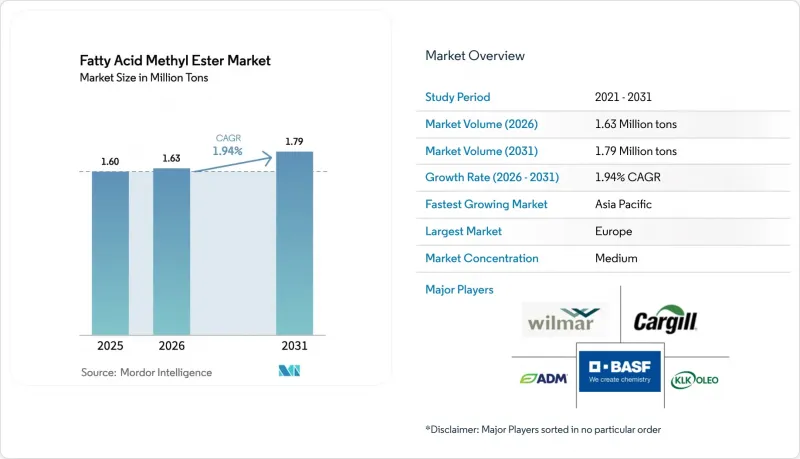
本報告按類型(菜籽油、大豆油、棕櫚油及其他)、應用領域(燃料、潤滑油、塗料、食品和農業、個人保健產品及其他應用)和地區(亞太地區、北美地區、歐洲地區、南美地區、中東和非洲地區)進行細分。市場預測以噸為單位。
全球脂肪酸甲酯市場趨勢及洞察
加強生物柴油摻混強制規定
印尼計畫於2026年強制實施B50標準,預計每年吸收約1,100萬噸棕櫚油,並保護國內生產者免受出口波動風險的影響。在巴西,根據RenovaBio計分類階段過渡到B15標準預計將新增15億公升的需求。同時,美國提案71.2億至75億個生質能柴油燃料的RINs(再生能源識別碼),並計劃對與進口原料相關的碳權額度進行折扣。在歐洲,RED III指令維持了29%的交通能源目標,同時將農作物衍生生生質燃料限制在7%,促使投資轉向廢油酯。諸如ISCC和REDcert-EU等認證體系目前已涵蓋超過15,000個地點,並對全球貿易准入產生影響。
原料供應增加和成本競爭力提高
在ISCC認證和市政回收計畫的支持下,2024年中國向歐盟出口的廢棄食用油(UCO)達到120萬噸。儘管2024年歐洲廢棄食用油的平均價格為每噸950歐元,但由於RED III政策下的雙重積分計算,歐洲廢棄食用油仍具有經濟可行性。到2024年底,棕櫚油價格已降至每噸3800至4000馬來西亞馬幣,提高了東南亞長期合約生產商的利潤率。然而,南美洲的天氣波動和印尼的棕櫚油出口配額可能會迅速抵消這一成本優勢,凸顯了脂肪酸甲酯市場固有的原料風險。
植物油價格波動
棕櫚油期貨價格從2023年初的每噸5200馬來西亞馬幣波動至2024年12月的每噸3800馬來西亞馬幣,導致未避險生產商的脂肪酸甲酯(FAME)利潤率下降多達20個百分點。美國大豆油價格也呈現類似趨勢,在2024年3月達到每磅68美分的峰值,但由於巴西大豆豐收,到10月跌至每磅42美分。由於原物料成本佔生產成本的85%之多,此類價格波動會迅速侵蝕盈利。
細分市場分析
其他類型的脂肪酸甲酯,例如源自廢油、動物脂肪和藻油的脂肪酸甲酯,預計到2031年將以2.76%的複合年成長率成長,超過整體脂肪酸甲酯市場的成長速度。 2024年,中國廢油衍生脂肪酸甲酯的總產量達到180萬噸,中石化和中糧集團向鹿特丹和漢堡出口了經認證的貨物。北美動物油脂加工企業,例如達令原料公司(Darling Ingredients),利用其垂直整合的回收網路,供應了40萬噸源自動物脂肪的脂肪酸甲酯。
2025年,得益於歐洲800萬噸的精煉基地以及符合EN 14214標準的低溫流動性優勢,菜籽油甲酯仍將佔全球產量的45.12%,而大豆油甲酯則在美洲市場佔據主導地位。棕櫚油甲酯主要產自印尼和馬來西亞,正面臨歐盟間接土地利用變化(ILUC)限制,進口配額將凍結在2019年的水平。因此,獲得ISCC和REDcert認證對於市場准入至關重要,無法證明其供應鏈不涉及森林砍伐的生產商將面臨被市場拒之門外的風險。
區域分析
2025年,歐洲佔全球總產量的38.92%,但可再生柴油工廠和先進生質燃料的配額正擠佔傳統脂肪酸甲酯(FAME)的原料供應。由於廢食用油(UCO)短缺擠壓利潤空間,德國2024年的FAME產量下降4%至280萬噸,而法國則得益於Sipol公司一體化的菜籽資產,產量維持在160萬噸不變。英國2024年發放了120萬張FAME可再生運輸燃料證書,較去年同期下降8%,原因是煉油廠轉向使用氫化植物油(HVO)。北歐地區的需求仍然不高,但向廢棄物衍生替代燃料的快速轉型正在推動歐洲原料結構的變化。
預計到2031年,亞太地區的複合年成長率將達到3.54%。馬來西亞將其剩餘棕櫚油出口到菲律賓和泰國,但由於棕櫚油價格走軟,煉油利潤率下降。中國的國內生產主要依賴城市廢棄物項目,其80%的產量出口到歐盟,而歐盟普遍存在重複累計獎勵的情況。印度因高度重視乙醇混合燃料而發展滯後,而日本和韓國則小規模進口棕櫚油以履行其企業永續性承諾。
到2025年,北美將佔據較大的市場佔有率。美國憑藉其卓越的消費量位居榜首,這主要得益於愛荷華州和伊利諾伊州大豆油精煉設施的快速擴張。加拿大在其「無污染燃料法規」的指導下消費了32萬噸,而墨西哥則依賴進口18萬噸。南美洲在2024年供應了320萬噸。巴西的B12法規吸收了63億公升,阿根廷在貿易爭端緩和後出口了120萬噸。中東和非洲仍在發展中,但展現出巨大潛力,沙烏地阿拉伯計劃投資5億美元,建造一個年處理量30萬噸的廢油項目,該項目計劃於2026年投產。
其他福利
- Excel格式的市場預測(ME)表
- 3個月的分析師支持
目錄
第1章:引言
- 研究假設和市場定義
- 調查範圍
第2章:調查方法
第3章執行摘要
第4章 市場狀況
- 市場概覽
- 市場促進因素
- 加強生物柴油摻混強制規定
- 原料供應增加和成本競爭力提高
- 對低硫可再生柴油替代品的需求日益成長
- 利用脂肪酸甲酯混合物為航運業進行燃料庫示範項目
- 個人護理行業需求增加
- 市場限制因素
- 植物油價格波動
- 替代生質燃料與可再生柴油燃料之間的競爭
- 監管的不確定性和對政策的依賴
- 價值鏈分析
- 波特五力模型
第5章 市場規模與成長預測
- 按類型
- 油菜籽
- 大豆
- 棕櫚油
- 其他類型(源自廢油、動物脂肪、藻油)
- 透過使用
- 燃料
- 潤滑劑
- 塗層
- 食品和農業
- 個人保健產品
- 其他用途(塑化劑、界面活性劑、金屬加工液)
- 按地區
- 亞太地區
- 中國
- 印度
- 日本
- 韓國
- ASEAN
- 其他亞太國家
- 北美洲
- 美國
- 加拿大
- 墨西哥
- 歐洲
- 德國
- 英國
- 法國
- 義大利
- 西班牙
- 北歐國家
- 其他歐洲國家
- 南美洲
- 巴西
- 阿根廷
- 其他南美國家
- 中東和非洲
- 沙烏地阿拉伯
- 阿拉伯聯合大公國
- 南非
- 奈及利亞
- 其他中東和非洲國家
- 亞太地區
第6章 競爭情勢
- 市場集中度
- 策略趨勢
- 市佔率和排名分析
- 公司簡介
- Archer Daniels Midland Co.
- BASF
- Cargill, Incorporated.
- Emery Oleochemicals
- Godrej Industries Limited
- IOI Oleochemical
- KLK OLEO
- ABITEC, Larodan Research Grade Lipids
- Louis Dreyfus Company
- Mewah Group
- Chevron
- Tokyo Chemical Industry Pvt. Ltd.
- VERBIO North America LLC
- Wilmar International Ltd
第7章 市場機會與未來展望
According to Mordor Intelligence, the fatty acid methyl ester market size is expected to grow from 1.60 million tons in 2025 to 1.63 million tons in 2026 and is forecast to reach 1.79 million tons by 2031 at a 1.94% CAGR over 2026-2031.
This report is Segmented by Type (Rapeseed, Soy, Palm Oil, Other Types), Application (Fuel, Lubricants, Coatings, Food and Agriculture, Personal Care Products, Other Applications), and Geography (Asia-Pacific, North America, Europe, South America, Middle East and Africa). The Market Forecasts are Provided in Terms of Volume (Tons).
Global Fatty Acid Methyl Ester Market Trends and Insights
Escalating Biodiesel Blend Mandates
Indonesia will introduce a B50 requirement in 2026 that is expected to absorb about 11 million tons of palm oil annually, insulating domestic producers from export volatility. Brazil's phased move to B15 adds 1.5 billion liters of incremental demand under RenovaBio, while the United States proposes biomass-based diesel volumes of 7.12-7.50 billion RINs but intends to discount credits tied to imported feedstocks. In Europe, RED III preserves a 29% transport-energy target yet caps crop-based biofuels at 7%, nudging investments toward waste-oil esters. Certification schemes such as ISCC and REDcert-EU now cover more than 15,000 sites, shaping global trade access.
Increasing Feedstock Availability and Cost Competitiveness
Municipal collection programs lifted China's used-cooking-oil exports to the EU to 1.2 million tons in 2024, supported by ISCC approvals. Double-counting credits under RED III keeps European UCO economical despite the average 2024 prices of EUR 950 per ton. Palm oil eased to MYR 3,800-4,000 per ton by late-2024, boosting margins for Southeast Asian producers holding long-term contracts. However, weather shifts in South America or palm-export quotas in Indonesia can swiftly reverse the cost advantage, underscoring the feedstock risk embedded in the Fatty Acid Methyl Ester market.
Vegetable-Oil Price Volatility
Palm-oil futures swung from MYR 5,200 per ton in early 2023 to MYR 3,800 per ton by December 2024, slicing FAME margins by as much as 20 percentage points for producers lacking hedges. Soybean oil prices saw a similar pattern in the United States, peaking at 68 cents per pound in March 2024, then sliding to 42 cents by October as Brazilian harvests surged. With feedstock accounting for up to 85% of production cost, such volatility can erode profitability swiftly.
Other drivers and restraints analyzed in the detailed report include:
- Rising Demand for Low-Sulfur Renewable Diesel Substitutes
- Maritime Bio-Bunkering Pilots Adopting FAME Blends
- Competition from Alternative Biofuels and Renewable Diesel
For complete list of drivers and restraints, kindly check the Table Of Contents.
Segment Analysis
Other Types - spanning waste-oil, animal-fat, and algal-oil methyl esters - are set to expand at a 2.76% CAGR through 2031, outpacing the overall Fatty Acid Methyl Ester market. Waste-oil ester output in China totaled 1.8 million tons in 2024, with Sinopec and COFCO exporting certified cargoes to Rotterdam and Hamburg. North American renderers such as Darling Ingredients supplied 400,000 tons of tallow-based FAME, leveraging vertically integrated collection networks.
Rapeseed methyl ester retained 45.12% global volume in 2025 due to Europe's 8 million-ton refining base and cold-flow advantages that align with EN 14214 norms, while soy methyl ester dominated the Americas. Palm-oil esters, concentrated in Indonesia and Malaysia, face EU ILUC caps that freeze import quotas at 2019 levels. Certification under ISCC and REDcert is therefore pivotal for market access, and producers unable to document zero-deforestation supply chains risk exclusion.
Complete Report Scope:
- By Type
- Rapeseed Methyl Ester
- Soy Methyl Ester
- Palm Oil Methyl Ester
- Other Types (Waste-Oil Methyl Ester, Animal-Fat-Derived Methyl Ester, Algal-Oil Methyl Ester)
- By Application
- Fuel
- Lubricants
- Coatings
- Food and Agriculture
- Personal Care Products
- Other Applications (Plasticizers and Surfactants,Metalworking Fluids)
- By Geography
- Asia-Pacific
- China
- India
- Japan
- South Korea
- ASEAN Countries
- Rest of Asia-Pacific
- North America
- United States
- Canada
- Mexico
- Europe
- Germany
- United Kingdom
- France
- Italy
- Spain
- NORDIC Countries
- Rest of Europe
- South America
- Brazil
- Argentina
- Rest of South America
- Middle-East and Africa
- Saudi Arabia
- United Arab Emirates
- South Africa
- Nigeria
- Rest of Middle-East and Africa
- Asia-Pacific
Geography Analysis
Europe commanded 38.92% of global volume in 2025, yet renewable diesel plants and advanced-biofuel quotas are siphoning feedstocks away from traditional FAME. Germany's 2024 output slipped 4% to 2.8 million tons as UCO shortages pressed margins, while France held flat at 1.6 million tons thanks to Saipol's integrated rapeseed assets. The United Kingdom issued 1.2 million Renewable Transport Fuel Certificates for FAME in 2024, 8% lower than the prior year as refiners pivoted toward HVO. Nordic demand remains modest but is shifting quickly to waste-based alternatives, reinforcing Europe's structural feedstock shift.
Asia-Pacific is primed for a 3.54% CAGR through 2031. Malaysia exported surplus volumes to the Philippines and Thailand, but softer palm prices narrowed refinery spreads. China's domestic output is centered on municipal waste-oil programs, with 80% of production exported to the EU, where double-counting incentives prevail. India lags due to ethanol-blend priorities, while Japan and South Korea import modest cargoes to deliver corporate sustainability pledges.
North America accounted for a significant market share in 2025. The United States led with outstanding volume consumption anchored by rapidly scaled soybean-oil refining in Iowa and Illinois. Canada consumed 320,000 tons under its Clean Fuel Regulations, and Mexico relied on imports for 180,000 tons. South America supplied 3.2 million tons in 2024, with Brazil's B12 rule absorbing 6.3 billion liters and Argentina exporting 1.2 million tons after trade disputes eased. The Middle East and Africa remain nascent but show potential as Saudi Arabia channels USD 500 million into a 300,000-ton waste-oil project slated for 2026.
- Archer Daniels Midland Co.
- BASF
- Cargill, Incorporated.
- Emery Oleochemicals
- Godrej Industries Limited
- IOI Oleochemical
- KLK OLEO
- ABITEC, Larodan Research Grade Lipids
- Louis Dreyfus Company
- Mewah Group
- Chevron
- Tokyo Chemical Industry Pvt. Ltd.
- VERBIO North America LLC
- Wilmar International Ltd
Additional Benefits:
- The market estimate (ME) sheet in Excel format
- 3 months of analyst support
TABLE OF CONTENTS
1 Introduction
- 1.1 Study Assumptions and Market Definition
- 1.2 Scope of the Study
2 Research Methodology
3 Executive Summary
4 Market Landscape
- 4.1 Market Overview
- 4.2 Market Drivers
- 4.2.1 Escalating biodiesel blend mandates
- 4.2.2 Increasing feedstock availability and cost competitiveness
- 4.2.3 Rising demand for low-sulfur renewable diesel substitutes
- 4.2.4 Maritime bio-bunkering pilots adopting FAME blends
- 4.2.5 Increasing demand from personal care industry
- 4.3 Market Restraints
- 4.3.1 Vegetable-oil price volatility
- 4.3.2 Competition from Alternative Biofuels and Renewable Diesel
- 4.3.3 Regulatory Uncertainty and Policy Dependence
- 4.4 Value Chain Analysis
- 4.5 Porter's Five Forces
- 4.5.1 Bargaining Power of Buyers
- 4.5.2 Bargaining Power of Suppliers
- 4.5.3 Threat of New Entrants
- 4.5.4 Threat of Substitutes
- 4.5.5 Degree of Competition
5 Market Size and Growth Forecasts (Volume)
- 5.1 By Type
- 5.1.1 Rapeseed Methyl Ester
- 5.1.2 Soy Methyl Ester
- 5.1.3 Palm Oil Methyl Ester
- 5.1.4 Other Types (Waste-Oil Methyl Ester, Animal-Fat-Derived Methyl Ester, Algal-Oil Methyl Ester)
- 5.2 By Application
- 5.2.1 Fuel
- 5.2.2 Lubricants
- 5.2.3 Coatings
- 5.2.4 Food and Agriculture
- 5.2.5 Personal Care Products
- 5.2.6 Other Applications (Plasticizers and Surfactants,Metalworking Fluids)
- 5.3 By Geography
- 5.3.1 Asia-Pacific
- 5.3.1.1 China
- 5.3.1.2 India
- 5.3.1.3 Japan
- 5.3.1.4 South Korea
- 5.3.1.5 ASEAN Countries
- 5.3.1.6 Rest of Asia-Pacific
- 5.3.2 North America
- 5.3.2.1 United States
- 5.3.2.2 Canada
- 5.3.2.3 Mexico
- 5.3.3 Europe
- 5.3.3.1 Germany
- 5.3.3.2 United Kingdom
- 5.3.3.3 France
- 5.3.3.4 Italy
- 5.3.3.5 Spain
- 5.3.3.6 NORDIC Countries
- 5.3.3.7 Rest of Europe
- 5.3.4 South America
- 5.3.4.1 Brazil
- 5.3.4.2 Argentina
- 5.3.4.3 Rest of South America
- 5.3.5 Middle-East and Africa
- 5.3.5.1 Saudi Arabia
- 5.3.5.2 United Arab Emirates
- 5.3.5.3 South Africa
- 5.3.5.4 Nigeria
- 5.3.5.5 Rest of Middle-East and Africa
- 5.3.1 Asia-Pacific
6 Competitive Landscape
- 6.1 Market Concentration
- 6.2 Strategic Moves
- 6.3 Market Share(%)/Ranking Analysis
- 6.4 Company Profiles (includes Global level Overview, Market level overview, Core Segments, Financials as available, Strategic Information, Market Rank/Share, Products and Services, Recent Developments)
- 6.4.1 Archer Daniels Midland Co.
- 6.4.2 BASF
- 6.4.3 Cargill, Incorporated.
- 6.4.4 Emery Oleochemicals
- 6.4.5 Godrej Industries Limited
- 6.4.6 IOI Oleochemical
- 6.4.7 KLK OLEO
- 6.4.8 ABITEC, Larodan Research Grade Lipids
- 6.4.9 Louis Dreyfus Company
- 6.4.10 Mewah Group
- 6.4.11 Chevron
- 6.4.12 Tokyo Chemical Industry Pvt. Ltd.
- 6.4.13 VERBIO North America LLC
- 6.4.14 Wilmar International Ltd
7 Market Opportunities and Future Outlook
- 7.1 White-space and Unmet-Need Assessment
- 7.2 Catalyst and process-intensification breakthroughs

 ω-3 乙酯市場:全球市場預測,2026-2032 年脂肪酸甲酯市場-2026-2032年全球市場預測
 脂肪酸甲酯市場-全球產業規模、佔有率、趨勢、機會、預測:按原料、應用、地區和競爭對手分類,2021-2031年
 脂肪酸甲酯市場規模、佔有率和趨勢分析報告:按原料、產品、應用、地區和細分市場預測(2026-2033 年)
 2026年全球氯化脂肪酸甲酯市場報告
 脂肪酸甲酯(FAME)全球市場、需求分析、依區域、應用、預測(~2034年)
 脂肪酸甲酯市場:按類型、應用和地區
 脂肪酸甲酯市場預測至 2030 年:按脂肪酸類型、原料、生產方法、應用和地區進行的全球分析脂肪酸甲酯 (FAME) 全球市場(2018-2034)