


 |
市場調查報告書
商品編碼
2100270
網路安全諮詢:市場佔有率分析、產業趨勢與統計、成長預測(2026-2031)Cybersecurity Consulting - Market Share Analysis, Industry Trends & Statistics, Growth Forecasts (2026 - 2031) |
||||||

※ 本網頁內容可能與最新版本有所差異。詳細情況請與我們聯繫。
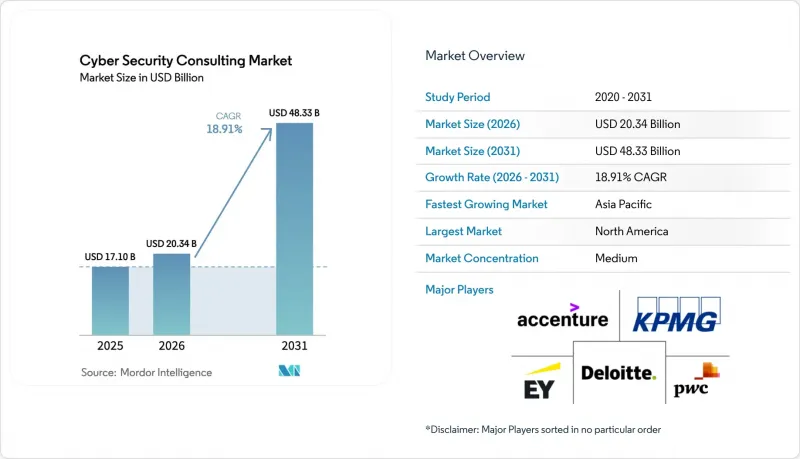
據 Mordor Intelligence 稱,網路安全諮詢市場在 2025 年的價值為 171 億美元,預計到 2031 年將達到 483.3 億美元,而 2026 年為 203.4 億美元,預測期(2026-2031 年)的複合年成長率為 18.91%。
本報告按安全類型(網路安全、終端安全等)、服務類型(風險評估與管理、合規與審計等)、合約類型(企劃為基礎等)、組織規模(大型企業和中小企業)、行業(醫療保健和生命科學等)以及地區進行細分。市場預測以美元計價。
全球網路安全諮詢市場趨勢與洞察
多方面攻擊的頻率和複雜性日益增加
2024年,勒索軟體、供應鏈攻擊和敲詐勒索宣傳活動的數量和複雜性呈現爆炸性成長。據Verizon稱,漏洞利用攻擊事件增加了180%,勒索軟體攻擊佔所有記錄事件的32%。全球平均潛伏期從16天縮短至10天,迫使企業尋求全天候威脅狩獵合作夥伴,以縮短從偵測到遏制的週期。超過一半的受害者仍然透過第三方了解事件,這進一步凸顯了對外部諮詢的需求。攻擊者和防禦者雙方對人工智慧工具的採用,使得網路安全威脅的複雜性增加到企業內部團隊無法獨自應對的程度。因此,隨著企業尋求以固定價格簽訂事件回應合約(包括取證調查、危機管理溝通和監管報告),網路安全諮詢市場蓬勃發展。
加強全球和特定產業合規要求。
根據美國證券交易委員會(SEC)於2023年9月生效的規定,在美國上市的上市公司必須在四個工作天內報告重大網路安全事件。此外,上市公司還必須遵守全球250多項與隱私相關的法律,而美國運輸安全局(TSA)針對管道和鐵路營運商提案的規則實施預計將在未來十年內耗資22億美元。在歐洲,「網路歐洲2024」演習動員了5,000名從業人員檢驗跨國應變能力,凸顯了監管機構桌面演練的製度化趨勢。這些相互交織的監管要求正在將諮詢範圍從隱私擴展到出口管制、強制勞動合規和供應鏈完整性等領域,從而進一步擴大網路安全諮詢市場。
網路安全專業認證人員嚴重短缺,導致專案成本上升。
根據ISC2發布的《2024年人才調查報告》,全球人才缺口已達480萬,而所需職位僅填補了72%。 IBM量化了這項損失,指出與人才充足的同業相比,人才短缺的公司平均因資料外洩損失456萬美元。顧問公司向擁有稀缺認證的高素質人才支付高薪,這最終會轉嫁給客戶,但需求仍然超過供給,限制了專案能力,並減緩了網路安全諮詢市場的整體成長。
細分市場分析
與雲端安全相關的合約預計將以19.85%的年成長率成長,成為網路安全諮詢市場各細分領域中成長率最高的。這主要是由於身分配置錯誤和無伺服器架構目前加劇了安全漏洞的發生率。到2025年,網路安全仍將佔網路安全諮詢市場的23.80%,但隨著零信任策略的普及,其對邊界防禦的關注度正在下降。終端安全受益於遠端辦公的興起,而隨著DevSecOps將測試整合到CI/CD管道中,應用安全的重要性日益凸顯。隨著OT網路和IT的融合以及安全性的日益重要,基礎設施和ICS(工業控制系統)的諮詢也不斷深化。身分和存取管理的採用正在穩步推進,而隨著NIST量子防禦密碼學(PQC)標準的製定,量子防禦措施正逐漸成為一個高階諮詢領域。總體而言,這些領域的多元化正在增強網路安全諮詢市場的韌性。
隨著SaaS在高度監管產業的普及,預計到2030年,雲端安全領域的網路安全諮詢市場規模將成長三倍以上。將ERP工作負載遷移到雲端平台的企業面臨諸多合規性問題,例如影子管理員帳戶、安全性低的API以及資料居住等。顧問顧問會整合雲端原生安全態勢管理、自動化基礎架構即程式碼(IaC)掃描,並設計最小權限身分模型。同時,針對量子運算的諮詢服務涵蓋演算法敏捷性、加密資產清單和遷移計畫等面向。網路微隔離在傳統環境中仍然至關重要,但它現在已與零信任仲介整合,而不再只是一個防火牆。 5G和邊緣物聯網的日益普及推動了ICS/OT審計的增加,並在製造業和公共產業催生了新的需求。無論企業成熟度如何,傳統邊界防禦與下一代雲端控制的結合都在推動網路安全諮詢市場的強勁成長。
風險評估仍然至關重要,預計到2025年將佔網路安全諮詢市場支出的30.70%。同時,資安管理服務正以19.10%的速度成長,滿足了客戶在人手不足下對持續監控的需求。隨著隱私法規的日益完善,合規和審計領域保持著長期發展勢頭;隨著攻擊者手段日益複雜,威脅情報和取證相關工作也不斷擴展。由於攻擊延遲的縮短,事件回應和彈性規劃在預算中佔據了更高的優先事項。結合網路保險和ESG報告的諮詢服務目前仍處於起步階段,但隨著核保人和評級機構將安全指標納入考量,預計該服務將迎來爆發性成長。
進一步分析表明,在網路安全諮詢市場中,託管安全服務 (MSS) 的成長速度超過了傳統的企劃為基礎服務。客戶報告稱,透過外包給專業的安全營運中心 (SOC),平均檢測時間 (MTD) 縮短了 40%。服務供應商正在整合自動化安全營運分析回應 (SOAR)、精選情報源和專有的人工智慧分析能力,從而提高了准入門檻。在風險評估方面,調查方法越來越符合 NIST CSF 2.0 和 ISO/IEC 27001 的最新修訂版,提高了分析的深度和可重複性。合規性審計現在涵蓋了 CCPA、CPRA、GDPR、Schrems II 資料傳輸條款,甚至包括新的人工智慧相關法規。數位取證的範圍正在擴大,包括行動惡意軟體的逆向工程和基於區塊鏈的證據保存。這些服務共同實現了收入來源多元化,並減輕了經濟波動對網路安全諮詢市場的影響。
區域分析
預計到2025年,北美將佔全球收入的37.50%,這主要得益於美國證券交易委員會(SEC)的資訊揭露規則、18個州的隱私法以及網路保險的高普及率。加拿大國家網路威脅評估報告指出,勒索軟體和國家支持的間諜活動是最大的風險,並敦促企業投資制定諮詢藍圖。在墨西哥,由於美墨加協定(USMCA)下貿易監控和跨境資料傳輸審計力度加大,網路安全諮詢市場需求不斷成長,進一步擴大了網路安全諮詢市場。
亞太地區是成長最快的地區,複合年成長率高達19.35%。在中國實施資料本地化法規的同時,日本正在投資量子加密試點計畫。在印度,四大會計師事務所的分公司諮詢收入成長了25%,新增了3,300名合夥人,其中超過一半的收入來自技術和網路安全相關合約。韓國市場正圍繞安全營運中心(SOC)自動化進行整合,而澳洲則在推動關鍵基礎設施改革。這些因素共同支撐著亞太地區在網路安全諮詢市場的佔有率。
在歐洲,受GDPR和新的NIS2指令的推動,網路安全諮詢市場呈現穩定成長態勢。德國已強制要求工業安全營運中心(SOC)進行認證,英國正在完善脫歐後的DPIA流程,法國則在投資主權雲端和加密服務。由歐盟網路安全局(ENISA)贊助的「網路歐洲」演習已將準備評估制度化,而解讀演習結果需要諮詢支持。俄羅斯因制裁而陷入孤立,這催生了對國內諮詢服務的需求,並重塑了競爭格局。法律體系的多樣性要求跨境運營的公司統籌跨多個司法管轄區的項目,從而擴大了區域網路安全諮詢市場。
其他好處:
- Excel格式的市場預測(ME)表
- 3個月的分析師支持
目錄
第1章:引言
- 研究假設和市場定義
- 調查範圍
第2章:調查方法
第3章執行摘要
第4章 市場狀況
- 市場概覽
- 市場促進因素
- 多方面攻擊的頻率和複雜性都在增加。
- 加強全球和特定產業合規要求
- 雲端運算、SaaS 和邊緣運算的日益普及正在擴大攻擊面。
- 網路保險保單中強制要求第三方審計的條款
- 資料外洩指標現已反映在董事會層級的 ESG 評估中。
- 量子運算賦能加密技術的藍圖正在加速諮詢費用的成長。
- 市場限制因素
- 合格網路安全人員嚴重短缺,導致專案成本上升。
- 現有MSSP服務商面臨的高昂轉換成本與工具鎖定問題
- 加強對高能耗測試實驗室碳排放計算的監測
- 地緣政治出口限制阻礙了跨國法證調查。
- 價值供應鏈分析
- 監理情勢
- 技術展望
- 波特五力模型
- 價格波動機制
第5章 市場規模與成長預測
- 按安全類型
- 網路安全
- 端點安全
- 雲端安全
- 應用程式安全
- 基礎設施/ICS 安全
- 身分和存取管理
- 其他安全類型(物聯網、營運技術、量子技術)
- 按服務類型
- 風險評估與管理
- 合規與審計
- 威脅情報和數位取證
- 託管安全服務 (MSS)
- 事件回應與復原規劃
- 網路保險和ESG報告諮詢
- 按參與模式
- 企劃為基礎
- 預付費/訂閱
- 基於績效和風險分擔的模式
- 按組織規模
- 大公司
- 中小企業
- 按行業分類
- 銀行、金融服務和保險(BFSI)
- 醫療保健和生命科學
- IT/通訊
- 政府/國防
- 零售與電子商務
- 製造業和工業
- 能源公用事業
- 其他行業(教育、媒體)
- 按地區
- 北美洲
- 美國
- 加拿大
- 墨西哥
- 歐洲
- 德國
- 英國
- 法國
- 義大利
- 西班牙
- 俄羅斯
- 其他歐洲國家
- 亞太地區
- 中國
- 日本
- 印度
- 韓國
- 澳洲和紐西蘭
- 其他亞太國家
- 南美洲
- 巴西
- 阿根廷
- 其他南美國家
- 中東和非洲
- 中東
- 阿拉伯聯合大公國
- 沙烏地阿拉伯
- 土耳其
- 其他中東國家
- 非洲
- 南非
- 奈及利亞
- 其他非洲國家
- 中東
- 北美洲
第6章 競爭情勢
- 市場集中度
- 策略趨勢
- 市佔率分析
- 公司簡介
- Accenture
- Deloitte
- PwC
- KPMG
- EY
- IBM
- Booz Allen Hamilton
- Cisco
- CrowdStrike
- Broadcom(Symantec Enterprise)
- McAfee
- Check Point
- Atos
- Capgemini
- Wipro
- Tata Consultancy Services
- BAE Systems
- CGI
- Optiv Security
- Palo Alto Networks(Unit 42)
- CyberArk
- Infosys
- Mandiant(Google Cloud)
- Rapid7
第7章 市場機會與未來展望
According to Mordor Intelligence, the cybersecurity consulting market size was valued at USD 17.10 billion in 2025 and estimated to grow from USD 20.34 billion in 2026 to reach USD 48.33 billion by 2031, at a CAGR of 18.91% during the forecast period (2026-2031).
This report is Segmented by Security Type (Network Security, Endpoint Security, and More), Service Type (Risk Assessment and Management, Compliance and Audit, and More), Engagement Model (Project-Based, and More), Organization Size (Large Enterprises and SMEs), Industry Vertical (Healthcare and Life Sciences, and More), and by Geography. The Market Forecasts are Provided in Terms of Value (USD).
Global Cybersecurity Consulting Market Trends and Insights
Rising frequency and sophistication of multi-vector attacks
The volume and complexity of ransomware, supply-chain, and extortion campaigns exploded in 2024, with Verizon logging a 180% rise in vulnerability-led breaches and ransomware representing 32% of all recorded incidents. Median global dwell time tightened to 10 days, down from 16, forcing companies to source 24/7 threat-hunting partners capable of compressing detection-to-containment cycles. Over half of the victims still learn of incidents from third parties, further validating the external advisory demand. AI-enabled tooling on both attacker and defender sides adds complexity that few in-house teams can manage. Consequently, the Cybersecurity Consulting Market grew as organizations sought incident response retainers that include forensics, crisis communications and regulatory reporting.
Escalating global and sector-specific compliance mandates
Public companies listed in the United States must now report material cyber events within four business days under SEC rules enacted September 2023. Firms also navigate more than 250 privacy laws worldwide, while the TSA's proposed rules for pipeline and rail operators will cost USD 2.2 billion over ten years. In Europe, the Cyber Europe 2024 exercise mobilized 5,000 practitioners to test cross-border readiness, underscoring how regulators institutionalize tabletop drills. These overlapping mandates extend consulting beyond privacy into export-control, forced-labor compliance and supply-chain integrity, swelling the Cybersecurity Consulting Market.
Acute shortage of certified cyber talent inflates project costs
ISC2's 2024 workforce study places the global shortfall at 4.8 million practitioners, leaving only 72% of required seats filled. IBM quantifies the cost: firms with shortages incurred average breach losses of USD 4.56 million, versus better-staffed peers. Consulting providers pay premium wages for scarce certifications, a burden ultimately borne by clients, yet demand still outstrips supply, limiting project throughput and tempering total Cybersecurity Consulting Market growth.
Other drivers and restraints analyzed in the detailed report include:
- Cloud, SaaS and edge adoption widening attack surfaces
- Cyber-insurance clauses mandating third-party audits
- Rising carbon-accounting scrutiny on energy-intensive labs
For complete list of drivers and restraints, kindly check the Table Of Contents.
Segment Analysis
Cloud security engagements are projected to grow 19.85% annually, the fastest rate among sub-segments of the Cybersecurity Consulting Market because mis-configured identities and serverless architectures now account for a rising share of breaches. Network security still commands 23.80% of the Cybersecurity Consulting Market share in 2025, yet its perimeter focus erodes under zero-trust policies. Endpoint security benefits from remote-work persistence, while application security gains relevance as DevSecOps integrates testing into CI/CD pipelines. Infrastructure and ICS consulting deepens as OT networks converge with IT, raising safety stakes. Identity and access management sees steady uptake, and quantum-readiness appears as a premium advisory niche following NIST's PQC standards. All told, diversification across these lines adds resilience to the Cybersecurity Consulting Market.
The Cybersecurity Consulting Market for cloud security is positioned to expand more than threefold by 2030 as SaaS adoption penetrates heavily regulated verticals. Organizations re-platforming ERP workloads confront shadow admin accounts, insecure APIs, and compliance concerns around data residency. Consultants embed cloud-native security posture management, automate infrastructure-as-code scanning, and design least-privilege identity models. Meanwhile, quantum readiness consulting addresses algorithm agility, crypto-asset inventory, and migration timelines. Across legacy environments, network micro-segmentation remains mandatory, yet now integrates with zero-trust brokers rather than firewalls alone. As 5G and edge IoT footprints grow, ICS/OT audits escalate, feeding a separate wave of demand in manufacturing and utilities. The mix of traditional perimeter hygiene and next-gen cloud controls keeps the Cybersecurity Consulting Market robust across enterprise maturity bands.
Risk assessment remained the anchor, capturing 30.70% of 2025 spend within the Cybersecurity Consulting Market. Yet Managed Security Services accelerate at 19.10%, matching buyers' need for continuous monitoring amid workforce shortages. Compliance and audit lines enjoy secular momentum as privacy regimes multiply; threat intelligence and forensics engagements grow with attacker sophistication. Incident response and resiliency planning win budget priority after dwell times compress. Advisory blending cyber-insurance and ESG reporting is nascent but expected to surge as underwriters and rating agencies incorporate security metrics.
A deeper dive shows the Cybersecurity Consulting Market for MSS growth, outpacing traditional project-based work. Buyers cite mean-time-to-detect reductions of 40% after outsourcing to specialist SOCs. Providers embed SOAR automations, curated intelligence feeds and proprietary AI analytics, which in turn elevate barriers to entry. For risk assessment, methodologies increasingly align with NIST CSF 2.0 and ISO/IEC 27001 updates, adding depth and repeatability. Compliance audits now span CCPA, CPRA, GDPR, Schrems II transfer clauses and novel AI-act provisions. Digital forensics has expanded to include mobile malware reverse engineering and blockchain-enabled evidence preservation. Together, these services diversify revenue streams and cushion cyclical swings in the Cybersecurity Consulting Market.
Complete Report Scope:
- By Security Type
- Network Security
- Endpoint Security
- Cloud Security
- Application Security
- Infrastructure/ICS Security
- Identity and Access Management
- Other Security Types (IoT, OT, Quantum-Readiness)
- By Service Type
- Risk Assessment and Management
- Compliance and Audit
- Threat Intelligence and Digital Forensics
- Managed Security Services (MSS)
- Incident Response and Resiliency Planning
- Advisory for Cyber-Insurance and ESG Reporting
- By Engagement Model
- Project-Based
- Retainer / Subscription
- Outcome-Based and Shared-Risk
- By Organization Size
- Large Enterprises
- Small and Medium Enterprises (SMEs)
- By Industry Vertical
- Banking, Financial Services and Insurance (BFSI)
- Healthcare and Life Sciences
- IT and Telecommunications
- Government and Defense
- Retail and E-Commerce
- Manufacturing and Industrial
- Energy and Utilities
- Other Verticals (Education, Media)
- By Geography
- North America
- United States
- Canada
- Mexico
- Europe
- Germany
- United Kingdom
- France
- Italy
- Spain
- Russia
- Rest of Europe
- Asia-Pacific
- China
- Japan
- India
- South Korea
- Australia and New Zealand
- Rest of Asia-Pacific
- South America
- Brazil
- Argentina
- Rest of South America
- Middle East and Africa
- Middle East
- United Arab Emirates
- Saudi Arabia
- Turkey
- Rest of Middle East
- Africa
- South Africa
- Nigeria
- Rest of Africa
- Middle East
- North America
Geography Analysis
North America held 37.50% of 2025 revenue, anchored by SEC disclosure rules, 18 state privacy laws, and deep cyber-insurance penetration. Canada's National Cyber Threat Assessment flags ransomware and state-sponsored espionage as top risks, pressing companies to invest in advisory road maps. Mexico sees heightened demand as USMCA trade scrutiny and cross-border data transfer audits rise, further inflating the Cybersecurity Consulting Market.
Asia-Pacific is the fastest-growing region with a 19.35% CAGR. China enforces data-localization rules, while Japan funds quantum-safe encryption pilots. India's Big Four affiliates added 3,300 partners as advisory revenue grew 25%, with more than half sourced from tech and cyber contracts. South Korea's market coalesces around SOC automation, and Australia pushes critical-infrastructure reforms. Collectively, these drivers underpin the Asia-Pacific share of the Cybersecurity Consulting Market.
Europe posts steady gains under GDPR and new NIS2 obligations. Germany mandates industrial SOC certification; the United Kingdom refines post-Brexit DPIA processes; France invests in sovereign cloud and crypto services. ENISA's Cyber Europe drills institutionalize readiness assessment, requiring advisory help to interpret exercise findings. Russia's sanctions-driven isolation necessitates a domestic consulting supply, reshaping competitive contours. The diversity of legal regimes means cross-border corporates must orchestrate multi-jurisdiction programs, expanding the regional Cybersecurity Consulting Market.
- Accenture
- Deloitte
- PwC
- KPMG
- EY
- IBM
- Booz Allen Hamilton
- Cisco
- CrowdStrike
- Broadcom (Symantec Enterprise)
- McAfee
- Check Point
- Atos
- Capgemini
- Wipro
- Tata Consultancy Services
- BAE Systems
- CGI
- Optiv Security
- Palo Alto Networks (Unit 42)
- CyberArk
- Infosys
- Mandiant (Google Cloud)
- Rapid7
Additional Benefits:
- The market estimate (ME) sheet in Excel format
- 3 months of analyst support
TABLE OF CONTENTS
1 INTRODUCTION
- 1.1 Study Assumptions and Market Definition
- 1.2 Scope of the Study
2 RESEARCH METHODOLOGY
3 EXECUTIVE SUMMARY
4 MARKET LANDSCAPE
- 4.1 Market Overview
- 4.2 Market Drivers
- 4.2.1 Rising frequency and sophistication of multi-vector attacks
- 4.2.2 Escalating global and sector-specific compliance mandates
- 4.2.3 Cloud, SaaS and edge adoption widening attack surfaces
- 4.2.4 Cyber-insurance policy clauses mandating third-party audits
- 4.2.5 Board-level ESG scoring now factoring data-breach metrics
- 4.2.6 Quantum-ready encryption road-maps accelerating advisory spend
- 4.3 Market Restraints
- 4.3.1 Acute shortage of certified cyber talent inflates project costs
- 4.3.2 High switching costs from incumbent MSSP/tool lock-in
- 4.3.3 Rising carbon-accounting scrutiny on energy-intensive testing labs
- 4.3.4 Geopolitical export-control rules limiting cross-border forensics
- 4.4 Value / Supply-Chain Analysis
- 4.5 Regulatory Landscape
- 4.6 Technological Outlook
- 4.7 Porter's Five Forces
- 4.7.1 Bargaining Power of Suppliers
- 4.7.2 Bargaining Power of Buyers
- 4.7.3 Threat of New Entrants
- 4.7.4 Threat of Substitutes
- 4.7.5 Intensity of Competitive Rivalry
- 4.8 Pricing Dynamics
5 MARKET SIZE AND GROWTH FORECASTS (VALUES)
- 5.1 By Security Type
- 5.1.1 Network Security
- 5.1.2 Endpoint Security
- 5.1.3 Cloud Security
- 5.1.4 Application Security
- 5.1.5 Infrastructure/ICS Security
- 5.1.6 Identity and Access Management
- 5.1.7 Other Security Types (IoT, OT, Quantum-Readiness)
- 5.2 By Service Type
- 5.2.1 Risk Assessment and Management
- 5.2.2 Compliance and Audit
- 5.2.3 Threat Intelligence and Digital Forensics
- 5.2.4 Managed Security Services (MSS)
- 5.2.5 Incident Response and Resiliency Planning
- 5.2.6 Advisory for Cyber-Insurance and ESG Reporting
- 5.3 By Engagement Model
- 5.3.1 Project-Based
- 5.3.2 Retainer / Subscription
- 5.3.3 Outcome-Based and Shared-Risk
- 5.4 By Organization Size
- 5.4.1 Large Enterprises
- 5.4.2 Small and Medium Enterprises (SMEs)
- 5.5 By Industry Vertical
- 5.5.1 Banking, Financial Services and Insurance (BFSI)
- 5.5.2 Healthcare and Life Sciences
- 5.5.3 IT and Telecommunications
- 5.5.4 Government and Defense
- 5.5.5 Retail and E-Commerce
- 5.5.6 Manufacturing and Industrial
- 5.5.7 Energy and Utilities
- 5.5.8 Other Verticals (Education, Media)
- 5.6 By Geography
- 5.6.1 North America
- 5.6.1.1 United States
- 5.6.1.2 Canada
- 5.6.1.3 Mexico
- 5.6.2 Europe
- 5.6.2.1 Germany
- 5.6.2.2 United Kingdom
- 5.6.2.3 France
- 5.6.2.4 Italy
- 5.6.2.5 Spain
- 5.6.2.6 Russia
- 5.6.2.7 Rest of Europe
- 5.6.3 Asia-Pacific
- 5.6.3.1 China
- 5.6.3.2 Japan
- 5.6.3.3 India
- 5.6.3.4 South Korea
- 5.6.3.5 Australia and New Zealand
- 5.6.3.6 Rest of Asia-Pacific
- 5.6.4 South America
- 5.6.4.1 Brazil
- 5.6.4.2 Argentina
- 5.6.4.3 Rest of South America
- 5.6.5 Middle East and Africa
- 5.6.5.1 Middle East
- 5.6.5.1.1 United Arab Emirates
- 5.6.5.1.2 Saudi Arabia
- 5.6.5.1.3 Turkey
- 5.6.5.1.4 Rest of Middle East
- 5.6.5.2 Africa
- 5.6.5.2.1 South Africa
- 5.6.5.2.2 Nigeria
- 5.6.5.2.3 Rest of Africa
- 5.6.5.1 Middle East
- 5.6.1 North America
6 COMPETITIVE LANDSCAPE
- 6.1 Market Concentration
- 6.2 Strategic Moves
- 6.3 Market Share Analysis
- 6.4 Company Profiles (includes Global level Overview, Market level overview, Core Segments, Financials as available, Strategic Information, Market Rank/Share for key companies, Products and Services, and Recent Developments)
- 6.4.1 Accenture
- 6.4.2 Deloitte
- 6.4.3 PwC
- 6.4.4 KPMG
- 6.4.5 EY
- 6.4.6 IBM
- 6.4.7 Booz Allen Hamilton
- 6.4.8 Cisco
- 6.4.9 CrowdStrike
- 6.4.10 Broadcom (Symantec Enterprise)
- 6.4.11 McAfee
- 6.4.12 Check Point
- 6.4.13 Atos
- 6.4.14 Capgemini
- 6.4.15 Wipro
- 6.4.16 Tata Consultancy Services
- 6.4.17 BAE Systems
- 6.4.18 CGI
- 6.4.19 Optiv Security
- 6.4.20 Palo Alto Networks (Unit 42)
- 6.4.21 CyberArk
- 6.4.22 Infosys
- 6.4.23 Mandiant (Google Cloud)
- 6.4.24 Rapid7
7 MARKET OPPORTUNITIES AND FUTURE OUTLOOK
- 7.1 White-space and Unmet Need Analysis

 全光譜網路安全服務市場:全球市場預測,2026-2032年託管網路安全服務市場:按服務組件、安全類型、部署模式、組織規模和產業分類-2026-2032年全球市場預測
 2026年全球安全與隱私支援服務市場報告2026年全球網路安全諮詢市場報告
 保全服務市場規模、佔有率和趨勢分析報告:按服務、最終用途、地區和細分市場分類(2026-2033 年)2026年全球網路安全託管服務市場報告2026年全球保全服務市場報告
 全球網路安全諮詢市場規模、佔有率、趨勢和成長分析報告(2026-2034)網路安全託管服務市場規模、佔有率、成長率和全球產業分析:按類型、應用和地區分類的洞察,2026-2034 年預測
 網路安全保全服務市場 - 全球產業規模、佔有率、趨勢、機會及預測(按組織規模、安全類型、最終用戶產業、地區和競爭格局分類,2021-2031 年)