


 |
市場調查報告書
商品編碼
2099761
西非乳木果油:市場佔有率分析、產業趨勢與統計及成長預測(2026-2031 年)West Africa Shea Butter - Market Share Analysis, Industry Trends & Statistics, Growth Forecasts (2026 - 2031) |
||||||

※ 本網頁內容可能與最新版本有所差異。詳細情況請與我們聯繫。
據 Mordor Intelligence 稱,2025 年西非乳木果油市場價值為 12.5 億美元,預計到 2031 年將從 2026 年的 13.1 億美元成長至 37.8 億美元,預測期(2026-2031 年)複合年成長率為 6.57%。
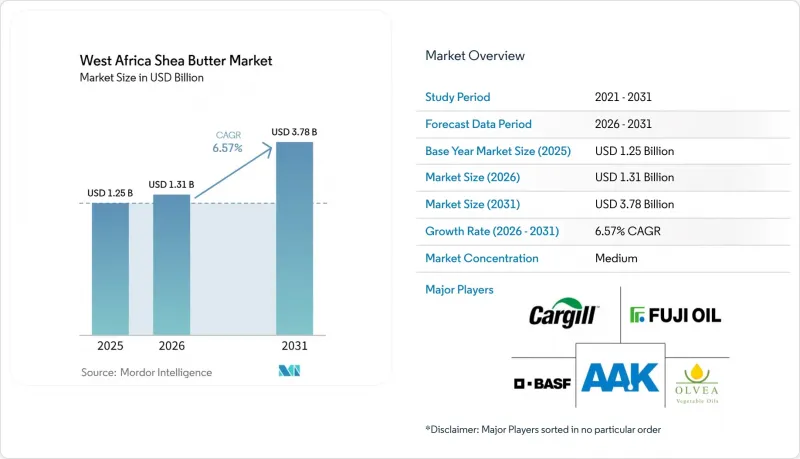
本報告按類型(原料/未精製、精製、分餾)和應用(食品飲料、化妝品及個人護理、製藥、工業)進行分類。市場預測以美元計價。
西非乳木果油市場趨勢與洞察
擴大潔淨標示和植物來源化妝品配方
西非乳木果油市場正受益於護膚和護髮品牌不斷轉向更簡潔的成分錶和植物來源的原料。歐洲和北美買家擴大使用乳木果油,因為未經精煉的原料含有三萜醇、生育酚和酚類化合物,這些成分有助於提升成品的保濕和抗發炎功效。因此,如果品牌既追求產品的功能性,又希望展現天然成分的概念,那麼很難以相近的成本用合成潤膚劑取代未經精煉的乳木果油。這種改變也影響著採購行為。隨著品牌尋求經過認證且可追溯的供應商,而非標準的通用級原料,普通市場的供應量正在減少,而基於合約的採購模式則越來越受歡迎。因此,西非乳木果油市場的需求不僅在數量上有所成長,而且對具有明確永續性和採購記錄的優質產品的需求也在增加。
糖果甜點和食品加工產業對可可脂替代品的需求
西非乳木果油市場也受惠於糖果甜點和食品加工產業對乳木果衍生可可脂替代品的需求成長。西非可可供應緊張導致2024年和2025年可可脂價格飆升,迫使製造商尋求技術可靠的替代品,以保持可可脂的質地和品質。發表在《食品生物物理學》雜誌上的一項研究表明,透過適當控制替代比例,將乳木果油和硬脂酸混合,可以保持固態脂含量和感官特性,這將促進其在巧克力應用中的大規模商業化應用。此外,美國食品藥物管理局(FDA)於2024年7月發布了乳木果硬脂酸的GRAS(一般公認無異議)函,進一步鞏固了這個需求前景。這在北美食品應用領域經歷了長期停滯後,重新開啟了受監管的成長之路。西非乳木果油市場從這種轉變中受益最大,因為加工商能夠生產出符合食品級標準的精製和分餾等級產品,特別是硬脂酸。
對生堅果的出口限制正在擾亂貿易流通。
西非乳木果油市場正面臨短期衝擊,因為多個國家對原果出口的限制措施推進速度超過了當地加工能力的提升速度。奈及利亞的出口禁令就是一個典型的例子。儘管該政策旨在支持國內加工,但其過早實施導致許多採摘者在收穫季節無法立即找到買家。這增加了先前依賴靈活採購和區域外加工的國際買家的採購風險。此外,買家現在要求簽訂長期乳木果油供應契約,而不是在公開市場上購買原果,這增加了對營運資金的需求。西非乳木果油市場可能將持續面臨這種壓力,直到新的提取和精煉能力能夠即時消化更大比例的當地收穫。
細分市場分析
至2025年,未經精煉的乳木果油將佔西非乳木果油市場價值的58.42%,成為該市場最大的類別。這一主導地位反映了化妝品買家對完整未皂化成分的持續需求,以保持潤膚、抗氧化和皮膚屏障功能,而這些功能在更高級的加工過程中會受到損害。精煉產品也是成長最快的品類,預計到2031年,西非乳木果油市場的這一細分市場將以8.21%的複合年成長率成長。這種規模和成長的結合表明,買家將未經精煉的乳木果油視為一種高銷量成分,同時又將其定位為一種與天然來源和可追溯性相關的優質成分。
精製乳木果油適用於那些對顏色、香味和食品級稠度要求高於完全天然成分的應用。因此,它在糖果甜點、中性化妝品基底以及其他需要在大規模批量生產中保持技術性能一致性的應用中仍然非常重要。由於硬脂酸在可可脂替代品配方中的應用日益廣泛,以及已發表的研究證實其在受控配方比例下具有良好的功能性,分餾乳木果油的重要性也日益凸顯。因此,對於那些能夠在產地附近提取、精製和分餾原料,而不是將低價值原料出口到海外的加工商而言,西非乳木果油市場正在創造更大的價值。
其他好處:
- Excel格式的市場預測(ME)表
- 3個月的分析師支持
目錄
第1章:引言
- 研究假設和市場定義
- 調查範圍
第2章:調查方法
第3章執行摘要
第4章 市場狀況
- 市場概覽
- 市場促進因素
- 擴大潔淨標示和植物來源美容產品的市場
- 糖果甜點和食品加工產業對可可脂替代品的需求
- 西非認證產品的可追溯性溢價
- 在原產地市場進行加工和增值維護的本地化
- 優先選擇永續且符合道德規範的原料
- 坑式發酵方法的改進和機械壓榨機的引入提高了供應品質。
- 市場限制因素
- 季節性供應短缺和藍藻素的長成熟週期。
- 對生堅果的出口限制阻礙了貿易流通。
- 分散的收集網路中存在品質差異和非法污染問題。
- 遵守有機、公平貿易和食品安全標準的高成本。
- 供應鏈分析
- 監理情勢
- 技術展望
- 波特五力模型
第5章 市場規模與成長預測
- 按類型
- 生的/未精製的
- 純化
- 分離脂肪和油脂(硬脂酸、油酸)
- 透過使用
- 食品/飲料
- 化妝品和個人護理
- 製藥
- 工業用途(生物潤滑劑、蠟燭等)
第6章 競爭情勢
- 市場集中度
- 策略趨勢
- 市場排名分析
- 公司簡介
- AAK AB
- Cargill, Incorporated
- Bunge Global SA
- Fuji Oil Holdings Inc.
- Olvea Group
- Savannah Fruits Company
- BASF SE
- Croda International Plc
- Clariant AG
- SOPHIM SA
- Ghana Nuts Company Ltd.
- Gombella Integrated Services Ltd.
- Manorama Industries Limited
- All Organic Treasures GmbH
- Shea Radiance LLC
- Suru Chemicals and Pharmaceuticals Pvt. Ltd.
- Natural Sourcing, LLC
- TegaGold Resources
- Right Shea Ltd.
- Pure Origins Ghana
第7章 市場機會與未來展望
According to Mordor Intelligence, the west Africa shea butter market size was valued at USD 1.25 billion in 2025 and is estimated to grow from USD 1.31 billion in 2026 to reach USD 3.78 billion by 2031, at a CAGR of 6.57% during the forecast period (2026-2031).
This report is Segmented by Type (raw/Unrefined, Refined, and Fractionated), Application (food and Beverages, Cosmetics and Personal Care, Pharmaceuticals, and Industrial). The Market Forecasts are Provided in Terms of Value (USD).
West Africa Shea Butter Market Trends and Insights
Expansion Of Clean-Label And Plant-Based Beauty Formulations
The West Africa Shea Butter market is benefiting from a steady move by skincare and haircare brands toward simpler ingredient lists and plant-based inputs. Buyers in Europe and North America are using more shea butter because unrefined material retains triterpene alcohols, tocopherols, and phenolic compounds that support moisturization and anti-inflammatory performance in finished products. This makes unrefined shea harder to replace at the same cost with synthetic emollients when brands want both functional performance and a natural ingredient story. The shift is also changing buying behavior because brands are now asking for certified and traceable supply rather than standard commodity-grade material, which reduces open-market availability and favors contracted sourcing programs. The West Africa Shea Butter market is therefore seeing stronger demand not only for volume, but also for premium grades that carry clear sustainability and sourcing credentials.
Cocoa Butter Equivalent Demand In Confectionery And Food Processing
The West Africa Shea Butter market is also being supported by the rise in shea-based cocoa butter equivalents in confectionery and food processing. Cocoa supply stress in West Africa lifted cocoa butter prices sharply in 2024 and 2025, which pushed manufacturers to look for technically reliable alternatives that could hold texture and product quality. Research published in Food Biophysics showed that shea butter stearin blends can maintain solid fat content and sensory properties at controlled substitution ratios, which supports larger commercial use in chocolate applications. The FDA strengthened this demand path when it issued a GRAS "No Questions" letter in July 2024 for shea stearin, which reopened a regulated growth path in North American food use after a long gap. The West Africa Shea Butter market is gaining most from this shift in processors that can produce refined and fractionated grades, especially stearin, at food-grade standards.
Raw Nut Export Restrictions Disrupting Trade Flows
The West Africa Shea Butter market is facing short-term disruption because raw nut export restrictions are moving faster than local processing capacity in several countries. Nigeria's export ban shows the main problem clearly because the policy was meant to support domestic processing, but early implementation left many collectors with fewer immediate buyers during the harvest season. This raises procurement risk for international buyers that used to depend on flexible nut purchases and then process material outside the region. It also raises working capital needs because buyers now need longer-term contracts for butter supply instead of open-market nut purchases. The West Africa Shea Butter market will remain exposed to this pressure until new extraction and refining capacity can absorb a larger share of local harvests in real time.
Other drivers and restraints analyzed in the detailed report include:
- Processing Localization And Value Retention In Origin Markets
- Traceability Premium For Certified West African Supply
- Seasonal Supply Tightness And Long Shea Tree Maturity Cycles
For complete list of drivers and restraints, kindly check the Table Of Contents.
Segment Analysis
Raw and unrefined shea butter held 58.42% of market value in 2025, which made it the largest type in the West Africa Shea Butter market. This lead reflects sustained demand from cosmetics buyers that want the full unsaponifiable profile because it supports emollient, antioxidant, and skin barrier functions that are reduced by heavier processing. Refined material is also the fastest-growing type, with the West Africa Shea Butter market size for this segment projected to rise at an 8.21% CAGR through 2031. This combination of scale and growth shows that buyers are treating unrefined shea as both a volume material and a premium ingredient linked to natural positioning and traceable sourcing.
Refined shea butter serves applications where color, odor, and food-grade consistency matter more than a full natural profile. That keeps it relevant in confectionery, neutral cosmetic bases, and other uses where technical performance must remain stable across large batches. Fractionated shea has become more important because stearin is being used more actively in cocoa butter equivalent formulations, and published research supports its functional compatibility at controlled blend ratios. The West Africa Shea Butter market is therefore creating more value for processors that can handle extraction, refining, and fractionation close to origin rather than shipping lower-value raw material abroad.
Complete Report Scope:
- By Type
- Raw / Unrefined
- Refined
- Fractionated (stearin, olein)
- By Application
- Food and Beverages
- Cosmetics and Personal Care
- Pharmaceuticals
- Industrial (bio-lubes, candles, etc.)
List of Companies Covered in this Report:
- AAK AB
- Cargill, Incorporated
- Bunge Global SA
- Fuji Oil Holdings Inc.
- Olvea Group
- Savannah Fruits Company
- BASF SE
- Croda International Plc
- Clariant AG
- SOPHIM S.A.
- Ghana Nuts Company Ltd.
- Gombella Integrated Services Ltd.
- Manorama Industries Limited
- All Organic Treasures GmbH
- Shea Radiance LLC
- Suru Chemicals and Pharmaceuticals Pvt. Ltd.
- Natural Sourcing, LLC
- TegaGold Resources
- Right Shea Ltd.
- Pure Origins Ghana
Additional Benefits:
- The market estimate (ME) sheet in Excel format
- 3 months of analyst support
TABLE OF CONTENTS
1 INTRODUCTION
- 1.1 Study Assumptions & Market Definition
- 1.2 Scope of the Study
2 RESEARCH METHODOLOGY
3 EXECUTIVE SUMMARY
4 MARKET LANDSCAPE
- 4.1 Market Overview
- 4.2 Market Drivers
- 4.2.1 Expansion of Clean-Label and Plant-Based Beauty Formulations
- 4.2.2 Cocoa Butter Equivalent Demand in Confectionery and Food Processing
- 4.2.3 Traceability Premium for Certified West African Supply
- 4.2.4 Processing Localization and Value Retention in Origin Markets
- 4.2.5 Preference for sustainable and ethically sourced raw materials
- 4.2.6 Improved pit-fermentation & mechanised presses boosting supply quality
- 4.3 Market Restraints
- 4.3.1 Seasonal Supply Tightness and Long Shea Tree Maturity Cycles
- 4.3.2 Raw Nut Export Restrictions Disrupting Trade Flows
- 4.3.3 Quality Inconsistency and Adulteration in Fragmented Collection Networks
- 4.3.4 High Compliance Cost for Organic, Fairtrade, and Food-Safety Standards
- 4.4 Supply Chain Analysis
- 4.5 Regulatory Landscape
- 4.6 Technological Outlook
- 4.7 Porter's Five Forces
- 4.7.1 Threat of New Entrants
- 4.7.2 Bargaining Power of Buyers/Consumers
- 4.7.3 Bargaining Power of Suppliers
- 4.7.4 Threat of Substitute Products
- 4.7.5 Intensity of Competitive Rivalry
5 MARKET SIZE AND GROWTH FORECASTS (VALUE)
- 5.1 By Type
- 5.1.1 Raw / Unrefined
- 5.1.2 Refined
- 5.1.3 Fractionated (stearin, olein)
- 5.2 By Application
- 5.2.1 Food and Beverages
- 5.2.2 Cosmetics and Personal Care
- 5.2.3 Pharmaceuticals
- 5.2.4 Industrial (bio-lubes, candles, etc.)
6 COMPETITIVE LANDSCAPE
- 6.1 Market Concentration
- 6.2 Strategic Moves
- 6.3 Market Ranking Analysis
- 6.4 Company Profiles (includes Global level Overview, Market level overview, Core Segments, Financials as available, Strategic Information, Market Rank/Share for key companies, Products & Services, and Recent Developments)
- 6.4.1 AAK AB
- 6.4.2 Cargill, Incorporated
- 6.4.3 Bunge Global SA
- 6.4.4 Fuji Oil Holdings Inc.
- 6.4.5 Olvea Group
- 6.4.6 Savannah Fruits Company
- 6.4.7 BASF SE
- 6.4.8 Croda International Plc
- 6.4.9 Clariant AG
- 6.4.10 SOPHIM S.A.
- 6.4.11 Ghana Nuts Company Ltd.
- 6.4.12 Gombella Integrated Services Ltd.
- 6.4.13 Manorama Industries Limited
- 6.4.14 All Organic Treasures GmbH
- 6.4.15 Shea Radiance LLC
- 6.4.16 Suru Chemicals and Pharmaceuticals Pvt. Ltd.
- 6.4.17 Natural Sourcing, LLC
- 6.4.18 TegaGold Resources
- 6.4.19 Right Shea Ltd.
- 6.4.20 Pure Origins Ghana
7 MARKET OPPORTUNITIES AND FUTURE OUTLOOK

 乳木果油市場:依等級、終端用途產業、分銷通路及地區分類
 分餾乳木果油市場:按形態、加工方法、包裝、應用、終端用戶產業和分銷管道分類-2026-2032年全球市場預測乳木果油市場:按類型、形態、原料、等級、應用和分銷管道分類-2026-2032年全球市場預測
 乳木果油市場-全球產業規模、佔有率、趨勢、機會與預測:按產品、應用、銷售管道、地區和競爭格局分類,2021-2031年
 乳木果油:市場佔有率分析、產業趨勢與統計、成長預測(2026-2031)
 乳木果油市場規模、佔有率和成長分析:按產品類型、類別、應用、分銷管道、最終用戶和地區分類-2026-2033年產業預測
 2026年全球乳木果油市場報告化妝品級乳木果油市場-全球產業規模、佔有率、趨勢、機會、預測:按類型、性質、最終用途、地區和競爭格局分類,2021-2031年
 全球乳木果油市場:產業分析、規模、佔有率、成長、趨勢與預測(2025-2032)
 乳木果油市場分析及預測(至2034年):類型、產品、應用、最終用戶、形式、製程、技術、成分、功能