


 |
市場調查報告書
商品編碼
2097352
電子商務退貨和逆向物流包裝:市場佔有率分析、行業趨勢和統計數據以及成長預測(2025-2030 年)E-commerce Returns And Reverse-Logistics Packaging - Market Share Analysis, Industry Trends & Statistics, Growth Forecasts (2025 - 2030) |
||||||

※ 本網頁內容可能與最新版本有所差異。詳細情況請與我們聯繫。
根據 Mordor Intelligence 預測,電子商務退貨和逆向物流包裝的市場規模預計將在 2025 年達到 98.2 億美元,到 2030 年達到 151.9 億美元,複合年成長率為 9.12%。
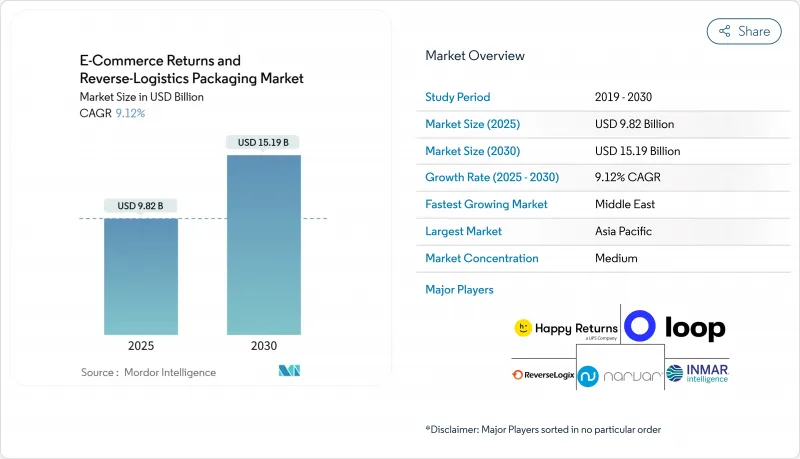
本報告按包裝材料(瓦楞紙箱、紙本郵件/信封、塑膠郵寄袋等)、退貨方式(預付費標籤宅配上門取件等)、終端用戶行業(時尚/服裝等)、銷售管道(電商平台賣家等)和地區(北美等)進行細分。市場預測以美元計價。
全球電子商務退貨與逆向物流包裝市場趨勢與分析
提高全通路退貨率
在時尚產業,退貨率超過30%,消費性電子產品產業的退貨率也高達15%,這使得能夠承受多環節配送流程的專用包裝需求持續成長。 「線上購買,線下退貨」模式要求包裝方便快速檢查。此外,歐盟《數位服務法》下的數位追蹤法規增加了文件工作量,從而影響了包裝設計。採用高度適應性包裝的零售商能夠最大限度地減少搬運過程中的損壞,加快庫存補充速度,並提高客戶滿意度。
擴大法規範圍,強制要求免費退貨
法國的廢棄物減量法和加州提案的立法將退貨運費的負擔從消費者轉移到零售商,迫使品牌商在成本、保護性和永續性方面重新設計包裝。合規框架正在推動對經認證的可生物分解材料的需求,並提供尺寸合適的解決方案,以降低運費附加費。
新興市場回收基礎設施碎片化
在印度和拉丁美洲部分地區,回收能力的區域差異迫使品牌商維持多種包裝規格,這增加了庫存管理和合規的複雜性。這一障礙阻礙了可重複使用包裝和先進包裝的大規模應用。
基於細分市場的分析
2024年,瓦楞紙箱在電商退貨和逆向物流包裝市場中仍佔據48.31%的佔有率,在支援大批量訂單處理方面發揮核心作用。瓦楞紙箱在電商退貨和逆向物流包裝領域的市場規模依然強勁,這主要得益於其堅固的結構,能夠有效保護大型電子設備和家居用品在運輸過程中免受損壞。然而,可重複使用的郵寄袋和托特包的複合年成長率(CAGR)為11.29%,顯示品牌正在轉向降低每次配送的生命週期成本。人工智慧驅動的尺寸測量機透過減少多餘的空隙和降低體積重量附加費,進一步提高了瓦楞紙箱的利用效率。
隨著訂閱服務的擴展,使用耐用纖維、聚合物和塗層紙的趨勢日益明顯,這些材料的設計壽命可達20次以上。 Loop 的專案已證明,與一次性包裝相比,可節省約60%的成本,這促使零售商將投資從一次性紙板轉向可回收托特包的共用庫存。如今,可回收材料也被添加到可重複使用的郵寄信封的緩衝材料中,這與歐盟監管機構倡導的循環經濟目標一致。
2024年,取貨點和宅配櫃檯處理了42.94%的退貨,利用現有零售分行提供輔助服務。自助儲物櫃系統正以10.37%的複合年成長率快速擴張,這主要得益於其24小時全天候服務和較低的人事費用成本。自助退貨儲物櫃每平方英尺的交易量比人工櫃檯高出40%,充分展現了自助服務模式的擴充性。
儘管宅配在高階電子產品和超大件商品的收發方面仍然發揮著至關重要的作用,但不斷上漲的人事費用正在擠壓利潤空間。移動QR碼的引入實現了非接觸式配送,縮短了等待時間並提高了追蹤精度。在人口密度日益成長的都市區,安裝在交通樞紐的微型儲物櫃正在減少「最後一公里」的浪費,並沿著通勤路線擴展儲物櫃網路,從而強化了便利性作為競爭優勢的作用。
區域分析
預計到2024年,亞太地區將引領電商退貨和逆向物流包裝市場,佔38.34%的市場佔有率,主要得益於中國龐大的電商市場規模和循環包裝指南。日本和韓國的政府獎勵正在加速人工智慧驅動的最佳化,而區域製造商則受益於具有成本競爭力的原料和高速加工生產線。印度線上零售的快速成長推動了對經濟型郵寄包裝的需求,但由於回收設施不足,先進的生物複合材料應用進展緩慢。
北美憑藉其成熟的履約基礎設施和對雲端包裝分析技術的早期應用,持續引領創新潮流。加州嚴格的廢棄物減量法規推動了高品質可生物分解產品的研發,而加拿大的生產者延伸責任制(EPR)框架則促進了可重複使用包裝試驗計畫的發展。墨西哥跨境貿易的成長催生了對符合海關要求的雙語標籤和退貨單的需求,進而促使承運商和包裝加工商之間加強合作。
在歐洲,歐盟的循環經濟行動計畫正在引領永續性潮流,該計畫制定了明確的再利用和可回收標準。德國的押金返還制度正在塑造設計指南,而英國脫歐後的政策則催生了對特定國家合規標籤的利基需求。中東地區以10.15%的複合年成長率領先該地區,這主要得益於海灣國家雄心勃勃的“2030願景”,該願景將數位商務的擴張與環境管理緊密結合。沙烏地阿拉伯和阿拉伯聯合大公國(阿拉伯聯合大公國)正在試行為奢侈品銷售提供智慧儲物櫃和可重複使用的包裝,這與其作為高價值零售商的定位相符。
其他好處:
- Excel格式的市場預測(ME)表
- 3個月的分析師支持
目錄
第1章:引言
- 市場分析與定義的前提條件
- 分析範圍
第2章 分析方法
第3章執行摘要
第4章 市場狀況
- 市場概覽
- 市場促進因素
- 全通路策略退貨率上升
- 擴大法規範圍,強制要求免費退貨
- 透過永續的回收包裝實現品牌差異化
- 人工智慧驅動的適宜尺寸包裝系統的擴展
- 在逆向物流中引入數位身分和QR碼
- 大型零售商的循環經濟目標
- 市場限制因素
- 新興市場回收基礎設施碎片化
- 再生纖維價格劇烈波動
- 逆向物流的成本成長率高於出境物流。
- 消費者對重新包裝的複雜性感到厭倦
- 產業價值鏈分析
- 監理情勢
- 宏觀經濟因素的影響
- 技術展望
- 波特五力分析
第5章:預測市場規模與成長率
- 透過包裝材料
- 瓦楞紙箱
- 紙質郵件袋和信封
- 塑膠郵寄袋
- 可重複使用的郵寄托特包
- 保護性內包裝
- 透過返回方法
- 預付宅配取件
- 收貨點/宅配櫃檯
- 透過儲物櫃/自助服務終端退貨
- 透過按需配送服務取貨
- 按最終用戶行業分類
- 時尚與服裝
- 家用電子電器
- 美容及個人護理
- 居家生活
- 食品和快速消費品
- 其他終端用戶產業
- 通道特異性
- 市集賣家
- D2C品牌
- 訂閱式商務
- 租賃和轉售平台
- 按地區
- 北美洲
- 美國
- 加拿大
- 墨西哥
- 南美洲
- 巴西
- 阿根廷
- 其他南美國家
- 歐洲
- 德國
- 英國
- 法國
- 義大利
- 西班牙
- 俄羅斯
- 其他歐洲國家
- 亞太地區
- 中國
- 日本
- 印度
- 韓國
- 東南亞
- 其他亞太國家
- 中東和非洲
- 中東
- 沙烏地阿拉伯
- 阿拉伯聯合大公國
- 土耳其
- 其他中東國家
- 非洲
- 南非
- 奈及利亞
- 其他非洲國家
- 中東
- 北美洲
第6章 競爭情勢
- 市場集中度
- 策略趨勢
- 市佔率分析
- 公司簡介
- Happy Returns LLC(UPS)
- Xariable, Inc.(dba Loop Returns)
- Narvar, Inc.
- ReverseLogix Corp.
- Inmar, Inc.
- ReBound Returns
- ZigZag Global Ltd
- Returnly(Affirm, Inc.)
- Doddle Ltd
- Boxzooka Efulfillment LLC
- Sendcloud BV
- ShipBob, Inc.
- ReturnGo Technologies/ReturnGo Ltd
- Reverse Logistics Group/Reverse Logistics GmbH
- PFSweb, Inc.
- PAACK LOGISTICS IBERIA, SL
- Boomerang Returns
- Kenco Group
- FedEx Supply Chain(formerly GENCO)
- DHL Supply Chain
- UPS Supply Chain Solutions
- Original RePack Oy/Plan B From Outer Space Oy
- Recommerce Group
- Returnalyze, Inc.
- ShipMonk, Inc.
第7章 市場機會與未來展望
According to Mordor Intelligence, the e-commerce returns and reverse-Logistics packaging market size reached USD 9.82 billion in 2025 and is forecast to touch USD 15.19 billion by 2030, reflecting a 9.12% CAGR.
This report is Segmented by Packaging Material (Corrugated Boxes, Paper Mailers and Envelopes, Poly Mailers, and More), Return Method (Pre-Paid Label Courier Pickup, and More), End-Use Industry (Fashion and Apparel, and More), Channel (Marketplace Sellers, and More), and Geography (North America, and More). The Market Forecasts are Provided in Terms of Value (USD).
Global E-commerce Returns And Reverse-Logistics Packaging Market Trends and Insights
Rising Omni-Channel Return Rates
Return rates surpass 30% in fashion and 15% in consumer electronics, creating persistent demand for specialized packaging that endures multi-touchpoint journeys. Buy-online-return-in-store models require formats that allow quick inspection, while digital tracking rules under the EU Digital Services Act add documentation layers that shape design. Retailers equipped with adaptable packaging minimize handling damage, accelerate restocking, and elevate customer satisfaction.
Growth of Legislation Mandating Free Returns
France's anti-waste law and California's proposed statutes transfer return shipping costs from consumers to retailers, forcing brands to re-engineer packaging for cost, protection, and sustainability. Compliance frameworks drive demand for certified biodegradable materials and provide right-sized solutions that reduce freight surcharges.
Fragmented Recycling Infrastructure in Emerging Markets
Uneven regional capabilities in India and parts of Latin America compel brands to maintain multiple packaging variants, raising inventory and compliance complexity. This barrier slows scalable deployment of reusable or advanced bio-based formats.
Other drivers and restraints analyzed in the detailed report include:
- Brand Differentiation via Sustainable Return Packaging
- Expansion of AI-Driven Right-Size Packaging Systems
- High Volatility in Recycled Fibre Prices
For complete list of drivers and restraints, kindly check the Table Of Contents.
Segment Analysis
Corrugated boxes retained a 48.31% share of the e-commerce returns and reverse logistics packaging market in 2024, serving as the backbone of high-volume fulfillment. The e-commerce returns and reverse logistics packaging market size tied to corrugated solutions remains resilient because rigid structures safeguard large electronics and household goods during transit. Yet, reusable mailers and totes post an 11.29% CAGR, underscoring a brand migration toward lower lifetime costs per shipment. AI-enabled right-sizing machinery further enhances corrugated efficiency by trimming excess void and lowering dimensional weight penalties.
Growing subscription services accelerate the adoption of durable textiles, polymers, and coated papers engineered for 20 or more cycles. Loop's program validates cost savings of nearly 60% over one-way formats, enticing retailers to shift capital from single-use corrugated to pooled inventories of return-ready totes. Protective cushioning inside reusable mailers now incorporates recycled content, aligning with circular economy goals championed by EU regulators.
Drop-off stores and parcel shops handled 42.94% of returns in 2024, utilizing their existing retail footprints to provide assisted service. Automated locker systems grow at a 10.37% CAGR, driven by 24-hour access and labor cost efficiency. Return lockers process 40% more transactions per square foot than staffed counters, validating the scalability of self-service models.
Courier pick-up remains relevant for premium electronics and bulky goods, yet labor inflation narrows margins. The integration of mobile QR codes enables contactless handovers, which shorten queue times and improve tracking precision. As urban density rises, micro-hub lockers embedded in transit stations reduce final-mile emissions and extend locker coverage to commute corridors, reinforcing convenience as a competitive differentiator.
Complete Report Scope:
- By Packaging Material
- Corrugated Boxes
- Paper Mailers and Envelopes
- Poly Mailers
- Reusable Mailers and Totes
- Protective Inner Packaging
- By Return Method
- Pre-Paid Label Courier Pickup
- Drop-Off Store / Parcel Shop
- Locker / Kiosk Returns
- Carrier Pick-Up on Demand
- By End-User Industry
- Fashion and Apparel
- Consumer Electronics
- Beauty and Personal Care
- Home and Living
- Grocery and FMCG
- Other End-User Industries
- By Channel
- Marketplace Sellers
- Direct-to-Consumer Brands
- Subscription Commerce
- Rental and Resale Platforms
- By Geography
- North America
- United States
- Canada
- Mexico
- South America
- Brazil
- Argentina
- Rest of South America
- Europe
- Germany
- United Kingdom
- France
- Italy
- Spain
- Russia
- Rest of Europe
- Asia-Pacific
- China
- Japan
- India
- South Korea
- South-East Asia
- Rest of Asia-Pacific
- Middle East and Africa
- Middle East
- Saudi Arabia
- United Arab Emirates
- Turkey
- Rest of Middle East
- Africa
- South Africa
- Nigeria
- Rest of Africa
- Middle East
- North America
Geography Analysis
Asia-Pacific led the E-commerce Returns And Reverse-Logistics Packaging Market with a 38.34% share in 2024 on the back of China's e-commerce scale and circular-packaging directives. Government incentives in Japan and South Korea accelerate AI-enabled optimization, and regional manufacturers benefit from cost-competitive raw materials and high-speed converting lines. India's rapid online retail growth fuels demand for economical mailers, but patchy recycling facilities slow the uptake of advanced bio-composites.
North America remains an innovation hub thanks to mature fulfillment infrastructure and early adoption of cloud-based packaging analytics. California's stringent waste-reduction rules stimulate the development of premium biodegradable options, while extended producer responsibility frameworks in Canada encourage reusable pilot programs. Mexico's rising cross-border trade requires bilingual labeling and customs-compliant return forms, thereby deepening collaboration between carriers and packaging converters.
Europe embeds sustainability leadership via the EU circular-economy action plan, which imposes explicit reuse and recyclability thresholds. Germany's deposit-refund regimes shape design guidelines, and post-Brexit United Kingdom policies create niche demand for country-specific compliance labeling. The Middle East posts the fastest regional CAGR at 10.15%, underpinned by the Gulf states' Vision 2030 ambitions, which couple digital-commerce expansion with environmental stewardship. Saudi Arabia and the United Arab Emirates are piloting smart lockers and luxury-grade reusable packaging that aligns with their high-value retail positioning.
- Happy Returns LLC (UPS)
- Xariable, Inc. (dba Loop Returns)
- Narvar, Inc.
- ReverseLogix Corp.
- Inmar, Inc.
- ReBound Returns
- ZigZag Global Ltd
- Returnly (Affirm, Inc.)
- Doddle Ltd
- Boxzooka Efulfillment LLC
- Sendcloud B.V.
- ShipBob, Inc.
- ReturnGo Technologies / ReturnGo Ltd
- Reverse Logistics Group / Reverse Logistics GmbH
- PFSweb, Inc.
- PAACK LOGISTICS IBERIA, S.L.
- Boomerang Returns
- Kenco Group
- FedEx Supply Chain (formerly GENCO)
- DHL Supply Chain
- UPS Supply Chain Solutions
- Original RePack Oy / Plan B From Outer Space Oy
- Recommerce Group
- Returnalyze, Inc.
- ShipMonk, Inc.
Additional Benefits:
- The market estimate (ME) sheet in Excel format
- 3 months of analyst support
TABLE OF CONTENTS
1 INTRODUCTION
- 1.1 Study Assumptions and Market Definition
- 1.2 Scope of the Study
2 RESEARCH METHODOLOGY
3 EXECUTIVE SUMMARY
4 MARKET LANDSCAPE
- 4.1 Market Overview
- 4.2 Market Drivers
- 4.2.1 Rising Omni-Channel Return Rates
- 4.2.2 Growth of Legislation Mandating Free Returns
- 4.2.3 Brand Differentiation via Sustainable Return Packaging
- 4.2.4 Expansion of AI-Driven Right-Size Packaging Systems
- 4.2.5 Implementation of Digital ID / QR for Reverse Logistics
- 4.2.6 Circular-Economy Goals of Major Retailers
- 4.3 Market Restraints
- 4.3.1 Fragmented Recycling Infrastructure in Emerging Markets
- 4.3.2 High Volatility in Recycled Fibre Prices
- 4.3.3 Reverse-Logistics Cost Inflation Outpacing Outbound Rates
- 4.3.4 Consumer Fatigue toward Re-Packing Complexity
- 4.4 Industry Value Chain Analysis
- 4.5 Regulatory Landscape
- 4.6 Impact of Macroeconomic Factors
- 4.7 Technological Outlook
- 4.8 Porter's Five Forces Analysis
- 4.8.1 Threat of New Entrants
- 4.8.2 Threat of Substitutes
- 4.8.3 Bargaining Power of Suppliers
- 4.8.4 Bargaining Power of Buyers
- 4.8.5 Industry Rivalry
5 MARKET SIZE AND GROWTH FORECASTS (VALUE)
- 5.1 By Packaging Material
- 5.1.1 Corrugated Boxes
- 5.1.2 Paper Mailers and Envelopes
- 5.1.3 Poly Mailers
- 5.1.4 Reusable Mailers and Totes
- 5.1.5 Protective Inner Packaging
- 5.2 By Return Method
- 5.2.1 Pre-Paid Label Courier Pickup
- 5.2.2 Drop-Off Store / Parcel Shop
- 5.2.3 Locker / Kiosk Returns
- 5.2.4 Carrier Pick-Up on Demand
- 5.3 By End-User Industry
- 5.3.1 Fashion and Apparel
- 5.3.2 Consumer Electronics
- 5.3.3 Beauty and Personal Care
- 5.3.4 Home and Living
- 5.3.5 Grocery and FMCG
- 5.3.6 Other End-User Industries
- 5.4 By Channel
- 5.4.1 Marketplace Sellers
- 5.4.2 Direct-to-Consumer Brands
- 5.4.3 Subscription Commerce
- 5.4.4 Rental and Resale Platforms
- 5.5 By Geography
- 5.5.1 North America
- 5.5.1.1 United States
- 5.5.1.2 Canada
- 5.5.1.3 Mexico
- 5.5.2 South America
- 5.5.2.1 Brazil
- 5.5.2.2 Argentina
- 5.5.2.3 Rest of South America
- 5.5.3 Europe
- 5.5.3.1 Germany
- 5.5.3.2 United Kingdom
- 5.5.3.3 France
- 5.5.3.4 Italy
- 5.5.3.5 Spain
- 5.5.3.6 Russia
- 5.5.3.7 Rest of Europe
- 5.5.4 Asia-Pacific
- 5.5.4.1 China
- 5.5.4.2 Japan
- 5.5.4.3 India
- 5.5.4.4 South Korea
- 5.5.4.5 South-East Asia
- 5.5.4.6 Rest of Asia-Pacific
- 5.5.5 Middle East and Africa
- 5.5.5.1 Middle East
- 5.5.5.1.1 Saudi Arabia
- 5.5.5.1.2 United Arab Emirates
- 5.5.5.1.3 Turkey
- 5.5.5.1.4 Rest of Middle East
- 5.5.5.2 Africa
- 5.5.5.2.1 South Africa
- 5.5.5.2.2 Nigeria
- 5.5.5.2.3 Rest of Africa
- 5.5.5.1 Middle East
- 5.5.1 North America
6 COMPETITIVE LANDSCAPE
- 6.1 Market Concentration
- 6.2 Strategic Moves
- 6.3 Market Share Analysis
- 6.4 Company Profiles (includes Global level Overview, Market level overview, Core Segments, Financials as available, Strategic Information, Market Rank/Share for key companies, Products and Services, and Recent Developments)
- 6.4.1 Happy Returns LLC (UPS)
- 6.4.2 Xariable, Inc. (dba Loop Returns)
- 6.4.3 Narvar, Inc.
- 6.4.4 ReverseLogix Corp.
- 6.4.5 Inmar, Inc.
- 6.4.6 ReBound Returns
- 6.4.7 ZigZag Global Ltd
- 6.4.8 Returnly (Affirm, Inc.)
- 6.4.9 Doddle Ltd
- 6.4.10 Boxzooka Efulfillment LLC
- 6.4.11 Sendcloud B.V.
- 6.4.12 ShipBob, Inc.
- 6.4.13 ReturnGo Technologies / ReturnGo Ltd
- 6.4.14 Reverse Logistics Group / Reverse Logistics GmbH
- 6.4.15 PFSweb, Inc.
- 6.4.16 PAACK LOGISTICS IBERIA, S.L.
- 6.4.17 Boomerang Returns
- 6.4.18 Kenco Group
- 6.4.19 FedEx Supply Chain (formerly GENCO)
- 6.4.20 DHL Supply Chain
- 6.4.21 UPS Supply Chain Solutions
- 6.4.22 Original RePack Oy / Plan B From Outer Space Oy
- 6.4.23 Recommerce Group
- 6.4.24 Returnalyze, Inc.
- 6.4.25 ShipMonk, Inc.
7 MARKET OPPORTUNITIES AND FUTURE OUTLOOK
- 7.1 White-space and unmet-need assessment

 2026年全球工業散裝包裝市場報告
 PE袋和PP編織袋市場分析及預測(至2035年):類型、產品類型、技術、應用、材料類型、製程、最終用戶、功能、安裝類型
 工業散裝包裝市場:2026-2032年全球市場預測(依包裝類型、材料、容量、最終用途產業、應用及分銷通路分類)
 高耐久性可重複使用包裝市場預測至2034年-按產品生命週期、材料類型、包裝類型、最終用戶和地區分類的全球分析工業散裝包裝市場:預測(至2034年)-按材料、產品類型、產能、包裝類型、應用、最終用戶和地區分類的全球分析
 工業大包裝市場機會、成長要素、產業趨勢分析及2026-2035年預測2026年全球散裝液體市場報告散裝液體物流市場:依服務類型、運輸方式、罐體類型、產品類型及最終用戶產業分類-2026-2032年全球市場預測
 2025-2029年全球硬式散裝包裝市場重型可重複使用工業包裝市場預測至2032年:按產品、材料、分銷管道、最終用戶和地區分類的全球分析