


 |
市場調查報告書
商品編碼
2097350
汽車零件及售後包裝:市場佔有率分析、產業趨勢及統計、成長預測(2025-2030 年)Automotive Parts and Aftermarket Packaging - Market Share Analysis, Industry Trends & Statistics, Growth Forecasts (2025 - 2030) |
||||||

※ 本網頁內容可能與最新版本有所差異。詳細情況請與我們聯繫。
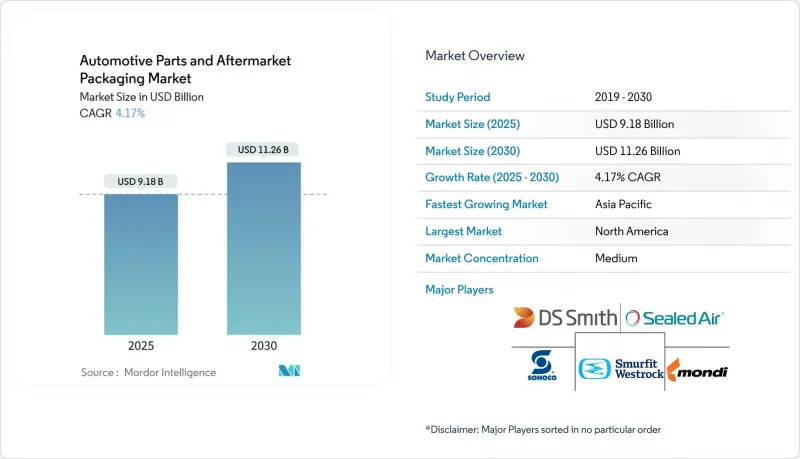
根據 Mordor Intelligence 預測,汽車零件及售後包裝市場規模預計將在 2025 年達到 91.8 億美元,到 2030 年達到 112.6 億美元,在此期間的複合年成長率為 4.17%。
本報告按包裝類型(紙盒/紙箱、吸塑包裝、標籤等)、材料(紙板、瓦楞紙板、塑膠等)、零件類型(引擎零件、電氣零件、內裝零件等)、車輛類型(乘用車、輕型商用車等)和地區進行細分。市場預測以美元計價。
全球汽車零件及售後市場包裝市場趨勢與分析
電子商務售後市場 SKU 數量快速成長
線上零件平台處理數十萬個SKU,遠遠超過實體店的選擇範圍。這迫使包裝供應商開發模組化套件,以便在無需客製化模具的情況下適應各種形狀的產品。快速換模、數位印刷和按需庫存管理等工作流程縮短了前置作業時間,即使在小批量生產的情況下也能保持經濟效益,使經銷商能夠在不精簡SKU的情況下實現成本目標。這一趨勢對於能夠靈活包裹不規則形狀產品的保護膜和膠帶而言尤其有利,而非固定壁厚的瓦楞紙箱。由於多語言支持,標籤種類日益增多,而「直接印刷在紙箱上」的技術則在生產流程的最後階段完成,從而消除了對過多預印庫存的需求。由於電子商務目前是售後市場通路中成長最快的領域,包裝設計針對宅配業者進行了最佳化,並整合了可掃描的條碼,以便與履約庫存匹配。這些功能使賣家能夠最大限度地減少因運輸途中損壞造成的退貨,維持賣家評級,並確保兌現隔天送達的承諾,從而鼓勵重複購買。
原始設備製造商對可回收環保包裝的要求
全球汽車製造商正致力於實現循環經濟目標,敦促供應商從一次性紙板包裝過渡到堅固耐用、可追溯且可重複使用的周轉箱。 BMW樹立了採購先例,其他品牌很可能效仿,目標是到2025年實現95%的生產零件使用可回收包裝。這項要求會增加資本成本,因為工程塑膠週轉箱的成本約為一次性包裝的三倍。然而,減少廢棄物和消除處置成本可以降低3到5個循環週期內的整體擁有成本。透過與像CHEP這樣的資源池專家合作,管理資產輪換、清潔和維修工作以及物聯網追蹤,一級供應商可以將複雜的物流流程外包,同時幫助原始設備製造商(OEM)實現其績效目標。可回收計畫刺激了對模塑紙漿護角和金屬加固件的需求,這些材料可以延長週轉箱的使用壽命,並加強與供應商在多個車輛項目中的合作。
樹脂價格波動加劇
聚丙烯和聚乙烯的現貨價格每季波動幅度高達兩位數,擠壓了固定價格包裝合約的利潤空間,並延緩了中小加工企業的資本投資項目。雖然有避險工具,但這些工具需要許多中型企業缺乏的雄厚財力,迫使它們要麼加入成本轉嫁條款,要麼接受收益波動。這種不確定性也阻礙了長期創新預算的製定,因為它使投資回報率的計算變得不明朗。原始設備製造商(OEM)通常認為成本逐年下降是理所當然的,因此往往不願意接受季度附加費,這加劇了採購流程的摩擦,延長了採購週期。如果這種波動持續下去,買家將擴大轉向混合方案,將可回收資產與一次性紙板相結合,以降低樹脂價格風險,這可能會減緩塑膠的普及速度,直到原料市場穩定下來。
基於細分市場的分析
2024年,紙匣和紙箱佔銷售額的38.54%,證實了它們在引擎、濾清器和煞車皮等領域的廣泛應用。然而,隨著零件經銷商追求更輕、更客製化的包裝形式,它們的佔有率正在逐漸下降。預計到2030年,保護膜和膠帶將達到最高的成長率,複合年成長率將達到6.91%。這主要是由於電子商務交易的激增,單一零件在運輸過程中需要經過多次交接,而刮擦、潮濕和靜電等因素會帶來重大風險。在薄膜基材上進行數位印刷,可以提高SKU的一致性和品牌保護,同時將最低訂購量降低至500件。鑑於售後市場SKU數量超過50萬,這項措施至關重要。吸塑包裝和泡殼包裝適用於注重貨架可見性的零售管道,但隨著繞過商店陳列架的直接出貨方式日益普及,它們的普及速度正在放緩。標籤正從基本的識別資訊發展到帶有嵌入式QR碼(用於播放影片)和防篡改封條的多層小冊子。液體包裝袋採用可耐受潤滑劑且符合聯合國危險品法規的阻隔薄膜,凸顯了該類別產品的技術複雜性。用於盛裝電池和安全氣囊等危險品的專用容器仍作為高階產品銷售。
保護膜利用其低密度和極小的儲存空間,使履約中心能夠儲備可放置在包裝台下方的微型捲材,方便即時使用。其柔韌性和黏合性使其能夠安全包裝不規則形狀的產品,無需額外的紙質緩衝材料,從而縮小瓦楞紙箱尺寸並降低運輸成本。帶有可列印區域的膠帶無需額外貼紙即可進行合規標籤標註,從而提高每個包裝的材料利用率。市場認知至關重要。由於工程師信賴熟悉的瓦楞紙箱,供應商透過提供跌落測試數據來證明其薄膜的耐用性。大宗採購商簽訂多年合約,將薄膜和自動化包裝機捆綁在一起,從而加強與供應商的合作關係,超越單純的耗材銷售。這些趨勢共同推動汽車零件和售後市場包裝市場轉型為更具獲利性的保護解決方案。
儘管瓦楞紙板在2024年仍將佔出貨量的42.11%,但預計塑膠將以6.39%的複合年成長率超越所有其他競爭材料,這得益於其輕便、防潮和抗靜電性能的優勢。射出成型的周轉箱整合了RFID技術,可實現閉合迴路追蹤;薄壁熱成型零件可在不增加體積的情況下保護感測器。在散裝主紙箱中運輸的過濾器和墊圈領域,紙板仍然保持著價格優勢,但隨著對永續性要求的提高,造紙商被迫從經認證的森林管理專案中採購纖維。模塑紙漿正逐漸成為一種用途廣泛的中間材料,它在單一材料工藝中兼具緩衝性和可回收性,無需單獨的發泡襯墊。金屬在需要電磁屏蔽和阻燃性能的高價值精密工具和電池模組中繼續發揮至關重要的作用。
塑膠供應商正投資研發生物塑膠混合物,以滿足原始設備製造商 (OEM) 的碳排放目標,同時又不影響其機械性能。導電母粒顯著降低了防靜電托盤的成本,使其遠低於鋁製墊材。預計塑膠包裝的市場規模將超過汽車零件和售後市場包裝,尤其是在電子元件領域。然而,遵守 REACH 法規需要嚴格披露化學物質資訊,這可能會延遲產品上市計劃。瓦楞紙板製造商正透過使用源自甘蔗的防水塗層進行層壓來解決這個問題,從而維護紙張的環保形象。生命週期評估 (LCA) 對材料選擇的影響日益顯著,客戶不僅比較銷售價格,還考慮從搖籃到大門的排放。這種數據驅動的審查正在推動具有檢驗回收途徑的材料的替代循環。
區域分析
2024年,北美地區的銷售額佔總銷售額的28.42%。這主要得益於成熟的售後市場網路、當日送達服務以及嚴格的危險品法規,這些法規優先考慮經過測試的包裝方案。在美國,冬季道路除冰劑的使用會加速零件磨損,因此對耐腐蝕內襯的需求不斷成長。同時,在加拿大,極端溫度波動要求在-40 度C至40 度C的溫度範圍內進行測試,以防止材料脆化。與墨西哥的跨境物流正在推動可回收貨架計畫的實施,以避免加工廠產生額外的掩埋費用。美國環保署 (EPA) 關於揮發性有機化合物 (VOC) 的法規迫使印刷商轉向水性油墨,這使得早期採用者在合規方面具有優勢。
亞太地區預計將以6.61%的複合年成長率成為全球成長最快的地區,這主要得益於印度和泰國汽車保有量的成長以及電子商務的快速發展。在中國的超級樞紐城市,全自動化的履約中心運作,這些中心能夠按需列印標籤並與海關資料庫同步,為跨境經銷商提供出口便利。在日本,用於混合動力汽車電子元件的導電生質塑膠的研發正處於領先地位,區域供應商正迅速進入這一細分市場。從新加坡強制回收廢棄物電子設備到印度尚處於早期階段的法規,各地不同的回收要求都要求包裝設計能適應多種使用後的處理方式。由於各地對本地語言的要求涵蓋20多種方言,因此在生產流程的最後階段具備印刷能力至關重要。
歐洲仍然是永續性的標桿,透過政策引導材料組合向閉合迴路解決方案發展。德國的包裝方法直接向製造商收取回收成本,加速了向單一材料纖維板和模塑紙漿的轉變,這些材料符合現有的市政回收系統。法國的循環經濟藍圖正在推廣“環保改造費”,獎勵環境影響較小的包裝,從而影響歐盟內部的設計指南。脫歐後的英國對原生聚合物含量徵收塑膠稅,鼓勵經銷商進口含有再生材料的翻蓋式容器,用於電子產品售後市場。從地中海地區出口到北非的貨物通常會在自由貿易區重新包裝成更輕的瓦楞紙箱,以降低運費,這凸顯了該地區作為洲際物流橋樑的作用。
其他好處:
- Excel格式的市場預測(ME)表
- 3個月的分析師支持
目錄
第1章:引言
- 市場分析與定義的前提條件
- 分析範圍
第2章 分析方法
第3章執行摘要
第4章 市場狀況
- 市場概覽
- 市場促進因素
- 電子商務售後市場 SKU 的快速擴張
- 原始設備製造商在可回收環保包裝方面的義務
- 更嚴格執行生產者延伸責任法
- 含抗靜電添加劑的熱塑性塑膠需求激增
- 降低採用數位印刷的客製化套件的最低訂購量(MOQ)。
- 無線軟體更新的廣泛應用導致對現場服務的需求下降。
- 市場限制因素
- 樹脂價格波動加劇
- 重量增加對重型紙箱運費的影響。
- 複雜的區域可回收性認證
- 繞過正規包裝的假零件通路。
- 產業價值鏈分析
- 監理情勢
- 技術展望
- 宏觀經濟因素的影響
- 波特五力分析
第5章:預測市場規模與成長率
- 按包裝類型
- 盒子/紙箱
- 吸塑包裝
- 蛤殼
- 袋子和小袋
- 保護膜和膠帶
- 標籤
- 其他類型的包裝
- 材料
- 紙板
- 紙板
- 塑膠
- 金屬
- 模塑紙漿
- 其他材料
- 依組件類型
- 引擎部件
- 電氣元件
- 懸吊和煞車
- 身體部位
- 液體和潤滑劑
- 內部零件
- 配件
- 其他類型的記錄
- 按車輛類型
- 搭乘用車
- 輕型商用車
- 大型商用車輛
- 摩托車
- 非公路用車
- 按地區
- 北美洲
- 美國
- 加拿大
- 墨西哥
- 南美洲
- 巴西
- 阿根廷
- 其他南美國家
- 歐洲
- 德國
- 英國
- 法國
- 義大利
- 西班牙
- 俄羅斯
- 其他歐洲國家
- 亞太地區
- 中國
- 日本
- 印度
- 韓國
- 東南亞
- 其他亞太國家
- 中東和非洲
- 中東
- 沙烏地阿拉伯
- 阿拉伯聯合大公國
- 土耳其
- 其他中東國家
- 非洲
- 南非
- 奈及利亞
- 其他非洲國家
- 中東
- 北美洲
第6章 競爭情勢
- 市場集中度
- 策略趨勢
- 市佔率分析
- 公司簡介
- Sealed Air Corporation
- DS Smith plc
- Smurfit Westrock plc
- Sonoco Products Company
- Mondi Group
- Amcor plc
- Crown Holdings Inc.
- Huhtamaki Oyj
- Pregis LLC
- Signode Industrial Group LLC
- Orbis Corporation(Menasha)
- Nefab AB
- UFP Industrial Packaging
- JIT Packaging Inc.
- Alpha Packaging
- RPC M&H Plastics
- Greif Inc.
- PalletOne Inc.
- Mauser Packaging Solutions
- Mpact Limited
- Shorr Packaging Corp.
- Kompak Packaging Solutions Pvt. Ltd.
- Flexcon Company Inc.
- Advanced Protective Packaging Ltd.
第7章 市場機會與未來展望
According to Mordor Intelligence, the automotive parts and aftermarket packaging market size stands at USD 9.18 billion in 2025 and is forecast to reach USD 11.26 billion by 2030, reflecting a 4.17% CAGR during the period.
This report is Segmented by Packaging Type (Boxes and Cartons, Clamshells, Labels, and More), Material (Paperboard, Corrugated Fiberboard, Plastics, and More), Component Type (Engine Parts, Electrical Components, Interior Components, and More), Vehicles (Passenger Cars, Light Commercial Vehicles, and More), and Geography. The Market Forecasts are Provided in Terms of Value (USD).
Global Automotive Parts and Aftermarket Packaging Market Trends and Insights
Aggressive SKUs Proliferation in E-Commerce Aftermarket
Online parts platforms stock hundreds of thousands of SKUs, dwarfing the assortments of brick-and-mortar stores and forcing packaging suppliers to engineer modular kits that fit dramatically varied geometries without requiring bespoke tooling. Quick-change die-cutting, digital printing, and inventory-on-demand workflows compress lead times and keep small volumes economical, letting distributors avoid SKU rationalization while still meeting cost targets. The trend especially favors protective films and tapes that wrap irregular items more flexibly than fixed-wall cartons. Increased labeling variations for multilingual compliance are handled by late-stage, print-on-box technology, eliminating the need for pre-printed overstock. As e-commerce now represents the fastest-growing aftermarket channel, pack designs are optimized for parcel carriers, integrating scannable codes that interface with fulfillment software for real-time inventory reconciliation. These capabilities enable sellers to minimize damage-in-transit returns, preserve seller ratings, and accelerate next-day shipping promises that drive repeat purchase behavior.
OEM Mandates on Returnable Eco-Packaging
Global automakers commit to circular-economy targets that require suppliers to shift away from one-way corrugate toward rigid, trackable, multi-cycle totes. BMW expects 95% of inbound production parts to be in returnable containers by 2025, setting a procurement precedent that other brands will likely quickly emulate. The mandate increases capital costs because engineered plastic totes cost roughly three times more than one-time packs; however, the total cost of ownership improves over three to five cycles through lower scrap and the elimination of disposal fees. Pooling specialists such as CHEP manage asset rotation, clean-and-repair operations, and IoT tracking, allowing tier suppliers to outsource logistics complexity while meeting OEM scorecard targets. Returnable programs stimulate demand for molded pulp corner blocks and metal reinforcements, which extend tote life and deepen supplier engagement across multiple vehicle programs.
Rising Resin Price Volatility
Polypropylene and polyethylene spot prices have whipsawed by double-digit percentages quarter-to-quarter, eroding margins on fixed-price packaging contracts and delaying capital projects at smaller converters. Hedging instruments exist but require balance-sheet strength that many mid-tier players lack, forcing them to introduce pass-through clauses or accept income volatility. The uncertainty also hampers long-term innovation budgets because ROI calculations become cloudy. OEMs accustomed to year-over-year cost-down expectations often balk at quarterly surcharges, which add procurement friction and lengthen sourcing cycles. Over time, the turbulence nudges buyers toward hybrid programs that blend returnable assets with single-use corrugate to temper resin exposure, potentially slowing plastics penetration until feedstock markets stabilize.
Other drivers and restraints analyzed in the detailed report include:
- Tightening Extended Producer-Responsibility Laws
- Surge in Thermoplastics with Anti-Static Additives
- Weight-Adding Impact on Freight Cost for Heavy Corrugates
For complete list of drivers and restraints, kindly check the Table Of Contents.
Segment Analysis
Boxes and cartons accounted for 38.54% of 2024 revenue, confirming their ubiquity for engines, filters, and brake pads; however, their share is edging downward as parts sellers chase lighter, tailor-fit formats. Protective films and tapes are expected to achieve the fastest 6.91% CAGR by 2030, driven by the ballooning e-commerce volumes that ship single parts across multiple hand-offs, where scuff, moisture, and static are significant risks. Digital printing on film substrates enhances SKU matching and brand security while reducing the minimum order quantity to 500 sheets, a crucial step when aftermarket SKUs exceed half a million. Clamshells and blisters remain aligned with retail channels that value shelf visibility, but their uptake slows as direct shipping bypasses store fixtures. Labels evolve from basic ID to multi-layer booklets that embed QR codes for fitting videos and include tamper-evident seals. Fluid pouches utilize barrier films that withstand lubricants while meeting UN hazardous goods regulations, underscoring the category's technical complexity. Niche containers for hazardous batteries and airbags continue to be premium offerings.
Protective films capitalize on low density and small storage footprints, empowering fulfillment centers to stock micro-rolls that fit under packing benches for just-in-time usage. Their stretch and cling technology enables secure wraps around irregular shapes without the need for additional paper void fill, reducing carton sizes and freight costs. Adhesive tapes with printable zones offer compliance labeling without the need for extra stickers, allowing for a more efficient use of material per pack. Market education is key: technicians trust familiar cartons, so suppliers demonstrate drop-test data to prove the resilience of their films. Volume buyers lock in multi-year contracts that bundle films with automated wrapper machines, thereby cementing supplier relationships that extend far beyond the sale of consumables alone. These trends meld to push the automotive parts and aftermarket packaging market toward higher-margin protective solutions.
Corrugated fiberboard still accounts for 42.11% of the 2024 volume, but plastics are projected to outgrow all rivals at a 6.39% CAGR, benefiting from weight savings, moisture barriers, and anti-static performance. Injection-molded totes integrate RFID for closed-loop tracking while thin-wall thermoforms shield sensors without adding bulk. Paperboard remains a price leader for filters and gaskets shipped in bulk master cartons, although sustainability demands are pushing mills to derive fibers from certified forestry programs. Molded pulp emerges as a versatile middle ground, combining cushioning with recyclability in a single material pass, thereby avoiding the need for separate foam inserts. Metals keep relevance for high-value precision tools or battery modules that need electromagnetic shielding and flame resistance.
Plastics suppliers invest in bio-resin blends that meet OEM carbon goals without compromising mechanical properties. Conductive masterbatches reduce per-unit costs for anti-static trays significantly below those of aluminum dunnage, enabling electronics-heavy parts to surpass automotive parts and aftermarket packaging market size forecasts for plastics. However, REACH compliance requires rigorous chemical disclosures, which can stretch product-launch timelines. Corrugate producers counter by laminating water-resistant coatings derived from sugarcane, thereby preserving the eco-image of paper. Life-cycle assessments are increasingly dictating material choices, and customers are comparing cradle-to-gate emissions rather than sticker prices alone. This data-driven scrutiny encourages substitution cycles in favor of materials with verifiable recycling streams.
Complete Report Scope:
- By Packaging Type
- Boxes and Cartons
- Blister Packs
- Clamshells
- Bags and Pouches
- Protective Films and Tapes
- Labels
- Other Packaging Types
- By Material
- Paperboard
- Corrugated Fiberboard
- Plastics
- Metals
- Molded Pulp
- Other Materials
- By Component Type
- Engine Parts
- Electrical Components
- Suspension and Braking
- Body Parts
- Fluids and Lubricants
- Interior Components
- Accessories
- Other Component Types
- By Vehicle
- Passenger Cars
- Light Commercial Vehicles
- Heavy Commercial Vehicles
- Two Wheelers
- Off-Highway Vehicles
- By Geography
- North America
- United States
- Canada
- Mexico
- South America
- Brazil
- Argentina
- Rest of South America
- Europe
- Germany
- United Kingdom
- France
- Italy
- Spain
- Russia
- Rest of Europe
- Asia-Pacific
- China
- Japan
- India
- South Korea
- South-East Asia
- Rest of Asia-Pacific
- Middle East and Africa
- Middle East
- Saudi Arabia
- United Arab Emirates
- Turkey
- Rest of Middle East
- Africa
- South Africa
- Nigeria
- Rest of Africa
- Middle East
- North America
Geography Analysis
North America accounted for 28.42% of the revenue in 2024, driven by a mature aftermarket network, same-day courier services, and stringent hazmat regulations that prioritize tested packaging protocols. U.S. winter-salted roads accelerate part wear, thereby increasing demand for corrosion-resistant inner liners. Meanwhile, Canadian temperature swings necessitate material testing from -40 °C to 40 °C to prevent brittleness. Cross-border flows with Mexico incentivize returnable rack programs that circumnavigate landfill surcharges at maquiladora plants. Environmental Protection Agency rules on volatile organic compounds are pushing printers toward water-based inks, giving early-adopting converters a compliance edge.
The Asia-Pacific region is forecast to post a 6.61% CAGR, the fastest worldwide, driven by the expansion of the vehicle parc in India and Thailand, as well as steep e-commerce penetration. Chinese megahubs operate fully automated fulfillment centers that print labels on demand and synchronize with customs databases, easing exports for cross-border sellers. Japan pioneers conductive bioplastics for hybrid-vehicle electronics, a niche that regional suppliers are rapidly adopting. Varied recycling mandates, from Singapore's mandatory waste-electrical recycling to India's nascent regulations, compel packaging designs that accommodate multiple end-of-life pathways. Local language requirements encompass 20-plus dialects, making late-stage printing capacity indispensable.
Europe remains a sustainability bellwether, leveraging policy to steer material portfolios toward closed-loop solutions. Germany's Packaging Act charges producers directly for collection costs, accelerating the transition to mono-material fiberboard and molded pulp that fit within existing municipal streams. France's circular-economy roadmap promotes eco-modulation fees that reward lower-impact packages, influencing design guidelines across the trading bloc. Post-Brexit United Kingdom enforces its own plastic tax on virgin polymer content, nudging distributors to import recycled-content clamshells for aftermarket electronics. Mediterranean exports to North Africa are often repackaged into lighter cartons in free-trade zones to shave freight bills, underscoring the region's role as a logistics bridge between continents.
- Sealed Air Corporation
- DS Smith plc
- Smurfit Westrock plc
- Sonoco Products Company
- Mondi Group
- Amcor plc
- Crown Holdings Inc.
- Huhtamaki Oyj
- Pregis LLC
- Signode Industrial Group LLC
- Orbis Corporation (Menasha)
- Nefab AB
- UFP Industrial Packaging
- JIT Packaging Inc.
- Alpha Packaging
- RPC M&H Plastics
- Greif Inc.
- PalletOne Inc.
- Mauser Packaging Solutions
- Mpact Limited
- Shorr Packaging Corp.
- Kompak Packaging Solutions Pvt. Ltd.
- Flexcon Company Inc.
- Advanced Protective Packaging Ltd.
Additional Benefits:
- The market estimate (ME) sheet in Excel format
- 3 months of analyst support
TABLE OF CONTENTS
1 INTRODUCTION
- 1.1 Study Assumptions and Market Definition
- 1.2 Scope of the Study
2 RESEARCH METHODOLOGY
3 EXECUTIVE SUMMARY
4 MARKET LANDSCAPE
- 4.1 Market Overview
- 4.2 Market Drivers
- 4.2.1 Aggressive SKUs Proliferation in E-Commerce Aftermarket
- 4.2.2 OEM Mandates on Returnable Eco-Packaging
- 4.2.3 Tightening Extended Producer-Responsibility Laws
- 4.2.4 Surge in Thermoplastics with Anti-Static Additives
- 4.2.5 Digital Printing Lowering MOQ for Customized Kits
- 4.2.6 Growth of Over-the-Air Software Updates Reducing On-Site Servicing Demand
- 4.3 Market Restraints
- 4.3.1 Rising Resin Price Volatility
- 4.3.2 Weight-Adding Impact on Freight Cost for Heavy Corrugates
- 4.3.3 Complex Recyclability Certification across Regions
- 4.3.4 Counterfeit Spare Parts Channels Bypassing Formal Packaging
- 4.4 Industry Value Chain Analysis
- 4.5 Regulatory Landscape
- 4.6 Technological Outlook
- 4.7 Impact of Macroeconomic Factors
- 4.8 Porter's Five Forces Analysis
- 4.8.1 Threat of New Entrants
- 4.8.2 Bargaining Power of Suppliers
- 4.8.3 Bargaining Power of Buyers
- 4.8.4 Threat of Substitute Products
- 4.8.5 Competitive Rivalry
5 MARKET SIZE AND GROWTH FORECASTS (VALUE)
- 5.1 By Packaging Type
- 5.1.1 Boxes and Cartons
- 5.1.2 Blister Packs
- 5.1.3 Clamshells
- 5.1.4 Bags and Pouches
- 5.1.5 Protective Films and Tapes
- 5.1.6 Labels
- 5.1.7 Other Packaging Types
- 5.2 By Material
- 5.2.1 Paperboard
- 5.2.2 Corrugated Fiberboard
- 5.2.3 Plastics
- 5.2.4 Metals
- 5.2.5 Molded Pulp
- 5.2.6 Other Materials
- 5.3 By Component Type
- 5.3.1 Engine Parts
- 5.3.2 Electrical Components
- 5.3.3 Suspension and Braking
- 5.3.4 Body Parts
- 5.3.5 Fluids and Lubricants
- 5.3.6 Interior Components
- 5.3.7 Accessories
- 5.3.8 Other Component Types
- 5.4 By Vehicle
- 5.4.1 Passenger Cars
- 5.4.2 Light Commercial Vehicles
- 5.4.3 Heavy Commercial Vehicles
- 5.4.4 Two Wheelers
- 5.4.5 Off-Highway Vehicles
- 5.5 By Geography
- 5.5.1 North America
- 5.5.1.1 United States
- 5.5.1.2 Canada
- 5.5.1.3 Mexico
- 5.5.2 South America
- 5.5.2.1 Brazil
- 5.5.2.2 Argentina
- 5.5.2.3 Rest of South America
- 5.5.3 Europe
- 5.5.3.1 Germany
- 5.5.3.2 United Kingdom
- 5.5.3.3 France
- 5.5.3.4 Italy
- 5.5.3.5 Spain
- 5.5.3.6 Russia
- 5.5.3.7 Rest of Europe
- 5.5.4 Asia-Pacific
- 5.5.4.1 China
- 5.5.4.2 Japan
- 5.5.4.3 India
- 5.5.4.4 South Korea
- 5.5.4.5 South-East Asia
- 5.5.4.6 Rest of Asia-Pacific
- 5.5.5 Middle East and Africa
- 5.5.5.1 Middle East
- 5.5.5.1.1 Saudi Arabia
- 5.5.5.1.2 United Arab Emirates
- 5.5.5.1.3 Turkey
- 5.5.5.1.4 Rest of Middle East
- 5.5.5.2 Africa
- 5.5.5.2.1 South Africa
- 5.5.5.2.2 Nigeria
- 5.5.5.2.3 Rest of Africa
- 5.5.5.1 Middle East
- 5.5.1 North America
6 COMPETITIVE LANDSCAPE
- 6.1 Market Concentration
- 6.2 Strategic Moves
- 6.3 Market Share Analysis
- 6.4 Company Profiles (includes Global level Overview, Market level overview, Core Segments, Financials as available, Strategic Information, Market Rank/Share for key companies, Products and Services, and Recent Developments)
- 6.4.1 Sealed Air Corporation
- 6.4.2 DS Smith plc
- 6.4.3 Smurfit Westrock plc
- 6.4.4 Sonoco Products Company
- 6.4.5 Mondi Group
- 6.4.6 Amcor plc
- 6.4.7 Crown Holdings Inc.
- 6.4.8 Huhtamaki Oyj
- 6.4.9 Pregis LLC
- 6.4.10 Signode Industrial Group LLC
- 6.4.11 Orbis Corporation (Menasha)
- 6.4.12 Nefab AB
- 6.4.13 UFP Industrial Packaging
- 6.4.14 JIT Packaging Inc.
- 6.4.15 Alpha Packaging
- 6.4.16 RPC M&H Plastics
- 6.4.17 Greif Inc.
- 6.4.18 PalletOne Inc.
- 6.4.19 Mauser Packaging Solutions
- 6.4.20 Mpact Limited
- 6.4.21 Shorr Packaging Corp.
- 6.4.22 Kompak Packaging Solutions Pvt. Ltd.
- 6.4.23 Flexcon Company Inc.
- 6.4.24 Advanced Protective Packaging Ltd.
7 MARKET OPPORTUNITIES AND FUTURE OUTLOOK
- 7.1 White-space and unmet-need assessment

 機械維修及重建服務市場分析及預測(至2035年):依類型、產品、服務、技術、組件、應用、製程、最終用戶、設備及解決方案分類
 汽車售後成長機會:全球,2026 年北美乘用車和輕型卡車傳動系統零件售後市場:2026–2032
 引擎清潔劑市場規模、佔有率和成長分析:按引擎類型、引擎油類型、包裝規格、最終用途、配銷通路和地區分類-2026-2033年行業預測
 電子商務汽車售後市場:依產品類型、車輛類型、最終用戶和銷售管道分類-2026-2032年全球市場預測汽車售後市場:2026-2032年全球市場預測(依產品類型、車輛年份、服務類型、客戶類型、車輛型號及通路分類)全球汽車售後市場:市場規模、佔有率、趨勢和成長分析(2026-2034 年)
 2026年全球售後市場聯網警報系統市場報告
 汽車售後市場預測至2034年-全球分析(按替換零件、車輛類型、認證類型、動力系統、應用、服務管道、最終用戶、分銷管道和地區分類)汽車售後市場分析及預測(至2035年):依類型、產品類型、服務、技術、零件、應用、材料類型、製程、最終用戶及安裝方法分類