


 |
市場調查報告書
商品編碼
2097342
兩棲全地形車:市場佔有率分析、產業趨勢與統計、成長預測(2025-2030 年)Amphibious ATV - Market Share Analysis, Industry Trends & Statistics, Growth Forecasts (2025 - 2030) |
||||||

※ 本網頁內容可能與最新版本有所差異。詳細情況請與我們聯繫。
根據 Mordor Intelligence 預測,兩棲 ATV 市場規模預計在 2025 年達到 37.2 億美元,到 2030 年達到 56.9 億美元,預測期內複合年成長率為 8.87%。
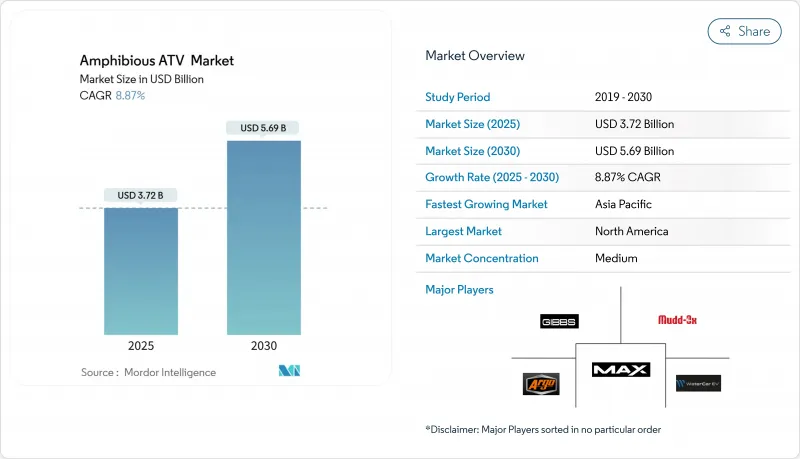
本報告按類型(6x6 全地形車、8x8 全地形車)、應用領域(運動休閒、農業、其他)、最終用戶(私人企業、政府機構、個人消費者)、驅動系統(輪式、履帶式)、分銷管道(OEM、售後市場)和地區進行細分。市場預測以美元計價。
全球兩棲全地形車市場趨勢與分析
新冠疫情後越野休閒活動的蓬勃發展
隨著旅行限制的放寬,戶外活動參與人數激增,帶動了對無需拖車即可穿越濕地、沙洲和淺河的多功能車輛的持續需求。製造商紛紛擴展產品線,配備舒適的座椅、藍牙顯示器和簡化的操縱桿轉向系統,以吸引新的愛好者。據北美經銷商稱,越來越多的家庭將傳統全地形車升級為水陸兩用全地形車,這不僅將騎行季節延長至早春和晚秋,還能進行一些輕型作業,從而提高了復購率。零售融資方案的延長還款期限降低了購車門檻,而社群媒體的宣傳也進一步凸顯了擁有「無所不能」車輛的價值。
對電氣化和低噪音推進系統的需求
電池驅動的電動系統能夠在受保護的濕地和生態旅遊區實現近乎無聲的運作、極低的維護需求以及局部零排放。早期商業型號,例如“WaterCar-EV”,採用船用級電池組和密封輪轂式馬達,以支援完整的兩棲作戰循環。軍方正在加速測試用於偵察任務的混合動力和純電動原型車,這些任務需要低聲學和熱學特徵。與非公路施工機械的供應鏈協同效應有望提高高功率電池模組的產量,從而降低成本並促進其在民用領域的更廣泛應用。
與四驅全地形車相比,購置和維修成本更高
兩棲車型採用封閉式船體、雙轉向模式和耐腐蝕動力系統,增加了材料和組裝成本。較低的年產量無法實現規模經濟,導致單價居高不下,令許多首次購車者望而卻步。海水侵蝕會加速磨損,因此車主需要頻繁檢查軸承和清潔船體。雖然機構投資者可以透過車隊服務合約降低整體成本,但新興經濟體的消費者往往更傾向於選擇價格較低的四輪驅動車,即使是用於類似的陸地用途。
細分市場分析
2024年,6x6配置的兩棲全地形車(ATV)憑藉其卓越的操控性、牽引能力和便於停放的尺寸,佔據了67.82%的市場佔有率。主要汽車製造商銷售的六輪車輛配備了模組化貨架、車座艙罩和即插即用的救援套件,這種配置已成為休閒、輕型車輛和入門級政府車輛的標準配備。其便捷的固定方式使其易於在皮卡車廂或戰術飛機上運輸,進一步擴大了使用者群體。
8x8平台的目標市場是重工業和國防任務,在這些領域,4000磅的負載容量、獨立的輪式渦輪推進系統和遙控武器站至關重要。儘管市場規模較小,但該細分市場的複合年成長率高達9.52%,這反映出管道公司、通訊業者和軍方的訂單正在加速成長,他們需要在高風險部署中擁有更強的浮力和冗餘性。製造商正在整合集中式輪胎壓力調節系統、絞盤和開放式架構電子設備,以確保未來升級的可行性。這些改進使8x8平台有望在預測期內縮小銷售差距。
2024年,運動休閒產業佔了兩棲全地形車(ATV)市場的42.24%。這主要歸功於家庭用戶、釣魚愛好者和越野愛好者對兼具越野刺激和水上活動便利性的車輛的需求。在Instagram上分享的沙灘登陸和濕地探索等精彩內容顯著提升了品牌知名度。國家公園和湖區的租賃業者正在增加車隊規模以滿足假日期間的旺季需求,這也推動了中檔6x6車型的持續成長。
預計到2030年,國防採購將以9.78%的複合年成長率成長,兩棲旅戰術和沿海機動戰略的推動將加速這一成長勢頭。 30毫米砲塔式戰鬥車輛、自主運輸車和北極機動項目的新契約,為長期預算的永續性提供了保障。在公共產業、採礦和建築等商業應用領域,兩棲裝備正被用於管道檢測、光纖鋪設以及穿越濕地通道區域的物資運輸,從而為原始設備製造商(OEM)提供了多元化的收入來源。
區域分析
2024年,北美佔了兩棲全地形車(ATV)市場的55.18%。這得益於其在休閒領域的廣泛應用、充足的國防預算撥款以及有利的資金籌措結構。聯邦和省級的防洪計畫正在資助為易澇地區購置車輛,而私人土地所有者則投資購買「移動作業」混合動力車輛,以抵消多用途車輛的營運成本。加拿大北極機動性舉措旨在部署多達170輛履帶式車輛,顯示各機構對此類車輛有廣泛的需求。該地區成熟的經銷商網路和透明的報名手續也進一步促進了車輛的部署。
預計到2030年,亞太地區將以10.98%的複合年成長率成長,受益於可支配收入的增加、沿海地區人口的集中以及大規模的國防現代化。中國正在試行配備無人砲塔的步兵戰車,印度則在展示其國產兩棲運輸車,用於後勤走廊。東南亞農業機械化進程加速了環保6x6車輛的銷售,這些車輛用於維護稻田和灌溉設施。越南和印尼政府對農業機械化的補貼進一步促進了銷售。
在歐洲,受日益嚴格的環保法規推動,電動動力系統需求不斷成長,市場呈現穩定成長態勢。歐盟第168/2013號法規概述了L類特種車輛的核准流程,指南原始設備製造商(OEM)的設計選擇。北約在北極地區的演習提振了耐寒車輛的訂單,而斯堪地那維亞和亞得里亞海地區的探險旅遊也推動了消費者的需求。在南美洲、中東和非洲,市場仍在發展中,但兩棲車輛在油田物流、礦產探勘和Delta地區災害救援等領域的應用日益廣泛。
其他好處:
- Excel格式的市場預測(ME)表
- 3個月的分析師支持
目錄
第1章:引言
- 市場分析與定義的前提條件
- 分析範圍
第2章 分析方法
第3章執行摘要
第4章 市場狀況
- 市場概覽
- 市場促進因素
- 新冠疫情後越野休閒活動的蓬勃發展
- 對電氣化和低噪音推進系統的需求
- 氣候變遷導致防洪救災設備採購量增加
- 在軟土地區引進精密農業
- 防禦需要隱蔽的全地形偵察部隊。
- 旅遊業者增加了「從陸地到水上」的刺激體驗
- 市場限制因素
- 與四驅全地形車相比,購置和維修成本更高
- 有限的經銷商和服務網路
- 關於侵占濕地的環境法規
- 許可/安全法規
- 價值鍊和供應鏈分析
- 監理情勢
- 技術展望
- 波特五力分析
第5章:預測市場規模與成長率
- 按類型
- 6x6 ATV
- 8x8 ATV
- 透過使用
- 運動休閒
- 農業
- 戶外工作
- 軍事/國防
- 最終用戶
- 商業企業
- 政府機構
- 個人消費者
- 透過驅動系統
- 帶輪子的
- 軌道類型
- 透過分銷管道
- OEM
- 售後市場
- 按地區
- 北美洲
- 美國
- 加拿大
- 其他北美國家
- 南美洲
- 巴西
- 阿根廷
- 其他南美國家
- 歐洲
- 英國
- 德國
- 西班牙
- 義大利
- 法國
- 俄羅斯
- 其他歐洲國家
- 亞太地區
- 印度
- 中國
- 日本
- 韓國
- 其他亞太國家
- 中東和非洲
- 阿拉伯聯合大公國
- 沙烏地阿拉伯
- 土耳其
- 埃及
- 南非
- 其他中東和非洲國家
- 北美洲
第6章 競爭情勢
- 市場集中度
- 策略趨勢
- 市佔率分析
- 公司簡介
- Argo
- Recreatives Industries, Inc.(MAX)
- Gibbs Amphibians Ltd.
- Mudd-Ox Inc.
- Hydratrek Inc.
- Ameitta Technology Co., Ltd.
- Zhejiang Xibeihu Special Vehicle Co., Ltd.
- Tinger
- Neoteric Hovercraft
- Hoverstream LLC
- Sealegs International Limited
- Minerva Special Purpose Vehicles LLC
- WaterCar Inc.
第7章 市場機會與未來展望
According to Mordor Intelligence, the amphibious ATV market size stands at USD 3.72 billion in 2025 and is projected to reach USD 5.69 billion by 2030, reflecting an 8.87% CAGR during the forecast period.
This report is Segmented by Type (6x6 ATVs and 8x8 ATVs), Application (Sports and Leisure, Agriculture Industry, and More), End User (Commercial Enterprises, Governmental Bodies, and Individual Consumers), Propulsion Type (Wheel-Based and Track-Based), Distribution Channel (OEM and Aftermarket), and Geography. The Market Forecasts are Provided in Terms of Value (USD).
Global Amphibious ATV Market Trends and Insights
Recreational Off-road Boom Post-COVID
Outdoor participation surged after travel restrictions eased, creating durable demand for versatile machines to cross wetlands, sandbars, and shallow rivers without trailers. Manufacturers broadened line-ups with comfort seating, Bluetooth displays, and simplified joystick steering to attract new hobbyists. North American dealers report higher repeat purchases as families upgrade from conventional ATVs to amphibious alternatives that extend riding seasons into early spring and late autumn while also serving light utility chores. Retail financing programs with extended tenors lowered barriers to entry, and social media exposure reinforced the value proposition of owning a "go-anywhere" vehicle.
Electrification and Low-noise Propulsion Demand
Battery-electric drivetrains offer near-silent operation, minimal maintenance, and zero local emissions in protected wetlands and eco-tourism zones. Early commercial launches like the WaterCar-EV feature marinized battery packs and sealed hub motors for complete amphibious duty cycles. Militaries accelerate testing of hybrid and pure-electric prototypes for reconnaissance missions where acoustic and thermal signatures must remain low. Supply-chain synergies with off-highway construction equipment enlarge volume potential for high-power battery modules, driving down costs and encouraging broader civilian adoption.
High Purchase and Maintenance Cost vs. 4X4 ATVs
Amphibious models contain sealed hulls, dual steering modes, and corrosion-resistant drivetrains that elevate material and assembly expense. Low annual volumes restrict economies of scale, keeping unit prices beyond the reach of many first-time buyers. Saltwater exposure accelerates wear, forcing owners to schedule frequent bearing inspections and hull flushing. Institutional buyers mitigate total cost through fleet service contracts, yet retail customers in emerging economies often default to lower-priced 4X4 machines for similar land-only tasks.
Other drivers and restraints analyzed in the detailed report include:
- Climate-Driven Flood-Rescue Procurement
- Precision-Agriculture Demand in Soft Soils
- Limited Dealer and Service Networks
For complete list of drivers and restraints, kindly check the Table Of Contents.
Segment Analysis
The 6X6 format captured 67.82% share of the amphibious all-terrain vehicle market in 2024, owing to its balance of maneuverability, towing strength, and garage-friendly footprint. Leading OEMs market 6-wheelers with modular racks, roof canopies, and plug-and-play rescue kits, making the configuration a staple for recreation, light utility, and entry-level government fleets. Rapid tie-down capability enables easy transport in pickup beds or tactical aircraft, further widening user reach.
8X8 platforms pursue heavy industrial and defense missions where 4,000 lb payloads, independent wheel-turbine propulsion, and remote weapon stations become essential. Although representing a smaller base, the segment's 9.52% CAGR reflects accelerating orders from pipeline companies, telecom operators, and militaries requiring higher buoyancy and redundancy for risk-intensive deployments. Manufacturers integrate central tire inflation, winches, and open-architecture electronics to ensure future upgrade paths. These enhancements place the 8X8 variant on track to narrow the unit-volume gap over the forecast horizon.
Sports & leisure held a 42.24% share of the amphibious all-terrain vehicle market in 2024 as families, anglers, and overlanding enthusiasts sought machines that blend off-road thrills with water access. Instagram-ready content featuring beach landings and marshland expeditions multiplied brand visibility. Rental outfits in national parks and lake districts expand fleets to meet holiday peaks, reinforcing recurring demand for mid-range 6X6 units.
Defense procurement is forecast to climb at a 9.78% CAGR through 2030, and momentum has been gained from amphibious brigade doctrines and littoral maneuver strategies. New contracts for 30 mm-turreted combat vehicles, autonomous cargo carriers, and Arctic mobility programs validate long-term budgets. Commercial work applications-utilities, mining, and construction-also rely on amphibious assets to inspect pipelines, install fiber, and haul supplies across swampy rights-of-way, anchoring a diversified revenue stream for OEMs.
Complete Report Scope:
- By Type
- 6x6 ATVs
- 8x8 ATVs
- By Application
- Sports and Leisure
- Agriculture Industry
- Outdoor Work
- Military and Defense
- By End User
- Commercial Enterprises
- Governmental Bodies
- Individual Consumers
- By Propulsion Type
- Wheel-Based
- Track-Based
- By Distribution Channel
- Original Equipment Manufacturer (OEM)
- Aftermarket
- By Geography
- North America
- United States
- Canada
- Rest of North America
- South America
- Brazil
- Argentina
- Rest of South America
- Europe
- United Kingdom
- Germany
- Spain
- Italy
- France
- Russia
- Rest of Europe
- Asia-Pacific
- India
- China
- Japan
- South Korea
- Rest of Asia-Pacific
- Middle East and Africa
- United Arab Emirates
- Saudi Arabia
- Turkey
- Egypt
- South Africa
- Rest of Middle East and Africa
- North America
Geography Analysis
North America commanded a 55.18% share of the amphibious all-terrain vehicle market in 2024, underpinned by broad recreational participation, robust defense allocations, and favorable financing structures. Federal and provincial resilience programs fund fleet purchases for flood-prone zones, while private landowners invest in ride-and-work hybrids that offset utility vehicle fleet costs. Canada's Arctic mobility initiative, seeking up to 170 tracked platforms, illustrates institutional demand breadth. The region's mature dealer network and transparent registration processes further ease adoption.
Asia-Pacific, expanding at a 10.98% CAGR through 2030, benefits from rising disposable income, extensive coastal populations, and significant defense modernization. China trials uncrewed turret infantry fighting vehicles and India showcases indigenous amphibious haulers for logistics corridors. Agricultural mechanization across Southeast Asia accelerates sales of low-impact 6X6 units for rice paddies and irrigation maintenance. Government subsidies for mechanized farming in Vietnam and Indonesia augment volumes.
Europe exhibits steady growth anchored by stringent environmental regulations that elevate demand for electrified drivetrains. EU Regulation 168/2013 delineates approval pathways for L-category special-use vehicles, guiding OEM design choices. NATO exercises in the High North amplify orders for cold-weather capable assets, while adventure tourism in Scandinavia and the Adriatic adds consumer pull. South America, the Middle East & Africa remain nascent but increasingly active, leveraging amphibious fleets for oil-field logistics, mining exploration, and disaster relief in delta regions.
- Argo
- Recreatives Industries, Inc. (MAX)
- Gibbs Amphibians Ltd.
- Mudd-Ox Inc.
- Hydratrek Inc.
- Ameitta Technology Co., Ltd.
- Zhejiang Xibeihu Special Vehicle Co., Ltd.
- Tinger
- Neoteric Hovercraft
- Hoverstream LLC
- Sealegs International Limited
- Minerva Special Purpose Vehicles L.L.C
- WaterCar Inc.
Additional Benefits:
- The market estimate (ME) sheet in Excel format
- 3 months of analyst support
TABLE OF CONTENTS
1 Introduction
- 1.1 Study Assumptions & Market Definition
- 1.2 Scope of the Study
2 Research Methodology
3 Executive Summary
4 Market Landscape
- 4.1 Market Overview
- 4.2 Market Drivers
- 4.2.1 Recreational Off-Road Boom Post-COVID
- 4.2.2 Electrification and Low-Noise Propulsion Demand
- 4.2.3 Rising Climate-Driven Flood-Rescue Purchases
- 4.2.4 Precision-Agriculture Adoption in Soft-Soils
- 4.2.5 Defense Need for Silent, All-Terrain Scout Units
- 4.2.6 Tourism Operators Adding "Land-To-Water" Thrills
- 4.3 Market Restraints
- 4.3.1 High Purchase and Maintenance Cost Vs. 4x4 ATVs
- 4.3.2 Limited Dealer and Service Networks
- 4.3.3 Environmental Regulations on Wet-Land Intrusion
- 4.3.4 Operator-Licensing/Safety Restrictions
- 4.4 Value / Supply-Chain Analysis
- 4.5 Regulatory Landscape
- 4.6 Technological Outlook
- 4.7 Porter's Five Forces
- 4.7.1 Threat of New Entrants
- 4.7.2 Bargaining Power of Suppliers
- 4.7.3 Bargaining Power of Buyers
- 4.7.4 Threat of Substitutes
- 4.7.5 Competitive Rivalry
5 Market Size & Growth Forecasts (Value (USD))
- 5.1 By Type
- 5.1.1 6x6 ATVs
- 5.1.2 8x8 ATVs
- 5.2 By Application
- 5.2.1 Sports and Leisure
- 5.2.2 Agriculture Industry
- 5.2.3 Outdoor Work
- 5.2.4 Military and Defense
- 5.3 By End User
- 5.3.1 Commercial Enterprises
- 5.3.2 Governmental Bodies
- 5.3.3 Individual Consumers
- 5.4 By Propulsion Type
- 5.4.1 Wheel-Based
- 5.4.2 Track-Based
- 5.5 By Distribution Channel
- 5.5.1 Original Equipment Manufacturer (OEM)
- 5.5.2 Aftermarket
- 5.6 By Geography
- 5.6.1 North America
- 5.6.1.1 United States
- 5.6.1.2 Canada
- 5.6.1.3 Rest of North America
- 5.6.2 South America
- 5.6.2.1 Brazil
- 5.6.2.2 Argentina
- 5.6.2.3 Rest of South America
- 5.6.3 Europe
- 5.6.3.1 United Kingdom
- 5.6.3.2 Germany
- 5.6.3.3 Spain
- 5.6.3.4 Italy
- 5.6.3.5 France
- 5.6.3.6 Russia
- 5.6.3.7 Rest of Europe
- 5.6.4 Asia-Pacific
- 5.6.4.1 India
- 5.6.4.2 China
- 5.6.4.3 Japan
- 5.6.4.4 South Korea
- 5.6.4.5 Rest of Asia-Pacific
- 5.6.5 Middle East and Africa
- 5.6.5.1 United Arab Emirates
- 5.6.5.2 Saudi Arabia
- 5.6.5.3 Turkey
- 5.6.5.4 Egypt
- 5.6.5.5 South Africa
- 5.6.5.6 Rest of Middle East and Africa
- 5.6.1 North America
6 Competitive Landscape
- 6.1 Market Concentration
- 6.2 Strategic Moves
- 6.3 Market Share Analysis
- 6.4 Company Profiles (Includes Global level Overview, Market level overview, Core Segments, Financials as available, Strategic Information, Market Rank/Share for key companies, Products & Services, and Recent Developments)
- 6.4.1 Argo
- 6.4.2 Recreatives Industries, Inc. (MAX)
- 6.4.3 Gibbs Amphibians Ltd.
- 6.4.4 Mudd-Ox Inc.
- 6.4.5 Hydratrek Inc.
- 6.4.6 Ameitta Technology Co., Ltd.
- 6.4.7 Zhejiang Xibeihu Special Vehicle Co., Ltd.
- 6.4.8 Tinger
- 6.4.9 Neoteric Hovercraft
- 6.4.10 Hoverstream LLC
- 6.4.11 Sealegs International Limited
- 6.4.12 Minerva Special Purpose Vehicles L.L.C
- 6.4.13 WaterCar Inc.
7 Market Opportunities & Future Outlook

 2026-2030年全球兩用車市場
 水陸兩用車市場規模、佔有率、成長、全球產業分析、區域趨勢及2026-2034年預測。
 兩棲車輛市場:2026-2032年全球市場預測(按車輛類型、推進系統、乘客容量、車身設計、最終用戶和分銷管道分類)
 兩棲車輛市場報告:趨勢、預測與競爭分析(至2035年)
 兩棲車輛市場預測至2034年-按推進系統、應用、最終用戶和地區分類的全球分析
 2026-2030年全球兩棲登陸艇市場
 全球兩棲車市場:依推進系統、應用程式、最終用戶和地區分類
 2026年全球雙用途汽車市場報告兩棲全地形車市場:2026-2032年全球市場預測(按引擎排氣量、產品類型、驅動系統、價格範圍、應用、最終用戶和銷售管道)
 兩棲車輛市場規模、佔有率、趨勢和預測:按推進系統、應用、最終用途和地區分類,2026-2034 年