


 |
市場調查報告書
商品編碼
2097107
德國複合飼料:市場佔有率分析、行業趨勢和統計數據、成長預測(2026-2031)Germany Compound Feed - Market Share Analysis, Industry Trends & Statistics, Growth Forecasts (2026 - 2031) |
||||||

※ 本網頁內容可能與最新版本有所差異。詳細情況請與我們聯繫。
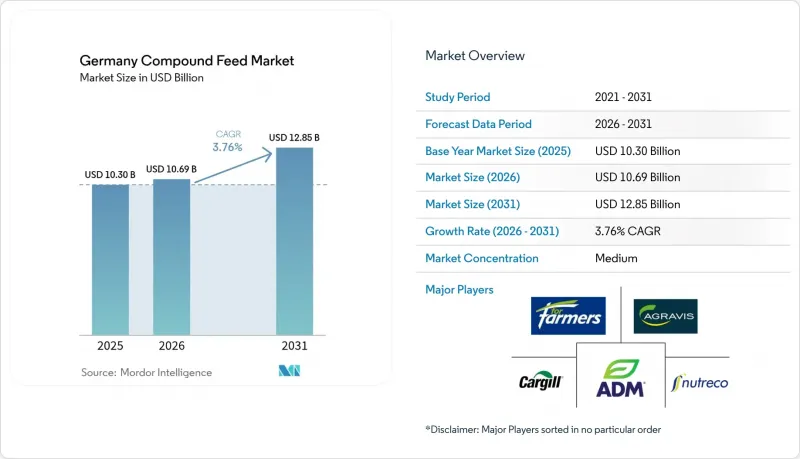
據 Mordor Intelligence 稱,2025 年德國複合飼料市場價值 103 億美元,預計到 2031 年將達到 128.5 億美元,而 2026 年為 106.9 億美元,預測期(2026-2031 年)複合年成長率為 3.76%。
本報告按動物類型(反芻動物、家禽、豬、水產養殖及其他動物種類)、原料(穀物、餅粕、副產品及添加劑)和飼料形態(粉狀、顆粒狀、碎粒狀、膨化飼料及其他形態)進行細分。市場預測以美元計價。
德國複合飼料市場的趨勢與洞察
對動物性蛋白質的需求量大
根據德國聯邦農業資訊中心(BZL)的快報數據,預計2024年德國人均肉類消費量將達到53.2公斤,較2022年的52.8公斤略有成長,這表明儘管人們的飲食習慣傾向於植物來源食物,但蛋白質需求依然強勁。這一消費量顯著高於全球平均水平,並支撐了畜牧業對飼料的旺盛需求。這種蛋白質需求為能夠提升肉質和生產效率的優質飼料配方帶來了商機。德國消費者越來越重視肉類的品質而非數量,這推動了對符合動物福利標準並有助於提升高級產品定位的飼料的需求。飼料生產商正在積極響應,開發能夠最佳化蛋白質轉換率並支持高價值肉類生產的專用營養方案。隨著「品質優先於數量」的消費趨勢不斷增強,能夠在市場上獲得高價的先進飼料解決方案正日益受到青睞。
提高牲畜飼料效率的必要性
德國畜牧業利潤率面臨的壓力正加速推動精準飼餵技術和酵素製劑的普及,以最佳化飼料轉換率。現代化的德國農場正擴大採用人工智慧驅動的飼餵系統,該系統能夠根據牲畜的生產性能數據和環境條件即時調整飼料量。嘉吉公司於2024年6月投資2億歐元(約2.16億美元)將其位於克雷費爾德的工廠從玉米加工廠改造為小麥加工廠,這反映了整個產業向提高穀物利用效率的轉型。透過精準營養技術將飼料轉換率提高3-5%,可直接轉化為更高的農場盈利,並降低單位蛋白質生產對環境的影響。酵素製劑技術的引入,特別是植酸酶和蛋白酶,能夠在提高營養物質利用效率的同時,降低飼料成本和環境污染。
消費者向植物來源飲食的轉變正在加速。
德國近期的調查報告顯示,2022年約有800萬人奉行素食主義,其中158萬人為純素食者。這種飲食習慣的轉變對年輕一代和都市區消費者的影響尤其顯著,並且正在改變他們的長期蛋白質攝取模式。為此,飼料生產商正在拓展植物來源蛋白質來源的供應鏈,並開發飼料那些注重動物福利、支持高品質肉類飼料的飼料創造了機遇,吸引了那些重視品質而非數量、願意支付更高價格的消費者。然而,總體而言,這導致傳統飼料銷售量成長放緩,並對國內通用飼料的價格構成壓力。
細分市場分析
到2025年,家禽飼料將佔據德國複合飼料市場40.65%的佔有率,憑藉一體化的生產系統和穩定的消費者需求,繼續保持主導地位。該領域正高效擴張,推動了對氨基酸最佳化肉雞飼料和注重動物福利的蛋雞飼料的投資。豬飼料緊隨其後,但面臨政策阻力,促使養殖戶採用精準飼餵技術以最大限度地提高單頭產量。反芻動物飼料市場以乳牛為中心,甲烷減排添加劑的應用日益廣泛,而肉牛牛戶則轉向草飼品牌以搶佔高階市場。
預計2026年至2031年間,水產養殖飼料市場將以6.55%的複合年成長率快速成長,隨著淡水鱒魚和鯉魚養殖場的現代化改造,其在德國複合飼料市場中的佔有率也在不斷擴大。為了滿足永續性標準,海洋來源的ω-3脂肪酸替代品、昆蟲粉和微生物蛋白等成分正被添加到飼料配方中。寵物和馬飼料等專業領域仍屬於小眾市場,但盈利豐厚,這得益於針對特定營養需求量身訂製的營養素和功能性添加劑。養殖動物的多樣化正在降低風險,並增強德國複合飼料產業的韌性。
其他好處:
- Excel格式的市場預測(ME)表
- 3個月的分析師支持
目錄
第1章:引言
- 研究假設和市場定義
- 調查範圍
第2章:調查方法
第3章執行摘要
第4章 市場狀況
- 市場概覽
- 市場促進因素
- 對動物性蛋白質的需求量大
- 提高牲畜飼料轉換率的必要性
- 擴大家禽和生豬綜合大型養殖場
- 政府對農場飼料廠的獎勵措施
- 碳中和肉類認證的出現。
- 引進人工智慧驅動的精準送料
- 市場限制因素
- 消費者對植物來源食品的偏好日益成長
- 穀物和油籽價格波動
- 加強對磷洩漏的監管
- 德國動物福利藍圖導致牲畜數量下降
- 監理情勢
- 技術展望
- 波特五力分析
第5章 市場規模與成長預測
- 依動物類型
- 反芻動物
- 家禽
- 豬
- 水產養殖
- 其他動物類型
- 按原料
- 穀類
- 蛋糕餐
- 依產品
- 補充
- 透過飼餵法
- 搗碎
- 顆粒
- 崩潰
- 擠出成型
- 其他形式
第6章 競爭情勢
- 市場集中度
- 策略趨勢
- 市佔率分析
- 公司簡介
- Cargill Incorporated
- Archer Daniels Midland Company
- ForFarmers NV
- Nutreco NV(SHV Holdings)
- Agravis Raiffeisen AG
- BayWa Aktiengesellschaft
- Deutsche Tiernahrung Cremer GmbH & Co. KG
- Rothkotter Holding GmbH
- Broring Beteiligungs GmbH
- GS agri eG
- Royal Agrifirm Group UA
- AGRAVIS Raiffeisen AG
- Erbacher Group
- Alltech Inc.
- Charoen Pokphand Group Co., Ltd.
第7章 市場機會與未來展望
According to Mordor Intelligence, the Germany compound feed market size was valued at USD 10.30 billion in 2025 and estimated to grow from USD 10.69 billion in 2026 to reach USD 12.85 billion by 2031, at a CAGR of 3.76% during the forecast period (2026-2031).
This report is Segmented by Animal Type (Ruminants, Poultry, Swine, Aquaculture, and Other Animal Types), by Ingredient (Cereals, Cakes and Meals, By-Products, and Supplements), and by Feed Form (Mash, Pellets, Crumbles, Extruded, and Other Forms). The Market Forecasts are Provided in Terms of Value (USD).
Germany Compound Feed Market Trends and Insights
High Demand for Animal Protein
According to preliminary data from the Federal Agricultural Information Center (BZL), average per capita meat consumption in Germany in 2024 was 53.2 kg, a slight increase from 52.8 kg in 2022 , demonstrating the resilience of protein demand despite plant-based diet trends. This consumption level, significantly above the global average, sustains robust feed demand across livestock sectors. The protein demand creates opportunities for premium feed formulations that enhance meat quality and production efficiency. German consumers increasingly prioritize meat quality over quantity, driving demand for feeds that support animal welfare standards and premium product positioning. Feed manufacturers respond by developing specialized nutrition programs that optimize protein conversion ratios and support higher-value meat production. The trend toward quality over volume consumption patterns favors sophisticated feed solutions that command premium pricing in the market.
Need to Improve Livestock Feed Efficiency
Margin pressure across German livestock operations accelerates the adoption of precision feeding technologies and enzyme supplementation to optimize feed conversion ratios. Modern German farms increasingly deploy AI-driven feeding systems that adjust rations in real-time based on animal performance data and environmental conditions. Cargill's EUR 200 million (USD 216 million) investment in converting its Krefeld plant from corn to wheat processing in June 2024 reflects industry shifts toward more efficient grain utilization. Feed efficiency gains of 3-5% through precision nutrition technologies translate directly to improved farm profitability and reduced environmental impact per unit of protein produced. The integration of enzyme technologies, particularly phytases and proteases, enables better nutrient utilization while reducing feed costs and environmental excretion.
Rising Consumer Shift Toward Plant-Based Diets
In Germany, according to a recent survey report, nearly 8 million people followed a vegetarian diet and 1.58 million people identified themselves as vegan in 2022. This dietary shift particularly impacts younger demographics and urban consumers, influencing long-term protein consumption patterns. Feed manufacturers respond by diversifying into plant-based protein ingredient supply chains and developing feeds for alternative protein production systems. The trend creates opportunities for feeds supporting higher-welfare, premium meat production that appeals to conscious consumers willing to pay premiums for quality over quantity. However, the overall impact reduces traditional feed volume growth and pressures commodity feed pricing in domestic markets.
Other drivers and restraints analyzed in the detailed report include:
- Expansion of Integrated Poultry And Swine Mega-Farms
- Government Incentives for On-Farm Feed Mills
- Volatile Grain and Oilseed Prices
For complete list of drivers and restraints, kindly check the Table Of Contents.
Segment Analysis
Poultry feed represented 40.65% of Germany compound feed market share in 2025, sustaining a leadership position due to integrated production systems and consistent consumer demand. The segment scales efficiently, encouraging investment in amino acid-optimized broiler diets and welfare-driven layer formulations. Swine feed follows, but faces policy headwinds that motivate precision-feeding adoption to maximize output per animal. Ruminant feed markets center on dairy cows, where methane-reducing additives gain momentum, while beef producers pivot toward grass-fed badges to capture premium channels.
Aquaculture feed posts the fastest expansion at a 6.55% CAGR between 2026 and 2031, elevating its contribution to Germany compound feed market size as freshwater trout and carp farms modernize. Marine-derived omega-3 alternatives, insect meals, and microbial proteins enter formulations to meet sustainability metrics. Specialty segments such as pet and equine feed remain niche but lucrative, relying on tailored nutrients and functional additives. Diversified animal-type demand mitigates risk and enhances resilience for the Germany compound feed industry.
Complete Report Scope:
- By Animal Type
- Ruminants
- Poultry
- Swine
- Aquaculture
- Other Animal Types
- By Ingredient
- Cereals
- Cakes and Meals
- By-products
- Supplements
- By Feed Form
- Mash
- Pellets
- Crumbles
- Extruded
- Other Forms
List of Companies Covered in this Report:
- Cargill Incorporated
- Archer Daniels Midland Company
- ForFarmers N.V.
- Nutreco N.V. (SHV Holdings)
- Agravis Raiffeisen AG
- BayWa Aktiengesellschaft
- Deutsche Tiernahrung Cremer GmbH & Co. KG
- Rothkotter Holding GmbH
- Broring Beteiligungs GmbH
- GS agri eG
- Royal Agrifirm Group U.A.
- AGRAVIS Raiffeisen AG
- Erbacher Group
- Alltech Inc.
- Charoen Pokphand Group Co., Ltd.
Additional Benefits:
- The market estimate (ME) sheet in Excel format
- 3 months of analyst support
TABLE OF CONTENTS
1 Introduction
- 1.1 Study Assumptions and Market Definition
- 1.2 Scope of the Study
2 Research Methodology
3 Executive Summary
4 Market Landscape
- 4.1 Market Overview
- 4.2 Market Drivers
- 4.2.1 High demand for animal protein
- 4.2.2 Need to improve livestock feed efficiency
- 4.2.3 Expansion of integrated poultry and swine mega-farms
- 4.2.4 Government incentives for on-farm feed mills
- 4.2.5 Emergence of carbon-neutral meat certifications
- 4.2.6 AI-driven precision-feeding adoption
- 4.3 Market Restraints
- 4.3.1 Rising consumer shift toward plant-based diets
- 4.3.2 Volatile grain and oilseed prices
- 4.3.3 Stricter phosphorus-runoff regulations
- 4.3.4 Shrinking livestock herd under Germany's animal-welfare roadmap
- 4.4 Regulatory Landscape
- 4.5 Technological Outlook
- 4.6 Porter's Five Forces Analysis
- 4.6.1 Bargaining Power of Suppliers
- 4.6.2 Bargaining Power of Buyers
- 4.6.3 Threat of New Entrants
- 4.6.4 Threat of Substitutes
- 4.6.5 Intensity of Competitive Rivalry
5 Market Size and Growth Forecasts (Value)
- 5.1 By Animal Type
- 5.1.1 Ruminants
- 5.1.2 Poultry
- 5.1.3 Swine
- 5.1.4 Aquaculture
- 5.1.5 Other Animal Types
- 5.2 By Ingredient
- 5.2.1 Cereals
- 5.2.2 Cakes and Meals
- 5.2.3 By-products
- 5.2.4 Supplements
- 5.3 By Feed Form
- 5.3.1 Mash
- 5.3.2 Pellets
- 5.3.3 Crumbles
- 5.3.4 Extruded
- 5.3.5 Other Forms
6 Competitive Landscape
- 6.1 Market Concentration
- 6.2 Strategic Moves
- 6.3 Market Share Analysis
- 6.4 Company Profiles (includes Global-level Overview, Market-level Overview, Core Segments, Financials as available, Strategic Information, Market Rank/Share for key companies, Products and Services, and Recent Developments)
- 6.4.1 Cargill Incorporated
- 6.4.2 Archer Daniels Midland Company
- 6.4.3 ForFarmers N.V.
- 6.4.4 Nutreco N.V. (SHV Holdings)
- 6.4.5 Agravis Raiffeisen AG
- 6.4.6 BayWa Aktiengesellschaft
- 6.4.7 Deutsche Tiernahrung Cremer GmbH & Co. KG
- 6.4.8 Rothkotter Holding GmbH
- 6.4.9 Broring Beteiligungs GmbH
- 6.4.10 GS agri eG
- 6.4.11 Royal Agrifirm Group U.A.
- 6.4.12 AGRAVIS Raiffeisen AG
- 6.4.13 Erbacher Group
- 6.4.14 Alltech Inc.
- 6.4.15 Charoen Pokphand Group Co., Ltd.


