


 |
市場調查報告書
商品編碼
1940570
英國設施管理:市場佔有率分析、產業趨勢與統計、成長預測(2026-2031)United Kingdom (UK) Facility Management - Market Share Analysis, Industry Trends & Statistics, Growth Forecasts (2026 - 2031) |
||||||

※ 本網頁內容可能與最新版本有所差異。詳細情況請與我們聯繫。
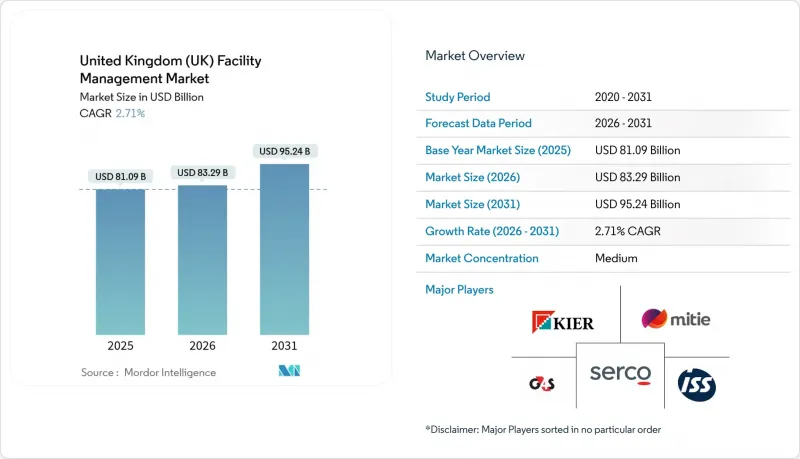
2025年英國設施管理市場價值為810.9億美元,預計2031年將達到952.4億美元,高於2026年的832.9億美元。
預計在預測期(2026-2031 年)內,複合年成長率將達到 2.71%。
這種穩健的成長軌跡標誌著一個日益成熟的產業正在能源效率要求、數位轉型以及對外包服務模式的持續偏好下不斷發展。硬性服務至關重要,因為老舊建築需要嚴格的機械、電氣和管道維護才能達到最低能源效率標準。同時,軟性服務也在快速發展,以滿足職場的福祉和嚴格的衛生法規要求。從物聯網感測器網路到人工智慧驅動的分析,技術整合正在實現更快的響應速度、更低的能耗以及基於績效的契約,從而在不增加人員配置的情況下提高收入。隨著公共和私人客戶尋求能夠確保合規性並在投入價格波動的情況下提供成本確定性的專業知識,外包勢頭持續強勁。儘管與英國脫歐相關的勞動力短缺和成本上漲正在擠壓利潤率,但公共部門維修資金的增加和靈活辦公空間的興起為那些能夠快速創新的服務提供者提供了擴張途徑。
英國設施管理市場趨勢與洞察
技術整合(物聯網、人工智慧、自動化)
人工智慧驅動的建築管理平台正在重新定義服務交付方式。英國智慧財產局在實施數位化工單入口網站後,將維護回應時間從14天縮短至幾秒鐘。智慧感測器即時傳輸人員佔用率、溫度和空氣品質數據,使服務供應商能夠從被動維護轉向預測性維護,同時降低能源消耗並提升員工舒適度。世邦魏理仕進軍超級大規模資料中心設施管理領域,凸顯了該產業巨大的獲利潛力,因為該產業需要全天候的分析監控。醫療保健和教育產業的客戶正在主導這一趨勢,因為合規制度要求持續進行環境監測。隨著數位化儀錶板整合軟性服務和硬性服務,服務提供者將清潔、保全、辦公室支援和資產維護等服務打包到資料豐富的合約中,從而獲得更高的價格溢價。
商業不動產的快速擴張
根據英國特許測量師學會 (RICS) 的數據,預計租戶需求將在 2025 年第一季轉正,倫敦市中心黃金地段的辦公大樓租金預計將以每年約 5% 的速度成長。工業資產的投資熱情最為強勁,受電子商務和近岸外包的推動,投資者需求淨成長 18%。新開發項目帶動了對性能驗證、全生命週期資產管理和持續合規審核的需求成長。與開發商早期合作的設施管理人員將從智慧建築中獲得多年的穩定收入,這些智慧建築從一開始就整合了 ESG(環境、社會和治理)儀錶板。同樣,物流業的成長也推動了客製化設施管理方案的發展,這些方案結合了庫存追蹤技術、碼頭管理和先進的消防維護技術,適用於高容量倉庫。
勞動力短缺和技能差距
飯店、清潔和餐飲業正面臨設施管理職缺的困境,預計英國脫歐後將有13.2萬個職缺。 2025年移民白皮書將把技術純熟勞工簽證的要求提高到RQF 6級,這將限制入門級設施管理職位的國際人才招募。自2005年以來,雇主在培訓方面的投入下降了28%,導致技能短缺,同時,建築物卻在採用先進的數位系統。企業正在透過設立主管培訓學院來應對這項挑戰,這些學院專注於提升領導力和技術技能,例如Samsic旗下JPC推出的包含12個模組的「下一代」計畫。然而,高離職率和勞動力老化仍然是限制該產業發展能力的因素。
細分市場分析
截至2025年,硬性服務將佔英國設施管理市場的60.12%,這主要得益於英國國民醫療服務體系(NHS)高達116億英鎊(31.9億美元)的延期維護支出以及日益嚴格的能源性能證書(EPC)期限。由於仍有28%的商業建築EPC評級為D級或以下,英國設施管理市場中硬性服務合約的規模預計將會成長,這刺激了對機械、電氣和管道(MEP)維修的需求。 MEP和HVAC(暖氣、通風和空調)產業受益於淨零排放的監管路徑,該路徑要求到2035年排放47%至62%。資產數位化將進一步推動對預測性維護分析的需求,使服務提供者能夠在資產故障發生前進行干預,同時滿足合規報告要求。
儘管目前軟性服務規模較小,但在醫院級清潔標準和職場體驗創新的推動下,預計到2031年將以2.78%的複合年成長率成長。更嚴格的感染控制法規推動了對機器人消毒系統和感測器檢驗衛生通訊協定的需求。共享辦公空間營運商對智慧門禁系統的需求推動了保全服務的現代化。格雷內爾消防法案實施後加強的消防安全措施推動了對整合警報測試和疏散規劃服務的需求。這些因素共同促使服務提供者的產品組合轉向融合卓越軟性服務和資料驅動合規性的綜合方案。
其他福利:
- Excel格式的市場預測(ME)表
- 分析師支持(3個月)
目錄
第1章 引言
- 研究假設和市場定義
- 調查範圍
第2章調查方法
第3章執行摘要
第4章 市場情勢
- 市場概覽
- 目前運轉率
- 主要FM業者的盈利能力
- 勞動指標 - 勞動參與率
- 按服務類型分類的設施管理市場佔有率(%)
- 以硬性服務分類的設施管理市場佔有率(%)
- 按軟體服務分類的設施管理市場佔有率(%)
- 主要都會區的都市化和人口成長
- 英國基礎設施計畫中的產業投資優先事項
- 與勞動和安全標準相關的監管促進因素
- 市場促進因素
- 商業不動產的快速擴張
- 技術整合(物聯網、人工智慧、自動化)
- 外包趨勢日益成長
- 更重視職場經驗和員工福祉
- 嚴格的能源效率和淨零排放法規
- 靈活辦公空間的興起對靈活的設施管理合約提出了更高的要求。
- 市場限制
- 労働力不足とスキルギャップ
- 營運成本上升給利潤率帶來壓力。
- 供應商生態系統分散,阻礙服務標準化
- 智慧建築系統中的資料安全問題
- 價值鏈分析
- PESTEL 分析
- 新參與企業的監管和法律體制
- 宏觀經濟指標對FM需求的影響
- 波特五力分析
- 供應商的議價能力
- 買方的議價能力
- 新進入者的威脅
- 替代品的威脅
- 競爭對手之間的競爭
- 投資與資金籌措分析
第5章 市場規模與成長預測
- 按服務類型
- 硬服務
- 資產管理
- 機電及暖通空調服務
- 消防設備和安全措施
- 其他硬體維修服務
- 軟服務
- 辦公室支援與安全
- 清潔服務
- 餐飲服務
- 其他軟性調頻服務
- 硬服務
- 按產品類型分類
- 內部管理
- 外包
- 單頻調頻
- 綜合設施管理(捆綁式設施管理)
- 綜合設施管理(綜合FM)
- 按最終用戶行業分類
- 商業設施(IT/通訊、零售/倉儲等)
- 餐飲服務業(飯店、餐廳、大型餐廳)
- 公共及公共基礎設施(政府機構、教育機構、交通運輸)
- 醫療保健(公立和私立機構)
- 工業和流程(製造業、能源業、採礦業)
- 其他終端用戶產業(多用戶住宅、娛樂、運動和休閒)
第6章 競爭情勢
- 市場集中度
- 策略舉措與夥伴關係
- 市佔率分析
- 公司簡介
- ISS UK
- Mitie Group PLC
- Serco Group PLC
- Kier Group PLC
- G4S Facilities Management UK Limited
- Sodexo Facilities Management Services
- Compass Group
- Equans
- VINCI Facilities Limited
- Aramark Facilities Services
- Andron Facilities Management
- CSM Facilities Management Group
- Orton Group
- Global Facilities.
- BGIS
第7章 市場機會與未來展望
The United Kingdom facility management market was valued at USD 81.09 billion in 2025 and estimated to grow from USD 83.29 billion in 2026 to reach USD 95.24 billion by 2031, at a CAGR of 2.71% during the forecast period (2026-2031).
The measured trajectory signals a mature sector advancing under energy-efficiency mandates, digital transformation, and a sustained preference for outsourced service models. Hard services hold prime importance because ageing building stock demands strict mechanical, electrical, and plumbing upkeep to meet Minimum Energy Efficiency Standards, while soft services evolve quickly to address workplace well-being and stringent hygiene rules. Technology integration from IoT sensor grids to AI-powered analytics-cuts response times, trims energy consumption, and enables outcome-based contracts that grow revenue without proportionate head-count expansion. Outsourcing momentum continues as public and private clients seek specialist expertise that guarantees compliance and delivers cost certainty amid volatile input prices. Although Brexit-linked labour shortages and cost inflation compress margins, rising public-sector refurbishment funding and the spread of flexible workspaces offer expansion lanes for providers that innovate fast.
United Kingdom (UK) Facility Management Market Trends and Insights
Technology Integration (IoT, AI, Automation)
AI-driven building-management platforms are redefining service delivery, with the Intellectual Property Office cutting maintenance response times from 14 days to seconds after launching a digital work-order portal. Smart sensors relay live occupancy, temperature, and air-quality data, letting providers shift from reactive to predictive maintenance while lowering energy use and elevating employee comfort. CBRE's entry into hyperscale data-center facilities management underscores the high-margin potential in segments that demand 24-hour analytical monitoring. Healthcare and education clients lead adoption because compliance regimes mandate continuous environmental monitoring. As digital dashboards merge soft and hard services, providers package cleaning, security, office support, and asset maintenance into data-rich contracts that command price premiums.
Rapid Commercial Real Estate Expansion
Royal Institution of Chartered Surveyors data show occupier demand turned positive in Q1 2025, and prime office rents in Central London are projected to rise nearly 5% in the year. Industrial assets register the strongest investment appetite, with an +18% net balance in investor demand, propelled by e-commerce and near-shoring. New developments increase demand for commissioning, lifecycle asset management, and ongoing compliance auditing. Facility managers partnering early with developers secure multi-year revenue streams in smart-ready buildings that integrate ESG dashboards from day one. Logistics growth similarly drives tailored FM packages that combine inventory tracking technologies, dock management, and advanced fire-suppression maintenance for high-throughput warehouses.
Labor Shortages and Skill Gaps
Hospitality, cleaning, and catering units face 132,000 job vacancies post-Brexit, straining FM rosters. The 2025 Immigration White Paper raises the Skilled Worker visa threshold to RQF Level 6, curtailing access to international staff for entry-level FM roles. Employer training investment has fallen 28% since 2005, creating a skills deficit just as buildings adopt sophisticated digital systems. Firms counteract with supervisor academies such as JPC by Samsic's 12-module Next Gen programme focusing on leadership and technical upskilling. Nonetheless, high turnover and an aging workforce continue to limit sector capacity.
Other drivers and restraints analyzed in the detailed report include:
- Increasing Outsourcing Trend
- Rising Focus on Workplace Experience and Employee Well-being
- Margin Pressure from Rising Operational Costs
For complete list of drivers and restraints, kindly check the Table Of Contents.
Segment Analysis
Hard services held 60.12% of United Kingdom facility management market share in 2025, anchored by the NHS's GBP 11.6 billion (USD 3.19 billion) maintenance backlog and stringent EPC upgrade timelines. The United Kingdom facility management market size for hard-service contracts is poised to expand as 28% of commercial properties still rate D or lower on EPC scale, forcing accelerated mechanical, electrical, and plumbing overhauls. MEP and HVAC segments benefit from regulatory pathways to net-zero that mandate 47%-62% emissions cuts by 2035. Asset digitization further lifts demand for predictive-maintenance analytics, letting providers intervene before asset failure while meeting compliance reporting needs.
Soft services, while smaller today, are forecast to grow 2.78% CAGR through 2031, propelled by hospital-grade cleaning standards and workplace-experience innovations. Heightened infection-control rules elevate the premium for robotic disinfection systems and sensor-verified hygiene protocols. Co-working operators require smart access control, driving security-service modernization. Fire-safety upgrades tied to post-Grenfell legislation amplify demand for integrated alarm testing and evacuation-planning services. Together, these forces shift provider offerings toward comprehensive packages that merge soft-service excellence with data-backed compliance.
The United Kingdom Facility Management Market Report is Segmented by Service Type (Hard Services, Soft Services), Offering Type (In-House, Outsourced), End-User Industry (Commercial, Hospitality, Institutional and Public Infrastructure, Healthcare, Industrial and Process, Other End-User Industries). The Market Forecasts are Provided in Terms of Value (USD).
List of Companies Covered in this Report:
- ISS UK
- Mitie Group PLC
- Serco Group PLC
- Kier Group PLC
- G4S Facilities Management UK Limited
- Sodexo Facilities Management Services
- Compass Group
- Equans
- VINCI Facilities Limited
- Aramark Facilities Services
- Andron Facilities Management
- CSM Facilities Management Group
- Orton Group
- Global Facilities.
- BGIS
Additional Benefits:
- The market estimate (ME) sheet in Excel format
- 3 months of analyst support
TABLE OF CONTENTS
1 INTRODUCTION
- 1.1 Study Assumptions and Market Definition
- 1.2 Scope of the Study
2 RESEARCH METHODOLOGY
3 EXECUTIVE SUMMARY
4 MARKET LANDSCAPE
- 4.1 Market Overview
- 4.1.1 Current Occupancy Rates
- 4.1.2 Profitability Rates of Major FM Players
- 4.1.3 Workforce Indicators - Labor Participation
- 4.1.4 Facility Management Market Share (%), by Service Type
- 4.1.5 Facility Management Market Share (%), by Hard Services
- 4.1.6 Facility Management Market Share (%), by Soft Services
- 4.1.7 Urbanization and Population Growth in Major Metros
- 4.1.8 Sector Investment Priorities in United Kingdom's Infrastructure Pipeline
- 4.1.9 Regulatory Drivers Specific to Labour and Safety Standards
- 4.2 Market Drivers
- 4.2.1 Rapid Commercial Real Estate Expansion
- 4.2.2 Technology Integration (IoT, AI, Automation)
- 4.2.3 Increasing Outsourcing Trend
- 4.2.4 Rising Focus on Workplace Experience and Employee Well-being
- 4.2.5 Stringent Energy-Efficiency and Net-Zero Regulations
- 4.2.6 Rise of Flexible Workspaces Requiring Agile FM Contracts
- 4.3 Market Restraints
- 4.3.1 Labor Shortages and Skill Gaps
- 4.3.2 Margin Pressure from Rising Operational Costs
- 4.3.3 Fragmented Supplier Ecosystem Hindering Service Standardization
- 4.3.4 Data-Security Concerns in Smart Building Systems
- 4.4 Value Chain Analysis
- 4.5 PESTEL Analysis
- 4.6 Regulatory and Legislative Framework for Market Entrants
- 4.7 Impact of Macroeconomic Indicators on FM Demand
- 4.8 Porter's Five Forces Analysis
- 4.8.1 Bargaining Power of Suppliers
- 4.8.2 Bargaining Power of Buyers
- 4.8.3 Threat of New Entrants
- 4.8.4 Threat of Substitute Services
- 4.8.5 Intensity of Competitive Rivalry
- 4.9 Investment and Funding Analysis
5 MARKET SIZE AND GROWTH FORECASTS (VALUE)
- 5.1 By Service Type
- 5.1.1 Hard Services
- 5.1.1.1 Asset Management
- 5.1.1.2 MEP and HVAC Services
- 5.1.1.3 Fire Systems and Safety
- 5.1.1.4 Other Hard FM Services
- 5.1.2 Soft Services
- 5.1.2.1 Office Support and Security
- 5.1.2.2 Cleaning Services
- 5.1.2.3 Catering Services
- 5.1.2.4 Other Soft FM Services
- 5.1.1 Hard Services
- 5.2 By Offering Type
- 5.2.1 In-house
- 5.2.2 Outsourced
- 5.2.2.1 Single FM
- 5.2.2.2 Bundled FM
- 5.2.2.3 Integrated FM
- 5.3 By End-user Industry
- 5.3.1 Commercial (IT and Telecom, Retail and Warehouses, etc.)
- 5.3.2 Hospitality (Hotels, Eateries, Large-scale Restaurants)
- 5.3.3 Institutional and Public Infrastructure (Govt, Education, Transportation)
- 5.3.4 Healthcare (Public and Private Facilities)
- 5.3.5 Industrial and Process (Manufacturing, Energy, Mining)
- 5.3.6 Other End-user Industries (Multi-housing, Entertainment, Sports and Leisure)
6 COMPETITIVE LANDSCAPE
- 6.1 Market Concentration
- 6.2 Strategic Moves and Partnerships
- 6.3 Market Share Analysis
- 6.4 Company Profiles (includes Global level Overview, Market level overview, Core Segments, Financials as available, Strategic Information, Market Rank/Share for key companies, Products and Services, and Recent Developments)
- 6.4.1 ISS UK
- 6.4.2 Mitie Group PLC
- 6.4.3 Serco Group PLC
- 6.4.4 Kier Group PLC
- 6.4.5 G4S Facilities Management UK Limited
- 6.4.6 Sodexo Facilities Management Services
- 6.4.7 Compass Group
- 6.4.8 Equans
- 6.4.9 VINCI Facilities Limited
- 6.4.10 Aramark Facilities Services
- 6.4.11 Andron Facilities Management
- 6.4.12 CSM Facilities Management Group
- 6.4.13 Orton Group
- 6.4.14 Global Facilities.
- 6.4.15 BGIS
7 MARKET OPPORTUNITIES AND FUTURE OUTLOOK
- 7.1 White-space and Unmet-Need Assessment
- 7.2 Technology-led Integrated FM (IoT, BMS, AI-based Predictive Maintenance)
- 7.3 ESG-compliant FM Solutions Demand
- 7.4 Future Service-Model Shifts (Outcome-based Contracts)

 全球設施管理服務市場:機會與策略展望(至2035年)
 日本綜合設施管理:市場佔有率分析、產業趨勢與統計、成長預測(2026-2031)義大利綜合設施管理:市場佔有率分析、產業趨勢與統計、成長預測(2026-2031)馬來西亞綜合設施管理:市場佔有率分析、產業趨勢與統計、成長預測(2026-2031)中國綜合設施管理:市場佔有率分析、產業趨勢與統計、成長預測(2026-2031)綜合設施管理:市場佔有率分析、產業趨勢與統計、成長預測(2026-2031)印度綜合設施管理:市場佔有率分析、產業趨勢與統計、成長預測(2026-2031)泰國綜合設施管理:市場佔有率分析、產業趨勢與統計、成長預測(2026-2031)印尼綜合設施管理:市場佔有率分析、產業趨勢與統計、成長預測(2026-2031)新加坡綜合設施管理:市場佔有率分析、產業趨勢與統計、成長預測(2026-2031)