

 |
市場調查報告書
商品編碼
2083255
電鍋市場商機、成長要素、產業趨勢分析及2026-2035年預測。Electric Rice Cooker Market Opportunity, Growth Drivers, Industry Trend Analysis, and Forecast 2026 - 2035 |
||||||

預計到 2025 年,全球電鍋市場規模將達到 45 億美元,並以 5.9% 的複合年成長率成長,到 2035 年將達到 81 億美元。
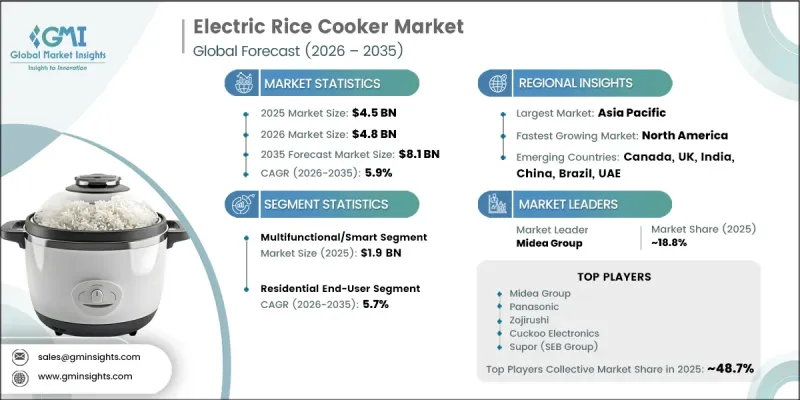
亞太地區、中東和拉丁美洲以米為主食的家庭對電鍋的強勁需求,以及北美和歐洲注重便利性的消費者對電鍋日益成長的接受度,持續推動著市場擴張。消費者對省時廚房電器的偏好不斷增強,生活方式的改變以及多功能烹飪解決方案的日益普及,為全球電鍋市場創造了有利的成長機會。技術進步使製造商能夠推出更便利、更節能、操作更簡單的電鍋產品,從而吸引更廣泛的消費者群體。此外,都市化加快、可支配收入增加以及現代零售和電子商務通路的擴張,也加速了全球消費者取得電鍋產品的進程。消費者對能夠簡化烹飪過程、減輕體力勞動負擔的電器也表現出越來越濃厚的興趣。諸如延時啟動、延長保溫時間和一鍵烹飪等功能,透過提升便利性增強了產品的吸引力,幫助製造商在已開發市場和新興市場同時贏得新客戶和更換客戶。
| 市場範圍 | |
|---|---|
| 開始年份 | 2025 |
| 預測期 | 2026-2035 |
| 上市時的市場規模 | 45億美元 |
| 預計金額 | 81億美元 |
| 複合年成長率 | 5.9% |
預計到2025年,多功能智慧產品市場規模將達到19億美元,市佔率將達42%。預計到2035年,該市場將以5.8%的複合年成長率成長。消費者對能夠用一台設備烹飪多種菜餚的多功能廚房電器的需求不斷成長,持續推動著該市場的成長。此外,價格實惠以及在商用廚房等機構採購中的廣泛應用,也為其持續的市場地位做出了貢獻。
預計到2025年,住宅終端用戶市場將佔83.6%的市場佔有率,達到37.6億美元,並在2035年之前以5.7%的複合年成長率成長。家庭需求仍然是主要的收入來源,這反映了廚房產品在日常飲食準備中的關鍵作用。另一方面,商用採購在整體需求中所佔的佔有率仍然很小。在住宅中,購買決策受到多種因素的影響,例如家庭規模、所需的烹飪能力、收入水平、所需的產品功能、價格預期和更換週期,所有這些因素都會影響消費者對不同產品類型的偏好。
預計到2025年,北美電鍋市場規模將達10億美元。該地區市場持續受惠於穩定的家庭需求、消費者對便利烹飪方式日益成長的興趣,以及對高階多功能家電投資意願的提升。儘管現有用戶群對電鍋的需求已趨於成熟,但未來成長預計將主要來自一般消費者對更智慧、更便利、功能更強大的烹飪電器的需求。
目錄
第1章:調查方法和範圍
第2章執行摘要
第3章 行業洞察
- 產業生態系分析
- 供應商情況
- 利潤率
- 每個階段增加的價值
- 影響價值鏈的因素
- 影響產業的因素
- 促進因素
- 全球米的消費量的成長和都市化的加快,推動了對便利廚房電器的需求。
- 亞太地區和新興市場中產階級的壯大正在推動家用電器滲透率的提高。
- 不斷擴展的智慧廚房生態系統和物聯網的融合,為高級產品創造了商機。
- 職業專業數量的增加和核心家庭的興起推動了便利家用電器的普及。
- 產業潛在風險與挑戰
- 已開發國家的市場飽和和產品同質化導致利潤率下降。
- 仿冒品偽劣產品會損害品牌價值和消費者信任。
- 有關環境和電子廢棄物的法規增加了製造商的合規成本。
- 多功能烹飪鍋和氣炸鍋領域的激烈競爭模糊了產品類型之間的界線。
- 機會
- 南亞、東南亞和撒哈拉以南非洲尚未開發的農村和半都市區市場
- 拓展電子商務通路,可以實現高階產品的直接銷售,並透過直接銷售給消費者來打造品牌。
- 注重健康的消費者正在轉向使用不含聚四氟乙烯(PTFE)和陶瓷塗層內膽的電鍋。
- 商業領域的擴張是由食品服務業和機構餐飲的成長所驅動的。
- 促進因素
- 成長潛力分析
- 未來市場趨勢
- 技術與創新展望
- 最新科技趨勢
- 新興技術
- 監理情勢
- 標準和合規要求
- 區域監理框架
- 認證標準
- 貿易數據分析
- 進出口量及進口額趨勢
- 主要貿易路線及關稅的影響
- 價格分析
- 對過去價格趨勢的分析
- 按業務類型(高階/低階/大眾市場)分類的定價策略
- 人工智慧和生成式人工智慧對市場的影響
- 利用人工智慧改造現有經營模式
- 按細分市場分類的生成式人工智慧用例和部署藍圖
- 風險、限制和監管考量
- 波特的分析
- PESTLE分析
第4章 競爭情勢
- 介紹
- 企業市佔率分析
- 按地區
- 企業矩陣分析
- 主要市場公司的競爭分析
- 競爭定位矩陣
- 主要進展
- 併購
- 夥伴關係和聯盟
- 新產品發布
- 業務拓展計劃
第5章 市場估算與預測:依產品類型分類,2022-2035年
- 標準/常規
- 微電腦(Micom)
- 感應加熱(IH)
- 高壓電電鍋
- 多功能/智慧
第6章 市場估計與預測:依產能分類,2022-2035年
- 少於2公升
- 2-4升
- 4公升或更多
第7章 市場估算與預測:依內膽塗層分類,2022-2035年
- 不沾(聚四氟乙烯/鐵氟龍)塗層
- 陶瓷塗層
- 陽極處理鋁
- 不鏽鋼(未塗層)
- 其他
第8章 市場估計與預測:依價格分類,2022-2035年
- 低的
- 中等的
- 高的
第9章 市場估價與預測:依最終用戶分類,2022-2035年
- 住宅
- 商業的
第10章 市場估價與預測:依通路分類,2022-2035年
- 線上
- 電子商務網站
- 公司網站
- 離線
- 大賣場和超級市場
- 專業商店和量販店
- 其他
第11章 市場估價與預測:按地區分類,2022-2035年
- 北美洲
- 美國
- 加拿大
- 歐洲
- 德國
- 英國
- 法國
- 義大利
- 西班牙
- 亞太地區
- 中國
- 印度
- 日本
- 韓國
- 澳洲
- 印尼
- 馬來西亞
- 拉丁美洲
- 巴西
- 墨西哥
- 阿根廷
- 中東和非洲
- 沙烏地阿拉伯
- UAE
- 南非
第12章:公司簡介
- 世界頂尖公司
- Panasonic Corporation
- Zojirushi Corporation
- Tiger Corporation
- Cuckoo Electronics Co., Ltd.
- Midea Group Co., Ltd.
- Toshiba Corporation
- Philips NV
- 該地區的領先企業
- SUPOR Co., Ltd.
- Joyoung Co., Ltd.
- Bajaj Electricals Ltd.
- Hitachi Global Life Solutions, Inc.
- Breville Group Limited
- 新興企業
- Aroma Housewares Company
- Hamilton Beach Brands Holding Company
- Morphy Richards
The Global Electric Rice Cooker Market was valued at USD 4.5 billion in 2025 and is estimated to grow at a CAGR of 5.9% to reach USD 8.1 billion by 2035.
Strong demand from rice-consuming households across Asia Pacific, the Middle East, Latin America, and growing adoption among convenience-focused consumers in North America and Europe continue to support market expansion. Rising consumer preference for time-saving kitchen appliances, changing lifestyles, and the increasing popularity of multifunctional cooking solutions are creating favorable growth opportunities for the global electric rice cooker market. Technological advancements have encouraged manufacturers to introduce models with enhanced convenience, improved energy efficiency, and user-friendly controls, making these appliances increasingly attractive across a broader consumer base. In addition, growing urbanization, higher disposable incomes, and the expansion of modern retail and e-commerce channels are accelerating product accessibility worldwide. Consumers are also showing stronger interest in appliances that simplify meal preparation while reducing manual effort. Features such as delayed-start timers, extended keep-warm functionality, and one-touch cooking operations continue to strengthen product appeal by offering greater convenience, helping manufacturers attract both first-time buyers and replacement purchases across developed and emerging markets.
| Market Scope | |
|---|---|
| Start Year | 2025 |
| Forecast Year | 2026-2035 |
| Start Value | $4.5 Billion |
| Forecast Value | $8.1 Billion |
| CAGR | 5.9% |
The multifunctional and smart segment generated USD 1.9 billion in 2025, accounting for 42% share, and is projected to grow at a CAGR of 5.8% through 2035. Increasing consumer demand for versatile kitchen appliances capable of preparing multiple dishes through a single device continues to support this segment's growth. Their affordability and widespread use in institutional purchasing across commercial food preparation environments continue to sustain their market presence.
The residential end-user segment captured 83.6% share in 2025, representing USD 3.76 billion, and is anticipated to register a CAGR of 5.7% through 2035. Household demand remains the primary revenue contributor, reflecting the appliance's role as an essential kitchen product for everyday meal preparation. Commercial purchases continue to represent a smaller portion of overall demand. Within the residential segment, purchasing decisions are influenced by household size, preferred cooking capacity, income levels, desired product features, pricing expectations, and replacement cycles, all which shape consumer preferences for different product categories.
North America Electric Rice Cooker Market reached USD 1 billion in 2025. The regional market continues to benefit from stable household demand, increasing interest in convenient meal preparation, and greater consumer willingness to invest in premium multifunctional appliances. Although the market has reached a relatively mature stage among established users, future growth is expected to be supported by broader adoption among mainstream consumers seeking smart, easy-to-use cooking appliances with enhanced functionality.
Major companies operating in the global electric rice cooker market include Panasonic, Midea Group, Supor (SEB Group), Cuckoo Electronics, and Zojirushi. Companies operating in the electric rice cooker market are strengthening their competitive position by expanding multifunctional product portfolios, integrating smart technologies, and improving energy efficiency to address changing consumer preferences. Manufacturers continue to invest in product innovation, focusing on advanced cooking programs, intuitive controls, and enhanced convenience features that improve the overall user experience. They are also broadening their presence through online retail platforms and expanding distribution partnerships to improve market reach across both developed and emerging economies. Premium product launches, localized product designs, and attractive pricing strategies help companies appeal to diverse consumer groups.
Table of Contents
Chapter 1 Methodology & Scope
- 1.1 Market scope and definition
- 1.2 Research design
- 1.2.1 Research approach
- 1.2.2 Data collection methods
- 1.3 Data mining sources
- 1.3.1 Global
- 1.3.2 Regional/Country
- 1.4 Base estimates and calculations
- 1.4.1 Base year calculation
- 1.4.2 Key trends for market estimation
- 1.5 Primary research and validation
- 1.5.1 Primary sources
- 1.6 Forecast model
- 1.7 Research assumptions and limitations
Chapter 2 Executive Summary
- 2.1 Industry 360° synopsis
- 2.2 Key market trends
- 2.2.1 Regional
- 2.2.2 Product type
- 2.2.3 Capacity
- 2.2.4 Inner pot coating
- 2.2.5 Price
- 2.2.6 End user
- 2.2.7 Distribution channel
Chapter 3 Industry Insights
- 3.1 Industry ecosystem analysis
- 3.1.1 Supplier landscape
- 3.1.2 Profit margin
- 3.1.3 Value addition at each stage
- 3.1.4 Factor affecting the value chain
- 3.2 Industry impact forces
- 3.2.1 Growth drivers
- 3.2.1.1 Rising global rice consumption & urbanization driving demand for convenient cooking appliances
- 3.2.1.2 Expanding middle-class population in Asia Pacific & emerging markets boosting appliance penetration
- 3.2.1.3 Growing smart kitchen ecosystem & IoT integration creating premium product opportunities
- 3.2.1.4 Rising number of working professionals & nuclear families driving convenience appliance adoption
- 3.2.2 Industry pitfalls & challenges
- 3.2.2.1 Market saturation & product commoditization in developed markets driving margin compression
- 3.2.2.2 Counterfeit & substandard products erode brand equity & consumer trust
- 3.2.2.3 Environmental & e-waste regulations increasing compliance costs for manufacturers
- 3.2.2.4 Intense competition from multi-cooker & air fryer segment blurring product category boundaries
- 3.2.3 Opportunities
- 3.2.3.1 Untapped rural & semi-urban markets in South/Southeast Asia & Sub-Saharan Africa
- 3.2.3.2 Growing e-commerce channel enabling direct-to-consumer premium sales & brand building
- 3.2.3.3 Health-conscious consumer shift toward PTFE -free & ceramic-coated inner pot models
- 3.2.3.4 Commercial segment expansion driven by foodservice & institutional catering growth
- 3.2.1 Growth drivers
- 3.3 Growth potential analysis
- 3.4 Future market trends
- 3.5 Technology and innovation landscape
- 3.5.1 Current technological trends
- 3.5.2 Emerging technologies
- 3.6 Regulatory landscape
- 3.6.1 Standards and compliance requirements
- 3.6.2 Regional regulatory frameworks
- 3.6.3 Certification standards
- 3.7 Trade data analysis (HS Code 8516.6)
- 3.7.1 Import/export volume & value trends
- 3.7.2 Key trade corridors & tariff impact
- 3.8 Pricing analysis
- 3.8.1 Historical price trend analysis (driven by primary research)
- 3.8.2 Pricing strategy by player type (premium / value / mass market)
- 3.9 Impact of AI & generative AI on the market
- 3.9.1 AI-driven disruption of existing business models
- 3.9.2 GenAI use cases & adoption roadmap by segment
- 3.9.3 Risks, limitations & regulatory considerations
- 3.10 Porter's analysis
- 3.11 PESTEL analysis
Chapter 4 Competitive Landscape, 2025
- 4.1 Introduction
- 4.2 Company market share analysis
- 4.2.1 By Region
- 4.2.1.1 North America
- 4.2.1.2 Europe
- 4.2.1.3 Asia Pacific
- 4.2.1.4 Latin America
- 4.2.1.5 Middle East & Africa
- 4.2.1 By Region
- 4.3 Company matrix analysis
- 4.4 Competitive analysis of major market players
- 4.5 Competitive positioning matrix
- 4.6 Key developments
- 4.6.1 Mergers & acquisitions
- 4.6.2 Partnerships & collaborations
- 4.6.3 New product launches
- 4.6.4 Expansion plans
Chapter 5 Market Estimates & Forecast, By Product Type, 2022 - 2035, (USD Billion) (Thousand Units)
- 5.1 Key trends
- 5.2 Standard/Conventional
- 5.3 Microcomputer (Micom)
- 5.4 Induction heating (IH)
- 5.5 Pressure rice cooker
- 5.6 Multifunctional/Smart
Chapter 6 Market Estimates & Forecast, By Capacity, 2022 - 2035, (USD Billion) (Thousand Units)
- 6.1 Key trends
- 6.2 Below 2 liters
- 6.3 2 to 4 liters
- 6.4 Above 4 liters
Chapter 7 Market Estimates & Forecast, By Inner Pot Coating, 2022 - 2035, (USD Billion) (Thousand Units)
- 7.1 Key trends
- 7.2 Non-stick (PTFE/Teflon) coating
- 7.3 Ceramic coating
- 7.4 Anodized aluminum
- 7.5 Stainless steel (uncoated)
- 7.6 Others
Chapter 8 Market Estimates & Forecast, By Price, 2022 - 2035, (USD Billion) (Thousand Units)
- 8.1 Key trends
- 8.2 Low
- 8.3 Medium
- 8.4 High
Chapter 9 Market Estimates & Forecast, By End User, 2022 - 2035, (USD Billion) (Thousand Units)
- 9.1 Key trends
- 9.2 Residential
- 9.3 Commercial
Chapter 10 Market Estimates & Forecast, By Distribution Channel, 2022 - 2035, (USD Billion) (Thousand Units)
- 10.1 Key trends
- 10.2 Online
- 10.2.1 E-commerce website
- 10.2.2 Company owned website
- 10.3 Offline
- 10.3.1 Hypermarkets & supermarkets
- 10.3.2 Specialty & electronics stores
- 10.3.3 Others
Chapter 11 Market Estimates & Forecast, By Region, 2022 - 2035, (USD Billion) (Thousand Units)
- 11.1 Key trends
- 11.2 North America
- 11.2.1 U.S.
- 11.2.2 Canada
- 11.3 Europe
- 11.3.1 Germany
- 11.3.2 UK
- 11.3.3 France
- 11.3.4 Italy
- 11.3.5 Spain
- 11.4 Asia Pacific
- 11.4.1 China
- 11.4.2 India
- 11.4.3 Japan
- 11.4.4 South Korea
- 11.4.5 Australia
- 11.4.6 Indonesia
- 11.4.7 Malaysia
- 11.5 Latin America
- 11.5.1 Brazil
- 11.5.2 Mexico
- 11.5.3 Argentina
- 11.6 MEA
- 11.6.1 Saudi Arabia
- 11.6.2 UAE
- 11.6.3 South Africa
Chapter 12 Company Profiles
- 12.1 Top Global Players
- 12.1.1 Panasonic Corporation
- 12.1.2 Zojirushi Corporation
- 12.1.3 Tiger Corporation
- 12.1.4 Cuckoo Electronics Co., Ltd.
- 12.1.5 Midea Group Co., Ltd.
- 12.1.6 Toshiba Corporation
- 12.1.7 Philips N.V.
- 12.2 Regional Champions
- 12.2.1 SUPOR Co., Ltd.
- 12.2.2 Joyoung Co., Ltd.
- 12.2.3 Bajaj Electricals Ltd.
- 12.2.4 Hitachi Global Life Solutions, Inc.
- 12.2.5 Breville Group Limited
- 12.3 Emerging Players
- 12.3.1 Aroma Housewares Company
- 12.3.2 Hamilton Beach Brands Holding Company
- 12.3.3 Morphy Richards

 電鍋市場:按加熱技術、容量、終端用戶、銷售管道和地區分類
 電鍋市場報告:按產品、容量、銷售管道、最終用戶和地區分類(2026-2034 年)
 電鍋市場:按產品類型、容量、價格範圍、分銷管道和最終用戶分類,全球預測(2026-2032年)商用瓦斯電鍋市場:按類型、容量、燃料類型、最終用戶和分銷管道分類-2026-2032年全球預測商用電磁加熱電鍋市場:依產品類型、容量、額定功率、應用、最終用戶和通路分類-全球預測,2026-2032年
 全球電鍋市場規模、佔有率、趨勢及成長分析報告(2026-2034)
 全球商用電飯煲市場:市場規模、產業趨勢、機會分析及預測(2026-2035 年),依最終用戶、產品類型、應用、容量、分銷管道和地區劃分遠紅外線IH電鍋市場:按容量、價格範圍、功能、銷售管道和最終用戶分類,全球預測(2026-2032年)
 電鍋市場規模、佔有率及成長分析(按應用、分銷通路、產品及地區分類)-產業預測,2026-2033年
 電鍋市場-全球產業規模、佔有率、趨勢、機會和預測,按產品類型、應用、配銷通路、地區和競爭細分,2020-2030 年