

 |
市場調查報告書
商品編碼
2071294
家庭音響設備市場:市場機會、成長促進因素、產業趨勢分析及未來預測(2026-2035)Home Audio Equipment Market Opportunity, Growth Drivers, Industry Trend Analysis, and Forecast 2026 - 2035 |
||||||

全球家用音響設備市場預計到 2025 年將價值 427 億美元,並將以 8.3% 的複合年成長率成長,到 2035 年達到 952 億美元。
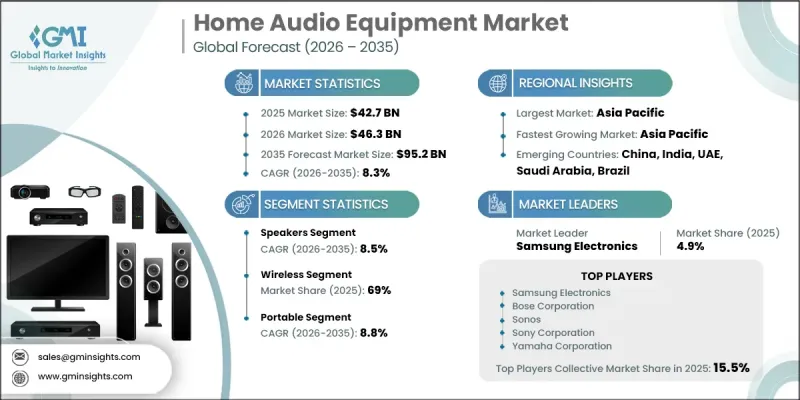
音訊技術的快速發展、消費者對高品質音響系統日益成長的期望以及智慧家庭生態系統的不斷普及,共同推動了這個市場的發展。藍牙和Wi-Fi等無線連接標準的日益融合顯著提升了設備間的互通性,並極大地便利了用戶使用。數位串流媒體平台的擴張和智慧音箱的普及進一步刺激了市場對最新音訊解決方案的需求。消費者越來越重視沉浸式聆聽體驗,這推動了先進家庭娛樂系統的普及。可支配收入的增加、生活方式的改變以及對高階消費性電子產品的日益偏好,也促進了市場的擴張。製造商不斷推出創新產品,例如條形音箱、低音炮和多房間音頻系統,以提升用戶體驗。然而,全球主要公司之間的激烈競爭以及仿冒品的存在,可能會在一定程度上限制市場的發展潛力。儘管如此,持續的創新和策略合作有望維持市場的長期成長。
| 市場範圍 | |
|---|---|
| 開始年份 | 2025 |
| 預測期 | 2026-2035 |
| 初始市場規模 | 427億美元 |
| 市場規模預測 | 952億美元 |
| 複合年成長率 | 8.3% |
預計到2025年,揚聲器市場規模將達到205億美元,並在2035年之前以8.5%的複合年成長率成長。推動這一市場成長的主要因素是消費者對卓越音質和更豐富聆聽體驗日益成長的需求。配備語音助理技術的無線和智慧揚聲器的日益普及進一步促進了該市場的成長。緊湊的設計和聲學性能的不斷提升,使製造商能夠吸引更廣泛的消費群體。
預計2026年至2035年,可攜式音訊市場將以8.8%的複合年成長率成長。此市場成長的主要驅動力是消費者對便攜、易用的小型無線音訊設備的需求不斷成長。藍牙產品的日益普及以及電池性能的提升,進一步推動了市場需求。此外,消費者對行動娛樂的日益偏好以及智慧隨身聽設備的廣泛應用,也是推動該市場擴張的重要因素。
美國家用音響設備市場佔84%的市場佔有率,預計2025年市場規模將達到110億美元。該國市場成長的驅動力主要來自持續的技術創新和消費者對先進音響系統的強勁需求。在可支配所得高、人口密度高、都市化程度高的州,音響設備的普及率尤其高。對包括揚聲器、條形音箱和家庭劇院系統在內的整合式智慧家庭音訊解決方案的需求不斷成長,持續推動整體住宅應用領域的市場擴張。
全球家用音響設備產業的主要參與者包括Sony Corporation、三星電子、LG公司、Yamaha公司、Bose公司、Sonos、鐵三角、Bang & Olufsen、劍橋音響、DALI、DynaAudio、KEF、Monitor Audio、Focal(巴可)、 Kenwood Panasonic Corporation家用音響設備市場的各公司正積極致力於透過持續的產品創新和先進技術的融合來增強自身競爭力,例如無線連接、人工智慧驅動的聲音最佳化以及智慧家庭相容性。許多公司正在拓展產品系列,推出高性能揚聲器、隨身聽設備和多房間系統,旨在提升沈浸式聆聽體驗。與串流媒體平台和智慧家庭生態系統供應商的策略合作正在加強設備連接並提升用戶參與度。此外,各公司還在研發方面投入巨資,以提升聲學性能、能源效率和產品緊湊性。拓展電子商務通路和 D2C(直接面對消費者)模式有助於品牌擴大市場覆蓋範圍,並改善其與客戶的接觸。
目錄
第1章:分析方法和範圍
第2章執行摘要
第3章業界考察
- 產業生態系分析
- 供應商情況
- 利潤率
- 每個階段增加的價值
- 影響價值鏈的因素
- 中斷
- 影響產業的因素
- 促進因素
- 產業潛在風險與挑戰
- 市場機遇
- 成長潛力分析
- 價格趨勢
- 對過去價格趨勢的分析
- 定價策略:按業務類型分類
- 監理框架
- 家用電子電器安全與電磁相容性標準(FCC、CE、VCCI)
- 區域無線電頻率和連線法規
- 能源效率和環境合規標準
- 波特五力分析
- PESTLE分析
- 貿易數據分析
- 進出口量及進口額趨勢
- 主要貿易路線及關稅的影響
- 人工智慧和生成式人工智慧對市場的影響
- 人工智慧正在改變傳統的經營模式。
- 按客戶群分類的生成式人工智慧用例和部署藍圖
- 風險、限制和監管考量
- 未來市場趨勢
- 技術與創新展望
- 最新科技趨勢
- 新興技術
- 消費行為分析
- 購買模式
- 偏好分析
- 不同地區的消費行為差異
- 電子商務對購買決策的影響
第4章 競爭情勢
- 介紹
- 公司市佔率分析
- 企業矩陣分析
- 主要公司的競爭分析
- 競爭定位矩陣
- 主要趨勢
- 企業合併(M&A)
- 商業夥伴關係與合作
- 新產品發布
- 擴張計劃
第5章 市場估算與預測:依產品類型分類(2022-2035 年)
- 揚聲器
- 書架音箱
- 落地架式揚聲器
- 壁掛式和吸頂式揚聲器
- 可攜式/藍牙音箱
- 智慧音箱
- 會議和交流演講者
- 條形音箱
- 基本型條形音箱(2.0、2.1)
- 高級條形音箱(3.1、5.1)
- 相容於杜比全景聲/DTS:X的長條音箱
- 家庭劇院系統
- 家庭劇院套裝 (HTiB)
- 基於組件的系統
- 高級家庭劇院系統
- AV接收擴大機
- AV 接收器(5.1、7.1、9.2、11.4 頻道)
- 綜合擴大機
- 功率放大器
- 前級擴大機
- 耳機擴大機
- 多房間音響系統
- 支援網路的家庭音響系統
- 區域分配系統
- 轉盤
- 皮帶驅動式轉盤
- 直驅式唱盤
- DJ唱盤
- 其他
第6章 市場估計與預測:依技術分類(2022-2035 年)
- 有線
- 類比有線連接(RCA、XLR)
- 數位有線連接(光纖、同軸、HDMI)
- 無線的
- Bluetooth
- Wi-Fi
- 多重通訊協定
第7章 市場估算與預測:依安裝類型分類(2022-2035 年)
- 可攜式的
- 固定類型
第8章 市場估算與預測:依價格區間分類(2022-2035 年)
- 價格低廉(200 美元以下)
- 中價位(200美元至499美元)
- 高價位(超過500美元)
第9章 市場估計與預測:依通路分類(2022-2035 年)
- 線上
- 電子商務
- 企業網站
- 離線
- 超級市場和大賣場
- 專賣店
- 其他(個體店、百貨公司等)
第10章 市場估價與預測:按地區分類(2022-2035 年)
- 北美洲
- 美國
- 加拿大
- 歐洲
- 德國
- 英國
- 法國
- 西班牙
- 義大利
- 荷蘭
- 亞太地區
- 中國
- 日本
- 印度
- 澳洲
- 韓國
- 拉丁美洲
- 巴西
- 墨西哥
- 阿根廷
- 中東和非洲
- 南非
- 沙烏地阿拉伯
- UAE
第11章:公司簡介
- 世界頂尖公司
- Audio-Technica
- Bose Corporation
- LG Corporation
- Samsung Electronics
- Sonos
- Sony Corporation
- Yamaha Corporation
- 該地區的主要公司
- Bang & Olufsen
- Cambridge Audio
- DALI
- Dynaudio
- Focal(Barco)
- KEF
- Monitor Audio
- 新興企業和專業公司
- Anker Soundcore
- Edifier Technology
- JVCKENWOOD Corporation
- Panasonic Corporation
- Paradigm Electronics
- SVS
- Xiaomi
The Global Home Audio Equipment Market was valued at USD 42.7 billion in 2025 and is estimated to grow at a CAGR of 8.3% to reach USD 95.2 billion by 2035.
The market is driven by rapid advancements in audio technology, rising consumer expectations for high-fidelity sound systems, and increasing adoption of smart home ecosystems. Growing integration of wireless connectivity standards such as Bluetooth and Wi-Fi has significantly improved device interoperability and user convenience. The expansion of digital streaming platforms and the rising penetration of smart speakers are further accelerating demand for modern audio solutions. Consumers are increasingly prioritizing immersive listening experiences, which is strengthening the adoption of advanced home entertainment systems. Rising disposable incomes, evolving lifestyles, and growing preference for premium electronics are also contributing to market expansion. Manufacturers are continuously launching innovative products, including soundbars, subwoofers, and multiroom audio systems, to enhance user experience. However, intense competition among global players and the presence of counterfeit products may restrain market potential to some extent, even though ongoing innovation and strategic collaborations are expected to sustain long-term growth.
| Market Scope | |
|---|---|
| Start Year | 2025 |
| Forecast Year | 2026-2035 |
| Start Value | $42.7 Billion |
| Forecast Value | $95.2 Billion |
| CAGR | 8.3% |
The speakers segment accounted for USD 20.5 billion in 2025 and is projected to grow at a CAGR of 8.5% through 2035. This segment leads the market due to increasing consumer demand for superior sound quality and enhanced listening experiences. The rising popularity of wireless and smart speakers integrated with voice assistant technologies is further supporting segment growth. Continuous improvements in compact design and acoustic performance are helping manufacturers attract a broader consumer base.
The portable segment is expected to grow at a CAGR of 8.8% from 2026 to 2035. Growth in this segment is driven by rising demand for compact, wireless audio devices that support mobility and convenience. Expanding adoption of Bluetooth-enabled products, along with improvements in battery performance, is further boosting demand. Increasing preference for on-the-go entertainment and the growing use of smart portable audio devices are also strengthening segment expansion.
United States Home Audio Equipment Market held an 84% share, generating USD 11 billion in 2025. Market growth in the country is supported by continuous technological innovation and strong consumer demand for advanced audio systems. High adoption levels are particularly evident in densely populated and urbanized states where disposable incomes are higher. Rising demand for integrated smart home audio solutions, including speakers, soundbars, and home theater systems, continues to drive market expansion across residential applications.
The major companies operating in the Global Home Audio Equipment Industry include Sony Corporation, Samsung Electronics, LG Corporation, Yamaha Corporation, Bose Corporation, Sonos, Audio-Technica, Bang & Olufsen, Cambridge Audio, DALI, Dynaudio, KEF, Monitor Audio, Focal (Barco), Anker Soundcore, Edifier Technology, JVCKENWOOD Corporation, Panasonic Corporation, Paradigm Electronics, SVS, and Xiaomi. Companies in the home audio equipment market are actively focusing on strengthening their competitive position through continuous product innovation and integration of advanced technologies such as wireless connectivity, AI-driven sound optimization, and smart home compatibility. Many players are expanding their product portfolios with high-performance speakers, portable audio devices, and multiroom systems designed to enhance immersive listening experiences. Strategic partnerships with streaming platforms and smart home ecosystem providers are enabling better device integration and user engagement. Firms are also investing in research and development to improve acoustic performance, energy efficiency, and compact product design. Expansion into e-commerce channels and direct-to-consumer sales models is helping brands improve market reach and customer accessibility.
Table of Contents
Chapter 1 Methodology and scope
- 1.1 Research approach
- 1.2 Quality Commitments
- 1.2.1 GMI AI policy & data integrity commitment
- 1.2.1.1 Source consistency protocol
- 1.2.1 GMI AI policy & data integrity commitment
- 1.3 Research Trail & Confidence Scoring
- 1.3.1 Research Trail Components
- 1.3.2 Scoring Components
- 1.4 Data Collection
- 1.4.1 Partial list of primary sources
- 1.5 Data mining sources
- 1.5.1 Paid sources
- 1.5.1.1 Sources, by region
- 1.5.1 Paid sources
- 1.6 Base estimates and calculations
- 1.6.1 Base year calculation for any one approach
- 1.7 Forecast model
- 1.7.1 Quantified market impact analysis
- 1.7.1.1 Mathematical impact of growth parameters on forecast
- 1.7.1 Quantified market impact analysis
- 1.8 Research transparency addendum
- 1.8.1 Source attribution framework
- 1.8.2 Quality assurance metrics
- 1.8.3 Our commitment to trust
Chapter 2 Executive summary
- 2.1 Industry 360° synopsis
- 2.2 Key market trends
- 2.2.1 Regional
- 2.2.2 Product type
- 2.2.3 Technology
- 2.2.4 Installation
- 2.2.5 Price range
- 2.2.6 Distribution channel
Chapter 3 Industry insights
- 3.1 Industry ecosystem analysis
- 3.1.1 Supplier landscape
- 3.1.2 Profit margin
- 3.1.3 Value addition at each stage
- 3.1.4 Factor affecting the value chain
- 3.1.5 Disruptions
- 3.2 Industry impact forces
- 3.2.1 Growth drivers
- 3.2.2 Industry pitfalls & challenges
- 3.2.3 Opportunities
- 3.3 Growth potential analysis
- 3.4 Price trends
- 3.4.1 Historical price trend analysis
- 3.4.2 Pricing strategy by player type
- 3.5 Regulatory framework
- 3.5.1 Consumer Electronics Safety & EMC Standards (FCC, CE, VCCI)
- 3.5.2 Wireless Spectrum & Connectivity Regulations by Region
- 3.5.3 Energy Efficiency & Environmental Compliance Standards
- 3.6 Porter's five forces analysis
- 3.7 PESTEL analysis
- 3.8 Trade data analysis (based on paid database) (HS Code: 85182100)
- 3.8.1 Import/export volume & value trends
- 3.8.2 Key trade corridors & tariff impact
- 3.9 Impact of AI & generative AI on the market
- 3.9.1 AI-driven disruption of traditional business models
- 3.9.2 GenAI use cases & adoption roadmap by customer segment
- 3.9.3 Risks, limitations & regulatory considerations
- 3.10 Future market trends
- 3.11 Technology and innovation landscape
- 3.11.1 Current technological trends
- 3.11.2 Emerging technologies
- 3.12 Consumer behavior analysis
- 3.12.1 Purchasing patterns
- 3.12.2 Preference analysis
- 3.12.3 Regional variations in consumer behavior
- 3.12.4 Impact of e-commerce on buying decisions
Chapter 4 Competitive landscape, 2025
- 4.1 Introduction
- 4.2 Company market share analysis
- 4.2.1 North America
- 4.2.2 Europe
- 4.2.3 Asia Pacific
- 4.2.4 Latin America
- 4.2.5 MEA
- 4.3 Company matrix analysis
- 4.4 Competitive analysis of major market players
- 4.5 Competitive positioning matrix
- 4.6 Key developments
- 4.6.1 Mergers & acquisitions
- 4.6.2 Partnerships & collaborations
- 4.6.3 New product launches
- 4.6.4 Expansion plans
Chapter 5 Market Estimates & Forecast, By Product Type, 2022 - 2035 ($Billion, Thousand Units)
- 5.1 Key trends
- 5.2 Speakers
- 5.2.1 Bookshelf speakers
- 5.2.2 Floor-standing speakers
- 5.2.3 In-wall/in-ceiling speakers
- 5.2.4 Portable/Bluetooth speakers
- 5.2.5 Smart speakers
- 5.2.6 Conference/communication speakers
- 5.3 Soundbars
- 5.3.1 Basic soundbars (2.0, 2.1)
- 5.3.2 Advanced soundbars (3.1, 5.1)
- 5.3.3 Dolby Atmos/DTS:X soundbars
- 5.4 Home theater systems
- 5.4.1 Home theater in a box (HTiB)
- 5.4.2 Component-based systems
- 5.4.3 Premium dedicated home theater systems
- 5.5 AV receivers & amplifiers
- 5.5.1 AV receivers (5.1, 7.1, 9.2, 11.4 channel)
- 5.5.2 Integrated amplifiers
- 5.5.3 Power amplifiers
- 5.5.4 Pre-amplifiers
- 5.5.5 Headphone amplifiers
- 5.6 Multi-room audio systems
- 5.6.1 Networked whole-home systems
- 5.6.2 Zone-based distribution systems
- 5.7 Turntables
- 5.7.1 Belt-drive turntables
- 5.7.2 Direct-drive turntables
- 5.7.3 DJ turntables
- 5.7.4 Others
Chapter 6 Market Estimates & Forecast, By Technology, 2022 - 2035 ($Billion, Thousand Units)
- 6.1 Key trends
- 6.2 Wired
- 6.2.1 Analog wired (RCA, XLR)
- 6.2.2 Digital wired (Optical, Coaxial, HDMI)
- 6.3 Wireless
- 6.3.1 Bluetooth
- 6.3.2 Wi-Fi
- 6.3.3 Multi-protocol
Chapter 7 Market Estimates & Forecast, By Installation, 2022 - 2035 ($Billion, Thousand Units)
- 7.1 Key trends
- 7.2 Portable
- 7.3 Fixed
Chapter 8 Market Estimates & Forecast, By Price Range, 2022 - 2035 ($Billion, Thousand Units)
- 8.1 Key trends
- 8.2 Low (under USD 200)
- 8.3 Medium (USD 200 - USD 499)
- 8.4 High (USD 500 and above)
Chapter 9 Market Estimates & Forecast, By Distribution Channel, 2022 - 2035 ($Billion, Thousand Units)
- 9.1 Key trends
- 9.2 Online
- 9.2.1 E-commerce
- 9.2.2 Company websites
- 9.3 Offline
- 9.3.1 Supermarkets/hypermarkets
- 9.3.2 Specialty stores
- 9.3.3 Others (individual stores, department stores, etc.)
Chapter 10 Market Estimates & Forecast, By Region, 2022 - 2035 ($Billion, Thousand Units)
- 10.1 Key trends
- 10.2 North America
- 10.2.1 U.S.
- 10.2.2 Canada
- 10.3 Europe
- 10.3.1 Germany
- 10.3.2 UK
- 10.3.3 France
- 10.3.4 Spain
- 10.3.5 Italy
- 10.3.6 Netherlands
- 10.4 Asia Pacific
- 10.4.1 China
- 10.4.2 Japan
- 10.4.3 India
- 10.4.4 Australia
- 10.4.5 South Korea
- 10.5 Latin America
- 10.5.1 Brazil
- 10.5.2 Mexico
- 10.5.3 Argentina
- 10.6 MEA
- 10.6.1 South Africa
- 10.6.2 Saudi Arabia
- 10.6.3 UAE
Chapter 11 Company Profiles
- 11.1 Top Global Players
- 11.1.1 Audio-Technica
- 11.1.2 Bose Corporation
- 11.1.3 LG Corporation
- 11.1.4 Samsung Electronics
- 11.1.5 Sonos
- 11.1.6 Sony Corporation
- 11.1.7 Yamaha Corporation
- 11.2 Regional Key Players
- 11.2.1 Bang & Olufsen
- 11.2.2 Cambridge Audio
- 11.2.3 DALI
- 11.2.4 Dynaudio
- 11.2.5 Focal (Barco)
- 11.2.6 KEF
- 11.2.7 Monitor Audio
- 11.3 Emerging and Specialized Players
- 11.3.1 Anker Soundcore
- 11.3.2 Edifier Technology
- 11.3.3 JVCKENWOOD Corporation
- 11.3.4 Panasonic Corporation
- 11.3.5 Paradigm Electronics
- 11.3.6 SVS
- 11.3.7 Xiaomi


