


 |
市場調查報告書
商品編碼
2045763
2026 年至 2035 年美容醫學市場的商業機會、成長要素、產業趨勢分析與預測。Aesthetic Medicine Market Opportunity, Growth Drivers, Industry Trend Analysis, and Forecast 2026 - 2035 |
||||||

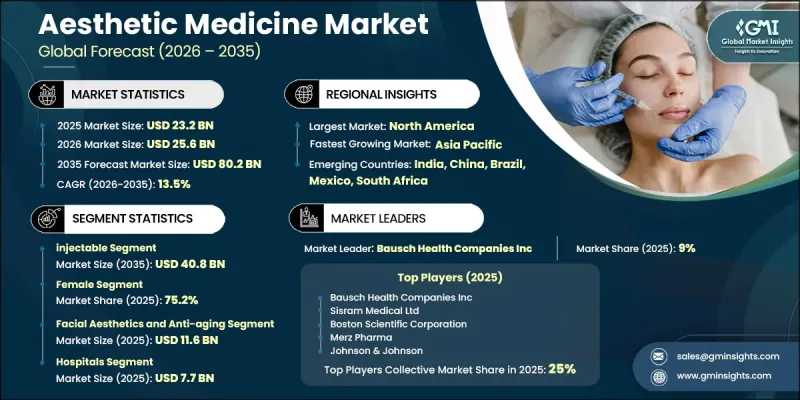
2025年全球美容醫藥市場價值為232億美元,預計到2035年將以13.5%的複合年成長率成長至802億美元。
在人們對整形手術認知度不斷提高、醫療和美容技術持續進步以及對非侵入性治療日益成長的偏好推動下,市場正經歷強勁成長。對肥胖和身材形像日益關注也進一步促進了市場擴張,越來越多的人尋求整形醫學來改善自身外觀。美容設備和治療方法的創新提高了安全性、精準度和治療效果,使手術更加便利且更具吸引力。此外,社會對整形手術的態度轉變、可支配收入的增加以及各個年齡層對美容治療接受度的提高,都支撐著市場的持續需求。皮膚科診所和專業美容中心的擴張也提高了人們獲得先進手術的機會,進一步增強了全球市場的滲透率。
| 市場範圍 | |
|---|---|
| 開始年份 | 2025 |
| 預測期 | 2026-2035 |
| 上市時的市場規模 | 232億美元 |
| 預測金額 | 802億美元 |
| 複合年成長率 | 13.5% |
美容醫學是指透過外科手術、微創手術和非手術方式改善外貌的醫學領域。它解決皺紋、疤痕、脂肪堆積、皮膚鬆弛、橘皮組織、體毛過多和膚色不均等問題。這些手術由皮膚科醫生、整形外科醫生和美容醫學從業者等合格的專業人員進行。隨著越來越多的人尋求改善外觀和提升自信的治療,美容手術的需求顯著成長。全球肥胖率的上升也是一個主要的成長要素,越來越多的人選擇美容手術來獲得比傳統生活方式改變(如節食和運動)更好的塑形效果。
2025年,注射美容市場規模為111億美元,預計2035年將達408億美元。隨著消費者偏好轉向微創、快速見效且效果自然的美容項目,該市場持續保持強勁成長動能。肉毒桿菌毒素和皮膚填充劑注射療法廣泛應用於臉部輪廓塑形、除皺和容量填充。日益增強的美容意識、年輕一代對注射美容接受度的提高以及男性消費者數量的成長,進一步推動了全球注射美容市場的需求。
預計到2025年,女性市場將佔據75.2%的市場。這一主導地位歸功於女性對美容手術的高度認知、對美容手術日益成長的接受度,以及對護膚和抗衰老療法的濃厚興趣。女性通常會選擇諸如活膚、注射、塑形和緊緻療法等項目來提升自身形象,並保持年輕活力。數位媒體、美容潮流和專家建議也對這群人接受美容手術的意願產生了影響。
預計到2025年,北美美容醫學市場將佔據39.5%的市場。該地區預計將繼續保持強勁成長勢頭,這主要得益於消費者意識的提高、美容技術的進步以及人們對自身外觀日益成長的關注。大規模積極尋求美容治療的人群顯著推動了該地區的需求。此外,先進美容服務的普及以及各個年齡層對美容手術接受度的提高,也進一步促進了該地區的市場成長。
目錄
第1章:調查方法
第2章執行摘要
第3章 行業洞察
- 產業生態系分析
- 影響產業的因素
- 促進因素
- 人們對美容手術的認知不斷提高
- 與美容醫療設備相關的技術進步
- 肥胖症盛行率上升
- 非侵入性手術的擴展
- 產業潛在風險與挑戰
- 美容手術費用高昂
- 缺乏償還機制和嚴格的法規環境
- 市場機遇
- 男性美容手術的擴展
- 再生美容領域(使用 PRP 和幹細胞的療法)的拓展
- 促進因素
- 成長潛力分析
- 監理情勢
- 技術展望
- 最新科技趨勢
- 點陣二氧化碳雷射治療痤瘡疤痕和活膚
- 微針射頻活膚治療
- 新興技術
- 高強度聚焦超音波用於臉部回春和身體塑形
- 用於恢復活力的再生生物刺激療法
- 最新科技趨勢
- 未來市場趨勢
- 人工智慧和生成式人工智慧對市場的影響
- 價格趨勢分析
- 專利分析
- 波特的分析
- PESTLE分析
第4章 競爭情勢
- 介紹
- 企業市佔率分析
- 世界
- 北美洲
- 歐洲
- 亞太地區
- 企業矩陣分析
- 主要市場公司的競爭分析
- 競爭定位矩陣
- 主要進展
- 併購
- 夥伴關係和聯盟
- 新產品發布
- 業務拓展計劃
第5章 市場估價與預測:依產品分類,2022-2035年
- 能源利用裝置
- 雷射美容儀
- 射頻(RF)美容設備
- 光療美容設備
- 超音波美容設備
- 其他能源相關產品
- 注射藥物
- 肉毒桿菌毒素
- 皮膚填充劑(含透明質酸和不含透明酸的)
- 膠原蛋白誘導劑
- 植入
- 植入
- 臉部植入
- 其他植入
- 護膚品及相關配件
第6章 市場估計與預測:依性別分類,2022-2035年
- 男性
- 女士
第7章 市場估計與預測:依應用領域分類,2022-2035年
- 臉部美容與抗衰老
- 皮膚再生與修復
- 塑形和減脂
- 除毛
- 疤痕和色素沉著治療
- 其他用途
第8章 市場估算與預測:依最終用途分類,2022-2035年
- 醫院
- 門診手術中心
- 美容院及醫療水療中心
- 皮膚科診所
第9章 市場估計與預測:依地區分類,2022-2035年
- 北美洲
- 美國
- 加拿大
- 歐洲
- 德國
- 英國
- 法國
- 西班牙
- 義大利
- 荷蘭
- 亞太地區
- 中國
- 日本
- 印度
- 澳洲
- 韓國
- 拉丁美洲
- 巴西
- 墨西哥
- 阿根廷
- 中東和非洲
- 南非
- 沙烏地阿拉伯
- UAE
第10章:公司簡介
- 世界公司
- Boston Scientific Corporation
- 博士倫健康公司
- Cutera
- Johnson &Johnson
- Merz Pharma
- Sisram Medical Ltd
- Venus Concept
- 當地公司
- El.En. SpA
- Huadong Medicine Co., Ltd
- Sciton, Inc.
- SharpLight Technologies Inc
- 新興企業
- Apax Partners
- GC Aesthetics plc
- Vitruvian Partners LLP
- Hahn &Company
The Global Aesthetic Medicine Market was valued at USD 23.2 billion in 2025 and is estimated to grow at a CAGR of 13.5% to reach USD 80.2 billion by 2035.
The market is witnessing strong growth momentum driven by rising awareness of cosmetic enhancement procedures, continuous advancements in medical aesthetic technologies, and increasing preference for non-invasive treatments. Growing concerns related to obesity and body image are further contributing to market expansion as more individuals seek aesthetic interventions to improve physical appearance. Technological innovation in aesthetic devices and treatment methods is enhancing safety, precision, and outcomes, making procedures more accessible and appealing. In addition, shifting social attitudes toward cosmetic enhancement, combined with increased disposable income and broader acceptance of aesthetic treatments across different age groups, is supporting sustained demand. The expansion of dermatology clinics and specialized cosmetic centers is also improving access to advanced procedures, further strengthening market penetration globally.
| Market Scope | |
|---|---|
| Start Year | 2025 |
| Forecast Year | 2026-2035 |
| Start Value | $23.2 Billion |
| Forecast Value | $80.2 Billion |
| CAGR | 13.5% |
Aesthetic medicine refers to a medical specialty focused on improving physical appearance through surgical, minimally invasive, and non-surgical procedures. It addresses concerns such as wrinkles, scars, excess fat, skin laxity, cellulite, unwanted hair, and uneven pigmentation. These procedures are performed by qualified professionals, including dermatologists, plastic surgeons, and cosmetic practitioners. The rising acceptance of cosmetic enhancement is significantly boosting demand, as more individuals pursue treatments to enhance their appearance and self-confidence. Increasing global obesity rates are also acting as a key growth driver, with more people opting for aesthetic procedures to achieve improved body contouring outcomes beyond traditional lifestyle approaches such as diet and exercise.
The injectable segment was valued at USD 11.1 billion in 2025 and is projected to reach USD 40.8 billion by 2035. This segment continues to gain strong traction as consumer preference shifts toward minimally invasive procedures that deliver quick results with natural-looking outcomes. Treatments involving botulinum-based products and dermal fillers are widely used for facial enhancement, wrinkle reduction, and volume restoration. Rising aesthetic awareness, increased acceptance among younger populations, and growing participation from male consumers are further strengthening demand for injectable treatments across global markets.
The female segment accounted for 75.2% share in 2025. This leadership is attributed to higher awareness of cosmetic procedures, greater openness toward aesthetic enhancement, and strong interest in skincare and anti-aging treatments. Women commonly opt for procedures such as skin rejuvenation, injectables, body contouring, and tightening treatments to enhance appearance and maintain youthful looks. Influences from digital media, beauty trends, and professional recommendations further encourage the adoption of aesthetic procedures across this demographic.
North America Aesthetic Medicine Market held 39.5% in 2025. The region continues to experience strong growth supported by rising consumer awareness, technological advancements in aesthetic procedures, and increasing emphasis on physical appearance. A large population base actively seeking cosmetic treatments contributes significantly to regional demand. The expanding availability of advanced aesthetic services and growing acceptance of cosmetic enhancement across diverse age groups further strengthen market growth in the region.
Major companies operating in the Global Aesthetic Medicine Market include Johnson & Johnson, Merz Pharma, Bausch Health Companies Inc., Boston Scientific Corporation, Cutera, El.En. S.p.A., GC Aesthetics plc, Sisram Medical Ltd, Venus Concept, Sciton, Inc., SharpLight Technologies Inc, Huadong Medicine Co., Ltd, Hahn & Company, Apax Partners, and Vitruvian Partners LLP. Companies in the aesthetic medicine market are focusing on continuous innovation in minimally invasive and non-invasive treatment technologies to enhance safety, effectiveness, and patient satisfaction. They are increasing investments in research and development to introduce advanced injectables, energy-based devices, and combination therapies. Strategic partnerships with dermatology clinics, cosmetic surgery centers, and medical spa chains are helping expand market reach and strengthen distribution networks. Firms are also prioritizing product portfolio expansion through mergers and acquisitions to gain access to new technologies and geographic markets. Growing emphasis on clinical training and practitioner education programs is improving procedural adoption rates.
Table of Contents
Chapter 1 Research Methodology
- 1.1 Research approach
- 1.2 Quality commitments
- 1.2.1 GMI AI policy & data integrity commitment
- 1.2.1.1 Source consistency protocol
- 1.2.1 GMI AI policy & data integrity commitment
- 1.3 Research trail & confidence scoring
- 1.3.1 Research trail components
- 1.3.2 Scoring components
- 1.4 Data collection
- 1.4.1 Partial list of primary sources
- 1.5 Data mining sources
- 1.5.1 Paid sources
- 1.5.1.1 Sources, by region
- 1.5.1 Paid sources
- 1.6 Base estimates and calculations
- 1.6.1 Base year calculation for any one approach
- 1.7 Forecast model
- 1.7.1 Quantified market impact analysis
- 1.7.1.1 Mathematical impact of growth parameters on forecast
- 1.7.1 Quantified market impact analysis
- 1.8 Research transparency addendum
- 1.8.1 Source attribution framework
- 1.8.2 Quality assurance metrics
- 1.8.3 Our commitment to trust
Chapter 2 Executive Summary
- 2.1 Industry 3600 synopsis
- 2.2 Key market trends
- 2.2.1 Product trends
- 2.2.2 Gender trends
- 2.2.3 Application trends
- 2.2.4 End use trends
- 2.2.5 Regional trends
- 2.3 CXO perspectives: Strategic imperatives
Chapter 3 Industry Insights
- 3.1 Industry ecosystem analysis
- 3.2 Industry impact forces
- 3.2.1 Growth drivers
- 3.2.1.1 Increasing awareness regarding aesthetic procedures.
- 3.2.1.2 Technological advancements associated with medical aesthetic devices.
- 3.2.1.3 Rising prevalence of obesity.
- 3.2.1.4 Increasing adoption of non-invasive procedures.
- 3.2.2 Industry pitfalls and challenges
- 3.2.2.1 High cost associated with aesthetic procedures.
- 3.2.2.2 Lack of reimbursement and stringent regulatory scenario.
- 3.2.3 Market opportunities
- 3.2.3.1 Expansion of aesthetic procedures among men
- 3.2.3.2 Expansion in regenerative aesthetics (PRP, stem-cell based therapies)
- 3.2.1 Growth drivers
- 3.3 Growth potential analysis
- 3.4 Regulatory landscape (Driven by primary research)
- 3.4.1 North America
- 3.4.2 Europe
- 3.4.3 Asia Pacific
- 3.4.4 Latin America
- 3.4.5 Middle East and Africa
- 3.5 Technology landscape (Driven by primary research)
- 3.5.1 Current technological trends
- 3.5.1.1 Fractional CO2 laser for acne scars and skin rejuvenation
- 3.5.1.2 Microneedle radiofrequency for skin rejuvenation
- 3.5.2 Emerging technologies
- 3.5.2.1 High-intensity focused ultrasound for facial rejuvenation and body contouring
- 3.5.2.2 Regenerative bio stimulation therapies for rejuvenation
- 3.5.1 Current technological trends
- 3.6 Future market trends (Driven by primary research)
- 3.7 Impact of AI and Generative AI on the market (Driven by primary research)
- 3.8 Pricing trend analysis (Driven by primary research)
- 3.9 Patent analysis
- 3.10 Porter's analysis
- 3.11 PESTEL analysis
Chapter 4 Competitive Landscape, 2025
- 4.1 Introduction
- 4.2 Company market share analysis
- 4.2.1 Global
- 4.2.2 North America
- 4.2.3 Europe
- 4.2.4 Asia Pacific
- 4.3 Company matrix analysis
- 4.4 Competitive analysis of major market players
- 4.5 Competitive positioning matrix
- 4.6 Key developments
- 4.6.1 Mergers and acquisitions
- 4.6.2 Partnerships and collaborations
- 4.6.3 New product launches
- 4.6.4 Expansion plans
Chapter 5 Market Estimates and Forecast, By Product, 2022 - 2035 ($ Mn)
- 5.1 Key trends
- 5.2 Energy-based devices
- 5.2.1 Laser-based aesthetic device
- 5.2.2 Radiofrequency (RF)-based aesthetic device
- 5.2.3 Light-based aesthetic device
- 5.2.4 Ultrasound aesthetic device
- 5.2.5 Other energy-based products
- 5.3 Injectables
- 5.3.1 Botulinum toxin
- 5.3.2 Dermal fillers (HA & Non-HA)
- 5.3.3 Collagen stimulators
- 5.4 Implants
- 5.4.1 Breast implants
- 5.4.2 Facial implants
- 5.4.3 Other implants
- 5.5 Skincare products & accessories
Chapter 6 Market Estimates and Forecast, By Gender, 2022 - 2035 ($ Mn)
- 6.1 Key trends
- 6.2 Male
- 6.3 Female
Chapter 7 Market Estimates and Forecast, By Application, 2022 - 2035 ($ Mn)
- 7.1 Key trends
- 7.2 Facial aesthetics and anti-aging
- 7.3 Skin resurfacing and rejuvenation
- 7.4 Body contouring and fat reduction
- 7.5 Hair removal
- 7.6 Scar and pigmentation treatment
- 7.7 Other applications
Chapter 8 Market Estimates and Forecast, By End use, 2022 - 2035 ($ Mn)
- 8.1 Key trends
- 8.2 Hospitals
- 8.3 Ambulatory surgical centers
- 8.4 Beauty centers and medical spas
- 8.5 Dermatology clinics
Chapter 9 Market Estimates and Forecast, By Region, 2022 - 2035 ($ Mn)
- 9.1 Key trends
- 9.2 North America
- 9.2.1 U.S.
- 9.2.2 Canada
- 9.3 Europe
- 9.3.1 Germany
- 9.3.2 UK
- 9.3.3 France
- 9.3.4 Spain
- 9.3.5 Italy
- 9.3.6 Netherlands
- 9.4 Asia Pacific
- 9.4.1 China
- 9.4.2 Japan
- 9.4.3 India
- 9.4.4 Australia
- 9.4.5 South Korea
- 9.5 Latin America
- 9.5.1 Brazil
- 9.5.2 Mexico
- 9.5.3 Argentina
- 9.6 Middle East and Africa
- 9.6.1 South Africa
- 9.6.2 Saudi Arabia
- 9.6.3 UAE
Chapter 10 Company Profiles
- 10.1 Global players
- 10.1.1 Boston Scientific Corporation
- 10.1.2 Bausch Health Companies Inc.
- 10.1.3 Cutera
- 10.1.4 Johnson & Johnson
- 10.1.5 Merz Pharma
- 10.1.6 Sisram Medical Ltd
- 10.1.7 Venus Concept
- 10.2 Regional players
- 10.2.1 El.En. S.p.A
- 10.2.2 Huadong Medicine Co., Ltd
- 10.2.3 Sciton, Inc.
- 10.2.4 SharpLight Technologies Inc
- 10.3 Emerging players
- 10.3.1 Apax Partners
- 10.3.2 GC Aesthetics plc
- 10.3.3 Vitruvian Partners LLP
- 10.3.4 Hahn & Company

 美容醫學市場:2026-2032年全球市場預測(按產品類型、手術、技術、性別、類別、應用、最終用戶和分銷管道分類)
 全球美容醫學市場-產業規模、佔有率、趨勢、機會和預測:按手術類型、地區和競爭格局分類,2021-2031年
 美容醫學市場規模、佔有率和成長分析:按治療類型、產品類型、應用、最終用戶和地區分類-2026-2033年產業預測
 美容醫學市場規模、佔有率和趨勢分析報告:按手術、應用、地區和細分市場預測(2026-2033 年)
 脂肪空化市場:按技術、應用、產品類型、年齡層、性別、最終用戶、分銷管道和地區分類
 2026年全球醫美市場報告
 全球美容醫學市場規模、佔有率、趨勢和成長分析報告(2026-2034)美容醫療市場:依手術項目和地區分類
 全球脂肪空化市場
 美容醫療的全球市場:各手術類型,各功能,各手術類型,各地區:市場規模,產業趨勢,機會分析,預測(2025年~2033年)