


 |
市場調查報告書
商品編碼
2038714
融合飲料市場機會、成長要素、產業趨勢分析及2026-2035年預測Fusion Beverages Market Opportunity, Growth Drivers, Industry Trend Analysis, and Forecast 2026 - 2035 |
||||||

全球融合飲料市場預計到 2025 年將價值 79 億美元,預計到 2035 年將以 5% 的複合年成長率成長至 131 億美元。
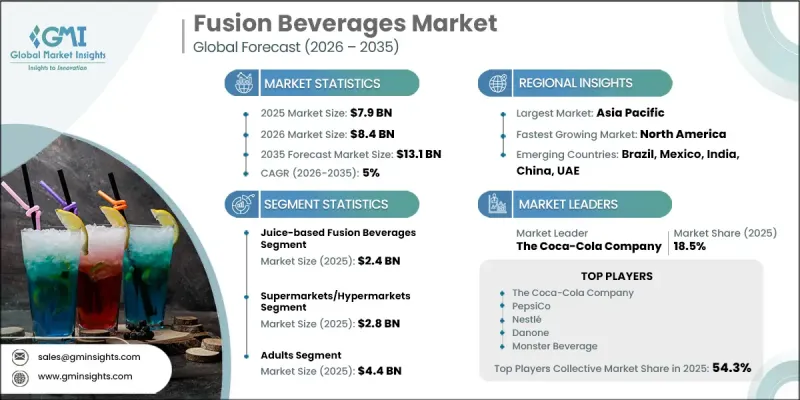
融合飲料是指將多種飲料類別中的不同成分、風味和功能元素融合在一起的創新飲料配方,旨在提供獨特的味覺體驗和額外的營養價值。這類飲料透過結合水果萃取物、植物萃取物和功能性添加劑等元素而研發,旨在滿足消費者對口味多樣性和健康益處的不斷變化的需求。此品類迎合了消費者對兼具補水、能量和整體生活方式提升功能的飲料的偏好,同時保持了便利性和全年供應的特點。消費者對新奇口味的日益青睞和對多功能飲料的需求是推動市場擴張的關鍵因素。融合飲料不斷將傳統飲料產品轉化為具有商業性吸引力的差異化產品,使品牌能夠有效地滿足消費者對多樣性和功能性的需求。該細分市場在塑造現代飲料消費模式方面發揮著至關重要的作用,尤其是在受多元飲食文化影響且口味偏好快速變化的地區。
| 市場範圍 | |
|---|---|
| 開始年份 | 2025 |
| 預測期 | 2026-2035 |
| 上市時的市場規模 | 79億美元 |
| 預測金額 | 131億美元 |
| 複合年成長率 | 5% |
到2025年,果汁基混合飲料市場規模將達24億美元。隨著消費者對兼具天然成分和功能性益處的飲料需求日益成長,該細分市場持續保持強勁成長勢頭。此類產品因其高營養價值、健康益處以及清爽口感而定位為高階產品。其便利性和多功能性使其既適合居家飲用,也適合外出攜帶,進一步推動了市場需求。
預計到2025年,超級市場和大賣場市場規模將達28億美元。這些零售業態憑藉其豐富的產品種類、極具競爭力的定價策略和高客流量,在市場中佔據主導地位。它們能夠提供極高的產品曝光率並支援促銷活動,使品牌能夠觸及廣泛的消費者群體,從而成為大規模分銷的重要管道。
預計北美融合飲料市場將從2025年的28億美元成長到2035年的47億美元。該地區的成長主要得益於消費者對兼具功能性和獨特風味的飲料日益成長的興趣。在美國市場,家庭消費和餐飲服務領域的融合飲料市場都在持續擴張。生產技術和包裝解決方案的進步,以及包括實體店和數位平台在內的零售基礎設施的不斷完善,都為全部區域的穩定產品供應和品質提升提供了保障。
目錄
第1章:調查方法和範圍
第2章執行摘要
第3章業界考察
- 生態系分析
- 供應商情況
- 利潤率
- 每個階段增加的價值
- 影響價值鏈的因素
- 中斷
- 影響產業的因素
- 促進因素
- 產業潛在風險與挑戰
- 市場機遇
- 成長潛力分析
- 監理情勢
- 北美洲
- 歐洲
- 亞太地區
- 拉丁美洲
- 中東和非洲
- 波特五力分析
- PESTEL 分析
- 價格趨勢
- 按地區
- 按類型
- 未來市場趨勢
- 科技與創新趨勢
- 當前技術趨勢
- 新興技術
- 專利趨勢
- 貿易統計(HS編碼)
- 主要進口國
- 主要出口國
- 永續性和環境方面
- 永續計劃
- 減少廢棄物策略
- 生產中的能源效率
- 環保意識的舉措
- 考慮碳足跡
第4章 競爭情勢
- 介紹
- 企業市佔率分析
- 按地區
- 北美洲
- 歐洲
- 亞太地區
- 拉丁美洲
- 中東和非洲(MEA)
- 按地區
- 主要市場公司的競爭分析
- 競爭定位矩陣
- 主要進展
- 併購
- 夥伴關係和聯盟
- 新產品發布
- 業務拓展計劃
第5章 市場估計與預測:依類型分類,2022-2035年
- 以果汁為基底的調酒
- 以茶為基底的調酒
- 以咖啡為基底的調酒
- 碳酸融合飲料
- 酒精融合飲料
- 植物來源
- 其他
第6章 市場估計與預測:依通路分類,2022-2035年
- 超級市場/大賣場
- 專賣店
- 線上零售
- 便利商店
- 其他
第7章 市場估計與預測:依最終用戶分類,2022-2035年
- 孩子
- 成人
- 老年人
第8章 市場估計與預測:依地區分類,2022-2035年
- 北美洲
- 美國
- 加拿大
- 歐洲
- 德國
- 英國
- 法國
- 西班牙
- 義大利
- 其他歐洲國家
- 亞太地區
- 中國
- 印度
- 日本
- 澳洲
- 韓國
- 其他亞太地區
- 拉丁美洲
- 巴西
- 墨西哥
- 阿根廷
- 其他拉丁美洲
- 中東和非洲
- 沙烏地阿拉伯
- 南非
- 阿拉伯聯合大公國
- 其他中東和非洲地區
第9章:公司簡介
- Coca-Cola Company
- Liquid Fusion
- Campbell Soup
- PepsiCo
- Danone
- Monster Beverage
- Nestle
- Pocari
- Gatorade
- 100 Plus
- Power Ade
The Global Fusion Beverages Market was valued at USD 7.9 billion in 2025 and is estimated to grow at a CAGR of 5% to reach USD 13.1 billion by 2035.
Fusion beverages are defined as innovative drink formulations that merge diverse ingredients, flavors, and functional elements from multiple beverage categories to deliver distinctive taste experiences and added nutritional value. These beverages are developed by combining elements such as fruit-based components, botanical infusions, and functional additives, creating products that cater to evolving consumer expectations for both flavor diversity and wellness benefits. The category addresses shifting preferences toward beverages that offer hydration, energy support, and overall lifestyle enhancement while maintaining convenience and year-round availability. The growing inclination toward experimentation in taste and the demand for multifunctional drinks are key factors supporting market expansion. Fusion beverages continue to transform conventional beverage offerings into differentiated products with strong commercial appeal, enabling brands to respond effectively to consumer demand for variety and functional attributes. This segment plays a significant role in shaping modern beverage consumption patterns, particularly in regions characterized by diverse culinary influences and rapidly changing taste preferences.
| Market Scope | |
|---|---|
| Start Year | 2025 |
| Forecast Year | 2026-2035 |
| Start Value | $7.9 Billion |
| Forecast Value | $13.1 Billion |
| CAGR | 5% |
The juice-based fusion beverages segment accounted for USD 2.4 billion in 2025. This segment continues to gain momentum as consumers increasingly seek beverages that combine natural ingredients with enhanced functionality. Products within this category are positioned as premium offerings due to their perceived nutritional value and ability to deliver refreshing taste profiles along with added health-oriented benefits. Their convenience and versatility make them suitable for both at-home consumption and on-the-go usage, further strengthening demand.
The supermarkets and hypermarkets segment reached USD 2.8 billion in 2025. These retail formats dominate due to their wide product assortment, competitive pricing strategies, and high customer footfall. Their ability to provide strong product visibility and support promotional activities enables brands to reach a broad consumer base, making them a key channel for large-scale distribution.
North America Fusion Beverages Market is anticipated to grow from USD 2.8 billion in 2025 to USD 4.7 billion by 2035. Growth in the region is driven by increasing consumer interest in beverages that combine functional benefits with unique flavor profiles. The United States market continues to witness rising adoption across both household and foodservice sectors. Expansion of retail infrastructure, including physical stores and digital platforms, along with advancements in production technologies and packaging solutions, is supporting consistent product availability and quality improvements across the region.
Key players operating in the Global Fusion Beverages Market include PepsiCo, The Coca-Cola Company, Nestle, Danone, Monster Beverage, Campbell Soup, Liquid Fusion, Gatorade, Powerade, 100 Plus, and Pocari. Companies in the Fusion Beverages Market are adopting a combination of innovation, branding, and distribution expansion strategies to strengthen their competitive position. Manufacturers are focusing on developing new flavor combinations and functional formulations to meet changing consumer preferences. Investment in research and development is enabling the introduction of products with enhanced nutritional profiles and improved taste experiences. Strategic collaborations, partnerships, and acquisitions are being used to expand product portfolios and market reach. Companies are also strengthening their presence across multiple retail channels, including e-commerce, to improve accessibility.
Table of Contents
Chapter 1 Methodology & Scope
- 1.1 Market scope and definition
- 1.2 Research design
- 1.2.1 Research approach
- 1.2.2 Data collection methods
- 1.3 Data mining sources
- 1.3.1 Global
- 1.3.2 Regional/Country
- 1.4 Base estimates and calculations
- 1.4.1 Base year calculation
- 1.4.2 Key trends for market estimation
- 1.5 Primary research and validation
- 1.5.1 Primary sources
- 1.6 Forecast model
- 1.7 Research assumptions and limitations
Chapter 2 Executive Summary
- 2.1 Industry 360° synopsis
- 2.2 Key market trends
- 2.2.1 Type
- 2.2.2 Distribution Channel
- 2.2.3 End User
- 2.2.4 Regional
- 2.3 TAM Analysis, 2026-2035
- 2.4 CXO perspectives: Strategic imperatives
Chapter 3 Industry Insights
- 3.1 Industry ecosystem analysis
- 3.1.1 Supplier landscape
- 3.1.2 Profit margin
- 3.1.3 Value addition at each stage
- 3.1.4 Factor affecting the value chain
- 3.1.5 Disruptions
- 3.2 Industry impact forces
- 3.2.1 Growth drivers
- 3.2.2 Industry pitfalls and challenges
- 3.2.3 Market opportunities
- 3.3 Growth potential analysis
- 3.4 Regulatory landscape
- 3.4.1 North America
- 3.4.2 Europe
- 3.4.3 Asia Pacific
- 3.4.4 Latin America
- 3.4.5 Middle East & Africa
- 3.5 Porter's analysis
- 3.6 PESTEL analysis
- 3.7 Price trends
- 3.7.1 By region
- 3.7.2 By Type
- 3.8 Future market trends
- 3.9 Technology and Innovation landscape
- 3.9.1 Current technological trends
- 3.9.2 Emerging technologies
- 3.10 Patent Landscape
- 3.11 Trade statistics (HS code)
- 3.11.1 Major importing countries
- 3.11.2 Major exporting countries
- 3.12 Sustainability and environmental aspects
- 3.12.1 Sustainable practices
- 3.12.2 Waste reduction strategies
- 3.12.3 Energy efficiency in production
- 3.12.4 Eco-friendly initiatives
- 3.13 Carbon footprint consideration
Chapter 4 Competitive Landscape, 2025
- 4.1 Introduction
- 4.2 Company market share analysis
- 4.2.1 By region
- 4.2.1.1 North America
- 4.2.1.2 Europe
- 4.2.1.3 Asia Pacific
- 4.2.1.4 LATAM
- 4.2.1.5 MEA
- 4.2.1 By region
- 4.3 Competitive analysis of major market players
- 4.4 Competitive positioning matrix
- 4.5 Key developments
- 4.5.1 Mergers & acquisitions
- 4.5.2 Partnerships & collaborations
- 4.5.3 New Product Launches
- 4.5.4 Expansion Plans
Chapter 5 Market Estimates and Forecast, By Type, 2022-2035 (USD Billion) (Million Liters)
- 5.1 Key trends
- 5.2 Juice-based Fusion Beverages
- 5.3 Tea-based Fusion Beverages
- 5.4 Coffee-based Fusion Beverages
- 5.5 Carbonated Fusion Drinks
- 5.6 Alcoholic Fusion Beverages
- 5.7 Plant-based
- 5.8 Others
Chapter 6 Market Estimates and Forecast, By Distribution Channel, 2022-2035 (USD Billion) (Million Liters)
- 6.1 Key trends
- 6.2 Supermarkets/Hypermarkets
- 6.3 Specialty Stores
- 6.4 Online Retail
- 6.5 Convenience Stores
- 6.6 Others
Chapter 7 Market Estimates and Forecast, By End user, 2022-2035 (USD Billion) (Million Liters)
- 7.1 Key trends
- 7.2 Children
- 7.3 Adults
- 7.4 Senior citizen
Chapter 8 Market Estimates and Forecast, By Region, 2022-2035 (USD Billion) (Kilo Tons)
- 8.1 Key trends
- 8.2 North America
- 8.2.1 U.S.
- 8.2.2 Canada
- 8.3 Europe
- 8.3.1 Germany
- 8.3.2 UK
- 8.3.3 France
- 8.3.4 Spain
- 8.3.5 Italy
- 8.3.6 Rest of Europe
- 8.4 Asia Pacific
- 8.4.1 China
- 8.4.2 India
- 8.4.3 Japan
- 8.4.4 Australia
- 8.4.5 South Korea
- 8.4.6 Rest of Asia Pacific
- 8.5 Latin America
- 8.5.1 Brazil
- 8.5.2 Mexico
- 8.5.3 Argentina
- 8.5.4 Rest of Latin America
- 8.6 Middle East and Africa
- 8.6.1 Saudi Arabia
- 8.6.2 South Africa
- 8.6.3 UAE
- 8.6.4 Rest of Middle East and Africa
Chapter 9 Company Profiles
- 9.1 Coca-Cola Company
- 9.2 Liquid Fusion
- 9.3 Campbell Soup
- 9.4 PepsiCo
- 9.5 Danone
- 9.6 Monster Beverage
- 9.7 Nestle
- 9.8 Pocari
- 9.9 Gatorade
- 9.10 100 Plus
- 9.11 Power Ade

 飲料市場報告:趨勢、預測與競爭分析(至2035年)
 全球兒童飲料市場規模、佔有率、趨勢和成長分析報告(2026-2034)全球放鬆飲品市場規模、佔有率、趨勢和成長分析報告(2026-2034)
 放鬆飲料市場-全球產業規模、佔有率、趨勢、機會和預測:按類型、應用、分銷管道、地區和競爭格局分類,2021-2031年飲料市場-全球產業規模、佔有率、趨勢、機會和預測(按產品類型、按包裝類型、按配銷通路、按地區和競爭情況,2020-2030 年)
 全球混合飲料市場
 飲料產業市場規模、佔有率和成長分析(按產品類型、包裝類型、分銷管道和地區)- 產業預測 2025-2032全球飲料市場:預測(2025-2030)