

 |
市場調查報告書
商品編碼
2038453
皮膚化妝品市場機會、成長要素、產業趨勢分析及2026-2035年預測。Dermocosmetics Market Opportunity, Growth Drivers, Industry Trend Analysis, and Forecast 2026 - 2035 |
||||||

2025年全球皮膚化妝品市場價值為390億美元,預計到2035年將以8.4%的複合年成長率成長至857億美元。
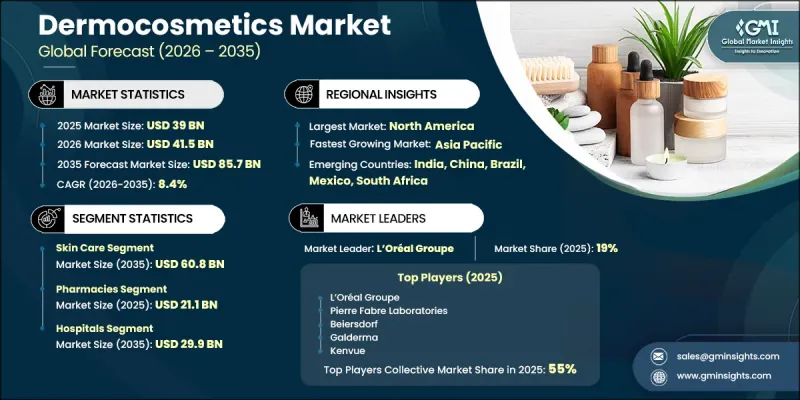
這一成長源於消費者對個人化護膚、頭皮和頭髮護理方案日益成長的需求,以及各年齡層皮膚問題的日益普遍。隨著人們對長期皮膚健康管理意識的增強,消費者的偏好正從基礎化妝品轉向皮膚科醫生推薦的兼具治療和美容功效的產品。環境壓力因素,例如污染和紫外線照射,以及生活方式相關因素,進一步加劇了敏感肌、色素沉著過度和皮膚早衰等慢性皮膚問題的增加。同時,全球人口老化和可支配收入的成長也促使人們在高階護膚方案上投入更多資金。配方科學和輸送系統的持續創新正在提升產品的功效和易用性,從而增強消費者的信心。因此,皮膚化妝品不再只是被視為短期美容手段,而是日益成為預防保健和長期皮膚維護的重要解決方案。
| 市場範圍 | |
|---|---|
| 開始年份 | 2025 |
| 預測期 | 2026-2035 |
| 上市時的市場規模 | 390億美元 |
| 預測金額 | 857億美元 |
| 複合年成長率 | 8.4% |
預計到2035年,護膚市場規模將達到608億美元。此品類涵蓋眾多產品,旨在輔助日常護膚並解決特定的肌膚問題。這些產品廣泛用於預防和修復肌膚問題,有助於維持健康的皮膚屏障功能,並改善整體膚質。消費者對科學研發的護膚品的興趣日益濃厚,加上皮膚科醫生推薦的增多,正推動著該細分市場持續成長的需求。
預計到2025年,藥局通路的銷售額將達到211億美元,佔市佔率的54%。該銷售管道之所以能保持主導地位,是因為它與專業信譽和醫療信任緊密相連。消費者青睞這些門市,因為它們值得信賴,並能提供專業的建議,而且在選擇護膚產品時,他們往往會依賴專家的推薦。皮膚科醫生推薦產品的供應進一步增強了消費者的信任,促進了重複購買,並支撐了銷售的持續成長。
預計到2025年,北美皮膚護理產品市佔率將達到40.4%。該地區正經歷強勁成長,這主要得益於消費者對個人化護膚和護髮解決方案日益成長的興趣。人們對環境、遺傳和生活方式因素造成的皮膚多樣性的認知不斷提高,從而推動了對個人化配方的需求。先進診斷工具和數位化皮膚科服務的引入進一步增強了產品客製化,並提升了消費者參與度。這些趨勢有助於增強品牌忠誠度,並推動全部區域先進皮膚護理解決方案的廣泛應用。
目錄
第1章:調查方法
- 研究途徑
- 品質改進計劃
- GMI人工智慧政策和資料完整性計劃
- 資訊來源一致性協議
- GMI人工智慧政策和資料完整性計劃
- 調查過程和可靠性評分
- 調查過程的組成部分
- 評分組成部分
- 數據收集
- 主要來源部分列表
- 資料探勘資訊來源
- 付費資訊來源
- 區域資訊來源
- 付費資訊來源
- 基本估算和計算方法
- 每種方法中基準年的計算
- 預測模型
- 量化市場影響分析
- 生長參數對預測的數學影響
- 量化市場影響分析
- 關於調查透明度的補充信息
- 資訊來源歸屬框架
- 品質保證指標
- 對信任的承諾
第2章執行摘要
第3章業界考察
- 生態系分析
- 影響產業的因素
- 促進因素
- 消費者對個人化護膚、頭皮和頭髮護理產品的需求日益成長
- 皮膚病盛行率增加
- 人口老化加劇和可支配所得增加
- 皮膚化妝品領域的進展
- 產業潛在風險與挑戰
- 嚴格的監管要求
- 人們擔心皮膚敏感問題以及假冒產品使用量的增加。
- 市場機遇
- 透過研發和生物技術合作實現創新
- 促進因素
- 成長潛力分析
- 監理情勢(基於初步調查)
- 技術趨勢(基於初步調查)
- 當前技術趨勢
- 人工智慧驅動的護膚程序個性化
- 用於個人化診斷的智慧型設備和美容技術
- 清潔美容和永續配方
- 新興技術
- 微生物組工程協助個人化皮膚健康
- 用於標靶護理的仿生組件
- 當前技術趨勢
- 未來市場趨勢(基於初步研究)
- 功能性和治療性護膚的興起
- 生物技術與先進活性成分的融合
- 數位化診斷和人工智慧驅動的護膚
- 人工智慧和生成式人工智慧對市場的影響(基於初步研究)
- 2025年價格分析(基於初步調查)
- 波特五力分析
- PESTEL 分析
第4章 競爭情勢
- 介紹
- 企業市佔率分析
- 世界
- 北美洲
- 歐洲
- 亞太地區
- 企業矩陣分析
- 主要市場公司的競爭分析
- 競爭定位矩陣
- 主要進展
- 併購
- 夥伴關係與合作
- 新產品發布
- 業務拓展計劃
第5章 市場估價與預測:依產品分類,2022-2035年
- 護膚
- 洗面乳
- 化妝水
- 保濕化妝水
- 化妝水
- 米糠化妝水
- 溫泉水化妝水
- 其他保濕化妝水
- 保濕化妝水
- 平衡化妝水的乳液
- 去角質化妝水
- 美容精華液
- 保濕霜
- 防曬油
- 面具
- 其他護膚產品
- 護髮
- 洗髮精
- 去屑洗髮精
- 保濕洗髮精
- 防脫髮洗髮精
- 其他洗髮精
- 護髮素
- 髮膜
- 深層滋養面膜
- 蛋白質處理
- 防脫髮面膜
- 其他髮膜
- 精華液/精油
- 其他護髮產品
- 洗髮精
第6章 市場估計與預測:依通路分類,2022-2035年
- 超級市場和大賣場
- 藥局
- 零售藥房
- 網路藥房
- 其他分銷管道
第7章 市場估計與預測:依最終用途分類,2022-2035年
- 醫院
- 專科診所
- 醫療水療中心
- 其他最終用戶
第8章 市場估計與預測:依地區分類,2022-2035年
- 北美洲
- 美國
- 加拿大
- 歐洲
- 德國
- 英國
- 法國
- 西班牙
- 義大利
- 荷蘭
- 亞太地區
- 中國
- 日本
- 印度
- 澳洲
- 韓國
- 拉丁美洲
- 巴西
- 墨西哥
- 阿根廷
- 中東和非洲
- 南非
- 沙烏地阿拉伯
- 阿拉伯聯合大公國
第9章:公司簡介
- AmorePacific
- Beiersdorf
- Byome Labs
- Cosmauvergne
- Galderma
- Hero Cosmetics
- Kenvue
- Kanebo Cosmetics Inc.
- Laboratoire SVR
- Laboratoires Ducray
- L'Oreal Groupe
- Medik8
- NAOS Group
- Nomige
- Pierre Fabre Laboratories
- Sebamed
- Shiseido Co., Limited
The Global Dermocosmetics Market was valued at USD 39 billion in 2025 and is estimated to grow at a CAGR of 8.4% to reach USD 85.7 billion by 2035.
Growth is driven by rising demand for personalized skin, scalp, and hair care solutions, alongside a growing prevalence of dermatological conditions across all age groups. Increasing awareness of long-term skin health management is shifting consumer preference away from basic cosmetic products toward dermatologist-recommended formulations that offer both therapeutic and aesthetic benefits. Environmental stressors such as pollution, UV exposure, and lifestyle-related factors are further contributing to the rise in chronic skin concerns, including sensitivity, pigmentation disorders, and premature aging. At the same time, an aging global population and increasing disposable income levels are supporting higher spending on advanced skincare solutions. Continuous innovation in formulation science and delivery systems is improving product efficacy and usability, strengthening consumer trust. As a result, dermocosmetics are increasingly positioned as essential solutions for preventive care and long-term dermatological maintenance rather than short-term cosmetic enhancement.
| Market Scope | |
|---|---|
| Start Year | 2025 |
| Forecast Year | 2026-2035 |
| Start Value | $39 Billion |
| Forecast Value | $85.7 Billion |
| CAGR | 8.4% |
The skin care segment is projected to reach USD 60.8 billion by 2035. This category includes a broad range of products designed to support daily skin maintenance and address specific dermatological concerns. These formulations are widely used for both preventive and corrective purposes, supporting skin barrier health and improving overall skin condition. Growing consumer focus on scientifically developed skincare products, combined with increasing dermatologist recommendations, is driving consistent demand across this segment.
The pharmacies segment generated USD 21.1 billion in 2025, accounting for a 54% share. This channel maintains its leading position due to its strong association with professional credibility and medical trust. Consumers prefer these outlets for their perceived reliability and expert guidance, often relying on professional recommendations when selecting skincare solutions. The availability of dermatologist-endorsed products further strengthens consumer confidence and encourages repeat purchases, supporting sustained revenue growth.
North America Dermocosmetics Market accounted for 40.4% share in 2025. The region is experiencing strong growth due to increasing consumer interest in tailored skincare and hair care solutions. Rising awareness of skin diversity influenced by environmental, genetic, and lifestyle factors is encouraging demand for personalized formulations. The adoption of advanced diagnostic tools and digital dermatology services is further enhancing product customization and improving consumer engagement. These developments are supporting stronger brand loyalty and expanding the use of advanced dermocosmetic solutions across the region.
Key companies operating in the Global Dermocosmetics Market include L'Oreal Groupe, Beiersdorf, Galderma, Shiseido Co Limited, Kenvue, Pierre Fabre Laboratories, Amore Pacific, NAOS Group, Kanebo Cosmetics Inc., Laboratoires Ducray, Sebamed, Medik8, Laboratoire SVR, Hero Cosmetics, Byome Labs, Cosmauvergne, and Nomige. Companies in the Global Dermocosmetics Market are strengthening their market position through continuous innovation, personalized product development, and expansion of distribution channels. They are investing in advanced formulation technologies to enhance product efficacy and address specific skin concerns more effectively. Strategic collaborations with dermatologists and healthcare professionals are helping build clinical credibility and consumer trust. Many players are focusing on digital transformation, including AI-based skin analysis tools and personalized recommendation systems, to improve customer engagement. Expansion into emerging markets and premium product segments further supports revenue growth.
Table of Contents
Chapter 1 Research Methodology
- 1.1 Research approach
- 1.2 Quality commitments
- 1.2.1 GMI AI policy & data integrity commitment
- 1.2.1.1 Source consistency protocol
- 1.2.1 GMI AI policy & data integrity commitment
- 1.3 Research trail & confidence scoring
- 1.3.1 Research trail components
- 1.3.2 Scoring components
- 1.4 Data collection
- 1.4.1 Partial list of primary sources
- 1.5 Data mining sources
- 1.5.1 Paid sources
- 1.5.1.1 Sources, by region
- 1.5.1 Paid sources
- 1.6 Base estimates and calculations
- 1.6.1 Base year calculation for any one approach
- 1.7 Forecast model
- 1.7.1 Quantified market impact analysis
- 1.7.1.1 Mathematical impact of growth parameters on forecast
- 1.7.1 Quantified market impact analysis
- 1.8 Research transparency addendum
- 1.8.1 Source attribution framework
- 1.8.2 Quality assurance metrics
- 1.8.3 Our commitment to trust
Chapter 2 Executive Summary
- 2.1 Industry 3600 synopsis
- 2.2 Key market trends
- 2.2.1 Product trends
- 2.2.2 Distribution channel trends
- 2.2.3 End use trends
- 2.2.4 Regional trends
- 2.3 CXO perspectives: Strategic imperatives
Chapter 3 Industry Insights
- 3.1 Industry ecosystem analysis
- 3.2 Industry impact forces
- 3.2.1 Growth drivers
- 3.2.1.1 Rising demand for personalized skin and scalp and hair care products
- 3.2.1.2 Growing prevalence of skin conditions
- 3.2.1.3 Increasing aging population base and rising disposable income
- 3.2.1.4 Advancements in dermocosmetics
- 3.2.2 Industry pitfalls and challenges
- 3.2.2.1 Stringent regulatory requirements
- 3.2.2.2 Skin sensitivity concerns coupled with rising usage of counterfeit products
- 3.2.3 Market opportunities
- 3.2.3.1 Innovation through R&D and biotech partnerships
- 3.2.1 Growth drivers
- 3.3 Growth potential analysis
- 3.4 Regulatory landscape (Driven by primary research)
- 3.4.1 North America
- 3.4.2 Europe
- 3.4.3 Asia Pacific
- 3.4.4 Latin America
- 3.4.5 Middle East and Africa
- 3.5 Technology landscape (Driven by primary research)
- 3.5.1 Current technological trends
- 3.5.1.1 AI-powered personalization in skincare routines
- 3.5.1.2 Smart devices and beauty tech for personalized diagnostics
- 3.5.1.3 Clean beauty and sustainable formulations
- 3.5.2 Emerging technologies
- 3.5.2.1 Microbiome engineering for personalized skin health
- 3.5.2.2 Biomimetic ingredients for targeted care
- 3.5.1 Current technological trends
- 3.6 Future market trends (Driven by primary research)
- 3.6.1 Rise of functional and therapeutic skincare
- 3.6.2 Integration of biotechnology and advanced actives
- 3.6.3 Digital diagnostics and AI-powered skincare
- 3.7 Impact of AI and Generative AI on the market (Driven by primary research)
- 3.8 Pricing analysis, 2025 (Driven by primary research)
- 3.9 Porter's analysis
- 3.10 PESTEL analysis
Chapter 4 Competitive Landscape, 2025
- 4.1 Introduction
- 4.2 Company market share analysis
- 4.2.1 Global
- 4.2.2 North America
- 4.2.3 Europe
- 4.2.4 Asia Pacific
- 4.3 Company matrix analysis
- 4.4 Competitive analysis of major market players
- 4.5 Competitive positioning matrix
- 4.6 Key developments
- 4.6.1 Mergers and acquisitions
- 4.6.2 Partnerships and collaborations
- 4.6.3 New product launches
- 4.6.4 Expansion plans
Chapter 5 Market Estimates and Forecast, By Product, 2022 - 2035 ($ Mn)
- 5.1 Key trends
- 5.2 Skin care
- 5.2.1 Cleansers
- 5.2.2 Toners
- 5.2.2.1 Hydrating toners
- 5.2.2.1.1 Milky toners
- 5.2.2.1.2 Rice based toner
- 5.2.2.1.3 Thermal water-based toners
- 5.2.2.1.4 Other hydrating toners
- 5.2.2.1 Hydrating toners
- 5.2.3 Balancing toners
- 5.2.4 Exfoliating toners
- 5.2.5 Serums
- 5.2.6 Moisturizers
- 5.2.7 Sunscreens
- 5.2.8 Masks
- 5.2.9 Other skin care products
- 5.3 Hair care
- 5.3.1 Shampoos
- 5.3.1.1 Anti-dandruff shampoos
- 5.3.1.2 Moisturizing shampoos
- 5.3.1.3 Anti-hair fall shampoos
- 5.3.1.4 Other shampoos
- 5.3.2 Conditioners
- 5.3.3 Hair masks
- 5.3.3.1 Deep conditioning masks
- 5.3.3.2 Protein treatments
- 5.3.3.3 Anti-hair fall masks
- 5.3.3.4 Other hair masks
- 5.3.4 Serums / oils
- 5.3.5 Other hair products
- 5.3.1 Shampoos
Chapter 6 Market Estimates and Forecast, By Distribution Channel, 2022 - 2035 ($ Mn)
- 6.1 Key trends
- 6.2 Supermarket and hypermarket
- 6.2.1 Pharmacies
- 6.2.2 Retail pharmacies
- 6.3 Online pharmacies
- 6.4 Other distribution channels
Chapter 7 Market Estimates and Forecast, By End Use, 2022 - 2035 ($ Mn)
- 7.1 Key trends
- 7.2 Hospitals
- 7.3 Specialty clinics
- 7.4 Medical spas
- 7.5 Other end users
Chapter 8 Market Estimates and Forecast, By Region, 2022 - 2035 ($ Mn)
- 8.1 Key trends
- 8.2 North America
- 8.2.1 U.S.
- 8.2.2 Canada
- 8.3 Europe
- 8.3.1 Germany
- 8.3.2 UK
- 8.3.3 France
- 8.3.4 Spain
- 8.3.5 Italy
- 8.3.6 Netherlands
- 8.4 Asia Pacific
- 8.4.1 China
- 8.4.2 Japan
- 8.4.3 India
- 8.4.4 Australia
- 8.4.5 South Korea
- 8.5 Latin America
- 8.5.1 Brazil
- 8.5.2 Mexico
- 8.5.3 Argentina
- 8.6 Middle East and Africa
- 8.6.1 South Africa
- 8.6.2 Saudi Arabia
- 8.6.3 UAE
Chapter 9 Company Profiles
- 9.1 AmorePacific
- 9.2 Beiersdorf
- 9.3 Byome Labs
- 9.4 Cosmauvergne
- 9.5 Galderma
- 9.6 Hero Cosmetics
- 9.7 Kenvue
- 9.8 Kanebo Cosmetics Inc.
- 9.9 Laboratoire SVR
- 9.10 Laboratoires Ducray
- 9.11 L’Oreal Groupe
- 9.12 Medik8
- 9.13 NAOS Group
- 9.14 Nomige
- 9.15 Pierre Fabre Laboratories
- 9.16 Sebamed
- 9.17 Shiseido Co., Limited

 皮膚美容護膚品市場報告:趨勢、預測及競爭分析(至2035年)
 古銅粉市場:按類型、應用和分銷管道分類-2026-2032年全球市場預測
 全球護膚(護膚品)市場規模、佔有率、趨勢和成長分析報告(2026-2034)
 化妝品護膚品市場-全球產業規模、佔有率、趨勢、機會和預測,按產品類型、膚質、最終用戶、分銷管道、地區和競爭格局分類,2021-2031年皮膚化妝品市場-全球產業規模、佔有率、趨勢、機會和預測:產品類型、治療類型、最終用戶、分銷管道、地區和競爭格局,2021-2031年
 護膚和護膚品市場規模、佔有率和成長分析(按產品類型、通路、應用、最終用戶和地區分類)—2026-2033年產業預測護膚妝保養品市場按產品類型、配方類型、成分類型、性別、年齡層、包裝類型、最終用戶類型和分銷管道分類 - 2025-2030 年全球預測
 全球臉部古銅色化妝品市場全球藥妝市場藥用化妝品市場,按類型、按護髮產品、按配銷通路、按國家和地區 - 2025 年至 2032 年的行業分析、市場規模、市場佔有率和預測