


 |
市場調查報告書
商品編碼
1801859
無麩質麵粉市場機會、成長動力、產業趨勢分析及 2025 - 2034 年預測Gluten Free Flour Market Opportunity, Growth Drivers, Industry Trend Analysis, and Forecast 2025 - 2034 |
||||||

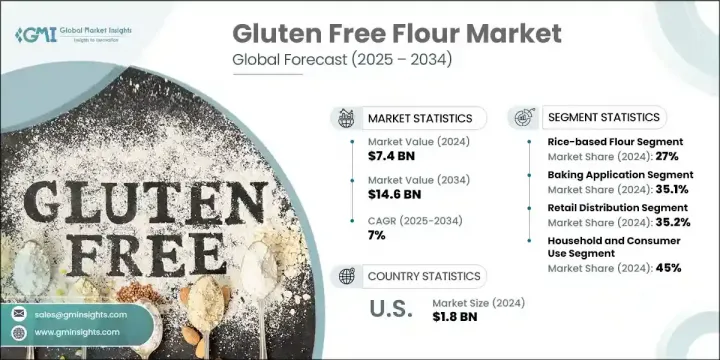
2024年,全球無麩質麵粉市場規模達74億美元,預計到2034年將以7%的複合年成長率成長,達到146億美元。這一成長主要源於消費者對麩質敏感性的認知不斷提高,以及人們普遍轉向更健康的飲食習慣,以及注重健康和體重控制的飲食趨勢。隨著越來越多的人(無論是經醫學診斷還是僅僅注重健康)尋求含麩質穀物的替代品,對豆類、種子、豆類、穀物和堅果製成的麵粉的需求持續成長。植物性飲食和清潔標籤飲食的流行也推動了這一成長。
許多消費者選擇無麩質麵粉,是因為他們認為無麩質麵粉有益於消化和健康,即使沒有確診麩質相關疾病。從家庭烘焙師到大型商業食品生產商,無麩質麵粉產品的吸引力正在推動整個市場的創新和擴張。北美憑藉其完善的零售網路、日益增強的消費者意識以及廣泛普及的無麩質生活方式,依然保持著領先地位,所有這些都有助於鞏固其在該領域的領導地位。
| 市場範圍 | |
|---|---|
| 起始年份 | 2024 |
| 預測年份 | 2025-2034 |
| 起始值 | 74億美元 |
| 預測值 | 146億美元 |
| 複合年成長率 | 7% |
2024年,米粉市場佔最大佔有率,達到27%,預計到2034年將以7.3%的複合年成長率成長。米粉因其溫和的口味、價格實惠且適用於各種食譜而廣受歡迎。它是烘焙和烹飪中小麥粉的實用替代品,是無麩質麵粉領域的主打產品。混合麵粉和特殊麵粉,即混合了各種澱粉和無麩質穀物或豆類的麵粉,也越來越受歡迎。這些混合麵粉經過精心設計,可以複製傳統小麥粉的彈性和質地,滿足消費者對無麩質烘焙食品口味和品質的期望。
2024年,烘焙領域佔了35.1%的市場。餅乾、蛋糕、麵包、鬆餅和糕點等烘焙食品仍然是無麩質麵粉的主要用途。這種主導地位與乳糜瀉確診人數的增加以及注重健康的消費者日益成長的興趣有關。麵粉配方和黏合劑的技術進步顯著改善了無麩質烘焙食品的質地、外觀和口感,吸引了更廣泛的受眾,並支持了市場的持續擴張。
美國無麩質麵粉市場在2024年創收18億美元,預計2034年將以5.9%的複合年成長率成長。美國市場的成長源於大眾對營養日益成長的關注、麩質相關健康診斷的顯著增加,以及人們對成分透明度和無過敏原食品的追求。隨著越來越多的消費者積極尋找更健康的小麥粉替代品,美國的需求持續攀升,使其成為全球無麩質麵粉領域最具活力和最重要的地區之一。
塑造全球無麩質麵粉市場的知名公司包括Bob's Red Mill Natural Foods、Ancient Harvest(Quinoa Corporation)、Archer Daniels Midland Company(ADM)、Arrowhead Mills(Hain Celestial Group)、General Mills Inc.、Enjoy Life Foods和Cargill Inc.。為了保持和擴大市場佔有率,無麩質麵粉產業的公司正在採用創新、合作和產品多樣化等多種策略。許多公司正在透過添加古代穀物和高蛋白質成分來擴展其無麩質產品,以滿足不斷變化的消費者偏好。對先進研磨和混合技術的投資有助於提高產品的一致性和可擴展性。品牌也著重於清潔標籤認證、美觀的包裝和客製化行銷,以吸引注重健康的消費者。
目錄
第1章:方法論與範圍
第2章:執行摘要
第3章:行業洞察
- 產業生態系統分析
- 供應商格局
- 利潤率
- 每個階段的增值
- 影響價值鏈的因素
- 中斷
- 產業衝擊力
- 成長動力
- 乳糜瀉盛行率和認知度不斷上升。
- 優質和手工食品市場成長。
- 健康和保健趨勢的採用。
- 清潔標籤和天然產品需求。
- 產業陷阱與挑戰
- 生產和原料成本更高。
- 保存期限有限和儲存問題。
- 市場機會
- 古代穀物與超級食物的融合
- 富含蛋白質的麵粉開發
- 功能成分強化
- 新興市場滲透
- 成長動力
- 成長潛力分析
- 監管格局
- 北美洲
- 歐洲
- 亞太地區
- 拉丁美洲
- 中東和非洲
- 波特的分析
- PESTEL分析
- 價格趨勢
- 按地區
- 按麵粉型
- 未來市場趨勢
- 科技與創新格局
- 當前的技術趨勢
- 新興技術
- 專利態勢
- 貿易統計(HS編碼)(註:僅提供重點國家的貿易統計資料)
- 主要進口國
- 主要出口國
- 永續性和環境方面
- 永續實踐
- 減少廢棄物的策略
- 生產中的能源效率
- 環保舉措
- 碳足跡考慮
第4章:競爭格局
- 介紹
- 公司市佔率分析
- 按地區
- 北美洲
- 歐洲
- 亞太地區
- 拉丁美洲
- MEA
- 按地區
- 公司矩陣分析
- 主要市場參與者的競爭分析
- 競爭定位矩陣
- 關鍵進展
- 併購
- 夥伴關係與合作
- 新產品發布
- 擴張計劃
第5章:市場估計與預測:依麵粉型,2021-2034
- 主要趨勢
- 米粉
- 白米粉
- 糙米粉
- 甜米粉
- 特製米粉
- 堅果和種子粉
- 杏仁粉
- 椰子粉
- 其他堅果粉
- 種子粉
- 根莖類蔬菜和塊莖粉
- 木薯粉
- 馬鈴薯粉
- 其他根莖類蔬菜粉
- 古代穀物麵粉
- 藜麥粉
- 莧菜粉
- 苔麩粉
- 小米粉
- 豆類和豆粉
- 鷹嘴豆粉
- 扁豆粉
- 其他豆粉
- 玉米粉
- 玉米粉(masa harina)
- 玉米粉
- 玉米澱粉
- 特種麵粉和混合麵粉
- 多穀物混合物
- 烘焙混合料
- 蛋白質強化混合物
- 功能性成分混合物
第6章:市場估計與預測:按應用,2021-2034
- 主要趨勢
- 烘焙應用
- 麵包和麵包製品
- 蛋糕和糕點
- 餅乾和餅乾
- 披薩和扁麵包
- 烹飪和烹飪應用
- 增稠和塗層
- 義大利麵和麵條製作
- 早餐應用
- 商業食品製造
- 包裝烘焙食品
- 冷凍食品應用
- 休閒食品製造
- 餐飲服務應用
- 餐廳和麵包店用途
- 機構餐飲服務
- 餐飲和活動
第7章:市場估計與預測:按配銷通路,2021-2034
- 主要趨勢
- 零售分銷
- 超市和大賣場
- 健康食品和專賣店
- 便利商店
- 線上和電子商務
- 各大電商平台
- 直接面對消費者的管道
- 行動商務
- 批發和 B2B 分銷
- 食品分銷商
- 工商銷售
- 替代分銷管道
- 農夫市集和本地銷售
- 合作社和採購團體
- 散裝和倉儲銷售
- 出口和國際貿易
第8章:市場估計與預測:按最終用途產業,2021-2034 年
- 主要趨勢
- 家庭和消費者使用
- 家庭烘焙愛好者
- 注重健康的家庭
- 乳糜瀉和麩質敏感家庭
- 烹飪愛好者和廚師
- 商業食品製造
- 烘焙食品製造商
- 零食生產商
- 冷凍食品公司
- 早餐麥片製造商
- 餐飲業
- 餐廳和咖啡館
- 麵包店和糕點店
- 披薩和速食連鎖店
- 餐飲和活動服務
- 機構餐飲服務
- 學校和教育機構
- 醫療保健設施
- 公司餐廳
- 老年生活社區
- 工業應用
- 寵物食品製造
- 營養補充品生產
- 製藥應用
- 化妝品和個人護理
第9章:市場估計與預測:按地區,2021-2034
- 主要趨勢
- 北美洲
- 美國
- 加拿大
- 歐洲
- 德國
- 英國
- 法國
- 西班牙
- 義大利
- 歐洲其他地區
- 亞太地區
- 中國
- 印度
- 日本
- 澳洲
- 韓國
- 亞太其他地區
- 拉丁美洲
- 巴西
- 墨西哥
- 阿根廷
- 拉丁美洲其他地區
- 中東和非洲
- 沙烏地阿拉伯
- 南非
- 阿拉伯聯合大公國
- 中東和非洲其他地區
第10章:公司簡介
- Ancient Harvest (Quinoa Corporation)
- Anthony's Goods
- Archer Daniels Midland Company
- Arrowhead Mills (Hain Celestial Group)
- Authentic Foods
- Bob's Red Mill Natural Foods
- Cargill Inc.
- Doves Farm Foods
- Enjoy Life Foods (Mondelez International)
- Firebird Artisan Mills
- General Mills Inc.
- Giusto's Specialty Foods
- Great River Organic Milling
- Hodgson Mill
- Honeyville Food Products
- Ingredion Incorporated
- King Arthur Baking Company
- Maida Place Mills
- Nutiva
- Pamela's Products
- Shipton Mill Ltd.
- Terrasoul Superfoods
The Global Gluten Free Flour Market was valued at USD 7.4 billion in 2024 and is estimated to grow at a CAGR of 7% to reach USD 14.6 billion by 2034. This expansion is fueled by increasing consumer awareness about gluten sensitivity, as well as a broader shift toward healthier eating habits and dietary trends focused on wellness and weight control. As more individuals-whether medically diagnosed or simply health-conscious-seek alternatives to gluten-containing grains, demand for flour derived from legumes, seeds, beans, grains, and nuts continues to rise. The growth is supported by the popularity of plant-based and clean-label diets.
Many consumers are opting for gluten-free flour options due to perceived digestive and wellness benefits, even in the absence of diagnosed gluten-related disorders. From home bakers to large-scale commercial food producers, the appeal of gluten-free flour products is driving innovation and expansion across the market. North America remains at the forefront due to its well-established retail networks, heightened consumer awareness, and widespread adoption of gluten-free lifestyles, all of which help reinforce its leadership in this space.
| Market Scope | |
|---|---|
| Start Year | 2024 |
| Forecast Year | 2025-2034 |
| Start Value | $7.4 Billion |
| Forecast Value | $14.6 Billion |
| CAGR | 7% |
In 2024, the rice-based flour segment held the largest share, holding 27% and will grow at a CAGR of 7.3% through 2034. Rice flour is especially popular due to its mild flavor, affordability, and adaptability in a wide variety of recipes. It serves as a practical substitute for wheat flour in baking and cooking, making it a staple in the gluten-free flour sector. Blended and specialty flours, which combine various starches and gluten-free grains or legumes, are also gaining traction. These blends are engineered to replicate the elasticity and texture of traditional wheat-based flours, meeting consumer expectations for taste and quality in gluten-free baked goods.
The baking segment held a 35.1% share in 2024. Baked goods such as cookies, cakes, breads, muffins, and pastries continue to be the leading use case for gluten-free flour. This dominance is linked to the increasing diagnosis of celiac disease and growing interest among health-focused consumers. Technological advancements in flour formulations and binding agents have significantly improved the texture, appearance, and taste of gluten-free baked items, attracting a broader audience and supporting ongoing market expansion.
United States Gluten Free Flour Market generated USD 1.8 billion in 2024 and is projected to grow at a CAGR of 5.9% by 2034. The growth of the U.S. market stems from heightened public interest in nutrition, a significant rise in gluten-related health diagnoses, and a movement toward ingredient transparency and allergen-free foods. With more consumers actively searching for healthier substitutes to wheat flour, demand in the U.S. continues to climb, making it one of the most dynamic and vital regions in the global gluten-free flour space.
Prominent companies shaping the Global Gluten Free Flour Market include Bob's Red Mill Natural Foods, Ancient Harvest (Quinoa Corporation), Archer Daniels Midland Company (ADM), Arrowhead Mills (Hain Celestial Group), General Mills Inc., Enjoy Life Foods, and Cargill Inc. To maintain and grow their market share, companies within the gluten-free flour industry are employing a mix of innovation, partnerships, and product diversification. Many are expanding their gluten-free offerings by incorporating ancient grains and high-protein ingredients to cater to evolving consumer preferences. Investments in advanced milling and blending technologies help improve product consistency and scalability. Brands are also focusing on clean-label certifications, appealing packaging, and tailored marketing to appeal to health-conscious buyers.
Table of Contents
Chapter 1 Methodology & Scope
- 1.1 Market scope and definition
- 1.2 Research design
- 1.2.1 Research approach
- 1.2.2 Data collection methods
- 1.3 Data mining sources
- 1.3.1 Global
- 1.3.2 Regional/Country
- 1.4 Base estimates and calculations
- 1.4.1 Base year calculation
- 1.4.2 Key trends for market estimation
- 1.5 Primary research and validation
- 1.5.1 Primary sources
- 1.6 Forecast model
- 1.7 Research assumptions and limitations
Chapter 2 Executive Summary
- 2.1 Industry 360° synopsis
- 2.2 Key market trends
- 2.2.1 Regional
- 2.2.2 Flour type
- 2.2.3 Application
- 2.2.4 Distribution channel
- 2.2.5 End use industry
- 2.3 TAM Analysis, 2025-2034
- 2.4 CXO perspectives: Strategic imperatives
- 2.4.1 Executive decision points
- 2.4.2 Critical success factors
- 2.5 Future Outlook and Strategic Recommendations
Chapter 3 Industry Insights
- 3.1 Industry ecosystem analysis
- 3.1.1 Supplier landscape
- 3.1.2 Profit margin
- 3.1.3 Value addition at each stage
- 3.1.4 Factor affecting the value chain
- 3.1.5 Disruptions
- 3.2 Industry impact forces
- 3.2.1 Growth drivers
- 3.2.1.1 Rising celiac disease prevalence and awareness.
- 3.2.1.2 Premium and artisanal food market growth.
- 3.2.1.3 Health and wellness trend adoption.
- 3.2.1.4 Clean label and natural product demand.
- 3.2.2 Industry pitfalls and challenges
- 3.2.2.1 Higher production and raw material costs.
- 3.2.2.2 Limited shelf life and storage issues.
- 3.2.3 Market opportunities
- 3.2.3.1 Ancient grains and superfood integration
- 3.2.3.2 Protein-enriched flour development
- 3.2.3.3 Functional ingredient fortification
- 3.2.3.4 Emerging market penetration
- 3.2.1 Growth drivers
- 3.3 Growth potential analysis
- 3.4 Regulatory landscape
- 3.4.1 North America
- 3.4.2 Europe
- 3.4.3 Asia Pacific
- 3.4.4 Latin America
- 3.4.5 Middle East & Africa
- 3.5 Porter’s analysis
- 3.6 PESTEL analysis
- 3.6.1 Technology and Innovation landscape
- 3.6.2 Current technological trends
- 3.6.3 Emerging technologies
- 3.7 Price trends
- 3.7.1 By region
- 3.7.2 By flour type
- 3.8 Future market trends
- 3.9 Technology and Innovation landscape
- 3.9.1 Current technological trends
- 3.9.2 Emerging technologies
- 3.10 Patent Landscape
- 3.11 Trade statistics (HS code) (Note: the trade statistics will be provided for key countries only)
- 3.11.1 Major importing countries
- 3.11.2 Major exporting countries
- 3.12 Sustainability and environmental aspects
- 3.12.1 Sustainable practices
- 3.12.2 Waste reduction strategies
- 3.12.3 Energy efficiency in production
- 3.12.4 Eco-friendly initiatives
- 3.13 Carbon footprint consideration
Chapter 4 Competitive Landscape, 2024
- 4.1 Introduction
- 4.2 Company market share analysis
- 4.2.1 By region
- 4.2.1.1 North America
- 4.2.1.2 Europe
- 4.2.1.3 Asia Pacific
- 4.2.1.4 LATAM
- 4.2.1.5 MEA
- 4.2.1 By region
- 4.3 Company matrix analysis
- 4.4 Competitive analysis of major market players
- 4.5 Competitive positioning matrix
- 4.6 Key developments
- 4.6.1 Mergers & acquisitions
- 4.6.2 Partnerships & collaborations
- 4.6.3 New product launches
- 4.6.4 Expansion plans
Chapter 5 Market Estimates & Forecast, By Flour Type, 2021-2034 (USD Million & Kilo Tons)
- 5.1 Key Trends
- 5.2 Rice-based flours
- 5.2.1 White rice flour
- 5.2.2 Brown rice flour
- 5.2.3 Sweet rice flour
- 5.2.4 Specialty rice flour
- 5.3 Nut and seed flours
- 5.3.1 Almond flour
- 5.3.2 Coconut flour
- 5.3.3 Other nut flours
- 5.3.4 Seed flours
- 5.4 Root vegetable and tuber flours
- 5.4.1 Cassava flour
- 5.4.2 Potato flour
- 5.4.3 Other root vegetable flours
- 5.5 Ancient grain flours
- 5.5.1 Quinoa flour
- 5.5.2 Amaranth flour
- 5.5.3 Teff flour
- 5.5.4 Millet flour
- 5.6 Legume and bean flours
- 5.6.1 Chickpea flour
- 5.6.2 Lentil flour
- 5.6.3 Other bean flours
- 5.7 Corn-based flours
- 5.7.1 Corn flour (masa harina)
- 5.7.2 Cornmeal
- 5.7.3 Corn starch
- 5.8 Specialty and blend flours
- 5.8.1 Multi-grain blends
- 5.8.2 Baking mix blends
- 5.8.3 Protein-enhanced blends
- 5.8.4 Functional ingredient blends
Chapter 6 Market Estimates and Forecast, By Application, 2021-2034 (USD Million & Kilo Tons)
- 6.1 Key trends
- 6.2 Baking application
- 6.2.1 Bread and loaf products
- 6.2.2 Cakes and pastries
- 6.2.3 Cookies and biscuits
- 6.2.4 Pizza and flatbreads
- 6.3 Cooking and culinary applications
- 6.3.1 Thickening and coating
- 6.3.2 Pasta and noodle making
- 6.4 Breakfast applications
- 6.4.1 Commercial food manufacturing
- 6.4.2 Packaged baked goods
- 6.4.3 Frozen food application
- 6.4.4 Snack food manufacturing
- 6.5 Foodservice applications
- 6.5.1 Restaurant and bakery use
- 6.5.2 Institutional foodservice
- 6.5.3 Catering and events
Chapter 7 Market Estimates & Forecast, By Distribution Channel, 2021-2034 (USD Million & Kilo Tons)
- 7.1 Key Trends
- 7.2 Retail distribution
- 7.2.1 Supermarkets & hypermarkets
- 7.2.2 Health food and specialty stores
- 7.2.3 Convenience stores
- 7.3 Online and e-commerce
- 7.3.1 Major e-commerce platforms
- 7.3.2 Direct-to-consumer channels
- 7.3.3 Mobile commerce
- 7.4 Wholesale and b2b distribution
- 7.4.1 Food distributors
- 7.4.2 Industrial and commercial sales
- 7.5 Alternative distribution channels
- 7.5.1 Farmers markets and local sales
- 7.5.2 Co-op and buying groups
- 7.5.3 Bulk and warehouse sales
- 7.5.4 Export and international trade
Chapter 8 Market Estimates & Forecast, By End Use Industry, 2021-2034 (USD Million & Kilo Tons)
- 8.1 Key Trends
- 8.2 Household and consumer use
- 8.2.1 Home baking enthusiasts
- 8.2.2 Health-conscious families
- 8.2.3 Celiac and gluten-sensitive households
- 8.2.4 Culinary hobbyists and chefs
- 8.3 Commercial food manufacturing
- 8.3.1 Baked goods manufacturers
- 8.3.2 Snack food producers
- 8.3.3 Frozen food companies
- 8.3.4 Breakfast cereal manufacturers
- 8.4 Foodservice industry
- 8.4.1 Restaurants and cafes
- 8.4.2 Bakeries and patisseries
- 8.4.3 Pizza and fast food chains
- 8.4.4 Catering and event services
- 8.5 Institutional foodservice
- 8.5.1 Schools and educational institutions
- 8.5.2 Healthcare facilities
- 8.5.3 Corporate cafeterias
- 8.5.4 Senior living communities
- 8.6 Industrial applications
- 8.6.1 Pet food manufacturing
- 8.6.2 Nutritional supplement production
- 8.6.3 Pharmaceutical applications
- 8.6.4 Cosmetic and personal care
Chapter 9 Market Estimates and Forecast, By Region, 2021-2034 (USD Million & Kilo Tons)
- 9.1 Key trends
- 9.2 North America
- 9.2.1 U.S.
- 9.2.2 Canada
- 9.3 Europe
- 9.3.1 Germany
- 9.3.2 UK
- 9.3.3 France
- 9.3.4 Spain
- 9.3.5 Italy
- 9.3.6 Rest of Europe
- 9.4 Asia Pacific
- 9.4.1 China
- 9.4.2 India
- 9.4.3 Japan
- 9.4.4 Australia
- 9.4.5 South Korea
- 9.4.6 Rest of Asia Pacific
- 9.5 Latin America
- 9.5.1 Brazil
- 9.5.2 Mexico
- 9.5.3 Argentina
- 9.5.4 Rest of Latin America
- 9.6 Middle East and Africa
- 9.6.1 Saudi Arabia
- 9.6.2 South Africa
- 9.6.3 UAE
- 9.6.4 Rest of Middle East and Africa
Chapter 10 Company Profiles
- 10.1 Ancient Harvest (Quinoa Corporation)
- 10.2 Anthony's Goods
- 10.3 Archer Daniels Midland Company
- 10.4 Arrowhead Mills (Hain Celestial Group)
- 10.5 Authentic Foods
- 10.6 Bob's Red Mill Natural Foods
- 10.7 Cargill Inc.
- 10.8 Doves Farm Foods
- 10.9 Enjoy Life Foods (Mondelez International)
- 10.10 Firebird Artisan Mills
- 10.11 General Mills Inc.
- 10.12 Giusto's Specialty Foods
- 10.13 Great River Organic Milling
- 10.14 Hodgson Mill
- 10.15 Honeyville Food Products
- 10.16 Ingredion Incorporated
- 10.17 King Arthur Baking Company
- 10.18 Maida Place Mills
- 10.19 Nutiva
- 10.20 Pamela's Products
- 10.21 Shipton Mill Ltd.
- 10.22 Terrasoul Superfoods

