


 |
市場調查報告書
商品編碼
1750521
射頻隔離器市場機會、成長動力、產業趨勢分析及 2025 - 2034 年預測RF Isolator Market Opportunity, Growth Drivers, Industry Trend Analysis, and Forecast 2025 - 2034 |
||||||

2024年,全球射頻隔離器市場規模達11億美元,預計2034年將以6.4%的複合年成長率成長,達到21億美元。這得益於資料中心和雲端基礎設施的快速擴張,以及航太和國防技術應用的不斷成長。射頻隔離器能夠防止訊號反射,在確保訊號完整性和系統可靠性方面發揮至關重要的作用,這在高頻惡劣環境下至關重要。現代雷達系統、安全通訊和電子戰技術投資的不斷增加也推動了市場的成長。隨著全球國防現代化進程的加速,對先進可靠的射頻元件的需求預計將持續成長。
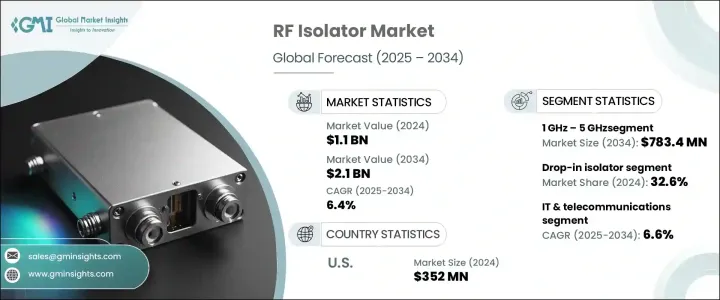
然而,由於美國法律(包括《貿易法》第301條款)徵收的貿易關稅,射頻隔離器產業面臨挑戰。這些關稅影響了射頻元件(包括隔離器和微波相關材料)的供應鏈,增加了製造商的成本。因此,美國公司不得不重新考慮其採購策略和本地生產選擇,以減輕價格波動和供應鏈中斷的影響。儘管面臨這些挑戰,射頻隔離器的需求仍然強勁,尤其是在商用無線網路和國防系統中。
| 市場範圍 | |
|---|---|
| 起始年份 | 2024 |
| 預測年份 | 2025-2034 |
| 起始值 | 11億美元 |
| 預測值 | 21億美元 |
| 複合年成長率 | 6.4% |
微帶隔離器市場正在經歷顯著成長,預計到2034年將達到5.194億美元。微帶隔離器憑藉其緊湊、扁平的設計,易於與印刷電路板(PCB)整合,正成為現代射頻(RF)電路的關鍵元件。這使得它們成為各種無線技術應用的理想選擇。其日益普及的趨勢可以歸因於電子元件的日益小型化以及現代系統中高密度電路設計的興起。微帶隔離器在物聯網(IoT)設備和先進的5G基礎設施等設備中尤其重要,因為尺寸、效率和可靠性對於這些設備至關重要。
此外,工作頻率範圍在1 GHz至5 GHz的射頻隔離器市場預計將大幅成長,預計到2034年其市值將達到7.834億美元。這一成長主要得益於行動網路、Wi-Fi系統和藍牙技術的擴展。隨著物聯網(IoT)使世界互聯互通,以及5G網路在全球範圍內的持續部署,對這一特定頻率範圍內的射頻隔離器的需求也將持續成長。這些隔離器在維護訊號完整性、減少干擾和確保設備間可靠通訊方面發揮著至關重要的作用,這在日益互聯的消費性電子、智慧家庭和行動通訊領域至關重要。
2024年,美國射頻隔離器市場規模達3.52億美元。美國在國防、衛星通訊和先進航太技術研發方面的投資刺激了對射頻隔離器的需求。此外,5G基礎設施的快速部署以及軍事應用對雷達和通訊系統的日益依賴也是推動市場成長的關鍵因素。美國領先的射頻元件製造商的強大影響力以及大量的研發投入進一步支撐了市場的成長軌跡。
全球射頻隔離器產業的主要參與者包括 Deewave Electronics、DiTom Microwave、Smiths Interconnect、Renaissance Electronics & Communications 和 JQL Electronics。這些公司正在採取多種策略,例如擴大產品組合、注重創新以及與關鍵產業參與者合作,以增強其市場影響力。為了提升市場地位,射頻隔離器公司專注於產品創新,以滿足市場對適用於高密度應用的較小、更有效率組件日益成長的需求。他們正在大力投資研發,以提高產品性能,尤其是在頻率範圍和與現代通訊系統的整合等方面。與領先技術公司建立策略夥伴關係也有助於擴大市場覆蓋範圍。
目錄
第1章:方法論與範圍
第2章:執行摘要
第3章:行業洞察
- 產業生態系統分析
- 川普政府關稅分析
- 對貿易的影響
- 貿易量中斷
- 報復措施
- 對產業的影響
- 供給側影響(原料)
- 主要材料價格波動
- 供應鏈重組
- 生產成本影響
- 需求面影響(售價)
- 價格傳導至終端市場
- 市佔率動態
- 消費者反應模式
- 供給側影響(原料)
- 受影響的主要公司
- 策略產業反應
- 供應鏈重組
- 定價和產品策略
- 政策參與
- 展望與未來考慮
- 對貿易的影響
- 產業衝擊力
- 成長動力
- 擴展全球通訊服務
- 資料中心和雲端基礎設施的激增
- 衛星通訊系統部署日益增多
- 消費性電子產品和智慧型設備的成長
- 航太和國防應用的擴展
- 產業陷阱與挑戰
- 先進的射頻隔離器組件成本高昂
- 某些應用中的工作頻率範圍有限
- 成長動力
- 成長潛力分析
- 監管格局
- 技術格局
- 未來市場趨勢
- 差距分析
- 波特的分析
- PESTEL分析
第4章:競爭格局
- 介紹
- 公司市佔率分析
- 主要市場參與者的競爭分析
- 競爭定位矩陣
- 策略儀表板
第5章:市場估計與預測:依類型,2021-2034
- 主要趨勢
- 插入式隔離器
- 微帶隔離器
- 同軸隔離器
- 表面貼裝隔離器
- 其他
第6章:市場估計與預測:依頻率範圍,2021-2034 年
- 主要趨勢
- 高達 1 GHz
- 1 GHz – 5 GHz
- 5 GHz – 10 GHz
- 10 GHz以上
第7章:市場估計與預測:按最終用途產業,2021-2034 年
- 主要趨勢
- IT與電信
- 軍事與國防
- 醫療保健
- 消費性電子產品
- 其他
第8章:市場估計與預測:按地區,2021 年至 2034 年
- 主要趨勢
- 北美洲
- 美國
- 加拿大
- 歐洲
- 德國
- 英國
- 法國
- 西班牙
- 義大利
- 荷蘭
- 亞太地區
- 中國
- 印度
- 日本
- 澳洲
- 韓國
- 拉丁美洲
- 巴西
- 墨西哥
- 阿根廷
- 中東和非洲
- 沙烏地阿拉伯
- 南非
- 阿拉伯聯合大公國
第9章:公司簡介
- Deewave Electronics
- DiTom Microwave
- ETL Systems
- Fairview Microwave
- JQL Electronics
- MECA Electronics
- Microwave Communications Laboratories
- Molex
- Nova Microwave
- Pasternack
- Renaissance Electronics and Communications
- Smiths Interconnect
- Sonoma Scientific
- UIY
- UTE Microwave
The Global RF Isolator Market was valued at USD 1.1 billion in 2024 and is estimated to grow at a CAGR of 6.4% to reach USD 2.1 billion by 2034, driven by the rapid expansion of data centers and cloud infrastructure, as well as the rising use of aerospace and defense technologies. RF isolators play a crucial role in ensuring signal integrity and system reliability by preventing signal reflection, which is vital in high-frequency, harsh environments. The market growth is also supported by rising investments in modern radar systems, secure communications, and electronic warfare technologies. The need for advanced and reliable RF components is expected to continue as defense modernization accelerates worldwide.
However, the RF isolator industry has faced challenges due to trade tariffs imposed under U.S. legislation, including Section 301 of the Trade Act. These tariffs affected the supply chain for RF components, including isolators and microwave-related materials, increasing costs for manufacturers. As a result, U.S. companies have had to reconsider their sourcing strategies and local production options to mitigate the impact of price fluctuations and supply chain disruptions. Despite these challenges, the demand for RF isolators remains robust, particularly in commercial wireless networks and defense systems.
| Market Scope | |
|---|---|
| Start Year | 2024 |
| Forecast Year | 2025-2034 |
| Start Value | $1.1 Billion |
| Forecast Value | $2.1 Billion |
| CAGR | 6.4% |
The microstrip isolator market is experiencing significant growth, with forecasts suggesting it will reach USD 519.4 million by 2034. Microstrip isolators are becoming a key component in modern radio frequency (RF) circuits due to their compact, flat design, which allows for easy integration with printed circuit boards (PCBs). This makes them ideal for applications in a variety of wireless technologies. Their growing adoption can be attributed to the increasing miniaturization of electronic components and the rise of high-density circuit designs in modern systems. Microstrip isolators are particularly valuable in devices such as Internet of Things (IoT) gadgets and advanced 5G infrastructure, where size, efficiency, and reliability are critical.
Additionally, the RF isolator market operating in the 1 GHz to 5 GHz frequency range is poised to grow significantly, with projections indicating a value of USD 783.4 million by 2034. This growth is primarily driven by the expansion of mobile networks, Wi-Fi systems, and Bluetooth technologies. As the world becomes more connected through the Internet of Things (IoT) and the rollout of 5G networks continues globally, the demand for RF isolators in this specific frequency range is set to rise. These isolators play an essential role in maintaining the integrity of signals, reducing interference, and ensuring reliable communication between devices, which is critical in the increasingly interconnected world of consumer electronics, smart homes, and mobile communication.
United States RF Isolator Market was valued at USD 352 million in 2024. The country's investments in defense, satellite communication, and the development of advanced aerospace technologies have spurred demand for RF isolators. Additionally, the rapid deployment of 5G infrastructure and the increasing reliance on radar and communication systems in military applications are key factors driving growth. The strong presence of leading RF component manufacturers in the U.S. and substantial R&D investments further support the market's growth trajectory.
Major players in the Global RF Isolator Industry include Deewave Electronics, DiTom Microwave, Smiths Interconnect, Renaissance Electronics & Communications, and JQL Electronics. These companies are adopting strategies such as expanding product portfolios, focusing on innovation, and collaborating with key industry players to strengthen their market presence. To enhance their market position, RF isolator companies are focusing on product innovation to meet the growing demand for smaller, more efficient components suitable for high-density applications. They are investing heavily in research and development to improve the performance of their products, particularly in areas such as frequency range and integration with modern communication systems. Strategic partnerships with leading technology companies are also helping to expand market reach.
Table of Contents
Chapter 1 Methodology and Scope
- 1.1 Market scope and definitions
- 1.2 Research design
- 1.2.1 Research approach
- 1.2.2 Data collection methods
- 1.3 Base estimates and calculations
- 1.3.1 Base year calculation
- 1.3.2 Key trends for market estimation
- 1.4 Forecast model
- 1.5 Primary research and validation
- 1.5.1 Primary sources
- 1.5.2 Data mining sources
Chapter 2 Executive Summary
- 2.1 Industry 360° synopsis
Chapter 3 Industry Insights
- 3.1 Industry ecosystem analysis
- 3.2 Trump administration tariffs analysis
- 3.2.1 Impact on trade
- 3.2.1.1 Trade volume disruptions
- 3.2.1.2 Retaliatory measures
- 3.2.2 Impact on the industry
- 3.2.2.1 Supply-side impact (raw materials)
- 3.2.2.1.1 Price volatility in key materials
- 3.2.2.1.2 Supply chain restructuring
- 3.2.2.1.3 Production cost implications
- 3.2.2.2 Demand-side impact (selling price)
- 3.2.2.2.1 Price transmission to end markets
- 3.2.2.2.2 Market share dynamics
- 3.2.2.2.3 Consumer response patterns
- 3.2.2.1 Supply-side impact (raw materials)
- 3.2.3 Key companies impacted
- 3.2.4 Strategic industry responses
- 3.2.4.1.1 Supply chain reconfiguration
- 3.2.4.1.2 Pricing and product strategies
- 3.2.4.1.3 Policy engagement
- 3.2.5 Outlook and future considerations
- 3.2.1 Impact on trade
- 3.3 Industry impact forces
- 3.3.1 Growth drivers
- 3.3.1.1 Expansion of global communication services
- 3.3.1.2 Proliferation of data centers and cloud infrastructure
- 3.3.1.3 Increasing deployment of satellite communication systems
- 3.3.1.4 Growth in consumer electronics and smart devices
- 3.3.1.5 Expansion of aerospace and defense applications
- 3.3.2 Industry pitfalls and challenges
- 3.3.2.1 High cost of advanced RF isolator components
- 3.3.2.2 Limited operating frequency range in certain applications
- 3.3.1 Growth drivers
- 3.4 Growth potential analysis
- 3.5 Regulatory landscape
- 3.6 Technology landscape
- 3.7 Future market trends
- 3.8 Gap analysis
- 3.9 Porter's analysis
- 3.10 PESTEL analysis
Chapter 4 Competitive Landscape, 2024
- 4.1 Introduction
- 4.2 Company market share analysis
- 4.3 Competitive analysis of major market players
- 4.4 Competitive positioning matrix
- 4.5 Strategy dashboard
Chapter 5 Market Estimates & Forecast, By Type, 2021-2034 (USD Billion & units)
- 5.1 Key trends
- 5.2 Drop-in isolator
- 5.3 Microstrip isolator
- 5.4 Co-axial isolator
- 5.5 Surface mount isolator
- 5.6 Others
Chapter 6 Market Estimates & Forecast, By Frequency Range, 2021-2034 (USD Billion & units)
- 6.1 Key trends
- 6.2 Up to 1 GHz
- 6.3 1 GHz – 5 GHz
- 6.4 5 GHz – 10 GHz
- 6.5 Above 10 GHz
Chapter 7 Market Estimates & Forecast, By End Use Industry, 2021-2034 (USD Billion & units)
- 7.1 Key trends
- 7.2 IT & telecommunications
- 7.3 Military & defense
- 7.4 Medical & healthcare
- 7.5 Consumer electronics
- 7.6 Others
Chapter 8 Market Estimates and Forecast, By Region, 2021 – 2034 (USD Billion & units)
- 8.1 Key trends
- 8.2 North America
- 8.2.1 U.S.
- 8.2.2 Canada
- 8.3 Europe
- 8.3.1 Germany
- 8.3.2 UK
- 8.3.3 France
- 8.3.4 Spain
- 8.3.5 Italy
- 8.3.6 Netherlands
- 8.4 Asia Pacific
- 8.4.1 China
- 8.4.2 India
- 8.4.3 Japan
- 8.4.4 Australia
- 8.4.5 South Korea
- 8.5 Latin America
- 8.5.1 Brazil
- 8.5.2 Mexico
- 8.5.3 Argentina
- 8.6 Middle East and Africa
- 8.6.1 Saudi Arabia
- 8.6.2 South Africa
- 8.6.3 UAE
Chapter 9 Company Profiles
- 9.1 Deewave Electronics
- 9.2 DiTom Microwave
- 9.3 ETL Systems
- 9.4 Fairview Microwave
- 9.5 JQL Electronics
- 9.6 MECA Electronics
- 9.7 Microwave Communications Laboratories
- 9.8 Molex
- 9.9 Nova Microwave
- 9.10 Pasternack
- 9.11 Renaissance Electronics and Communications
- 9.12 Smiths Interconnect
- 9.13 Sonoma Scientific
- 9.14 UIY
- 9.15 UTE Microwave

 微波隔離器市場報告:趨勢、預測和競爭分析(至2035年)
 2026年全球無菌隔離器市場報告滅菌隔離器市場報告:趨勢、預測與競爭分析(至2031年)2025年全球無菌隔離器市場報告
 無菌隔離器:全球市場佔有率和排名、總收入和需求預測(2025-2031年)