


 |
市場調查報告書
商品編碼
1684769
燕麥蛋白市場機會、成長動力、產業趨勢分析及 2025 - 2034 年預測Oat Proteins Market Opportunity, Growth Drivers, Industry Trend Analysis, and Forecast 2025 - 2034 |
||||||

2024 年全球燕麥蛋白市場價值為 6,590 萬美元,預計將經歷強勁成長,預計 2025 年至 2034 年的複合年成長率為 4.9%。這一擴張是由對植物蛋白質來源的需求激增、人們對健康和保健意識的增強以及全球純素食和素食者人數不斷增加所推動的。隨著越來越多的消費者重視永續性和營養,向植物蛋白替代品的轉變正在加速。燕麥蛋白富含必需氨基酸,因其作為動物性蛋白質的營養豐富、環保替代品的潛力而越來越受到認可。
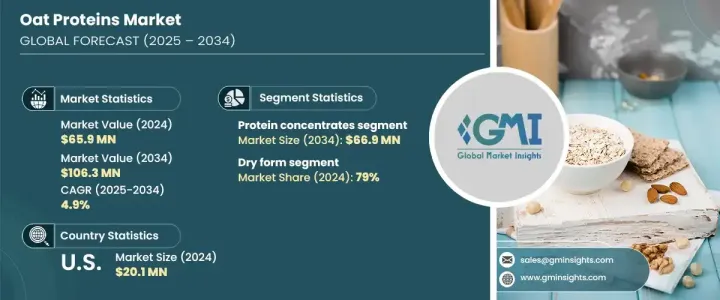
隨著人們對食物過敏的擔憂日益加劇,燕麥蛋白因其低過敏性特性而脫穎而出,在注重健康的食品和飲料領域特別有吸引力。燕麥奶和燕麥優格等燕麥乳製品的持續流行進一步推動了市場的發展,鞏固了燕麥蛋白作為植物蛋白革命中關鍵參與者的地位。此外,燕麥蛋白萃取技術的創新正在擴大其應用範圍,提高產品質量,並為消費者提供更廣泛的富含燕麥蛋白的選擇。
| 市場範圍 | |
|---|---|
| 起始年份 | 2024 |
| 預測年份 | 2025-2034 |
| 起始值 | 6590 萬美元 |
| 預測值 | 1.063億美元 |
| 複合年成長率 | 4.9% |
根據類型,市場分為蛋白質濃縮物、蛋白質分離物和蛋白質水解物。 2024 年,蛋白質濃縮物佔據市場主導地位,價值 4,230 萬美元。由於其均衡的營養成分和極少的加工,預計到 2034 年該細分市場的規模將達到 6,690 萬美元,使其成為飲料、烘焙產品和零食等各種應用的理想選擇。蛋白分離物以其蛋白質含量高、脂肪或碳水化合物含量低而聞名,其需求量也在增加。由於其營養價值,它們在運動營養和膳食補充劑中特別受歡迎。
燕麥蛋白市場也根據形式進行細分,包括乾燕麥和液態燕麥。到 2024 年,乾性形式將佔據 79% 的市場。由於其保存期限長、易於儲存和運輸,這一領域很受歡迎。此外,乾燥技術的進步也提高了乾燕麥蛋白的質量,擴大了其在植物肉、營養棒和烘焙食品等一系列產品中的用途。
2024 年美國燕麥蛋白市場產值達 2,010 萬美元,反映出消費者對植物性和永續食品選擇的濃厚興趣。隨著越來越多的消費者採用植物性飲食,對防過敏、無麩質燕麥蛋白的需求預計將持續上升。隨著燕麥類乳製品替代品的供應增加以及燕麥蛋白被納入功能性和運動營養產品中,這一成長趨勢得到了進一步推動。美國市場創新燕麥產品數量呈上升趨勢,推動了消費者接受度的提高和市場的整體擴張。
目錄
第 1 章:方法論與範圍
- 市場範圍和定義
- 基礎估算與計算
- 預測計算
- 資料來源
- 基本的
- 次要
- 付費來源
- 公共資源
第 2 章:執行摘要
第 3 章:產業洞察
- 產業生態系統分析
- 影響價值鏈的因素
- 利潤率分析
- 中斷
- 未來展望
- 製造商
- 經銷商
- 供應商概況
- 利潤率分析
- 重要新聞及舉措
- 監管格局
- 衝擊力
- 成長動力
- 對植物蛋白質來源的需求不斷成長
- 消費者對健康益處的認知提高
- 純素食和素食者人數不斷增加
- 產業陷阱與挑戰
- 與動物性蛋白質相比,功能上的潛在限制
- 保持一致的品質和供應鏈問題的挑戰
- 成長動力
- 成長潛力分析
- 波特的分析
- PESTEL 分析
第4章:競爭格局
- 介紹
- 公司市佔率分析
- 競爭定位矩陣
- 戰略展望矩陣
第 5 章:市場規模與預測:按類型,2021-2034 年
- 主要趨勢
- 蛋白質濃縮物
- 蛋白質分離物
- 蛋白質水解物
第6章:市場規模及預測:依形式,2021-2034
- 主要趨勢
- 乾燥形式
- 液體形式
第 7 章:市場規模與預測:按應用,2021-2034 年
- 主要趨勢
- 食品和飲料
- 藥品
- 化妝品和個人護理
- 動物飼料
- 其他
第 8 章:市場規模及預測:按配銷通路,2021-2034 年
- 主要趨勢
- 線下零售
- 網路零售
第 9 章:市場規模與預測:按地區,2021-2034 年
- 主要趨勢
- 北美洲
- 美國
- 加拿大
- 歐洲
- 英國
- 德國
- 法國
- 義大利
- 西班牙
- 俄羅斯
- 亞太地區
- 中國
- 印度
- 日本
- 韓國
- 澳洲
- 拉丁美洲
- 巴西
- 墨西哥
- 中東及非洲
- 南非
- 沙烏地阿拉伯
- 阿拉伯聯合大公國
第10章:公司簡介
- Archer Daniels Midland Company
- Avena Foods
- Axiom Foods
- Avebe
- BENEO
- Cargill
- Crop Energies
- Emsland Group
- Givaudan
- Glanbia
- Kerry Group
- Oterra
- Pure Oats
- Roquette Frères
- Tate & Lyle
The Global Oat Proteins Market, valued at USD 65.9 million in 2024, is projected to experience robust growth, with an anticipated CAGR of 4.9% from 2025 to 2034. This expansion is driven by the surging demand for plant-based protein sources, a growing awareness of health and wellness, and an increasingly larger vegan and vegetarian population globally. As more consumers prioritize sustainability and nutrition, the shift towards plant-based protein alternatives is accelerating. Oat proteins, which are rich in essential amino acids, are gaining recognition for their potential to offer a nutritious, eco-friendly substitute for animal-based proteins.
With rising concerns over food allergies, oat proteins stand out due to their hypoallergenic properties, making them particularly appealing in the health-conscious food and beverage sector. The continued popularity of oat-based dairy products, such as oat milk and oat yogurt, further propels the market, cementing oat proteins as a key player in the plant-based protein revolution. Furthermore, the innovation in oat protein extraction technologies is expanding its application scope, enhancing product quality, and providing consumers with a broader range of oat protein-enriched options.
| Market Scope | |
|---|---|
| Start Year | 2024 |
| Forecast Year | 2025-2034 |
| Start Value | $65.9 Million |
| Forecast Value | $106.3 Million |
| CAGR | 4.9% |
By type, the market is divided into protein concentrates, protein isolates, and protein hydrolysates. In 2024, the protein concentrates segment dominated the market, accounting for USD 42.3 million. This segment is expected to reach USD 66.9 million by 2034, owing to its balanced nutritional profile and minimal processing, making it an ideal choice for various applications like beverages, bakery products, and snacks. Protein isolates, known for their higher protein content and reduced fats or carbohydrates, are also experiencing a rise in demand. These are particularly sought after in sports nutrition and dietary supplements due to their nutritional benefits.
The oat proteins market is also segmented based on form, with dry and liquid formats. In 2024, the dry form held a dominant 79% market share. This segment is popular due to its extended shelf life, ease of storage, and transportation. Additionally, advancements in drying technologies are enhancing the quality of dry oat proteins, expanding their usage across a range of products such as plant-based meats, nutrition bars, and baked goods.
The U.S. oat proteins market generated USD 20.1 million in 2024, reflecting strong consumer interest in plant-based and sustainable food choices. With more consumers adopting plant-based diets, the demand for allergen-friendly, gluten-free oat proteins is expected to continue rising. This growth is further fueled by the increased availability of oat-based dairy alternatives and the inclusion of oat proteins in functional and sports nutrition products. The U.S. market is seeing an uptick in innovative oat-based products, contributing to rising consumer adoption and the overall expansion of the market.
Table of Contents
Chapter 1 Methodology & Scope
- 1.1 Market scope & definition
- 1.2 Base estimates & calculations
- 1.3 Forecast calculation
- 1.4 Data sources
- 1.4.1 Primary
- 1.4.2 Secondary
- 1.4.2.1 Paid sources
- 1.4.2.2 Public sources
Chapter 2 Executive Summary
- 2.1 Industry synopsis, 2021-2034
Chapter 3 Industry Insights
- 3.1 Industry ecosystem analysis
- 3.1.1 Factor affecting the value chain
- 3.1.2 Profit margin analysis
- 3.1.3 Disruptions
- 3.1.4 Future outlook
- 3.1.5 Manufacturers
- 3.1.6 Distributors
- 3.2 Supplier landscape
- 3.3 Profit margin analysis
- 3.4 Key news & initiatives
- 3.5 Regulatory landscape
- 3.6 Impact forces
- 3.6.1 Growth drivers
- 3.6.1.1 Growing demand for plant-based protein sources
- 3.6.1.2 Increased consumer awareness about health benefits
- 3.6.1.3 Expansion of vegan and vegetarian populations
- 3.6.2 Industry pitfalls & challenges
- 3.6.2.1 Potential limitations in functionality compared to animal-based proteins
- 3.6.2.2 Challenges in maintaining consistent quality and supply chain issues
- 3.6.1 Growth drivers
- 3.7 Growth potential analysis
- 3.8 Porter’s analysis
- 3.9 PESTEL analysis
Chapter 4 Competitive Landscape, 2024
- 4.1 Introduction
- 4.2 Company market share analysis
- 4.3 Competitive positioning matrix
- 4.4 Strategic outlook matrix
Chapter 5 Market Size and Forecast, By Type, 2021-2034 (USD Million) (Kilo Tons)
- 5.1 Key trends
- 5.2 Protein concentrates
- 5.3 Protein isolates
- 5.4 Protein hydrolysates
Chapter 6 Market Size and Forecast, By Form, 2021-2034 (USD Million) (Kilo Tons)
- 6.1 Key trends
- 6.2 Dry form
- 6.3 Liquid form
Chapter 7 Market Size and Forecast, By Application, 2021-2034 (USD Million) (Kilo Tons)
- 7.1 Key trends
- 7.2 Food & beverages
- 7.3 Pharmaceuticals
- 7.4 Cosmetics & personal care
- 7.5 Animal feed
- 7.6 Others
Chapter 8 Market Size and Forecast, By Distribution Channel, 2021-2034 (USD Million) (Kilo Tons)
- 8.1 Key trends
- 8.2 Offline retail
- 8.3 Online retail
Chapter 9 Market Size and Forecast, By Region, 2021-2034 (USD Million) (Kilo Tons)
- 9.1 Key trends
- 9.2 North America
- 9.2.1 U.S.
- 9.2.2 Canada
- 9.3 Europe
- 9.3.1 UK
- 9.3.2 Germany
- 9.3.3 France
- 9.3.4 Italy
- 9.3.5 Spain
- 9.3.6 Russia
- 9.4 Asia Pacific
- 9.4.1 China
- 9.4.2 India
- 9.4.3 Japan
- 9.4.4 South Korea
- 9.4.5 Australia
- 9.5 Latin America
- 9.5.1 Brazil
- 9.5.2 Mexico
- 9.6 MEA
- 9.6.1 South Africa
- 9.6.2 Saudi Arabia
- 9.6.3 UAE
Chapter 10 Company Profiles
- 10.1 Archer Daniels Midland Company
- 10.2 Avena Foods
- 10.3 Axiom Foods
- 10.4 Avebe
- 10.5 BENEO
- 10.6 Cargill
- 10.7 Crop Energies
- 10.8 Emsland Group
- 10.9 Givaudan
- 10.10 Glanbia
- 10.11 Kerry Group
- 10.12 Oterra
- 10.13 Pure Oats
- 10.14 Roquette Frères
- 10.15 Tate & Lyle

