


 |
市場調查報告書
商品編碼
2037786
全球高超音速飛彈市場(2026-2036 年)Global Hypersonic Missiles Market 2026-2036 |
||||||

全球高超音速飛彈市場
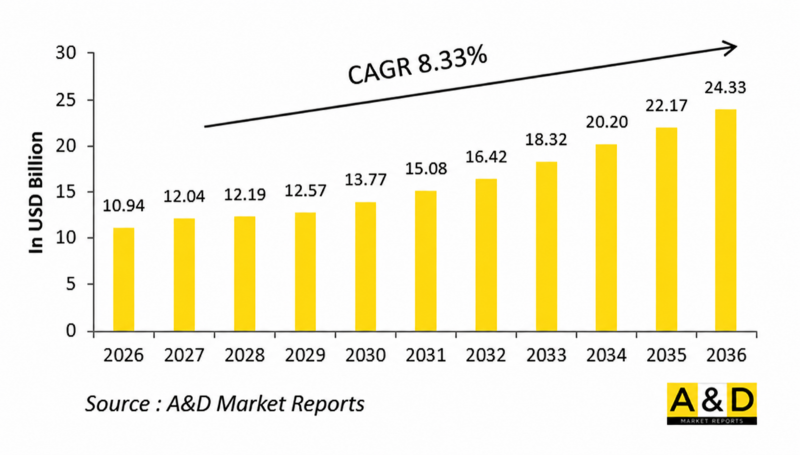
全球高超音速飛彈市場預計在 2026 年達到 109.4 億美元,預計到 2036 年將達到 243.3 億美元,在 2026 年至 2036 年的預測期內,複合年成長率為 8.33%。
介紹
隨著各國加速研發先進高速武器系統,全球高超音速飛彈市場正成為世界各國國防機構的戰略焦點。由於高超音速飛彈飛行速度極高且機動性強,傳統的飛彈防禦系統難以偵測和攔截。這些武器日益被視為戰略阻礙力、快速打擊行動和現代戰爭中的關鍵資產。
市場成長的促進因素包括地緣政治緊張局勢加劇、軍事現代化計劃以及對先進精確打擊能力日益成長的需求。主要軍事強國正大力投資高超音速滑翔飛行器、高超音速巡航飛彈和下一代推進技術,以增強其防禦能力。
超音速燃燒衝壓引擎引擎、熱防護系統和高速導引技術的進步,正推動著更有效率、更具實戰能力的超音速武器的研發。此外,世界各國政府正加強與私人航太和國防相關企業的合作,以加速研發和生產項目。隨著全球安全格局的不斷演變,預計超音速飛彈系統將在未來的戰略防禦行動中發揮日益關鍵的作用。
科技對全球高超音速飛彈市場的影響
技術進步正從根本上改變全球高超音速飛彈市場,顯著提升推進效率、機動性、目標捕獲精度和生存能力。超音速燃燒衝壓引擎推進技術是支撐高超音速飛彈持續飛行的關鍵創新之一,它使飛彈能夠在保持作戰穩定性的同時,以極高的速度飛行。
由於超音速飛彈在極端空氣動力學和熱力學條件下運行,先進的熱防護系統和耐熱材料對其研發至關重要。材料科學的不斷進步使國防製造商能夠提高飛彈在高速飛行中的耐久性和作戰效能。
人工智慧和先進導引系統正擴大整合到高超音速武器中,以提高目標捕獲精度、彈道最佳化和規避威脅能力。這些技術使飛彈能夠適應動態的戰場環境,並降低被攔截的風險。
感測器融合、衛星導航和即時戰場通訊技術進一步提升了作戰協調和目標捕獲的效率。此外,預測分析和彈道建模的研究正在推動先進飛彈防禦和攔截策略的發展,以應對高超音速威脅。這些新技術可望繼續塑造未來高超音速飛彈系統的作戰能力。
全球高超音速飛彈市場的主要促進因素
地緣政治緊張局勢加劇以及主要軍事強國之間的戰略競爭是全球高超音速飛彈市場的主要促進因素。各國正優先發展高超音速武器,以增強阻礙力、提高打擊效率,並在快速變化的安全環境中維持軍事優勢。
傳統飛彈防禦系統的限制日益凸顯,這也推動了對高超音速技術的投資。由於其速度快、機動性強且飛行軌跡難以預測,高超音速飛彈被認為對現代防空系統具有極高的殺傷力。這種能力正在加速國防機構的採購和研發活動。
推進系統、人工智慧、溫度控管和導引技術的進步正在提高高超音速武器的可行性。世界各國政府也正在加大對超音速燃燒衝壓引擎引擎、滑翔飛行器和能夠承受極端溫度的尖端材料等研究項目的投入。
全球軍事現代化進程和不斷成長的國防預算正進一步推動市場擴張。各國正將高超音速技術融入更廣泛的國防戰略,以提升快速反應和精確打擊能力。此外,各國政府、國防相關企業和航太企業之間合作的不斷深化,也加速了高超音速系統的創新和大規模研發。
本報告對全球高超音速飛彈市場進行了深入分析,包括影響該市場的技術資訊、未來 10 年的預測以及區域趨勢。
目錄
高超音速飛彈市場報告定義
高超音速飛彈市場細分
按地區
副產品
透過歸納法
未來十年高超音速飛彈市場分析
高超音速飛彈市場技術
全球高超音速飛彈市場預測
區域高超音速飛彈市場趨勢及預測
北美洲
促進因素、阻礙因素、挑戰
害蟲
市場預測與情境分析
大公司
供應商等級
企業標竿管理
歐洲
中東
亞太地區
南美洲
高超音速飛彈市場國別分析
美國
國防計劃
最新消息
專利
該市場目前的技術成熟度水平
市場預測與情境分析
加拿大
義大利
法國
德國
荷蘭
比利時
西班牙
瑞典
希臘
澳洲
南非
印度
中國
俄羅斯
韓國
日本
馬來西亞
新加坡
巴西
高超音速飛彈市場機會矩陣
專家對高超音速飛彈市場報告的意見
結論
關於航空航太和國防市場報告
Global Hypersonic Missiles Market
The Global Hypersonic Missiles Market is estimated at USD 10.94 billion in 2026, projected to grow to USD 24.33 billion by 2036 at a Compound Annual Growth Rate (CAGR) of 8.33% over the forecast period 2026-2036.
Introduction
The Global Hypersonic Missiles Market is becoming a strategic focus area for defense organizations worldwide as nations accelerate the development of advanced high-speed weapon systems. Hypersonic missiles travel at extremely high velocities and possess maneuvering capabilities that make them difficult to detect and intercept using conventional missile defense systems. These weapons are increasingly viewed as critical assets for strategic deterrence, rapid strike missions, and modern warfare operations.
The market is driven by growing geopolitical tensions, military modernization programs, and the rising demand for advanced precision strike capabilities. Major military powers are investing heavily in hypersonic glide vehicles, hypersonic cruise missiles, and next-generation propulsion technologies to strengthen national defense capabilities.
Advancements in scramjet engines, thermal protection systems, and high-speed guidance technologies are enabling the development of more efficient and operationally capable hypersonic weapons. Governments are also increasing collaboration with private aerospace companies and defense contractors to accelerate research and production programs. As global security dynamics continue to evolve, hypersonic missile systems are expected to play an increasingly important role in future strategic defense operations.
Technology Impact in Global Hypersonic Missiles Market
Technological advancements are significantly transforming the Global Hypersonic Missiles Market by improving propulsion efficiency, maneuverability, targeting precision, and survivability. Scramjet propulsion technology is one of the most important innovations supporting sustained hypersonic flight, enabling missiles to travel at extremely high speeds while maintaining operational stability.
Advanced thermal protection systems and heat-resistant materials are also critical in hypersonic missile development, as these weapons operate under extreme aerodynamic and thermal conditions. Continuous improvements in material science are helping defense manufacturers enhance missile durability and operational effectiveness during high-speed flight.
Artificial intelligence and advanced guidance systems are increasingly integrated into hypersonic weapons to improve targeting accuracy, trajectory optimization, and threat evasion capabilities. These technologies enable missiles to adapt to dynamic battlefield conditions and reduce interception risks.
Sensor fusion, satellite navigation, and real-time battlefield communication technologies are further enhancing mission coordination and targeting efficiency. Additionally, research in predictive analytics and trajectory modeling is supporting the development of advanced missile defense and interception strategies against hypersonic threats. Emerging technologies are expected to continue reshaping the operational capabilities of future hypersonic missile systems.
Key Drivers in Global Hypersonic Missiles Market
Growing geopolitical tensions and strategic competition among major military powers are key drivers of the Global Hypersonic Missiles Market. Nations are prioritizing the development of hypersonic weapons to strengthen deterrence capabilities, improve strike effectiveness, and maintain military superiority in rapidly evolving security environments.
The increasing limitations of conventional missile defense systems are also encouraging investment in hypersonic technologies. Due to their speed, maneuverability, and unpredictable flight paths, hypersonic missiles are considered highly effective against modern air defense systems. This capability is driving defense agencies to accelerate procurement and research activities.
Advancements in propulsion systems, artificial intelligence, thermal management, and guidance technologies are making hypersonic weapons more operationally feasible. Governments are also increasing funding for research programs focused on scramjet engines, glide vehicles, and advanced materials capable of withstanding extreme temperatures.
Military modernization initiatives and increasing defense budgets worldwide are further supporting market expansion. Countries are integrating hypersonic technologies into broader defense strategies to improve rapid response and precision strike capabilities. In addition, growing collaboration between governments, defense contractors, and aerospace companies is accelerating innovation and large-scale development of hypersonic systems.
Regional Trends in Global Hypersonic Missiles Market
North America remains one of the leading regions in the Global Hypersonic Missiles Market due to extensive investments in advanced defense technologies and ongoing hypersonic weapons programs. The region focuses heavily on developing next-generation strike capabilities, missile defense systems, and advanced propulsion technologies to maintain military superiority.
Europe is increasingly investing in hypersonic research and collaborative defense initiatives aimed at strengthening regional security capabilities. Several countries are focusing on advanced missile systems, air defense modernization, and technology partnerships to enhance strategic deterrence.
The Asia-Pacific region is witnessing rapid market growth driven by rising geopolitical tensions, territorial disputes, and strong defense modernization programs. Countries such as China, India, Japan, and South Korea are investing significantly in indigenous hypersonic weapon development and missile defense technologies. India's growing focus on hypersonic propulsion and advanced missile programs reflects the region's increasing strategic emphasis on high-speed weapon systems.
The Middle East is gradually exploring advanced missile technologies to strengthen regional defense capabilities, while Russia continues to play a major role in global hypersonic weapon deployment and strategic deterrence programs. Increasing global defense competition is expected to drive continued regional investments in hypersonic technologies and counter-hypersonic defense systems.
Key Global Hypersonic Missiles Market Program
Several major defense programs worldwide are accelerating the development and deployment of hypersonic missile systems. Governments are investing heavily in hypersonic glide vehicles, scramjet-powered cruise missiles, and advanced strike systems designed for rapid response and strategic deterrence missions.
Military organizations are focusing on integrating hypersonic technologies into land-based, naval, and airborne platforms to enhance operational flexibility and long-range precision strike capabilities. Programs involving advanced thermal protection systems, autonomous guidance technologies, and high-speed propulsion are supporting the transition from prototype development to operational deployment.
Research institutions and defense contractors are collaborating to improve missile maneuverability, survivability, and targeting accuracy under extreme operational conditions. Governments are also investing in counter-hypersonic defense programs aimed at improving threat detection, tracking, and interception capabilities.
India's ongoing hypersonic propulsion and missile development initiatives, including scramjet combustor testing programs, demonstrate increasing global participation in advanced hypersonic research. Collaborative defense partnerships between allied nations are further accelerating innovation, technology transfer, and large-scale production efforts in the global hypersonic missile industry.
Table of Contents
Hypersonic Missiles Market - Table of Contents
Hypersonic Missiles Market Report Definition
Hypersonic Missiles Market Segmentation
By Region
By Product
By Guidance
Hypersonic Missiles Market Analysis for next 10 Years
The 10-year Hypersonic Missiles Market analysis would give a detailed overview of Hypersonic Missiles Market growth, changing dynamics, technology adoption overviews and the overall market attractiveness is covered in this chapter.
Market Technologies of Hypersonic Missiles Market
This segment covers the top 10 technologies that is expected to impact this market and the possible implications these technologies would have on the overall market.
Global Hypersonic Missiles Market Forecast
The 10-year hypersonic missiles market forecast of this market is covered in detailed across the segments which are mentioned above.
Regional Hypersonic Missiles Market Trends & Forecast
The regional hypersonic missiles market trends, drivers, restraints and Challenges of this market, the Political, Economic, Social and Technology aspects are covered in this segment. The market forecast and scenario analysis across regions are also covered in detailed in this segment. The last part of the regional analysis includes profiling of the key companies, supplier landscape and company benchmarking. The current market size is estimated based on the normal scenario.
North America
Drivers, Restraints and Challenges
PEST
Market Forecast & Scenario Analysis
Key Companies
Supplier Tier Landscape
Company Benchmarking
Europe
Middle East
APAC
South America
Country Analysis of Hypersonic Missiles Market
This chapter deals with the key defense programs in this market, it also covers the latest news and patents which have been filed in this market. Country level 10 year market forecast and scenario analysis are also covered in this chapter.
US
Defense Programs
Latest News
Patents
Current levels of technology maturation in this market
Market Forecast & Scenario Analysis
Canada
Italy
France
Germany
Netherlands
Belgium
Spain
Sweden
Greece
Australia
South Africa
India
China
Russia
South Korea
Japan
Malaysia
Singapore
Brazil
Opportunity Matrix for Hypersonic Missiles Market
The opportunity matrix helps the readers understand the high opportunity segments in this market.
Expert Opinions on Hypersonic Missiles Market Report
Hear from our experts their opinion of the possible analysis for this market.
Conclusions
About Aviation and Defense Market Reports
List of Tables
- Table 1: 10 Year Market Outlook, 2026-2036
- Table 2: Drivers, Impact Analysis, North America
- Table 3: Restraints, Impact Analysis, North America
- Table 4: Challenges, Impact Analysis, North America
- Table 5: Drivers, Impact Analysis, Europe
- Table 6: Restraints, Impact Analysis, Europe
- Table 7: Challenges, Impact Analysis, Europe
- Table 8: Drivers, Impact Analysis, Middle East
- Table 9: Restraints, Impact Analysis, Middle East
- Table 10: Challenges, Impact Analysis, Middle East
- Table 11: Drivers, Impact Analysis, Apac
- Table 12: Restraints, Impact Analysis, Apac
- Table 13: Challenges, Impact Analysis, Apac
- Table 14: Drivers, Impact Analysis, South America
- Table 15: Restraints, Impact Analysis, South America
- Table 16: Challenges, Impact Analysis, South America
- Table 17: Scenario Analysis, Scenario 1, By Region, 2026-2036
- Table 18: Scenario Analysis, Scenario 1, By Product 2026-2036
- Table 19: Scenario Analysis, Scenario 1, By Guidance, 2026-2036
- Table 20: Scenario Analysis, Scenario 2, By Region, 2026-2036
- Table 21: Scenario Analysis, Scenario 2, By Product 2026-2036
- Table 22: Scenario Analysis, Scenario 2, By Guidance, 2026-2036
List of Figures
- Figure 1: Global Defense Hypersonic Missiles Market Forecast, 2026-2036
- Figure 2: Global Defense Hypersonic Missiles Market Forecast, By Region, 2026-2036
- Figure 3: Global Defense Hypersonic Missiles Market Forecast, By Product 2026-2036
- Figure 4: Global Defense Hypersonic Missiles Market Forecast, By Guidance, 2026-2036
- Figure 5: North America, Defense Hypersonic Missiles Market , Market Forecast, 2026-2036
- Figure 6: Europe, Defense Hypersonic Missiles Market , Market Forecast, 2026-2036
- Figure 7: Middle East, Defense Hypersonic Missiles Market , Market Forecast, 2026-2036
- Figure 8: Apac, Defense Hypersonic Missiles Market , Market Forecast, 2026-2036
- Figure 9: South America, Defense Hypersonic Missiles Market , Market Forecast, 2026-2036
- Figure 10: United States, Defense Hypersonic Missiles Market , Region Maturation, 2026-2036
- Figure 11: United States, Defense Hypersonic Missiles Market , Market Forecast, 2026-2036
- Figure 12: Canada, Defense Hypersonic Missiles Market , Region Maturation, 2026-2036
- Figure 13: Canada, Defense Hypersonic Missiles Market , Market Forecast, 2026-2036
- Figure 14: Italy, Defense Hypersonic Missiles Market , Region Maturation, 2026-2036
- Figure 15: Italy, Defense Hypersonic Missiles Market , Market Forecast, 2026-2036
- Figure 16: France, Defense Hypersonic Missiles Market , Region Maturation, 2026-2036
- Figure 17: France, Defense Hypersonic Missiles Market , Market Forecast, 2026-2036
- Figure 18: Germany, Defense Hypersonic Missiles Market , Region Maturation, 2026-2036
- Figure 19: Germany, Defense Hypersonic Missiles Market , Market Forecast, 2026-2036
- Figure 20: Netherlands, Defense Hypersonic Missiles Market , Region Maturation, 2026-2036
- Figure 21: Netherlands, Defense Hypersonic Missiles Market , Market Forecast, 2026-2036
- Figure 22: Belgium, Defense Hypersonic Missiles Market , Region Maturation, 2026-2036
- Figure 23: Belgium, Defense Hypersonic Missiles Market , Market Forecast, 2026-2036
- Figure 24: Spain, Defense Hypersonic Missiles Market , Region Maturation, 2026-2036
- Figure 25: Spain, Defense Hypersonic Missiles Market , Market Forecast, 2026-2036
- Figure 26: Sweden, Defense Hypersonic Missiles Market , Region Maturation, 2026-2036
- Figure 27: Sweden, Defense Hypersonic Missiles Market , Market Forecast, 2026-2036
- Figure 28: Brazil, Defense Hypersonic Missiles Market , Region Maturation, 2026-2036
- Figure 29: Brazil, Defense Hypersonic Missiles Market , Market Forecast, 2026-2036
- Figure 30: Australia, Defense Hypersonic Missiles Market , Region Maturation, 2026-2036
- Figure 31: Australia, Defense Hypersonic Missiles Market , Market Forecast, 2026-2036
- Figure 32: India, Defense Hypersonic Missiles Market , Region Maturation, 2026-2036
- Figure 33: India, Defense Hypersonic Missiles Market , Market Forecast, 2026-2036
- Figure 34: China, Defense Hypersonic Missiles Market , Region Maturation, 2026-2036
- Figure 35: China, Defense Hypersonic Missiles Market , Market Forecast, 2026-2036
- Figure 36: Saudi Arabia, Defense Hypersonic Missiles Market , Region Maturation, 2026-2036
- Figure 37: Saudi Arabia, Defense Hypersonic Missiles Market , Market Forecast, 2026-2036
- Figure 38: South Korea, Defense Hypersonic Missiles Market , Region Maturation, 2026-2036
- Figure 39: South Korea, Defense Hypersonic Missiles Market , Market Forecast, 2026-2036
- Figure 40: Japan, Defense Hypersonic Missiles Market , Region Maturation, 2026-2036
- Figure 41: Japan, Defense Hypersonic Missiles Market , Market Forecast, 2026-2036
- Figure 42: Malaysia, Defense Hypersonic Missiles Market , Region Maturation, 2026-2036
- Figure 43: Malaysia, Defense Hypersonic Missiles Market , Market Forecast, 2026-2036
- Figure 44: Singapore, Defense Hypersonic Missiles Market , Region Maturation, 2026-2036
- Figure 45: Singapore, Defense Hypersonic Missiles Market , Market Forecast, 2026-2036
- Figure 46: United Kingdom, Defense Hypersonic Missiles Market , Region Maturation, 2026-2036
- Figure 47: United Kingdom, Defense Hypersonic Missiles Market , Market Forecast, 2026-2036
- Figure 48: Opportunity Analysis, Defense Hypersonic Missiles Market , By Region (Cumulative Market), 2026-2036
- Figure 49: Opportunity Analysis, Defense Hypersonic Missiles Market , By Region (Cagr), 2026-2036
- Figure 50: Opportunity Analysis, Defense Hypersonic Missiles Market , By Product Cumulative Market), 2026-2036
- Figure 51: Opportunity Analysis, Defense Hypersonic Missiles Market , By Product (Cagr), 2026-2036
- Figure 52: Opportunity Analysis, Defense Hypersonic Missiles Market , By Guidance(Cumulative Market), 2026-2036
- Figure 53: Opportunity Analysis, Defense Hypersonic Missiles Market , By Guidance (Cagr), 2026-2036
- Figure 54: Scenario Analysis, Defense Hypersonic Missiles Market , Cumulative Market, 2026-2036
- Figure 55: Scenario Analysis, Defense Hypersonic Missiles Market , Global Market, 2026-2036
- Figure 56: Scenario 1, Defense Hypersonic Missiles Market , Total Market, 2026-2036
- Figure 57: Scenario 1, Defense Hypersonic Missiles Market , By Region, 2026-2036
- Figure 58: Scenario 1, Defense Hypersonic Missiles Market , By Product 2026-2036
- Figure 59: Scenario 1, Defense Hypersonic Missiles Market , By Guidance, 2026-2036
- Figure 60: Scenario 2, Defense Hypersonic Missiles Market , Total Market, 2026-2036
- Figure 61: Scenario 2, Defense Hypersonic Missiles Market , By Region, 2026-2036
- Figure 62: Scenario 2, Defense Hypersonic Missiles Market , By Product 2026-2036
- Figure 63: Scenario 2, Defense Hypersonic Missiles Market , By Guidance, 2026-2036
- Figure 64: Company Benchmark, Defense Hypersonic Missiles Market , 2026-2036


